Business

DBL Lifestyles opens premium Adidas, Nike and Levi’s store in Ctg
DBL Lifestyles Limited, the retail arm of DBL Group, has officially transformed the port city’s fashion landscape with the grand opening of a premium multi-brand store at Ispahani Centre in Lalkhan Bazar in Chattogram.
Bringing together three of the world’s most iconic names—Adidas, Nike and Levi’s—under one roof, the new destination offers an unparalleled shopping experience for sportswear and lifestyle enthusiasts.
The store was inaugurated on Sunday at a high-profile ribbon-cutting ceremony attended by local dignitaries and business leaders. The launch marks a strategic expansion for DBL Lifestyles, the official franchise partner of these global brands in Bangladesh, said a media statement.
Designed to deliver a modern, world-class aesthetic, the store is set to become a key destination for premium retail in Chattogram.
DBL Group Chairman Abdul Wahed, Managing Director M A Jabbar and Deputy Managing Director and Group CEO M A Quader (Anu), among others, were present at the event.
The new store provides immediate access to the latest global trends:
• Adidas: Showcasing innovation-driven athletic footwear and performance-focused designs.
• Nike: Featuring cutting-edge sportswear and modern performance gear.
• Levi’s: Offering its legendary 501® jeans and world-renowned denim lifestyle collections.
“Our vision is to bring world-class retail experiences closer to Bangladeshi consumers,” the DBL leadership team said, adding that the strategy aims to strengthen the presence of international brands across the country.
DBL Lifestyles Limited is the retail arm of DBL Group and the authorised franchise partner for global brands such as Adidas, Nike, Levi’s, Puma and Bugatti in Bangladesh.
With an expanding footprint in Dhaka and Chattogram, the company is committed to setting new benchmarks in the domestic retail sector, the statement added.
4 months ago
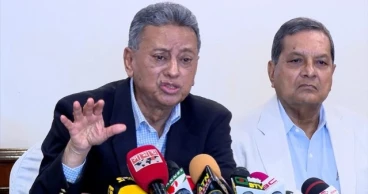
Middle East tensions figuring in govt's policy plans for economy: Amir Khasru
Finance Minister Amir Khasru Mahmud Chowdhury on Monday said the government is taking into account the possible economic impacts of ongoing geopolitical tensions in the Middle East while preparing its policy plans and economic projections.
“We are conducting our overall economic activities while anticipating the possible challenges that may arise from the current global situation,” he said.
Responding to a question at a briefing marking the launch of the government’s “Family Card” programme at the Multipurpose Hall of the Ministry of Finance, the minister said the government is closely monitoring global developments and adjusting its strategies accordingly.
Khosru noted that conflicts and other global disruptions pose potential risks to economies worldwide, and Bangladesh is not outside their influence.
He said the government has already factored such uncertainties into its economic forecasts and policy directions.
“This is something we cannot avoid. Therefore, we are incorporating these realities into our projections and planning,” he said.
The finance minister said the government’s future economic outlook and projections will reflect the uncertainties created by global conflicts and geopolitical developments.
“We are working continuously, and our projections for the coming days will take into account the global problems emerging from war and other international factors,” he added.
Khosru said relevant ministries and agencies are coordinating efforts to address potential economic pressures and maintain stability in key sectors.
He also stressed the importance of ensuring energy security amid the uncertain global environment.
“Energy security is extremely important for us. We are seeking cooperation from various partners and are in discussions with suppliers and governments,” he said.
The minister said the government remains committed to managing the country’s economic activities prudently while preparing for possible external shocks arising from global crises.
He expressed confidence that with careful planning and coordination among relevant agencies, Bangladesh will be able to navigate potential challenges stemming from global geopolitical tensions.
4 months ago

Businesses urge govt to pass amendment to anti-tobacco law in first session of parliament
Leaders of various business associations on Monday urged the government to pass the Smoking and Tobacco Products Usage (Control) (Amendment) Ordinance 2025 as a law in the first session of the 13th National Parliament, warning that delaying the move could weaken tobacco control efforts and harm public health.
They said if the ordinance remains only on paper and is not enacted by Parliament, it will become ineffective, leading to an increase in tobacco-related deaths, higher healthcare costs and setbacks in achieving the Sustainable Development Goals (SDGs).
The call came at a discussion titled “The Importance of Strengthening Tobacco Control Law for Preventing Non-Communicable Diseases and Protecting Public Health,” organised by Dhaka Ahsania Mission at the Zahur Hossain Chowdhury Hall of the National Press Club.
Speakers at the meeting said about 21.3 million people aged 15 years and above in Bangladesh currently use tobacco, while nearly 200,000 people die every year from tobacco-related diseases—an average of around 545 deaths per day.
They warned that the death toll could rise further if the ordinance is not passed during the first session of the new Parliament.
Business leaders also pointed out that although the government earns around Tk 40,000 crore annually from tobacco-related revenue, the total economic loss caused by healthcare expenses, productivity loss and premature deaths exceeds Tk 87,000 crore.
They said the interim government approved the Tobacco Control Ordinance in December last year to address the issue, and stressed that it must now be passed as a law in Parliament to ensure its effective implementation.
Presenting the keynote, Shariful Islam, coordinator of the Tobacco Control Project at Dhaka Ahsania Mission, highlighted several key provisions of the ordinance. These include banning smoking in all public places and public transport and removing designated smoking areas to protect non-smokers from second-hand smoke.
The ordinance also proposes banning the display of tobacco products at points of sale, prohibiting all forms of tobacco advertising and promotion, increasing pictorial health warnings on cigarette packets to 75 percent, and banning the sale of tobacco products within 100 metres of educational institutions, hospitals and sports facilities.
The meeting was chaired by Dr S M Khalilur Rahman, vice-president of Dhaka Ahsania Mission, while Mokhlesur Rahman, deputy director of its health sector, delivered the welcome speech.
Among others present were Badiuzzaman Badal, president of Bangladesh Inland Water Transport (Passenger) Association; Zakir Hossain, general secretary of Bangladesh Super Market Owners Association; Nazmul Hasan Mahmud, president of Bangladesh Shop Owners Association; Arifur Rahman Tipu of Dhaka Metropolitan Shop Owners Association; Mokaddem Hossain, general secretary of Bangladesh Combined Workers Federation; Alamgir Hossain Khan, general secretary of Bangladesh Grocery Business Association; and Rafiqul Islam Babul, president of the National Employees Federation, along with leaders from various professional organisations.
4 months ago

Bangladesh Bank eases share transfers, profit repatriation for foreign investors
In a major move to boost investor confidence, Bangladesh Bank has simplified the process for foreign investors to transfer shares and repatriate sale proceeds from non-listed public and private limited companies.
The central bank issued a comprehensive master circular (EID Circular No. 01), consolidating and updating regulations from 2018 and 2020 to create a more predictable, efficient, and transparent exit mechanism for non-resident investors.
Prashanta Kumar Mondal, Public Relations Officer of the Bangladesh Investment Development Authority (BIDA), shared the details in a press release on Monday.
Under the new guidelines, Authorized Dealer (AD) banks have been granted significantly more power to process transactions without seeking prior approval from the central bank.
Higher Transaction Limits: AD banks can now process share transfers and repatriations up to Tk 100 crore following prescribed valuation methods.
Joint Declarations: For transactions up to Tk 1 crore, transfers can be completed based on a joint declaration by the buyer and seller, bypassing the need for independent valuation.
Fixed Timelines: Once documentation is complete, share transfers must be finalized within 45 days, and the repatriation of sale proceeds must be processed within five working days.
Institutional Oversight: Every AD bank is required to form an internal committee led by senior management to review valuation and repatriation applications.
The reform package was finalized on November 19 last year by a high-level Capital Repatriation Committee, led by BIDA Executive Member Nahian Rahman Rochi and supported by Bangladesh Bank.
BIDA Executive Chairman Chowdhury Ashik Mahmud Bin Harun emphasized that a healthy environment for Foreign Direct Investment (FDI) relies on investors feeling confident at every stage of their journey—including the exit.
"By reducing approval complexities, allowing easier repatriation of sale proceeds, and simplifying valuation and documentation, Bangladesh is moving toward that goal," said the BIDA chief.
"These initiatives are the foundation of a reliable environment for foreign investment," he said.
4 months ago

Remittance inflow to stay stable if Middle East jobs remain unaffected: BAB chairman
Bangladesh Association of Banks (BAB) Chairman Abdul Hai Sarker on Monday said the flow of inward remittances is expected to remain stable despite the ongoing conflict in the Middle East, provided Bangladeshi expatriate workers can continue their jobs without disruption.
He made the remarks while talking to reporters after a meeting with Bangladesh Bank Governor Md Mostaqur Rahman at the central bank headquarters.
“If our expatriate workers in the Middle East can continue their regular jobs, remittance inflow will remain steady,” the BAB chairman said.
However, the situation could change if the conflict leads to job losses or disruptions at workplaces, he said.
“If the war affects their employment or working environment, it may negatively impact remittance inflows,” he said.
It is too early to predict the outcome as much depends on the duration and stability of the situation, said the BAB chaimran.
During the meeting, Abdul Hai Sarker also stressed the need for regular coordination between the central bank and commercial banks on policy decisions to avoid gaps in implementation.
He said discussions also covered measures to maintain stability in weaker banks within the financial sector through necessary support.
The meeting further addressed the implementation of International Financial Reporting Standard (IFRS)-9, which requires banks to maintain provisions for expected credit losses.
The BAB chairman said a circular has already been issued and the standard is scheduled to come into effect in 2028.
“While we are following international standards, banks are exploring ways to implement them effectively within Bangladesh’s socio-economic context,” he said noting that the country’s banking infrastructure and capacity differ from those of developed economies.
He also expressed optimism about the central bank’s supportive stance toward private banks.
4 months ago

Private sector-led growth vital to revive Bangladesh’s economy: MCCI report
Reviving private sector-led growth will be critical for restoring Bangladesh’s economic momentum and ensuring sustainable development, according to a new policy report launched on Monday by the Metropolitan Chamber of Commerce and Industry (MCCI).
M Masrur Reaz, Chairman and CEO of Policy Exchange Bangladesh presented the report titled “Reviving Private Sector-led Economic Growth: Critical Issues and Priorities Facing the New Government in Bangladesh,” at a programme organised by MCCI.
The report provides an evidence-based assessment of Bangladesh’s current economic challenges and outlines a set of reform priorities aimed at restoring macroeconomic stability, strengthening investment climate, and enabling sustainable growth driven by the private sector.
Speaking at the launch, Reaz said Bangladesh stands at a ‘critical juncture’ as the economy transitions from crisis management to recovery amid persistent structural constraints and global uncertainty.
He said although the country experienced decades of strong growth averaging around 6–7 percent, economic momentum has slowed significantly since 2022 due to a combination of global shocks, domestic policy weaknesses and institutional challenges.
According to the report, Bangladesh’s GDP growth has dropped to below 4 percent in FY2025, while inflation, declining private investment and tightening credit conditions have continued to weigh on business confidence and economic activity.
The study highlights that structural weaknesses in public finance, the banking sector, export competitiveness and the investment climate are undermining the country’s growth prospects.
Without comprehensive reforms, these vulnerabilities could push the economy toward prolonged stagnation, it warned.
The report identifies seven priority areas for policy reform to revive private sector-led growth.
These include macroeconomic stabilisation, fiscal management and debt sustainability, banking sector reforms, export diversification, private investment mobilisation, energy security, and skills development.
It also stresses that restoring macroeconomic stability should be the immediate priority for policymakers. The study recommends tighter monetary and fiscal coordination, improved revenue mobilisation, and a more flexible exchange rate regime to stabilise inflation and rebuild foreign exchange reserves.
In the financial sector, the report highlights the urgent need to address rising non-performing loans and governance weaknesses in banks, warning that these issues are constraining credit flows and discouraging private investment.
Export diversification is another key challenge identified in the report.
While Bangladesh’s export sector remains heavily dependent on ready-made garments, the report calls for targeted policies to develop new high-potential sectors and strengthen global value chain integration, particularly as the country prepares for its post-LDC transition.
To boost investment, the study recommends improving regulatory predictability, modernising business-related laws and strengthening the investment promotion framework to attract both domestic and foreign investors.
The report also emphasises the importance of energy sector reforms to ensure reliable and affordable power supply for businesses, as well as expanding skill development programmes to create a future-ready workforce capable of supporting productivity growth and job creation.
MCCI leaders said the report aims to provide policymakers with a comprehensive reform roadmap to restore economic confidence and enable Bangladesh to move toward a more resilient and competitive growth model.
4 months ago
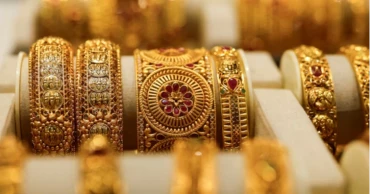
Gold price drops by Tk 3,266 per bhori in Bangladesh
The price of gold in Bangladesh has fallen by Tk 3,266 per bhori, with the rate of 22-carat gold now set at Tk 264,948, according to the Bangladesh Jewellers Association (Bajus).
In a notification issued Monday, Bajus said the new rate was fixed in line with the overall market situation following a decline in the price of pure gold, locally known as tejabi gold.
The revised prices came into effect immediately.
Gold prices fall sharply in Bangladesh as 22-carat gold drops Tk 9,214
Under the new rates, 22-carat gold will be sold at Tk 264,948 per bhori (11.664 grams).
The price of 21-carat gold has been set at Tk 252,876 per bhori, while 18-carat gold will cost Tk 216,775 per bhori.
Gold produced using the traditional method will be priced at Tk 176,943 per bhori.
Earlier, on March 4, Bajus reduced gold prices by Tk 9,214 per bhori, setting the rate of 22-carat gold at Tk 268,214.
So far this year, gold prices in the country have been revised 38 times, including 24 increases and 14 decreases.
Silver prices have also been reduced. Bajus cut the price of 22-carat silver by Tk 175 per bhori to Tk 6,357.
The price of 21-carat silver has been set at Tk 6,065 per bhori, while 18-carat silver will cost Tk 5,190 per bhori.
Silver produced using the traditional method will be sold at Tk 3,907 per bhori.
So far in 2026, silver prices have been revised 23 times in the local market, including 14 increases and nine decreases.
4 months ago
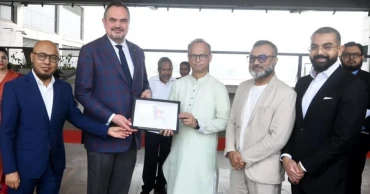
US ambassador, BGMEA leaders discuss trade, energy, and labour reforms
United States Ambassador to Bangladesh Brent T. Christensen held a meeting with the President of the Bangladesh Garment Manufacturers and Exporters Association (BGMEA), Mahmud Hasan Khan, to discuss bilateral trade, investment, and labor sector reforms.
The meeting, held on Sunday at the BGMEA Complex in Uttara, covered a wide range of issues, including US investment in Bangladesh's energy sector, economic cooperation, and labor-related matters.
The US delegation included Labor Attaché Leena Khan, Agricultural Attaché Erin Covert, Commercial Attaché Paul Frost, Political and Economic Officer Srini Sitaram, and Labor Expert Saifuzzaman Mehrab.
During the discussion, the BGMEA requested clarification on the mechanism for duty-free access for apparel made from US-sourced cotton. President Mahmud Hasan Khan noted that such an initiative would strengthen the relationship between the textile sectors of both nations.
Ambassador Christensen responded that the Office of the United States Trade Representative (USTR) is currently working on the matter.
He highlighted that the recent trade agreement is a positive step for Bangladesh, making it the first country to receive such a special opportunity, which is expected to boost US cotton exports to Bangladesh.
BGMEA Senior Vice President Enamul Haque Khan raised concerns over business confusion caused by frequent tariff changes.
The Ambassador explained that these adjustments were influenced by a recent US Supreme Court ruling, expressing optimism that the complexities would be resolved soon to restore stability.
On the energy front, the BGMEA President emphasized the need for US investment to meet industrial demand. He proposed investment in LNG infrastructure for short-term relief and the use of US technology for domestic gas extraction as a long-term solution.
Ambassador Christensen reacted positively, stating that US investors would be interested if Bangladesh formulated a stable, long-term energy policy.
The meeting also addressed labor laws and a proposed new ordinance. Christensen described labor reform as a "long-standing and crucial issue" in bilateral trade relations. The BGMEA President informed the delegation that discussions are ongoing on 145 specific points in the proposed ordinance, but further clarification is needed to ensure transparency.
Other proposals from the BGMEA included relaxing visa bond requirements for garment entrepreneurs and granting long-term visas.
Director Sheikh Mohammad Mustafiz highlighted that Bangladesh currently hosts the highest number of LEED-certified green factories under the US Green Building Council (USGBC). He urged the US to play a larger role in the sector's
Both sides concluded the meeting by reaffirming their commitment to elevating economic ties to new heights.
4 months ago
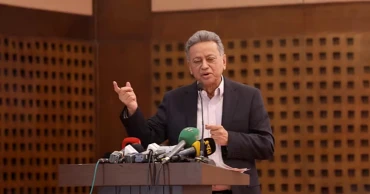
Private sector key to growth, govt prioritising investment: Finance Minister
Finance and Planning Minister Amir Khosru Mahmud Chowdhury on Sunday said the private sector remains the main engine of the country’s economic growth and the government is giving top priority to trade, commerce and investment.
Amir Khosru made the remarks during a meeting with Dhaka Chamber of Commerce & Industry (DCCI) President Taskeen Ahmed at his office at the Secretariat.
The minister said the government is working to make the capital market more vibrant and the central bank more private sector-oriented through different initiatives.
Finance Minister Amir Khosru returns home after hospital treatment
Khosru also noted that easing lending conditions for the private sector and increasing credit flow remain among the government’s priorities to boost investment in the country.
During the meeting, Taskeen urged the government to strengthen the financial sector to support economic growth and restore investor confidence.
Taskeen proposed a gradual reduction in the policy rate to ease lending rates and stimulate private sector investment.
He also suggested reconsidering the loan rescheduling facility for genuine or unintentional defaulters by extending the loan classification period.
A coordinated approach involving monetary, fiscal and structural reforms could help restore investor confidence, strengthen financial stability and accelerate inclusive development, Taskeen added, assuring full support from the business community.
DCCI Senior Vice President Razeev H Chowdhury and Vice President Md. Salem Sulaiman were also present at the meeting.
4 months ago

Chinese firm to invest $15.34m in garment factory at BEPZA Economic Zone
Flourish Garments Bangladesh Co., Ltd., a China (Hong Kong)-based company, is set to invest US$15.34 million to establish a high-end garments manufacturing facility at the BEPZA Economic Zone in Mirsharai of Chattogram.
An agreement to this effect was signed on Sunday at the BEPZA Complex in Dhaka between the Bangladesh Export Processing Zones Authority (BEPZA) and Flourish Garments Bangladesh Co., Ltd.
Md Tanvir Hossain, Executive Director (Investment Promotion) of BEPZA, and Han Junxiao, Managing Director of Flourish Garments Bangladesh Co., Ltd., signed the agreement on behalf of their respective sides.
BEPZA Executive Chairman Major General Mohammad Moazzem Hossain witnessed the signing ceremony, said a press release.
Under the project, the company will produce around 4 million pieces of garments annually, including fleece jackets, soft-shell jackets, down jackets, cotton coats, leather jackets, T-shirts, polo shirts, shorts, parkas, long pants, ski suits, windproof jackets, fishing and hiking suits, yoga and running suits, jeans, knitted shorts, faux leather clothing, deer skin velvet clothing, golf clothing and casual skirts.
The project is expected to create employment opportunities for about 1,988 Bangladeshi nationals, it added.
4 months ago