Business
Stocks continue to slide as DSE, CSE start week with sharp losses
Bangladesh’s two stock exchanges opened the week with a steep fall on Sunday, as indices plunged in both markets and share prices declined for the majority of listed companies.
The benchmark index of the Dhaka Stock Exchange (DSE), DSEX, dropped by 231 points during the day’s trading. The Shariah-based DSES index fell by 35 points while the blue-chip DS30 index declined by 90 points.
Most listed companies ended in the red: prices fell for 371 firms, while only 10 gained and nine remained unchanged.
Although turnover slightly increased, selling pressure dominated the market. A total of shares and units worth Tk 531 crore were traded on the DSE, up from Tk 459 crore in the previous session.
In the block market, shares worth Tk 23 crore from 30 companies were traded, with Asiatic Laboratories Limited topping the list with transactions worth about Tk 4 crore.
City Insurance Company Limited led the gainers’ chart on the DSE with a 5 percent rise in share price, while Alif Manufacturing Company Limited was the worst loser, shedding 10 percent.
The Chittagong Stock Exchange (CSE) also witnessed a sharp decline as its overall index CASPI dropped by 419 points.
Prices fell for 145 companies against 17 gainers, while two remained unchanged on the CSE.
Turnover on the port city bourse fell sharply to about Tk 16 crore, compared with Tk 41 crore in the previous trading session.
Prime Bank 1st ICB AMCL Mutual Fund topped the gainers’ list on the CSE with a 10 percent rise, while Familytex (BD) Limited was the worst loser, losing 10 percent of its value.
4 months ago

bKash connects donors with iftar initiatives for underprivileged people
Thanks to the bKash app, underprivileged children across Dhaka, including orphan Al Amin, are receiving daily iftar during Ramadan, while thousands of donors like Brishty Rahman can contribute easily from anywhere in the country.
Fourteen-year-old Al Amin, who grew up in the Kamalapur Railway Station area, earns his livelihood through small jobs. He fasts every day during Ramadan and attends the daily iftar event at Mojar School to break his fast.
Meanwhile, Brishty Rahman, a resident of Badda in Dhaka, grew up watching her mother arrange iftar for people in need. Although she cannot organize large-scale initiatives due to her busy urban lifestyle, she now provides iftar to five children every day by donating through the bKash app to Mojar School.
For Brishty, the digital platform offers a meaningful way to carry forward her mother’s values. bKash has made it easy for people like her to connect with initiatives for children like Al Amin.
Thousands of others across the country have also been able to participate effortlessly in different organizations’ iftar programmes through bKash, ensuring that more underprivileged children can break their fast during the holy month.
The connection of religious and social sentiment with arranging iftar for those who are fasting is a longstanding tradition. This year too, mosques, various institutions, social organisations, and even individuals have taken initiatives throughout Ramadan to arrange iftar for fasting people. The ‘Donation’ option on the bKash app has made participation in this noble initiative easy and instant.
Speaking about organising daily iftar, Arian Arif, Chief Executive Officer of Mojar School, said, “Our organisation runs various initiatives to stand beside underprivileged and streetchildren. But arranging iftar gives us a different kind of fulfilment. Watching people sit in long rows and break their fast together after an entire day is a special joy. We may have taken the initiative, but people from all over the country are joining us. Anyone who wishes to contribute to iftar can easily donate through the bKash app and be part of this effort.”
Where and How to Donate for Iftar:
Donations for the iftar of one or multiple individuals can be sent directly from the bKash app to organisations like Obhizatrik Foundation, Mojar School, Shakti Foundation, and Mastul Foundation.
Depending on the organisation, an individual can provide iftar for one person at Tk 40 or Tk 50. Users can also take responsibility for a family’s entire month of iftar by donating Tk 1000.
bKash customers can donate daily or donate larger amounts at once as per their convenience. These social organisations arrange daily iftar for underprivileged communities at various locations across Dhaka, in mosques, as well as at several places outside Dhaka.
To donate iftar through bKash app, customers need to click on the ‘Donation’ icon from the bKash app.
Then, the preferred organisation can be selected from the list, and the customers need to submit their name, email and donation amount. In the next step, the customer will get an acknowledgment note after completing the donation process with bKash PIN. In addition to the bKash app, customers can also donate through this weblink
https://www.bkash.com/en/products-services/donation.
4 months ago

Preserve reserves, source alternative fuel: Top economists advise governor on Middle East crisis
Leading economists have urged the Bangladesh Bank (BB) to prioritize the preservation of foreign exchange reserves and seek alternative energy sources to shield the national economy from the looming fallout of the Middle East conflict.
The advice was given during a high-level meeting on Saturday (March 7) between Governor Mostaqur Rahman and eight of the country’s top economists, held at the central bank headquarters in Motijheel. The session was convened to discuss policy strategies amidst rising global uncertainty caused by military tensions between the US and Iran.
Key Recommendations from Economists:
The economists emphasized that while the full extent of the crisis remains unclear, the pressure on the US dollar and national reserves is inevitable. Their primary recommendations include:
Preserve Reserves: Avoid spending dollars from the reserves to fund imports; instead, use existing foreign currency inflows strictly for essential stability.
Fuel Diversification: To reduce dependency on the volatile Middle East, the government should immediately explore fuel imports from alternative sources such as Brunei and Singapore.
No Immediate Hikes: Despite rising global prices, the experts advised against passing costs onto domestic consumers immediately to prevent a further spike in inflation.
Monetary Caution: They argued against lowering the policy interest rate (Repo rate) at this moment. While lower rates could boost investment, the priority must remain inflation control until the war-induced pressure subsides.
Governor Pledges Independence:
Governor Mostaqur Rahman, who took office on February 26, addressed concerns regarding political influence during the meeting.
“I will perform my duties with absolute honesty and will not make any decisions under political pressure," the Governor assured the economists.
He also instructed commercial banks to remain steadfast against external political interference in their decision-making processes.
Strengthening Financial Inflow:
The meeting also highlighted the potential risks to remittance inflows if worker movement in the Middle East is hindered. To counter this, economists suggested:
Smoothing the legal channels for expatriates to send money home.
Expediting the release of committed foreign loans from the ‘World Bank’ and other global lenders.
Seeking additional credit lines from the Islamic Development Bank (IDB) specifically for oil imports.
The distinguished economist panel included Dr. Mustafizur Rahman, distinguished fellow of CPD, Dr. Fahmida Khatun, Executive Director of CPD,
Dr. Mustafa K. Mujeri, former chief economist of BB, Dr. Mohammad Abdur Razzaque of RAPID, Dr. Selim Raihan of SANEM, Dr. Masrur Reaz of Policy Exchange, Dr. A.K. Enamul Haque, Director General of BIDS,
Nazmus Sadat Khan of the World Bank.
The meeting concluded with a proposal to form a standing committee of experts to provide regular updates and policy recommendations to the central bank to prevent public panic and ensure institutional stability.
4 months ago
Stocks end week sharply lower as indices tumble on DSE, CSE
Stocks ended the week on a sharp downturn on Thursday as key indices of both the Dhaka Stock Exchange (DSE) and the Chittagong Stock Exchange (CSE) fell significantly, with the majority of listed companies witnessing price declines.
The market opened on a negative note at the DSE and failed to recover throughout the session. At the close, the benchmark DSEX index dropped 82 points.
The Shariah-based DSES index lost 13 points while the blue-chip DS30 index declined 33 points.
Most of the listed securities ended lower: prices fell for 308 companies, while 52 advanced and 33 remained unchanged.
Turnover also declined, with shares and units worth Tk 459 crore traded during the session, down from Tk 582 crore in the previous trading day.
In the block market, shares of 34 companies worth about Tk 21 crore were traded, with Orion Infusion PLC leading the chart with transactions worth Tk 4.7 crore.
Intech Limited topped the gainers’ list on the DSE with a rise of over 4.5 percent, while First Finance Limited was the worst loser, shedding 10 percent.
Meanwhile, the CSE also experienced a sharp fall as its benchmark CASPI index dropped 192 points.
Out of the traded issues, 126 companies declined, 41 advanced and 14 remained unchanged.
However, turnover at the port city bourse increased nearly fivefold to Tk 41 crore, compared to Tk 8 crore in the previous session.
IFL Islamic Mutual Fund-1 emerged as the top gainer at the CSE with a 10 percent rise, while Takaful Islami Insurance PLC was the worst performer, losing 10 percent.
4 months ago
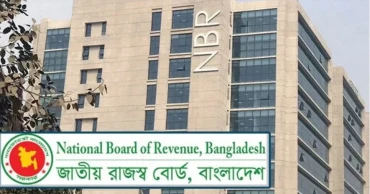
NBR makes ASYCUDA Data mandatory for income tax assessment
The National Board of Revenue (NBR) has made it mandatory to use data from the ASYCUDA system while assessing income tax in cases involving importers, aiming to enhance transparency and reduce tax evasion.
In a directive issued on March 4, the NBR instructed income tax officials under its Income Tax Wing to collect and use authentic information on imported goods and advance income tax paid at the import stage from the ASYCUDA system’s Business Intelligence (BI) server.
According to the order, tax officials will have to rely on this information when selecting cases for audit, reopening tax cases under the Income Tax Act, or correcting erroneous tax assessments.
The directive also outlines the procedure for using the BI server of the ASYCUDA system.
It states that supervisory range officers will obtain the relevant information from the server and provide it in writing to the concerned circle officers responsible for determining tax.
The system will enable officials to verify key import-related information of taxpayers, including the quantity of goods imported, the declared import value and the advance income tax paid at the import stage.
NBR officials said the measure is expected to ensure greater accuracy in granting advance income tax credit during tax assessment.
Under the new arrangement, commissioners and supervisory range officers will be able to log into the BI server from pre-designated IP-bounded computers.
After collecting information from the server, range officers will also have to record the data regularly in a specific register.
The revenue authority said the initiative will make it easier to verify import-related tax data during the settlement of income tax cases, helping to ensure a transparent and accurate assessment process.
4 months ago

Global markets show mixed trends amid higher oil prices
European shares slipped Thursday despite rebounds in Asia and on Wall Street, as Iran launched new attacks and threatened the U.S.
U.S. futures also fell back, with the contract for the Dow Jones Industrial Average losing 0.5%, while that for the S&P 500 shed 0.3%.
Uncertainty about the war in the Middle East has been rattling financial markets, with most taking their cues from what the price of oil is doing.
“Yesterday’s bounce in risk assets already looks less like a turning point and more like a classic relief rally in a market that briefly inhaled before realizing the room was still on fire,” Stephen Innes of SPI Asset Management said in a commentary.
Crude prices climbed early Thursday, with Brent, the international standard, gaining 3.2% to $84 per barrel. U.S. benchmark crude jumped 3.7% to $77.37 per barrel.
The war brought a fresh wave of attacks by Iran on Israeli and American bases. Iran warned the United States would “bitterly regret” torpedoing an Iranian warship in the Indian Ocean and a religious leader called for “Trump’s blood,” while Israel said it had begun a “large-scale” attack on Tehran.
In Germany, the DAX lost 0.5% to 24,087.63, while the CAC 40 in Paris lost 0.6% to 8,118.25. Britain's FTSE 100 edged 0.2% lower, to 10,547.82.
In Asian trading, South Korea’s Kospi took back much of its historic losses from a day earlier, jumping 9.6% to 5,583.90. It had gained as much as 12% earlier in the day as investors hunted bargains, triggering temporary trading halts.
The government announced emergency measures for the economy after the benchmark fell by the most ever in a single day on Wednesday. President Lee Jae Myung urged officials to activate an emergency financial package worth 100 trillion won ($68.5 billion) aimed at calming market volatility.
Tokyo's Nikkei 225 index gave back some early gains, closing 1.9% higher at 55,278.06.
In Hong Kong, the Hang Seng climbed 0.3% to 25,321.34 after Chinese Premier Li Qiang opened the annual session of the National People's Congress with a report that set the annual target for economic growth this year at 4.5% to 5%. A draft budget put the increase in military spending at 7%, down from 7.2% in recent years.
The government pledged to support the sluggish domestic economy and spur more consumer spending, but did not announce any major new stimulus.
The Shanghai Composite index gained 0.6% to 4,108.57.
In Australia, the S&P/ASX 200 rose 0.4% to 8,940.30, while New Zealand's benchmark rose 0.6%.
Taiwan's main share index gained 2.6%.
On Wednesday, U.S. stocks got a boost as oil prices steadied, albeit temporarily. A report that said growth for U.S. businesses in the real estate, finance and other services industries accelerated last month at the fastest pace since the summer of 2022 also helped.
The S&P 500 rose 0.8%, erasing much of its losses since the war with Iran began. The Dow industrials added 0.5% and the Nasdaq composite climbed 1.3%.
Another report suggested U.S. private sector employers stepped up hiring last month, a potentially hopeful signal for a more comprehensive U.S. government Friday about the overall job market.
Investors are worried over how long the war with Iran could last, how high inflation may go because of more expensive oil and how much damage that might do to corporate profits.
Wall Street also got a lift from Big Tech stocks as Amazon rose 3.9% and Nvidia added 1.7%. Because they’re among the biggest stocks in the U.S. market in terms of total value, their movements carry more weight on the S&P 500.
Wednesday’s strong reports on the economy were welcome news for the Federal Reserve, whose job it is to keep the U.S. job market healthy and inflation low. The Fed’s job has become more difficult because of the jump in oil prices, which is pushing upward on already high inflation.
In other dealings early Thursday, the U.S. dollar rose to 157.22 Japanese yen from 157.07 yen. The euro fell to $1.1596 from $1.1636.
The dollar has advanced against other currencies partly because the U.S. is viewed as facing less risk from the war than other countries, analysts said.
“When the world becomes less certain, capital gravitates toward the deepest pool of liquidity available,” Innes said, adding that the dollar “remains the market's preferred storm shelter.”
4 months ago

DSE, CSE stocks slip at close despite early gains
Stocks ended lower on both bourses on Wednesday, reversing early gains, while overall turnover declined significantly on the day.
At the Dhaka Stock Exchange (DSE), the benchmark DSEX index shed 2 points at the close. The Shariah-based DSES remained unchanged, while the blue-chip DS30 index declined by 4 points.
Despite the marginal fall in indices, most listed companies posted gains. Of the traded issues, 227 advanced, 112 declined and 54 remained unchanged.
DSE gains in first half as CSE slips despite broader price rise
Turnover at the DSE fell sharply to over Tk 580 crore, down from Tk 885 crore in the previous session.
In the block market, shares worth Tk 28 crore from 36 companies were traded. Orion Infusion PLC led the segment with nearly Tk 14 crore in transactions.
Among the day’s top performers, Sea Pearl Beach Resort & Spa Limited gained nearly 7 percent to top the advancers’ chart, while GSP Finance Company (Bangladesh) PLC plunged around 10 percent to emerge as the worst loser on the DSE.
The Chittagong Stock Exchange (CSE) also closed in the red, with its broad index CASPI losing 68 points.
Most issues on the CSE declined, as 96 companies saw price erosion against 58 gainers, while 16 remained unchanged.
Turnover at the port city bourse dropped nearly threefold to Tk 8 crore, compared to Tk 23 crore in the previous session.
Zahintex Industries Limited rose 10 percent to lead the gainers at the CSE, while Hakkani Pulp & Paper Mills PLC fell nearly 10 percent to bottom the losers’ list.
4 months ago

DSE gains in first half as CSE slips despite broader price rise
Trading on Bangladesh’s bourses showed a mixed trend in the first half on Wednesday, with the Dhaka Stock Exchange (DSE) posting gains while the Chittagong Stock Exchange (CSE) witnessed a decline in its key index.
During the first half of the fourth trading day of the week, the DSE’s benchmark index DSEX advanced by 47 points.
The Shariah-based DSES index rose by 8 points, while the blue-chip DS30 index gained 11 points.
Most listed companies saw price appreciation at the DSE, with 325 issues advancing, 29 declining and 38 remaining unchanged.
Turnover at the DSE stood at around Tk 330 crore in the first half of trading.
Meanwhile, the CSE experienced a fall in its overall index. The CASPI lost 46 points in the first half.
Despite the index decline, the majority of companies registered gains at the CSE, as 51 issues advanced against 48 decliners, while 18 remained unchanged.
Turnover at the CSE amounted to Tk 4 crore during the period.
4 months ago

Gold prices fall sharply in Bangladesh as 22-carat gold drops Tk 9,214
After several rounds of rises, gold prices in Bangladesh fell on Wednesday, with the rate of 22-carat gold dropping by Tk 9,214 per bhori.
The new rate sets the price of 22-carat gold at Tk 268,214 per bhori (11.664 grams), according to a statement issued in the morning by the Bangladesh Jewellers Association (BAJUS).
BAJUS said the decision was taken considering the overall market situation particularly a decline in the price of pure gold (tejabi gold) in the local market.
The revised rates have come into effect immediately.
Under the new pricing structure, 21-carat gold now costs Tk 256,025 per bhori while 18-carat gold is priced at Tk 219,258 per bhori.
The price of traditional-method gold has been set at Tk 179,159 per bhori.
The last adjustment was made on March 3, when BAJUS increased the price of 22-carat gold by Tk 3,324 per bhori to Tk 277,428.
So far in 2026, gold prices have been adjusted 37 times in the domestic market, with rates increased 24 times and reduced 13 times.
Alongside gold, silver prices have also been reduced.
The price of 22-carat silver has been cut by Tk 641 per bhori to Tk 6,532.
The price of 21-carat silver now stands at Tk 6,240 per bhori, 18-carat silver at Tk 5,365 per bhori, and traditional-method silver at Tk 4,024 per bhori.
In 2026, silver prices have been adjusted 22 times so far, including 14 increases and eight reductions.
4 months ago

Gas, oil prices surge, global shares drop amid Middle East tensions
Global gas and oil prices surged while stock markets across the world fell sharply as the Middle East conflict intensified, raising concerns about its duration and economic impact.
In the UK, gas prices hit their highest level in three years on Tuesday after significant gains on Monday, while Brent crude briefly exceeded $85 a barrel, a level last seen in July 2024. Major stock indexes in the US, Europe, and Asia also suffered losses.
Investors are assessing the economic consequences of the Israel and US airstrikes on Iran and Tehran’s retaliatory measures, including potential effects on inflation and interest rates.
Analysts fear that disruption in this critical energy and shipping region could mirror the impact of Russia’s full-scale invasion of Ukraine four years ago, which drove up global energy costs, reports BBC.
The UK’s Office for Budget Responsibility warned in its latest fiscal outlook that the conflict could severely affect both global and UK economies. German Chancellor Friedrich Merz, after meeting with US President Donald Trump at the White House, also expressed concern over possible economic damage, urging a swift end to the hostilities.
By Tuesday’s close, London’s FTSE 100 fell 2.75%, while Germany’s DAX and France’s CAC 40 dropped 3.44% and 3.46% respectively. In the US, the S&P 500 opened sharply lower but ended down 0.9%. In Asia, Japan’s Nikkei fell 3.3%, Hong Kong’s Hang Seng and China’s Shanghai Composite declined, and South Korea’s Kospi fell over 7% following Monday’s holiday closure.
UK gas prices rose above 165p per therm, a level last seen a year after the Ukraine war began, and closed at 138p, over 20% higher than Monday. Prices have doubled since the US and Israel began airstrikes on Iran. The spike followed QatarEnergy halting production after “military attacks” on its facilities, later suspending output of aluminium, methanol, and urea used in fertilizers.
Higher gas prices may increase household energy bills in the UK, though the impact is capped until July. Oil prices rose moderately, as crude can be sourced more flexibly, but higher fuel costs could still push up transport, food, and overall inflation, influencing central bank decisions on interest rates.
Shipping through the Strait of Hormuz, which carries about 20% of the world’s oil and gas, has largely stopped after attacks on vessels. Ebrahim Jabbari, adviser to Iran’s Islamic Revolutionary Guard Corps chief, warned ships against entering the region. Supertanker freight rates from the Middle East to China hit a record $400,000 per day, nearly double last week’s rate.
Logistics experts say insurance risks and carrier hesitancy have effectively closed the Strait of Hormuz, likely driving global shipping rates higher. UK consumers may face increased fuel prices if crude remains elevated, according to Alasdair Locke, chairman of Motor Fuel Group.
4 months ago