Business

Gas, oil prices surge, global shares drop amid Middle East tensions
Global gas and oil prices surged while stock markets across the world fell sharply as the Middle East conflict intensified, raising concerns about its duration and economic impact.
In the UK, gas prices hit their highest level in three years on Tuesday after significant gains on Monday, while Brent crude briefly exceeded $85 a barrel, a level last seen in July 2024. Major stock indexes in the US, Europe, and Asia also suffered losses.
Investors are assessing the economic consequences of the Israel and US airstrikes on Iran and Tehran’s retaliatory measures, including potential effects on inflation and interest rates.
Analysts fear that disruption in this critical energy and shipping region could mirror the impact of Russia’s full-scale invasion of Ukraine four years ago, which drove up global energy costs, reports BBC.
The UK’s Office for Budget Responsibility warned in its latest fiscal outlook that the conflict could severely affect both global and UK economies. German Chancellor Friedrich Merz, after meeting with US President Donald Trump at the White House, also expressed concern over possible economic damage, urging a swift end to the hostilities.
By Tuesday’s close, London’s FTSE 100 fell 2.75%, while Germany’s DAX and France’s CAC 40 dropped 3.44% and 3.46% respectively. In the US, the S&P 500 opened sharply lower but ended down 0.9%. In Asia, Japan’s Nikkei fell 3.3%, Hong Kong’s Hang Seng and China’s Shanghai Composite declined, and South Korea’s Kospi fell over 7% following Monday’s holiday closure.
UK gas prices rose above 165p per therm, a level last seen a year after the Ukraine war began, and closed at 138p, over 20% higher than Monday. Prices have doubled since the US and Israel began airstrikes on Iran. The spike followed QatarEnergy halting production after “military attacks” on its facilities, later suspending output of aluminium, methanol, and urea used in fertilizers.
Higher gas prices may increase household energy bills in the UK, though the impact is capped until July. Oil prices rose moderately, as crude can be sourced more flexibly, but higher fuel costs could still push up transport, food, and overall inflation, influencing central bank decisions on interest rates.
Shipping through the Strait of Hormuz, which carries about 20% of the world’s oil and gas, has largely stopped after attacks on vessels. Ebrahim Jabbari, adviser to Iran’s Islamic Revolutionary Guard Corps chief, warned ships against entering the region. Supertanker freight rates from the Middle East to China hit a record $400,000 per day, nearly double last week’s rate.
Logistics experts say insurance risks and carrier hesitancy have effectively closed the Strait of Hormuz, likely driving global shipping rates higher. UK consumers may face increased fuel prices if crude remains elevated, according to Alasdair Locke, chairman of Motor Fuel Group.
5 months ago
BGMEA thanks govt for releasing Tk 2,500 crore in export incentives
The Bangladesh Garment Manufacturers and Exporters Association (BGMEA) has welcomed the government’s decision to release Tk 2,500 crore against outstanding cash incentives for the export-oriented ready-made garment (RMG) and related sectors.
BGMEA President Mahmud Hasan Khan expressed deep gratitude and sincere thanks to the top levels of the government, including the Finance Minister, Commerce Minister, and the Governor of Bangladesh Bank, describing the move as a "critical and timely intervention" during the current crisis in the apparel industry.
BGMEA pushes for quick release of Tk 5,700cr RMG incentives
President Hasan noted that the fund allocation brings significant relief to factory owners who are facing immense pressure to clear workers' wages, allowances, and bonuses ahead of the upcoming Holy Eid-ul-Fitr, alongside settled utility bills for electricity and gas.
The current BGMEA board recently held several rounds of productive discussions and meetings with high-level government officials, the Ministry of Finance, and Bangladesh Bank to secure the release of these stuck cash incentives. Following these efforts, the Tk 2,500 crore fund was approved within a very short timeframe.
According to a notification issued by the Ministry of Finance, the total allocation was granted in two phases under the first part of the third installment for the 2025-26 fiscal year: Tk 1,500 crore in the first phase and Tk 1,000 crore in the second.
The BGMEA has urged its member factories to contact their respective banks to take the necessary steps to process the funds.
5 months ago

Fuel crisis, price hike unlikely amid Middle East tensions: BPC Chairman
Bangladesh has sufficient fuel stock and there is no risk of supply disruption or price hike despite the ongoing tensions in the Middle East, Bangladesh Petroleum Corporation (BPC) Chairman Md Rezanur Rahman said on Tuesday.
“We have already opened letters of credit (LCs) for 15 consignments for March. For April, another 15 consignments have been scheduled, of which payment for seven has already been completed. So there is no reason for any fuel shortage in the country,” he told reporters at the BPC office in Karwan Bazar.
The BPC Chairman said the country currently has fuel reserves sufficient for several days, including diesel for 14 days, octane for 28 days, petrol for 15 days, furnace oil for 93 days and jet fuel for 55 days.
Iran death toll hits 787 as Israeli, US strikes intensify
Responding to a question about possible supply chain disruptions due to the conflict in the Middle East, the BPC chairman said a crude oil consignment was loaded on March 1 and is scheduled to pass through the Strait of Hormuz.
“It will start its journey once the situation remains normal. Another consignment will be loaded on March 22. Suppliers have informed us that supply will remain uninterrupted for now,” he said.
Rezanur said BPC is also exploring alternative sourcing options in view of the evolving situation.
UNGA Presidency: UK to give due consideration to Bangladesh’s candidature
If necessary, additional refined fuel will be imported, he added.
The government last adjusted fuel prices on March 1, keeping retail prices unchanged for March. Diesel remains at Tk 100 per litre, octane at Tk 120, petrol at Tk 116 and kerosene at Tk 112 per litre.
5 months ago

Bangladesh Bank to provide special loans for RMG workers’ wages
Bangladesh Bank on Tuesday instructed commercial banks to offer special term loans to export-oriented industries to ensure timely payment of workers’ wages for February 2026.
The central bank issued a circular citing both global and domestic economic pressures that have strained liquidity and production capacity in the country’s export sector.
According to Banking Regulation and Policy Department (BRPD) of Bangladesh Bank, the initiative aims to maintain production momentum and support export growth despite falling orders and delayed shipments.
Under the directive, banks can provide term loans to “active” export-oriented units beyond their existing working capital limits.
The loan amount cannot exceed the average of the last three months’ wages and allowances paid by the respective factory.
Loans will carry prevailing market-based interest rates, with no additional fees, profit charges, or commissions.
Repayment must be made in equal monthly or quarterly installments within a maximum of one year including a three-month grace period.
Bangladesh Bank defined “export-oriented” industries as those exporting at least 80 percent of their total production.
To be considered “active,” an industry must have regularly paid workers’ salaries from November 2025 to January 2026.
Eligibility must be certified by trade bodies such as the Bangladesh Garment Manufacturers and Exporters Association (BGMEA) or the Bangladesh Knitwear Manufacturers and Exporters Association (BKMEA).
To ensure transparency and prevent fund diversion, the circular mandates that the loan amount be credited directly to the bank or Mobile Financial Service (MFS) accounts of the workers, with no cash disbursement through factory management.
5 months ago

DSE, CSE witness steepest fall of the year as indices plunge
The country’s two main bourses, the Dhaka Stock Exchange (DSE) and the Chittagong Stock Exchange (CSE), suffered their steepest fall of the year on Tuesday, with key indices plunging sharply amid widespread price erosion.
At the Dhaka Stock Exchange, the benchmark DSEX dropped 208 points at the close of trading, the third working day of the week.
The Shariah-based DSES declined by 36 points, while the blue-chip DS30 index shed 85 points.
Most listed companies saw their share prices fall. Of the traded issues, 349 declined, 31 advanced and 11 remained unchanged.
Turnover at the DSE stood at Tk 885 crore, up from Tk 779 crore in the previous session.
In the block market, shares worth about Tk 23 crore were traded involving 25 companies. GQ Ball Pen Industries Limited recorded block transactions of nearly Tk 3 crore.
Standard Islami Bank PLC topped the gainers’ list at the DSE with nearly 9 percent price appreciation, while Northern Jute Manufacturing Company Limited languished at the bottom, losing more than 9 percent.
The Chittagong Stock Exchange also faced a major downturn, with its benchmark CASPI index plunging 414 points.
Of the traded issues at the CSE, 153 declined, 45 advanced and 16 remained unchanged.
The port city bourse recorded a turnover of Tk 23 crore, compared to Tk 19 crore in the previous session.
Bangladesh Industrial Finance Company Limited emerged as the top gainer at the CSE, rising 10 percent, while Asia Insurance PLC was the worst performer, shedding 10 percent.
5 months ago

Stocks nosedive at DSE, CSE amid intense selling pressure
Trading at the country’s two bourses witnessed a sharp downturn on Tuesday, the third working day of the week, with major indices posting significant losses in the first half of the session.
At the Dhaka Stock Exchange (DSE), the benchmark DSEX shed 165 points by midday.
The Shariah-based DSES declined 26 points, while the blue-chip DS30 index fell 71 points, reflecting broad-based selling pressure across sectors.
Most listed companies faced price erosion.
Of the traded issues, 347 advanced declined, compared to only 30 that registered gains, while 11 remained unchanged.
Turnover at the DSE stood at around Tk 600 crore in the first half of trading, indicating active participation despite the steep fall in indices.
A similar trend was observed at the Chittagong Stock Exchange (CSE), where the overall CASPI index dropped 309 points during the same period.
Out of the traded securities at the CSE, 111 companies saw their share prices fall, while 50 posted gains and 12 remained unchanged.
The port city bourse recorded a turnover of Tk 19 crore in the first half of the session.
5 months ago

Classified loans in Bangladesh drop by Tk 87,298 crore in Q4 2025
The volume of classified loans in Bangladesh’s banking sector witnessed a significant decrease of Tk 87,298.33 crore during the final quarter of 2025.
As of December 31, 2025, total classified loans stood at Tk 5,57,216.92 crore, down from Tk 6,44,515.25 crore in September 2025.
According to a report by the Banking Regulation and Policy Department of Bangladesh Bank, the gross classified loan rate fell to 30.60 percent in December, compared to 35.73 percent at the end of September 2025.
However, on a year-on-year basis, the gross ratio remains significantly higher than the 20.20 percent recorded in December 2024.
Net Classified and Defaulted Loans:
The net classified loan rate, after adjusting for maintained provisions and suspense interest, dropped sharply to 13.93 percent in December from 26.40 percent in September. Meanwhile, specific defaulted loans totaled Tk 5,44,831.88 crore (29.92 percent of total loans), marking a decrease of Tk 68,039.57 crore over the three-month period of quarter-2.
Category-wise Performance The reduction in classified loans was observed across all bank categories:
State-owned Commercial Banks: The rate dropped to 44.44% from 49.65%.
Private Commercial Banks: Saw a decline to 28.25% from 33.75%.
Specialized Banks: Decreased to 39.74% from 41.95%.
Foreign Banks: Maintained the lowest rate at 4.51%.
Provision Shortfall and Credit Growth Despite the drop in bad debt, the banking sector continues to face a massive provision shortfall of Tk 1,91,441.35 crore.
Bangladesh Bank buys $25 million from banks to stabilize market
Total outstanding loans and advances in the 61 scheduled banks reached Tk 18,20,915.44 crore by the end of December 2025, reflecting an annual credit growth of 6.40 percent. Private commercial banks led this growth with a 7.56 percent increase in disbursements over the year.
5 months ago

Bangladesh Bank buys $25 million from banks to stabilize market
Bangladesh Bank (BB) on Monday purchased US$25 million from two banks as a continuous effort to maintain stability in the foreign exchange market.
The central bank bought the dollar at a cutoff rate of Tk 122.30 per dollar, according to a central bank official.
Arif Hossain Khan, Executive Director and Spokesperson of Bangladesh Bank, confirmed the transaction. "We purchased $25 million from two commercial banks today at the 122.30 cutoff rate," he said.
With Monday's procurement, the central bank's total dollar purchase for the current fiscal year, FY2025–26, has reached a substantial $5.49 billion, the spokesperson added.
The central bank has been consistently mopping up dollars from the banking channel throughout February to manage liquidity and exchange rate volatility.
Earlier on February 24, the BB bought $87 million from eight banks, following a purchase of $123 million from eight commercial banks on February 22. In the first half of February, the bank made several large-scale interventions, including $171 million on Feb 10, $209 million on Feb 9, and $196.5 million on Feb 5.
Record data shows that on February 2, the bank made its highest single-day purchase of the month, collecting $218.50 million from 16 commercial banks.
All recent transactions have been consistently settled at the exchange rate of Tk 122.30, reflecting the central bank's current peg or target rate for these official interventions.
5 months ago
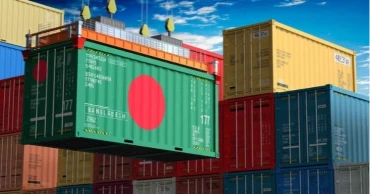
Bangladesh goods exports hit $31.91b in July-Feb, a decline of 3.97 percent
Bangladesh’s merchandise export earnings reached US$31.91 billion during the first eight months of the 2025-26 fiscal year (July–February), signaling sector stability despite a cooling global trade climate.
In February 2026, Bangladesh's exports declined by 12.03 percent to $3.97 billion compared with February 2025. In January 2026, Bangladesh exported goods worth $4.41 billion.
According to the latest data from the Export Promotion Bureau (EPB), in eight months, the country recorded a marginal 3.15 percent decline, down from $32.92 billion in the same period in the previous fiscal year FY2024-25.
Industry insiders attributed the slight contraction to temporary factors, including domestic port disruptions, the recently held national election, and subdued global demand in key traditional markets.
The Ready-made Garments (RMG) sector, the backbone of the nation's export economy, fetched $25.79 billion during the July-February period, reflecting a 3.73 percent decrease year-on-year. Within the apparel sector, knitwear continued to outpace woven garments, maintaining its lead as the primary driver of earnings.
While the overall figure saw a slight dip, several non-traditional sectors registered positive growth, indicating a steady diversification of the national export basket. Key sectors that saw year-on-year increases include leather and leather goods, Jute and jute goods, Home textiles, light engineering and frozen fish.
In terms of destinations, the United States remained the largest market for Bangladeshi products, totaling $5.87 billion with a modest growth of 0.74 percent.
Notably, China recorded the highest growth among major destinations, with a significant year-on-year increase of 19.12 percent.
Despite the marginal overall decline, trade experts suggest that the performance reflects a resilient environment capable of navigating both domestic and international complexities as the fiscal year enters its final quarter.
5 months ago
DSE, CSE rebound sharply in early trading after previous slump
Stocks posted a strong rebound in early trading on Monday, with key indices at both the Dhaka Stock Exchange (DSE) and the Chittagong Stock Exchange (CSE) registering significant gains, recovering from the previous session’s steep fall.
During the first half of the trading session, the DSE’s benchmark index, DSEX, advanced by 108 points.
The Shariah-based DSES index rose by 18 points, while the blue-chip DS30 index gained 33 points, reflecting broad-based buying interest across sectors.
Market breadth remained overwhelmingly positive at the DSE, as share prices of 372 companies advanced against 12 decliners, while 6 issues remained unchanged.
The turnover at the DSE stood at around Tk 440 crore in the first half of the session, indicating renewed investor participation.The upbeat trend was also visible at the CSE.
DSE sinks 138 points on broad sell-off; CSE also tumbles
In early trading, the port city bourse’s benchmark CASPI index climbed 160 points.
Of the traded issues at the CSE, 89 companies saw price gains, compared to 31 decliners, while 14 remained unchanged.
The turnover at the CSE amounted to Tk 9 crore during the same period.
5 months ago