Business
Experts flag possible energy pressure for Bangladesh amid US-Iran tensions
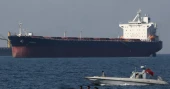
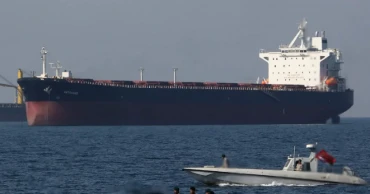
Bangladesh could face mounting energy and financial pressures amid rising tensions between the United States and Iran, with concerns growing over possible disruptions in the Strait of Hormuz, a key route for the country’s energy imports.
With 65-70 percent of the nation's energy demand met through imports—primarily Liquefied Natural Gas (LNG), crude oil, and Liquefied Petroleum Gas (LPG)—sector experts warn that a prolonged regional war could paralyze the economy.
The Strait of Hormuz is the world’s most vital oil transit point. Reports indicate that Iran’s Revolutionary Guard has begun transmitting radio warnings that vessels may be barred from the passage. If the Strait is officially closed, international research agencies forecast that crude oil prices could surge to between USD $95 and $110 per barrel.
For Bangladesh, this is a direct threat. The country relies on this specific maritime route for:
LNG: 55 percent of total imports (mainly from Qatar and Oman).
Crude Oil: 20 percent of annual demand (sourced from Saudi Arabia and UAE).
LPG: Almost 100 percent of supply is Middle East-centric.
How Bangladesh Will Be Affected
The disruption of this supply chain is expected to trigger a domino effect across several sectors.
Severe Power Shortages: As Qatar is a primary source of gas for power plants, any disruption in LNG shipments will lead to widespread load-shedding during the upcoming peak summer season.
Gas Crisis: Professor M. Tamim, an energy expert and Pro-VC of Independent University, warned that "a continued war will spike oil prices and disrupt Qatar's LNG supply, creating a grave gas crisis."
LPG Scarcity: The domestic market, which requires 1.2 lakh tonnes of LPG monthly, is already facing a shortage. A supply chain break would cause prices to skyrocket and supplies to vanish.
Economic Strain: Rising global oil prices will put immense pressure on Bangladesh's foreign exchange reserves and increase the cost of living.
Dr. Ijaz Hossain, Professor and Dean of Engineering, Specialization Energy and Environment of BUET told UNB that energy supply from the Middle East will be severely disrupted if the war prolonged.
“Impact of this both energy supply and electricity generation in Bangladesh would be affected vastly as there is no immediate alternative. The national storage capacity is small for our country,” he added.
Despite the looming threat, the Bangladesh Petroleum Corporation (BPC) maintains that refined oil supplies are "safe" until June, as they are sourced from Malaysia, China, and Singapore, bypassing the Strait of Hormuz. However, the BPC Chairman, Md. Rezanur Rahman, admitted they are "closely monitoring" the crude oil situation.
Petrobangla Director (Operations) Engr. Md. Rafiqul Islam echoed these concerns, stating that while they are monitoring the situation 24/7, a closure of the Qatari shipping route remains a major cause for anxiety.
Energy Minister Iqbal Hassan Mahmood, has called an emergency meeting to discuss the crisis. "We are monitoring the situation and planning to explore alternative import sources to ensure Bangladesh does not fall into an energy vacuum," the Minister told reporters.
Industry leaders, including East Coast Group Chairman Azam J. Chowdhury, have urged the government to establish advanced communications with alternative suppliers like Indonesia and Malaysia to mitigate the risk.
5 months ago

DSE sinks 138 points on broad sell-off; CSE also tumbles
Stocks witnessed a sharp downturn on Sunday as major indices of the Dhaka Stock Exchange (DSE) and the Chittagong Stock Exchange (CSE) closed significantly lower amid widespread selling pressure.
At the DSE, the benchmark DSEX plunged 138 points. The Shariah-based DSES lost 26 points, while the blue-chip DS30 index fell 52 points.
Most listed companies ended in the red, with 353 issues declining against 30 gainers and six remaining unchanged.
Weekly market wrap: Indices rally at DSE, CSE despite shrinking turnover
The turnover also dropped sharply. The DSE recorded transactions worth Tk 775 crore, down from Tk 947 crore in the previous session.
In the block market, shares of 23 companies worth Tk 24 crore were traded. Orion Infusion posted the highest block turnover at Tk 4.60 crore.
Shinepukur Ceramics PLC topped the gainers’ chart on the DSE, advancing nearly 10 percent, while Bangladesh Welding Electrodes Limited languished at the bottom, shedding around 8 percent.
The CSE also experienced a major slide, with its benchmark CASPI index plunging 245 points.
Out of the traded issues, 138 declined, 35 advanced and 11 remained unchanged.
Stocks advance at DSE, CSE in early trading
The turnover at the port city bourse stood at Tk 12 crore, down from Tk 19 crore in the previous trading day.
Prime Finance and Investment Limited led the gainers at the CSE with a 10 percent rise, while Apex Tannery Limited was the worst performer, losing 10 percent.
5 months ago

Gold posts massive Tk 7,640 single-day hike in Bangladesh
Gold prices in Bangladesh surged by Tk 7,640 per bhori in a single day as the Bangladesh Jewellers Association (BAJUS) revised rates twice on Saturday, setting the price of 22-carat gold at Tk 268,680 per bhori (11.664 grams).
BAJUS first announced a Tk 4,374 hike in the morning and later raised the price by another Tk 3,266 at night, resulting in a cumulative increase of Tk 7,640 in a day.
In a late-night statement, BAJUS said the new rates were fixed considering the rise in the price of pure gold (tejabi gold) in the local market and the overall market situation.
Under the revised rates, 21-carat gold will cost Tk 256,433 per bhori, while 18-carat gold has been set at Tk 219,808 per bhori. The price of gold produced under the traditional method has been fixed at Tk 179,859 per bhori.
The association said a mandatory 5 percent government VAT and a minimum 6 percent making charge set by BAJUS must be added to the selling price. However, the making charge may vary depending on design and quality of jewellery.
So far in 2026, gold prices have been adjusted 34 times in the domestic market, including 22 hikes and 12 reductions.
Bangladesh gold price drops Tk 3,266 per bhori; 22-carat set at Tk 255,558
Silver prices were also raised alongside gold. BAJUS increased the price of 22-carat silver by Tk 116 per bhori to Tk 6,998.
The new rates set 21-carat silver at Tk 6,707 per bhori, 18-carat silver at Tk 5,715 per bhori, and traditional-method silver at Tk 4,316 per bhori.
In 2026, silver prices have been adjusted 20 times so far, with 13 increases and seven decreases.
5 months ago

Weekly market wrap: Indices rally at DSE, CSE despite shrinking turnover
The country’s two main bourses closed the week on a positive note, with all major indices rising at both the Dhaka Stock Exchange (DSE) and the Chittagong Stock Exchange (CSE), although overall turnover declined significantly.
According to the DSE weekly review, the benchmark DSEX advanced by 134 points during the week, marking a 2.5 percent gain over the previous week and a 15 percent rise compared to the same period in 2025.
The DSEX, which began the week at 5,465 points, closed at 5,600 points. The Shariah-based DSES index also rose by 21 points, up nearly 2 percent week-on-week.
The blue-chip DS30 index climbed 71 points, posting a gain of around 3.5 percent over the previous week and standing 17 percent higher than the corresponding period last year.
Despite the upward trend in indices, average daily turnover at the DSE dropped to Tk 724 crore, down from Tk 1,050 crore in the previous week, a decline of nearly 30 percent.
Most listed companies posted price gains, with 274 issues advancing against 83 decliners, while 32 remained unchanged.
Sector-wise analysis, however, showed price declines across most major sectors. The banking sector fell by 24 percent during the week, while non-bank financial institutions dropped by more than 35 percent.
The insurance sector also witnessed notable corrections, with general insurance companies declining by 60 percent and life insurance firms by 40 percent.
At the DSE, the highest turnover was recorded in shares of The City Bank, Olympic Industries, BRAC Bank, Robi Axiata, Khan Brothers PP Woven Bag Industries and Orion Infusion. In the block market, Olympic, Grameenphone, Orion Infusion and Summit Alliance Port dominated transactions.
Notably, Z-category stocks — widely considered distressed and non-dividend paying companies — led the gainers’ chart at the DSE. Nine of the top ten gainers belonged to the Z category, while one was from B category, indicating investors’ preference for speculative issues despite the index rally.
In contrast, seven of the top ten losers were A-category stocks, generally regarded as fundamentally strong and high dividend-paying companies.
At the CSE, the overall CASPI index gained 248 points over the week. The blue-chip CSE30 and CSE50 indices rose by 287 points and 25 points respectively, while the Shariah index added 7 points.
Out of the traded issues at the CSE, 150 advanced, 107 declined and 28 remained unchanged.
Similar to the DSE, Z-category stocks dominated the top gainers’ list at the CSE, accounting for nine out of the top ten, with the remaining one from B category.
Meanwhile, six of the top ten losers were A-category stocks.
At the CSE, the week’s highest turnover was recorded in shares of Fine Foods Limited, Orion Infusion, City General Insurance Company, ML Dyeing, Lovello Ice-cream and Paramount Textile.
5 months ago

Improved law and order seen key to cutting business costs: DCCI
Business leaders on Saturday underscored that strengthening law and order, alongside coordinated market management, is essential for boosting trade, attracting investment and lowering the cost of doing business in the country.
The call came at a views-exchange meeting titled ‘Necessity of Maintaining an Improved Law & Order Situation to Facilitate the Ease of Doing Business’, organised by the Dhaka Chamber of Commerce & Industry (DCCI) at its auditorium in the city.
In his welcome address, DCCI President Taskeen Ahmed said the private sector has failed to achieve the desired progress in recent years due to contractionary monetary policy, deterioration in law and order, illegal extortion, corruption, administrative complexities and bureaucratic red-tapism.
He said there is no alternative to ensuring a safe and predictable environment for boosting trade and investment alongside macroeconomic stability.
Taskeen expressed hope that the newly elected government would prioritise trade and investment facilitation by improving law and order and strengthening coordination among the private sector, law enforcement agencies, policymakers and economic ministries.
Chairman of the Bangladesh Competition Commission AHM Ahsan said effective initiatives by both the government and private sector have brought visible stability to the market, particularly for essential commodities, during the current Ramadan.
He emphasised that proper coordination between supply and demand and ensuring accurate data on the use and distribution of essential goods are indispensable for sound market management.
Creating a business-friendly environment reduces institutional costs for entrepreneurs, which ultimately helps keep product prices stable, he added, urging closer cooperation with law enforcement agencies to maintain order.
FBCCI Administrator Md Abdur Rahim Khan said improving law and order and strengthening market management are prerequisites for smooth business operations.
He observed that sustained economic growth would contribute to strengthening the political system and law enforcement, thereby reducing activities outside the legal framework.
Abdur Rahim, however, stressed that prompt reform measures are needed to bring visible changes and restore public confidence.
Additional Secretary of the Ministry of Commerce Shibir Bicitro Barua said instability in law and order creates a crisis of confidence among businesses and discourages both local and foreign investment.
He pointed out that the ministry has taken initiatives to introduce the IPO Policy 2025–28 to further facilitate business and investment activities.
Abdul Jalil, Director of the Directorate of National Consumer Rights Protection, highlighted quality concerns in agricultural production, saying excessive use of fertilisers and pesticides in potatoes is hampering export prospects as products often fail to meet international standards.
He called for coordinated efforts among farmers, entrepreneurs and government agencies to address the issue.
Deputy Commissioner of Dhaka Metropolitan Police Mohammad Harun-or-Rashid said around 500,000 battery-operated auto-rickshaws have been added to Dhaka since the election, significantly worsening traffic congestion.
Rashid said police have undertaken several initiatives and expressed hope that visible improvements would be seen after Eid, and stressed the need for regulating import policies for related equipment and bring charging garages under proper monitoring.
He urged the public not to occupy footpaths and roads for setting up shops and assured that police would take the highest level of initiative to control extortion.
During the open discussion, business leaders identified traffic congestion and deterioration in law and order as two major concerns affecting trade and investment.
They called for a tolerable VAT and tax policy, stricter measures to curb extortion during product transportation, and improved traffic management to reduce operational costs.
Some participants also criticised limited import permissions for essential commodities, saying it creates syndicates and drives up prices. They suggested allowing more genuine business entities to import such goods.
DCCI Senior Vice President Razeev H Chowdhury, Vice President Md Salem Sulaiman and members of the board of directors were also present.
5 months ago
Retailers hiking LPG prices, importers not responsible: Minister Muktadir
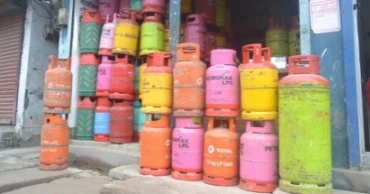
Commerce Minister Khandaker Abdul Muktadir on Thursday said the recent hike in liquefied petroleum gas (LPG) prices at the consumer level is driven by retailers, not importers.
“Importers are not increasing prices. Retail traders are responsible for the price escalation in the market,” the minister told reporters after a meeting with LPG importers at the Commerce Ministry conference room.
The minister said the government discussed pricing and supply issues in detail with importers and noted their concerns.
To prevent market manipulation at the retail level, Muktadir said, monitoring will be intensified through local administrations in the coming days.
The Bangladesh Energy Regulatory Commission (BERC) had initially fixed the retail price of a 12kg LPG cylinder at Tk 1,356, later revising it down to Tk 1,341 on February 24. However, cylinders are currently being sold in the market at Tk 1,700–1,800.
Responding to a question on when LPG would be available at the BERC-set price, the minister said prices would eventually come down to the previous level, though importers have sought a price review. “The ministry will consider the matter based on data and information. No one can run a business at a loss. However, no decision has been taken to increase LPG prices.”
In January, the government allowed the state-run Bangladesh Petroleum Corporation (BPC) to import LPG under a government-to-government (G2G) arrangement to ease supply constraints. But the initiative has yet to yield visible impact in the market due to limited storage capacity.
“The main problem for BPC is the lack of storage facilities. Without adequate storage, it cannot proceed with imports,” the minister said, adding that plans are underway to gradually enhance LPG storage capacity. The government may also utilise storage facilities of private importers.
Although 33 companies have permission to import LPG in Bangladesh, only around 10 are currently active.
The minister said many importers became inactive following the August 5, 2024 developments, creating a supply gap in the market.
Muktadir pointed out that reliance on the spot market instead of future contracts contributes to price volatility.
Importers are additionally facing banking-related complications, he said, expressing the hope that the LPG market would stabilise soon after addressing these issues.
5 months ago
New BB Governor hints at policy rate cut, pledges factory support
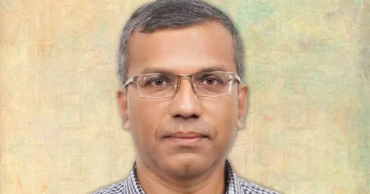
Bangladesh Bank’s newly appointed Governor Mostaqur Rahman on Thursday hinted at a possible cut in the central bank’s policy rate and pledged support to revive factories shuttered amid political unrest under the interim government.
On his first day in office, a day after his appointment, the new Governor held a meeting with deputy governors and executive directors at Bangladesh Bank to outline his vision and priorities.
"The Governor emphasised maintaining macroeconomic stability while steering the economy towards inclusive growth," central bank spokesperson Arief Hossain Khan told journalists.
“The Governor stressed the need to keep macroeconomic stability intact and move towards inclusive growth to generate employment. High interest rates are a major barrier to employment generation and investment. He has addressed the necessary course of action in this regard,” Arief said.
The Governor also assured all-out cooperation to restart industrial units that were closed during the period of political instability. Bangladesh Bank will extend policy support, facilitate required financing and strengthen coordination within the banking sector to help resume production, which is expected to boost employment and output, the spokesperson added.
“Containing inflation and ensuring price stability within consumers’ purchasing capacity will remain a priority, Governor noted the issue of elevated lending rates that are constraining investment will be reviewed for appropriate action,” Arief said.
To ensure good governance at the central bank, Governor instructed that decision-making processes be fully rule-based and non-discriminatory. He also decided to enhance the delegation of authority to expedite operations by empowering officials at different levels with greater decision-making capacity.
Mostaqur joined the central bank as the 14th Governor on Thursday, succeeding Ahsan H Mansur. He is the first full-fledged businessman to assume the top position at the central bank, unlike his predecessors who were career bureaucrats or professional economists.
Responding to questions about his background, the spokesperson said, “A Governor’s academic discipline is not the main issue. He has assumed office through due process. The Governor’s core responsibility is to formulate monetary policy. It is not rocket science. There is a research team to assist him.”
Arief also said the Governor expressed reluctance to engage in regular media briefings. “The Governor holds the highest position in a regulatory body. His words carry weight. He will not brief journalists every day. However, he may speak at formal briefings when necessary.”
The Governor underscored the importance of stronger coordination with other regulatory bodies and the Ministry of Finance to tackle economic challenges through a unified approach, and called for collective efforts to uphold the central bank’s reputation and strengthen the economy.
Later in the afternoon, the Governor visited the Ministry of Finance to meet Finance Minister Amir Khosru Mahmud Chowdhury, marking his first meeting with the minister after assuming office.
5 months ago

BGMEA pushes for quick release of Tk 5,700cr RMG incentives
Bangladesh Garment Manufacturers and Exporters Association (BGMEA) has urged the government to expedite the disbursement of Tk 5,700 crore in cash incentives for the ready-made garment (RMG) sector.
The call came during a meeting with Finance Minister Amir Khosru Mahmud Chowdhury at the Secretariat on Wednesday, a delegation member, led by BGMEA President Mahmud Hasan Khan, said on Thursday.
BGMEA described the ‘fragile state’ of the industry, highlighting stalled incentives, working capital shortages, and hurdles to ease of doing business.
Khan said the cash incentives for FY2025-26 remain trapped in audit procedures by lien banks and Bangladesh Bank, leaving many factories in severe liquidity stress.
He urged a shift from the quarterly release system to immediate disbursement upon application.
The Finance Minister acknowledged the demand’s validity and pledged to modernize and streamline the process for quicker fund release.
BGMEA Vice President Md. Shihab Uddoja Chowdhury raised concerns over loan rescheduling, noting that while banks reschedule loans to manage non-performing loan ratios, they often fail to provide the working capital necessary to keep factories operational.
He proposed a ‘win-win’ approach where banks supply working capital alongside rescheduling. The minister expressed support for the idea.
Describing the garment industry as the ‘backbone of the economy’, Amir Khosru asked BGMEA to submit a detailed list of obstacles and recommendations within a week and assured full policy support for sustainable sector growth.
The delegation included Senior Vice President Enamul Huq Khan, Vice President (Finance) Mizanur Rahman, Vice Presidents Vidya Amrit Khan and Md. Shihab Uddoja Chowdhury, and several board directors.
5 months ago

Mansur out, Mostaqur in; dramatic leadership change at Bangladesh Bank
In a dramatic turn of events marked by confusion and protests, Md Mostaqur Rahman was appointed Governor of Bangladesh Bank within a day, replacing Ahsan H Mansur without prior announcement.
Mostaqur received his appointment on Wednesday and joined office on Thursday, ending intense speculation that began earlier in the day over a possible change in the central bank’s top post.
The 13th governor, Ahsan H Mansur, reportedly had no prior knowledge of his removal.
Talking to reporters while leaving the central bank premises amid pressure from a section of officials and employees, he said, “I know nothing about this process. I hear that I am being removed. I did not resign. Resignation is not an issue; it would take me two seconds to resign.”
Shortly after his departure, Adviser to the Governor Ahsan Ullah was also reportedly forced to leave the central bank.
Within two hours, the Ministry of Finance issued a gazette notification announcing Mostaqur’s appointment.
The ministry, however, did not provide a specific explanation as to why Mansur — who had one year remaining in his contract — was replaced abruptly, or why a businessman was chosen over an economist to lead the central bank.
When asked why a routine institutional process took such a dramatic turn, Finance Minister Amir Khosru Mahmud Chowdhury said, “A new government has taken office. Many things are changing. Accordingly, the governor has been appointed through the normal process.”
A Bangladesh Bank assistant director, speaking on condition of anonymity, said members of the Bangladesh Bank Officers’ Welfare Council had been agitating over various demands.
“There was also significant pressure from the ruling party wing. Their demand was that the new government cancel all contractual appointments at Bangladesh Bank and appoint new individuals. The change in governor appears to be the culmination of that process,” he said.
Mostaqur is the first businessman to be appointed governor, a position traditionally held by senior bureaucrats or economists.
According to Bangladesh Bank, he holds an FCMA degree from The Institute of Cost and Management Accountants of Bangladesh (ICMAB).
Sources at the central bank revealed that Mostaqur has no prior experience in a senior role at any bank or financial institution. He currently serves as the Managing Director of a sweater manufacturing company and is an active member of the Bangladesh Garment Manufacturers and Exporters Association (BGMEA).
Besides, Mostaqur holds affiliations with the Real Estate and Housing Association of Bangladesh (REHAB) and the Association of Travel Agents of Bangladesh (ATAB). He is also a member of the Dhaka Chamber of Commerce and Industry and has previously worked for a period at the Chittagong Stock Exchange.
Mostaqur also served as the 23rd member of the 41-member central election management committee of the Bangladesh Nationalist Party (BNP) for the 13th parliamentary elections.
Speaking to reporters on his first day at office, Mostaqur said, “Let me formally assume charge and begin work. Then everything will be said.”
The leadership change comes at a time when Bangladesh’s foreign exchange reserves have increased from $25 billion to $35 billion following the fall of the Awami League government. The current reserve level is sufficient to cover six months of imports, compared to the three-month benchmark generally considered safe.
After the August 5, 2024 student-led uprising that led to the ouster of the Awami League government, investigations by Bangladesh Bank revealed massive loan irregularities amounting to Tk 6.5 lakh crore. To manage the crisis, five Shariah-based Islamic banks were merged. Mansur, a former official of the International Monetary Fund (IMF), had also initiated efforts to recover laundered funds from abroad.
Economists have expressed concern that appointing a businessman as governor may create potential conflicts of interest.
“The biggest challenge for the new governor will be conflict of interest. How a businessman balances economic management with business interests is now the key question,” said former Bangladesh Bank chief economist Mustafa K Mujeri.
Selim Raihan, executive director of the South Asian Network on Economic Modeling (SANEM), said the appointment raises concerns about the government’s commitment to banking sector reforms.
‘Govt moves to remove BB Governor, appoint successor’
“Appointing a cost accountant and businessman as central bank governor naturally raises questions — is the government truly committed to reforming the banking sector? The central bank is not only a monetary policymaker; it is also the regulator and supervisor of banks. Placing someone with a business background in such a critical role risks potential conflict of interest,” he said.
He pointed out that Bangladesh’s banking sector is already grappling with high non-performing loans, governance deficits and political interference. “In this context, transparency, professional independence and regulatory experience were crucial considerations. Whether the new appointment meets those expectations or sets back reform efforts remains to be seen.”
Mansur had been working to amend the Bangladesh Bank Order to strengthen the central bank’s full autonomy, a move that would restrict the finance ministry’s discretionary power in appointing governors. Economists fear the sudden leadership change could slow down or halt that reform process.
5 months ago

Stocks advance at DSE, CSE in early trading
Trading at the Dhaka Stock Exchange (DSE) and the Chittagong Stock Exchange (CSE) witnessed an upward trend on Thursday, the last working day of the week, with key indices posting notable gains in the first half of the session.
At the DSE, the benchmark DSEX gained 36 points by midday. The Shariah-based DSES index advanced 8 points, while the blue-chip DS30 index rose 14 points.
Most listed companies saw their share prices increase, as 270 issues advanced against 63 decliners, while 56 remained unchanged.
Bangladesh's gross reserves touch $35.03 billion
The turnover at the DSE stood at nearly Tk 500 crore in the first half of trading.
The upbeat trend was also reflected at the CSE, where the overall CASPI index climbed 100 points by midday.
Of the traded issues, 90 advanced, 25 declined and 19 remained unchanged.
The port city bourse recorded a turnover of Tk 7 crore during the same period.
5 months ago