Business
Bangladesh capital market posts year’s highest turnover
Bangladesh’s capital market recorded its highest daily turnover of 2026 on Tuesday, the last trading day before a four-day closure due to the national election and the weekly holidays.
The Dhaka Stock Exchange (DSE) saw transactions worth nearly Tk 800 crore, the highest so far this year. Trading began on a positive note in the morning, with turnover crossing Tk 300 crore within the first two hours. By the end of the session, the total turnover stood at Tk 790 crore.
Previously, the highest turnover this year was Tk 746 crore on February 2. With Tuesday’s performance, the market has crossed Tk 700 crore in daily turnover on three occasions so far in 2026.
All indices posted gains during the day.
The benchmark DSEX surged by 87 points, while the Shariah-based DSES rose by 19 points and the blue-chip DS30 advanced by 27 points.
Stocks surge in early trading at DSE, CSE
Most listed companies ended higher, as share prices of 288 companies increased against declines in 67, while prices of 37 companies remained unchanged.
In the block market, shares of 26 companies worth Tk 23 crore were traded, with Apex Spinning and Knitting Mills Limited topping the list by selling shares worth Tk 8 crore.
Al-Arafah Islami Bank PLC topped the DSE gainers’ chart with a 10 percent rise, while Keya Cosmetics Limited was the day’s worst performer, losing around 5.5 percent.
The Chittagong Stock Exchange (CSE) also witnessed a strong rally, with its overall index CASPI jumping by 241 points.
On the CSE, prices of 166 companies advanced against declines in 24, while 13 issues remained unchanged.
The total turnover at the bourse stood at Tk 9 crore, up from Tk 8 crore in the previous session.
Apollo Ispat Complex Limited emerged as the top gainer on the CSE with a 10 percent rise, while Global Heavy Chemicals Limited ended at the bottom, shedding more than 9 percent.
5 months ago
Stocks surge in early trading at DSE, CSE
Bangladesh’s stock market witnessed a strong rally in the first half of trading on Tuesday, with key indices posting sharp gains on both the Dhaka Stock Exchange (DSE) and the Chittagong Stock Exchange (CSE).
On the third working day of the week, the DSE’s benchmark index DSEX advanced by 54 points.
The Shariah-based DSES index rose by 11 points, while the blue-chip DS30 index gained 13 points.
Most of the listed companies traded higher, as prices of 297 shares increased against 48 that declined, while 47 issues remained unchanged.
The turnover at the DSE crossed Tk 300 crore in the first half of the session.
Stocks trade higher as indices rise at DSE, CSE
Trading also remained buoyant at the CSE, where the overall index CASPI jumped by 145 points.
The share prices of 85 companies rose, while 14 declined and 10 remained unchanged.
The port city bourse recorded a turnover of more than Tk 1.60 crore during the first half of trading.
5 months ago
Asian stocks mostly higher as Japan’s post-election rally lifts markets
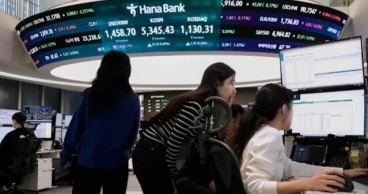
Asian stock markets mostly advanced on Tuesday, led by strong gains in Japan as investor confidence improved following a landmark election victory.
Japan’s benchmark Nikkei 225 jumped 2.6 percent to 57,821.58, setting a new record. The index extended its rally from Monday, when it surged after the ruling party’s landslide win in parliamentary elections cleared the way for Sanae Takaichi to become the country’s first female prime minister. Investors are betting that the new leadership will push ahead with economic reforms that could support growth and corporate earnings.
Elsewhere in the region, Australia’s S&P/ASX 200 rose 0.3 percent to 8,893.60, while South Korea’s Kospi gained 0.6 percent to 5,327.80. Hong Kong’s Hang Seng climbed 1.0 percent to 27,300.00, and China’s Shanghai Composite added 0.2 percent to 4,130.20.
On Wall Street, US stocks closed higher, coming off their strongest session since May, although concerns remain that equity valuations have become stretched after the recent rally. The S&P 500 rose 0.5 percent to 6,964.82, edging closer to its all-time high. The Nasdaq composite gained 0.9 percent, while the Dow Jones Industrial Average was little changed.
Investors continue to watch whether massive spending on artificial-intelligence technology by major companies will deliver sufficient returns. Still, optimism around the sector lifted chipmakers, with shares of Nvidia and Broadcom posting solid gains.
January export earnings dip slightly amid mixed global trends
In the bond market, US Treasury yields were largely steady ahead of key economic data later this week, including reports on employment and inflation. The data could shape expectations for future interest-rate moves by the US Federal Reserve.
Gold prices rose 2 percent to $5,079.40 per ounce amid continued volatility, while silver posted a sharp jump. Bitcoin hovered just below $71,000 after recent swings.
Oil prices were little changed in early Asian trading, and the US dollar edged slightly lower against the Japanese yen, while the euro also weakened modestly against the dollar.
5 months ago
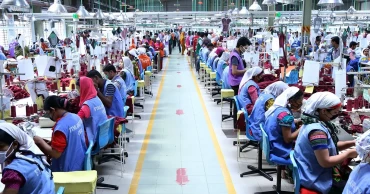
RMG exports down 2.4% y-on-y in first 7 months of fiscal
Bangladesh’s readymade garment (RMG) exports declined by 2.43 percent year-on-year to US$22.98 billion during July–January of fiscal year 2025–26, according to the latest country-wise export data published by the Export Promotion Bureau (EPB).
The European Union (EU) remained the country’s largest export destination for RMG, accounting for 49.35 percent of total exports in the category. Export earnings from the EU stood at US$11.34 billion, marking a 3.98 percent year-on-year decline, said former BGMEA director Mohiuddin Rubel on Monday.
The United States retained its position as the second-largest market. RMG exports to the USA amounted to US$4.47 billion, representing 19.46 percent of total RMG exports, with a marginal year-on-year decrease of 0.03 percent.
According to EPB data, Bangladesh’s total RMG exports to the United States from February 2025 to January 2026 reached US$7,544.34 million. During this period, total national RMG exports stood at US$38,775.15 million, with the US market accounting for 19.46 percent of the total.
Exports to Canada and the United Kingdom posted positive growth during the period. RMG exports to Canada amounted to US$784.17 million, accounting for a 3.41 percent share and showing 4.42 percent year-on-year growth. Exports to the United Kingdom reached US$2.62 billion, representing an 11.38 percent share with 2.55 percent growth.
Exports to non-traditional markets stood at US$3.77 billion, accounting for 16.40 percent of total RMG exports, though registering a 4.99 percent year-on-year decline.
In terms of product categories, the knitwear segment recorded a 3.13 percent decrease in exports, while the woven segment saw a 1.60 percent decline during the period.
5 months ago
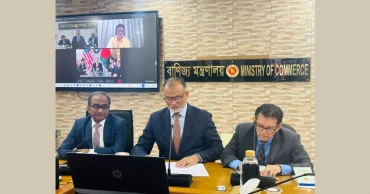
Agreement grants zero tariff access for Bangladeshi RMG using American cotton into US market
Bangladesh and the United States on Monday signed an agreement whereby the US committed to establishing a mechanism for certain textile and apparel goods from Bangladesh using American cotton and man-made fibres to enjoy zero tariff entry into the lucrative US market.
At the same time, the agreement reduces the 'Reciprocal Tariff' rate for all other goods between the two nations to 19%. It was originally set at 37 percent and later reduced to 20 percent in August last year.
On the Bangladesh side, the signatories were Commerce Adviser Sheikh Bashir Uddin and National Security Adviser Khalilur Rahman, and on US side Ambassador Jamieson Greer, US Trade Representative. Negotiations on the agreement spanned over nine months since April last year.
"The agreement marks a historically new level in our bilateral economic and trade relations. It will provide substantially enhanced access of Bangladesh and the US to each other's respective markets," said Commerce Adviser Sheikh Bashir Uddin, who led the Bangladesh side.
"The reduction of reciprocal tariff from 20 percent to 19 percent will grant further advantage to our exporters, while zero reciprocal tariff on specific textile and apparel exports from Bangladesh will give substantially added impetus to our garments sector," said NSA Rahman, who was the lead negotiator of Bangladesh.
The agreement was approved by the Council of Advisers today (Monday) and will be operational once notifications are issued by the two sides.
Present during the signing were Commerce Secretary of Bangladesh Mahbubur Rahman and Assistant US trade Representative Brendan Lynch.
5 months ago
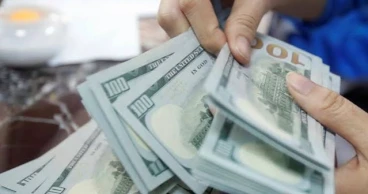
Bangladesh’s forex reserves surge past $34 billion driven by remittance boom
Bangladesh’s foreign exchange reserves have hit a new milestone, crossing $34 billion mark as of Monday (February 9).
This growth is largely attributed to a sustained surge in inward remittances and strategic stability in the foreign exchange market.
Arif Hossain Khan, Executive Director and Spokesperson of Bangladesh Bank, confirmed that by the close of business on Monday, gross reserves stood at $34.06 billion. Under the IMF’s BPM6 calculation method, the reserves are valued at approximately $29.48 billion.
The reserves have shown consistent growth over the past month:
February 9: $34.06 billion (BPM6: $29.48 billion)
February 2: $33.25 billion (BPM6: $28.75B)
January 15: $32.32 billion (BPM6: $28.03 billion)
Expatriates remit Tk 200bn via bKash in 2025
While reserves peaked at an all-time high of $48 billion in August 2021, they faced a sharp decline due to money laundering and economic instability, falling to $20.48 billion at the time of the previous government’s fall.
The current recovery marks a significant turnaround for the nation’s economy.
The "remittance windfall" continues to be the backbone of this recovery. Following a strong December, expatriates sent over $3 billion in January alone. This momentum has carried into February, with $1.03 billion arriving in the first eight days—a significant jump from the $ 54 percent received during the same period last year.
Central bank sources indicate that the current leadership has managed to stabilize the exchange rate at approximately Tk122 per US dollar. Notably, the new governor has not sold a single dollar from the reserves since taking office, allowing the stockpile to grow organically.
5 months ago
Bangladesh capital market ends higher on strong DSE, CSE gains
Bangladesh’s capital market closed on a positive note on Monday, with indices at both the Dhaka Stock Exchange (DSE) and Chittagong Stock Exchange (CSE) posting notable gains amid higher turnover and broad-based price appreciation.
At the DSE, the benchmark DSEX advanced by 82 points. The Shariah-based DSES index rose 11 points, while the blue-chip DS30 gained 33 points.
Gainers dominated the market as prices of 327 companies increased against declines in 37 issues, while shares of 33 companies remained unchanged.
Stocks open week lower at DSE, CSE despite gains in majority shares
The turnover at the premier bourse jumped by about Tk 168 crore to Tk 646 crore, compared to Tk 478 crore in the previous session.
In the block market, shares of 27 companies worth Tk 22 crore were traded, with Asiatic Laboratories Limited accounting for the highest turnover at around Tk 5 crore.
Sharp Industries PLC topped the DSE gainers’ list with nearly a 10 percent rise, while Islami Bank Bangladesh PLC ended as the worst loser, shedding around 7 percent.
The upbeat trend was mirrored at the CSE, where the broad-based CASPI index climbed 109 points.
Out of the traded issues, prices of 130 companies advanced against declines in 41, while shares of 21 companies remained unchanged.
The turnover at the port city bourse also increased to Tk 8 crore from Tk 6 crore in the previous session.
AFC Agro Biotech Limited emerged as the top gainer at the CSE with a 10 percent price jump, while Northern Islami Insurance PLC ended at the bottom, losing 10 percent.
Stocks open higher as DSE, CSE indices gain in first hour
5 months ago

Prolonged tight monetary policy stalling Bangladesh’s growth: DCCI
Dhaka Chamber of Commerce & Industry (DCCI) on Monday expressed deep concern over the central bank’s continued contractionary monetary policy, warning that prolonged tightening is holding back Bangladesh’s economic growth without effectively curbing inflation.
As one of the country’s leading private sector bodies, the DCCI said maintaining a tight monetary stance solely to control inflation has failed to deliver the intended results, while inflicting significant damage on productive economic activities, investment and employment generation.
The chamber noted that private sector credit growth has plunged to a 22-year low, falling sharply to 6.1 percent in December 2025, reflecting acute liquidity constraints, high interest rates and rising borrowing costs.
These factors, it said, are choking entrepreneurship, industrial expansion and job creation.
Private sector investment is also on a declining trend, dropping from 24.18 percent of GDP in FY2023 to 22.48 percent in FY2025, reinforcing concerns that prolonged monetary tightening is discouraging long-term investment decisions.
“The Bangladesh economy cannot grow with a tightly clenched monetary fist,” the DCCI observed.
The chamber pointed out that broad money (M2) growth rose from 7 percent in June 2025 to 9.6 percent by December 2025, indicating monetary expansion and raising questions about the overall effectiveness and consistency of the current tightening policy.
DCCI calls for immediate normalisation of Ctg port operations
Export performance has also come under pressure. Over the last six months, exports recorded consecutive negative growth, plunging to minus 14.25 percent in December 2025, signaling weakening external demand and declining competitiveness amid high financing costs.
DCCI said sustained growth, employment creation and investment revival are not possible under an excessively restrictive monetary regime.
It urged the next elected government to adopt a more pragmatic, growth-supportive policy framework through better coordination between fiscal and monetary policies.
The chamber called for ensuring flexible liquidity availability, reduced borrowing costs and a balanced approach that safeguards macroeconomic stability while supporting economic recovery in the days ahead.
5 months ago
Stocks trade higher as indices rise at DSE, CSE
Trading at both the Dhaka Stock Exchange (DSE) and the Chattogram Stock Exchange (CSE) remained upbeat on Monday, the second working day of the week, as key indices posted notable gains amid a rise in most share prices.
During the first hour of trading, the DSE’s benchmark index, DSEX, advanced by 55 points.
The Shariah-based DSES index gained 6 points, while the blue-chip DS30 index rose by 17 points.
The turnover on the DSE crossed Tk 280 crore in the first hour, with prices of most listed securities moving upward.
Of the traded companies, 323 recorded price gains, while 32 saw declines and 34 remained unchanged.
Stocks advance at DSE, CSE in first half of trading
The bullish trend was also evident at the Chattogram Stock Exchange.
The CSE’s broad-based index, CASPI, climbed by 30 points during the same period.
At the CSE, prices rose for 67 companies, fell for 26, and remained unchanged for 19, while total turnover exceeded Tk 3 crore in shares and units.
5 months ago
Bangladesh stocks retreat on week’s first trading day as turnover drops
Stocks in Bangladesh closed lower on Sunday, the first trading day of the week, with both the Dhaka Stock Exchange (DSE) and Chittagong Stock Exchange (CSE) posting index declines amid a reduced turnover.
At the DSE, the benchmark DSEX shed 5 points by the end of the session. The Shariah-based DSES fell 6 points, while the blue-chip DS30 slipped 3 points.
Market breadth was evenly split, with prices of 162 companies advancing against declines in 162 others, while 69 issues remained unchanged.
The turnover at the DSE dropped by more than Tk 100 crore from the previous session, with shares and units worth Tk 478 crore traded, down from Tk 587 crore on Thursday.
In the block market, shares of 48 companies worth Tk 18 crore changed hands, with Fine Foods Limited topping the list after selling shares worth Tk 4 crore.
Stocks open week lower at DSE, CSE despite gains in majority shares
Kay & Que (Bangladesh) Ltd emerged as the top gainer on the DSE, rising more than 8.5 percent, while DBH First Mutual Fund lost nearly 10 percent to end as the day’s worst performer.
The CSE also ended in the red, with its key index CASPI falling 48 points.
On the port city bourse, prices of 72 companies declined against gains in 66, while 30 issues remained unchanged.
The turnover at the CSE stood at Tk 6 crore, down from Tk 7 crore in the previous session.
Navana CNG Limited topped the CSE gainers’ chart with a 10 percent rise, while Pragati Insurance Limited lost nearly 10 percent to finish at the bottom.
5 months ago