Business
Gold Price Shock: Tk16,330 surge hits Bangladesh overnight
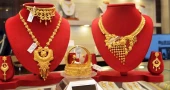
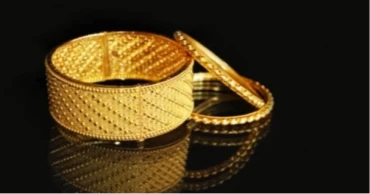
Gold prices in Bangladesh soared again on Tuesday, climbing a total of Tk16,330 per bhori through two separate hikes announced by the Bangladesh Jewellers Association (BAJUS), pushing the price back above Tk260,000 per bhori.
In a morning notification, BAJUS said it had raised the price of 22-carat hallmarked gold by Tk5,424 per bhori. Later in the afternoon, the jewellers’ body announced another hike of Tk10,906 per bhori, taking the total increase for the day to Tk16,330.
Following the two revisions, the price of 22-carat gold has been set at Tk262,090 per bhori, effective immediately.
BAJUS said the latest price adjustment was made considering the overall market situation after an increase in the price of tejabi gold (pure gold) in the local market.
Under the new rates, 21-carat gold will cost Tk250,193 per bhori, 18-carat gold Tk214,443, while gold under the traditional method has been fixed at Tk175,485 per bhori.
In addition to the selling price, buyers will have to pay a 5 percent government-imposed VAT and a minimum 6 percent making charge set by BAJUS. The making charge may vary depending on the design and quality of jewellery.
Just a day earlier, on Monday, BAJUS had reduced gold prices twice, bringing the price of 22-carat gold down to Tk245,760 per bhori.
Gold prices plunge over 9%: what triggered the fall and where prices may head next
With the latest hike, gold prices have been adjusted 24 times so far this year—raised 16 times and reduced eight times.
Alongside gold, silver prices were also revised. The price of 22-carat silver has been fixed at Tk6,532 per bhori after a reduction of Tk175. The new rates set 21-carat silver at Tk6,240, 18-carat at Tk5,365, and traditional silver at Tk4,024 per bhori.
This marks the 16th adjustment of silver prices this year, with prices increased 10 times and reduced six times.
Gold prices drop by Tk6,590 per bhori in Bangladesh
Meanwhile, in the global market, spot gold prices jumped by more than 6 percent in a single day, rising over USD 280 per ounce to trade at around USD 4,900 per ounce.
6 months ago
Stocks advance at DSE, CSE in first half of trading
Bangladesh’s capital market witnessed a positive trend in the first half of trading on Tuesday, with indices rising on both the Dhaka Stock Exchange (DSE) and the Chittagong Stock Exchange (CSE) as the majority of listed companies posted gains.
At the DSE, the benchmark index DSEX advanced by 25 points, while the Shariah-based DSES gained 14 points and the blue-chip index DS30 rose by 4 points.
Out of the total traded issues, share prices of 217 companies increased, while 112 declined and 64 remained unchanged.
The turnover at the DSE crossed Tk 400 crore during the first half of the session.
Meanwhile, at the CSE, the overall index CASPI climbed by 50 points.
Stocks open higher on DSE, CSE
Share prices of 72 companies rose, while 45 declined and 20 remained unchanged at the port city bourse.
The total turnover at the CSE exceeded Tk 3 crore during the period.
6 months ago
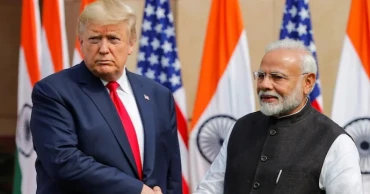
US and India reach trade deal, Trump announces after call with Modi
US President Donald Trump announced on Monday that he has agreed to a trade deal with Indian Prime Minister Narendra Modi. Under the agreement, the US will reduce tariffs on Indian goods from 25% to 18%.
In a post on Truth Social, Trump said India has agreed to eliminate trade barriers entirely and will stop buying Russian oil. The 25% tariff penalty previously imposed over India’s purchase of Russian oil will also be removed.
The announcement comes less than a week after India and the European Union finalized a landmark trade agreement following nearly two decades of negotiations.
Modi expressed his delight over the deal in a post on X, saying he was pleased that an agreement had been reached.
Trump added that the morning phone call with Modi covered both trade and the Russia-Ukraine conflict. He said Modi agreed to increase oil purchases from the US and possibly Venezuela, and at Modi’s request, he immediately consented to the trade deal. This agreement will see India reduce tariffs and non-tariff barriers to zero.
Trump threatens 10% tariff on 8 European countries over Greenland stance
Trump further stated that Modi committed to purchasing more than $500 billion worth of American goods, including energy, technology, agriculture, and coal products.
The trade relationship between the US and India had been strained since August, when the US imposed a 50% tariff on Indian goods, the highest on any Asian country, including a 25% penalty tied to Indian oil imports from Russia.
A White House official confirmed that the Russian oil-linked tariffs will be removed and other tariffs reduced to 18% under the new deal.
Modi thanked Trump for the announcement, saying the cooperation between the two largest democracies will benefit their people and open up significant opportunities for mutually beneficial trade.
Indian exports to the US had fallen sharply after the previous tariffs were applied. The recent India-EU trade deal will also reduce tariffs on a wide range of goods and services and includes a joint security partnership.
#With inputs from BBC
6 months ago
Stocks surge as Bangladesh market turnover tops Tk 700cr in 2026
Bangladesh’s capital market saw a major boost on Monday as the turnover at the Dhaka Stock Exchange (DSE) crossed Tk 700 crore for the first time this year, alongside a broad-based rally in share prices.
The total turnover on the DSE stood at Tk 746 crore worth of shares and units during the session. The previous highest turnover in 2026 was Tk 693 crore, recorded on January 27.
Before that, the turnover last crossed the Tk 700 crore mark on October 7, 2025, when transactions amounted to Tk 787 crore, making Monday’s performance the strongest in nearly four months.
Stocks open higher on DSE, CSE
The benchmark DSEX index jumped 54 points during the day. The Shariah-based DSES advanced 12 points, while the blue-chip DS30 gained 20 points. All three indices rose by more than 1 percent in a single session.
Most stocks ended higher, with prices rising for 215 companies against declines for 107, while 68 issues remained unchanged.
In the block market, shares of 23 companies worth Tk 13 crore were traded, with Fine Foods Limited topping the list at Tk 6 crore.
Islami Bank Bangladesh PLC emerged as the top gainer on the DSE, surging nearly 10 percent, while Meghna PET Industries Limited was the worst performer, shedding around 8 percent.
The rally also extended to the Chittagong Stock Exchange (CSE), where the benchmark CASPI index rose by 111 points.
On the CSE, prices increased for 98 companies, declined for 60, and remained unchanged for 25 issues.
Stocks advance at DSE, CSE as majority of shares gain
The turnover improved to Tk 8 crore, up from Tk 6 crore in the previous session.
People’s Leasing and Financial Services Limited topped the CSE gainers’ chart with a 10 percent rise, while FAS Finance and Investment Limited ended at the bottom, losing 10 percent.
6 months ago
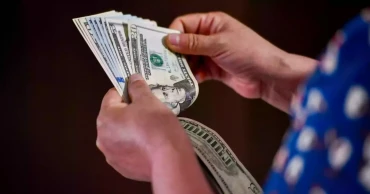
January export earnings dip slightly amid mixed global trends
Bangladesh's export earnings saw a marginal decline of 0.5 percent in January 2026, totaling US $4.41 billion compared to $4.43 billion during the same month last year.
According to the latest data from the Export Promotion Bureau (EPB) released on Monday, the cumulative export earnings for the first seven months (July–January) of the 2025–26 fiscal year fell by 1.93 percent to $28.41 billion.
Despite the slight year-on-year dip, January demonstrated a significant recovery in trade momentum. Compared to December 2025, which saw a sharp 14.25 percent decline in earnings, January posted a double-digit month-on-month growth of 11.22 percent. This upward shift suggests a stabilization of the export sector following several months of consistent contraction.
Read More: Bangladesh's garment exports to Europe exceed €18 billion, growing over 7.5%
The Ready-Made Garments (RMG) sector remains the backbone of the nation's economy, accounting for $22.98 billion of the total July–January earnings. The sector registered a robust 11.77 percent growth over the previous year, reflecting sustained global demand and enhanced competitiveness despite broader economic headwinds.
Performance in other major sectors was mixed.
Growth Leaders: Leather and leather goods, jute and jute products, home textiles, plastic goods, and light engineering products all registered growth on both a year-on-year and month-on-month basis.
Other Sectors: Agro-processed products and frozen fish showed varied trends, struggling to match the steady growth of the apparel sector.
Key Export Destinations:
he United States maintained its status as the top destination for Bangladeshi products, with exports reaching $ 5.21 billion during the July–January period, marking a 1.64 increase.
Read More: Bangladesh exports rise in Dec on monthly momentum, still down from year earlier
United States: Recorded a 3.59 percent year-on-year growth and 2.24 percent month-on-month growth.
Europe: Germany and the United Kingdom followed as the second and third largest markets, earning $ 2.85 billion and $ 2.77 billion, respectively.
Other Markets: Spain and the Netherlands also recorded positive turnarounds, reaffirming strong trade ties with the European Union.
While the overall recovery remains modest due to global trade conditions, the double-digit growth between December and January provides a sense of optimism for exporters.
Analysts suggest that if the current momentum in the RMG and leather sectors continues, the fiscal year may conclude with a stronger performance than the initial months indicated.
6 months ago
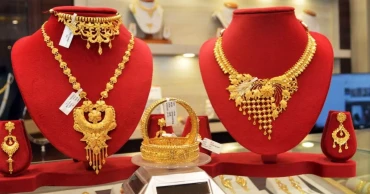
Gold prices plunge over 9%: what triggered the fall and where prices may head next
Gold’s sharp slide—down more than 9 percent in a single session—has rattled global markets and raised a pressing question among investors: will prices sink below the $4,403 mark or stage a recovery?
Spot gold fell to around $4,403 an ounce, marking its steepest one-day decline in decades. The selloff came amid broad weakness across commodities, equities and metals, following the nomination of Kevin Warsh as the next chair of the US Federal Reserve. The move sparked a surge in the US dollar and triggered heavy profit-taking after gold’s recent record highs.
Gold prices drop by Tk6,590 per bhori in Bangladesh
A stronger dollar typically weighs on gold, making the metal more expensive for investors holding other currencies. At the same time, easing geopolitical tensions and tighter trading conditions combined to intensify the downturn.
What drove gold’s steep fall?
Markets reacted swiftly after US President Donald Trump named Warsh, who is widely seen as hawkish on inflation, to lead the Federal Reserve. Expectations of a tougher stance on interest rates lifted the dollar and dampened demand for non-yielding assets like gold.
Spot gold slid more than 9 percent to $4,403.29 per ounce, its sharpest daily fall since 1983. Silver fared even worse, dropping over 13 percent on Monday after plunging 27 percent on Friday. Both metals had hit record highs just days earlier.
Selling pressure accelerated after CME Group raised margin requirements for metal futures, increasing trading costs and forcing many investors to pare back leveraged positions. Analysts said the move led to a rapid unwinding of speculative bets built up during the recent rally, reports The Economic Times.
Gold and silver were sold alongside equities, pointing to a broader market shift as investors reassessed risk. The dollar’s continued strength after Warsh’s nomination added further pressure on precious metals.
Beyond gold: a wider commodities selloff
The downturn spread well beyond bullion markets. Oil prices fell nearly 5.5 percent as signs of easing US-Iran tensions reduced supply concerns. Trump said Iran was in talks with Washington, while Tehran signalled it would not conduct live-fire drills in the Strait of Hormuz.
Gold sees sharpest one-day fall, down Tk15,746 per bhori
Industrial metals also came under heavy pressure. Copper prices slid sharply as demand softened ahead of China’s Lunar New Year holiday, with the most-active contract on the Shanghai Futures Exchange falling 9 percent. Aluminium, nickel and tin also hit limit-down levels.
On the London Metal Exchange, copper dropped nearly 5 percent, while aluminium, zinc, lead, nickel and tin posted steep losses, weighed down by high inventories and subdued buying interest.
Will gold fall further or rebound?
The immediate focus is whether gold will break below the $4,403 level or find support. Analysts say the selloff appears driven more by position unwinding and profit-taking than by a deterioration in fundamentals, suggesting the move could be a correction after an unusually rapid rally.
Outlooks remain divided. Some analysts believe gold could regain strength later in the year if economic risks resurface or expectations around US interest rates shift. For now, however, volatility is likely to persist as markets digest signals on US monetary policy and global growth.
What should investors watch?
Market watchers advise caution in the near term. Movements in the US dollar and signals from the Federal Reserve will be key drivers for gold prices. While some see the recent fall as a healthy correction, others warn that price swings could remain sharp.
7.8 million ounces of new gold resources discovered in Saudi Arabia
Long-term investors may prefer to wait for clearer signs of stability before increasing exposure, while short-term traders are urged to limit leverage amid higher margins and heightened volatility. Diversification, analysts say, remains crucial as markets navigate an uncertain phase.
6 months ago
Stocks open higher on DSE, CSE
Trading at Bangladesh’s stock markets began on a positive note on Monday, with key indices posting gains at both the Dhaka Stock Exchange (DSE) and the Chittagong Stock Exchange (CSE) in the first half of the session.
At the DSE, the benchmark DSEX advanced by 35 points. The Shariah-based DSES index rose by 10 points, while the blue-chip DS30 index also gained 10 points.
Out of the traded issues, prices of 244 companies increased, while 76 declined and 67 remained unchanged.
The turnover at the DSE crossed Tk 400 crore in the first half of the day.
The CSE also witnessed an upward trend, with its overall index CASPI gaining 70 points.
Indices extend gains despite lower turnover at Bangladesh bourses
At the port city bourse, the prices of 67 companies rose against declines in 36, while 23 issues remained unchanged.
The turnover at the CSE stood at over Tk 2.26 crore during the first half of trading.
6 months ago
Gold prices drop by Tk6,590 per bhori in Bangladesh
Gold prices in Bangladesh have been cut by Tk6,590 per bhori, with the new rates taking effect immediately, the Bangladesh Jewellers Association (BAJUS) said on Monday.
In a morning notice, BAJUS said the decision was taken following a decline in the local price of pure gold (tejabi), prompting a review of the overall market situation.
Under the revised rates, a bhori (11.664 grams) of 22-carat hallmark gold will now cost Tk251,184.
The price of 21-carat gold has been fixed at Tk239,754 per bhori, while 18-carat gold will sell at Tk205,520. Gold made under the traditional method has been priced at Tk168,195 per bhori.
In addition to the selling price, buyers will have to pay a mandatory 5 percent government VAT and a minimum 6 percent wage set by BAJUS. The labour charge, however, may vary depending on the design and quality of jewellery.
BAJUS last adjusted gold prices on the night of February 1, when it reduced the price of 22-carat gold by Tk1,925 per bhori to Tk257,774.
So far in 2026, gold prices have been adjusted 21 times in the local market—raised on 14 occasions and reduced seven times.
Despite the fall in gold prices, silver rates have remained unchanged. According to prices set on January 31, 22-carat silver is currently selling at Tk7,290 per bhori.
Why gold prices hit record highs and what triggered the sudden drop
The price of 21-carat silver stands at Tk6,940, while 18-carat silver is priced at Tk5,949 per bhori. Silver made under the traditional method is trading at Tk4,432 per bhori.
Silver prices have been adjusted 14 times so far this year, with increases on nine occasions and reductions on five.
6 months ago
$3.17 billion received in remittances in January, up 45.1 percent y-on-y
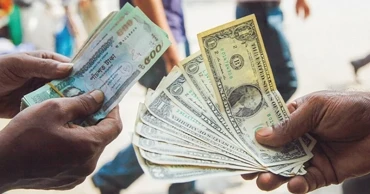
Bangladesh received US $3.17 billion in remittances in January 2026, a growth of 45.1 percent year-on-year.
The expatriates sent inward remittance $2.18 billion in January of 2025, while in January 2026, the volume of remittance is $3.17 billion. It means, Bangladesh received $985 million or 45.1 percent additional remittance in January 2026.
According to data released on Sunday by Arif Hossain Khan, spokesperson for Bangladesh Bank, the country received an average of $102.25 million daily during this period.
The expatriates sent $19.43 billion in seven months till January of fiscal year FY 2025-26, which was 15.96 billion in the previous FY2024-25. This figure marks a significant surge compared to the same period of last year, which saw an inflow of $3.47 billion additional remittance representing an increase by 21.8 percent.
The surge in January follows a record-breaking performance inward remittance in December 2025, which saw $3.23 billion, sent by the expatriates to the country. This was not only the highest monthly total for the current fiscal year but also the second-highest monthly remittance in history.
Monthly remittance breakdown of FY 2025-26.
December: $3.23 Billion (Highest in FY)
November: $2.89 Billion
October: $2.56 Billion
September: $2.69 Billion
August: $2.42 billion
July: $2.47 billion
This upward trend builds on the momentum of the previous FY 2024-25, which set an all-time record with a total of $30.32 billion in remittances.
Economic analysts suggest that the continued growth in formal channel transfers is providing a much-needed boost to the country's foreign exchange reserves and overall macroeconomic stability.
6 months ago
Stocks advance at DSE, CSE as majority of shares gain
The country’s stock markets opened the week on a positive note on Sunday, with key indices rising at both the Dhaka Stock Exchange (DSE) and the Chittagong Stock Exchange (CSE), while prices of most listed companies moved higher.
At the DSE, the benchmark DSEX index gained 39 points by the end of the session.
The Shariah-based DSES advanced 8 points, while the blue-chip index DS30 rose by 10 points.
Out of the traded issues, share prices increased for 168 companies, declined for 162, and remained unchanged for 62.
The turnover on the premier bourse improved, with shares and units worth Tk 626 crore changing hands during the session, up from Tk 550 crore in the previous trading day, an increase of Tk 76 crore.
Stocks open higher on Sunday as indices surge at DSE, CSE
In the block market, shares of 27 companies worth Tk 25 crore were traded, with Dominage Steel Building Systems Ltd accounting for the highest turnover at Tk 8 crore.
Al-Arafah Islami Bank PLC topped the DSE gainers’ list, soaring 10 percent, while The Dacca Dyeing and Manufacturing Company Ltd emerged as the top loser, shedding nearly 10 percent.
The CSE also witnessed an uptrend, as its all-share price index CASPI climbed 110 points.
At the port city bourse, prices rose for 90 companies, fell for 57, and remained unchanged for 27.
The turnover, however, declined at the CSE, with shares and units worth Tk 6 crore traded, compared to Tk 8 crore in the previous session.
Islami Bank Bangladesh PLC topped the gainers’ chart on the CSE, rising by nearly 10 percent, while Singer Bangladesh Ltd ended at the bottom after losing more than 10 percent.
6 months ago