Business
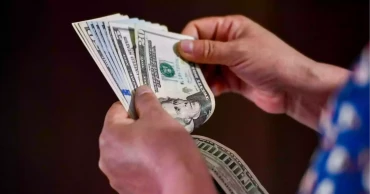
Remittance inflow surges 23.5% to $2.09b in first 21 days of July
The remittance inflow to Bangladesh reached $2.095 billion in the first 21 days of July, marking a robust 23.5 percent year-on-year growth at the beginning of the current fiscal year 2026-27, according to the latest data from Bangladesh Bank.
Bangladeshi Expatriates living in different countries remitted $1.696 billion during the corresponding period (July 1-21) of FY26.
On July 21 alone, Bangladeshis sent home $78 million.
BB allows unlimited royalty remittance for EZ units with BEZA nod
The sustained momentum in inward remittances is expected to further strengthen the country's foreign exchange reserves, relieve pressure on the balance of payments, and support macroeconomic stability in the early months of the new fiscal year.
Central bank officials attribute the strong growth to an increasing preference among non-resident Bangladeshis for legal and formal banking channels, supported by competitive exchange rates and policy measures aimed at facilitating seamless fund transfers.
12 days ago
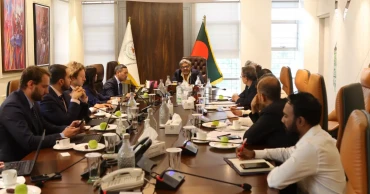
BSEC, IMF mission discuss expanding green bond market in Bangladesh
Bangladesh Securities and Exchange Commission (BSEC) held a meeting with a visiting International Monetary Fund (IMF) technical assistance team on Wednesday, exploring ways to expand green and sustainability bonds in the country's capital market.
BSEC Commissioner Tanwir Habib Rahman led the commission's side at the meeting at BSEC while the IMF delegation was headed by mission team leader Suphachol Suphachalasai.
The discussion centred on developing Bangladesh's green bond, sustainability bond and other thematic bond markets, with both sides also exchanging views on progress in sustainable finance taxonomy, impact reporting, strengthening external review systems, identifying prospective issuers, assessing investor demand, and improving coordination among regulators and development partners.
Participants stressed expanding the capital market's role in strengthening sustainable financing and climate-resilient investment structures in Bangladesh.
The meeting concluded with a productive discussion on capacity building, policy development, and strengthening market infrastructure in line with international best practices.
12 days ago
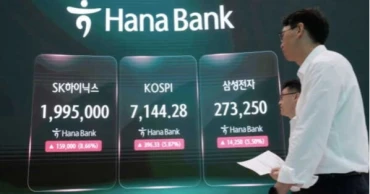
Asian markets mixed as oil prices rise despite Wall Street rally
Asian stock markets ended mixed on Wednesday after a strong performance on Wall Street, as investors weighed gains in technology shares against concerns over rising oil prices and inflation.
Japan's Nikkei 225 slipped 0.2% to close at 66,115.60. Government data showed both imports and exports increased compared with a year earlier, helped by the weaker yen, which boosted the value of trade when converted from US dollars.
Australia's S&P/ASX 200 rose 0.3% to 8,823.00, while South Korea's Kospi gained 0.7% to 6,797.70. Hong Kong's Hang Seng Index fell 1.1% to 24,866.67, and China's Shanghai Composite edged down by less than 0.1% to 3,861.82.
Wall Street closed higher overnight, driven by renewed buying of technology stocks linked to artificial intelligence (AI). The S&P 500 gained 0.9%, the Dow Jones Industrial Average rose 385 points, or 0.7%, and the Nasdaq Composite advanced 1.3%.
AI-related shares rebounded for a second straight session after suffering heavy losses last week amid concerns that their prices had risen too quickly.
Micron Technology jumped 12.2%, building on the previous day's gains after a sharp decline last week. Nvidia also rose 2%, with both companies among the biggest contributors to the S&P 500's advance.
However, higher oil prices continued to worry investors as tensions between the United States and Iran persisted.
In early Wednesday trading, US benchmark crude oil rose $1.67 to $86.01 a barrel, while Brent crude, the international benchmark, climbed $1.84 to $92.85 a barrel.
Stephen Innes, a market analyst and former trader, said higher oil prices pose a particular challenge for Japan, which relies heavily on imported energy.
"A weaker yen and rising crude oil prices are putting extra pressure on the Japanese economy at the same time," he said.
In currency trading, the US dollar was little changed at 163.13 Japanese yen, while the euro strengthened slightly to $1.1409.
Analysts say rising oil prices could push inflation higher again after recent signs of easing. That may prompt the US Federal Reserve and other central banks to keep interest rates higher for longer or raise them further, a move that could slow economic growth and weigh on global stock markets.
12 days ago
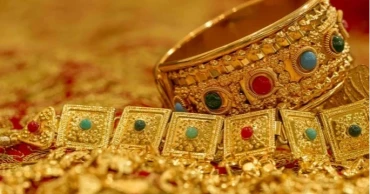
Gold prices rise again in Bangladesh within 24 hours
Bangladesh Jewellers Association (Bajus) has raised the prices of gold for the second consecutive day, pushing the rate of 22-carat gold up by Tk 2,741 per bhori to Tk 2,24,182, inclusive of VAT.
In a notice issued Wednesday morning, Bajus said the revision followed a rise in the price of pure gold in the local market, prompting the fresh adjustment. The new rate came into effect from 10am the same day.
Under the revised pricing, each bhori (11.664 grams) of 21-carat gold will now cost Tk 2,14,093, while 18-carat gold has been set at Tk 1,83,883 per bhori. Traditional gold will sell at Tk 1,50,232 per bhori, the notice said.
Bajus said the new prices will remain effective at all jewellery outlets until further notice, though making charges will continue to apply depending on ornament design.
Since VAT is already included in the selling price of gold and silver ornaments, jewellers cannot charge it separately from customers.
The association added that its existing rules on exchange and repurchase of ornaments, excluding specified VAT, making charges and stone costs, will remain unchanged.
The previous adjustment came on the morning of July 21, when Bajus raised the price of 22-carat gold by Tk 1,633 per bhori to Tk 2,21,441, inclusive of VAT.
So far in 2026, the price of gold has been revised 93 times in the domestic market, increased on 45 occasions, decreased on 47, and adjusted once for VAT.
Alongside gold, the price of silver was also raised.
The rate of 22-carat silver went up by Tk 175 per bhori to Tk 4,782. Similarly, 21-carat silver is now selling at Tk 4,549 per bhori, 18-carat at Tk 3,907, and traditional silver at Tk 2,974 per bhori.
Silver prices have been adjusted 57 times so far this year, with 29 increases and 28 decreases.
12 days ago
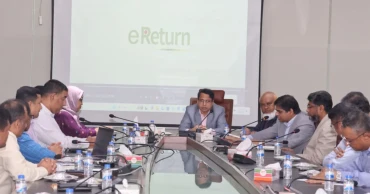
NBR opens online income tax return filing, offers 5% early rebate
The National Board of Revenue (NBR) on Wednesday launched its online income tax return filing service for individual taxpayers for the 2026-27 tax year, urging taxpayers to submit returns early to avail incentives and avoid additional tax.
It also announced that individual taxpayers who submit their returns between July and September for the 2026-27 tax year will receive a 5 per cent rebate on their net payable tax, subject to a maximum benefit of Tk 25,000.
Returns submitted after September will not qualify for the incentive, while returns filed after December will attract additional tax, the NBR said, urging taxpayers to file their returns within the stipulated timeframe.
The revenue authority said the e-Return service has been introduced as part of its efforts to make tax services easier, faster and more transparent.
According to the NBR, the online return filing system has gained widespread popularity since its introduction in 2021. During the 2025-26 tax year, a record nearly 4.7 million individual taxpayers successfully submitted their income tax returns through the e-Return platform.
The NBR has also made online filing mandatory for all regular individual taxpayers through a special order.
However, paper returns will still be accepted from taxpayers aged 65 years or above, physically challenged or persons with disabilities upon submission of supporting documents, Bangladeshi taxpayers residing abroad, representatives filing returns on behalf of deceased taxpayers and foreign nationals working in Bangladesh.
In addition, individual taxpayers who are unable to register on the e-Return system due to technical or registration-related problems may submit paper returns with approval from the Additional or Joint Commissioner of Taxes concerened.
Through the NBR’s e-Tax platform, taxpayers can pay taxes online using bank transfers, debit or credit cards, bKash, Rocket, Nagad and other mobile financial services. They will also be able to obtain instant acknowledgement receipts and income tax certificates after successfully filing their returns.
The NBR said its officials will provide assistance through the call centre (09643717171) and other electronic channels during office hours on working days to resolve any issues related to online return filing.
12 days ago
Central bank revises Basel-III NSFR reporting framework for banks
Bangladesh Bank (BB) has revised the reporting framework for Net Stable Funding Ratio (NSFR) under the Basel III liquidity regime to align regulatory disclosures with the updated accounting treatment of central bank liquidity operations.
The Supervisory Data Management and Analytics Department (SDAD) of the central bank issued a circular letter on Tuesday to managing directors and chief executive officers of banks, outlining the amendments.
According to the circular signed by SDAD Director Md. Abdul Mannan, the revised reporting template comes into effect with the reporting period ending June 30, 2026.
Key Revisions to the NSFR Framework
The central bank explained that the review was necessitated by the revised Open Market Operations (OMO) guidelines issued on February 26, 2026 (DMD Circular No. 02). Under the updated OMO framework, liquidity management operations—including Central Bank Repo, Standing Lending Facility (SLF), and Islamic Banks Liquidity Facility (IBLF)—are now recognized as collateralized borrowings rather than outright sale transactions.
To ensure consistency and enhance the risk sensitivity of NSFR reporting, Bangladesh Bank has amended the guidance note as follows:
Collateralized Borrowing from Central Bank: A new component titled "Collateralized Borrowing/Financing from Central Bank" has been added under Serial No. 7 to explicitly capture Central Bank Repo, SLF, IBLF, Assured Repo, and similar borrowings.
Interbank Repo: Interbank Repo transactions are now formally included under Serial No. 6 ("Amount owed to financial institutions").
Government and Central Bank Securities: Previous debt securities categories (Serial Nos. 12 and 13) have been replaced by "Unencumbered Marketable Government and Central Bank Securities" (Serial No. 13) and "Encumbered Marketable Government and Central Bank Securities" (Serial No. 14). These will be reported at amortized cost value for Held to Maturity (HTM) securities and market value for Held for Trading (HFT) securities.
Exposures to Finance Companies and Foreign FIs: Reporting classifications for loans and deposits in other financial institutions have been updated to "Loans/Investments to, and deposits in, other Finance Companies in Bangladesh" (Serial No. 22) and "Loans/Investments to, and deposits in, Banks and other Financial Institutions outside Bangladesh" (Serial No. 23).
Implementation Instructions
Bangladesh Bank instructed all scheduled banks to prepare and submit their NSFR returns using the newly enclosed reporting template (Annexure-I) starting from the period ended June 30, 2026.
The central bank clarified that all other provisions, reporting components, and instructions under the original NSFR guidelines issued via DOS Circular No. 01 dated January 01, 2015, remain unchanged and will continue to remain in force.
13 days ago
Sammilito Islami Bank depositors demand roadmap to return funds with profit, cancellation of 'haircut'
Affected depositors of the five merged banks under the Sammilito Islami Bank staged demonstrations in the capital on Tuesday, demanding the immediate issuance of an official gazette notification cancelling the "haircut" mechanism on their deposits and a clear roadmap to return full funds, including accrued profits.
The depositors gathered in front of the Bangladesh Bank headquarters and then marched towards the Jatiya Press Club. From there, a five-member delegation went to the Secretariat and submitted a memorandum to Finance and Planning Minister Amir Khosru Mahmud Chowdhury.
BB indecisive over withdrawing ‘haircut’ on Sammilito Islami Bank profits, depositors in limbo
According to the depositors, though the cancellation of the "haircut" scheme was announced in Parliament during the budget discussion on July 8, an official gazette notification has not yet been issued.
They demanded the immediate publication and implementation of the notification.
In their memorandum, the depositors urged the authorities to announce a clear roadmap for returning all types of matured deposits, including Fixed Deposit Receipts (FDR), Deposit Pension Schemes (DPS), and Monthly Term Deposit Receipts (MTDR), along with accrued profits.
They also called for scrapping the proposal to recalculate deposit profits and demanded the restoration of regular banking operations similar to other scheduled banks.
The depositors expressed deep frustration, stating that they have been unable to withdraw their own money for nearly two years.
This has plunged thousands of families into severe financial distress, leaving them unable to cover essential daily expenses, medical treatments, and educational costs for their children, they said.
The depositors urged the government to issue immediate directives to the BB governor, as well as the chairman and newly appointed managing director of Sammilito Islami Bank, to facilitate the prompt return of deposits and refund the money provisioned under the "haircut."
Highlighting the scale of the crisis, they said the situation directly affects around 76 lakh account holders and their nearly 3 crore family members.
The depositors asserted that fulfilling these demands will restore customer confidence in Sammilito Islami Bank and allow normal transactions to resume.
They warned that if the government and Bangladesh Bank fail to take swift and effective action, they will be forced to announce tougher protest programmes.
13 days ago
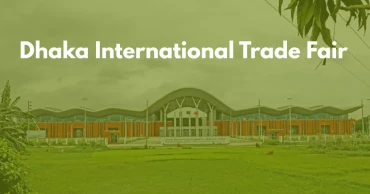
31st Dhaka Int’l Trade Fair likely to open on January 1 next
The 31st Dhaka International Trade Fair (DITF) is likely to begin on January 1, 2027 as the Export Promotion Bureau (EPB) on Tuesday set a tentative date for the annual event.
The decision was taken at the 149th board meeting of the EPB, held at its conference room with Commerce Minister Khandakar Abdul Muktadir in the chair.
The meeting also approved a steering committee for organising the DITF 2027, alongside the tentative start date of January 1.
DITF renamed to DTF to combat deception by local agents
In addition, the board decided in principle to lease out the fair venue, the Bangladesh-China Friendship Exhibition Centre in Purbachal.
The meeting approved the international trade fair calendar for the 2026-27 fiscal year to be managed by the EPB. Under the calendar, Bangladesh has been approved to participate in 50 international fairs across 27 countries, focusing on 12 priority sectors.
Commerce Secretary Md Ataur Rahman Khan, EPB Vice Chairman Mohammad Hasan Arif, and Additional Secretary (FTA) of the Commerce Ministry Ayesha Akther, along with EPB board members, were present at the meeting.
13 days ago
Govt to transform BFTI into strong national trade think tank: Minister Muktadir
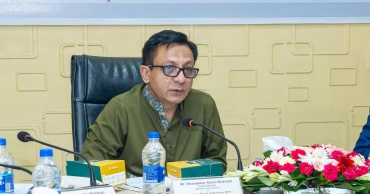
Bangladesh Foreign Trade Institute (BFTI) will be developed into a strong national think tank for international trade, trade law, economic research and skills development, Commerce Minister Khandaker Abdul Muktadir said on Tuesday.
Speaking as chair of the 63rd meeting of the institute's Board of Directors at the BFTI conference room, the minister said there is no alternative to in-depth research on the global trading system, international markets and economic shifts in order to safeguard the country's future commercial interests.
Reforms underway to turn leather sector into $10b export industry: Muktadir
He said BFTI is being strengthened further under a new plan with this goal in mind. "We have no shortage of the necessary funding, what was needed was long-term direction. That work has now begun.”
The minister said BFTI would play a key role in building a skilled workforce capable of interpreting international trade agreements, rules and legal provisions.
The institute will conduct regular research on market conditions, trade trends, potential risks and economic changes in major global economies, including China, India, the United States, Canada and the European Union, the minister said, adding that such research is expected to support both government policymaking and private sector business decisions.
Outlining plans to launch international-standard training programmes, the minister said specialised training on trade, trade law and economic policy would be introduced for government officials and private sector representatives in collaboration with renowned universities worldwide. “A skilled network of trade law experts from both public and private sectors will also be formed.”
The meeting approved the appointment of Mostafa Abid Khan as the new Chief Executive Officer of BFTI.
It was also informed that the Bangladesh Trade and Tariff Commission (BTTC) is carrying out several research and training activities to strengthen the country's trade policy and export capacity.
These include a review of existing laws and regulations, a study on the impact of anti-export bias on export diversification, an analysis of challenges related to anti-dumping, countervailing and safeguard measures, and research on opportunities to expand export markets for Bangladesh's leather sector.
Additionally, research is under way for the Bangladesh Competition Commission (BCC) on the competitive landscape of the country's air ticketing market, while training programmes on trade policy review, RJSC registration and returns filing, and tax-VAT-customs and import-export procedures continue.
The meeting further noted that BFTI, in a joint initiative with BRAC University, has taken steps to launch a Post Graduate Diploma (PGD) in International Trade and Business.
In parallel, BFTI is expanding its research and capacity-building activities through partnerships with UNDP, SANEM and the Institute of Economic Reporters' Forum (IERF).
13 days ago
Asian markets rebound as South Korea and Japan recover after AI stock sell-off
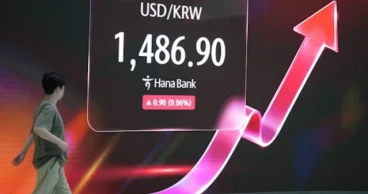
Asian stock markets mostly closed higher on Tuesday, with South Korea and Japan recovering some of the losses suffered in recent sessions due to heavy selling of artificial intelligence (AI)-related shares.
U.S. stock futures moved slightly higher, while oil prices fell.
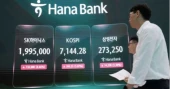
South Korea's Kospi index rose 4.7% to 6,821.41 after dropping 4.5% a day earlier. Technology stocks led the recovery, with Samsung Electronics climbing 7.4% and memory chip maker SK Hynix gaining 6.4%.
Despite a decline of more than 20% over the past month as investors locked in profits amid concerns over a possible AI investment bubble, the Kospi remains up more than 50% so far this year.
Japan's Nikkei 225 gained 2.8% to 65,926.41 after reopening following Monday's public holiday, recovering part of last week's losses.
Among major gainers, Kioxia Holdings surged 15.9%, chip testing equipment maker Advantest rose 6.9%, SoftBank Group advanced 6.1%, and Tokyo Electron added 1.3%.
Taiwan's Taiex index climbed 3.6%, supported by a 2.8% rise in Taiwan Semiconductor Manufacturing Co. (TSMC), the world's largest contract chipmaker.
Elsewhere, Hong Kong's Hang Seng Index edged up less than 0.1% to 25,150.75, while China's Shanghai Composite Index rose 0.6% to 3,819.66. Australia's S&P/ASX 200 added 0.1%, while India's Sensex slipped 0.1%.
Oil prices eased after Monday's gains. Brent crude, the global benchmark, fell 0.7% to $88.63 a barrel, while U.S. benchmark crude dropped 0.3% to $82.24 a barrel.
Investors continued to watch developments in the Middle East after Iran reportedly attacked another tanker in the Strait of Hormuz, a vital route for global oil and gas shipments. The United States also launched fresh strikes on Iran for a tenth consecutive night, while Tehran continued retaliatory attacks targeting U.S. allies in the region.
Iran's interior minister visited Pakistan, which has been acting as a mediator, for talks aimed at easing tensions, although no breakthrough has been announced.
Analysts at ING said there were some signs of possible de-escalation between the United States and Iran, but warned that major differences remain. They also said attacks by Yemen's Iran-backed Houthi rebels on shipping linked to Saudi Arabia have increased concerns over global oil supplies.
On Wall Street, the S&P 500 fell 0.2% on Monday, while the Dow Jones Industrial Average dropped 0.6%. The Nasdaq Composite slipped by less than 0.1%.
Several major AI and semiconductor companies still posted gains. Nvidia rose 0.2%, Micron Technology gained 1.9%, Broadcom climbed 2%, and Advanced Micro Devices (AMD) advanced 1.6% after expanding its AI partnership with Microsoft.
In currency trading, the U.S. dollar was little changed at 162.48 Japanese yen, while the euro remained steady at $1.1414.
14 days ago