Business

Expatriates remit Tk 200bn via bKash in 2025
Expatriates sent Tk 200 billion in remittances to the bKash accounts of their loved ones in Bangladesh in 2025.
A total of 4.1 million bKash accounts received these remittances, almost double the number recorded in the previous year, according to a company handout.
“With the assurance of sending money safely through formal channels, along with a convenient and instant transfer experience, bKash continues to strengthen its position as a trusted platform for both remittance senders and receivers,” the handout said.
Read More: Bangladesh sees remittance surge to $2.71 billion in January
Expatriates sent a record amount of remittance to Bangladesh in 2025 - equivalent to nearly USD 33 billion, which is 22 percent higher than 2024. Meanwhile, remittance sent through MFS channels saw more than 90 percent growth during the same period.
The use of MFS channels like bKash for sending remittances has grown significantly due to their ease of use and instant transfer capability.
Currently, expatriates can directly send remittances to their loved ones’ bKash account through 135 international MTOs from over 170 countries around the world that get settled at 27 top commercial banks in the country. Additionally, they are receiving a government incentive of Tk 25 per thousand.
Read More: Remittances surpass $2bn in 18 days of Jan; another $3bn-month within sight!
To make remittance tracking easier and more convenient, the bKash app now includes a “Remittance Statement” feature. This allows recipients to review their remittance history and download detailed statements whenever needed, which is also helpful for filing income tax returns.
Customers can cash out their remittance from nearby agent points as well as from over 2,500 ATMs across the country. At ATMs, recipients can withdraw money at a cost of only Tk 7 per thousand.
Besides, recipients of remittance can now open DPS accounts in four banks and one financial institution directly from the bKash app.
They can also use their received remittance for various transactions, including utility bill payments, educational institution fees, and shopping payments.
6 months ago
Indices extend gains despite lower turnover at Bangladesh bourses
Stock indices at both the Dhaka Stock Exchange (DSE) and the Chittagong Stock Exchange (CSE) extended their gains on Wednesday, marking the second consecutive day of rise in the country’s capital market, despite a decline in overall turnover.
At the DSE, the benchmark index DSEX advanced by 34 points. Among the other indices, the Shariah-based DSES rose by 4 points, while the blue-chip DS30 gained 16 points.
Prices, however, fell for most listed companies at the DSE, as 191 issues closed lower against 134 gainers, while prices of 64 shares remained unchanged.
The turnover eased on the fourth trading day of the week following Tuesday’s highest transaction of the year. Shares and units worth Tk 633 crore were traded on the DSE, down from Tk 693 crore in the previous session.
In the block market, shares of 33 companies worth Tk 21 crore changed hands, with Trust Bank PLC accounting for the highest turnover of about Tk 4 crore.
Pubali Bank PLC topped the DSE gainers’ chart with its price rising more than 7 percent, while FAS Finance and Investment Limited ended as the worst loser, shedding over 10 percent.
The CSE also saw a positive close, with its broad-based index CASPI rising by 114 points.
At the port city bourse, prices increased for most issues as 86 companies advanced against 78 decliners, while 23 issues closed unchanged.
The total turnover at the CSE stood at Tk 8 crore, down from Tk 13 crore in the previous trading session.
Silva Pharmaceuticals Limited emerged as the top gainer at the CSE, jumping nearly 10 percent, while Phoenix Finance 1st Mutual Fund closed at the bottom of the chart after losing more than 9 percent.
6 months ago
Capital markets open higher as DSE, CSE indices gain
Bangladesh’s capital markets opened on a positive note on Wednesday, with benchmark indices of both the Dhaka Stock Exchange (DSE) and the Chittagong Stock Exchange (CSE) registering gains in early trading.
On the fourth working day of the week, the DSE’s benchmark index, DSEX, rose by 33 points.
The Shariah-based index DSES gained 5 points, while the blue-chip index DS30 advanced by 15 points.
Out of the traded issues on the DSE, prices of 189 companies increased, while 114 declined and 81 remained unchanged.
Capital markets surge at DSE with year’s highest turnover
The turnover on the premier bourse crossed Tk 290 crore in the first half of the session.
The CSE also witnessed an upward trend, with its overall index CASPI climbing 86 points.
On the port city bourse, share prices of 67 companies moved up, 30 declined and 17 remained unchanged.
The total turnover on the CSE stood at over Tk 2.4 crore during the first half of trading.
6 months ago

Gold hits record high in Bangladesh as prices jump Tk 7,348 per bhori
Gold prices in Bangladesh surged to an all-time high on Wednesday, with the Bangladesh Jewellers Association (BAJUS) raising the price by Tk 7,348 per bhori, citing an increase in the local market price of pure gold.
According to a BAJUS notification issued in the morning, the price of 22-carat gold has been fixed at Tk 269,788 per bhori (11.664 grams), the highest ever in the country’s history.
The new rate came into effect immediately.
BAJUS said the latest adjustment was made after reviewing the overall market situation, particularly the rise in the price of tejabi gold (pure gold) in the local market.
Under the revised rates, the price of 21-carat gold has been set at Tk 257,483 per bhori, 18-carat gold at Tk 220,741 per bhori, and traditional method gold at Tk 181,725 per bhori.
Gold price skyrockets to Tk262,440 per bhori overnight in Bangladesh
In addition to the selling price, buyers will have to pay a mandatory 5 percent government VAT and a minimum 6 percent making charge set by BAJUS. However, the making charge may vary depending on the design and quality of the jewellery.
BAJUS last revised gold prices on January 26, when it increased the price by Tk 5,249 per bhori, setting the price of 22-carat gold at Tk 262,440 — which had remained the previous record high.
With the latest revision, gold prices have been adjusted 15 times so far this year, including 12 increases and three reductions.
Meanwhile, gold prices continue to soar in the global market. Spot gold prices have crossed $5,200 per ounce, marking a series of new records.
Gold price jumps Tk 6,299 per bhori in Bangladesh after brief cut
According to spot market reports, gold prices have risen by around 20 percent in the first month of the year alone, driven mainly by a weakening US dollar, as investors increasingly turn to gold as a safe-haven asset amid global uncertainties.
6 months ago

Capital markets surge at DSE with year’s highest turnover
The Dhaka Stock Exchange (DSE) witnessed a strong rally on Tuesday, the third trading day of the week, as all key indices jumped sharply and turnover climbed to the highest level so far this year.
The benchmark DSEX index advanced 59 points during the day. The Shariah-based DSES gained 12 points, while the blue-chip DS30 rose 26 points.
Most stocks closed higher, with prices of 249 companies increasing against declines in 83, while shares of 59 companies remained unchanged.
Read More: Stocks mixed at midday: DSE slips, CSE gains
The turnover at the DSE stood at Tk 693 crore worth of shares and units, marking the highest single-day transaction in 2026. Previously, the year’s highest turnover of Tk 669 crore was recorded on January 20.
In the block market, shares of 28 companies worth Tk 32 crore were traded, with telecom operator Grameenphone topping the list at Tk 10 crore.
Islami Bank Bangladesh PLC emerged as the top gainer on the DSE, rising nearly 10 percent, while FAS Finance and Investment Limited lost nearly 10 percent to become the day’s worst performer.
The Chittagong Stock Exchange (CSE) also closed higher, with its broad-based CASPI index climbing 101 points.
Read More: Stocks end lower at DSE, CSE as most shares decline
On the port city bourse, prices of 103 companies advanced, while 47 declined and 28 remained unchanged.
The turnover at the CSE increased significantly to Tk 13 crore, up from Tk 4 crore in the previous session.
ADN Telecom Limited topped the gainers’ list on the CSE with a rise of nearly 10 percent, while FAS Finance and Investment Limited again ended as the top loser, shedding around 10 percent.
6 months ago

Bangladesh sees remittance surge to $2.71 billion in January
Remittance inflows to Bangladesh have surged in January, reaching $2.71 billion in the first 26 days of the month, data from Bangladesh Bank show.
According to Arif Hossain Khan, spokesperson for the central bank, the country received an average of $104.2 million per day during this period.
The figures mark a significant jump from the same period last year, when Bangladesh received $1.79 billion in remittances. The growth underscores a notable increase in expatriate income sent through formal channels.
On January 26 alone, expatriates remitted $88 million, Arif noted. For the current fiscal year 2025-26 (July 2025–Jan 26, 2026), total remittances have reached $18.97 billion, reflecting a 21.9% year-on-year increase.
Bangladesh’s remittance soars 56.3% in first 17 days of January
The January surge builds on a record-breaking December 2025, when $3.23 billion flowed into the country, the highest monthly total of the current fiscal year and the second-highest monthly remittance in history.
Monthly remittance inflows for FY 2025-26 are as follows:
· December: $3.23 billion (highest in FY)
· November: $2.89 billion
· October: $2.56 billion
· September: $2.69 billion
· August: $2.42 billion
· July: $2.47 billion
This upward trend continues the momentum of FY 2024-25, which set a record with $30.32 billion in total remittances.
Bangladesh remittance hits record $17.17 billion in 6 months as inflow surges
Economic analysts say the sustained growth in formal channel transfers is providing a vital boost to Bangladesh’s foreign exchange reserves and supporting overall macroeconomic stability.
6 months ago
Stocks surge as DSE, CSE trade higher on broad-based gains
Trading at both the Dhaka Stock Exchange (DSE) and the Chittagong Stock Exchange (CSE) remained upbeat on Tuesday, as key indices posted strong gains amid a rise in the majority of listed securities.
In the first half of the session, the benchmark DSE Broad Index (DSEX) jumped 64 points.
The Shariah-based DSES advanced 12 points, while the blue-chip DS30 index climbed 24 points.
Most stocks traded higher at the DSE, with share prices of 282 companies gaining, against 57 decliners, while 48 issues remained unchanged.
The turnover at the exchange crossed Tk 400 crore during the first half of trading.
The upbeat trend was also visible at the CSE; overall index, CASPI, rose by 88 points in the same period.
Read More: Stocks rebound at DSE despite broad price declines
At the CSE, the prices of 68 companies moved up, while 28 declined and 15 remained unchanged.
The trading volume at the port city bourse exceeded Tk 8 crore in the first half of the session.
6 months ago
U.S. stocks control higher as gold sets a fresh record and the dollar weakens again
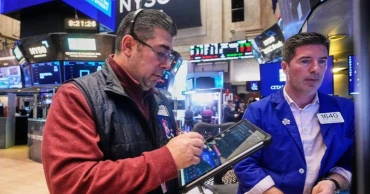
U.S. stock markets edged higher on Monday, even as other asset classes saw sharper movements, highlighted by gold prices surging to another record.
The S&P 500 gained 0.5%, recovering from losses recorded last week. The Dow Jones Industrial Average rose 313 points, or 0.6%, while the Nasdaq composite advanced 0.4%.
Shares of Baker Hughes jumped 4.4% after the company reported quarterly profits that exceeded analysts’ expectations. The energy technology firm said strong demand for liquefied natural gas continued to drive its performance.
CoreWeave shares climbed 5.7% after Nvidia announced a $2 billion investment in the company and said it would support the expansion of CoreWeave’s artificial intelligence facilities by 2030. The factories rely on Nvidia chips to boost AI adoption. Nvidia’s own shares slipped 0.6%.
USA Rare Earth surged 7.9% after the company said it secured $277 million in federal funding from the U.S. government to support production of heavy rare earths, minerals and magnets. The Trump administration also agreed to a proposed $1.3 billion loan, while the company raised an additional $1.5 billion from private investors.
Much of the broader Wall Street session remained subdued, including uneven trading among airline stocks after a winter storm forced the cancellation of thousands of flights across large parts of the United States. Delta Air Lines slipped 0.7%, while Southwest Airlines edged up 0.2%.
Read More: Wall Street tumbles as Trump threatens tariffs on eight European nations
Overall, the S&P 500 advanced 34.62 points to 6,950.23. The Dow Jones Industrial Average gained 313.69 points to 49,412.40, and the Nasdaq composite rose 100.11 points to 23,601.36.
Stronger momentum was seen in precious metals. Gold prices jumped 2.1% and briefly crossed $5,100 an ounce for the first time, setting a new record. Silver posted an even sharper move, ending 14% higher.
Demand for precious metals has climbed as investors seek safer assets amid tariff threats, persistent inflation, political tensions and rising global debt. Fresh concerns followed President Donald Trump’s warning of a 100% tariff on Canadian goods if Canada signs a free trade agreement with China.
The U.S. dollar continued to weaken against major currencies, while the Japanese yen surged on expectations of possible market intervention. More volatility may lie ahead as the Federal Reserve prepares to announce its interest-rate decision on Wednesday, alongside key earnings reports from major U.S. companies.
6 months ago
Gold price skyrockets to Tk262,440 per bhori overnight in Bangladesh
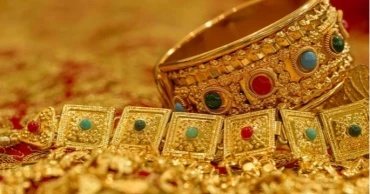
Gold prices in Bangladesh have climbed again within 24 hours, with the Bangladesh Jewellers Association (BAJUS) announcing a fresh hike on Monday that has pushed prices to a new all-time high.
In a notification issued late night, BAJUS said the price of 22-carat gold has been increased by Tk5,249 per bhori, fixing the new rate at Tk262,440, the highest ever in the country’s history.
The jewellers’ body said the decision was taken following an increase in the price of pure gold (tejabi gold) in the local market.
The revised prices will come into effect from Tuesday.
Under the new rates, 21-carat gold will sell at Tk250,484 per bhori, 18-carat gold at Tk214,734 per bhori, while gold made under the traditional method has been priced at Tk176,593 per bhori.
Buyers will have to pay an additional 5 percent VAT set by the government and a minimum 6 percent making charge fixed by BAJUS on the selling price.
Gold price jumps Tk 6,299 per bhori in Bangladesh after brief cut
However, making charges may vary depending on the design and quality of jewellery.
Earlier, on January 25, BAJUS last adjusted gold prices, raising the price of 22-carat gold by Tk1,574 to Tk257,191 per bhori, which was then the highest on record.
With the latest adjustment, gold prices have been revised 14 times so far in 2026 — increased on 11 occasions and reduced three times.
Alongside gold, BAJUS has also raised silver prices. The price of 22-carat silver has been increased by Tk525 per bhori to Tk7,757, marking the highest silver price in the country’s history.
According to the new rates, 21-carat silver will sell at Tk7,407 per bhori, 18-carat silver at Tk6,357 per bhori, while traditional silver has been priced at Tk4,782 per bhori.
So far this year, silver prices have been adjusted 11 times in the domestic market, with eight increases and three reductions.
6 months ago
Stocks rebound at DSE despite broad price declines
Dhaka Stock Exchange (DSE) rebounded on Monday after an early slump, with key indices closing higher, although prices of most listed companies ended the session lower.
The benchmark DSEX index gained 8 points by the end of trading. The Shariah-based DSES advanced 4 points, while the blue-chip DS30 rose by 2 points.
Despite the index gains, market breadth remained negative. Of the traded issues, prices fell for 189 companies, rose for 116, while 85 issues remained unchanged.
The turnover declined further, with total transactions amounting to Tk 492 crore, down from Tk 526 crore in the previous session.
In the block market, shares of 23 companies worth Tk 20 crore were traded. Fine Foods Limited topped the list with block trades worth Tk 6 crore.
Stocks mixed at midday: DSE slips, CSE gains
Pragati Life Insurance PLC emerged as the top gainer on the DSE, soaring nearly 10 percent, while FAS Finance and Investment Limited ended as the worst loser, shedding around 9.5 percent.
The Chittagong Stock Exchange (CSE) also closed higher, with its benchmark CASPI index adding 43 points.
However, similar to the DSE, most issues on the CSE ended lower. Prices declined for 74 companies, rose for 61, and remained unchanged for 31.
The turnover at the CSE dropped sharply to Tk 4 crore, compared to Tk 9 crore in the previous trading day.
DSE, CSE end week’s first session in red
IFL Islamic Mutual Fund-1 topped the CSE gainers’ chart with a 10 percent rise, while Tallu Spinning Mills Limited hit the floor, losing 10 percent.
6 months ago