Business
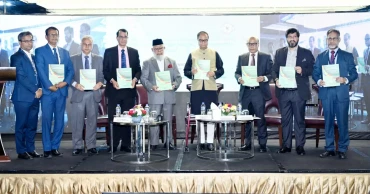
Bangladesh Bank to curb large corporate loans, boost bond market: Governor Dr. Mansur
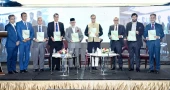
Bangladesh Bank Governor Dr. Ahsan H. Mansur on Monday announced a strategic plan to reduce large-scale corporate lending by banks as part of a broader effort to contain defaulted loans and develop the country's bond market.
Speaking at a seminar titled ‘Bond Market Development in Bangladesh: Challenges and Recommendations’ at the Renaissance Dhaka Gulshan Hotel, the Governor emphasized that corporate entities will be encouraged to decouple from traditional bank financing for large projects.
Governor Mansur reaffirmed that the central bank will strictly enforce the ‘Single Borrower Exposure Limit’, which restricts a bank from lending more than 25 percent of its total capital to a single client.
Funded Loans will be capped at 15 percent of capital. Non-Funded Loans will be capped at 10 percent of capital.
Limits will remain flexible for green financing, including the power and energy sectors.
The Governor described this restriction as a "push factor" designed to drive corporate houses toward the bond market for their long-term financing needs.
Speaking in the seminar, Bangladesh Securities and Exchange Commission (BSEC) Chairman Khondoker Rashed Maqsood noted that easy access to bank loans has historically discouraged corporates from entering the capital market.
He identified long-term bank lending as a primary driver of the rising volume of non-performing loans (NPLs) in the country.
"The economy will be shifted from bank-dependency to capital market-dependency," Governor Mansur stated, adding that while the central bank is currently leading the initiative, full regulatory control of the bond market will eventually transition to the capital market authorities.
To make bond issuance more attractive, the central bank and BSEC are working to reduce the time and cost required to issue bonds, provide attractive incentives for investors and conduct ongoing research to align the market with international standards.
The seminar, moderated by Deputy Governor Habibur Rahman, featured high-level panel discussions. Notable participants included Finance Secretary Khairuzzaman Mozumder, ICC Bangladesh President Mahbubur Rahman, DSE Chairman Mominul Islam, and senior executives from Pran-RFL Group and City Bank.
The discussions were based on joint research conducted by Bangladesh Bank and BSEC, presented by central bank official Ezazul Islam, which highlighted the roadmap for a sustainable secondary bond market in Bangladesh.
6 months ago
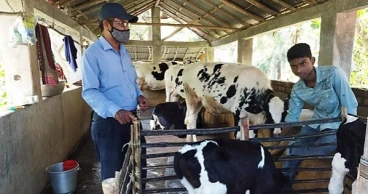
Bangladesh Dairy Board to open regional offices to boost milk output
The Bangladesh Dairy Development Board will open branch offices at key locations across the country to increase milk and dairy production and improve quality standards, Fisheries and Livestock Adviser Farida Akhter said on Monday.
Farida stressed the need to identify major dairy production hubs, establish an adequate number of regional offices, and develop an appropriate manpower structure to ensure effective implementation of the board’s mandate.
She made the remarks while presiding as chairperson over the first meeting of the dairy development governing board, formed under the Bangladesh Dairy Development Board Act, 2023, at the Fisheries and Livestock Ministry conference room.
Emphasising the importance of dairy as a balanced food, she said the board must play a strong role in increasing production, setting and controlling quality standards, marketing dairy products and ensuring proper management of related activities.
Plenty on fields: Why vegetables so expensive in Dhaka?
“To ensure safe milk and dairy products for people across the country, the activities of the Dairy Development Board must go beyond the confines of its headquarters and expand nationwide,” she said, adding that regular board meetings are essential for effective implementation of the law.
The 15-member governing board meeting was attended by Fisheries and Livestock Secretary Abu Tahir Muhammed Zaber, who served as vice-chairman of the board.
The secretary informed the meeting that Joint Secretary Shahina Ferdousi has been appointed as Executive Director of the board by the Ministry of Public Administration and will also serve as the board’s member secretary.
The meeting was convened to approve key decisions required for implementing the functions assigned to the board under the law.
Net FDI in Bangladesh jumps over 200 percent in Q3 of 2025: BIDA
Board members also discussed launching extensive publicity and awareness campaigns to familiarise stakeholders and the public with the activities of the Dairy Development Board, expressing unanimous support for the initiative.
6 months ago
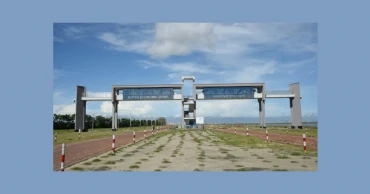
South Korean company to invest $80mn in Mirsarai EZ
The Bangladesh Export Processing Zones Authority (BEPZA) on Monday signed a lease agreement with South Korean company Park Handbag BD Ltd to establish a large-scale bag, luggage and high-end garments manufacturing facility at the BEPZA Economic Zone in Mirsarai, Chattogram.
The proposed investment, amounting to US$ 80 million, is expected to significantly contribute to industrial growth and employment generation in the country.
The agreement was signed at the BEPZA Complex in Dhaka.
Md Tanvir Hossain, Executive Director (Investment Promotion) of BEPZA, signed the agreement on behalf of BEPZA, while Beomjoon Park, Chairman of Park Handbag BD Ltd, signed on behalf of the investing company.
BEPZA Executive Chairman Major General Mohammad Moazzem Hossain witnessed the signing ceremony.
Under the agreement, Park Handbag BD Ltd will develop the project on 57,600 square metres of land to manufacture handbags, backpacks, luggage, and a wide range of knit and woven garments, including polo shirts, T-shirts, padded and down jackets, trousers, sportswear and undergarments.
Once fully operational, the project is expected to create employment opportunities for 10,960 Bangladeshi nationals.
The manufactured products will be exported to major global markets, including the USA, the UK, the European Union, South America and Asia.
Welcoming the South Korean investor, the BEPZA Executive Chairman reaffirmed the authority’s commitment to providing round-the-clock facilitation to investors. He also urged Park to encourage other South Korean entrepreneurs to explore investment opportunities in BEPZA-administered EPZs and Economic Zones.
He said BEPZA is continuously modernising its service delivery system through increased automation, digitalisation and efficiency to better serve investors.
“We should do better than yesterday,” he remarked, underscoring BEPZA’s drive to remain competitive and responsive.
Speaking at the ceremony, Beomjoon Park said Park Handbag BD Ltd will manufacture bags for globally renowned brands such as Coach and Kate Spade.
He expressed strong confidence in Bangladesh as a competitive manufacturing destination and praised BEPZA for its fast, efficient and investor-friendly services.
6 months ago
Stocks mixed at midday: DSE slips, CSE gains
Trading at the country’s stock markets showed a mixed trend in the first half of the second trading day of the week, with indices falling on the Dhaka Stock Exchange (DSE) while rising on the Chittagong Stock Exchange (CSE).
At the DSE, the market opened on a negative note. The benchmark DSEX index shed 7 points, while the blue-chip DS30 index lost 3 points. The Shariah-based DSES index, however, remained unchanged.
Most shares witnessed price declines, as prices of 195 companies fell against 101 gainers, while 90 issues remained unchanged.
The turnover at the DSE crossed Tk 210 crore during the first half of the session.
DSE, CSE end week’s first session in red
Meanwhile, the CSE posted gains in early trading. The overall CASPI index rose by 16 points.
The prices of 38 companies advanced against 34 losers, while shares of 21 companies remained unchanged.
During the first half, shares and units worth around Tk 70 lakh were traded on the CSE.
6 months ago

Al-Arafah Islami Bank to suspend all services for 9 days
Al-Arafah Islami Bank (AIBL) has announced a temporary suspension of all its banking services for nine consecutive days, starting from January 30 to February 7, 2026.
The shutdown is part of a major technical upgrade to its "Core Banking System" (CBS) to ensure more secure and modern digital services for its customers.
The central bank of Bangladesh issued a notification on Sunday (January 25) granting the bank permission for this scheduled downtime.
According to the bank’s schedule, the suspension will affect various services in phases:
January 30 – February 7: All online banking services, including ATMs and Internet Banking, will remain completely suspended for the full nine days.
February 1 – February 3: All branches and sub-branches will be closed for cash transactions and physical banking.
February 5 (10:00 AM): Branches will resume limited operations, primarily for cash transactions only.
February 8: All regular and online banking services will fully resume and return to normal operations.
Banking sector reform can’t be done overnight: Salehuddin
The bank stated that the upgrade is essential to enhance the quality of customer service and bolster transaction security in the current era of digital banking. While the total service suspension lasts nine days, the bank noted that the actual impact on branch-based banking is limited to three days, as January 30-31 are weekend holidays and February 4 is a scheduled holiday for Shab-e-Barat.
Bangladesh Bank has approved this "technical downtime" to facilitate the bank's long-term goal of providing superior Shariah-based financial services. Customers are advised to plan their urgent transactions before the shutdown begins.
6 months ago
DSE, CSE end week’s first session in red
Trading on the country’s bourses ended on a bearish note on Sunday, the first working day of the week, as both the Dhaka Stock Exchange (DSE) and the Chittagong Stock Exchange (CSE) witnessed index falls amid declining turnover and broad-based price erosion.
At the DSE, the benchmark DSEX shed 27 points by the end of the session. The Shariah-based DSES fell by 7 points, while the blue-chip index DS30 dropped 15 points.
Most stocks closed lower, with prices of 225 companies declining against 107 gainers, while 60 issues remained unchanged.
The total turnover at the DSE stood at Tk 526 crore, down from Tk 536 crore in the previous session.
In the block market, shares of 21 companies worth Tk 10 crore were traded, with Chartered Life Insurance PLC topping the list with block transactions amounting to Tk 1.6 crore.
Asia Insurance PLC emerged as the top gainer on the DSE, rising nearly 10 percent, while Familytex (BD) Limited was the worst performer, losing more than 8 percent.
The Chittagong Stock Exchange also ended in the red, with its overall index CASPI losing 13 points.
At the CSE, prices of 71 companies declined against 66 gainers, while 17 issues remained unchanged.
The turnover at the port city bourse dropped sharply to Tk 9 crore, compared to Tk 14 crore in the previous trading day.
Phoenix Insurance Company Limited topped the CSE gainers’ list with an almost 10 percent rise, while Investment Corporation of Bangladesh (ICB) hit the bottom, shedding 10 percent of its share price.
6 months ago
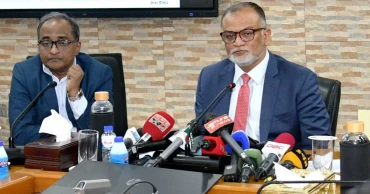
Market stable, prices likely to ease further in Ramadan: Adviser Bashir
Bangladesh’s market remains stable with no supply crunch, and the prices of essential commodities are expected to decline further during Ramadan, Commerce Adviser Sk Bashir Uddin said on Sunday.
Talking to journalists after the 10th meeting of the Taskforce Committee on reviewing prices and market conditions of essential commodities ahead of Ramadan held at the Commerce Ministry, Bashir said the assessments of imports and domestic production indicate a more stable market than last year.
“Based on our analysis, we believe this year’s Ramadan market will be better than last year’s, with greater stability,” he said, adding that traders have assured uninterrupted supply of essentials and effective price control during the holy month.
The adviser pointed out that the imports of essential commodities have increased by about 40 percent compared to last year, which he said would help keep prices within consumers’ reach. “If there is no supply disruption, there is no reason for prices to rise.”
Bashir also said there is no gas or dollar shortage, while the exchange rate remains stable, placing the market in a relatively stronger position than at other times.
Referring to edible oil, he said prices at the wholesale level are currently below government-fixed rates due to increased competition. “We have diversified edible oil supply. Around 500,000 tonnes of rice bran oil from domestic production have been supplied to the market, which has intensified competition.”
Costly mega projects like Padma Bridge hurt market stability, reiterates Bashir
He said future prices would be determined through market competition, which naturally helps reduce prices and ensures fair rates for consumers.
Responding to a question on government policy if prices rise during Ramadan despite these measures, Bashir said the government is focused on action rather than speculation. “We do not fear future fear-mongering. We are working and the results will follow.”
Commerce Secretary Mahbubur Rahman, heads of various commerce ministry agencies and senior representatives of private sector organisations were present at the meeting.
6 months ago
DSE slips, CSE gains as trading week opens
Bangladesh stock market began the week on a mixed note on Sunday, with the Dhaka Stock Exchange (DSE) sliding in early trade while the Chittagong Stock Exchange (CSE) posted gains.
During the first half of the session, the benchmark DSEX index of the DSE shed 10 points.
The Shariah-based DSES index fell by 3 points, while the blue-chip DS30 index dropped 10 points.
Most listed companies on the DSE saw their share prices decline, as 176 issues lost value against 141 gainers, while prices of 67 issues remained unchanged.
The turnover on the premier bourse crossed Tk 250 crore in the first half of the day.
In contrast, the CSE witnessed a positive trend, with its overall index CASPI rising by 25 points.
At the port city bourse, prices of 47 companies advanced, while 21 issues declined and 12 remained unchanged.
The trading volume at the CSE exceeded Tk 2 crore during the same period.
6 months ago
Bangladesh capital markets weekly turnover jumps 51pc as DSEX gains 3pc
Trading activity on the Dhaka Stock Exchange (DSE) surged sharply over the past week, with average daily turnover rising by 51 percent, while the benchmark DSEX advanced nearly 3 percent, reflecting renewed investor participation.
According to the DSE’s weekly review, the DSEX gained about 140 points during the week to close at 5,099. The Shariah-based DSES rose 29 points, while the blue-chip index DS30 climbed 50 points.
On a year-on-year basis, the DSEX is up nearly 5 percent in 2026, with the DSES and DS30 gaining about 2 percent and 6 percent respectively.
Average daily turnover stood at Tk 575 crore, up from Tk 380 crore in the previous week.
Most stocks closed higher, with prices of 309 companies advancing, 41 declining and 38 remaining unchanged over the week.
Sector-wise, all sectors posted gains except corporate bonds and paper & printing. The banking sector recorded a notable rally, with share prices rising by more than 40 percent and turnover increasing over 26 percent.
In the non-bank financial institutions sector, prices surged 120 percent with a 23 percent rise in turnover. General insurance stocks saw prices jump 116 percent and turnover soar 124 percent, while life insurance shares gained 55 percent with turnover up 50 percent. Mutual fund units rose 85 percent in price and 104 percent in turnover.
In the block market, Fine Foods Limited topped the chart, executing Tk 17 crore worth of shares over five trading days. Orion Infusion Limited followed with Tk 13 crore, while Grameenphone sold Tk 10 crore worth of shares. City Insurance PLC and others also featured prominently.
Orion Infusion Limited was the most traded stock on the DSE during the week, with shares worth Tk 22 crore changing hands at a last price of Tk 368.20 per share. Square Pharmaceuticals PLC ranked second, posting over Tk 16 crore in turnover, with its share price closing at Tk 217.30.
Other actively traded stocks included City Bank PLC, Asiatic Laboratories Limited, Beximco Pharmaceuticals PLC, Fine Foods Limited, BRAC Bank PLC, Bangladesh Shipping Corporation, Lovello Ice Cream and Khan Brothers PP Woven Bag Industries Limited.
Among the top 10 gainers, eight were Z-category companies that do not declare dividends, while the remaining two were A-category firms paying dividends of 10 percent or more. The top five gainers were all low-priced stocks trading below Tk 1 per share.
On the losing side, five of the top 10 decliners were A-category companies, two were B-category and three Z-category. Regent Textile Mills Limited bottomed the list, shedding nearly 8 percent.
CSE also posts gains
The Chittagong Stock Exchange (CSE) mirrored the upbeat trend, with its benchmark CASPI index rising 339 points over the week. The CSE30 and CSE50 indices gained 3 percent and 2 percent respectively.
Prices advanced for 197 companies, while 72 declined and 28 remained unchanged.
As on the DSE, Orion Infusion topped the turnover chart on the CSE, followed by Fine Foods, City Insurance, Asia Sea Foods and BBS Cables.
FAS Finance & Investment Limited emerged as the top gainer of the week on the CSE, while Hamid Fabrics PLC suffered the steepest fall.
6 months ago

LC openings rise amid dollar stability, settlements face hurdles
Import activity in Bangladesh showed signs of a modest recovery in the first five months of the current fiscal year (FY26), supported by a stable dollar market and preparations for Ramadan.
However, the recovery remains fragile as businesses adopt a cautious ‘wait-and-see’ approach ahead of the national election.
According to Bangladesh Bank data, Letters of Credit (LC) openings increased by 4.5 percent to $29.69 billion during July–November of FY26, up from $28.4 billion in the same period last year.
The data highlights a gap between LC openings and final payments with high interest rates and political uncertainty slowing settlements.
LC openings surged 32.22 percent to $911 million, reflecting renewed investments in energy-efficient equipment but settlements fell 16.77 percent to $745.5 million.
Ahead of Ramadan, LC openings rose 10.64 percent to $2.85 billion while settlements slightly declined to $2.41 billion, according the data.
Besides, openings increased marginally by 0.42 percent to $10.29 billion, indicating cautious production due to weak domestic demand and limited working capital.
Despite a stable interbank exchange rate at Tk 122 per dollar over the past nine months, high rates have raised import costs and debt servicing burdens.
Overall LC settlements dropped slightly by 0.63 percent to $27.94 billion during the July–November period.
6 months ago