Business
Wall Street tumbles as Trump threatens tariffs on eight European nations
Wall Street plunged sharply on Tuesday after US President Donald Trump threatened to impose new tariffs on eight European countries, intensifying tensions over his push to assert American influence over Greenland.
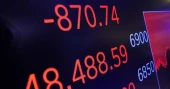
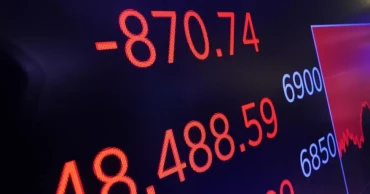
The sell-off affected nearly all sectors, extending losses from last week. The S&P 500 fell 143.15 points, or 2.1%, to 6,796.86, marking its steepest decline since October. The Dow Jones Industrial Average dropped 870.74 points, or 1.8%, to 48,488.59, while the Nasdaq composite slid 561.07 points, or 2.4%, to 22,954.32.
Technology stocks led the decline, with Nvidia down 4.4% and Apple falling 3.5%. Retailers, banks and industrial companies also lost ground, including Lowe’s (-3.3%), JPMorgan Chase (-3.1%) and Caterpillar (-2.5%).
Global markets reacted similarly, with European and Asian indices falling. Japanese long-term bond yields hit record levels amid concerns over fiscal policy. Gold and silver prices surged 3.7% and 6.9% respectively, while bitcoin retreated to around $89,700 from last week’s peak above $96,000.
Trump said on Saturday that he would levy a 10% import tax in February on goods from Denmark, Norway, Sweden, France, Germany, the UK, the Netherlands, and Finland. Combined imports from these European nations exceed those from the US’s two largest import partners, Mexico and China.
The threat has drawn sharp diplomatic reactions in Europe, with leaders considering countermeasures, including retaliatory tariffs. Analysts warned that such measures could push up inflation, complicating the Federal Reserve’s policy outlook.
Investors are also monitoring corporate earnings amid the tariff uncertainty. Industrial giant 3M fell 7% after reporting mixed quarterly results, while other major firms, including Johnson & Johnson, Halliburton and Intel, are expected to release earnings this week.
6 months ago
Experts, farmers warn of food security crisis over poultry import ban
Industry stakeholders and experts have expressed deep concern over the government’s move to ban the import of day-old chicks (DOC) for commercial poultry farming.
In a statement, they warn that the decision, outlined in the draft "National Poultry Development Policy-2026," could jeopardize the country’s Tk60,000 crore poultry industry, threaten food security, and drive up prices for general consumers.
The draft policy, published by the Ministry of Fisheries and Livestock on January 13, states in section 5.8.1.2 that imports of day-old chicks for commercial farming will be prohibited. Only "Grandparent Stock" and, in specific cases of extreme shortage, "Parent Stock" may be imported.
While the Department of Livestock Services (DLS) maintains the goal is to reduce import dependency and boosting local production, stakeholders argue that the timing is premature.
The Bangladesh Poultry Industries Association (BPIA) pointed out that domestic production is currently reliant on a limited number of companies. "If a major disease outbreak like Bird Flu hits these local facilities, production could stop instantly," an association representative stated. Without the option to import, such a disruption would lead to a massive shortage of broiler and layer chickens, causing prices to skyrocket.
Experts emphasize that poultry remains the most affordable source of animal protein for low- and middle-income families in Bangladesh.
"This policy could create a triple-threat crisis," said Agriculturist Anjan Majumdar, a poultry production specialist. "The biggest losers will be marginal farmers and consumers. Before implementing such a ban, there must be a public hearing where all stakeholders can voice their opinions."
Professor Md. Saiful Islam of Sher-e-Bangla Agricultural University added that the administrative process for importing stock is already lengthy and complex. If a crisis occurs, the "case-by-case" permission mentioned in the draft would likely be too slow to stabilize the market.
The BPIA President, Mosharraf Hossain Chowdhury, stressed that the priority should be ensuring that marginal farmers receive chicks at fair prices.
Furthermore, Professor Dr. Md. Bahanur Rahman, Dean of the Faculty of Veterinary Science at Bangladesh Agricultural University, told UNB that the government lacks large-scale production facilities of its own to intervene if private supply chains fail.
Industry insiders also criticized the draft for lacking clear directives on market management. They fear that banning imports will empower a small group of large domestic companies to form "syndicates," leading to price manipulation.
In response to the criticism, A.B.M. Khaleduzzaman, Director (Production) of the Department of Livestock Services, stated that the policy was designed to strengthen the industry in the long term.
"We believe the implementation of this policy will make the country's poultry sector more organized and prosperous," he said.
However, stakeholders are urging the Ministry to revise the draft to include a more realistic transition period and to focus on market regulation rather than outright import bans.
6 months ago

DSE turnover hits Tk 669 crore amid rising indices
Trading at the Dhaka Stock Exchange (DSE) crossed Tk 600 crore after nearly two months on Tuesday (January 20, 2026), with turnover reaching Tk 669 crore, the highest single-day volume in about three and a half months amid a continued rise in indices.
The market opened on a positive note on the third trading day of the week, extending gains seen over the past few sessions. Improved sentiment lifted share trading throughout the day, pushing total turnover to Tk 669 crore, the first time in 2026 that daily transactions returned to the Tk 600 crore range.
Previously, the DSE last saw turnover above Tk 600 crore on November 25, 2025, when transactions stood at Tk 636 crore. Following a prolonged downturn, daily turnover over the past two months had largely hovered between Tk 300 crore to Tk 400 crore. Tuesday’s figure was the highest since October 7, 2025.
The benchmark DSEX index advanced 17 points, while the Shariah-based DSES rose 7 points and the blue-chip DS30 gained 5 points.
Read more: Stocks open mixed as DSE advances, CSE slips
Gainers outnumbered losers, with prices rising for 210 companies against declines in 109, while 69 issues remained unchanged.
In the block market, shares worth Tk 32 crore from 21 companies were traded, led by Orion Infusion with transactions amounting to Tk 13 crore.
Daffodil Computers PLC topped the DSE gainers’ list with a near 10 percent rise, while Apex Tannery Limited was the day’s worst performer, shedding 5 percent.
The Chittagong Stock Exchange (CSE) also ended higher, with its general index CASPI climbing 43 points.
Read more: Stocks advance at DSE, CSE in early trading
At the CSE, prices advanced for 102 companies, declined for 55, and remained unchanged for 25.
The turnover, however, dipped to Tk 10 crore from Tk 12 crore in the previous session.
Janata Insurance PLC surged nearly 10 percent to lead the gainers at the CSE, while EBL NRB Mutual Fund fell about 8 percent to close at the bottom of the board.
6 months ago
Stocks open mixed as DSE advances, CSE slips
Trading at the country’s stock markets began on a mixed note on Tuesday, the third working day of the week, with indices rising at the Dhaka Stock Exchange (DSE) while the Chittagong Stock Exchange (CSE) edged lower.
In the first half of the session, the DSE’s benchmark index gained 12 points. The Shariah-based DSES index advanced by 2 points, while the blue-chip DS30 index added 1 point.
Most listed companies on the DSE saw price gains, as share prices of 213 companies rose against declines in 102, while 72 issues remained unchanged.
The total turnover at the DSE stood at Tk 260 crore during the period.
Stocks advance at DSE, CSE in early trading
Meanwhile, at the CSE, the overall CASPI index fell by 2 points in the first half of trading.
Despite the index decline, the majority of companies posted gains, with prices of 42 companies rising, 30 falling and 15 remaining unchanged.
The turnover at the port city bourse amounted to Tk 40 million in the first half of the session.
6 months ago

Gold price hits fresh record in Bangladesh
Gold prices in Bangladesh have soared to a new all-time high, with the price of 22-carat gold set at Tk 238,879 per bhori (11.664 grams), following the latest adjustment by the Bangladesh Jewellers Association (BAJUS).
In a notification issued late Monday night, BAJUS announced a price hike of Tk 4,199 per bhori, pushing gold prices to a record level.
The new rates will come into effect from Tuesday morning.
Under the revised prices, 21-carat gold will cost Tk 228,031 per bhori, 18-carat gold Tk 195,430 per bhori, while gold under the traditional method has been fixed at Tk 160,147 per bhori.
BAJUS said the price adjustment was made in view of an increase in the local market price of tejabi gold (pure gold), considering the overall market situation.
7.8 million ounces of new gold resources discovered in Saudi Arabia
The association also noted that a mandatory 5 percent value-added tax (VAT) imposed by the government and a minimum 6 percent making charge set by BAJUS must be added to the selling price of gold jewellery. However, making charges may vary depending on design and quality.
The last price revision took place on January 14, when BAJUS raised the price of 22-carat gold by Tk 2,625 per bhori to Tk 234,680 — which had been the highest price in the country’s history until now.
With the latest adjustment, gold prices have been revised eight times so far in 2026, with six increases and two reductions. In 2025, gold prices were adjusted a total of 93 times — raised on 64 occasions and reduced 29 times.
Alongside gold, silver prices have also been increased.
Gold price hits record Tk 234,680 per bhori in Bangladesh
The price of 22-carat silver has been raised by Tk 291 per bhori to Tk 6,240 — the highest level ever recorded in the country.
Under the new rates, 21-carat silver will cost Tk 5,949 per bhori, 18-carat silver Tk 5,132 per bhori, and silver under the traditional method Tk 3,849 per bhori.
So far this year, silver prices have been adjusted five times, with three increases and two reductions.
6 months ago

11 more institutions inc. banks, municipal bodies join BIDA’s One-Stop Service portal
The Bangladesh Investment Development Authority (BIDA) has signed Memorandums of Understanding (MoUs) with 11 service-providing institutions to integrate them into its One-Stop Service (OSS) portal, aiming to make business operations faster, more transparent, and dynamic for both domestic and foreign investors.
The signing ceremony took place on Monday at the BIDA conference room in Agargaon, Dhaka. BIDA Executive Chairman (with the rank of State Minister) Chowdhury Ashik Mahmud Bin Harun attended the event as the chief guest, while Executive Member Air Commodore (retd.) Md. Shaharul Huda presided over the program.
Bangladesh Bank allows entrepreneurs to Import Capital Machinery without BIDA’s approval
The 11 new partners include four major banks and seven city corporations:
Banks: Rupali Bank PLC, Dhaka Bank PLC, Bank Asia PLC, and Bengal Commercial Bank PLC.
City Corporations: Rajshahi, Khulna, Mymensingh, Barishal, Cumilla, Gazipur, and Narayanganj.
Under these agreements, these institutions will link their internal systems with BIDA’s online OSS platform. This integration will allow investors to open bank accounts, obtain trade licenses, and access various financial and municipal services through a single digital window, eliminating the need for physical visits and reducing bureaucratic hurdles.
Speaking at the event, Ashik Chowdhury emphasized BIDA's long-term goal of creating a "single-entry" system.
"Our objective is to reach a stage where everyone from small entrepreneurs to large industrial groups can access all necessary government services through a single website and a single login," he said.
"We want to move away from the culture of submitting the same data repeatedly to different departments," he added.
BIDA, Home Ministry strengthen coordination to boost foreign investment
BIDA Executive Chairman noted that developed nations have successfully implemented data-sharing across government agencies, and Bangladesh is following that path. While acknowledging that the journey is time-consuming, he stressed the importance of constant monitoring and feedback to ensure the system actually solves problems for investors.
According to BIDA, the online OSS portal was launched in February 2019 under the One-Stop Service Act, 2018. With the addition of these 11 institutions, BIDA has now signed MoUs with a total of 63 organizations.
Currently, the portal offers 142 services from 47 different agencies. To date, 215,699 applications have been successfully processed through the system. BIDA officials stated that services from more organizations will be integrated into the platform in the near future.
BIDA provides 147 services through One Stop Service (OSS) includes-
Business Setup & Registration: Company Registration, incorporation from the RJSC (Registrar of Joint Stock Companies and Firms).
BIDA Project Registration, Issuance of e-TIN (Tax Identification Number) and e-BIN (Business Identification Number) via the National Board of Revenue (NBR), Issuance and renewal of trade licenses from various City Corporations.
Specific services designed to help international businesses operate in Bangladesh. Such as Work Permits: Issuance, extension, and cancellation of work permits for foreign employees.
Visa Recommendations: Support for E-visas (Employment), PI-visas (Investor), and Visa on Arrival.
Branch/Liaison Office Permits: Permission to set up and extend the duration of representative offices.
Remittance Approvals: Approval for royalty, franchise, and technical assistance fee payments abroad.
Land Use Clearance: Provided by authorities like RAJUK (Dhaka) or CDA (Chattogram).
Construction Permits: Approval for building plans and occupancy certificates.
E-Mutation: Digital land record updates via the Ministry of Land.
Utility Connections- electricity from DPDC, DESCO, BREB, and BPDB.
Water & Sewerage: Industrial water connection permits from WASA.
Environment Clearance: Issuance of Site Clearance and Environmental Clearance Certificates (for green, orange, and red categories) from the Department of Environment.
6 months ago

Bangladesh stock market closes higher on strong bullish momentum
Bangladesh’s stock markets closed higher on Monday as the early gains seen in the first hour of trading were sustained throughout the session, pushing key indices up by a satisfactory margin.
At the Dhaka Stock Exchange (DSE), the benchmark DSEX index advanced by 56 points by the end of the day.
The other two indices also posted gains, with the Shariah-based DSES rising 14 points and the blue-chip DS30 climbing 25 points.
Most listed companies ended in the green; share prices of 268 companies rose, while 72 declined and 54 remained unchanged.
The turnover at the DSE increased by more than Tk 100 crore. Total shares and units worth Tk 593 crore were traded during the session, compared to Tk 474 crore in the previous trading day.
In the block market, shares of 27 companies worth Tk 32 crore were traded. Grameenphone led the segment, accounting for the highest block trade with shares worth Tk 10 crore.
Khan Brothers PP Woven Bag Industries Limited topped the DSE gainers’ list, rising by nearly 10 percent, while Prime Finance & Investment Ltd fell by around 10 percent to become the day’s top loser.
Stocks advance at DSE, CSE in early trading
The Chittagong Stock Exchange (CSE) also ended on a positive note. Its overall index, CASPI, gained 111 points.
Of the traded issues, prices of 118 companies advanced, 36 declined and 26 remained unchanged.
The total turnover at the CSE stood at Tk 12 crore, up from Tk 7 crore in the previous session.
S Alam Cold Rolled Steels Limited emerged as the top gainer at the CSE with a 10 percent rise, while Alltex Industries Limited lost 10 percent to end at the bottom of the losers’ chart.
6 months ago
Stocks advance at DSE, CSE in early trading
Bangladesh’s stock markets posted gains in early trading on Monday, with key indices rising at both the Dhaka Stock Exchange (DSE) and the Chittagong Stock Exchange (CSE).
During the first half of the session, the benchmark DSEX index at the DSE climbed 46 points.
Among the other indices, the Shariah-based DSES advanced 11 points, while the blue-chip DS30 index rose by 15 points.
Out of the traded issues at the DSE, prices of 304 companies moved up, while 40 declined and 43 remained unchanged.
The turnover at the premier bourse crossed Tk 270 crore in the first half of the day.
The CSE also witnessed a positive trend, with its overall index CASPI gaining 55 points.
Stocks surge at DSE, CSE on strong buying as week opens
At the port city bourse, share prices of 70 companies increased against declines in 22 issues, while prices of nine companies remained unchanged.
The turnover at the CSE stood at over Tk 1.70 crore during the first half of trading.
6 months ago

Garment industry leaders warn tariffs on yarn may worsen crisis
Leaders of the country’s apparel trade bodies, Bangladesh Garment Manufacturers and Exporters Association (BGMEA) and Bangladesh Knitwear Manufacturers and Exporters Association (BKMEA), on Monday strongly opposed recent recommendations to restrict yarn imports.
They said any attempt to force the purchase of local yarn through tariff barriers would undermine the global competitiveness of the garment industry and disrupt its integrated supply chain.
The leaders expressed their concern at an emergency press conference at a Dhaka hotel.
Selim Rahman, acting president of BGMEA, said exporters prefer local yarn if its price matches the global market but imposing new tariffs or restrictions to support local mills would create a crisis.
“If local yarn is available at global market rates, we will not import. But trying to force local yarn sales artificially is not a solution. It will only worsen the crisis,” he said.
He urged the government to support the textile sector through cash incentives, reliable energy supply, and favourable tax and interest rates instead of imposing duties on yarn imports.
He warned that BGMEA might take ‘tough measures’ if these concerns are ignored.
Mohammad Hatem, president of BKMEA, said price differences between local and imported yarn have always existed but the situation worsened after the reduction of cash incentives.
He criticised the Commerce Ministry for recommending restrictions on blended and man-made fiber (MMF) yarn, pointing out that local production in these categories is still insufficient. “If you stop yarn imports artificially and people start importing finished fabric instead, what will you do?” Hatem asked.
The BKMEA leader also raised concerns over the shrinking Export Development Fund (EDF) which has been cut from $7 billion to $2 billion under IMF conditions.
He said many businesses still cannot access the remaining funds.
Garment accessories sector posts record $7.45bn export earnings in FY25: BGAPMEA
Hatem expressed frustration over the lack of support from the financial sector.
Highlighting regional competition, he noted that India continues to provide strong incentives to its textile and apparel sectors despite graduating from LDC status.
He questioned why Bangladesh cannot implement similar support to sustain its top-earning export sector during this transition period.
6 months ago
NBR launches automated system easing compliance for importers
The National Board of Revenue (NBR) on Sunday (January 18, 2026) launched an automated system that allows income tax paid at the import stage to be directly credited to taxpayers’ electronic income tax returns, significantly easing long-standing compliance hassles for importers.
The new facility has been introduced through the successful integration of the NBR’s e-return system with ASYCUDA World, the customs clearance platform.
From now on, advance income tax paid during import will automatically appear as a credit in the concerned taxpayer’s e-return.
Officials said the move has effectively ended years of difficulties faced by importers in adjusting import-stage income tax against their final tax liability.
Read More: NBR sees growing use of e-returns by expatriate Bangladeshis
At the same time, it has made the process of filing e-returns simpler and more efficient for importing businesses.
Under the new system, when an importer enters business income details in the e-return for a particular assessment year, information related to advance income tax paid against each Bill of Entry during that year will be displayed automatically.
The credited amount is then deducted from the total payable income tax, enabling the system to determine the final tax payable along with the return.
The NBR noted that the initiative is part of its broader effort to digitise tax administration and improve taxpayer services through automation and system integration.
The e-return system for the 2025–26 tax year was formally inaugurated on August 4, 2025 by Finance Adviser Dr Salehuddin Ahmed through the website www.etaxnbr.gov.bd.
Read More: NBR links ASYCUDA World with BGMEA e-UD system to modernise bond management
Since the launch, more than 4.6 million taxpayers have registered on the e-return platform, while around 3.3 million taxpayers have already submitted their income tax returns online.
Notably, the NBR said, many individuals for whom e-return filing is not mandatory are also voluntarily submitting their returns through the online system, indicating growing acceptance of digital tax services.
The scope of the system has also been expanded to include non-resident Bangladeshis.
Expatriate taxpayers can now register and submit their income tax returns online. So far, nearly 4,000 expatriate Bangladeshis have filed their income tax returns for the 2025–26 tax year through the e-return system.
According to the NBR, taxpayers are not required to upload any supporting documents or papers while filing returns online.
The authority reiterated that its efforts are focused on enabling individual taxpayers to pay taxes and submit returns easily from home, without physical visits to tax offices.
The NBR has urged all individual taxpayers to submit their income tax returns online through the e-return system by January 31, 2026.
Read more: Mobile phone prices set to fall as NBR slashes import duty
6 months ago