business
Asian shares mixed after Wall Street rally, oil prices rebound
Asian stocks were mixed Tuesday after Wall Street rallied, while oil prices recovered some of their losses following a sharp drop a day earlier.
Investors were also assessing the impact of last week’s joint intervention by the United States and Japan to support the Japanese yen, analysts said.
Japan’s benchmark Nikkei 225 fell 0.3% to 63,585.58. The US dollar rose slightly to 157.51 yen from 157.18 yen, while the euro was trading at $1.1511, little changed from $1.1514.
The dollar had been trading around 160 yen before authorities stepped in to strengthen the Japanese currency after it had fallen close to a 40-year low.
Some analysts questioned how effective the intervention would be in the long run, saying it does not address the underlying economic factors driving currency movements, including inflation, interest rates and differences in economic strength.
A report by BMI, a unit of Fitch Solutions, said US backing gives the intervention stronger influence than action by Tokyo alone and could make speculators more cautious. However, it said the size of any US contribution would likely be limited.
Matthew Ryan, head of market strategy at financial services firm Ebury, said the latest move could have a greater impact because it appears to signal a broader change in monetary policy rather than a one-off effort to defend the yen.
"This is an historic and meaningful development for the yen," he said, adding that it has strengthened confidence in the currency’s prospects.
South Korea’s Kospi dropped 1.3% to 6,174.72, while Australia’s S&P/ASX 200 rose 1.2% to 9,129.00. Hong Kong’s Hang Seng declined 0.5% to 25,881.99, while the Shanghai Composite edged up 0.2% to 3,802.61.
Investors also remained cautious about sharp swings in chipmaker stocks. Such shares have moved up and down in recent weeks amid concerns over whether strong revenues driven by the artificial intelligence boom can continue.
On Wall Street, stocks rose strongly Monday as falling oil prices eased some concerns about inflation. The S&P 500 gained 1.5%, leaving it just 0.1% below its record high reached earlier this summer.
The Dow Jones Industrial Average climbed 693 points, or 1.3%, to a record high, while the Nasdaq composite jumped 2.1%.
In early Asian trading Tuesday, US benchmark crude rose 84 cents to $81.18 a barrel, while Brent crude, the international benchmark, gained $1.15 to $84.92 a barrel.
Oil prices had plunged more than 5% a day earlier after US President Donald Trump said over the weekend that he had decided to delay new strikes against Iran following appeals from regional allies.
Brent crude prices swung between $72 and $102 a barrel last month as concerns about the Iran war and the movement of oil tankers through the Persian Gulf changed.
The yield on the 10-year US Treasury note fell to 4.68% from 4.75% late Friday. However, it remained well above the 3.97% level recorded before the war with Iran.
1 hour ago

RMG exports rebound to $3.88 billion in July despite YoY dip
Bangladesh's ready-made garment (RMG) exports began fiscal year 2026-27 with a strong month-on-month rebound, rising 14.73 percent to US$3.88 billion in July from $3.38 billion in June, although earnings were slightly lower than a year earlier, according to the latest data from the Export Promotion Bureau (EPB).
The July export earnings were 1.92 percent lower than the $3.96 billion recorded in July 2025, reflecting softer year-on-year performance despite the strong sequential recovery.
RMG exports slip 0.63% to $19.34b in H1 2026: EPB
A product-wise analysis reveals that knitwear continued to hold the lion's share of total apparel exports during the opening month of the fiscal year, generating $ 2.15 billion, accounting for over 55 percent of total RMG export earnings, while woven garments brought in $ 1.72 billion.
Analysing the EPB performance figures, Mohiuddin Rubel, founder and chief executive officer of Bangladesh Apparel Voice and former director of the Bangladesh Garment Manufacturers and Exporters Association (BGMEA), noted that the strong sequential rebound from June demonstrates the sector's underlying resilience amid shifting global trade dynamics and demand fluctuations.
Industry experts emphasise that maintaining operational efficiency and navigating tariff structures across primary Western markets will be crucial to sustaining momentum through the remainder of FY27.
16 hours ago
Pressure mounts on foreign exchange market as US dollar demand surges
The country’s foreign exchange market is facing renewed pressure due to a sudden rise in the demand for US dollars to settle import payments, affecting interbank rates, commercial banks, and the kerb (open) market.
As a result, the exchange rate of the US dollar has been steadily climbing over the past few weeks.
Interbank Dollar rate remains stable at Tk 122.75
According to the latest data from Bangladesh Bank, the interbank exchange rate stood at Tk 123.82 per dollar on July 30. On the same day, the spot market rate traded at Tk 123.88, compared to Tk 122.85 just a month prior. However, to clear letters of credit (LCs) for international trade, several commercial banks are spending up to Tk 123.95 per dollar.
Industry insiders attribute the ongoing pressure to a combination of domestic and global factors. Such as-
Rising Global Fuel & Commodity Prices: Escalating geopolitical tensions and fresh conflict in the Middle East have driven up global fuel oil prices, significantly inflating import bills for essential goods, including fuel and fertilizer.
Widening Trade Deficit: While import costs continue to rise, export earnings have failed to keep pace. Central bank data shows that during the first 11 months (July–May) of FY2025–26, imports rose 6.26 percent year-on-year to nearly $64 billion. Conversely, export earnings fell by nearly 2 percent to roughly $40 billion, intensifying pressure on foreign reserves.
Slowing Remittance Inflows: Remittance flow—a vital source of foreign currency—has moderated in recent months. Although expatriates sent a record $35.59 billion home in FY2025–26, inflows slowed following Eid-ul-Fitr and Eid-ul-Adha. After maintaining over $3 billion monthly for six consecutive months, remittance receipts dropped to $2.82 billion in June and $2.86 billion in July, contracting dollar supply in the market.
To curb aggressive bidding and control price escalation, Bangladesh Bank recently issued verbal instructions to commercial banks, capping dollar acquisition rates at Tk 123.82 across all channels, including interbank transactions and remittance procurement.
Despite regulatory interventions, the kerb market has felt the impact. A visit to money exchange houses in Motijheel on Sunday revealed that money changers were buying dollars from customers at Tk 126.00 to Tk 126.40 and selling at Tk 126.70 to Tk 126.80. A month ago, open market rates ranged between Tk 125.00 and Tk 125.20.
Market experts noted that while high import bills, sluggish exports, and reduced remittance inflows have created short-term strain, strict monitoring by the central bank and consistent foreign currency supply could stabilize the market within the coming weeks.
18 hours ago

NBR sets Nov 30 deadline for businesses to switch to new BINs
The National Board of Revenue (NBR) has asked businesses to complete the transition to newly assigned Business Identification Numbers (BINs) by 30 November 2026, following the restructuring of VAT commissionerates, while assuring that import and export activities will continue without disruption during the transition period.
In a press release issued on Monday, the NBR said the reorganisation of VAT commissionerates has been undertaken to broaden the tax net, increase revenue collection, improve taxpayer services and create a more business-friendly environment.
NBR offers up to 5% tax rebate for early income tax return filing
As part of the administrative reform, the jurisdictions of existing VAT commissionerates have been redrawn and new commissionerates established to make the indirect tax system more dynamic, efficient and modern.
Following the restructuring, the BINs of many businesses have been transferred to their new jurisdictions.
The NBR said only the last four digits of the BIN have been changed to reflect the new VAT commissionerate and division, while all other information associated with the BIN remains unchanged.
To ensure that import and export operations are not affected, both the old and new BINs have been kept temporarily active in the Customs’ ASYCUDA World system.
The arrangement will allow businesses to complete ongoing customs procedures, including letters of credit (L/Cs), bills of entry, customs declarations and other transactions initiated under the previous BINs without interruption.
The revenue authority requested all affected businesses to complete all pending activities under their old BINs and begin using the new BINs for all customs related transactions by 30 November 2026.
The NBR warned that after the deadline, the old BINs will be automatically deactivated in the ASYCUDA World system. From 1 December 2026, all import and export related customs procedures must be carried out using only the new BINs.
The board said the measures are intended to ensure uninterrupted economic activities while strengthening a more efficient, effective and modern revenue administration.
19 hours ago
Asian markets mixed as yen strengthens, oil prices fall on easing Iran tensions
Asian stock markets traded mixed on Monday after the United States and Japan confirmed they had intervened to support the Japanese yen, pushing the currency to its strongest level against the US dollar since late last year.
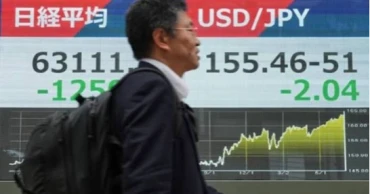
The yen strengthened after US President Donald Trump and Japanese officials confirmed they had stepped into the currency market last week to slow the dollar's sharp rise. The dollar fell to as low as 155.20 yen, compared with nearly 164 yen last week.
A weaker yen usually benefits Japanese exporters by increasing the value of their overseas earnings when converted into yen. However, it also raises the cost of imports such as oil and raw materials, adding pressure on Japan's economy.
The euro edged up slightly to $1.1533 from $1.1528.
Oil prices dropped sharply after Trump said he would instruct US forces not to carry out attacks on Iran, saying an agreement to end the conflict in the Middle East was close.
US benchmark crude fell 4.8% to $80.58 a barrel in early trading, while Brent crude, the international benchmark, dropped 5% to $83.87 a barrel.
In Asian markets, Japan's Nikkei 225 index fell 1.9% to 63,140.68, while South Korea's Kospi dropped 4.5% to 6,298.75.
The Kospi had surged 17.9% on Friday, its biggest single-day gain on record, after heavy losses earlier in the week. Shares of Samsung Electronics and SK Hynix, which had jumped more than 25% on Friday, fell 8% and 7.8%, respectively, in early Monday trading.
Hong Kong's Hang Seng index rose 0.6% to 26,038.92, while China's Shanghai Composite index slipped 0.5% to 3,812.97.
Australia's S&P/ASX 200 declined 0.2% to 8,961.30, while Taiwan's Taiex gained 0.7%.
On Friday, US stocks ended a volatile July on a positive note. The S&P 500 gained 0.7%, the Dow Jones Industrial Average rose 0.5%, and the Nasdaq Composite advanced 1%.
Wall Street has experienced sharp swings in recent weeks due to rising oil prices linked to the Iran conflict and investor concerns over whether heavy spending on artificial intelligence will generate enough profits to justify soaring technology stock prices.
Amazon led Friday's rally, jumping 15.3% after reporting quarterly earnings that far exceeded analysts' expectations. The company said profits more than tripled from a year earlier, helped by strong growth in its cloud computing business. It also raised its investment outlook, suggesting its AI spending is beginning to deliver results.
Microsoft saw a similar market reaction a day earlier after reporting signs that its AI investments were also boosting profits.
Chipmakers remained volatile. Micron Technology erased an early gain of 6.4% to end the day down 5.9%.
Apple, however, fell 7.4% despite reporting better-than-expected quarterly earnings. Investors were disappointed by its weaker revenue forecast, which the company attributed to supply shortages of key components amid strong AI-related demand.
1 day ago

City Bank's net profit reaches Tk526.69 crore in H1 2026
City Bank recorded a significant surge in profitability for the first half of 2026, posting a consolidated profit after tax of Tk 526.69 crore for the six months ended June 2026, according to a press release issued on Sunday.
The half-yearly net profit marks a substantial growth from Tk 301.11 crore reported in the corresponding period of the previous year.
The bank’s Consolidated Earnings Per Share (EPS) for the half-year ended June 2026 rose to Tk 3.01, up from Tk 1.72 in H1 2025.
The performance figures were disclosed during the bank's digital Earnings Disclosure webcast held on Sunday to present its Q2 2026 financial results. The event drew participation from local and international investors, equity researchers, capital market analysts, and financial sector stakeholders.
Mashrur Arefin, Managing Director and CEO of City Bank, presented the bank's strategic initiatives and future growth plans. Md. Mahbubur Rahman, Additional Managing Director and Chief Financial Officer, delivered a detailed breakdown of the financial metrics.
The management team—including Deputy Managing Director (DMD) and Head of Wholesale Banking Mesbaul Asif Siddiqui, DMD and Head of Internal Control and Compliance AKM Saif Ullah Kowchar, and Chief Risk Officer Mohammad Firoz Alam—addressed questions from global participants during an interactive Q&A session.
1 day ago

Bangladesh Bank cuts repo rate by 50 bps to 9.50% to spur investment, economic recovery
Bangladesh Bank (BB) has reduced its key policy rate (repo rate) by 50 basis points to 9.50 percent from 10 percent, aiming to boost private sector credit flow, spur investment, and accelerate economic recovery and employment generation.
The central bank issued a circular on Sunday (August 2) to the managing directors, chief executive officers, and administrators of all banks and finance companies, confirming that the new rates take effect immediately from August 2, 2026.
The decision was taken at a meeting of the Monetary Policy Committee (MPC) held on July 30, 2026, superseding the earlier policy rate corridor set in February 2026.
Under the re-aligned policy rate corridor, the upper limit—the Standing Lending Facility (SLF) rate—has also been slashed by 50 basis points to 11.0 percent from 11.50 percent.
However, the lower limit of the corridor, the Standing Deposit Facility (SDF) rate, remains unchanged at 7.50 percent.
According to the circular signed by Dr. Mohammad Monirul Islam Sarkar, Director of the Monetary Policy Department (MPD), the downward adjustment in policy rates is intended to facilitate private credit growth and create a more favorable environment for job-creating investments across the country.
1 day ago

Polish fashion giant LPP SA suspends Bangladesh sourcing over $40m payment disputes
Polish fashion retail giant LPP SA, famous for brands like Reserved, Cropp, and Sinsay, has suspended its apparel sourcing from Bangladesh following mounting payment disputes totaling around $40 million with local garment manufacturers.
Industry insiders and leaders from the Bangladesh Garment Manufacturers and Exporters Association (BGMEA) confirmed that the Polish buyer halted fresh orders after local suppliers repeatedly raised allegations of delayed payments, discounts demanded after shipment, and non-settlement of outstanding dues.
According to sources, dozens of Bangladeshi apparel exporters have been suffering from financial strain as LPP SA withheld payments worth approximately $40 million for goods already manufactured or shipped. While some suppliers claim the buyer sought ungrounded price cuts and delayed payments beyond agreed terms, representatives from the buyer side reportedly cited quality discrepancies, delayed deliveries, and global retail headwinds as reasons for the payment delays.
The dispute escalated to a point where the BGMEA intervened to mediate between the affected factory owners and the Polish buyer to resolve the outstanding financial liabilities amicably. However, as talks stalled and tensions grew over unresolved claims, LPP SA decided to temporarily halt its sourcing activities from the Bangladeshi market.
The suspension comes as a significant blow to Bangladesh's ready-made garment (RMG) sector, as LPP SA has been one of the prominent European buyers expanding its footprint rapidly in Central and Eastern Europe and sourcing millions of pieces of apparel from Bangladesh annually.
BGMEA president Mahmud Hasan Khan has expressed concern over the situation, noting that such large-scale payment disputes create operational distress for local factories, affecting cash flow, raw material payments, and worker wage disbursements.
The apex trade body is actively working with trade officials, legal advisors, and the buyer’s representatives to recover the unpaid dues and restore commercial ties, he said.
The Bangladesh Knitwear Manufacturers and Exporters Association (BKMEA) has also taken a firm stance regarding the matter. BKMEA President Mohammad Hatem confirmed receiving the suspension letter from the Polish brand.
"Whether they continue sourcing from Bangladesh is their business," Hatem said. "But if they fail to take steps to settle the outstanding payments owed to Bangladeshi exporters, we will move to have them blacklisted in Bangladesh."
He added that the association would also raise the issue of LPP's alleged non-compliance with the European Union, buyers' forums, and other relevant stakeholders.
1 day ago

NBR offers up to 5% tax rebate for early income tax return filing
The National Board of Revenue (NBR) has announced a tax incentive of up to five percent for individual taxpayers and Hindu Undivided Families (HUFs) who submit their income tax returns between July 1 and September 30, aiming to encourage voluntary tax compliance and timely return filing.
According to an NBR press release issued on Sunday, eligible taxpayers filing their returns within the three-month period will receive a tax rebate equivalent to five percent of the tax payable under Section 173 of the Income Tax Act, 2023, subject to a maximum benefit of Tk 25,000.
The revenue authority said no tax incentive will be available for returns filed between October 1 and December 31.
The NBR also outlined additional tax liabilities for late filers.
Taxpayers submitting returns between January 1 and March 31 will have to pay an additional amount equal to two percent of the tax payable or Tk 3,000, whichever is higher, under Section 173(2) of the Income Tax Act, 2023.
For returns filed between April 1 and June 30, the additional tax will be five percent of the tax payable or Tk 5,000, whichever is higher.
It said the new provision is intended to strengthen the culture of voluntary tax compliance by encouraging taxpayers to submit their returns at the beginning of the filing period, while also making tax administration more efficient and orderly.
The NBR noted that it launched the e-return service for individual taxpayers for the 2026-27 tax year on July 22.
Taxpayers can file their returns and pay taxes online through the NBR’s e-tax platform using bank transfers, debit and credit cards, as well as digital payment services including bKash, Nagad and Rocket.
Upon successful submission with accurate information, taxpayers can instantly obtain an acknowledgement receipt and tax certificate through the online system.
To assist taxpayers facing difficulties with online filing, NBR officials will provide support through the call centre (09643717171) and other electronic channels during office hours on working days.
The revenue authority urged taxpayers to submit their returns by September 30 to avail themselves of the tax rebate, reiterating that no incentive will be granted for returns filed after the deadline.
1 day ago

Remittance inflows jump 15.4 percent to $2.85bn in July
Expatriate Bangladeshis sent home US$2.85 billion in remittances during July, the opening month of the fiscal year FY2026–27, registering a 15.4 percent year-on-year growth, according to the latest data from Bangladesh Bank.
During the corresponding period of July 2025, the country received $2.47 billion in workers' remittances.
The central bank figures reveal that in the final two days of the month (July 30–31) alone, overseas workers remitted $152 million through official banking channels.
The strong start to the new fiscal year underscores a sustained upward trajectory in remittance inflows, driven by continued policy incentives and expatriates’ growing preference for legal banking channels.
Economic analysts note that the steady inflow of foreign currency will further bolster Bangladesh's foreign exchange reserves, easing import payment pressures and supporting broader macroeconomic stability.
Remittance remains one of the primary drivers of Bangladesh’s economy alongside export earnings, serving as a critical lifeline for foreign currency reserves and domestic household consumption.
1 day ago