business
Dhaka urges visiting ILO chief to close Article 26 case against it; cites landmark labour reforms
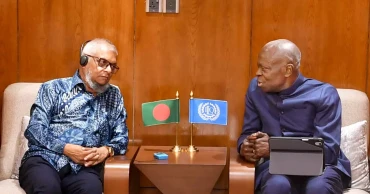
Labour and Employment Minister Ariful Haque Choudhury on Sunday urged the visiting Director General of the International Labour Organization, Gilbert F Houngbo, to expedite the resolution of a long-standing Article 26 case against Bangladesh, citing sweeping reforms in the country's labour sector.
An Article 26 complaint is the ILO's highest-level investigative procedure, used when a member state violates a ratified convention. The Article 26 complaint case against Bangladesh was filed in 2019 over non-observance of Conventions No. 81 (Labor Inspection), No. 87 (Freedom of Association), and No. 98 (Right to Organize), according to information available on the ILO's website.
Bangladesh embarking on new journey to improve work ambience: Shama Obaed
The call came during a bilateral meeting between the two at the minister's office, where discussions focused on modernising Bangladesh's labour sector, labour law reforms, job creation and strengthening bilateral cooperation to ensure international labour standards.
Welcoming the ILO chief, Ariful said the government remains fully committed to protecting workers' rights and ensuring a safe working environment, noting that labour reform is an ongoing process that recently culminated in the enactment of the Bangladesh Labour (Amendment) Act, 2026.
15 days ago

Railway earnings rise in FY26, but income still trails expenditure
Bangladesh Railway's revenue increased by Tk 221 crore in the 2025-26 fiscal year, but it continued to spend significantly more than it earned despite a modest improvement in its operating ratio.
According to a Bangladesh Railway press release issued on Sunday, it earned Tk 2,066.38 crore in FY26, up from Tk 1,845 crore in the previous fiscal year.
Its total operating expenditure, including salaries, allowances, pensions and maintenance of tracks and rolling stock, stood at Tk 3,955 crore, resulting in an expenditure-to-income ratio of 1.91, an improvement from 2.09 in FY25.
Bangladesh Railway sets sights on new locomotives to revamp services: Sheikh Moinuddin
The railway attributed the increase in revenue mainly to passenger services, which generated Tk 256 crore more than in the previous fiscal year.
However, freight income fell by Tk 8.34 crore due to a shortage of locomotives, while earnings from the transport and commercial sector, covering bidding licences and other miscellaneous income, dropped by around Tk 24.34 crore.
On the positive side, income from land and property assets rose by Tk 3 crore, and leasing of optical fibre infrastructure brought in an additional Tk 11.52 crore.
The railway authorities argued that their roughly Tk 1,000 crore annual pension expenditure should not be classified as an operating cost.
Excluding pension payments, total expenditure stands at Tk 2,955 crore, bringing the operating ratio down to 1.43, meaning the railway's non-pension expenditure exceeds its income by 43 percent.
Bangladesh Railway claimed that train fares have not been revised since 2016.
Meanwhile, costs for maintenance materials, imported goods, driven up by exchange rate fluctuations, staff salaries, pensions and fuel prices have all continued to rise over the same period.
Had fares been rationally adjusted in line with prevailing costs in other transport sectors and current market prices, the gap between income and expenditure would have been narrowed significantly.
It maintained that, in light of these factors, it would be unfair to characterise Bangladesh Railway as a loss-making organisation.
15 days ago
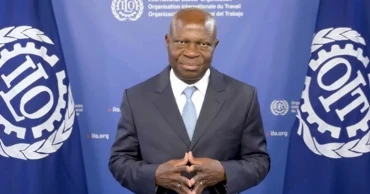
ILO chief arrives in Dhaka on two-day visit
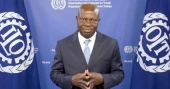
International Labour Organization (ILO) Director-General Gilbert F Houngbo arrived in Dhaka on Sunday morning on a two-day visit to Bangladesh.
Houngbo is scheduled to hold a courtesy meeting with Labour and Employment Minister Ariful Haque Choudhury today, and meet Prime Minister Tarique Rahman on Monday, according to a press release issued by the Ministry of Labour and Employment.
Discussions during the visit are likely to cover the improvement of labour standards, workplace conditions, workers' rights, social protection, skills development and labour market issues in Bangladesh, sources concerned said.
Talks are expected to particularly focus on the ready-made garment sector, the informal labour market and the implementation of international labour standards.
Houngbo, a national of Togo in West Africa, took office as the 11th director-general of the ILO in October 2022. He is the first African to lead the organisation in its century-long history.
15 days ago
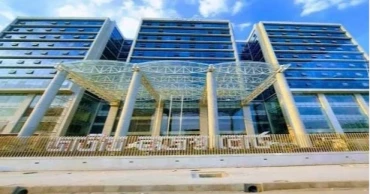
NBR launches special nationwide drive to verify tax deduction compliance
The National Board of Revenue (NBR) has intensified nationwide monitoring and verification of tax compliance, asking tax zones across the country to deploy special teams to ensure proper deduction and deposit of taxes at source under the Income Tax Act, 2023.
The revenue authority said the special drives are being conducted as per Section 147 of the Income Tax Act, 2023, which empowers tax officials to inspect businesses and verify whether taxes deducted at source have been correctly deposited into the government treasury.
The NBR urged all businesses, organisations and taxpayers to remain aware of the legal authority vested in tax officials under the law and to cooperate fully during inspection and verification activities.
According to the revenue authority, Section 147 authorises tax officials to enter any commercial or economic establishment, business premises or office without obstruction for on-site inspections.
During such visits, officials are empowered to examine and requisition account books, vouchers, bank statements, receipts and any other documents related to financial transactions or business activities.
The law also permits tax officials to inspect information stored in computer systems, cloud servers, digital records or electronic devices. Where necessary, they may gain access to password-protected or encrypted systems to verify tax-related information.
In addition, officials are authorised to temporarily seize and retain account books, documents, electronic records or digital devices if required to verify the accuracy of taxes deducted at source.
They may also collect copies of documents, images or account records and place identification marks or official seals on them for verification purposes.
The NBR said these powers are aimed at ensuring transparency in withholding tax administration and preventing revenue leakage through inaccurate or incomplete tax deductions.
The revenue authority also reminded taxpayers that Section 147(2) of the Income Tax Act provides for penalties against any individual or organisation that obstructs, resists or fails to cooperate with tax officials in carrying out their statutory duties.
The NBR urged all withholding tax deductors to deposit taxes deducted at source into the government treasury through the electronic challan (e-Challan) system, ensuring that the correct legal provision and the appropriate economic code are mentioned while making payments.
To address concerns over the implementation of Section 147, the NBR advised taxpayers facing any ambiguity, operational difficulty, alleged harassment or grievance to contact the member secretary of the NBR’s Section 147 Committee directly via email at [email protected].
The latest move comes as the tax authority seeks to strengthen compliance, improve monitoring of withholding tax collections and enhance revenue mobilisation through stricter enforcement of existing tax laws.
It has been assigned an ambitious revenue collection target of Tk 6.04 lakh crore for the 2026-27 fiscal year.
This historic target accounts for the majority of the overall Tk 6.95 lakh crore total government revenue collection goal for the period.
15 days ago
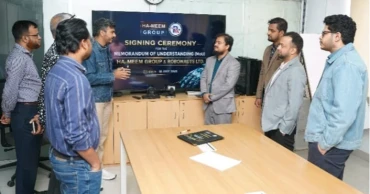
Ha-Meem Group, Robonauts partner to accelerate smart manufacturing in RMG sector
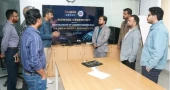
Ha-Meem Group on Saturday signed a Memorandum of Understanding (MoU) with Robonauts Ltd. to accelerate the adoption of Industry 4.0 technologies and develop a future-ready workforce for Bangladesh's ready-made garment (RMG) sector.
The MoU signing ceremony was attended by senior representatives from both organizations. Representing Ha-Meem Group were Rohit Gopalakrishnan Nair, Chief Operating Officer; Mr. M M Motiur Rahman, Zonal Executive Director – Tonzi Zone; Mr. Nizam Uddin, Assistant General Manager, Human Resources; and Mr. Washiful Islam Shadvi, Strategic Management and R&D Officer. Representing Robonauts Ltd. were Md Moonzoor Morshed, Chief Executive Officer; Mr. Ishraque Rafin, Chief Business Officer; and Mr. Tonmoy Khan, Executive Director.
The partnership aims to combine Ha-Meem Group's manufacturing expertise with Robonauts' capabilities in robotics, artificial intelligence (AI), industrial automation and engineering education to strengthen the competitiveness of the country's apparel industry.
According to the companies, the collaboration will focus on three key areas: workforce development, industrial automation and industry-academia collaboration.
Under the agreement, Robonauts will design and implement upskilling programmes for both white-collar and blue-collar employees, covering robotics, AI, automation systems, digital manufacturing, smart factory operations and other Industry 4.0 practices. Leadership development programmes will also be introduced to help managers lead digital transformation initiatives.
CEO of Robonauts Md Moonzoor Morshed said the partnership will also support the adoption of robotics, AI, machine vision, intelligent sensors and other smart manufacturing technologies across Ha-Meem Group's operations. Planned initiatives include automation assessments, process optimisation, AI-based quality inspection, predictive maintenance, automated material handling, production monitoring and customised automation solutions for the RMG sector.
The two organisations also plan to work with universities, engineering institutions and research organisations to promote innovation, research, internships and industry-academia collaboration, aiming to develop the next generation of engineers and technology professionals.
COO of Ha-Meem Group Rohit Gopalakrishnan Nair said the initiative reflects its long-term strategy to embrace Industry 4.0 and strengthen its global competitiveness through technology-driven manufacturing.
The companies said the partnership marks the beginning of a long-term collaboration to promote innovation, knowledge sharing and sustainable industrial growth, while supporting Bangladesh's ambition to remain a global leader in intelligent and technology-driven apparel manufacturing.
Robonauts Ltd. also expressed its heartfelt gratitude to Mr. Sajid Azad, Director of Ha-Meem Group, for his vision, encouragement and valuable support in making the collaboration possible.
16 days ago

DBA welcomes BSEC move to amend Margin Rules
The DSE Brokers Association of Bangladesh (DBA) has welcomed the initiative of the Bangladesh Securities and Exchange Commission (BSEC) to amend the Bangladesh Securities and Exchange Commission (Margin) Rules, 2025.
In a message on Saturday, the DBA said the pragmatic and market-friendly initiative marks a positive step for the country's capital market.
It said the amended Margin Rules, 2025 would help establish a balanced, modern and forward-looking regulatory framework that would play a significant role in ensuring the orderly, transparent and sustainable development of Bangladesh's capital market.
The association expressed hope that the draft of the amended margin rules would soon be published to seek public opinion, adding that it would submit detailed feedback and recommendations to the commission after reviewing the draft, if deemed necessary.
DBA President Saiful Islam said the association fully supports the reform initiatives undertaken by the BSEC to make Bangladesh's capital market stronger, more modern and investment-friendly.
He said the DBA would remain ready to work closely with the BSEC on all necessary reform initiatives for the development of the country's capital market in the future as well.
16 days ago
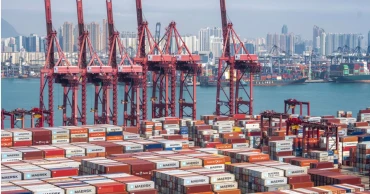
China signals US could restore preferential trade privileges for Hong Kong
China signaled on Friday that the United States could restore Hong Kong 's preferential privileges, saying Washington confirmed it will not renew an executive order that revoked the city's special trading status.
The Commerce Ministry said that the U.S. made commitments on Hong Kong issues and other matters during the U.S.-China trade talks in Madrid last year. The U.S. recently confirmed to China that the President’s Executive Order on Hong Kong Normalization would end, the ministry said in a statement responding to media questions.
“The U.S. side’s actions represent an important step in fulfilling the consensus reached during the bilateral economic and trade talks. China appreciates it,” it said.
It is not immediately clear what all the implications of the decision are. The White House referred questions about the executive order lapsing to the Treasury Department.
The U.S. Office of Foreign Assets Control said in a statement Friday that the national emergency declared in the executive order had expired and that it delisted people who were sanctioned under the order. But it said people who remain sanctioned under another act related to Hong Kong have been added to a different sanction list.
The statement showed Hong Kong leader John Lee and his predecessor, Carrie Lam, were removed from the first list but added to the second one.
The U.S. decision came two months after President Donald Trump met with his counterpart Xi Jinping in Beijing. It could warm ties between them ahead of Xi's expected visit to the U.S. later this year. Earlier this month, a pastor of a prominent underground church who was detained in China in October was released after Trump brought up his case with Xi.
Trump signed the now-expired executive order in July 2020, during his first term in response to Beijing imposing a national security law that year. Trump's order was last renewed for a year in July 2025.
Under the order, Trump said Hong Kong was no longer sufficiently autonomous to justify differential treatment in relation to mainland China under certain laws. It eliminated the preferential treatment for Hong Kong to the extent permitted by law and in the national security, foreign policy, and economic interest of the United States.
China considers the national security law for Hong Kong necessary to restore stability in the city after massive anti-government protests in 2019. The pro-democracy movement back then posed one of the biggest challenges to the Communist Party in Beijing and the Hong Kong government since the former British colony returned to Chinese rule in 1997.
Six years after the law's introduction, many leading activists, including pro-democracy former media tycoon Jimmy Lai, were imprisoned under it. Critics say the Western-style civil liberties that Beijing promised to maintain for 50 years after the handover have declined.
Hong Kong government said in a statement that it noted the “positive shift in the U.S. policy” toward the city.
“Safeguarding Hong Kong’s prosperity and stability serves the common interests of China and the US, and also aligns with the general expectation of the international community,” it said.
It said it hopes the U.S. will respect China's sovereignty and the rule of law in Hong Kong and resume normal economic and trade exchanges with the city.
17 days ago

US-Bangla Airlines steps into 13th year of operations
US-Bangla Airlines, one of the leading airlines in Bangladesh, on Friday stepped into its 13th year of operations, marking 12 years since its launch with plans to expand its fleet and international network over the coming years.
The airline, which began commercial operations on July 17, 2014 with flights on the Dhaka-Jashore route using a Dash 8-Q400 aircraft, now operates a fleet of 25 aircraft, including three Airbus 330-300 and nine Boeing 737-800, serving 20 domestic and international destinations, according to a press release.
US Bangla Group launches new venture ‘Take Trip’ travel agency
It has maintained an on-time performance rate of over 90 percent since its inception, the airline claimed.
US-Bangla currently operates domestic flights from Dhaka to Chattogram, Cox's Bazar, Sylhet, Saidpur and Rajshahi, and vice versa.
The carrier entered the international market on May 15, 2016 with flights to Kathmandu and has since expanded its network to Kolkata, Chennai, Male, Muscat, Doha, Dubai, Sharjah, Abu Dhabi, Jeddah, Riyadh, Kuala Lumpur, Singapore, Bangkok and Guangzhou.
US-Bangla Airlines is set to add few more Boeing 737-8 and Boeing 737-800 NG aircraft to its fleet soon.
In addition, it is moving forward with plans to operate flights to various middle east destinations, including Dammam, Madinah, Bahrain, Kuwait, Kathmandu, Colombo, Johur Bahru and Penang of Malaysia, Hong Kong by 2027 and European destinations, including London and Rome by 2028, and to New York, Toronto and Sydney by 2030.
US-Bangla was recently awarded the Best Domestic Airline in 2025. It has achieved Best Domestic Airline awards in 2022, 2023 and 2024 as well. It also won the Best Domestic Airline award in 2015.
On the occasion, US-Bangla Managing Director Mohammed Abdullah Al-Mamun said, "In a competitive world, we are ready to take on any kind of competitive challenge. In today's world, there is no alternative to modern aircraft to provide proper service to passengers. US-Bangla is constantly adding new aircraft to its fleet to ensure comfortable service to passengers.”
17 days ago
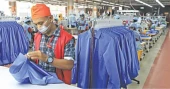
Bangladesh apparel exports to EU slump 19% in Jan-May
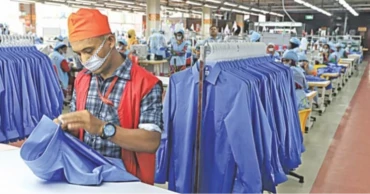
Bangladesh’s apparel exports to the European Union (EU) slumped by 18.89 percent year-on-year to €7.28 billion ($8.33 billion) in the first five months of 2026 (January-May), marking the steepest decline among the region's major global suppliers.
According to Eurostat data analysed by Mohiuddin Rubel, founder and CEO of Bangladesh Apparel Voice, the country is facing a critical "dual weakness," losing ground on both shipment volume and unit price simultaneously.
During the period, Bangladesh's apparel export volume to the EU fell by 10.46 percent, while its unit price dropped by 9.41 percent. Both figures are roughly double the global average decline.
Overall EU Demand Shrinks
The downturn reflects a broader contraction in the EU apparel market. Total EU apparel imports from the world fell by 9.96 percent year-on-year to €33.84 billion ($38.71 billion), down from €37.58 billion ($43.00 billion) in the same period last year.
The global decline was driven by a 6.46 percent drop in volume and a 3.74 percent decline in unit prices, suggesting that weaker consumer demand and softer pricing contributed almost equally to the market contraction.
However, Bangladesh’s performance in May alone showed worsening vulnerability, with export value sliding by 17.12 percent, volume down by 13.55 percent, and unit prices dropping by 4.13 percent.
Mixed Performance Among Competitors
While Bangladesh struggled on both fronts, its global competitors showed mixed resilience by adopting different market strategies.
China – the leading supplier – recorded the smallest value decline of 4.20 percent. It was the only major exporter to grow its shipment volume, which rose by 1.96 percent, defending its market share through a 6.05 percent price cut.
Vietnam emerged as the most resilient exporter, with its export value dipping just 1.51 percent. Despite a sharp 12.27 percent drop in volume, it defended its value through premium positioning, pushing its unit price up by 12.26 percent.
Pakistan’s export value fell by 17.01 percent despite a 3 percent increase in volume, suffering from a major unit price collapse of 19.43 percent.
India experienced a milder version of Bangladesh's dual weakness, with its export value declining by 13.33 percent.
Turkey and Cambodia faced volume-led declines of 17.17 percent and 15.13 percent, respectively, though their unit prices saw upward adjustments.
Indonesia experienced the sharpest volume contraction among all suppliers, plunging 23.76 percent.
Sustained Structural Concerns
Highlighting the gravity of the data, Mohiuddin Rubel noted that Bangladesh is currently the only major apparel supplier losing on both volume and price at this scale – contrasting sharply with Vietnam’s price-resilience and China’s volume-resilience.
He warned that because this dual weakness has persisted from April into May, it points to a sustained structural problem within Bangladesh's apparel sector rather than a temporary, one-month blip.
18 days ago
BIDA, ADB, SANEM hold workshop in Khulna to launch industrial survey, address investor challenges
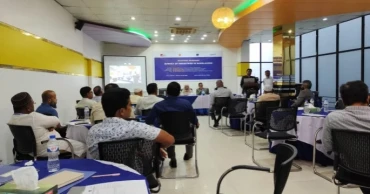
The Bangladesh Investment Development Authority (BIDA), in partnership with the Asian Development Bank (ADB) and the South Asian Network on Economic Modeling (SANEM), held a divisional workshop in Khulna on Thursday to introduce the "Survey of Industries in Bangladesh."
The event, held at a hotel in Khulna, brought together government officials, private sector representatives, and local business leaders to discuss promising regional sectors, identify barriers to investment, and seek stakeholder cooperation in verifying industrial data.
The survey led by BIDA, funded by ADB, and technically supported by SANEM—aims to identify investor grievances, resolve systemic bottlenecks, and establish a unified investment database to assist the government in evidence-based policymaking.
Addressing the workshop as the chief guest, Ms. Sifat Mehnaz, Additional Divisional Commissioner of Khulna Division, emphasized the need for efficient land use and the adoption of modern agricultural technologies to boost the economy.
She pointed out that approximately 30 percent of export-potential fruits are currently lost to post-harvest damage, and suggested the establishment of cold storage facilities to safeguard foreign earnings.
BIDA Director General Gazi AKM Fazlul Haque, who chaired the session, highlighted that the survey would replace scattered and redundant records with a clearer, unified database to help the government frame effective industrial policies.
"We must first make our domestic investment environment strong and keep local investors satisfied, which will naturally attract foreign investors," he said, noting that local business leaders have urgently requested a centralized portal for investment-related information.
Tasnim Alam, Public Sector Economist at ADB Bangladesh, who joined the session online, noted that with Bangladesh set to graduate from Least Developed Country (LDC) status in about three years, the private sector must step up to lead economic growth.
He stressed the importance of easing investor burdens through initiatives like BIDA's One-Stop Service (OSS).
Md. Tariqul Islam Zaheer, Managing Director of Achia Sea Foods Limited and guest of honour, discussed Khulna’s industrial potential in jute, sugar, shipbuilding, and cold storage sectors.
He advocated for establishing eco-friendly industries near the Sundarbans and integrating modern technologies into local enterprises. He also welcomed the survey, warning that the country’s growing debt is a heavy load being passed to future generations.
Dr. Selim Raihan, Executive Director of SANEM and Economics Professor at Dhaka University, explained that Bangladesh is simultaneously navigating three major structural shifts: energy, technology, and economic composition. He stated that building a unified investment database integrated with BIDA’s OSS portal is critical to overcoming the country's weak evidence base and fragmented records.
The industrial study is being executed through five work streams: collecting investment data, verifying it, building a standardized database, producing analytical reports, and preparing a national investment compendium.
SANEM Programme Director Zubayer Hossen highlighted that the survey covers all major economic sectors and ownership models across all eight administrative divisions of Bangladesh.
18 days ago