business
BSEC holds stakeholder consultation to make IPO process more transparent
The Bangladesh Securities and Exchange Commission (BSEC) on Wednesday held a stakeholder consultation meeting aimed at making the country's Initial Public Offering (IPO) process more transparent, accountable, efficient and internationally standard-compliant.
The meeting was held at the BSEC head office in Agargaon, chaired by BSEC Chairman Masud Khan, according to a press release issued by the commission.
BSEC Commissioners Tanwir Habib Rahman, Nahid Mahtab, and Nafeez Al Tarik, along with senior officials of the commission, attended the meeting.
BSEC clears maiden IQIO, greenlights intraday trading in reform push
The meeting held elaborate discussions on financial statement requirements for IPO applications under the Bangladesh Securities and Exchange Commission (Public Offer of Equity Securities) Rules, 2025, along with the roles and responsibilities of auditors, issue managers and issuers, and ways to make the IPO process more effective and investor-friendly.
Discussions also covered IPO pricing, listing of public interest entities, direct listing and rights issues, among other matters.
Representatives of various organisations participating in the discussion presented their assessments and recommendations on the existing challenges, practical experiences and potential reform areas in the IPO process.
The commission assured that it would consider the stakeholders' opinions with due importance and take necessary policy support and legal reform measures accordingly.
Representatives from the Financial Reporting Council (FRC), the Institute of Chartered Accountants of Bangladesh (ICAB), the Dhaka Stock Exchange (DSE), the Chittagong Stock Exchange (CSE), the DSE Brokers Association of Bangladesh (DBA), the Bangladesh Association of Publicly Listed Companies (BAPLC), the Bangladesh Merchant Bankers Association (BMBA), various merchant banks, issue managers and other stakeholders also joined the discussion.
BSEC's executive director, directors and other senior officials were also present at the meeting.
19 days ago

Al-Arafah Islami bank returned to former owners
Bangladesh Bank has handed the management of Al-Arafah Islami bank back to its former owners.
As per the central bank directive, 14 new entrepreneur-shareholders were inducted into the bank's board of directors on Wednesday (July 15).
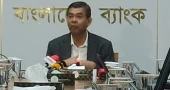
Bangladesh Bank Executive Director and Spokesperson Arif Hossain Khan confirmed the information to UNB.
Since August 2024, the bank had been functioning under a five-member body of independent directors. With the inclusion of these 14 individuals, the total number of directors now stands at 19. During the Awami League regime, Abdus Samad Labu, brother of S. Alam served as the chairman of Al-Arafah Islami bank.
The central bank spokesperson stated that among the 16 banks whose boards were previously dissolved by the BB, Al-Arafah Bank’s financial condition has shown improvement, prompting the reinstatement of its shareholder-directors.
He noted that while the entrepreneurs of other dissolved banks could not be traced, the situation was different for Al-Arafah Bank, which is why it has been handed back to them.
Among the 14 new board members, three are from the KDS Group. They are KDS Group Chairman Khalilur Rahman, KDS Garments representative director Mahbub Ahmed, and KDS Textile representative director Farid Uddin Ahmed.
The other directors included in the board are the bank’s former chairman Bodiur Rahman, Enayet Ullah (who contested the last election from Dhaka-7 representing Jamaat), Selim Rahman, Ahamedul Haque, Rafiqul Islam, Imadur Rahman, Nazmul Ahsan Khaled, Anwar Hossain, Abdus Salam, Liakat Ali Chowdhury, and Sharif Uddin Taslim, representing KY Steel Mills.
Following the fall of the Awami League regime, the central bank dissolved the board of Al-Arafah Islami Bank and appointed Khaja Shahriar as an independent director and chairman of the board.
The other independent directors on the board—Md. Shahin Ul Islam, Md. Abdul Wadud, M. Abu Yusuf, and Mohammad Ashraful Hasan—will also remain on the new board. Moving forward, all members of the newly formed board will collectively appoint a new chairman.
19 days ago
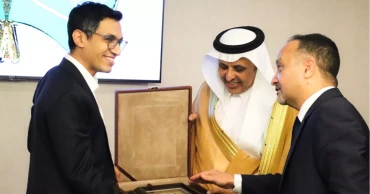
Saudi Arabia keen to expand investment in Bangladesh’s transport, logistics and Maritime sectors
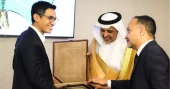
Saudi Arabia has expressed a strong interest in expanding its investment footprint in Bangladesh, with a particular focus on strengthening cooperation in the transport, logistics, and maritime sectors.
The interest was conveyed during a meeting between a Saudi delegation, led by Deputy Minister of Transport and Logistics Dr. Rumaih Mohammed Al-Rumaih, and Bangladeshi officials at Biniyog Bhaban in the capital on Wednesday.
Saudi envoy meets PM, hands over Crown Prince's letter
Ashik Chowdhury, Executive Chairman of the Bangladesh Investment Development Authority (BIDA) and CEO of the Public Private Partnership (PPP) Authority, led the Bangladesh side during the focused discussion on transport, logistics, and infrastructure cooperation. Officials from the PPPA, BIDA, and the Bangladesh Economic Zones Authority (BEZA) also joined the meeting.
During the meeting, the Saudi minister lauded Bangladesh’s focus on privatisation and business facilitation, noting that it closely aligns with Saudi Arabia’s own strategic goals.
19 days ago
BEPZA exports grow 2.2% to $8.41bn in FY26
Bangladesh Export Processing Zones Authority (BEPZA) posted a 2.2 percent growth in exports in the fiscal year (FY) 2025-26, outperforming the country’s overall export performance despite a slowdown in the global economy and a slight decline in Bangladesh’s total exports.
Exports from its export processing zones (EPZs) reached US$8.41 billion during FY26, accounting for 17.51 percent of Bangladesh’s total exports of US$48 billion, said a press release.
In the previous fiscal year, exports from BEPZA-run zones stood at US$8.22 billion out of the country’s total exports of US$48.28 billion.
While Bangladesh’s overall exports declined by 0.58 percent in FY26, exports from BEPZA zones recorded positive growth, highlighting the resilience of enterprises operating in the zones.
BEPZA also achieved its highest-ever investment commitment in a single fiscal year by signing lease agreements with 36 companies from China, South Korea, the British Virgin Islands, Singapore, the United Arab Emirates, Samoa and Bangladesh.
The proposed investment amounts to US$717.71 million. Once the projects go into full commercial production, they are expected to generate employment for 75,744 Bangladeshi nationals.
The new investments cover a wide range of diversified industries, including bags and luggage, fashion accessories, textiles, electrical and electronic products, Bluetooth headphones, aircraft amenity kits, toy and fishing drones, lightweight cargo drones, footwear, leather goods, light engineering products, camping furniture, greenhouse hydroponic tents, agricultural products, processed foods and household items.
BEPZA said growing investor confidence has encouraged existing investors to expand their operations. It cited China’s Kaixi Group as an example.
After investing US$60.85 million in Kaixi Lingerie Bangladesh, the group signed another lease agreement to invest an additional US$40.50 million in Kaixi Garments Bangladesh.
Excluding working capital, actual investment worth US$286.46 million was made in BEPZA zones during FY26 in the form of capital machinery, construction materials and other assets.
According to Bangladesh Bank data, BEPZA recorded net foreign direct investment (FDI) inflows of US$221.58 million during the first nine months of FY26 (July 2025 to March 2026), accounting for 19.61 percent of the country’s total FDI net inflows during the period.
Employment in BEPZA zones also reached a record high during the fiscal year.
A total of 25,164 new jobs were created, raising cumulative employment from 533,527 at the end of June 2025 to 558,691 by the end of June 2026.
BEPZA said its diversified industrial base continues to reduce dependence on the readymade garment sector.
Of the 451 operational enterprises, 33 percent are engaged in garment manufacturing, 18 percent in garment accessories and 8 percent in textiles, while the remaining 41 percent produce a broad range of diversified products.
Products manufactured in BEPZA-run zones are currently exported to 129 countries, reflecting the expanding global reach and competitiveness of Bangladesh’s export-oriented industries.
BEPZA currently operates eight Export Processing Zones and the BEPZA Economic Zone.
As of June 2026, cumulative investment in BEPZA zones stood at US$7.37 billion, while cumulative exports reached US$127.42 billion.
A total of 566 industrial enterprises are under BEPZA, including 451 in commercial operation and 115 under implementation.
19 days ago
BB eases external borrowing rules for foreign-owned industries
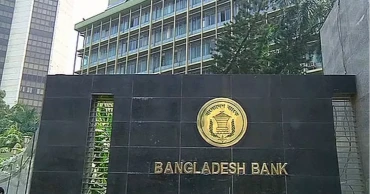
Bangladesh Bank has granted general permission for fully foreign-owned industrial enterprises, operating both within and outside specialised economic zones, to borrow directly from their parent companies, associates, or shareholders abroad, in a move aimed at easing access to finance for foreign investors.
The central bank's Foreign Exchange Investment Department (FEID) issued the directive through FEID Circular on Wednesday revising earlier provisions under FE Circular No. 34 of September 2, 2025, which governed external borrowing by such enterprises.
Under the new provisions, foreign-owned manufacturing and service enterprises outside specialised zones such as EPZs, PEPZs, EZs and HTPs can now avail short-term borrowing of less than one year without prior Bangladesh Bank approval, provided the funds are used for genuine business purposes.
The circular allows two options for such borrowing-enterprises may take interest-free loans for general working capital needs, excluding input procurement, with no central bank clearance required even for principal repayment.
Alternatively, they may opt for cost-bearing loans in convertible foreign currencies, including for input procurement, but the all-in cost of such borrowing must not exceed 3 percent per annum.
These loans must be repaid in a single bullet payment at maturity and may be rolled over, provided the total tenor, including rollovers, does not exceed three years from the date of initial drawdown. Such short-term facilities cannot be converted into medium or long-term loans.
Authorized Dealers (ADs) have been directed to report all such transactions to the FEID within one week of execution, in addition to routine reporting requirements.
19 days ago
BFIU seizes Tk 76,000 crore in assets in FY24-25, says it head
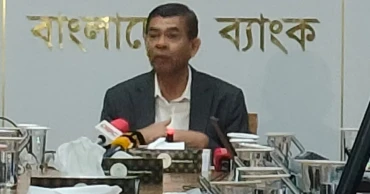
Bangladesh Financial Intelligence Unit (BFIU) seized assets worth around Tk 76,000 crore including Tk 57,000 crore in Bangladesh and Tk 19,000 crore abroad as per court orders during the 2024-25 fiscal year.
"The money has been seized by court order and the assets will remain frozen until the legal process is completed," BFIU Head Iqtiaruddin Md. Mamun said at a press briefing at the Bangladesh Bank headquarters on Tuesday while unveiling the BFIU Annual Report 2024-25.
He said the BFIU remains committed to protecting the assets of the people of Bangladesh and is conducting investigations into suspicious financial transactions impartially, regardless of political affiliation or personal identity.
Responding to a question, Mamun said the BFIU has strengthened its anti-money laundering efforts by increasing the use of technology including Artificial Intelligence (AI) to detect suspicious transactions more effectively.
The annual report also showed that the BFIU recorded a 74 percent increase in suspicious financial reports in FY2024-25 compared to the previous fiscal year.
According to the report, the financial intelligence agency received 30,199 suspicious reports during FY2024-25 including 20,524 Suspicious Transaction Reports (STRs) and 9,675 Suspicious Activity Reports (SARs).
The figure was significantly higher than the 17,345 reports received in FY2023-24 and nearly six times the 5,280 reports submitted in FY2020-21.
The BFIU attributed the sharp rise to stronger regulatory enforcement and compliance requirements for reporting entities, improved technological capabilities for transaction monitoring and pattern detection, increased awareness among financial institutions about money laundering and terrorist financing risks, and a rise in suspicious financial activities, including online gambling and betting, foreign exchange (FX) and cryptocurrency trading, and digital hundi.
The report said the banking sector continued to dominate Bangladesh's financial intelligence reporting system, accounting for 95 percent of all submissions in FY2024-25, up from 92 percent a year earlier.
Banks alone submitted 28,755 STRs and SARs during the fiscal year, marking an 80 percent increase from 15,991 reports in FY2023-24.
Although financial institutions and money remitters also recorded increases in the number of suspicious reports over the past three years, their overall contributions remained limited, accounting for about one percent and four percent of total reports respectively in FY2024-25.
The report also noted increased cooperation between the BFIU and law enforcement agencies.
Requests for financial intelligence from law enforcement and intelligence agencies rose by about 15 percent to 1,329 in FY2024-25 from 1,157 in the previous fiscal year.
The Criminal Investigation Department (CID) of Bangladesh Police and the Anti-Corruption Commission (ACC) were the leading agencies seeking financial intelligence from the BFIU.
Meanwhile, the BFIU observed a year-on-year decline in Cash Transaction Reports (CTRs), which are mandatory for cash deposits or withdrawals of Tk 10 lakh or more in a single day.
Banks and financial institutions reported 31.25 million cash transactions involving Tk 19,452 billion, while financial companies reported 1,484 such transactions worth Tk 2.17 billion.
According to the report, the decline in CTRs reflects Bangladesh Bank's continued efforts to promote a cashless and digitally enabled financial ecosystem.
19 days ago

Grameenphone declares 105% interim cash dividend for H1 2026
Grameenphone Limited has declared an interim cash dividend of 105 percent for the year 2026, equivalent to Tk 10.50 per share of Tk 10 each, alongside its audited financial statements for the six months ended June 30, 2026.
The dividend represents 100 percent of the company's profit after tax for the January-June period, according to a disclosure sent to the Dhaka Stock Exchange (DSE) on Wednesday.
The record date for entitlement to the interim cash dividend has been set for August 12, 2026.
Based on the audited accounts, Grameenphone's earnings per share (EPS) stood at Tk 5.62 for the April-June quarter of 2026, down from Tk 6.51 in the same quarter last year. For the January-June period, EPS was Tk 10.52, compared with Tk 11.21 during the corresponding period of 2025.
The company's net operating cash flow per share (NOCFPS) came down to Tk 22.27 for the first half of 2026, against Tk 26.94 in the same period last year, marking a 17.3 percent decline. Grameenphone attributed the drop mainly to higher payments made to suppliers during the current period.
Net asset value (NAV) per share was recorded at Tk 41.51 as of June 30, 2026, slightly lower than Tk 42.15 a year earlier.
Following the corporate declaration, there will be no price limit on the trading of Grameenphone shares on the DSE on Wednesday.
19 days ago
Bangladesh Bank tightens boiler import rules with prior approval requirement
Bangladesh Bank has made prior approval from the Chief Inspector of Boilers mandatory for the import of boilers and boiler components, in line with a directive from the Ministry of Industries.
The central bank's Foreign Exchange Policy Department issued a notification on Tuesday, instructing authorised dealer (AD) branches of all banks engaged in foreign exchange transactions to comply with the new requirement.
The notification said the fresh directive follows a memo issued by the Boiler Wing of the Ministry of Industries on June 28, 2026, and has been made effective for all boiler and boiler component imports accordingly.
According to the notification, boiler manufacturers must complete construction within a maximum of 12 months from the date of drawing and design approval.
Manufacturers must also hand over all documents and certificates required for registration to the buying entity after supply or sale of a boiler, and must inform the Chief Inspector of Boilers in writing of the buyer's name and address.
The directive further requires that occupational health and safety of factory workers be ensured, with all relevant provisions of existing labour law to be followed.
Under the new instructions, prior approval from the Chief Inspector of Boilers must be obtained through a prescribed application form before any import of boilers or boiler components.
On receipt of an application, a designated officer will verify the necessary documents and submit a report to the Chief Inspector, who will grant or reject the import approval after reviewing the report.
If approved, the Deputy Chief Inspector of Boilers will issue the approval letter. If an application is rejected, the applicant must be informed in writing of the reasons within seven working days, after which they may reapply upon rectifying the deficiencies and paying the requisite fee.
The notification added that the concerned authority may also inspect a manufacturer's factory or production process, if required, to ensure the quality of boilers.
19 days ago
BB grants exemption to Shinepukur Ceramics to open LCs with 100% margin until Dec 2027
Bangladesh Bank (BB) has exempted Shinepukur Ceramics Limited from a specific restrictive provision allowing the company to open Letters of Credit (LC) with a 100 percent margin through Sonali Bank PLC to import essential raw materials.
The central bank issued an official directive on Tuesday (July 14), signed by Deputy Governor Dr. Md. Kabir Ahmed and circulated by Director Md. Bayazid Sarker of the Banking Regulation and Policy Department-2, notifying the top executives of all scheduled banks across the country.
Bangladesh Bank declared that the restrictions under Section 27 Ka(3) of the same act will remain suspended for Shinepukur Ceramics Limited until December 31, 2027.
The central bank noted that the special regulatory waiver has been granted strictly on humanitarian and economic grounds to ensure the continuity of the factory’s industrial production and to protect the employment of its massive workforce.
However, the apex bank attached strict conditions to safeguard the state-owned lender's funds:
Designated Account Tracking: Shinepukur Ceramics Limited must deposit all its operational and business income into a single, specific designated bank account.
Proportionate Debt Clearance: Sonali Bank PLC must regularly recover its outstanding dues from that specific account on a proportionate basis.
Zero State Liability: The central bank explicitly clarified that no financial liability or obligation will be passed on to the Finance Division or Bangladesh Bank against this special credit facility.
No Future Bailouts: The directive strongly stated that Sonali Bank PLC, the Government, or any involved entity cannot claim any financial assistance or bailouts from Bangladesh Bank regarding this arrangement in the future.
20 days ago

Gold price slashed again within 24 hours
The Bangladesh Jewellers Association (BAJUS) on Tuesday cut the price of gold for the second time in 24 hours, slashing the rate of 22-karat gold by Tk 2,158 per bhori to set the new price at Tk 219,808, inclusive of VAT.
In a notice issued in the morning, BAJUS said the fresh price cut reflects a decline in the price of pure gold in the local market. The revised rates came into effect from 10 am on Tuesday.
According to the new pricing, each bhori (11.664 grams) of 21-karat gold will now cost Tk 209,894, while 18-karat gold has been priced at Tk 180,267 per bhori. Traditional gold will sell at Tk 147,316 per bhori.
BAJUS said the new prices will remain in effect until further notice, though making charges will continue to apply depending on jewellery design. Since VAT is already included in the sale price of gold and silver ornaments, jewellers cannot charge VAT separately from customers.
The association's existing rules for ornament exchange and purchase excluding specified VAT, making charges and stone costs will remain unchanged.
The previous price adjustment came on the morning of July 13, when BAJUS cut the rate by Tk 2,216 per bhori, setting 22-karat gold at Tk 221,966 including VAT.
With Tuesday's revision, the price of gold has been adjusted 91 times in the local market so far in 2026 - increased on 44 occasions, decreased on 46, and adjusted once for VAT.
Silver prices, meanwhile, remained unchanged. Each bhori of 22-karat silver is currently selling at Tk 4,607, while 21-karat, 18-karat and traditional silver are priced at Tk 4,374, Tk 3,791 and Tk 2,858 per bhori, respectively.
Silver prices have been adjusted 56 times so far this year, with 28 increases and 28 decreases.
20 days ago