business

EU share erodes as Bangladesh RMG exports slip 1.64% to $38.70 billion in FY26
Bangladesh’s ready-made garment (RMG) exports registered a slight year-on-year decline of 1.64 percent, totalling US$ 38.70 billion for the fiscal year 2025-26 from $39.34 billion in FY2024-25, according to recent data from the Export Promotion Bureau (EPB).
The export performance highlights shifting trends across major global destinations, featuring an erosion in the European Union (EU) market share alongside steady gains in North America and the United Kingdom.
June exports surge by 25.91%, FY26 earnings hold steady at $48 billion: EPB
EU Market Contraction Signals Diversification Urgency
The EU sustained its position as Bangladesh’s largest single destination bloc, but exports to the region fell by 3.31 percent to $ 19.06 billion.
This slump pulled the EU’s share of total apparel exports down to 49.25 percent from 50.10 percent a year earlier. Analysts view this contraction as a strong signal of intensifying market diversification pressure as Bangladesh moves closer to its Least Developed Country (LDC) graduation.
Gains in the US, UK, Canada offset declines
In stark contrast to the European slowdown, Bangladesh’s other traditional Western markets demonstrated resilience, posting across-the-board growth.
Apparel exports to the United States (US) rose by 2.63 percent to reach $ 7.74 billion, lifting its total export share to 20.01 percent from 19.18 percent in the previous year.
Shipments to the United Kingdom (UK) edged up by 0.91 percent to $ 4.39 billion, raising its overall market share slightly to 11.34 percent, while exports to Canada grew by 3.20 percent to reach $ 1.34 billion, with its share ticking up to 3.47 percent.
Combined, the US, the UK and Canada now account for more than 35 percent of Bangladesh's total RMG exports, partially cushioning the impact of the downturn in the EU market.
Slump Hits Non-Traditional Markets
The export crunch was not limited to Europe. Apparel shipments to non-traditional markets, including key destinations such as Japan, Australia, Russia, Turkey, and the Gulf states, dropped by 4.25 percent to $ 6.16 billion. Consequently, the collective share of these non-traditional destinations dipped to 15.93 percent from 16.36 percent, marking a second straight area of contraction for the sector.
Woven Outperforms Knitwear
Product category analysis revealed a varied performance between major garment types. Knitwear exports faced a steeper decline, dropping by 2.53 percent over the fiscal year.
Conversely, the woven garment category proved comparatively resilient, experiencing a marginal dip of just 0.61 percent, maintaining a steady trend of outperforming knitwear throughout the majority of the fiscal year.
Mohiuddin Rubel, former director of the Bangladesh Garment Manufacturers and Exporters Association (BGMEA), told UNB that Bangladesh has to diversify products to increase exports to EU markets.
27 days ago
NBR to e-auction 168 uncleared containers at Ctg port to ease congestion
The National Board of Revenue (NBR) has announced plans to auction 168 containers of uncleared and auctionable goods through its electronic auction (e-auction) system this month as part of efforts to reduce congestion at Chattogram Port, enhance operational efficiency and prevent wastage of state assets.
According to an NBR press release issued on Tuesday, the initiative is aimed at improving the port's handling capacity, clearing container backlogs, ensuring physical and financial security and safeguarding public property.
NBR alerts taxpayers to fake audit calls, extortion attempts
The auctions will be conducted entirely through a digital process to ensure transparency and accountability.
Under special e-auction No. 08/2026, 93 containers grouped into 76 lots will be auctioned in line with two NBR standing orders.
The consignments include various chemicals, bitumen, machinery and spare parts, plastic sheets, chest freezers, pipes, different types of fabrics, paper and household goods.
The NBR said no reserved value has been set for the goods under the special auction.
Meanwhile, e-auction No. 07/2026, to be conducted under the same standing order, will offer 75 containers in 55 lots.
The items include capital machinery, fabrics, PVC flex banners, badminton rackets, elevators, air filters, kraft liner paper, salt and other products.
To encourage greater competition, prospective bidders will be able to inspect the goods physically before submitting online bids.
Goods under e-auction No. 07/2026 will be available for inspection from July 13 to July 20 during office hours, while those under special e-auction No. 08/2026 can be inspected from July 16 to July 23.
Interested buyers can register on the customs' official e-auction portal and submit online bids for e-auction No. 07/2026 between July 12 and 3:00pm on July 22.
Bids for special e-auction No. 08/2026 can be submitted from July 14 until 3:00pm on July 26.
Successful bidders will be required to clear the goods in compliance with the applicable provisions of the Import Policy Order 2021-2024.
The bid box for e-auction No. 07/2026 will be opened at 3:30pm on July 22, while the bid box for special e-auction No. 08/2026 will be opened at 11:00am on July 27.
The NBR expressed hope that the technology-driven auction process will play an important role in increasing the efficiency of Chattogram Port and ensuring effective management of national assets.
27 days ago

Remittance inflow surges to $696m in first six days of FY27
Remittance inflow from expatriate Bangladeshis jumped to $696 million in the first six days of July.
At the same time, the country’s foreign exchange reserves remained stable, standing close to US$38 billion in gross terms, according to the latest data released by Bangladesh Bank.
The central bank data showed that expatriate Bangladeshis sent home $696 million in remittances between July 1 and July 6, 2026, compared to $427 million received during the same period of the previous fiscal year.
The inflow marked a 62.8 percent rise year-on-year, reflecting continued reliance on formal banking channels by migrant workers to send money home.
On July 6 alone, Bangladesh received $129 million in workers’ remittance.
Meanwhile, Bangladesh Bank reported that the country’s gross foreign exchange reserves stood at $37.85 billion as of July 6.
Under the International Monetary Fund’s (IMF) Balance of Payments and International Investment Position Manual (BPM6) calculation method, the reserves stood at $33.20 billion.
The combination of strong remittance inflows and a stable reserve position is expected to provide a cushion for Bangladesh’s macroeconomic stability amid uncertainties in the global economy.
In the previous fiscal year 2025-26, Bangladeshi expatriates sent $35.34 billion in remittances through official banking channels.
27 days ago
BB outlines rules for Tk 20,000cr pre-finance scheme to revive closed industries
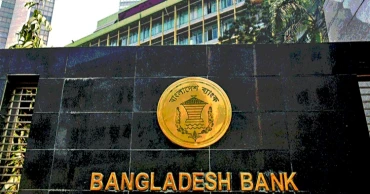
Bangladesh Bank (BB) has issued comprehensive guidelines for scheduling banks to access its newly formed Tk 20,000 crore revolving pre-finance scheme, aimed at revitalising closed and capital-starved units in the country’s large industry and service sectors, particularly export-oriented ones.
The central bank's Banking Regulation and Policy Department-3 (BRPD-3) issued a circular for the managing directors and chief executive officers of all scheduled banks on Tuesday, detailing the operational modalities.
BB issues new directives on appointing audit firms for cash incentives
According to the circular, the three-year revolving fund titled “Closed Industry and Service Sector Facilitation Pre-finance Scheme” will be sourced from the surplus liquidity of scheduled banks.
To participate in the scheme, interested banks must execute a "Participation Agreement" with the BRPD-3. After obtaining approval from their respective boards of directors, banks can apply for the pre-finance facility using a designated format, complete with necessary documentation, before disbursing the loans to end-borrowers.
The central bank stipulated that borrowers who are already availing working capital facilities from other BB re-finance or pre-finance schemes must undergo a thorough review of their requirements before a fresh application is submitted.
To ensure transparency and prevent financial irregularities, Bangladesh Bank has mandated that participating banks must collect specific declarations and reports from applicants alongside standard documentation.
These include a declaration from the borrower confirming that they have never been involved in money laundering, forgery, fund diversion, or loan misuse, a certification verifying the client’s production or service delivery capability, sales and revenue reports from the beneficiary entities, a commitment from banks to conduct quarterly factory inspections and submit inspection reports.
Reporting and Compliance
Participating banks will be required to submit quarterly statements on loan disbursement and recovery to Bangladesh Bank by the 10th of the month following the end of each quarter.
27 days ago
BSEC approves UCB's Tk 775cr rights share issue, new mutual fund
Bangladesh Securities and Exchange Commission (BSEC) on Tuesday approved United Commercial Bank PLC's (UCB) proposal to raise Tk 775.18 crore through a rights share issue, alongside clearing the draft prospectus of a new open-end mutual fund.
The decisions were taken at the commission's 1019th meeting, held at its Agargaon office and chaired by BSEC Chairman Masud Khan.
Under the approved plan, UCB will issue 77,51,87,549 ordinary shares at a face value of Tk 10 each on a 1:2 rights basis, meaning one rights share for every two existing shares held.
The bank will use the proceeds to support its regular business operations, the commission said.
In a separate decision, the commission approved the draft prospectus and abridged version of “Blue-Wealth First Stable Return Fund,” a new open-end mutual fund with an initial target size of Tk 30 crore. Of this, sponsor Blue-Wealth Assets Limited will contribute Tk 3 crore, while the remaining Tk 27 crore will be open to general investors, with each unit priced at Tk 10.
Blue-Wealth Assets Limited will act as the fund's asset manager, while Sandhani Life Insurance Company Ltd. (SLIC) and Commercial Bank of Ceylon PLC will serve as trustee and custodian, respectively.
27 days ago

June as PMI falls 9.9 points to low 50s, signaling weaker business confidence
Bangladesh's Purchasing Managers’ Index (PMI) for June has recorded a sharp slowdown, falling 9.9 points from May to settle at 52.9, as manufacturing and construction sectors slipped back into contraction while agriculture and services continued to expand at a softer pace, according to a report released on Tuesday.
The Bangladesh PMI, jointly compiled by the Metropolitan Chamber of Commerce and Industry (MCCI), and Policy Exchange Bangladesh (PEB), is developed with support from the UK government and technical assistance from the Singapore Institute of Purchasing & Materials Management (SIPMM).
PMI improves in February, indicating spike in economic confidence
The index is designed to provide timely and reliable insights into the country's economic health to help businesses, investors and policymakers make informed decisions.
Commenting on the findings, M Masrur Reaz, Chairman and CEO of Policy Exchange Bangladesh, said the June reading suggested Bangladesh's economy remained in expansion overall, but with clear sectoral divergence.
He said agriculture and services continued to grow, though more slowly, while manufacturing returned to contraction on weaker orders, exports, employment and supplier deliveries.
Construction also contracted amid softer activity and new business, he said, adding that long Eid holidays, the onset of the monsoon and fading pre-Eid demand had weighed on business conditions during the month.
The agriculture sector recorded its tenth consecutive month of expansion in June, although growth moderated from May. New business, business activity, employment and input costs all continued to expand, while the order backlogs index remained in contraction for the second straight month.
The manufacturing sector returned to contraction after two months of expansion, dragged down by weaker new orders, new exports, employment, supplier deliveries and order backlogs. Factory output, input purchases and imports continued to grow, though at a slower pace, while input prices accelerated and the finished goods index swung back into expansion.
The construction sector also reverted to contraction after posting expansion in May, with new business, construction activity and employment all falling back. Input costs and order backlogs, however, continued to expand at a faster pace within the sector.
The services sector expanded for the 21st consecutive month in June, though growth slowed across new business, business activity, employment and input costs, while the order backlogs index contracted at a faster rate.
Looking ahead, the Future Business Index points to continued expansion in agriculture, construction and services, while manufacturing is expected to return to expansion, reflecting cautious optimism about business conditions in the coming months.
Respondents across major economic sectors described business conditions in June as challenging amid rising production costs and weaker market conditions. Many firms cited higher LPG and fuel prices, rising transportation and operating costs, and increasing labour expenses as key pressures squeezing profit margins.
Several businesses also pointed to financial constraints, disruptions from ongoing road construction activities, and concerns over the recently imposed 15 percent VAT, which they said had raised the cost of doing business. Agricultural respondents flagged weather-related uncertainties affecting production and seasonal demand, while some firms noted that local economic activity remained subdued.
Despite the challenges, respondents expressed hope that improvements in the business environment, stable energy supplies and supportive government policies would help strengthen business confidence and economic activity in the months ahead.
Several respondents also recommended maintaining a representative and high-quality respondent panel to further enhance the reliability of the Bangladesh PMI.
The report was signed by Farooq Ahmed, Secretary-General and CEO of MCCI, and M Masrur Reaz, Chairman and CEO of Policy Exchange Bangladesh.
27 days ago
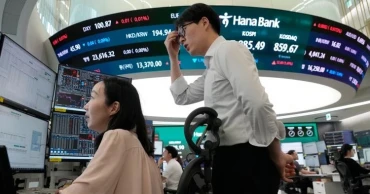
Asian markets fall as South Korean stocks tumble despite Wall Street's AI-driven rally
Asian stock markets closed lower on Tuesday, led by a sharp fall in South Korean shares, even as AI-related stocks helped lift major US indexes overnight.
Oil prices edged higher, while US stock futures showed mixed performance.
South Korea's Kospi briefly plunged as much as 8% before recovering some ground to end the day down 4.9% at 7,656.31.
Shares of Samsung Electronics dropped 7.7%, despite the company reporting a 19-fold jump in quarterly operating profit to 89.4 trillion won (about $58.7 billion) and more than doubling its revenue. Chipmaker SK Hynix also fell 6.7%.
Kim Seok-hwan, an analyst at Mirae Asset Securities, said Samsung's decline was mainly due to foreign investors taking profits after recent gains and adjusting their investment portfolios.
Technology stocks linked to artificial intelligence have seen sharp swings in recent weeks as investors question whether the massive spending on AI chips and data centres will generate enough profits to justify the investments.
Stephen Innes of SPI Asset Management said the market reaction to Samsung's strong earnings suggested investors were becoming more cautious about AI-related stocks.
Investor sentiment will face another test this week as SK Hynix plans to raise $28 billion through a Nasdaq share offering in the United States. If successful, it would rank among the largest US stock offerings, following SpaceX's $75 billion IPO last month.
Despite recent losses, SK Hynix shares have more than tripled this year on strong optimism over AI demand.
Elsewhere in Asia, Japan's Nikkei 225 fell 2.1% to 68,256.96. Tokyo Electron lost 3.9%, while Kioxia Holdings dropped 11.3%.
Hong Kong's Hang Seng Index slipped 0.7% to 23,444.20, while China's Shanghai Composite Index declined 1.3% to 3,990.25. Taiwan's Taiex lost 2.3%.
Australia's S&P/ASX 200 edged down 0.3%, while India's Sensex gained 0.5%.
On Wall Street, the S&P 500 rose 0.7% on Monday to 7,537.54, moving within 1% of its record high despite most of its listed stocks ending lower.
The Nasdaq Composite climbed 1.1% to 26,121.16, driven by gains in AI-related technology companies, while the Dow Jones Industrial Average added 0.3% to close at a record 53,055.91.
Broadcom was among the biggest contributors to the S&P 500's gains after rising 3.7% on news of long-term agreements to supply silicon products to Apple.
SpaceX fell 1% in its final trading session before joining the Nasdaq-100 index, a move expected to trigger buying by funds that track the benchmark.
AI infrastructure company TeraWulf gained 4.9% after announcing a 20-year agreement with Anthropic to use its Kentucky data centre. The company expects the deal to generate about $19 billion in revenue as it shifts its business from bitcoin mining to high-performance computing.
In energy markets, Brent crude, the international benchmark, rose 84 cents to $72.83 a barrel, while US benchmark crude increased 73 cents to $69.28.
Oil supply concerns resurfaced after the British military reported that a liquefied natural gas tanker caught fire off the coast of Oman in the Strait of Hormuz after being struck by a projectile early Tuesday.
The latest attack highlighted continuing security risks in the strategic waterway, through which about one-fifth of the world's oil and natural gas trade once passed during peacetime. Iranian state television reported that the tanker was attacked after ignoring warnings but stopped short of claiming responsibility.
In currency trading, the US dollar slipped to 162.01 Japanese yen from 162.09 yen, while the euro eased to $1.1431 from $1.1442.
27 days ago

Anis Ur Rahman appointed Deputy Governor of Bangladesh Bank
Md. Anis Ur Rahman, Executive Director of Bangladesh Bank, has been appointed as the Deputy Governor of the central bank for a three-year term.
The Financial Institutions Division of the Ministry of Finance issued an official gazette notification to this effect today, Monday (July 6).
According to the office order, the appointment has been made by order of the President in accordance with Article 10(4) of the Bangladesh Bank Order, 1972.
The notification, signed by Md. Shafi Ullah, Senior Assistant Secretary of the Financial Institutions Division, states that Md. Anisur Rahman has been appointed on a contractual basis for a period of three (3) years from the date of his joining.
The appointment is subject to the condition of his voluntary retirement from his current post as Executive Director and the suspension of his Post Separation Leave (PRL).
Other terms and conditions of this appointment will be determined by a contract agreement. The order, issued in the public interest, will take effect immediately, the notification added.
28 days ago

Indices edge up on DSE, CSE but turnover declines on second trading day
Share prices edged higher on both the Dhaka and Chattogram bourses on Monday, the second trading day of the week, even as overall turnover fell and the majority of listed companies saw their share prices gain.
The DSEX, the benchmark index of the Dhaka Stock Exchange (DSE), rose 12 points during the day's trading.
DSE awards FIX certification to 3 more brokerages
The Shariah-based index DSES gained four points, while the blue-chip index DS30 edged up by one point.
Of the 392 companies traded, 166 saw price gains, 155 saw declines and 71 remained unchanged.
Turnover on the DSE stood at Tk 1,416 crore for the day, down from Tk 1,530 crore on Sunday, a fall of more than Tk 100 crore in a single day.
Dragon Sweater and Spinning Limited led the gainers, rising nearly 10 percent, while Bangladesh Industrial Finance Company Limited was the worst performer, losing around 9 percent.
The Chittagong Stock Exchange (CSE) also saw its benchmark index CASPI climb 73 points on the day.
Of the companies traded on the CSE, 135 posted gains, 93 declined and 26 remained unchanged.
Turnover on the CSE stood at Tk 16 crore, sharply down from Tk 66 crore on Sunday, a decline of nearly Tk 50 crore in a single day.
Beximco Pharmaceuticals PLC and Islamic Finance & Investment PLC topped the CSE gainers' list, each rising 10 percent, while Rahima Food Corporation Ltd was the top loser, shedding nearly 10 percent.
28 days ago
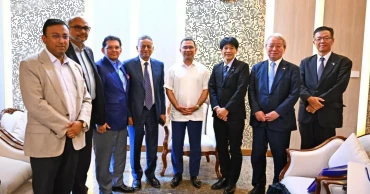
JICA chief completes tour of Bangladesh, reaffirms commitment to sustainable and inclusive development
President of the Japan International Cooperation Agency (JICA), Dr Tanaka Akihiko, has concluded a five-day official visit to Bangladesh, reaffirming the enduring Japan-Bangladesh Strategic Partnership and JICA's commitment to supporting the country's sustainable and inclusive development.
During his July 1-5 visit, Dr Tanaka attended the 10th memorial ceremony honouring the seven Japanese nationals killed in the 2016 Holey Artisan Bakery terrorist attack, paying tribute to the victims and reaffirming the shared commitment of Japan and Bangladesh to peace, resilience and cooperation.
Dr Tanaka also held a high-level meeting with Chief Adviser Tarique Rahman, during which both sides reaffirmed the strength of bilateral ties and discussed ongoing and future areas of cooperation.
According to JICA, the discussions focused on major Japanese-supported development projects, including the Dhaka Metro Rail, the expansion of Hazrat Shahjalal International Airport (HSIA), the Moheshkhali-Matarbari Integrated Infrastructure Development Initiative (MIDI) and the Bangladesh Special Economic Zone (BSEZ).
They also highlighted the significance of Japan's emergency support package of JPY 50 billion under the POWERR Asia initiative to strengthen regional energy security.
Throughout the visit, Dr Tanaka met senior members of the Bangladesh government, including Foreign Minister Dr Khalilur Rahman, State Minister for Foreign Affairs Shama Obaed Islam, Local Government, Rural Development and Cooperatives Minister Mirza Fakhrul Islam Alamgir, Finance and Planning Minister Amir Khosru Mahmud Chowdhury, Power, Energy and Mineral Resources Minister Iqbal Hassan Mahmood, and Roads, Transport and Bridges Minister Shaikh Rabiul Alam, who also oversees the shipping and railways portfolios.
The meetings reaffirmed shared priorities in infrastructure, industrial development, capacity building and regional connectivity, JICA said.
As part of his visit, Dr Tanaka toured several major projects supported by JICA and the Government of Japan.
On July 1, he visited Terminal 3 of Hazrat Shahjalal International Airport, one of Bangladesh's flagship infrastructure projects financed through JICA's concessional loans. Once operational, the terminal is expected to significantly improve passenger services while boosting trade, tourism and investment.
On July 3, he visited key sites under the Moheshkhali-Matarbari Integrated Infrastructure Development Initiative, including the power plant and deep seaport, which are expected to strengthen Bangladesh's energy security and trade connectivity. JICA said the projects also align with Japan's vision for an updated Free and Open Indo-Pacific.
During a visit to Cox's Bazar on July 4, Dr Tanaka observed humanitarian operations in the Rohingya camps, visiting a World Food Programme (WFP) e-voucher outlet, a UNHCR vocational training centre, an International Organization for Migration (IOM) clinic and JICA-supported livelihood initiatives. He also met the Refugee Relief and Repatriation Commissioner (RRRC) to discuss the humanitarian situation and ongoing assistance.
The same day, he visited the construction site of the Fish Landing Centre in Cox's Bazar, being built with JICA grant assistance to improve post-harvest handling and quality management. He also toured the Fisheries Livelihood Enhancement Project along the Bay of Bengal coast, where JICA is supporting seafood processing technologies, alternative income-generating activities and nutrition awareness programmes.
On the final day of his visit, Dr Tanaka visited a JICA-supported solid waste management initiative and observed the Japanese private-sector technological solution, J-Drum, being introduced for Dhaka North City Corporation (DNCC), highlighting JICA's broad-based development cooperation in Bangladesh.
Concluding the visit, Dr Tanaka reaffirmed JICA's long-term commitment to Bangladesh's development.
"Our partnership with Bangladesh is very strong. We would like to continue this course in the years ahead," he said.
28 days ago