business

Asian shares mixed, oil prices drop more than 1%
Asian shares traded mixed on Monday while oil prices fell more than 1% after climbing to their highest levels in more than four years last week. US stock futures edged higher.
Investors were preparing for major corporate earnings reports and central bank decisions expected to influence financial markets this week. Alphabet, Microsoft's parent competitor in the technology sector, and Amazon are among the major companies scheduled to report results, alongside Google’s parent company, Alphabet, and Microsoft.
Tokyo's Nikkei 225 declined 0.8% to 62,189.65 as technology stocks faced renewed selling pressure. Chip-testing equipment maker Advantest dropped 3.9%, while Tokyo Electron, a manufacturer of semiconductor and flat-panel production equipment, lost 3.7%. The Bank of Japan is scheduled to announce its key interest rate decision later this week.
South Korea's Kospi fell 1.5% to 5,469.47, with Samsung Electronics down 1.1%. Hong Kong's Hang Seng gained 0.5% to 23,206.82, while the Shanghai Composite rose 0.2% to 3,697.52. Australia's S&P/ASX 200 also recovered from early losses, advancing 0.2% to 8,809.90.
Brent crude, the international benchmark, fell 1.4% to $110.12 a barrel, while US benchmark crude dropped 1.8% to $101.37. On Friday, Brent had surged 3.1% to $116.72, its highest closing level since June 2022.
On Wall Street, the S&P 500 fell 0.5% on Friday, recording its second consecutive weekly loss. The Dow Jones Industrial Average dropped 1.2%, while the Nasdaq Composite declined 0.2%.
AI-related stocks showed mixed resilience, with Micron Technology gaining 2.5%, Intel rising 1.7%, Microsoft adding 0.7% and Advanced Micro Devices advancing 1.7%.
Investors remain concerned about whether heavy spending on artificial intelligence can justify elevated stock valuations, particularly as borrowing costs remain high.
“This week is less about broad conviction and more about proof,” said Stephen Innes of SPI Asset Management, highlighting pressure on major technology companies to demonstrate returns on their investments.
Treasury yields edged higher as inflation concerns and government debt weighed on markets. Investors expect the Federal Reserve to maintain interest rates this week, although markets increasingly anticipate another hike in December.
The US personal consumption expenditures price index, the Fed's preferred inflation measure, is expected to show inflation at 3.7% in September, well above its 2% target.
The US war with Iran has sharply reduced global oil supplies, pushing up energy costs and increasing prices for goods ranging from fuel to food and clothing.
In currency trading, the dollar slipped to 156.94 yen from 156.99 yen, while the euro fell to $1.1216 from $1.1223.
2 days ago

Stocks open post-Puja trading in red as all indices slip
Bangladesh’s stock market resumed trading on a bearish note on Sunday after the Durga Puja holidays, with all major indices and turnover ending lower.
The DSEX, the benchmark index of the Dhaka Stock Exchange (DSE), lost 18 points during the session.
The Shariah-based DSES dropped 9 points, while the blue-chip DS30 slipped 1 point.
Turnover at the country’s premier bourse stood at Tk 430 crore, down from Tk 502 crore in the previous session.
Losers dominated the floor, with 283 issues declining against 64 advancing. Prices of 38 companies remained unchanged.
All sectors except banks and real estate ended in the red. The jute sector was the worst performer, shedding 4.6 percent.
Bangladesh National Insurance PLC topped the gainers’ list with a rise of over 11 percent, while Bangladesh Building Systems PLC led the losers, falling nearly 8 percent.
The Chittagong Stock Exchange (CSE) also closed lower. Its all-share index, CASPI, fell 22 points.
Of the issues traded on the port city bourse, 86 declined, 59 advanced and 18 remained unchanged.
Turnover at the CSE slid to Tk 16 crore, down from Tk 21 crore on the previous trading day.
ACI Formulations PLC was the top gainer on the CSE, rising nearly 10 percent, while Information Services Network Ltd was the biggest loser, shedding almost 10 percent.
3 days ago

Bangladesh’s remittance earnings hit $10.72b since July
Bangladesh’s inward remittance momentum remained robust, with expatriates remitting US$2.13 billion during the first 24 days of October and pushing the cumulative total for the July 1–October 24 period of the current fiscal year to $10.72 billion.
According to the latest Bangladesh Bank (BB) update, the country received $2.13 billion in October alone (up to October 24, 2026), up from $2,002 million during the same period in October 2025, registering a monthly growth of 6.7 percent for FY 2026-27.
During the specific six-day span from October 19 to October 24, 2026, incoming remittances stood at $294 million.
The cumulative figure of $10.72 billion represents an 11.9 percent yearly growth compared to $9.58 billion recorded during the corresponding period of the previous fiscal year.
3 days ago
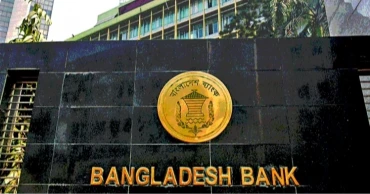
Bangladesh Bank restores website after 3-day shutdown over global cyber threat
Bangladesh Bank restored access to its official website on Sunday after keeping it offline for three days as a precaution against potential cyberattacks amid global security concerns.
The central bank took the website offline on Thursday to assess possible cybersecurity risks following warnings about global cyber threats.
However, websites of several private commercial banks remain offline and will be restored after the completion of risk assessments, banking sector sources said.
Bangladesh Bank Spokesperson and Executive Director Arief Hossain Khan said technical teams examined the website for potential vulnerabilities and software bugs.
He said the website was taken offline as a preventive measure in response to global warnings about cyberattacks and was restored after the risks were assessed.
Despite the temporary shutdown of the central bank's website, banking services including internet banking and mobile financial services (MFS) remained fully operational throughout the period, with no disruption to customer transactions.
In recent years, government services, banks, e-commerce platforms and news media have increasingly relied on websites and software applications to deliver services.
Many of these online platforms use the PHP programming language.
Global cybersecurity concerns intensified after two critical security vulnerabilities were identified in PHP.
Fears that hackers could exploit the flaws to target servers and websites prompted government agencies and commercial organisations in several countries to take precautionary measures.
International media reports said governments and businesses worldwide moved to strengthen their cybersecurity measures after the vulnerabilities were disclosed.
From Wednesday night, numerous government and commercial organisations temporarily shut down their websites as a precaution.
Despite these measures, millions of hacking attempts were reported worldwide, prompting organisations to audit their technology infrastructure and strengthen their cybersecurity defences.
3 days ago

Gold prices cut by Tk 3,324 per bhori in Bangladesh
The Bangladesh Jeweller’s Association (BAJUS) on Sunday cut gold prices by Tk 3,324 per bhori, setting the price of 22-carat gold at Tk 220,858, including valued added tax (VAT).
The revised prices came into effect at 10:00am on Sunday, according to a BAJUS press release.
The organisation said it lowered gold prices following a decline in the price of pure gold in the local market.
Under the new rates, 21-carat gold will cost Tk 210,943 per bhori, 18-carat gold Tk 181,200 and traditional-method gold Tk 148,016.
BAJUS said making charges will apply depending on the design of the jewellery. As VAT is included in the selling prices of gold and silver ornaments, jewellers cannot collect it separately from customers.
For jewellery exchanges, 12 percent will be deducted from the price, excluding making charges and stones, while 18 percent will be deducted for purchases. VAT cannot be deducted separately in exchange and purchase transactions, the association said.
The revised prices will remain effective at all jewellery establishments until further notice.
Before Sunday's adjustment, BAJUS last revised gold prices on October 23, slashing Tk 2,158 per bhori to set the price of 22-carat gold at Tk 224,182, including VAT.
At the time, 21-carat gold was priced at Tk 214,093 per bhori, 18-carat gold at Tk 183,883 and traditional-method gold at Tk 150,232.
With Sunday's adjustment, gold prices have been revised 126 times in the domestic market so far this year. Prices have been raised 60 times, lowered 65 times, and adjusted once for VAT.
Silver prices unchanged
Meanwhile, silver prices remained unchanged in the domestic market.
Including VAT, 22-carat silver is selling at Tk 3,849 per bhori, 21-carat silver at Tk 3,674, 18-carat silver at Tk 3,149 and traditional-method silver at Tk 2,391.
Silver prices have been revised 76 times so far this year, with 36 increases and 40 decreases.
3 days ago

Bangladesh retains top spot in EU denim imports despite year-to-date decline; August signals recovery
Bangladesh maintained its position as the largest supplier of denim to the European Union (EU) during the January–August period of 2026, capturing nearly 30 percent of the market despite an overall year-to-date contraction, according to the latest Eurostat data compiled by Bangladesh Apparel Voice (BAV).
During the first eight months of the year, the EU imported €2956.21 million worth of denim, reflecting a 4.40 percent decline compared to €3,092.27 million recorded in the same period last year.
However, August delivered a notable turnaround as total EU denim imports rose 11.23 percent year-on-year to €430.16 million—marking the first clear signal of market recovery this year.
Bangladesh led the market by shipping €869.13 million worth of denim products in the January–August period, holding a 29.40 percent market share. This placed Bangladesh comfortably ahead of its primary competitors, Pakistan (€525.49 million) and Turkey (€438.25 million).
Despite holding the top position, Bangladesh’s total denim export value to the EU during the eight-month period contracted by 5.85 percent year-on-year, while its market share slightly eased from 29.85 percent to 29.40 percent.
The rebound in August significantly narrowed Bangladesh's losses. Denim shipments from Bangladesh to the EU jumped 12.71 percent to €134.08 million in August, outperforming the overall market growth rate of 11.23 percent.
Consequently, Bangladesh’s market share for August expanded to 31.17 percent from 30.76 percent a year earlier, contributing roughly 35 percent of the EU's total import increase for the month. The strong August performance helped narrow Bangladesh's year-to-date export decline from 8.59 percent through July down to 5.85 percent through August.
The wider European market witnessed notable shifts among key supplying nations. Turkey recorded the sharpest drop, losing €117 million—a 21.08 percent decline—accounting for the bulk of the EU's total market contraction. Other traditional suppliers also posted losses, including Morocco (-14.48%), Pakistan (-7.88%), Cambodia (-6.47%), and Tunisia (-6.44%).
Conversely, non-traditional and growing suppliers gained ground, led by Egypt (+31.46% or +€45 million), China (+17.70% or +€30 million), and Vietnam (+45.38% or +€17 million). While Bangladesh fared better than most of its traditional competitors, it did not capture the market share relinquished by Turkey.
Commenting on the trend, Mohiuddin Rubel, Founder and CEO of Bangladesh Apparel Voice, noted that while Bangladesh’s leadership remains secure for now and August figures point to a return in demand, maintaining long-term market share will increasingly depend on matching nearer suppliers in terms of speed, agility, and flexibility.
3 days ago
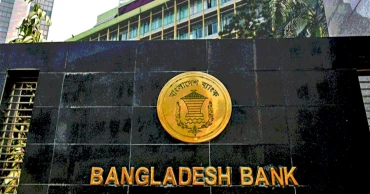
BB’s ‘Udyog’ program next round begins Nov 1, draws 18,444 applications in first phase
Bangladesh Bank’s 'Udyog' program, designed to foster young entrepreneurs and generate employment, applications for the upcoming second phase will open on November 1, allowing young entrepreneurs from the remaining 56 districts to apply.
The first received 18,444 applications across 64 upazilas in eight districts during the first phase of its 'Udyog' program, designed to foster young entrepreneurs and generate employment.
According to preliminary data released by the central bank, Netrokona district recorded the highest number of submissions in the first phase with 5,351 applications, followed by Rangpur with 2,745.
Submissions from other districts include 2,456 in Naogaon, 2,191 in Jhenaidah, 1,552 in Habiganj, 1,545 in Bhola, 1,343 in Manikganj, and 1,261 in Feni.
The central bank launched the initial phase to identify promising young entrepreneurs at the grassroots level and establish financing opportunities for their business ventures. Applications were collected between September 16 and October 15 through scheduled bank branches across all upazilas of the designated eight districts.
In the upcoming phase, young entrepreneurs from the country's remaining 56 districts can submit applications from November 1 to November 30. Submissions can be made at any scheduled bank branch within the respective upazilas.
Applicants must complete a prescribed form, which is available on the official websites of Bangladesh Bank, its SME portal, and participating scheduled banks.
Bangladesh Bank earlier issued the policy guidelines for the 'Udyog' program on September 13. The initiative aims to contribute to national economic development by cultivating youth entrepreneurship, creating new job opportunities, and encouraging innovative ventures. The central bank has sought the cooperation of all relevant stakeholders to ensure the successful implementation of the program.
4 days ago

Global crude oil prices hit six-month high on Middle East conflict, fears of US strikes on Iran
Global crude oil prices surged to a six-month high as investor anxieties mounted over potential US military strikes against Iran in the coming weeks alongside escalating regional conflict in the Middle East.
Brent crude futures rose by 3.1 percent (+$3.55) to settle at $116.72 per barrel on Friday—the highest closing level recorded since April 29. US West Texas Intermediate (WTI) crude similarly jumped by 3.8 percent to close at $103.27 per barrel.
The sharp uptick marks the third consecutive week of gains across international benchmark contracts, with Brent logging a 6.2 percent weekly advance and WTI expanding by 2 percent.
Market sentiment turned sharply bullish following escalated political rhetoric. US President Donald Trump stated on Wednesday that Washington was not holding negotiations with Tehran, adding that "something will happen soon." Citing senior US officials, the global media reported that the US and Israel are considering joint targeted operations against Iranian assets following the upcoming US midterm elections.
Adding to market jitteriness, Iran’s media cited the nation's military chief asserting that Iranian forces are fully prepared for asymmetrical warfare following recent upgrades to defense capabilities.
Concurrently, persistent drone and missile strikes by Iran-backed Houthi rebels against energy targets in Saudi Arabia have heightened supply vulnerability fears. In response to the escalating threats, the US Department of State directed non-essential government personnel to evacuate Saudi Arabia.
According to Saudi state media, a drone strike targeting the eastern Shaybah oilfield on Wednesday left two people dead and two injured. A separate attack on King Fahd International Airport in Dammam killed at least two people and injured eight others.
Following the series of strikes, Saudi state energy giant Saudi Aramco instructed employees at its Dhahran headquarters to relocate to secure positions and transition to remote operations.
4 days ago
Bangladesh Bank website still offline over global PHP security vulnerability
Bangladesh Bank has kept its official website offline to mitigate potential cyber attack risks following the identification of two critical security vulnerabilities in the PHP programming language.
Technical teams are reviewing the security risks to safely restore access as quickly as possible. Although the central bank's website was shut down on Thursday (October 22), it remained offline till Saturday.
A senior Bangladesh Bank official stated that the shutdown is not an isolated issue affecting Bangladesh Bank alone, but rather part of a global precautionary measure. The website will be restored once the risk assessment is complete.
Speaking on Thursday, Bangladesh Bank Spokesperson Arif Hossain Khan confirmed that the central bank's website was offline due to an urgent security issue.
Central bank sources revealed that IT specialists are actively working to detect and patch the vulnerabilities. Due to the same issue, several commercial banks utilizing PHP-based websites have also temporarily suspended their online platforms.
According to a report by international news agency AFP, attackers can exploit these PHP flaws to remotely execute unauthorized commands on servers without requiring passwords. This poses significant risks of compromising server files, databases, and sensitive information. Consequently, government institutions and digital services across France, the Netherlands, and Belgium have taken similar preventive actions.
Experts noted, however, that not all websites built on PHP are vulnerable, as the degree of risk depends on the specific version in use, security updates applied, and server security configurations.
Officials from the government's Aspire to Innovate (a2i) project clarified that around 36,500 websites under the National Portal Framework are not built on PHP, meaning they are not directly exposed to this specific vulnerability. Nevertheless, the underlying technologies of other government portals are being thoroughly audited.
Meanwhile, the Bangladesh Government Computer Incident Response Team (BGD e-GOV CIRT) has issued a security alert. The agency advised relevant organizations to audit their servers to identify PHP usage and versions, ensuring immediate installation of necessary security patches. If immediate updates are not feasible, institutions have been urged to restrict server access and closely monitor unauthorized connections.
4 days ago

World shares mixed after Wall Street's AI-driven losses as oil prices surge
World shares traded mixed on Friday following heavy losses in technology stocks on Wall Street, while oil prices climbed to their highest levels since May amid concerns over the war with Iran.
Brent crude, the international benchmark, rose 0.8% to $114.02 a barrel, while US benchmark crude gained 1.1% to $100.60.
In early European trading, Germany's DAX fell 0.4%, France's CAC 40 dropped 0.6% to 7,765.74 and Britain's FTSE 100 declined 0.4% to 10,685.86.
Asian markets showed a mixed performance, with some recovering from early losses. Tokyo's Nikkei 225 slipped 0.3% to 62,693.16, while South Korea's Kospi gained 0.3% to close at 5,550.30. Hong Kong's Hang Seng advanced 0.7% to 23,093.37, and the Shanghai Composite rose 0.9% to 3,690.48. Australia's S&P/ASX 200 remained nearly unchanged at 8,795.20.
On Thursday, the S&P 500 dropped 1.2%, marking its worst session since July, while the Nasdaq Composite plunged 2.6%. Technology stock losses overshadowed gains across much of the broader US market, with most stocks advancing. The Dow Jones Industrial Average edged up less than 0.1%.
Investors have become increasingly concerned that the artificial intelligence boom could lose momentum as borrowing costs rise for companies building data centres and purchasing AI chips. Despite continued industry growth, fears that valuations have become excessive have fuelled market volatility.
Meta Platforms fell 7% after reporting quarterly revenue above analysts' expectations but weaker-than-expected profits. The Facebook and Instagram owner also announced plans to create a new class of stock to raise funds for AI investments and other expenses.
Tesla shares dropped 3.1% despite reporting stronger-than-expected summer profits, as revenue fell short of forecasts. Nvidia declined 4.4%, becoming the biggest contributor to the S&P 500's decline because of its enormous market value. CoreWeave, which borrows money to purchase Nvidia chips and rents computing capacity to customers, plunged 10.1% amid concerns about its debt.
Rising oil prices have added to pressure on equities. Brent crude surged 4% on Thursday and has risen from below $97 a barrel at the beginning of October as uncertainty over the Iran war threatens the normalisation of global energy supplies.
Meanwhile, concerns over mounting government debt and strained public finances continue to weigh on developed economies. Protests in France have increased pressure on the government to boost spending, potentially adding to its debt burden.
In the United States, high inflation, signs of economic resilience and debt concerns have recently pushed Treasury yields to levels not seen in decades.
However, yields fell sharply on Thursday as investors sought the relative safety of government bonds amid the technology sell-off. The yield on the 10-year Treasury dropped to 4.97% from 5.13% late Wednesday and more than 5.30% earlier this month.
The decline came despite data suggesting continued strength in the US economy. A report showed that fewer Americans applied for unemployment benefits last week, indicating that layoffs may remain limited.
In early Friday currency trading, the US dollar rose to 156.93 Japanese yen from 156.77 yen, while the euro slipped to $1.1203 from $1.1218.
5 days ago