business

Stocks tumble on both bourses as week ends in red
The country's stock markets closed the week on a downbeat note on Thursday, with both the Dhaka and Chattogram bourses recording sharp declines as prices fell for the majority of listed companies.
The Dhaka Stock Exchange's (DSE) benchmark index, DSEX, shed 66 points during the day's trading. The other two indices also slid, with the Shariah-based DSES falling 16 points and the blue-chip DS30 losing 23 points.
All three DSE indices posted declines of more than 1 percent compared to the previous session. Of the issues traded, 310 companies saw their share prices fall, while 59 advanced and 20 remained unchanged.
Turnover at the DSE also dropped sharply, falling by around Tk 300 crore from Wednesday. The bourse saw transactions worth Tk 930 crore on Thursday, down from Tk 1,211 crore a day earlier.
M.L. Dyeing Limited topped the gainers' list, rising nearly 6 percent, while Shyampur Sugar Mills Ltd was the worst performer, losing about 9 percent.
The Chittagong Stock Exchange (CSE) mirrored the downturn, with its overall index CASPI falling 158 points. Of the companies traded, 186 declined, 54 advanced, and 22 remained unchanged.
Total transactions on the CSE stood at Tk 20 crore, up from Tk 16 crore the previous day.
GSP Finance Company (Bangladesh) PLC led the gainers on the CSE, rising nearly 10 percent, while Usmania Glass Sheet Factory Limited was the top loser, falling by a similar margin.
11 days ago
Pubali Bank to buy Tk 800cr Tejgaon tower for new corporate headquarters
Pubali Bank PLC has decided to purchase a plot of land along with a 26-storey under-construction building in the capital's Tejgaon area to set up its new Corporate Head Office, at a total cost of Tk 800 crore.
The bank's Board of Directors took the decision at a meeting held on Wednesday, according to a disclosure sent to the Dhaka Stock Exchange (DSE) on Thursday.
The property, measuring 95.10 decimals or 57.64 kathas, includes the building named "Swiss Tower," which has 26 storeys and three basement floors, located at 208, Bir Uttam Mir Showkat Sarak, also known as Tejgaon Link Road.
The Tk 800 crore price tag includes income taxes but excludes VAT, the disclosure said, adding that the purchase remains subject to approval from Bangladesh Bank and all other relevant regulatory authorities.
The building was originally developed by Bengal Hotel and Resort, a concern of Bengal Group of Industries, to house the five-star Swissôtel Dhaka.
However, sources said the company has now decided to sell the site to Pubali Bank instead of proceeding with the hotel project.
If the deal receives regulatory clearance, the tower will transition from its planned identity as a luxury hospitality venue to becoming the nerve centre of one of the country's oldest private commercial banks.
11 days ago
BB allows EDF loan repayment tenure extension up to 270 days under new Master Circular
Bangladesh Bank on Thursday issued a comprehensive Master Circular updating the operational guidelines for the Export Development Fund (EDF), allowing the repayment tenure of EDF loans to be extended up to a maximum of 270 days, subject to prior central bank approval.
The Foreign Exchange Policy Department of the central bank issued the circular to consolidate previously scattered directives and update foreign currency-based refinancing policies for export-oriented manufacturers importing raw materials and intermediate inputs.
Under the updated framework, regular EDF loans must be settled within 180 days, with the provision for extending the repayment window up to 270 days upon receiving prior approval from the central bank.
According to the new financial structure, Bangladesh Bank will provide refinancing to Authorized Dealer (AD) banks at a rate equal to the 6-month benchmark interest rate plus an additional 0.50 percent. AD banks, in turn, can charge exporters a maximum interest rate of up to 1.50 percent above the 6-month benchmark rate.
The central bank has also tightened eligibility criteria to ensure financial discipline. Exporters who fail to repatriate export proceeds within the stipulated timeframe, those whose EDF liabilities have been adjusted through other bank loans, and banks that default on timely EDF settlements will be ineligible for the facility. Exporters can, however, regain access to EDF financing once overdue export earnings are brought back or upon securing approval from the discount committee.
The Master Circular retains the existing sector-specific financing limits for back-to-back Letter of Credit (LC) imports, capped at up to $20 million depending on the industry. Sector-specific limits for bulk imports also remain unchanged, ranging between $1 million and $20 million.
In addition, a maximum EDF refinancing facility of $500,000 has been introduced for eligible bulk imports regardless of sector. Exporters who utilize both bulk imports and back-to-back LCs will be restricted to using the financing ceiling designated for a single trade association.
Business leaders have welcomed the central bank's initiative, noting that bringing isolated instructions under a single master circular will simplify compliance and make EDF operations far more transparent and efficient for commercial banks and exporters alike.
11 days ago
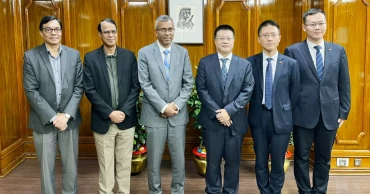
Chinese Ambassador calls on BB Governor; talks focus on trade, investment, and digital payment
Ambassador of China to Bangladesh Yao Wen paid a courtesy call on the Governor of Bangladesh Bank at his office in central bank's headquarters in Motijheel on Thursday (July 23).
During the meeting, both sides exchanged views on further strengthening bilateral economic and trade relations between Bangladesh and China.
To improve the trade balance between the two countries, the central bank Governor urged China to increase its imports of Bangladeshi products.
The Governor also sought China's technical assistance and experience from its 'Single QR' system to support the implementation of 'Bangla QR' in Bangladesh.
When the Chinese Ambassador emphasized the importance of further easing foreign investment, the Governor highlighted that Bangladesh Bank has already introduced several investment-friendly policy initiatives. Consequently, foreign investors can smoothly repatriate their invested capital and earn profits back to their home countries.
Furthermore, the Governor called for expanded Chinese investment in Bangladesh's technology-driven and industrial sectors.
Counsellor Song Yang and Attaché Wen Jinhua accompanied the Chinese Ambassador during the meeting. Bangladesh Bank Deputy Governors Dr. Habibur Rahman and Md. Sarwar Hossain was also present on behalf of the central bank.
11 days ago
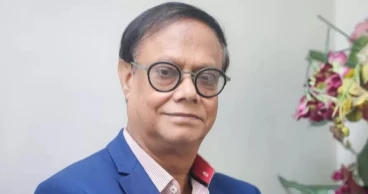
Cash management costs BB Tk 20,000cr a year, digital push a must: Mansur
Former Bangladesh Bank Governor and Distinguished Fellow of the Policy Research Institute of Bangladesh (PRI) Ahsan H Mansur on Thursday underscored the need to accelerate Bangladesh's transition to a cashless economy through an Inclusive Instant Payment System (IIPS), saying the central bank spends around Tk 20,000 crore annually on cash management.
Speaking at the inception workshop on "Analysis of the Inclusive Instant Payment System (IIPS) in Bangladesh and Cross-Border Remittance as a Use Case" at PRI in Banani, he said financial inclusion, digital payments and the IIPS should be pursued as a single, integrated national strategy to reduce payment costs.
Mansur said reducing the cost of digital transactions is essential to boosting adoption, adding that temporary incentives or subsidies for digital payments could yield greater long-term benefits than continuing large-scale subsidies in other sectors.
He also called for making smartphones and internet services more affordable to bridge the digital divide and promote nationwide financial inclusion.
The former BB chief further observed that restoring public confidence in the banking system is critical to reducing cash dependency and encouraging wider use of formal financial channels.
Highlighting the untapped investment potential of the Bangladeshi diaspora, he said establishing dedicated mechanisms for Non-Resident Bangladeshis (NRBs) could help repatriate an estimated $2-3 billion in investments through formal channels.
Director General of the Bangladesh Institute of Bank Management (BIBM) Ezazul Islam said the IIPS has the potential to significantly cut digital payment costs, strengthen financial inclusion, and enhance the efficiency and competitiveness of Bangladesh's payment ecosystem.
He said wider adoption of digital payments and IIPS could encourage greater use of formal financial channels, improve transaction traceability, and contribute to higher tax compliance and a more transparent economy.
Ezazul stressed that the long-term success of IIPS hinges on a robust governance framework, appropriate commercial incentives, sustainable pricing, effective dispute resolution mechanisms, sound settlement risk management, and a comprehensive cost-benefit assessment.
Chairing the session and delivering the opening remarks, PRI Chairman Zaidi Sattar underscored the macroeconomic significance of remittances, which currently account for around 6 percent of Bangladesh's GDP, and called for policy measures to redirect these flows from consumption toward productive investment.
He also pointed to the digital divide within the country's financial sector, noting that many of the roughly 7 lakh Bangladeshi migrants in Oman, cited as an illustrative example, continue to prefer informal hundi channels over formal banking systems to send money home.
A panel discussion featured Mohammad Jahid Iqbal, additional director of the Payment Systems Department at Bangladesh Bank, and Sayed Shaikh Ibna Jilany, vice president (Remittance, Financial Services, Commercial) at bKash Limited.
Iqbal said Bangladesh Bank is developing the IIPS on the open-source Mojaloop platform to cut costs, enable local customisation, and connect banks, payment providers and eventually microfinance institutions through a more integrated digital infrastructure.
Launched in November 2025, he said, the system will support feature-phone access, simpler account opening, fewer failed transactions, and stronger fraud protection through the Tazama toolkit.
Jilany shared perspectives from Bangladesh's leading mobile financial services provider on the opportunities and challenges of integrating private-sector platforms into an interoperable instant payment ecosystem, touching on consumer protection, affordability and user trust.
Participants at the workshop, organised with support from the Gates Foundation, discussed broader opportunities and challenges in developing an inclusive instant payment ecosystem, including interoperability, regulatory readiness, consumer protection, affordability, and the potential to make remittance transfers faster and more accessible to underserved populations.
11 days ago
BIDA’s structured pipeline yields over $400m in FDI execution from $1.5b target
The Bangladesh Investment Development Authority’s (BIDA) structured lead generation and active pipeline management strategy, introduced in 2025, has begun yielding tangible results.
Over $400 million in foreign direct investment (FDI) has progressed to the decision and execution stages from a total pipeline of nearly $1.5 billion.
The overall investment pipeline involved 70 top investors hailing from 20 countries. Turkey, China, Singapore, the Netherlands, and South Korea emerged as the primary source countries for these investment proposals.
According to BIDA, the conversion rate from lead generation to the "decision and execution" stage exceeded 15 percent, outperforming international conversion benchmarks.
BIDA highlighted several major global and domestic agreements currently being implemented from the 2025 pipeline:
Handa Industries Limited ($300 Million): Hong Kong-based textile giant Handa Industries initially signed a $150 million Memorandum of Understanding (MoU) during the Bangladesh Investment Summit 2025. Following coordinated support from BIDA, BEZA, and BEPZA, the company doubled its commitment to $300 million. The investment is split into two phases: an $80 million garment factory in the Mirsarai BEPZA Economic Zone (creating 10,000 jobs) and a $220 million integrated textile complex in the Keraniganj Economic Zone (creating 15,000 jobs). The project will introduce high-end fabric production technology to Bangladesh.
China Lesso Group ($32 Million): Hong Kong-listed manufacturing firm China Lesso Group finalized a $32 million manufacturing plant. The Bangladesh Economic Zones Authority (BEZA) officially transferred 12.5 acres of land in the National Special Economic Zone in Chattogram for the facility. The plant will produce PVC/PEX pipes, sanitary ware, kitchen equipment, water purifiers, cables, and solar photovoltaic modules through its subsidiary Lesso Solar.
Hengli Group / Lead Bangladesh ($35 Million): Lead Bangladesh Textile Technology Co. Ltd., a wholly owned subsidiary of China’s Shandong Hengli Textile Technology, initiated a $34.93 million project. Operating on 12.6 acres in the Bangladesh Special Economic Zone (BSEZ) in Araihazar, Narayanganj, the automated facility marks the country's first international-grade advanced textile production plant, strengthening domestic RMG value chains.
Megarich ($15 Million): Global airline amenity manufacturer Megarich finalized a $15 million investment following series discussions with BIDA and the National Board of Revenue (NBR). As the world’s second-largest supplier of airline amenity kits—servicing carriers like Singapore Airlines, Qatar Airways, and Saudia—Megarich’s entry into BEPZA/BIDA zones represents a major step toward export diversification beyond traditional garments.
Softlogic Life Insurance PLC ($1.9 Million): Sri Lanka’s second-largest life insurer, Softlogic Life, is acquiring a 60 percent stake in Bangladesh’s Diamond Life Insurance Company Limited for nearly $2 million. BIDA facilitated the cross-border deal, which brings advanced InsureTech capabilities, AI-driven underwriting, and a one-day claim settlement framework ("InstaClaim") to Bangladesh's financial sector.
MR.DIY Retail Expansion: Malaysian home improvement retail giant MR.DIY expanded its nationwide presence following regulatory guidance from BIDA and Bangladesh Bank regarding shareholder loans. Expanding beyond its early 2024 outlets, the brand now operates over 17 mega-stores across Dhaka, Chattogram (Halishahar), and Rajshahi, offering over 17,000 products across five core categories.
Reflecting on the progress, BIDA stated that converting over $400 million from a $1.5 billion pipeline within 12 to 15 months reflects strong investor confidence.
The entity announced plans to further intensify its lead generation activities through dedicated country- and sector-specific desks, aiming to add another $1.5 billion in prospective foreign investments to the pipeline in 2026, according to a BIDA release.
11 days ago
‘Depositors are true owners of Islami Bank’
Mohammad Zahir Hussain, executive director of Bangladesh Bank and the sole representative of the Board of Directors of Islami Bank Bangladesh PLC, on Wednesday emphasised that depositors are the true owners of the institution, assuring them that the bank will be run professionally to serve the general public.
"As long as Bangladesh exists, Insha'Allah, Islami Bank will also survive with glory," he said while speaking as the chief guest at a clients' get-together organised by the bank at its Islami Bank Tower Corporate Branch.
"It will not be a bank for any single individual, group, or community; it will be a bank for the general people", Zahir added.
Highlighting the financial structure of the institution, he noted that customer deposits stand at nearly Tk 1.75 lakh crore, whereas the share capital is Tk 6,500 crore, making the share ratio a negligible fraction of the total deposit volume.
The sole representative of the board assured customers that full trust and authority have been placed in the bank's management team, composed of professionals with 30 to 35 years of experience.
Emphasising that the board's role is strictly limited to policy-making while professionals manage operations, he urged depositors to support the bank and help increase its deposits, expressing firm confidence that the bank will regain its lost glory and achieve new heights in a short period.
The event was presided over by Executive Vice President and Head of the Corporate Branch Mohammad Kutub Uddin, while Senior Vice President Abdul Latif delivered the welcome address.
Acting Managing Director Md Altaf Hossain and Executive Vice President Mahmud Hossain Khan addressed the event as special guests.
Several representatives spoke on behalf of the clients, according to a press release.
12 days ago
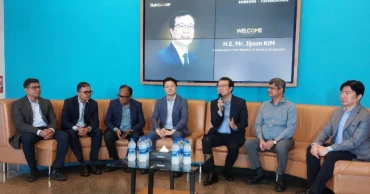
South Korean Ambassador visits electronics factory in Narsingdi, vows to boost industrial partnership
South Korean Ambassador to Bangladesh Jijoon Kim has said Bangladesh has huge potential in the manufacturing sector and can emerge as a regional production hub through a combination of its skilled workforce, supportive government policies and Korean technology.
He made the remarks on Wednesday during a press briefing after visiting Samsung’s manufacturing plant of Fair Electronics in Kamargaon area of Shibpur upazila in Narsingdi.
The ambassador expressed hope that such cooperation would further strengthen industrial partnership between Bangladesh and South Korea.
He said effective implementation and strict enforcement of the National Equipment Identity Register (NEIR) is crucial to protect the local mobile manufacturing industry, prevent tariff and revenue evasion, and ensure fair competition.
During the visit, Ambassador Kim reaffirmed South Korea’s continued support for Bangladesh’s industrial development and described Fair Electronics as a successful example of technology transfer, local production and industrial cooperation between the two countries.
He was accompanied by Samsung Bangladesh Managing Director Jangmin Jang.
Fair Group Chairman Ruhul Alam Al Mahbub, Director Mutassim Daiyan and senior officials of Fair Group and Samsung Bangladesh welcomed the ambassador.
Speaking at the event, Fair Group Chairman Ruhul Alam Al Mahbub said his company remains committed to strengthening Bangladesh’s manufacturing sector through global partnerships and technology transfer. He called for stronger measures against the grey market and unauthorised imports of mobile phones.
Samsung Bangladesh Managing Director Jangmin Jang reiterated Samsung’s long-term commitment to Bangladesh and said the company aims to expand local manufacturing while maintaining global standards through its partnership with Fair Electronics.
Fair Group Chief Marketing Officer Mohammad Mesbah Uddin highlighted the company’s journey from distribution to local manufacturing, saying Fair Group began its partnership with Samsung in 2014 and launched local production in 2017. In 2018, Fair Electronics introduced Bangladesh’s first locally manufactured Samsung smartphone, making Samsung the first global brand to produce smartphones locally in the country.
Senior officials from Samsung Bangladesh, Fair Group and the South Korean Embassy were also present at the briefing.
12 days ago
RMG exports slip 0.63% to $19.34b in H1 2026: EPB
Bangladesh’s ready-made garment (RMG) exports recorded a marginal year-on-year decline of 0.63 percent to $19.34 billion during the first half (January-June) of 2026, according to the latest figures from the Export Promotion Bureau (EPB).
Apparel export earnings stood at $19.46 billion during the corresponding period in 2025.
A sector-wise breakdown shows contrasting trends between woven products and knitwear.
Industry leaders call for AI, tech adoption in RMG sector
Woven garments posted a slight positive growth of 0.68 percent, generating $9.20 billion in the first six months of 2026, while knitwear saw a minor correction of 1.80 percent, bringing in $10.14 billion during the same period.
Analysing the performance, Mohiuddin Rubel, founder and chief executive officer of Bangladesh Apparel Voice, stated that the latest export figures reflect a resilient yet volatile landscape for Bangladesh's apparel industry.
He noted that despite fluctuating global market dynamics and shifting demand patterns, the performance underscores the sector's incredible adaptability and strength in maintaining stable export volumes.
12 days ago
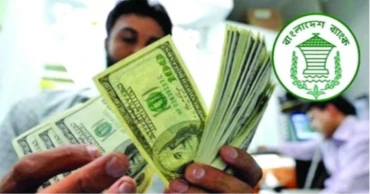
BB further eases foreign transaction rules for freelancers
Bangladesh Bank (BB) has further simplified foreign exchange transaction procedures for freelancers and IT service exporters to streamline incoming earnings and facilitate necessary international payments.
According to the central bank, the updated guidelines aim to remove operational bottlenecks, enabling freelancers to easily receive payments for service exports from abroad and execute legitimate foreign currency transactions for operational costs – such as software subscriptions, domain and hosting renewals, and digital marketing expenses.
BB opens one-time exit window for bad loans at finance companies
Under the relaxed framework, authorised dealer (AD) banks have been directed to expedite the processing of inward remittances and ensure smoother access to Exporter’s Retention Quota (ERQ) accounts and international payment cards.
Industry leaders and freelancing communities have welcomed the central bank's initiative, noting that simplifying financial channels will encourage more digital professionals to bring their foreign earnings through official channels, ultimately driving the growth of Bangladesh’s service export sector and bolstering foreign exchange inflows.
12 days ago