business

RMG export slump: BGMEA to submit ‘Charter of Policy Support’ to govt
Amid a continuous decline in ready-made garment (RMG) exports, Bangladesh Garment Manufacturers and Exporters Association (BGMEA) has decided to submit a comprehensive "Charter of Policy Support" to the government soon, recommending measures to stimulate investment, enhance production capacity and diversify exports.
The decision was taken during an emergency meeting of the Board of Directors held at the BGMEA headquarters in Uttara on Monday with its President Mahmud Hasan Khan in the chair.
BGMEA, BKMEA leaders meet PM
The meeting focused on analysing the root causes of the downward trend in export earnings and strategies to recover growth.
According to BGMEA sources, the upcoming charter will feature a comparative analysis of Bangladesh's position alongside its key global competitors, including India, Vietnam and Cambodia. It will highlight Bangladesh’s existing advantages, prevailing limitations, and policy gaps comparted to those rival nations.
During the meeting, the board discussed how international buyers are increasingly anxious due to uncertainties surrounding Bangladesh's Least Developed Country (LDC) graduation timeline and the potential postponement of the transition.
Furthermore, the rising competitiveness of India, the prospect of new trade agreements, and the strategic policy advantages enjoyed by regional competitors are emerging as major headwinds for Bangladesh’s apparel industry.
The BGMEA chief stated that the country's apparel sector is navigating a new reality due to global marketplace competition and LDC graduation uncertainties.
"In this context, the charter will be presented to the government with explicit recommendations to formulate policies conducive to expanding investment, boosting production, and diversifying exports, thereby strengthening Bangladesh’s position in the global market," he added.
Industry insiders believe that timely and strategic policy intervention from the government has become critical to ensuring the sustainable growth of Bangladesh's primary export earning sector amidst changing global trade realities.
4 months ago
Islami Bank depositors continue protests to press for 7-point demand
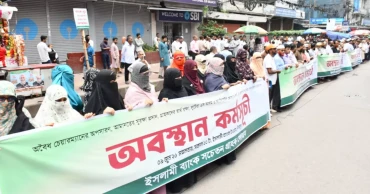
Depositors of Islami Bank Bangladesh PLC staged demonstrations for the seventh consecutive workday on Tuesday to press for their seven-point demand, including the immediate removal of bank’s newly appointed Chairman Md Khurshid Alam.
Under the banner of the "Islami Bank Sachetan Grahak Forum” (Islami Bank Conscious Depositors’ Forum), the depositors gathered in front of the bank’s central office in the Dilkusha area of Motijheel around 10:00am.
They held a sit-in there to press home their demands.
The other demands are reinstatement of Omar Faruk Khan to the post of managing director of the bank, exclusion of anyone linked to past financial plundering from the bank’s Board of Directors, repeal of Section 18(A) of the Bank Resolution Act, recovery of looted funds by liquidating the seized domestic assets and ownership stakes held by the controversial S Alam Group, implementing legal barriers to ensure S Alam Group can never regain control of Islami Bank or any other financial institution, and bringing all individuals involved in looting Islami Bank and the wider banking sector to justice with exemplary punishment.
Speaking at the rally, demonstrators alleged that the bank was unlawfully taken over by the previous regime in 2017 after which S Alam Group systematically emptied the institution.
They stated that while the bank was liberated following the mass uprising on August 5, 2024, a fresh conspiracy is now targeting the financial institution.
Following the political transition, former Bangladesh Bank Deputy Governor Khurshid Alam went into hiding, yet the bank is now being handed back to him, the protesters said, adding that they will never accept a corrupt individual like Khurshid Alam as chairman.
The depositors launched the protests on June 1 after the Eid-ul-Azha holiday ended.
On the day, a similar demonstration against Khurshid Alam's appointment was met with a police crackdown, where law enforcers lobbed batons, sound grenades, and water cannons against the agitators.
4 months ago

Bangladesh Bank forms Tk 10,000cr refinancing scheme for agricultural loans
Bangladesh Bank (BB) has formed a new Tk 10,000 crore refinancing scheme from its own funds to boost agricultural production, ensure food security, and create employment opportunities in rural areas.
Under the five-year scheme, farmers will be able to access low-interest loans capped at an 8 percent interest rate.
Bangladesh Bank buys $85 million in a single day to maintain exchange rate stability
The Agricultural Credit Department of the central bank issued a circular in this regard last night (Monday night), sending it to the chief executives of all scheduled banks.
The initiative aims to financially empower genuine farmers and rural entrepreneurs. Small, marginal, sharecroppers (Borga chashi), and women farmers will receive top priority under this fund.
To identify genuine beneficiaries, banks will utilise information from the local departments of agriculture, fisheries, and livestock, or the government-issued Farmer Cards .
In an effort to ease access, small and marginal farmers will be eligible to secure collateral-free loans of up to Tk 5 lakh solely against the liability of their crops and produce.
Furthermore, instead of immovable property, personal or group social guarantees will be considered as acceptable collateral for women and marginal farmers.
According to the central bank circular, any farmer or client who is a loan defaulter with any bank or financial institution will be disqualified from receiving loans under this scheme.
Additionally, the central bank strictly specified that these loans cannot be used to repay or adjust any existing or past debts.
An individual beneficiary will be permitted to avail themselves of the facilities under this refinancing scheme a maximum of three times.
4 months ago

Govt working to strengthen capital market through institutional and regulatory reforms: Finance Minister
Finance Minister Amir Khosru Mahmud Chowdhury on Tuesday told Parliament that the government is working to strengthen the country’s capital market through institutional and regulatory reforms aimed at mobilising domestic capital and accelerating economic activities.
“All necessary reforms will be undertaken to promote the capital market and ensure that it contributes meaningfully to the country’s economic growth trajectory,” he said while responding to a supplementary question from NCP lawmaker Atikur Rahman Mujahid (Kurigram-2) during the question-answer session in the Jatiya Sangsad.
Budget to address rising poverty, expand economic opportunities: Amir Khosru
Acknowledging the current challenges facing the capital market, the Finance Minister said the market remains in a weak condition and noted that several financial products required for its expansion have yet to be fully developed.
Referring to ongoing reform efforts, Khosru said the Bangladesh Securities and Exchange Commission (BSEC) has been restructured with the inclusion of experienced and competent professionals to enhance its regulatory effectiveness and oversight capacity.
He expressed optimism that the strengthened regulatory framework would help inject greater dynamism into the capital market in the coming days, enabling it to play a more effective role in channeling savings into productive investments and supporting overall economic growth.
4 months ago

DBA thanks BSEC for lifting floor price on Islami Bank, Beximco shares
DSE Brokers Association of Bangladesh (DBA) on Tuesday welcomed the decision to withdraw the long-standing floor price on shares of Islami Bank Bangladesh PLC and Beximco Ltd, expressing gratitude to newly appointed Bangladesh Securities and Exchange Commission (BSEC) Chairman Masud Khan and other commissioners.
In a statement, the association said the move would help restore normal trading activities, improve price discovery and boost investor confidence in the country's capital market.
The DBA noted that it had formally written to the BSEC on May 4, 2026, seeking the removal of the floor price imposed on the shares of Islami Bank Bangladesh PLC and Beximco Ltd to address prolonged market distortions and facilitate the resumption of normal trading.
In the letter signed by DBA President Saiful Islam, the association argued that the continued floor price had restricted normal trading activities by preventing shareholders from selling their holdings, while also hampering the market's natural price discovery mechanism.
The association further stated that the floor price system had increased the risk of negative equity for margin loan investors and created a negative perception of Bangladesh's capital market among foreign investors.
Considering the DBA's proposal and the overall market situation, the newly constituted BSEC Commission decided to withdraw the floor price imposed on the shares of Islami Bank Bangladesh PLC and Beximco Ltd.
Welcoming the decision, Saiful Islam thanked BSEC Chairman Masud Khan and the commissioners for taking what he described as a timely and market-oriented step.
According to the DBA, the removal of the floor price is expected to ease long-standing market stagnation, restore normal trading activities and strengthen investor confidence.
The association also believes the decision will make the market-based pricing mechanism more effective, transparent and dynamic.
Expressing optimism about the new leadership, the DBA said it expects the commission under Masud Khan to undertake necessary reforms to remove regulations and barriers that have long been viewed as inconsistent with a business- and investment-friendly capital market environment.
Saiful Islam welcomed the newly appointed chairman and commissioners and reaffirmed the DBA's commitment to working closely with the regulator in promoting market development, protecting investor interests and ensuring stability in the capital market.
4 months ago
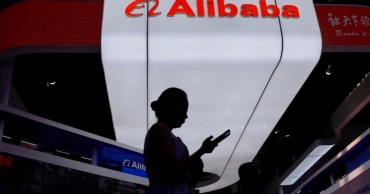
Pentagon adds Alibaba, BYD and Baidu to list of firms linked to Chinese military
The Pentagon has added several major Chinese companies, including Alibaba, BYD and Baidu, to its list of companies it says have ties to China's military, making them ineligible for US defense contracts.
The updated list, released Monday, expands US scrutiny beyond traditional defense firms to include some of China's best-known private-sector companies. The move reflects growing concerns in Washington that Beijing is using the expertise and technology of civilian businesses to strengthen its military capabilities.
The list was established in 2021 under a congressional mandate to identify Chinese companies believed to have links to the country's military. It includes not only firms directly controlled by military authorities but also those considered to support China's defense industry.
The Pentagon has previously said that China's military seeks access to advanced technologies and expertise developed by businesses, universities and research institutions that appear to operate as civilian entities.
China strongly criticized the decision. The Chinese Embassy in Washington accused the United States of misusing national security concerns to target Chinese businesses and called on Washington to provide a fair and non-discriminatory business environment for Chinese companies.
Alibaba and Baidu rejected the Pentagon's claims.
Alibaba said it is neither a military company nor part of any military-civil fusion program. Baidu, which has expanded into artificial intelligence and autonomous driving technology, described its inclusion on the list as completely unfounded.
The latest update increases the number of companies on the Pentagon's list to 188, up from about 130 last year. The list already included firms such as DJI, one of the world's leading makers of consumer drones.
Although companies on the list are not banned from operating in the United States, the designation can damage their reputation and may lead to additional restrictions in the future.
Following the announcement, the House Select Committee on the Chinese Communist Party described the list as a warning to American businesses, government agencies and the public. The committee argued that Chinese firms on the list should be removed from US stock exchanges and that American companies should avoid doing business with them.
The Pentagon said Alibaba supports China's defense industrial base through its ties to the country's Ministry of Industry and Information Technology. It also cited similar links involving BYD and Baidu.
BYD, one of the world's largest electric vehicle manufacturers, has become a dominant player in the global EV market. Earlier this year, US President Donald Trump said he would welcome Chinese automakers such as BYD if they built factories in the United States and hired American workers. However, several US lawmakers continue to push for restrictions on Chinese-made electric vehicles.
Another company newly added to the list is Unitree, known for its advanced robots that recently gained attention on the TV show America's Got Talent. The Pentagon said Unitree had received support from the Chinese government through programs designed to help innovative and globally competitive companies.
BYD and Unitree did not immediately respond to requests for comment.
4 months ago
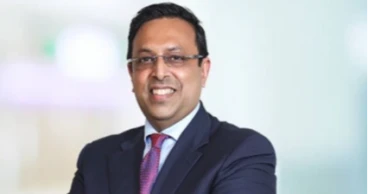
Naser Ezaz Bijoy steps down as Standard Chartered Bangladesh CEO
Naser Ezaz Bijoy, the chief executive officer (CEO) of Standard Chartered Bangladesh, has announced his resignation from the top post.
He has already informed Bangladesh Bank that he does not wish to continue in his role.
Bitopi Das Chowdhury, head of corporate affairs, brand and marketing at Standard Chartered Bangladesh, confirmed the development to reporters on Monday.
"Naser Ezaz Bijoy has stepped down. An interim CEO will now be appointed subject to approval from Bangladesh Bank," Bitopi Das said.
Commenting on his decision, Naser Ezaz Bijoy said, "I am stepping down from the post of CEO, but I will continue working as an employee of the bank."
Explaining the reasons behind his resignation, he noted that the bank's business growth has slowed down in tandem with the broader macroeconomic slowdown in the country. "Under these circumstances, the bank requires a fresh business strategy," he said.
Naser Ezaz Bijoy had been serving as the CEO of the bank since November 2017.
4 months ago
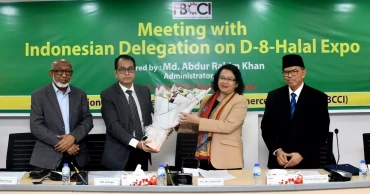
Beyond traditional trade, Bangladesh, Indonesia see major opportunities in halal economy
Bangladesh and Indonesia have significant untapped opportunities in the halal economy beyond their traditional trade relations, particularly in sectors such as processed food, fashion, pharmaceuticals, healthcare, medical equipment and digital technology, Indonesian Ambassador to Bangladesh Ms. Listyowati said on Monday.
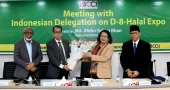
Indonesian Ambassador made the remarks during a meeting between the Federation of Bangladesh Chambers of Commerce and Industry (FBCCI) and a high-level Indonesian business delegation at Motijheel office in the city.
Highlighting the growing scope of halal trade, the ambassador said halal products extend far beyond halal meat and food, encompassing apparel, cosmetics, medicines, healthcare services, medical devices, Islamic finance and tourism. “Bangladesh and Indonesia can explore extensive business opportunities in these sectors and further strengthen bilateral trade ties.”
The ambassador also invited Bangladeshi businesses to participate in the D-8 Halal Expo 2026, scheduled to be held in Jakarta from July 8 to 12, expressing hope that a high-level Bangladeshi trade delegation would attend the event with their products.
“The Indonesian Embassy in Dhaka will provide all possible support in this regard,” she added.
Describing the upcoming expo as more than a conventional trade fair, Listyowati said it would serve as a unique platform for strengthening the halal ecosystem among D-8 member countries, expanding trade and investment, and fostering new partnerships across sectors.
A report on the D-8 Halal Expo 2026 was presented at the meeting by Putu Rahwidhiyasa, Director General of Indonesia’s National Committee for Islamic Economy and Finance (KNEKS).
He said Indonesia is not only focusing on halal product exports but is also actively developing a comprehensive halal value chain. “Bangladesh and Indonesia can further expand bilateral trade by leveraging this halal value chain and enhancing collaboration in the halal economy.”
Citing the report, Rahwidhiyasa noted that Indonesia ranked among the top 10 exporters in intra-OIC trade in 2022, trailing only Türkiye and the United Arab Emirates among the leading exporters.
According to the report, Indonesia currently ranks sixth globally in the Halal Economy Trade and Investment Index. The country holds the fourth position in the halal food sector and ranks sixth in the modest fashion and apparel segment, reflecting the strength and diversity of its halal market.
The report also highlighted the rapid growth of the global halal economy. Among all halal sectors, halal food remains the largest contributor, with spending across OIC member countries reaching approximately $1.24 trillion in 2023, supported by a projected annual growth rate of 6.2 percent.
The halal fashion sector ranked second, with Muslim consumer spending estimated at $277.9 billion and an annual growth rate of 6.8 percent.
Speaking at the event, Mohammad Riyad Ali, President of the Indonesia-Bangladesh Chamber of Commerce and Industry (IBCCI) and former FBCCI director, said the D-8 Halal Expo offers a valuable opportunity to observe how member countries integrate halal practices into daily life and commerce.
“It will also provide Bangladesh with an opportunity to learn from their experiences in developing and strengthening halal certification systems,” he said.
Earlier, FBCCI Secretary General Md Alamgir delivered the welcome address, describing Bangladesh and Indonesia as long-standing trade partners with strong economic ties.
While acknowledging Bangladesh’s relatively limited share in bilateral trade, he said participation in major international platforms such as the D-8 Halal Expo could diversify trade cooperation and open new avenues in the rapidly expanding halal market.
He also assured the Indonesian delegation that FBCCI would work sincerely to facilitate the participation of a Bangladeshi business delegation in the D-8 Halal Expo 2026.
4 months ago

Sammilito Islami Bank gets new chairman, MD
Kazi Shairul Hassan has been appointed new chairman while Abedur Rahman Sikder new managing director (MD) of Sammilito Islami Bank PLC, which was formed through the merger of five troubled Islami banks.
The Financial Institutions Division (FID) of the Ministry of Finance announced the leadership changes through two separate notifications issued on Monday.
According to the government orders, both the chairman and MD have been appointed for a three-year term, effective from their respective dates of joining.
Chairman of Sammilito Islami Bank Mohammad Ayub Mia resigns
Shairul Hassan earlier served as managing director of Saudi Bangladesh Industrial and Agricultural Investment Company (SABINCO), while Abedur Rahman is the current deputy managing director (DMD) of Dutch-Bangla Bank.
Industry insiders and financial analysts view these high-level appointments as a crucial step towards stabilising and reforming the specialised lender.
The new leadership is expected to streamline corporate governance, accelerate business expansion, fortify risk management, and restore depositor confidence through improved customer services.
Sammilito Islami Bank operates as a major Shariah-compliant financial institution in the country. The fresh appointments of the chairman and MD are considered a defining milestone in a series of ongoing structural and managerial overhauls intended to steer the bank towards long-term sustainability.
Sammilito Islami Bank was established by the previous interim government last year by merging Exim Bank, First Security Islami Bank, Global Islami Bank, Union Bank, and Social Islami Bank Limited.
4 months ago

Move afoot to bolster mechanism to curb market dominance: Muktadir
Commerce Minister Khandakar Abdul Muktadir on Monday said the government has undertaken a series of initiatives to strengthen the Bangladesh Competition Commission and the Directorate of National Consumers' Right Protection (DNCRP) to break the monopolistic dominance of large corporate groups and safeguard the interests of small and medium businesses.
He disclosed the measures in Parliament while responding to a question from opposition MP M Nurul Islam regarding the government's efforts to ensure fair competition in the market and protect small traders.
No plans for new state-owned mills, private sector to lead industrial growth: Muktadir
The minister said a project, titled “Strengthening the Bangladesh Competition Commission,” has been taken up to enhance the capacity of the commission in addressing anti-competitive practices and market concentration. The project proposal was sent to the Economic Relations Division (ERD) through the Ministry of Commerce on April 6, 2026.
He said the government has initiated steps to amend the Competition Act, 2012 to make it more modern and business-friendly. The proposed amendments are currently under review at the Ministry of Commerce.
In addition, the government has moved to amend the Consumers’ Right Protection Act, 2009 to make it more effective and relevant to current market realities, Muktadir added.
To strengthen the DNCRP, the minister said, a proposal is being processed at the Ministry of Commerce to expand the organisation’s workforce and logistical capacity.
Under the proposal, its approved manpower will be increased from 366 posts to 1,762 with the creation of 1,396 new positions. The plan also includes the provision of vehicles and other necessary equipment to improve enforcement and monitoring activities.
Muktadir further said initiatives have been taken to increase budgetary allocations for the directorate to support market surveillance operations, consumer awareness campaigns and other related activities.
He expressed hope that the measures will help establish a more competitive business environment, prevent market concentration and better protect consumers as well as small and medium-sized enterprises across the country.
4 months ago