business

‘One Health’ approach key to safe, sustainable poultry production: Experts
Experts at an international webinar on Monday stressed the importance of safe poultry production in a bid to ensure food security, public health and environmental sustainability, saying the “One Health” approach provides a practical framework for addressing emerging challenges facing the sector.
SAARC Agriculture Centre (SAC) organised the webinar, titled “Safe Poultry Production in the Context of One Health Approach.”
Tk 50,000cr poultry industry on brink of collapse under tax burden
The event brought together renowned experts, researchers, policymakers, academician, private practitioner, students and professionals from across the region to discuss strategies for ensuring safe, sustainable and resilient poultry production while addressing emerging challenges related to human and animal health and environmental sustainability through the One Health approach, according to a press release.
In his opening remarks, SAC Director Dr Md Harunur Rashid highlighted the growing importance of safe poultry production to ensure food security, public health and environmental sustainability.
He emphasised that the “One Health” approach provides a practical framework for addressing emerging challenges in the poultry sector.
Head of the Division of Poultry Nutrition at ICAR-Directorate of Poultry Research of India Dr Shyam Sundar Paul delivered the keynote presentation on scientific poultry management and nutrition.
He stressed that improved biosecurity, balanced nutrition and responsible farming practices are essential for enhancing productivity while safeguarding animal and human health.
Xiau Yi Tan, senior scientist at the National Centre for Food Science of Singapore Food Agency, shared insights on food safety and disease prevention in poultry production systems.
She underscored the need for stronger collaboration among veterinarians, public health experts and farmers to minimise risks throughout the food chain.
The session was moderated by Dr Md Younus Ali, senior programme specialist (Livestock) at SAC, who facilitated discussions and interactions among participants.
The webinar attracted participants from SAARC member states and beyond, reflecting growing regional interest in promoting safe, resilient and sustainable poultry production through the “One Health” approach.
4 months ago

Asian markets tumble as tech stock sell-off and rate hike fears shake investors
Asian stock markets fell sharply on Monday after a heavy sell-off in major technology shares dragged Wall Street to its worst day in months, while growing expectations of a possible U.S. interest rate hike added to investor concerns.
Japan's benchmark Nikkei 225 dropped 4.5 percent to 63,604.15. The decline came after the Japanese government revised its first-quarter annual economic growth rate to 1.8 percent from an earlier estimate of 2.1 percent. Despite the drop, the Nikkei remains more than double its level from five years ago.
Oil prices jumped after Israel carried out airstrikes early Monday targeting central and western Iran in response to missile attacks. Iranian state media reported explosions in Isfahan, Tabriz and Tehran.
The latest escalation comes despite U.S. and Iranian negotiators reaching a preliminary agreement last week to extend a ceasefire. However, the deal has yet to be finalized, and the renewed violence has raised doubts about efforts to end the conflict.
International benchmark Brent crude rose $4.55 to $97.64 per barrel, while U.S. benchmark crude gained $4.17 to $94.71 per barrel.
Elsewhere in Asia, South Korea's Kospi plunged 8.2 percent to 7,493.34. Shares of Taiwan's Taiex index declined 3.5 percent.
Hong Kong's Hang Seng Index fell 1.7 percent to 24,527.22, while China's Shanghai Composite Index dropped 1.8 percent to 3,955.72.
Markets in Australia were closed for the King's Birthday public holiday.
Analysts said the latest downturn reflects concerns that technology stocks, particularly those linked to artificial intelligence, may have risen too far too quickly.
On Friday, Wall Street closed sharply lower. The S&P 500 fell 2.6 percent to 7,383.74, marking its biggest one-day decline since October. The Dow Jones Industrial Average dropped 1.4 percent to 50,866.78, while the Nasdaq Composite slid 4.2 percent to 25,709.43.
Investor sentiment was hurt by a stronger-than-expected U.S. jobs report showing the economy added 172,000 jobs in May. The data reinforced expectations that the U.S. Federal Reserve could raise interest rates later this year.
Following the report, yields on U.S. government bonds rose. The yield on the 10-year Treasury note increased to 4.54 percent from 4.50 percent, while the two-year Treasury yield climbed to 4.16 percent from 4.04 percent.
The Federal Reserve has kept rates unchanged in recent months while assessing the impact of inflation and trade-related pressures. Concerns over global energy supplies have also increased as the conflict involving Iran continues to disrupt oil shipments through the Strait of Hormuz.
In currency trading, the U.S. dollar edged up to 160.27 Japanese yen from 160.25 yen, while the euro rose slightly to $1.1522 from $1.1515.
4 months ago

New BSEC chairman commits to IPO reform, digitalisation in first DSE meeting
The Dhaka Stock Exchange PLC on Sunday congratulated newly appointed Bangladesh Securities and Exchange Commission Chairman (BSEC) Masud Khan and three newly appointed commissioners, pledging full cooperation in carrying out meaningful capital market reforms.
A DSE board delegation led by Chairman Mominul Islam called on the new BSEC leadership at the commission's office and greeted them with floral bouquets.
BSEC Chairman Masud Khan said the commission has begun work with a clear action plan to make the capital market more effective, dynamic and investment-friendly. “Our primary goal will be to build a simple, transparent and effective regulatory framework by reducing unnecessary complexities.”
He said the commission will review recently enacted rules on IPOs, margin loans and mutual funds and take steps to amend them where necessary. “Full digitalisation of capital market operations and making the IPO process faster, more transparent and internationally competitive are also among the priorities.”
DSE Chairman Mominul Islam said the board and management are fully prepared to support the implementation of fundamental capital market reforms.
He stressed the need to enhance capacity in IPO valuation and market surveillance, and called for adopting a risk-based regulatory approach.
DSE Director Syeda Zakerin Bakht Nasir said effective development of the capital market requires a clear division of responsibilities and authority between BSEC and DSE, along with stronger coordination and improved decision-implementation processes.
Director Snehasish Barua called for greater accountability, efficiency and faster decision-making in IPO and rights issue processes, urging all stakeholders to play a more responsible role in protecting investor interests.
Director Richard D'Rozario highlighted the need to reassess the share category system, introduce a modern settlement mechanism and enforce the delisting process more seriously.
Director Minhaj Mannan Emon stressed the importance of strengthening the stock exchange's role in preventing irregularities in the brokerage sector and protecting investor interests in the IPO process.
He expressed confidence in the new BSEC leadership and assured DSE's full cooperation in building a transparent, modern and investor-friendly market.
DSE Managing Director Nuzhat Anwar said the exchange is making necessary preparations for introducing script netting and T+1 settlement, and is working in coordination with BSEC and Bangladesh Bank on the matter.
4 months ago
REHAB seeks bond-based housing finance, single-digit mortgage rates
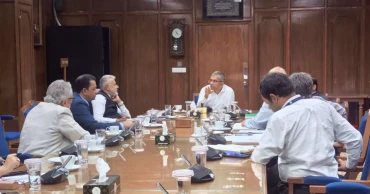
Bangladesh Bank is exploring a bond-based financing mechanism to ensure long-term funding for housing loans, the central bank governor said Sunday, as the country's leading real estate body pressed for a dedicated housing fund and single-digit interest rates on home loans.
The assurance came during a courtesy call by a delegation of the Real Estate and Housing Association of Bangladesh (REHAB) on Bangladesh Bank Governor Md. Mostakur Rahman at the central bank's headquarters.
Led by REHAB President Dr. Ali Afzal, the meeting covered the current state, challenges and prospects of the housing sector, with REHAB leaders urging the establishment of a special housing fund and long-term mortgage facilities at single-digit interest rates.
Governor said housing loans are among the most secure assets in the banking sector, which is why mortgage rates are already comparatively lower, running up to two percentage points below rates on many other loan categories.
He added that the central bank is working on a bond-based financing framework to ensure sustainable long-term funding for the housing sector, expressing confidence that the initiative, once implemented, would broaden mortgage access for ordinary citizens.
Afzal said affordable home loans under easy terms for first-time flat buyers would turn the homeownership dream of middle and lower-middle income people into reality. “At the same time, it will give the broader economy a further boost through housing sector activity.”
REHAB Senior Vice President Abdur Razzaque stressed the need to expand low-interest housing loan facilities to the district and upazila levels to support planned housing development and effectively decentralise Dhaka. “People will be more willing to settle outside the capital if affordable housing finance is available there.”
The delegation also included Vice Presidents Mohammad Akhter Biswas, Abu Khalid Md. Barkatullah and AFM Obaidullah, VP (Finance) Dr. Md. Harun-or-Rashid, and Director Tasnova Mahbub Salam, each of whom raised specific concerns and demands related to the sector.
Both sides expressed commitment to working jointly toward sustainable development of the housing sector, increased investment and broader homeownership access for the general public.
4 months ago

Grahak Forum gives Islami Bank chairman 24 hours to step down
The Islami Bank Sachetan Grahak Forum (Islami Bank Conscious Customers' Forum) on Sunday issued a 24-hour ultimatum demanding the resignation of bank’s newly appointed Chairman Khurshid Alam, labelling him an associate of the ousted fascist" Awami League regime and controversial S Alam Group.
The forum also called upon all officials and employees of Islami Bank Bangladesh PLC to observe a two-hour pen-down strike on Monday – from 10:00am to 12:00pm – in solidarity with its demand.
Prof Nur Nabi Manik, president of the forum, made the announcement while presiding over a rally held in front of the Islami Bank Tower in the capital’s Motijheel area, following a protest march.
"Khurshid Alam, an associate of the fascist Awami League and a successor to bank looter S Alam Group, must resign from the post of Islami Bank chairman within the next 24 hours," he said.
Urging the government to protect the country's financial system, Manik stated, "Islami Bank is the largest bank in the country. Do not destroy the national economy by handing over its control to a collaborator of the fallen autocratic regime."
Terming Khurshid Alam a "corrupt bank looter," he questioned the rationale behind his appointment.
The forum chief said Khurshid Alam was forced to step down from his position as deputy governor of Bangladesh Bank, and went into hiding, following the fall of the Awami League government on August 5, 2024
"Why should a fugitive like Khurshid Alam be appointed as chairman of Islami Bank? He was chosen because he excels in plundering resources. Previously, he looted funds to benefit the fallen Awami League and S Alam Group; now he will do the same for others," Manik alleged.
He said Islami Bank Sachetan Grahak Forum will stage sit-ins and form human chains in front of the bank's head office as well as all branches and sub-branches nationwide for two hours on Monday, urging all bank executives, officers, and staff members to join the programme and fully suspend banking operations for the period.
4 months ago

Businesses get until June 30 to upload paper VAT returns to e-VAT system
The National Board of Revenue (NBR) has extended the deadline for businesses to enter previously submitted paper-based VAT returns into the electronic VAT (e-VAT) system until June 30, 2026, ahead of the planned introduction of mandatory online VAT return filing from July.
According to an NBR press release issued on Sunday, a new sub-module titled “Hard Copy Return Entry” has been incorporated into the e-VAT system to facilitate the digital entry and preservation of all monthly VAT returns that had earlier been submitted in hard copy form.
The revenue authority said it had issued a circular on January 5, 2026 outlining the procedures for using the sub-module and had initially set March 31, 2026 as the deadline for entering all paper returns into the online system.
However, data from the e-VAT platform indicate that a significant number of hard-copy returns have yet to be entered electronically.
As part of its preparations to make online VAT return submission compulsory from July 2026, the NBR has decided to grant businesses additional time until June 30 to complete the process.
The NBR warned that businesses failing to enter their paper returns into the e-VAT system within the revised deadline would face restrictions.
In such cases, their closing balances as of May 2026 would be frozen, meaning no adjustments could be made against those balances in the future.
The revenue authority also noted that all VAT returns must be available in the online system for refund applications to be processed. As a result, businesses that do not enter all their previous VAT returns into the e-VAT platform will not be eligible to submit refund claims.
The NBR urged taxpayers to cooperate fully with its ongoing efforts to digitise all revenue-related activities, saying the initiative is aimed at enhancing transparency and accountability in the country’s tax administration system.
4 months ago

EATL hosts dinner for UK-China delegation to boost trade ties
EATL Innovation Hub Ltd on Saturday night hosted an exclusive dinner and strategic discussion in honour of a delegation of British and Chinese business leaders and investors visiting Bangladesh.
The event served as an important platform to strengthen international collaboration and explore new opportunities in trade, technology, infrastructure, education, healthcare, tourism and sustainable development.
China to invest in 1,000-bed hospital in Sylhet, minister says
The gathering brought together senior policymakers, government officials, international investors and business leaders committed to enhancing economic cooperation between Bangladesh, the United Kingdom and China.
Civil Aviation and Tourism Minister Afroza Khanam, BNP Standing Committee Member Dr Abdul Moyeen Khan and Vice Chairman Altaf Hossain Chowdhury, and Managing Director of EATL Innovation Hub MA Mubin Khan, among others, spoke at the event.
The visiting international delegation was led by Councillor Abdul Jabbar MBE, Deputy Leader of Oldham Council and Chairman of the Greater Manchester Bangladesh Partnership Board.
The delegation also included Andrew McCulley of EmirGreen Capital, Chris Baldwin of Arkitekton Construction, Hou Chunlin, Chief Executive Officer of Visient Holding Limited, and Qiu Run, Chief Executive Officer of Sheng Kai International Limited.
During the discussion, participants exchanged views on potential collaboration and investment opportunities in renewable energy, infrastructure development, education, healthcare, tourism and emerging technologies.
Members of the delegation expressed strong interest in supporting Bangladesh through green energy initiatives, innovative financing solutions, technology transfer and workforce development programmes.
Particular emphasis was placed on creating sustainable partnerships that can contribute to Bangladesh’s long-term economic growth and competitiveness in the global marketplace.
Speaking at the event, Civil Aviation and Tourism Minister Afroza Khanam highlighted the government’s continued efforts to attract foreign investment, expand trade opportunities, strengthen infrastructure, accelerate digital transformation and position the country as a regional hub for business, connectivity and innovation.
4 months ago

BSEC chairman Masud Khan vows market reforms, investor confidence restoration
Newly appointed Bangladesh Securities and Exchange Commission (BSEC) Chairman Masud Khan has pledged to restore investor confidence and undertake long-term reforms to build a transparent, fair and resilient capital market, acknowledging that the country's stock market is currently passing through a challenging period.
“I am truly overwhelmed by the outpouring of warm wishes, congratulations, and messages of support that I have received over the past few days. My heartfelt thanks to each and every one of you,” Masud Khan said in a post on his social media platform on Saturday, days after being appointed as the head of the market regulator.
Expressing gratitude for the opportunity to lead the commission, he said he was deeply humbled and privileged to serve as chairman of the BSEC at a critical juncture for Bangladesh's capital market.
Masud Khan noted that restoring investor confidence, enhancing market depth and meeting stakeholders' expectations would be among the key challenges facing the commission.
He acknowledged that reviving the market and placing it on a strong and sustainable footing would not be easy.
The newly appointed chairman said accepting the responsibility was a difficult decision, particularly given the experiences of previous commissions and the complex challenges associated with reforming and developing the capital market.
He also revealed that taking up the role required significant personal sacrifice, including giving up substantial financial benefits and a secure professional path built over a long corporate career.
“Public service often demands that personal considerations take a back seat to a larger purpose,” he said, adding that encouragement from family, friends and colleagues ultimately influenced his decision to accept the position.
Masud Khan said the mission ahead extends beyond merely recovering the market and includes strengthening institutions, attracting quality companies and long-term investment, improving governance and transparency, embracing digitisation, promoting investor education and creating the foundation for sustainable growth and innovation.
He stressed the importance of striking a balance between regulation and deregulation, saying his guiding principle would be to “regulate where necessary, simplify where possible.”
The BSEC chairman also emphasised that meaningful reforms cannot be achieved by any individual or institution acting alone.
He pledged to remain open to feedback, suggestions and constructive criticism from investors and stakeholders while acting in the best interests of the capital market and the broader economy.
Referring to his personal faith, Masud Khan said he believes that Allah is the best planner and expressed confidence that divine guidance and blessings would help overcome the challenges ahead.
Calling the task a collective endeavour, he sought the support and cooperation of investors, listed companies, intermediaries, regulators, policymakers, professional bodies and the media to rebuild trust in the country's capital market.
“With the support, cooperation, and goodwill of all stakeholders, I am confident that together we can restore confidence and build a transparent, fair, vibrant, and resilient capital market,” he said.
Masud Khan concluded by thanking well-wishers for their encouragement, support and prayers, saying he looks forward to working closely with all stakeholders in advancing the development of Bangladesh's capital market.
4 months ago
RMG exports decline 3.41% in 11 months of fiscal
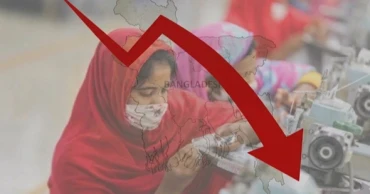
Bangladesh’s ready-made garment (RMG) exports fetched US$ 35.31 billion during the July–May period of the fiscal year 2025–26, registering a 3.41 percent decline compared to the same period in the previous fiscal year FY2024-25, according to the latest data from the Export Promotion Bureau (EPB).
The sector, which serves as the backbone of the country's export economy, faced minor contractions across most of its traditional and non-traditional destinations, though Canada emerged as a silver lining by maintaining positive growth momentum.
According to industry analyst Mohiuddin Rubel, Former Director of the Bangladesh Garment Manufacturers and Exporters Association (BGMEA), the European Union (EU) retained its status as the largest destination for Bangladeshi apparel. The EU market accounted for nearly half of the total RMG exports, taking in 49.15 percent of the shipments.
However, export earnings from the EU dropped to US$ 17.36 billion, marking a year-on-year negative growth of 4.88 percent.
The United States remained the second-largest destination for local apparel, holding a 19.90 percent market share. RMG exports to the US stood at US$ 7.03 billion, reflecting a marginal year-on-year decrease of 0.04 percent.
Meanwhile, export trends varied across other major Western markets. The United Kingdom, holding an 11.38 percent share, saw a slight decline of 0.50 percent, bringing its total import value to $ 4.02 billion.
Conversely, Canada bucked the downward trend by posting a 2.27 percent year-on-year growth, with exports reaching $ 1.23 billion (a 3.47 percent share).
Exports to non-traditional markets also experienced a slowdown. The collective earnings from these emerging markets dropped by 5.95 percent to $ 5.68 billion, capturing a 16.09 percent share of the total RMG export basket.
In terms of product performance, both major segments of the RMG basket registered negative growth. The knitwear segment fell by 4.26 percent, while the woven garment segment recorded a 2.42 percent decrease during the 11-month period.
4 months ago

Gold prices see sharp drop in Bangladesh; rate falls to Tk 229,373 per bhori
The price of gold in Bangladesh has been reduced by Tk 5,482 per bhori, with the rate of 22-carat gold now set at Tk 229,373 per bhori, according to the Bangladesh Jewellers Association (Bajus).
In a statement issued on Saturday morning, Bajus said the latest adjustment was made in view of the decline in the price of pure gold (tejabi gold) in the local market. The new rates came into effect from 10am.
Under the revised pricing structure, the price of 21-carat gold has been cut by Tk 5,249 per bhori to Tk 218,933.
The price of 18-carat gold has been reduced by Tk 4,490 per bhori to Tk 187,674, while gold produced under the traditional method now costs Tk 152,857 per bhori after a reduction of Tk 3,616.
Bajus last adjusted gold prices on June 2, when it reduced the price of 22-carat gold by Tk 3,266 per bhori, setting the rate at Tk 234,855.
So far in 2026, gold prices in the country have been revised 71 times. Of those, prices were increased on 37 occasions and reduced 34 times.
Alongside gold, Bajus also lowered silver prices. The price of 22-carat silver has been cut by Tk 408 per bhori to Tk 5,249.
Similarly, the price of 21-carat silver has been reduced by Tk 408 to Tk 4,957 per bhori, while 18-carat silver now costs Tk 4,257 per bhori after a Tk 350 reduction.
The price of traditional-method silver has been lowered by Tk 233 per bhori to Tk 3,441.
Silver prices have been adjusted 42 times so far this year, with increases recorded on 22 occasions and reductions on the remaining 20.
4 months ago