business

Stocks open week lower at DSE, CSE despite gains in majority shares
Bangladesh’s stock markets opened the week on a negative note on Sunday, with key indices of both the Dhaka Stock Exchange (DSE) and the Chittagong Stock Exchange (CSE) slipping in early trading.
During the first hour of trading, the DSE’s benchmark index DSEX fell by 3 points.
The Shariah-based index DSES and the blue-chip index DS30 also declined by 4 points each.
Despite the fall in indices, most listed companies saw gains in share prices. Of the traded securities, prices of 176 companies advanced, while 121 declined and 92 remained unchanged.
The turnover at the DSE crossed Tk 230 crore within the first hour.
The downward trend was also evident at the CSE, where the overall index CASPI dropped by 30 points in early trade.
Bangladesh stocks end week higher on upbeat sentiment
At the port city bourse, prices of 44 companies fell against gains by 38 companies, while share prices of 11 companies remained unchanged.
The turnover at the CSE exceeded Tk 1.50 crore during the first hour of trading.
5 months ago

Bangladesh gold prices fall in overnight reversal after morning peak
Gold prices in Bangladesh fell by Tk 3,266 per bhori on Saturday night, hours after a sharp increase earlier in the day, as the Bangladesh Jewellers Association (BAJUS) announced a fresh price adjustment.
In a notification BAJUS fixed the price of 22-carat gold at Tk 258,824 per bhori (11.664 grams), which will take effect from Sunday morning.
BAJUS said the revision was made in line with the decline in the price of pure gold (tejabi gold) in the local market and considering the overall market situation.
Under the new rates, 21-carat gold will sell at Tk 247,044 per bhori, 18-carat gold at Tk 211,760 per bhori, while gold under the traditional method has been priced at Tk 173,327 per bhori.
In addition to the selling price, buyers will have to pay a mandatory 5 percent government VAT and a minimum 6 percent wage set by BAJUS. However, labour charges may vary depending on the design and quality of jewellery.
Earlier on Saturday morning, BAJUS had raised the price of 22-carat gold by Tk 7,640 per bhori, fixing it at Tk 262,090.
With the latest revision, gold prices in Bangladesh have been adjusted 27 times so far in 2026 — increased 17 times and reduced 10 times.
Despite the cut in gold prices, silver prices in Bangladesh remained unchanged.
Currently, 22-carat silver is selling at Tk 6,357 per bhori, while 21-carat silver stands at Tk 6,065 per bhori, 18-carat silver at Tk 5,190 per bhori, and traditional silver at Tk 3,907 per bhori.
So far this year, silver prices in Bangladesh have been revised 17 times, with prices increased 10 times and reduced seven times.
5 months ago

Nagad announces Royal Enfield winner in mega campaign
A S M Noman Sarkar of Cumilla has won a Royal Enfield motorcycle as the mega prize of Nagad’s campaign titled “Asha Aar Fera, Surprise Sera.”
He secured the top prize by participating in the campaign and completing transactions in line with all campaign conditions, according to a press release issued by Nagad on Saturday.
The prize was handed over to the winner at a grand ceremony during the two-day Nagad Carnival held at the International School Dhaka (ISD) grounds.
Nagad Administrator, Md. Motasem Billah presented the motorcycle to the winner.
Nagad to receive remittances thru National Bank
Nagad Additional Managing Director, Shyamal B. Das, Chief Marketing Officer, Simon Imran Hyder, and Chief Commercial Officer, Mohammad Shaheen Sarwar Bhuiyan, also present.
Alongside the mega prize, participants in the campaign won several other rewards, including scooters and iPhones.
In addition, the first customer to make a transaction on Nagad every minute received mobile recharge rewards. Through this process, Nagad distributed thousands of small, medium, and large prizes. Among other notable winners, Sani Bepari from Barishal won an iPhone, while Sohel from Mymensingh won a scooter.
Expressing his excitement, A S M Noman Sarkar, said he first learned about the campaign from Nagad’s Facebook page. “After that, I reactivated my unused Nagad wallet and started making transactions,” he said. Sharing his feelings, he added, “I can’t really put my emotions into words. I feel extremely happy. From now on, I will use Nagad regularly and encourage my friends to do the same.”
The campaign, which began on 26 November last year, saw enthusiastic participation from customers across the country.
Through such initiatives, Nagad continues to demonstrate its commitment to its customers and aims to further strengthen its bond with them through more attractive campaigns in the future.
Nagad hits record Tk 40,000 crore in monthly transactions
5 months ago

Bangladesh stocks end week higher on upbeat sentiment
Bangladesh’s capital market ended the week on a positive note, with all major indices gaining as overall turnover rose, signalling renewed investor confidence.
According to the Weekly Market Pulse report of the Dhaka Stock Exchange (DSE), the benchmark DSEX index gained 80 points over the week.
After opening at 5,154 points, the index closed at 5,234 points, marking a year-on-year rise of more than 7.5 percent.
The Shariah-based DSES index advanced 37 points, while the blue-chip DS30 index added 15 points. Over the past year, the two indices have recorded gains of around 7 percent and 8 percent respectively.|
The SME index, representing small and medium enterprises, also edged up by more than 3.5 points.
Average daily turnover at the DSE climbed to Tk 668 crore during the week, up from Tk 579 crore in the previous week, an increase of over 15 percent.
Market breadth remained positive, as share prices of 231 companies increased against declines in 141 companies, while prices of 17 companies remained unchanged.
The banking sector emerged as the main attraction for investors. Share prices in the sector rose by more than 116 percent, the highest among all sectors, while turnover surged 123 percent, indicating heavy trading interest.
BRAC Bank PLC topped the turnover chart in the banking sector, with its weekly turnover rising by over 3 percent, placing it at the top of the DSE’s trading list. Other actively traded bank stocks included Islami Bank Bangladesh PLC and City Bank PLC.
The cement sector followed closely, posting a strong rally as prices increased by 109 percent and turnover rose 93 percent. All seven listed cement companies ended the week with price gains.
Among non-bank financial institutions, share prices rose by 44 percent, though turnover declined slightly by around 1.5 percent. Mutual fund units performed well, with prices and turnover increasing by 55 percent and 65 percent respectively.
In contrast, the insurance sector underperformed. General insurance stocks saw a 42 percent fall in prices and a 48 percent decline in turnover, while life insurance stocks recorded a 17 percent drop in prices and a 27 percent fall in turnover.
In the block market, Fine Foods Limited recorded the highest turnover, selling shares worth nearly Tk 13.8 crore through several transactions.
Interestingly, nine of the top ten gainers on the DSE were Z-category companies, while nine of the bottom ten losers were A-category firms.
This indicates that despite the overall market rise, non-dividend-paying and financially weaker companies dominated the gainers’ list, while fundamentally strong dividend-paying stocks largely lagged behind.
The Chittagong Stock Exchange (CSE) also witnessed a positive trend. The overall CASPI index rose by 262 points, while the CSE30 and CSE50 indices gained 253 points and 24 points respectively.
UNDP to support Bangladesh’s capital market with thematic bond development
At the CSE, share prices of 160 companies increased, compared to declines in 87 companies, while prices of 22 companies remained unchanged.
Orion Infusion Limited, Islami Bank Bangladesh PLC, Fine Foods Limited, Lovello Ice Cream PLC and Eastern Bank PLC were the most traded stocks on the CSE during the week.
5 months ago

Gold price drops by Tk7,640 per bhori in Bangladesh
Gold prices in Bangladesh have been reduced by Tk7,640 per bhori on Friday, following a fresh price revision announced by the Bangladesh Jewellers Association (BAJUS).
The association explained that the decision was taken in view of an overall assessment of the market situation, particularly a fall in the local price of tejabi gold (pure gold).
Under the new rates, the price of 22-carat gold has been fixed at Tk254,450 per bhori (11.664 grams), which comes into effect immediately, BAJUS said in a statement.
According to the revised price list, 21-carat gold will now sell at Tk242,903 per bhori, while 18-carat gold has been priced at Tk208,202 per bhori.
Gold made under the traditional method has been fixed at Tk170,411 per bhori.
Gold Price Shock: Tk16,330 surge hits Bangladesh overnight
In addition to the declared selling price, buyers will have to pay a mandatory 5 percent government VAT and a minimum 6 percent making charge set by BAJUS.
However, the making charge may vary depending on the design and quality of the jewellery.
BAJUS last adjusted gold prices on February 3, when it raised the price by Tk10,906 per bhori, fixing the rate of 22-carat gold at Tk262,090.
So far in 2026, gold prices in the domestic market have been revised around 25 times — increased on 16 occasions and reduced nine times.
Alongside gold, silver prices have also been lowered. The price of 22-carat silver has been reduced by Tk175 per bhori to Tk6,357.
The new rates for 21-carat silver stand at Tk6,065 per bhori, 18-carat silver at Tk5,190 per bhori, and traditional silver at Tk3,907 per bhori.
This marks the 17th adjustment of silver prices in the local market this year, with prices raised 10 times and cut seven times so far.
5 months ago

Policy reforms, ethical business key to competitiveness after LDC graduation: Business leaders
Analysts and business leaders on Thursday said comprehensive policy reforms, stronger institutional efficiency and an uncompromising commitment to ethical business practices are crucial for Bangladesh to sustain its competitiveness in the post-LDC graduation era.
The observations came at a high-level discussion titled “Business Climate in Bangladesh: Issues and Challenges of Ethical Practice”, jointly organised by the Federation of Bangladesh Chambers of Commerce and Industry (FBCCI) and the International Business Forum of Bangladesh (IBFB) at the FBCCI office in Motijheel.
Presenting the keynote paper, Dr Khondaker Golam Moazzem, Research Director of the Centre for Policy Dialogue (CPD), called for urgent ‘business process re-engineering’ to lower the cost of doing business and enhance the efficiency of government agencies.
Read More: Top business leaders meet Tarique Rahman, discuss economy, jobs
He said streamlining core services such as licensing, registration and customs clearance must go hand in hand with strengthening integrity and accountability among public officials to remove systemic bottlenecks.
During the open discussion, business leaders said creating a genuinely investment-friendly environment requires swift implementation of digitalisation, automation and a fully functional single window system to ensure transparency and predictability.
IBFB Director M S Siddiqui noted that several existing regulatory frameworks remain misaligned with ease-of-doing-business objectives, which can deter both domestic and foreign investment.
Responding to the concerns, Anti-Corruption Commission (ACC) Secretary Mohammad Kaled Rahim acknowledged procedural complexities in the system but reiterated the commission’s commitment to simplifying processes.
He urged members of the business community to report specific instances of harassment or irregularities to the authorities.
Foreign Secretary Dr Md Nazrul Islam said the interim government has already initiated complex institutional reforms, but emphasised that broad-based “behavioural reform” across both public and private sectors has now become a critical priority.
Read More: Govt signs deal with ‘Shukrishi’ to develop agri-business entrepreneurship
IBFB President Lutfunnisa Saudia Khan said ethical business practices are the foundation of inclusive growth and a stronger global image for Bangladesh.
She stressed that collective responsibility, transparency and continuous dialogue are as important as legal frameworks in addressing the challenges faced by entrepreneurs.
FBCCI Administrator Md Abdur Rahim Khan assured participants that the private sector’s recommendations would be formally conveyed to the government.
He also urged entrepreneurs to uphold responsible and ethical business conduct.
Former FBCCI directors, general body members, FBCCI Secretary General Md Alamgir, Head of FBCCI International Affairs Wing Md Zafar Iqbal, Adviser of FBCCI Safety Council Brig Gen (retd) Abu Nayeem Md Shahidullah, along with leaders from IBFB and various chambers and trade associations attended the event.
5 months ago
DCCI calls for immediate normalisation of Ctg port operations
Dhaka Chamber of Commerce and Industry (DCCI) on Thursday urged the government to take immediate steps to restore normal operations at Chattogram Port, warning that the prolonged shutdown is severely disrupting trade and could have far-reaching consequences for the national economy.
Describing Chattogram Port as the lifeline of Bangladesh’s trade, the chamber said nearly 92 percent of the country’s import-export activities are handled through the port, with an average clearance of around 260,000 Twenty-foot Equivalent Units (TEUs) per month, or about 9,000 TEUs daily.
However, port operations have remained completely halted since February 4, 2026, leaving around 54,000 containers stranded so far, the DCCI said in a media release.
Due to delays in cargo clearance, businesses are incurring additional costs ranging from Tk 10,000 to Tk 15,000 per day, it said, adding that the situation is having a particularly severe impact on the export sector.
The chamber warned that if the deadlock continues, it could adversely affect the national economy, as exporters face the risk of order cancellations or diversion of purchase orders to competing countries.
While some international buyers have temporarily agreed to extend shipment deadlines, they may seek alternative sourcing destinations if the crisis persists, the release said.
With Ramadan just days away, the DCCI also expressed concern that prolonged delays in clearing imported goods could trigger price hikes in the local market, negatively affecting consumers across all income groups.
The chamber further said the unexpected disruption in cargo handling is likely to push up operational costs across trade and investment activities, placing additional pressure on both businesses and consumers.
Calling for urgent government intervention, the DCCI urged authorities to resolve the issue quickly through discussions with all stakeholders involved in Chattogram Port operations.
Emphasising the port’s critical role as the main driving force of the country’s economy, the chamber stressed the need for coordinated efforts among the business community, the Chattogram Port Authority and other relevant stakeholders to ensure uninterrupted operations.
5 months ago

Stocks open higher as DSE, CSE indices gain in first hour
Bangladesh’s stock market opened on a positive note on Thursday, with key indices of both the Dhaka Stock Exchange (DSE) and the Chittagong Stock Exchange (CSE) rising during the first hour of trading, as share prices of most companies advanced.
At the DSE, the benchmark index DSEX rose by 18 points in the first hour.
Among other indices, the Shariah-based DSES gained 9 points, while the blue-chip DS30 slipped marginally by 2 points.
Market breadth remained positive, with prices of 217 companies rising against 96 decliners, while shares of 74 companies remained unchanged.
The turnover at the DSE crossed Tk 160 crore during the period.
Stocks advance at DSE, CSE in first half of trading
Meanwhile, at the CSE, the overall index CASPI advanced by 37 points in early trading.
Of the traded issues, prices of 36 companies increased, while 13 companies saw their share prices fall and 14 remained unchanged.
The total turnover at the CSE exceeded Tk 1.5 crore in the first hour of trading.
5 months ago

Logistics key to supply chain resilience, economic stability: AmCham President
Calling logistics a foundational pillar of modern economies, Syed Ershad Ahmed, President of AmCham Bangladesh, said efficient logistics systems are essential for sustaining supply chains, supporting economic growth, and ensuring the continuity of everyday life.
The global logistics landscape is being rapidly reshaped by forces such as AI and automation, decarbonization and fuel transitions, geopolitics, regionalization, and supply chain resilience, and stressed the need to bridge existing knowledge and capacity gaps to better support the country’s growing trade and investment needs, he said.
The AmCham President made the remarks at a focus group discussion titled “Framing the Logistics Sector Landscape: Challenges, Opportunities, and the Way Forward,” held at a city hotel on Tuesday.
Read More: AmCham honours Khaleda Zia as legacy of an exemplary leader
Drawing on over three decades of professional experience, he noted that while Bangladesh’s logistics sector has evolved, it continues to lag behind regional competitors and remains poorly understood domestically.
M. Masrur Reaz, Chairman, Policy Exchange Bangladesh, highlighted key challenges and opportunities in Bangladesh’s logistics sector, affirming its critical role in trade competitiveness through cost reduction, faster delivery, and efficiency gains.
Referring to the Chattogram port labor strike, he illustrated how logistics disruptions can severely impact the national economy, noting that logistics infrastructure and port capacity expansion will be crucial to supporting the projected GDP of USD 760 billion by 2030, while a 1% reduction in logistics costs could increase exports by around 7%, particularly as Bangladesh approaches LDC graduation.
He also identified major implementation gaps in the National Logistics Policy, including government monopolies in rail and air cargo, weak inter-ministerial coordination, and the absence of central logistics authority.
Read More: AmCham dialogue stresses urgent reforms to boost investment competitiveness
Seasoned entrepreneur Mahbubul Anam, Managing Director of CF Global, outlined key challenges in air logistics and express courier operations, emphasizing the need for stronger public–private coordination, supportive policy frameworks, stakeholder-informed infrastructure planning, and adequate equipment.
He stressed the importance of cost rationalization, capacity expansion, efficient courier services, and robust contingency arrangements to support time-sensitive shipments, particularly as e-commerce-driven demand for express logistics continues to grow.
He noted that logistics costs at Dhaka airport are 20–25% higher than those of road transport and underscored that stronger public–private cooperation is essential to address these constraints.
Nusrat Nahid Babi, Senior Transport Specialist, South Asia, The World Bank, said that Bangladesh’s logistics reform momentum since 2022 must be reaffirmed by the new government through clear priorities and high-level consensus.
She outlined a phased reform agenda structured around five thematic pillars: policy and procedural simplification; multimodal logistics infrastructure and connectivity; skills and institutional capacity development; supply-chain digitalization; and investment in logistics.
Other speakers and the overall discussion emphasized the need to move decisively from policy intent to implementation, including ratification of the National Logistics Policy 2025, supported by a clear execution roadmap.
Md. Moinul Huq, Citi Country Officer, Bangladesh Citibank, N.A., highlighted the urgent need for customs authorities to operationalise provisions of the Customs Act 2023 by clearly defining electronic document submission and payment modalities.
Participants expressed concern about the heavy dependence on RMG exports, slow progress in new infrastructure development, and poor implementation of electronic documentation despite the presence of enabling policies.
Read More: AmCham hosts session on Economic and Investment Outlook in Dhaka
5 months ago
BB buys $171mn, total purchases hit $4.32bn in FY2025-26
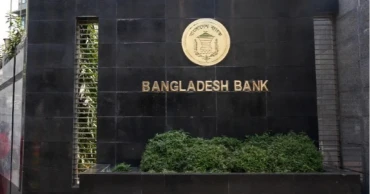
Bangladesh Bank (BB) purchased an additional US $171 million from 16 commercial banks on Wednesday as part of ongoing efforts to stabilise the country’s foreign exchange market.
The dollars were bought at a cut-off rate of Tk 122.30 per US dollar, a central bank official said.
This intervention follows a major purchase on Monday when the central bank acquired $218.5 million from 16 banks at the same rate. With these recent transactions, BB’s total dollar purchases in February have reached $389.5 million in just four days.
Aggressive Accumulation in FY2025-26
Throughout the current fiscal year, Bangladesh Bank has been actively buying dollars to curb rapid Taka appreciation and strengthen foreign exchange reserves.
The total purchases for FY2025-26 have reached $4.32 billion.
Recent Major Interventions:
Feb 4: $171 million from 16 banksFeb 2: $218.5 million from 16 banksJan 29: $55 million from 5 banksJan 20: $45 million from 2 banksJan 12: $81 million from 10 banksJan 6: $223.5 million from 14 banksAll transactions were executed at a uniform cut-off rate of Tk 122.30.
Read More: Bangladesh Bank directs banks, NGOs to boost awareness on referendum
Rationale Behind Market Intervention
Arif Hosain Khan, Executive Director and Spokesperson of Bangladesh Bank, confirmed the latest purchase, noting that the central bank employs an auction-based system to manage liquidity.
Key drivers include:
Remittance Surge: Inward remittances through formal banking channels have reached record levels, with January 2026 alone seeing $3.17 billion, leaving banks with surplus dollar holdings.
Exchange Rate Management: By setting a cut-off rate, the central bank aims to establish a floor for the Taka, supporting exporters and remitters.
Reserve Strengthening: Dollar purchases are helping rebuild the country’s foreign exchange reserves, which stood at $28.51 billion (net) as of December 2025.
Banking insiders say that while the dollar crisis of previous years has eased, active participation by the central bank remains critical to prevent market volatility and ensure a predictable exchange rate for trade planning.
5 months ago