business

Stocks surge at DSE, CSE on strong buying as week opens
Stocks rallied sharply on Sunday, the first trading day of the week, with key indices at both the Dhaka Stock Exchange (DSE) and the Chittagong Stock Exchange (CSE) posting significant gains amid broad-based price appreciation and higher turnover.
At the DSE, the benchmark DSEX index jumped 76 points, while the Shariah-based DSES rose 13 points and the blue-chip DS30 advanced 26 points.
Prices increased for most listed companies, as shares of 290 firms closed higher against declines in 42 issues, while 57 remained unchanged.
Read More: Stocks advance at midday at DSE, CSE
Market activity also strengthened, with total turnover at the DSE rising to Tk 474 crore, up from Tk 379 crore in the previous session.
In the block market, shares of 19 companies worth Tk 13.5 crore were traded, with Fine Foods Limited topping the list by executing transactions worth Tk 4.3 crore.
Apex Tannery Limited emerged as the top gainer at the DSE, climbing nearly 10 percent, while Familytex (BD) Limited ended as the worst performer, losing more than 8 percent.
The upbeat trend extended to the CSE, where the overall CASPI index soared 165 points.
At the port city bourse, prices of 97 companies advanced against declines in 47 issues, while 19 remained unchanged.
The turnover at the CSE stood at Tk 7 crore, compared to Tk 6 crore in the previous trading day.
Apex Tannery Limited also topped the gainers’ list at the CSE with a rise of around 10 percent, while Reliance One The First Scheme of Reliance Insurance Mutual Fund closed at the bottom, shedding nearly 10 percent.
DSE inches up, CSE slips as majority stocks end lower
6 months ago
Bangladesh’s remittance soars 56.3% in first 17 days of January
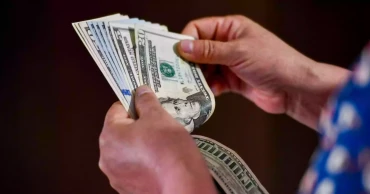
The upward trend in inward remittances continued and 56.3 percent growth in January, with receiving over US $1.86 billion in 17 days of the month.
Bangladesh received $18.12 billion in inward remittances from July to January 17, 2026, in the current fiscal year FY 2025-26. It was 14.96 billion in the same period of the previous FY2024-25, and saw a growth of 21.1 percent.
Read more: Stocks surge at DSE, CSE on strong buying as week opens
Blessed by strong remittances, Bangladesh’s gross forex reserves have surpassed $33 billion, up from $29 billion under the IMF’s BPM6 standard.
Arif Hossain Khan, Executive Director and spokesperson of Bangladesh Bank, said the expatriates have sent $1.86 billion in the first 17 days of January 2026, which was $1.19 million in the same period of January 2025. It means the remittance earnings grew by 56.3 percent in this time.
The growth is attributed to several factors, including incentives offered for sending money through legal banking channels, increased encouragement for using the formal system, and the active role of exchange houses.
In FY2025-26, Bangladesh received $2.47 billion in remittances in July, $2.42 billion in August, $2.68 billion in September, $2.56 billion in October, $2.88 billion in November, and $3.22 billion in December.
Read more: NBR launches automated system easing compliance for importers
This data revealed that the average inward remittance flow was over $2.42 billion in the last six months. This robust flow of remittance influences Bangladeshi policymakers to discourage lending from the IMF with tough conditions.
6 months ago
Proposed amendments to Bank Company Act faces fierce opposition from BAB
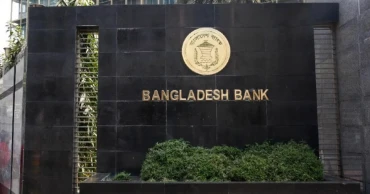
A move by the central bank to limit shareholding for individuals, families, and institutions has met with fierce opposition from the Bangladesh Association of Banks (BAB), an organization of bank owners, sparking a debate over the future of corporate governance in Bangladesh's financial sector.
Under the draft Bank Company (Amendment) Act 2025, Bangladesh Bank has proposed that no person, family, or institution may directly or indirectly hold more than a 5 percent stake in more than one bank simultaneously.
The Financial Institutions Division (FID) of the Ministry of Finance held a meeting last week, chaired by FID Secretary Nazma Mobarek, to discuss the addition of three new sub-sections to Section 14/B of the law. The primary objective is to prevent vested interest groups from exerting undue influence over multiple financial institutions at once.
Three legislative changes are proposed to achieve the desired result:
If a person or entity owns 2 percent or more of one bank, they cannot hold a similar 2 percent stake in any other bank.
Even if an investor holds more than 5 percent of a bank's shares, their voting rights will be capped at 5 percent (excluding the government and non-profit/strategic investors).
Current regulations allow an investor to hold up to 10 percent of a bank’s shares with "one share, one vote" rights, and there are no restrictions on holding shares in multiple banks.
The Bangladesh Association of Banks (BAB), representing private bank owners, has strongly opposed the move. BAB representatives argued that general shareholders do not influence policy; rather, the Board of Directors does. They contend that since there are already proposals to reduce the number of family members on boards, further limits on shareholding are unnecessary and "excessively strict."
BAB further proposed that the definition of a "family" be limited to spouses and dependent members, and that the maximum family shareholding limit be increased to 25 percent.
Conversely, Bangladesh Bank officials highlighted the recent devastation caused by a single large conglomerate that gained majority control over six banks. Central bank representatives stated that this group manipulated policies to loot thousands of crores of taka, leaving hundreds of thousands of depositors in jeopardy.
"The government had to inject Tk 20,000 crore of public money at the end of last year to compensate depositors of five merged private banks," officials noted during the meeting.
FID Secretary Nazma Mobarek stated that more time is needed to finalize the amendments due to the significant differences in opinion between the central bank and the BAB.
"We have asked the central bank officials and BAB representatives to reach a consensus before the next meeting," the Secretary said.
6 months ago
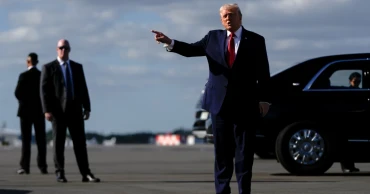
Trump threatens 10% tariff on 8 European countries over Greenland stance
President Donald Trump said Saturday that he would charge a 10% import tax starting in February on goods from eight European nations because of their opposition to American control of Greenland, setting up a potentially dangerous test of U.S. partnerships in Europe.
Denmark, Norway, Sweden, France, Germany, the United Kingdom, the Netherlands and Finland would face the tariff, Trump said in a social media post while at his golf club in West Palm Beach, Florida. The rate would climb to 25% on June 1 if no deal was in place for “the Complete and Total purchase of Greenland” by the United States, he said.
The Republican president appeared to indicate that he was using the tariffs as leverage to force talks with Denmark and other European countries over the status of Greenland, a semiautonomous territory of NATO ally Denmark that he regards as critical to U.S. national security.
“The United States of America is immediately open to negotiation with Denmark and/or any of these Countries that have put so much at risk, despite all that we have done for them,” Trump said on Truth Social.
The tariff threat could mark a problematic rupture between Trump and America's longtime NATO partners, further straining an alliance that dates to 1949 and provides a collective degree of security to Europe and North America. Trump has repeatedly tried to use trade penalties to bend allies and rivals alike to his will, generating investment commitments from some nations and pushback from others, notably China.
Trump is scheduled to travel on Tuesday to the World Economic Forum in Davos, Switzerland, where he likely will run into the European leaders he just threatened with tariffs that would start in little more than two weeks.
French President Emmanuel Macron pushed back against Trump in a social media post that seemed to equate the threat to Russian leader Vladimir Putin's war in Ukraine.
“No intimidation or threats will influence us, whether in Ukraine, Greenland or anywhere else in the world when we are faced with such situations,” Macron said in a translated post on X. “Tariff threats are unacceptable and have no place in this context. Europeans will respond in a united and coordinated manner.”
There are immediate questions about how the White House could try to implement the tariffs because the EU is a single economic zone in terms of trading, according to a European diplomat who was not authorized to comment publicly and spoke on the condition of anonymity. It was unclear, too, how Trump could act under U.S. law, though he could cite emergency economic powers that are currently subject to a U.S. Supreme Court challenge.
Trump has long said he thinks the U.S. should own the strategically located and mineral-rich island, which has a population of about 57,000 and whose defense is provided by Denmark. He intensified his calls a day after the military operation to oust Venezuela’s Nicolás Maduro earlier this month.
The president indicated the tariffs were retaliation for what appeared to be the deployment of s ymbolic levels of troops from the European countries to Greenland, which he has said was essential for the “Golden Dome” missile defense system for the U.S., He also has argued that Russia and China might try to take over the island.
The U.S. already has access to Greenland under a 1951 defense agreement. Since 1945, the American military presence in Greenland has decreased from thousands of soldiers over 17 bases and installations to 200 at the remote Pituffik Space Base in the northwest of the island, the Danish foreign minister has said. That base supports missile warning, missile defense and space surveillance operations for the U.S. and NATO.
Resistance has steadily built in Europe to Trump's ambitions even as several countries on the continent agreed to his 15% tariffs last year in order to preserve an economic and security relationship with Washington.
‘Important for the whole world’
Earlier Saturday, hundreds of people in Greenland's capital, Nuuk, braved near-freezing temperatures, rain and icy streets to march in a rally in support of their own self-governance.
Thousands of people also marched through Copenhagen, many of them carrying Greenland’s flag. Some held signs with slogans such as “Make America Smart Again” and “Hands Off.”
“This is important for the whole world,” Danish protester Elise Riechie told The Associated Press as she held Danish and Greenlandic flags. “There are many small countries. None of them are for sale.”
The rallies occurred hours after a bipartisan delegation of U.S. lawmakers, while visiting Copenhagen, sought to reassure Denmark and Greenland of their support.
NATO training exercises
Danish Maj. Gen. Søren Andersen, leader of the Joint Arctic Command, told the AP that Denmark does not expect the U.S. military to attack Greenland, or any other NATO ally, and that European troops were recently deployed to Nuuk for Arctic defense training.
He said the goal is not to send a message to the Trump administration, even though the White House has not ruled out taking the territory by force.
“I will not go into the political part, but I will say that I would never expect a NATO country to attack another NATO country,” he said from aboard a Danish military vessel docked in Nuuk. “For us, for me, it’s not about signaling. It is actually about training military units, working together with allies.”
The Danish military organized a planning meeting Friday in Greenland with NATO allies, including the U.S., to discuss Arctic security on the alliance’s northern flank in the face of a potential Russian threat. The Americans were also invited to participate in Operation Arctic Endurance in Greenland in the coming days, Andersen said.
In his 2½ years as a commander in Greenland, Andersen said that he hasn't seen any Chinese or Russian combat vessels or warships, despite Trump saying that they were off the island's coast.
But in the unlikely event of American troops using force on Danish soil, Andersen confirmed that Danish soldiers have an obligation to fight back.
‘Almost no better' ally to US than Denmark
Trump has contended that China and Russia have their own designs on Greenland and its vast untapped reserves of critical minerals. He said recently that anything less than the Arctic island being in U.S. hands would be “unacceptable.”
The president has seen tariffs as a tool to get what he wants without having to resort to military actions. At the White House on Friday, he recounted how he had threatened European allies with tariffs on pharmaceuticals and he teased the possibility of doing so again.
“I may do that for Greenland, too,” Trump said.
After Trump followed through, Rep. Don Bacon, R-Neb., said "Congress must reclaim tariff authorities” so that they are not used solely at a president's discretion.
European leaders have said it is only for Denmark and Greenland to decide on matters concerning the territory, and Denmark said this week that it was increasing its military presence in Greenland in cooperation with allies.
“There is almost no better ally to the United States than Denmark,” said Sen. Chris Coons, D-Del., while visiting Copenhagen with other members of Congress. “If we do things that cause Danes to question whether we can be counted on as a NATO ally, why would any other country seek to be our ally or believe in our representations?”
6 months ago

GAPEXPO ends with calls for policies to transform packaging sector into export earner
Industry leaders and experts have called for the immediate implementation of business-friendly policies and the support of an elected government to unlock the potential of the sustainable packaging sector.
Speakers at a high-profile industry event stated that with the right policy framework, this sector—already the country's second-largest export earner—could eventually surpass the Readymade Garments (RMG) industry.
These observations were made on Saturday during the closing ceremony of Garments Accessories & Packaging Expo (GAPEXPO) 2026 and Garment Technology Bangladesh (GTB) Expo2026. The four-day mega-exhibition, organized by ASK Trade & Exhibitions Pvt. Ltd. and the Bangladesh Garments Accessories & Packaging Manufacturers & Exporters Association (BGAPMEA), concluded at the International Convention City Bashundhara (ICCB).
Chief Guest Altaf Hossain Chowdhury, former commerce and home minister, expressed high optimism regarding the sector's trajectory. "In the last fiscal year, the packaging and accessories sector generated $7.45 billion in exports. This sector's energy and capacity are remarkable," he said.
He further noted that if the BNP forms the government in the future, it would stand by the business community to resolve all systemic issues hindering the sector.
Fazle Shamim Ehsan, President of the Bangladesh Employers Federation (BEF), highlighted that while the sector is often "underrated," its ability to import raw materials and re-export them as finished goods proves its immense capability.
He stressed the need for a stable, democratic government to restore foreign investor confidence and accelerate economic growth.
Industry leaders also voiced concerns regarding current trade regulations. Shaukat Aziz Russell, President of the Bangladesh Textile Mills Association (BTMA), warned that certain policies are pushing the industry toward a crisis.
Russell argued that if the ‘Free of Cost’ (FOC) import facility is allowed at 100 percent, domestic factories will fail as all products will be sourced from abroad.
He called for a reduction in extra taxes and port levies to enhance the competitiveness of local manufacturers.
Additionally, Md. Shahriar, President of BGAPMEA, emphasized the integrity of real entrepreneurs, noting that while corrupt individuals have laundered money under the guise of business, true industrialists are committed to the nation's wealth.
The Export Promotion Bureau (EPB) reported that this year’s expo was 80 percent more successful than the previous year. Abu Mokhles Alamgir Hossain, Director of EPB, highlighted the $700 billion global packaging market as a major opportunity.
"As the 'Product of the Year,' we will organize seminars to address this sector's challenges and engage with the National Board of Revenue (NBR) to ensure bond facilities and other necessary support," he stated.
The 15th GAPEXPO-2026, held from January 14–17, featured 1,500 stalls and 350 domestic and international companies from countries including India, China, Pakistan, Taiwan, Australia, Germany, and the UAE.
The organizers reported over 100,000 visitors, facilitating vital connections between global buyers and local sellers. The event concluded with the presentation of "Best Stall" awards to eight exceptional participating companies.
6 months ago
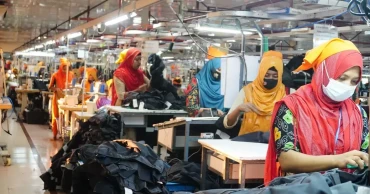
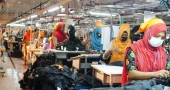
Bangladesh's garment exports to Europe exceed €18 billion, growing over 7.5%
The European Union’s apparel import market witnessed a significant reshuffling in 2025, as Bangladesh’s exports to the bloc climbed to €18.06 billion despite a broader trend of falling unit prices and aggressive competition from China.
According to the latest Eurostat data for the period of January to November 2025, the EU's total apparel imports grew by 3.93 percent, reaching a total value of €82.94 billion. While the market saw a robust 11.60 percent increase in volume, the average unit price for garments fell by 6.88%, signaling a highly competitive, price-sensitive environment for global suppliers.
Bangladesh, the EU's second-largest apparel supplier, saw its export value rise from €16.78 billion in 2024 to €18.06 billion in the first eleven months of 2025—a growth of 7.65 percent. This value growth was largely volume-driven, with an 11.26 percent increase in the quantity of goods shipped, even as the country faced a 3.25 percent decrease in unit prices.
However, data from the end of the period suggests a cooling trend. A comparison between November 2024 and November 2025 reveals a sharp 10.87% drop in export value and a 12.27% decline in unit prices, highlighting the mounting pressure on Bangladeshi manufacturers to lower costs.
Garment accessories sector posts record $7.45bn export earnings in FY25: BGAPMEA
The report highlights a strategic pivot by China. Facing ongoing challenges in the United States market, China has intensified its focus on Europe. Chinese apparel exports to the EU reached €24.42 billion, marking a 6.55 percent growth in value. Most notably, China saw a massive 15.73 percent surge in export volume, supported by a 7.93 percent reduction in unit prices.
The sourcing landscape across Asia showed varying results.
Vietnam recorded a healthy 10.10 percent growth, reaching €4.02 billion. Unlike its neighbors, Vietnam saw a 4.19 percent increase in unit price, likely reflecting a shift toward higher-value garments.
Turkey struggled significantly, facing an 11.31 percent decline in exports to the EU, totaling €7.66 billion.
India, Pakistan, and Cambodia all showed substantial growth rates, contributing to the overall volume surge in the European market.
Global demand crunch pinches RMG, exports stagnant in first 5 months of fiscal at $16bn
"The data reflects a complex environment where volume is up, but margins are being squeezed," noted Mohiuddin Rubel, Managing Director of Bangladesh Apparel Exchange Ltd.
"While Bangladesh remains a key player, the aggressive pricing strategies from competitors like China and the recent dip in November figures suggest that staying competitive will require a careful balance of volume and value-addition," he said.
6 months ago
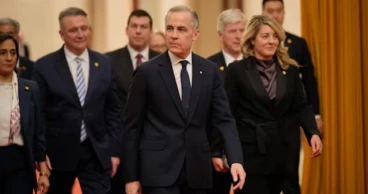
Canada to cut tariff on Chinese EVs in exchange for lower duties on farm exports
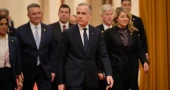
Canada has agreed to reduce its 100% tariff on Chinese electric vehicles in return for sharp cuts to Chinese duties on key Canadian farm products, Prime Minister Mark Carney said Friday.
Speaking after two days of talks with Chinese leaders, Carney said the deal will initially allow up to 49,000 Chinese-made EVs to enter the Canadian market. In exchange, China will lower its tariff on Canadian canola seeds from about 84 percent to around 15 percent.
The announcement came as Canada and China signaled a broader effort to reset relations after years of tension.
Carney said his visit, the first by a Canadian prime minister in eight years, marked “a historic and productive” step toward rebuilding ties and adapting cooperation to new global realities. He called for closer collaboration in agriculture, energy and finance.
Chinese President Xi Jinping said talks since an initial meeting last October had helped open a new chapter in bilateral relations and that Beijing was willing to continue working to improve ties.
Venezuela’s new leader signals oil sector reforms and warmer US ties
Relations between the two countries deteriorated in recent years after Canada followed the United States in imposing steep tariffs on Chinese electric vehicles, steel and aluminum under former prime minister Justin Trudeau. China retaliated with heavy duties on Canadian canola oil, meal and seeds, as well as pork and seafood, effectively shutting Canadian canola out of the Chinese market.
The renewed engagement comes as both countries face economic pressure from US President Donald Trump’s America-first trade policies, which have disrupted global commerce and hit both the Canadian and Chinese economies.
Carney said his government is seeking to build an economy less dependent on the United States and to diversify trade partnerships during a period of global trade disruption.
After leaving China on Saturday, Carney will visit Qatar before heading to Switzerland for the World Economic Forum, where he is expected to meet business leaders and investors to promote trade and investment.
6 months ago
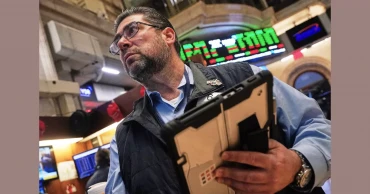
Asian shares mixed as US futures rise after Wall Street stabilises
Asian shares were mixed Friday after Wall Street broke a two-day losing streak and edged back toward record levels, helped by advances for Big Tech companies like Nvidia.
U.S. futures advanced and oil prices slipped.
Tech shares regained momentum after Taiwan Semiconductor Manufacturing Co., a major supplier to the industry, reported strong profits and investment plans. TSMC gained 2.7% early Friday and Taiwan's benchmark Taiex was up 2%.
The frenzy around AI has sent Nvidia and other superstar stocks to dizzying heights, stirring criticism that their prices had shot too high. Nvidia rose 2.1% after TSMC’s Chief Financial Officer Wendell Huang said it’s seeing “continued strong demand” in an encouraging signal for the entire AI industry.
TSMC’s stock that trades in the United States rose 4.4% on Thursday.
The gains also followed the signing of a U.S.-Taiwan trade deal involving $250 billion in new investments by Taiwan’s semiconductor and tech companies in the U.S. In exchange, the Trump administration will cut tariffs on Taiwanese goods. The deal aims to establish a strategic economic partnership and upgrade U.S. industrial infrastructure.
In Tokyo, the Nikkei 225 edged 0.1% lower to 54,062.28, while Hong Kong's Hang Seng gave up 0.3% to 26,851.69. The Shanghai Composite index lost 0.2% to 4,103.45.
China is due to report its economic growth data for 2025 on Monday.
Elsewhere in Asia, South Korea's Kospi rose 0.4% to 4,814.21. The benchmark has been trading at record highs for weeks, helped by a recovery in confidence in AI-related shares.
In Australia, the S&P/ASX 200 was up 0.4% at 8,895.00. India's Sensex also rose 0.4%.
Wall Street steadied on Thursday as stocks in the artificial-intelligence industry bounced back.
The S&P 500 rose 0.3% to 6,944.47. The Dow Jones Industrial Average added 0.6% to 49.442.44, and the Nasdaq composite rose 0.2% to 23,530.02.
Easing oil prices also helped to calm investors' jitters.
Early Friday, a barrel of benchmark U.S. crude cost $58.96, down 12 cents from a day earlier. It sank 4.6% on Thursday after Trump said he had heard “on good authority” that plans for executions in Iran had stopped amid widespread protests against the country’s leadership.
Brent crude, the international standard, fell 16 cents to $63.60 per barrel. It dropped 4.1% on Thursday.
Financial markets took Trump's comments as a signal that tensions flaring above some of the world’s largest oil deposits could ease, which in turn could lower the possibility of disruptions to oil supplies.
Earnings reporting season for big U.S. companies continued to pick up pace, meanwhile, with several more big financial companies delivering their results for the last three months of 2025.
BlackRock, the giant that’s now overseeing more than $14 trillion in investments, rose 5.9% after reporting stronger profit and revenue than analysts expected.
Encouraging reports on the U.S. economy contributed to the upbeat mood.
One said fewer workers applied for unemployment benefits last week in an indication layoffs may be slowing. Other reports said manufacturing was significantly stronger in the mid-Atlantic region and in New York state than economists had forecast.
The stronger-than-expected data on the U.S. economy helped stocks of smaller companies to lead the market. Their profits can be tied more closely to the strength of the U.S. economy than their bigger, multinational rivals, and the Russell 2000 index rose 0.9%.
In other dealings early Friday, the U.S. dollar fell to 158.27 Japanese yen from 158.63 yen.
The euro rose to $1.1610 from $1.1609.
6 months ago

Bangladesh suspends Vannamei shrimp fry imports amid disease concerns
The Ministry of Fisheries and Livestock on Thursday (January 15, 2026) suspended all new and existing approvals for importing shrimp fry for Vannamei farming, citing risks of disease transmission and environmental pollution linked to the exotic species.
In a media release issued in the afternoon, the ministry said the decision was taken following a high-level meeting held on January 7, chaired by Fisheries and Livestock Adviser Farida Akhter, to review the environmental, social and economic impacts of Vannamei shrimp farming in Bangladesh and determine future actions.
Read more: Safe, quality shrimp production must be prioritised: Adviser Farida
The meeting noted that Vannamei shrimp is an import-dependent species and that the import of its fry poses risks of disease outbreaks, environmental degradation, and adverse impacts on indigenous species, including Bagda (black tiger shrimp) and Galda (freshwater prawn).
In this context, participants opined that unregulated expansion of Vannamei shrimp farming would not be appropriate.
The discussion emphasised keeping Vannamei shrimp farming limited to controlled, intensive and environmentally compliant systems. It was also decided that the activities of already approved Vannamei farmers would be closely monitored, with on-site evaluations to ensure full compliance with stipulated farming conditions.
Until such evaluations are completed, all forms of new and existing approvals for importing Vannamei shrimp fry will remain suspended, the media release said.
The meeting further decided to undertake necessary research to assess the environmental, social and economic impacts of Vannamei shrimp farming. Future policy and administrative decisions will be taken based on the findings of these studies.
At the same time, the ministry underscored the need to prioritise the expansion of domestic shrimp farming by boosting the production of indigenous Bagda and Galda shrimp, rather than relying on imported species, and to take up suitable projects to support this goal.
Read more: Human chain demands enforcement of law to stop saline shrimp farming in cropland
Fisheries and Livestock Secretary Abu Tahir Muhammad Zaber, Additional Director General of the Department of Fisheries Md Zia Haider Chowdhury, senior ministry officials, and fisheries officers from relevant districts, also attended the meeting.
6 months ago

Depositors of five Islami banks face 2-year profit wipeout after merger
The depositors of five crisis-hit Shariah-based banks in Bangladesh will have to forgo profits on their savings for two years as the central bank moves to stabilise the lenders ahead of a planned merger.
Bangladesh Bank has ordered a ‘haircut’ on profits accrued during 2024 and 2025, meaning depositors will not receive any returns for that period and will see their account balances reduced.
The directive follows what the regulator described as international resolution practices for distressed banks.
Institutional deposits to be converted into shares as Bangladesh Bank finalises 'Sammilito Islami Bank' merger
The decision was conveyed on Wednesday through letters sent to administrators of First Security Islami Bank, Global Islami Bank, Union Bank, Exim Bank and Social Islami Bank.
The five banks have been merged into a single entity, ‘Sammilito Islamic Bank PLC’.
Under the instruction, all deposit accounts must be recalculated based on their status as of December 28, 2025.
Any profit credited between January 1, 2024 and December 28, 2025 must be removed, with the final balance determined after applying the prescribed haircut.
“To ensure the balanced implementation of the Resolution Scheme, all deposit accounts must be recalculated,” the central bank said in its letter, adding that the process should be completed swiftly.
Bank Merger: 'Sammilita Islami Bank' receives final approval
Bangladesh Bank officials said the lenders incurred heavy losses over the two-year period, leaving them unable to distribute profits to depositors. Prior to the directive, the banks had offered profit rates ranging from 7 percent to 9 percent on deposits.
According to central bank data, the five banks collectively serve about 7.5 million depositors and hold roughly Tk142,000 crore in deposits.
Their total outstanding loans stand at around Tk193,000 crore, a large portion of which is classified as defaulted.
The move means depositors will lose not only two years of expected earnings but will also experience a direct reduction in their account balances — an unusually severe step in Bangladesh’s banking sector. It follows an earlier decision in which the share value of the five banks was declared zero, wiping out investments held by sponsors and shareholders.
Exim Bank was previously controlled by Nazrul Islam Mazumder, former chairman of the Bangladesh Association of Banks.
The remaining four lenders were controlled by Saiful Alam, head of the S. Alam Group.
Now a writ on the 5 banks' merger filed with HC
Both were widely known as close associates of ousted Prime Minister Sheikh Hasina and allegedly held significant shareholdings while securing large loan facilities through various entities.
The merger marks one of the most sweeping banking restructurings undertaken by Bangladesh Bank as it seeks to contain systemic risk and restore confidence in the Islamic banking segment.
6 months ago