Sports
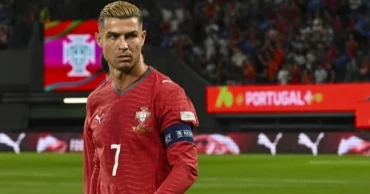
Portugal suspends Ronaldo, launches disciplinary proceedings over walkout
The Portuguese Football Federation has suspended Cristiano Ronaldo and initiated disciplinary proceedings against the veteran forward for walking out on the national team.
In a statement on Saturday, the federation said the case had been referred to its disciplinary investigation committee. The findings will remain confidential until the investigation is completed.
The 41-year-old Ronaldo left Portugal’s team camp during the international break following a dispute with new coach Jorge Jesus over a lack of playing time.
Portugal won all three matches in which Ronaldo was either an unused substitute or absent, while his replacement, Gonçalo Ramos, made the most of his opportunity by scoring three goals.
At the end of the international break, Ronaldo addressed his 679 million Instagram followers in a lengthy post, calling on Jesus to acknowledge a mistake over an incident involving the forward’s warm-up before Portugal’s match against Norway.
Ronaldo said the coach had asked him to warm up on the sidelines but then did not send him onto the field. Jesus did not acknowledge any mistake.
Ronaldo said he expected to face suspension under federation rules but reassured his supporters that “we will have one or more farewell matches.”
18 days ago
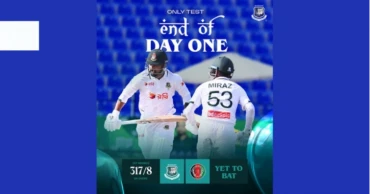
Bangladesh recover from batting collapse to cross 300 against Afghanistan
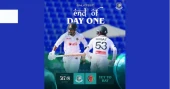
Bangladesh recovered from a dramatic middle-order collapse to reach 317 for eight on the opening day of their one-off test against Afghanistan in Abu Dhabi on Friday.
After winning the toss and electing to bat at Sheikh Zayed Cricket Stadium, Bangladesh made an excellent start through openers Tanzid Hasan and Shadman Islam, who put on 124 runs for the first wicket.
Tanzid led the charge with an aggressive 83 off 71 balls, while Shadman contributed 67. The opening partnership raised hopes of a substantial first-innings total before Tanzid fell to Ismat Alam, caught behind.
Shadman's dismissal at 184 for two triggered a collapse.
Mominul Haque made 39 before falling, and Bangladesh lost three wickets for just four runs to slump from 221 for two to 225 for five. Captain Najmul Hossain Shanto scored 29, while Mushfiqur Rahim was dismissed for a duck.
Mehidy Hasan Miraz and Litton Das then steadied the innings with a 62-run partnership, helping Bangladesh recover from the setback.
Miraz made 19 before being bowled by Ismat Alam, while Litton reached his half-century before falling for 50. Bangladesh crossed the 300-run mark but remained in a precarious position at 303 for seven after 79 overs.
For Afghanistan, Mohammad Saleem was the best bowler, taking three wickets. Yamin Ahmadzai and Ismat Alam bagged two wickets each for them.
19 days ago
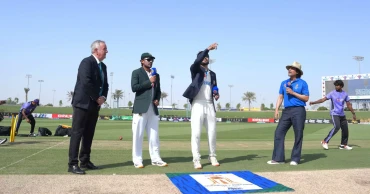
Bangladesh opt to bat against Afghanistan in Abu Dhabi Test
Bangladesh captain Najmul Hossain won the toss and elected to bat against Afghanistan in the one-off Test at Sheikh Zayed Cricket Stadium in Abu Dhabi on Friday.
Najmul said the dry pitch and hot conditions could make batting more difficult in the second innings.
Bangladesh named an 11-man side featuring three specialist batters at the top of the order, with Mushfiqur Rahim and Litton Das adding experience to the middle order.
Mehidy Hasan Miraz, Nayeem Hasan and Taijul Islam lead the spin options, while Hasan Mahmud and Ebadot Hossain provide the pace attack.
The match marks Bangladesh’s first Test at a neutral venue.
Afghanistan, meanwhile, are playing their sixth Test in the current three-year period.
Teams must play at least eight Tests in three years to qualify for the International Cricket Council’s Test rankings, leaving Afghanistan needing two more matches to meet the requirement.
Despite their absence from the rankings, Afghanistan could pose a stern challenge to Bangladesh in the contest.
Bangladesh XI: Shadman Islam, Tanzid Hasan, Mominul Haque, Najmul Hossain (captain), Mushfiqur Rahim, Litton Das (wicketkeeper), Mehidy Hasan Miraz, Nayeem Hasan, Hasan Mahmud, Taijul Islam and Ebadot Hossain.
19 days ago
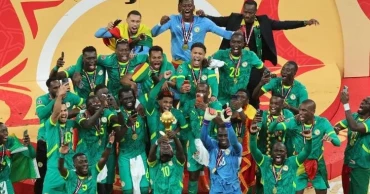
Senegal, Morocco face Africa Cup of Nations title rematch at Swiss sports court
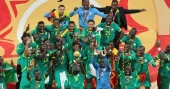
Senegal and Morocco will renew their dispute over the Africa Cup of Nations title on Thursday, nearly nine months after a chaotic final, as the case reaches the Court of Arbitration for Sport (CAS) in Switzerland.
The January final in Rabat was followed by clashes between Senegal fans and Moroccan police and a controversial decision that changed the outcome of the match.
Senegal initially won 1-0 after extra time, but the Confederation of African Football (CAF) overturned the result in March and awarded Morocco a 3-0 victory. CAF's appeals panel ruled against Senegal after its players briefly left the field to protest a penalty awarded to Morocco, causing a 15-minute delay.
The authority of referee Jean-Jacques Ndala of Congo is expected to be central to Senegal's appeal.
CAS hearingA one-day hearing involving three judges was scheduled behind closed doors Thursday at the CAS headquarters in Lausanne. The court has not set a date for its verdict, which will determine the champion of African men's football before the next AFCON begins in June in Kenya, Tanzania and Uganda.
The presidents of the Senegalese and Moroccan football federations were expected to miss the hearing because it coincides with a three-day CAF summit in Cape Verde attended by FIFA President Gianni Infantino.
Referee's decisionFootball's Laws of the Game give the referee final authority over decisions related to play, including whether a goal is scored and the result of a match.
Ndala allowed the final to continue after Senegal's players returned to the field following their protest over a penalty awarded deep in stoppage time.
Senegal forward Sadio Mané helped persuade his teammates to finish the match as tensions escalated inside the stadium.
Morocco's Brahim Díaz then took the penalty but failed to score with a slow, chipped effort known as a “Panenka.” Senegal goalkeeper Édouard Mendy stayed upright and caught the ball.
Four minutes into extra time, Senegal midfielder Pape Gueye scored the only goal of the match with a rising shot, securing Senegal's 1-0 victory.
CAF sanctionsEleven days after the final, CAF disciplinary judges imposed more than $1 million in combined fines on the two federations, players and Senegal coach Pape Thiaw.
The judges rejected Morocco's request to annul the result and declare it the winner because of Senegal's walk-off.
However, CAF appeal judges later ruled that Senegal had forfeited the match, citing tournament rules stating that a team that leaves the field before the match ends without the referee's permission is considered the loser and eliminated from the competition.
Government involvementSenegal's government pledged to pursue all appropriate legal avenues to recover the title and called for an investigation into suspected corruption in African football.
The dispute also fueled claims that Morocco, which will co-host the 2030 World Cup, has significant influence within CAF and FIFA.
In May, Moroccan King Mohammed VI pardoned 18 Senegalese football fans who had been jailed over disorder at the Rabat stadium.
20 days ago
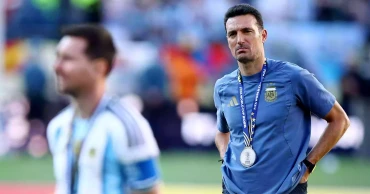
Tearful Scaloni says Argentina cannot replace Messi
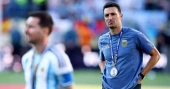
Argentina's coach, Lionel Scaloni, said that no one could take the place of Lionel Messi, speaking through tears after a 3-0 victory over Benin that marked Messi's departure from the national team.
For Scaloni, who won four major titles with Messi as his captain, the partnership was more than he had hoped for.
"It was truly like a dream come true," he said. "I never thought I could be the coach of the best player in history.”
His voice grew heavy as he went on. "We will be grateful to him forever for giving us the chance to be with him," he said.
"My eyes are watering, because there is so much going through my head right now," he said. "It will hurt not to see him anymore."
Under Scaloni, with Messi leading the team, Argentina won the 2021 Copa America, the 2022 World Cup, the 2022 Finalissima and the 2024 Copa America.
Messi scored once and set up two goals against Benin in his farewell match.
Asked about Argentina's future without Messi, Scaloni said there was no easy way to fill the void. Where, then, would the team find another Messi? "Nowhere," he said.
"We are working with young players now," he said. "This process will go on. But the feeling of having Messi next to you, nothing compares to it."
Scaloni tried to explain what made Messi different. "I have never seen such an aura in anyone else in my life," he said.
Then he seemed to remind himself of what had changed. "The player who could make a win possible in an impossible match with his extraordinary talent is no longer with you," he said.
21 days ago
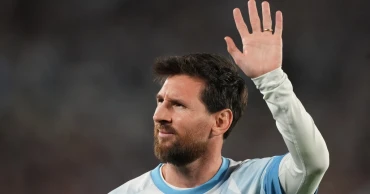
Argentina bids Messi farewell in final national team match, ending an era
Argentina is facing a once-unthinkable reality: a national team without soccer great Lionel Messi.
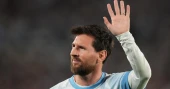
On Tuesday, 39-year-old Messi ended his 21-year international career after scoring 126 goals, winning two Copa América titles and a World Cup championship. He scored a penalty and assisted Argentina's other two goals in a 3-0 victory over Benin.
What would otherwise have been an ordinary friendly against the West African side turned into a moment the soccer-obsessed nation had long feared.
"It feels like an era is ending, knowing he won't play for the national team anymore," said Valentino Ruso, 17, who was on his way to a friend's house in Buenos Aires to watch the match. "I'm sad. I think everyone is upset today. He will be missed."
Argentines had a passionate and often harsh relationship with the shy boy who left his hometown of Rosario at 13 to join the youth academy of Spanish club Barcelona. As he developed into a global icon of almost mythical status, his compatriots both adored and criticized him, at times questioning his commitment to his homeland and accusing him of being indifferent to it.
By the end of his remarkable international career, however, there was no longer any doubt about Messi's devotion to Argentina. Nor was there any doubt about Argentina's affection for its most famous export, whose successes reminded the country of its ability to achieve greatness despite years of political and economic instability.
"Argentines often say, 'Thank God I was born at a time when I could experience the miracle of watching Messi play,'" said Andrés Rabinovich, a University of Chicago scholar who has researched soccer's role in Argentine culture. "It's hard living in Argentina. Soccer is often one of the few things that offers you some respite, some joy."
For years, Argentines debated when and how Messi should leave the international stage. His Aug. 31 announcement that he would retire from the national team, weeks after Argentina's defeat to Spain in the World Cup final, triggered an outpouring of gratitude and sadness, although Messi will continue playing for Inter Miami in Major League Soccer.
"I don't know if there has ever been a love story between a player and a nation as great as the one you built," teammate Rodrigo De Paul wrote on Instagram.
The Argentine soccer federation transformed Tuesday's game — Messi's 208th — into a national farewell dubbed "the last tango." More than 85,000 tickets for Buenos Aires' largest stadium sold out within 90 minutes. Tickets initially priced at around $60-$300 later sold for more than $2,500 on resale sites.
Players from Argentina's 1978, 1986 and 2022 World Cup-winning teams also returned to the stadium to bid farewell to Messi.
After the final whistle, Messi's eyes glistened as his teammates surrounded him and applauded. A roaring chorus of "Olé, olé, olé, olé, Messi, Messi" swept through the stands as tens of thousands of fans jumped, sang and bowed toward him. A banner at midfield declared him the "Eternal Captain."
"Even through the worst moments we went through, I never stopped fighting, battling, giving everything I had, wanting to always be here," Messi told the crowd, which erupted as though he had scored.
"I love all of you, and I will miss all of you. I am proud to be Argentine."
Winning over his own
Throughout the 2000s and 2010s, Messi collected trophies with his club and won devoted fans from Barcelona to Bangladesh. But a major international title with Argentina remained beyond his reach.
While the rest of the world saw a supernatural talent, some Argentines viewed him as an outsider who had never played professionally in Argentina and appeared unable to handle the enormous expectations placed on him.
Argentine fans chanted "Diego, Diego," referring to Diego Maradona, the larger-than-life hero of Argentina's 1986 World Cup triumph and reminding Messi of the standard he had yet to reach. Messi's quiet personality, sharply contrasting with Maradona's defiant swagger, also fueled questions about his patriotism.
After Argentina suffered a third straight final defeat in 2016, Messi briefly retired from international soccer.
"There's some resentment by the people that stay in Argentina for those who leave, this sense of, 'They think they're better than us,'" said Rabinovich, who identifies with Messi as a fellow teenage migrant. Rabinovich moved to Canada during Argentina's 2001 economic crisis, around the time Messi moved to Europe.
"The old-school Argentines would say, 'Diego is the Argentine. Messi is soft, a little Spanish boy,'" he said.
The turning point came in 2021, when Argentina defeated Brazil to win the Copa América, South America's championship, for the first time in 28 years.
Messi fell to the ground as his jubilant teammates ran to embrace him. The player who had long been accused of lacking emotion for his country could not stop crying.
"Winning clearly disarmed his critics. That's how soccer works in Argentina," said Diego Murzi, a sports sociologist at Conicet, Argentina's national scientific research council.
"Criticism of things off the field goes hand in hand with defeats on it," he said.
The following year's World Cup victory in Qatar cemented Messi's status as a national hero. He had secured the one major prize that had eluded him, prompting millions of Argentines to pour into the streets in celebration, chanting his name and wearing his No. 10 jersey.
"I'll never forget it. I'd never experienced anything like that, being out there with everyone, celebrating together," said Antonia Correa, 70, a kiosk owner, as she waited for a bus in Buenos Aires on Tuesday.
"We saw that he wasn't just an extraordinary player, but an excellent human being," she said.
In recent weeks, Argentine newspapers have been filled with nostalgic tributes, while murals celebrating Messi have appeared across the country.
La Nación, one of Argentina's leading newspapers, released "Immortal," a documentary about his final World Cup campaign, and published a 196-page special edition dedicated to his career.
Since June, a 26-meter (85-foot) statue of Messi kneeling with the World Cup trophy has stood over passing motorists in Patagonia. On Tuesday, Buenos Aires' iconic Obelisk was illuminated in sky blue and white, the colors of the national flag, while news websites followed every minute of the Benin friendly as though it were a World Cup final.
A jersey without an heir
Across Argentina, fans who grew up watching Messi as their parents watched Maradona have covered their bodies with tattoos honoring the soccer star, including portraits of him kissing the World Cup trophy.
It was easy to imagine that the world's greatest player would always be one of their own. But ahead of his farewell, Messi's No. 10 jersey had no designated successor, with coach Lionel Scaloni saying the decision would have to wait.
"I don't think we'll have somebody like him again, somebody with that sort of enduring power," said Pablo Brescia, a University of South Florida professor who writes about Argentine culture and soccer.
"Like Maradona, he'll be unique — a figure that can't be repeated."
Messi's contract with Inter Miami runs through the 2028 season. But the ritual of watching him carry Argentina's hopes and anxieties into every match has come to an end.
"Watching Messi play, you felt anything could happen," Murzi said. "I've seen him do things that I don't think I'll ever see another player do."
21 days ago
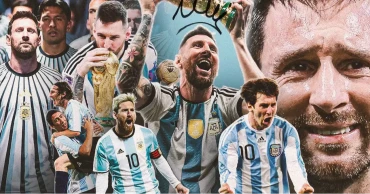
Messi’s international farewell leaves Argentines facing life without their playmaker
Lionel Messi is set to play his final match for Argentina on Tuesday, ending a 21-year international career that transformed his relationship with the country and left the national team facing an uncertain transition after the greatest period in its history.
The 39-year-old forward makes his 208th appearance for Argentina against Benin at River Plate's Estadio Monumental. He leaves as the country's record appearance holder and leading scorer, with 125 goals, after winning the 2021 and 2024 Copa Americas and the 2022 World Cup.
Messi also led Argentina through this year's World Cup, where they reached the final before losing to Spain. He subsequently announced his international retirement on Aug. 31.
His departure closes an era that once seemed unlikely to end this way. Messi spent much of his early international career under intense criticism from Argentines who compared him unfavorably with Diego Maradona and questioned his commitment to the national team.
That changed after Argentina won the 2021 Copa America, ending a 28-year wait for a major title. The 2022 World Cup triumph in Qatar completed Messi's transformation from a divisive figure into a national icon, while another Copa America title in 2024 further cemented his status.
The affection became especially evident during Argentina's World Cup celebrations in Buenos Aires in 2022, when millions took to the streets to celebrate the team's victory.
Messi's final tournament was marked by both sporting success and personal loss. His father, Jorge Messi, died in August at 68, shortly after the World Cup. Messi had played through the tournament while his father's illness was largely kept from him by his family.
Argentina must now replace not only its captain but also the player who has worn its No. 10 shirt since 2009.
There have been calls for the Argentine Football Association to retire the number in Messi's honor, as it has done for no national player.
But FIFA regulations require teams competing in its tournaments to assign consecutive squad numbers, meaning Argentina cannot permanently retire the No. 10 shirt for World Cup and other FIFA competition.
The shirt could eventually go to an established player such as Alexis Mac Allister, who wears No. 10 for Liverpool, or to one of the country's emerging creative players, including Nico Paz and Franco Mastantuono.
Coach Lionel Scaloni has said the shirt will eventually belong to a player who makes it his own.
Whoever wears it, however, will inherit an extraordinary burden. Messi's successors will not be expected simply to fill a position but to follow Maradona and Messi, two of Argentina's defining football figures.
Scaloni's future is also uncertain, while several members of the generation that won Argentina's recent titles are approaching the end of their international careers.
Argentina therefore enters its next era without a realistic replacement for Messi. The challenge will be less about finding another No. 10 than building a team capable of succeeding without a player who shaped the country's footballing identity for two decades.
Messi's farewell, meanwhile, offers a final measure of how dramatically that relationship changed. The player once criticized for not being Argentine enough now leaves the national team as a figure few in the country are willing to imagine replacing.
21 days ago
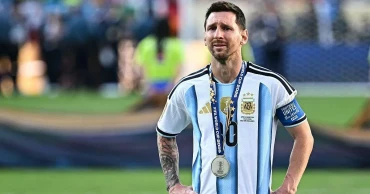
Messi set for emotional Argentina farewell against Benin
Lionel Messi is set to make his final appearance for Argentina on Tuesday when the World Cup champions face Benin in a friendly at the Estadio Monumental, bringing an emotional chapter of the country's football history to a close.
The 39-year-old forward leaves behind a remarkable international career spanning two decades, highlighted by Argentina's 2022 World Cup triumph, two other World Cup final appearances in 2014 and 2026, Copa América titles in 2021 and 2024, an Olympic gold medal in 2008 and a national-record 125 goals.
Messi's departure inevitably raises questions about whether Argentina can maintain its place among the world's elite or face another prolonged wait for major silverware, similar to the 35-year trophy drought that followed Diego Maradona's era.
“Messi leaves behind something unequaled,” Argentina coach Lionel Scaloni said. “We have to keep playing, but the feeling of having him on the pitch is unique.”
Scaloni, who is in advanced talks to extend his contract for another four years, remains confident about Argentina's future.
“The Argentine national team will endure. We will remain at a high level, I have no doubt about that,” he said.
A new generation emergesArgentina have already shown signs of life beyond Messi, winning their first two matches without him by convincing margins last week. They defeated Bolivia 4-0 and Burkina Faso 7-0, with several emerging players making their mark.
Established stars including goalkeeper Emiliano Martínez, defender Cristian Romero, midfielder Enzo Fernández and striker Lautaro Martínez remain central to the team, while younger talents such as Nicolás Paz, Franco Mastantuono, Gianluca Prestianni and Leonel Flores are pushing for bigger roles.
Paz, who plays for Italian club Como, scored against Burkina Faso and has been viewed by supporters as one of the leading candidates to carry Argentina forward.
Flores, a Boca Juniors academy product who made his professional debut only two months ago, has already received senior international experience.
“There's a changing of the guard; maybe we have to play differently now, not thinking in terms of ‘Messi and 10 others,’ but rather as a unified team,” Argentina supporter Cristian Versalles, 55, told AP.
His 23-year-old son Ramiro also pointed to the depth of emerging talent, saying there is “definitely a new generation ready to step up.”
Lautaro Martínez, meanwhile, continues to strengthen his place in Argentina's history. His goal against Burkina Faso took his international tally to 42, making him the country's third-highest scorer.
For Argentina fans, Messi's departure is emotional, but many remain confident about the team's prospects.
“As long as the players are eager to give their all for the shirt, for me, Argentina will remain a contender,” supporter Valentina Gago, 20, said.
Argentina's next major test without Messi will come at the 2028 Copa América.
22 days ago

Brisbane 2032 unveils cockatoo emblem for Olympics and Paralympics after accidental leak
A pink cockatoo has been chosen as the official emblem of the 2032 Olympic and Paralympic Games in Brisbane, beating out other Australian icons such as the kangaroo, koala and bin chicken following an accidental social media leak.
The emblem was officially launched Monday, several days after organizers held an emergency news conference to address the premature release of the design.
The Olympic emblem features a crest depicting a pink cockatoo, an Australian bird, with colors styled to evoke the Olympic and Paralympic flame and a shape representing Queensland, the host state.
Brisbane Lord Mayor Adrian Schrinner said the emblems celebrate the city and its lifestyle.
“They reflect the Brisbane people know and love: vibrant, resilient, connected, friendly, playful and a little bit cheeky,” Schrinner said, adding that they also symbolize the growing excitement ahead of the Games.
Organizers said the designs incorporate First Nations elements, noting that cockatoos are regarded as messengers carrying cultural significance and connecting people with places, stories and ceremonies.
The emblems are separate from the official Games mascot, which will be announced closer to the event.
The designs were accidentally revealed Friday night when an explanatory video intended to be released after a planned ceremonial event briefly appeared on the Brisbane 2032 YouTube channel. Screenshots quickly spread across social media.
Brisbane 2032 vice president Tim Mander and Chief Marketing Officer Brent Hill said at a weekend news conference that the leak turned into an unexpected publicity opportunity. Hill said the resulting attention had been “incredible.”
Brisbane 2032 Chairman Andrew Liveris said the emblems would help highlight the region’s unique character and encourage people worldwide to visit, invest and participate in the Games.
Australian sprinter Lachlan Kennedy, who attended Monday’s launch, praised the design, saying it represented Brisbane well and had “soul.”
Mikaela Cojuangco Jaworski, chair of the IOC coordination commission for the 2032 Games, described the emblems as a “vibrant expression” of the region.
Brisbane will host the Games alongside venues in cities including the Gold Coast and Sunshine Coast.
Australia has previously hosted the Summer Olympics in Melbourne in 1956 and Sydney in 2000.
22 days ago
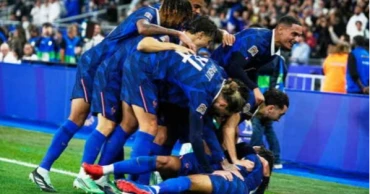
Zidane, Mancini secure first home wins with France, Italy in Nations League
France coach Zinedine Zidane secured his first home victory in charge as his side came from behind to beat Belgium 4-1 in the Nations League on Monday, while Roberto Mancini also celebrated his first home win since returning to lead Italy.
France scored four goals in the final 14 minutes through substitutes Désiré Doué, Rayan Cherki and Michael Olise, who netted twice, to turn around a match in which they had trailed until the 77th minute.
“Tonight, this is soccer, this is what we love,” Zidane said. He acknowledged that France had struggled in the first half but praised the team's response after the break.
The victory strengthened France's position at the top of Group A1, three points ahead of second-placed Italy, who defeated Turkey 3-1. Belgium remained third, four points behind France, while Turkey stayed without a point.
Zidane began his tenure with victories over Turkey and Belgium before France drew with Italy in his home debut on Friday.
Olise praised the team's collective effort, saying the players had followed Zidane's ideas well over their last four matches.
France have yet to secure a place in the quarterfinals. A victory over Belgium combined with an Italian failure to beat Turkey would have guaranteed France a top-two finish in the group.
France's substitutes turn the game around
Belgium took the lead at the Stade de France in the 35th minute when Dodi Lukébakio broke through the offside trap to meet a long pass from Roméo Lavia. He raced clear of France debutant goalkeeper Guillaume Restes and fired the ball into the net.
France levelled in the 77th minute as Doué sent a low shot into the bottom-right corner.
Four minutes later, Cherki put France ahead in an unusual fashion. Belgium goalkeeper Maarten Vandevoordt appeared ready to save his shot, but the ball struck his foot before rebounding off his left arm and crossing the goal line.
Olise, who assisted Cherki's goal, then scored twice within three minutes to complete France's emphatic comeback.
Zidane praised the impact of his substitutes but stressed that the victory reflected the efforts of the entire squad.
Italy beat Turkey for first home win
In Bologna, Mancini recorded his first home victory since returning as Italy coach.
Italy had lost to Belgium in Rome in Mancini's first match back in charge but responded with an impressive 4-1 away victory over Turkey before drawing with France.
Turkey, who had scored only once and conceded eight goals in their previous three matches, started brightly despite missing several key players.
Italy, however, took the lead against the run of play in the 26th minute. Gianluca Scamacca attempted to control a cross, which bounced off a Turkish defender's shoulder before returning to him. Scamacca then volleyed the ball into the net off the underside of the crossbar.
Turkey equalised in the 61st minute when Aral Şimşir finished with a sweeping shot.
Italy restored their lead just three minutes later as Riccardo Calafiori headed home Nicolò Barella's free kick.
Pio Esposito secured the victory late in the match by tapping in Alessandro Romano's shot.
Esposito became only the second Italian player to score seven international goals before turning 21.
Gyökeres extends scoring record
Victor Gyökeres continued his record-breaking run by scoring in Sweden's 1-0 victory over Romania.
The striker extended his Nations League scoring streak to seven consecutive matches, adding his fourth goal of the current campaign after setting the record on Friday.
Sweden remained top of Group B4, two points ahead of Bosnia-Herzegovina, who defeated Poland 1-0.
Northern Ireland stayed top of Group B2 after being held to a goalless draw by Georgia. Hungary moved into second place with a 2-1 victory over Ukraine.
22 days ago