World
Cargo ship reports being hit in Strait of Hormuz as US, Iran differ over talks
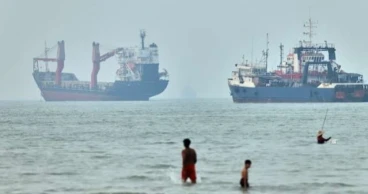
A cargo ship reported being hit by a projectile in the Strait of Hormuz off Oman, while the United States and Iran gave conflicting accounts of whether they were holding talks to end the war.
The United Kingdom Maritime Trade Operations Center (UKMTO) said the ship reported being “hit by an unknown projectile” at around 2am local time while sailing about 37 kilometres northeast of Al Khasab in Oman.
The agency did not provide details about the vessel, including its flag or the cargo it was carrying.
Al Khasab is located at the tip of the Arabian Peninsula, which extends into the Strait of Hormuz. The strategic waterway connects the Persian Gulf with the Gulf of Oman and is a key route for global oil and gas shipments.
Before the war, about one-fifth of the world’s oil and natural gas passed through the strait. The waterway has effectively been closed to commercial shipping since Iran began attacks on vessels after the war started in February. The United States has also imposed a blockade on Iranian ports in the area.
US and Iran give different accounts of talksUS President Donald Trump said Monday that Washington and Tehran had resumed talks aimed at ending the conflict.
However, Iran rejected the claim.
Iranian Foreign Ministry spokesperson Esmail Baghaei said no negotiations were taking place with the United States. He said Tehran was only holding discussions with Oman, mainly about creating a safe route for navigation through the Strait of Hormuz.
Trump had said a day earlier that he called off major strikes he had threatened against Iran after being urged to do so by Gulf allies Qatar, Saudi Arabia and the United Arab Emirates.
“Whether Iran wants to admit it or not, we are, in fact, talking,” Trump said.
He also expressed frustration with Iran, claiming that Tehran had sought talks despite publicly denying that negotiations were taking place.
“Iranian Leadership is unbelievably duplicitous!” Trump wrote on Truth Social.
He said Iran had requested a meeting and that talks had begun, with more meetings expected soon, while Tehran was publicly saying that it was not negotiating with Washington and was dealing only with Oman.
30 minutes ago

How India’s Gen Z ‘Cockroach’ movement dented Modi’s political image
For weeks, young protesters in India mocked Prime Minister Narendra Modi and his government with placards and slogans, rallying under an unusual name — the Cockroach Janta Party.
The movement achieved something few protests have managed during Modi’s more than 12 years in power: it helped force the resignation of a cabinet minister.
Modi has been one of India’s most powerful prime ministers in recent decades, winning elections while building a reputation as a strong and decisive leader. His government has rarely been seen backing down in the face of public pressure.
But the resignation of Education Minister Dharmendra Pradhan last month was a major exception, political experts said. The move came after pressure from the “Cockroach” movement and highlighted the growing political influence of India’s under-25 population, which accounts for nearly half of the country’s population.
It also showed how young Indians are increasingly using digital platforms to organise protests.
“This particular round has ended in a very important defeat for Mr. Modi,” said Nilanjan Mukhopadhyay, a political analyst and author of a biography of Modi.
He said the minister’s resignation could make people less afraid of protesting against a government that critics have long accused of restricting dissent.
“The threshold of fear has been broken. People are no longer scared to go and step out and protest,” he said.
Movement wants to be a watchdog, not a political party
The protests started in May as a satirical campaign with one main demand — Pradhan’s resignation over alleged leaks of examination papers that could affect the future of millions of young people.
As the protests grew, young urban Indians mobilised through social media and street demonstrations. The movement soon expanded into a wider campaign for accountability, reflecting concerns over youth unemployment, government transparency and the management of public institutions.
Mukhopadhyay said it was the first time in recent years that a student-led movement had maintained enough momentum to force the government to meet its main demand without the support of established political parties.
“Each one had their own little grievance about life not taking them anywhere,” he said.
It remains unclear whether the movement’s energy can eventually translate into votes against Modi’s ruling Bharatiya Janata Party.
Saurav Das, a spokesperson for the Cockroach Janta Party, said the movement had demonstrated the power of public pressure in a democracy.
“An arrogant government which did not blink for 12 years was forced to blink when the youth united,” he said.
He stressed that the group does not want to become a political party.
“We want to remain a pressure group,” he said.
Movement pushes Modi toward Gen Z outreach
The protests also appear to have prompted changes within Modi’s party.
In recent weeks, Modi has increasingly appeared in short, vertical videos aimed at young audiences on Instagram and other popular social media platforms.
The BJP has also stepped up its efforts to reach Gen Z through online campaigns. Some party lawmakers have started using youth slang in public appearances, including speeches in Parliament. Many members of Modi’s cabinet are aged 60 or older.
The shift comes after the government initially dismissed the protests as insignificant. But as demonstrations attracted larger crowds, authorities were forced to recognise the movement and respond to its growing influence.
Since Pradhan’s resignation, Modi has also spoken about forgiving people who mocked him, in what appeared to be an effort to rebuild ties with younger audiences.
Mukhopadhyay said the movement’s biggest impact was that it challenged the perception of Modi as a leader largely immune to public pressure.
“That image of Mr. Modi is heavily tarnished,” he said.
Some Modi supporters, however, have responded more aggressively. Online activists aligned with the ruling party have sought to identify protesters and publish their personal information, apparently to intimidate them.
Other officials could face pressure
Solidarity protests were held in several other Indian cities. Supporters also sent food and other supplies to protesters who were camping in New Delhi and taking part in hunger strikes.
Opposition leaders, rights activists and some Bollywood celebrities publicly supported the movement, helping spread its message beyond the protest sites.
For Neha Bora, who joined a hunger strike in New Delhi, the movement showed that ordinary citizens could still hold powerful officials accountable.
“If they (ministers) do not serve the people of this country, no matter what cabinet minister they are, they will be brought down from their seats,” she said.
1 hour ago

Trump calls new Iran talks ‘last chance’ to avoid escalation
President Donald Trump said Monday that new talks between Washington and Tehran are Iran’s “last chance” to reach a deal and avoid an escalation of US strikes.
Speaking at the Oval Office, Trump said the talks are expected to focus on reopening the Strait of Hormuz and creating a path for Iran to address US concerns over its nuclear programme. He said the status of the negotiations could become clearer “today or tomorrow.”
“The first phase is the opening of the straits. The second phase will be the denuclearization,” Trump said, adding that the second phase would take some time.
Trump said he decided to delay plans for major new strikes on Iran after being urged to do so by Gulf allies Qatar, Saudi Arabia and the United Arab Emirates.
He said US forces had been prepared to carry out “the biggest attack since World War II” on Sunday, but he abandoned the plan to give diplomacy more time after speaking with key Gulf leaders, including Saudi Crown Prince Mohammed bin Salman, and receiving requests from unnamed Iranian officials.
However, Trump again warned that his patience with Iran is running out.
“This is the last chance for them to sign a good document,” he said.
Earlier Monday, Trump criticised Iran on social media, calling it “unbelievably duplicitous” after Tehran said its talks with Oman were focused only on establishing a temporary safe navigation route through the Strait of Hormuz, a key waterway for global oil trade.
Trump said that, whether Iran acknowledges it or not, discussions are taking place on preventing Tehran from developing nuclear weapons.
Since the start of US and Israeli strikes on Iran on Feb 28, Trump has repeatedly threatened to intensify attacks before stepping back from those threats.
Asked why he has repeatedly issued strong warnings against Tehran and then backed away, Trump said he was showing patience because he wanted to avoid further loss of Iranian lives.
“I want to give them every last chance before decapitation,” Trump said. “Hopefully, they’ll come to their senses.”
Critics question Trump’s repeated shifts
Trump could still decide that a major escalation is necessary, but critics say his repeated hesitation may reflect an understanding within his administration that military force alone may not be enough to force Iran to back down and end the months-long war.
“I think what we’re seeing here is a president who has an approach that’s just rather erratic,” Sen. Mark Kelly, an Arizona Democrat on the Senate Armed Services Committee, said on CBS News’ “Face the Nation.”
Kelly said Trump appeared to be trying to return to the situation before the conflict began.
Trump has made similar threats and then backed away several times during the conflict.
In early April, the US and Iran agreed to a two-week ceasefire less than two hours before a deadline Trump had set for Tehran to capitulate or face attacks on bridges and power plants.
On May 18, after days of threats, Trump announced that he was postponing a major planned strike because “serious negotiations” were underway, while crediting Gulf allies for encouraging restraint.
In June, Trump threatened to hit Iran “VERY HARD” and seize its energy base on Kharg Island, but later called off the planned strikes after saying peace talks with senior Iranian officials had made progress.
Saudi crown prince influenced Trump’s decision
Trump indicated that Saudi Crown Prince Mohammed bin Salman played an important role in his decision to hold back from further escalation.
The US president spoke by phone with the Saudi leader on Saturday, shortly before announcing that he was halting the planned strikes.
According to a person briefed on the call, the crown prince warned that further escalation could have a serious impact on the global economy if Iran responded by attacking US allies in the Gulf.
The person, who was not authorised to speak publicly and requested anonymity, said Saudi officials had told the Trump administration that Saudi Arabia, Qatar and the UAE were capable of defending themselves against potential Iranian attacks.
However, Kuwait could be more vulnerable to attacks by Iran-backed militias in Iraq, the person said.
Republicans concerned over public opinion
Trump has denied that November’s midterm elections are influencing his approach to the Iran conflict, which has already caused concern across the global economy.
However, the issue is drawing attention among Republicans.
About two-thirds of US adults say the war with Iran has not been worthwhile, according to an AP-NORC Center for Public Affairs Research poll published last week. The view is shared by most Democrats and independents, as well as about 37% of Republicans.
Sen. John Kennedy, one of Trump’s strongest allies in Congress, said Sunday that the administration should moderate its approach to Iran.
Speaking on NBC’s “Meet the Press,” the Louisiana Republican pointed to the destruction caused by the US military in Iran and warned that further escalation could push energy prices even higher and fuel inflation.
Kennedy said maintaining sanctions and targeting Iran’s nuclear programme, rather than widening the conflict, could be the better approach for now.
“They’re all hellish choices,” Kennedy said. “But for the moment I’d maintain the status quo.”
4 hours ago
Trump says Iran talks to begin Monday as diplomatic uncertainty persists
US President Donald Trump said fresh talks aimed at ending the conflict with Iran would begin on Monday after he called off a new round of military strikes, although Iranian officials insisted their current diplomatic efforts are focused on neighbouring Oman rather than direct negotiations with Washington.
Talks between the United States and Iran are seen as key to ending the months-long conflict and restoring normal shipping through the Strait of Hormuz, a vital waterway that handled about one-fifth of the world's traded oil and natural gas before the war.
However, Iran's Foreign Ministry said its current negotiations are with Oman and are limited to ensuring temporary safe navigation through the strategic strait.
Trump, who has repeatedly alternated between threatening military action and offering diplomatic solutions, said Monday that "whether Iran wants to admit it or not, we are, in fact, talking."
Meanwhile, Israel carried out fresh strikes across the Gaza Strip over the weekend, days after the US and Hamas announced they had reached an agreement for the militant group to disarm, a move seen as a possible step toward ending the war in Gaza.
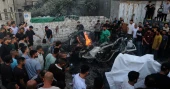
Hospitals in Gaza said at least 17 people, including children, were killed in the latest Israeli strikes. One attack on a residential building in southern Gaza killed three members of the same family, including a four-year-old child, according to Nasser Hospital. The Israeli military said the strikes targeted militants.
Trump announces renewed diplomatic push
Trump said on Sunday that he had decided against launching major strikes on Iran after appeals from Gulf allies, including Qatar, Saudi Arabia and the United Arab Emirates.
According to Trump, the US military had prepared what he described as "the biggest attack since World War II," but he chose to give diplomacy another opportunity after discussions with Gulf leaders and requests from unnamed Iranian officials. He did not disclose further details about the proposed talks or who would participate.
Iran, however, denied holding negotiations with the United States.
Foreign Ministry spokesperson Esmail Baghaei said ongoing discussions are only with Oman, across the Strait of Hormuz, and are focused on establishing a temporary maritime route for safe navigation.
Trade data platform Kpler reported that nine vessels passed through the Strait of Hormuz on Sunday, with most using an Iranian-controlled route.
Responding on his Truth Social platform, Trump criticised Iran's leadership, saying it was "unbelievably duplicitous" for publicly denying talks while allegedly requesting meetings.
Iranian officials visit Iraq and Pakistan
Iranian Foreign Minister Abbas Araghchi arrived Monday in the Iraqi holy city of Najaf to attend Arbaeen commemorations, one of the largest annual gatherings of Shiite Muslims.
His visit comes as Iraq continues balancing relations between Iran and the United States, a task made more difficult following the US-Israel conflict with Iran earlier this year.
At the same time, Iran's Minister of Industry, Mines and Trade Mohammad Atabak travelled to Pakistan for talks expected to focus on easing transit bottlenecks and increasing the movement of Iranian cargo through Pakistani ports during the ongoing US naval blockade.
During the two-day visit, Atabak is scheduled to attend a meeting of the Iran-Pakistan Joint Trade Committee and meet Pakistani Prime Minister Shehbaz Sharif.
Syria, Iraq discuss regional security
Syrian interim President Ahmad al-Sharaa met Iraqi Kurdish regional President Nechirvan Barzani on Monday to discuss strengthening cooperation and improving regional security.
The meeting took place amid rising tensions following a series of drone attacks by Iran-backed Iraqi militia groups targeting US interests in Iraq, including the Kurdish region.
Last month, Syrian authorities said they had intercepted an attempt to smuggle weapons across the Iraqi border that were allegedly destined for the Iran-backed Hezbollah group in Lebanon. Hezbollah rejected the allegation.
Iran executes two convicted of spying for Israel
Iran's judiciary announced Monday that it had executed two men convicted of spying for Israel during both last year's 12-day conflict and the current war.
State-run Mizan news agency identified them as Omid Behzad and Pouria Safvat, saying they had supplied military coordinates, photographs and intelligence used in attacks on Iranian targets. The agency did not disclose where the executions took place.
Last week, Iran also publicly executed two men convicted of killing four police officers during anti-government protests in January.
Gaza heat worsens humanitarian crisis
Extreme summer temperatures are making life even more difficult for hundreds of thousands of displaced Palestinians living in makeshift tents across Gaza.
The plastic-sheet shelters trap heat during the day and offer little ventilation, forcing many families to remain outdoors for long periods.
Aid organisations, including the Norwegian Refugee Council, warned that limited access to clean water, electricity and sanitation, combined with overcrowded camps, has increased the risk of dehydration, heat-related illnesses, skin infections and diarrhoeal diseases.
"It's very hot. We can't stay inside the tents. Our tent is made of nylon," said Aida Abu Hadeesha, who was displaced from Rafah in southern Gaza.
"There is no breeze, nothing, and our kids are suffering," she said, adding that the intense heat continues throughout the night while flies and cockroaches infest the camps.
13 hours ago
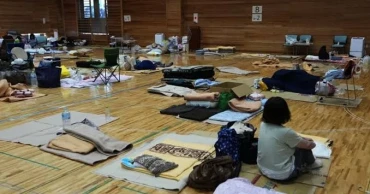
PM visits Japan's quake-hit Kumamoto as cleanup begins amid extreme heat
Japanese Prime Minister Sanae Takaichi on Monday visited the earthquake-hit Kumamoto Prefecture in southwestern Japan as residents began clearing debris from damaged homes while facing scorching temperatures and ongoing water shortages.
The magnitude 7.1 earthquake struck Kumamoto Prefecture on the southern island of Kyushu last Tuesday, killing 38 people, according to prefectural officials. Among the victims was a person who apparently died from heat stroke while sheltering inside a car. Authorities are still investigating the cause of another death.
Residents placed piles of rubble, broken furniture and damaged household appliances outside their homes for collection. Construction of temporary housing also began in the towns of Uki and Hikawa for people displaced by the disaster.
More than 46,000 households were still without running water on Monday, while many communities were also experiencing fuel shortages. The Japan Meteorological Agency forecast temperatures to approach 40 degrees Celsius, raising concerns over heat-related illnesses.
More than 8,500 people remained in emergency shelters, including community centres, school gymnasiums and classrooms, many of which lack air conditioning. Others continued to stay in cars parked near town halls and parks or outside their damaged homes.
Disaster experts have long warned that overcrowded shelters with limited sanitation and privacy can make conditions more difficult for displaced people.
During her visit, Takaichi toured one of the area's better-equipped shelters, which had cardboard beds, partitions and air conditioning. However, the visit drew criticism on social media, with some users saying it did not reflect the conditions in most evacuation centres.
Meanwhile, a local retailer acknowledged that it had instructed two employees, who later died in an explosion at a collapsed shopping mall, to return to the building to secure the day's sales proceeds.
Executives of Habita, which operated a store inside the collapsed Aeon Mall in Kashima, attended the funeral wake of 22-year-old employee Kurumi Otake on Sunday and apologised to her family.
Company sales manager Goji Yuse admitted the employees had been asked to return to the store if it was safe to place the money in a secure safe.
"My daughter is not coming back," Otake's mother told company officials through tears.
The mall operator believes the explosion was caused by a gas leak after about 3,000 shoppers had already been evacuated following the earthquake, though some employees remained inside the building. Rescue teams pulled five survivors from the rubble and recovered the bodies of seven others.
Authorities said the earthquake injured 114 people, destroyed around 700 homes and damaged more than 11,300 buildings across Kumamoto Prefecture.
21 hours ago
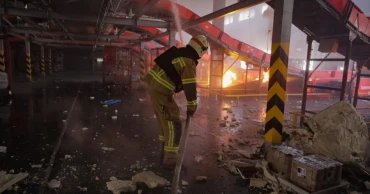
Ukraine says drone attacks hit Russian warehouse as cross-border strikes kill several
Ukrainian drone attacks killed at least five people in different parts of Russia and set fire to another warehouse belonging to Russia's largest online retailer, Wildberries, Russian officials said on Sunday, as both countries continued exchanging long-range drone strikes.
Russian authorities said a Ukrainian drone hit a Wildberries warehouse in the Samara region, about 800 kilometres from the Ukrainian border, causing a fire. Regional Governor Vyacheslav Fedorishchev said there were no casualties.
Wildberries, often compared to Amazon in Russia, has come under repeated Ukrainian attacks in recent weeks. Since mid-July, Ukrainian drones have struck more than a dozen of the company's warehouses as Kyiv seeks to disrupt Russia's economy and logistics during the ongoing war.
Russia's Defence Ministry said its air defence systems shot down 635 Ukrainian drones overnight, including some over Russian-occupied Crimea and the Black and Azov seas. The ministry did not say how many drones Ukraine had launched or how many reached their targets.
Ukraine's air force, meanwhile, said Russia launched 133 drones overnight, with 24 reaching their intended targets.
In Russia's Saratov region, Governor Roman Busargin said two people were killed after a Ukrainian drone hit a residential building. The attack also damaged civilian infrastructure in the cities of Engels and Saratov.
Engels is home to a major Russian military airbase, while Saratov has one of the country's large oil refineries. Both cities have been frequent targets of Ukrainian drone attacks.
In Russia's Bashkortostan region, Governor Radiy Khabirov said air defences repelled a large-scale drone attack on industrial facilities in the city of Ufa. He said a fire broke out but did not specify which facility had been hit.
In the Udmurt Republic, acting regional head Olga Abramova said three civilians were killed and two others injured in a Ukrainian drone strike. She said Russian air defences shot down two drones but a civilian vehicle was damaged during the attack.
Meanwhile, Russian strikes also caused casualties in Ukraine.
Authorities in the southern city of Zaporizhzhia said a Russian guided bomb hit a residential building, killing one person.
In the northeastern Kharkiv region, another Russian attack killed one person and set a postal terminal on fire, according to regional officials.
The latest attacks came as both Russia and Ukraine continued to intensify long-range drone and missile strikes deep inside each other's territory.
1 day ago

Congo pregnant women die as Ebola fears keep them away from hospitals
Esther Lutula stopped going for prenatal checkups shortly after the current Ebola outbreak was declared in eastern Congo. Midway into her pregnancy, the 26-year-old feared being put into isolation simply for having a fever, a common misconception.
“That’s why I’m waiting until the disease is no longer widespread,” she told The Associated Press from her home in Bunia, the capital of Ituri province and epicenter of the outbreak declared on May 15.
But that could be a deadly mistake.
Maternal mortality across Ituri soon doubled as news of the outbreak spread, with an average of about six women dying per week due to childbirth complication, according to Noemi Dalmonte, deputy country representative of the United Nations Population Fund in Congo.
While there was an average of 3.1 maternal deaths weekly this year before the outbreak, that jumped to 5.8 deaths from May 25 to July 19. Among those, the deaths outside health centers have also jumped from 9.1% to 17.4% within the same period, UNFPA data shows.
As Congo battles the fastest-growing Ebola outbreak on record, with more than 1,600 confirmed deaths, health and aid workers are warning of a shadow crisis as pregnant women avoid hospitals and the country's already high maternal mortality rate climbs even more.
While it’s common for Africans to avoid health centers during public health emergencies because of safety concerns, “with Ebola, it is stronger because Ebola has a lot of rumors," Dalmonte said in an interview.
With some wary residents questioning whether Ebola even exists, and health workers in one of Congo’s most remote and volatile regions struggling to respond to the outbreak with few supplies, pregnant women have less care than ever.
Congo is one of the world's most dangerous places to give birthCongo's has among the world's highest rates of both childbirths per woman and deaths around childbirth.
Women in the vast central African nation have almost six children on average. At least 19,000 women died from pregnancy complications in Congo in 2023, according to the latest U.N. data, tied with India and second only to Nigeria globally.
Now health workers in Ituri say they are seeing a decline in hospital visits as people worry about the risk of infection. This type of Ebola has no approved treatment or vaccine.
Women in need of care also fear being caught up in violence. Ebola treatment centers have been attacked by residents fueled by misinformation or anger over strict outbreak measures.
At the Bénédicte Clinic in Bunia, the number of women registered for prenatal care has dropped from 60 each month to around 10, said Dr. Sonny Mwembo, the medical director.
Even now, weeks into efforts to battle misinformation, some residents hold mistaken views of the outbreak.
“Right now, if you feel sick and go to the hospital, they say it’s Ebola and they put you in quarantine right away. That’s what scares people,” said Elodie Yabiri, a Bunia resident who is heavily pregnant.
Yabiri said she’s avoiding hospitals as much as she can.
As long as she still feels her unborn child moving, she believes everything is still okay.
Limited health care pivots to Ebola instead
The outbreak has strained Congo’s already overstretched healthcare system, complicating access for the pregnant women who still come for prenatal care or birth.
Health facilities in the five affected provinces are redirecting staff and supplies to the response, reducing access to essential maternal care services, according to aid groups.
At least 44 health infected workers have died. Many other health workers have walked off their jobs, protesting the lack of payment. At least 12 attacks have been recorded against health facilities and teams since the outbreak was declared in mid-May.
“We are doing everything we can to make the public understand how dangerous this disease is. We are working day and night without being paid,” said Dr. Ghislain Maneba, an epidemiologist and community investigator in Ituri's Rwampara health zone.
All women are at higher risk in this outbreak
Ebola is rare but highly contagious and severe, often fatal. It spreads in the human population through contact with bodily fluids such as vomit, blood or semen, and with contaminated surfaces and materials such as bedding and clothing.
Women are usually the primary caregivers when a loved one becomes ill. Many are among frontline health workers in this outbreak as well.
Associated Press journalists covering the outbreak have seen pregnant health workers among the responders.
“It is very important that they know how to protect themselves, that they have the right information,” Dalmonte said.
Pregnant women with Ebola are at an increased risk of problems including miscarriage, the U.S. Centers for Disease Control and Prevention has said in its clinical guidance.
Meanwhile, pregnant women who delay care and avoid health facilities “could die not from Ebola itself but because the care that would have saved them was no longer accessible, trusted or safe,” Dalmonte said.
1 day ago
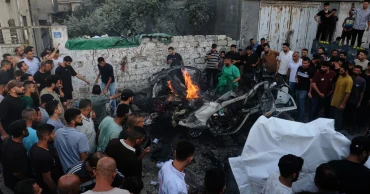
Israel expresses serious concerns over Hamas disarmament deal
Israel has shared “serious security concerns” with the White House regarding the proposed disarmament deal with Hamas, an Israeli official said as Israeli strikes overnight and into Sunday evening killed at least 17 people, including children, in Gaza.
The remarks by Doron Spielman, spokesperson for Israeli Prime Minister Benjamin Netanyahu's office, were some of the first public comments since U.S. President Donald Trump announced the agreement.
Spielman told The Associated Press that Israel's intelligence assessment is that Hamas remains committed to rebuilding its military rather than genuinely demilitarizing. He said the Israeli military would not withdraw from Gaza — where it controls more than 60% of the territory — before Hamas disarms.
“Our assessment is that if we redeploy before Hamas is truly disarmed, it will quickly expand its presence throughout Gaza, rebuild its terrorist infrastructure, once again threaten Israeli communities, and seek to carry out another Oct. 7-style attack,” he said, referring to the Hamas militant attack on Israel in 2023 that triggered the war in the Gaza Strip.
“Disarming means physically giving up the weapons. Nothing less,” Spielman said.
His comments come days after Hamas said that it would begin disarming as part of the U.S.-brokered ceasefire signed nine months ago to end the nearly three-year-long conflict. It marks a potential breakthrough in ending the conflict, but many hurdles, conditions and long timelines remain.
Hamas says it's agreed to disarm but the process has obstacles
Trump’s 20-point ceasefire plan calls on the militant group to surrender its weapons and destroy its vast network of tunnels. It also envisions Israeli forces withdrawing from Gaza, the arrival of a new technocratic Palestinian government, deployment of an international security force and the rebuilding of the battered Palestinian enclave.
Hamas disarming has been a sticking point and has deadlocked negotiations for months. In announcing the deal on social media on Thursday, Trump said it would be carried out in “carefully structured phases.”
A copy of the agreement obtained and verified by the AP said that all weapons held by the Hamas-run police will be transferred to the U.S.-backed Palestinian technocratic committee, known as the National Committee for the Administration of Gaza, upon its arrival in the enclave. It’s not clear when that would happen since it is contingent on other steps.
A process to decommission and store heavy weapons and to dismantle military production sites and tunnels will begin after the arrival of the Palestinian committee and the deployment of international forces. The process will be linked to a phased Israeli withdrawal, according to the agreement.
The areas Israel controls in Gaza have been mostly destroyed and depopulated. Most of the territory’s 2 million Palestinians are in the other part, where hundreds of thousands live in squalid tent camps and destroyed neighborhoods.
Israel appears unlikely to pull back significant forces or make other concessions ahead of its October elections. Prime Minister Benjamin Netanyahu faces a tough reelection battle, with his far-right coalition partners urging him to keep up the pressure on Hamas and leave forces in Gaza, and opponents accusing him of failing to prevent the Oct. 7, 2023, attack.
Hamas-led militants attacked Israeli communities then, killing around 1,200 people, mostly civilians, and taking 251 others hostage. Israel responded with a punishing military offensive that has killed more than 73,000 people, according to the Gaza Health Ministry.
The ministry, which was part of the recently dissolved Hamas-run government, maintains detailed records viewed as generally reliable by U.N. agencies and international organizations. It does not distinguish between civilians and militants but says women and children make up around half of all fatalities.
Israel warns that Hamas is rearming
While Spielman said Israel greatly appreciates Trump’s commitment to its security and to finding a durable resolution, the government's position on disarmament is based on detailed intelligence saying that Hamas continues to rearm, recruit fighters, and rebuild its military capabilities.
The White House did not provide additional comments on Sunday, when asked specifically about Israel’s assessment that Hamas remains committed to rebuilding its military.
U.S. officials, who briefed reporters on the disarmament agreement last week, said that Israel had been consulted at every step of the negotiations and was not being asked to do anything more than what it had committed to as part of the ceasefire and hostage release agreement signed last October.
It's unclear what exactly Israel conveyed to the White House. Two people with knowledge of the deal told the AP that Israel had communicated its issues with it to former British Prime Minister Tony Blair, who's part of the Trump-led Board of Peace. One of them said that among the points Israel wanted was freedom to conduct military operations in Gaza. They spoke anonymously because they were not authorized to speak to the media.
According to another person familiar with the deal, the Israelis raised two other issues: that Qatar and Turkey not be involved in verifying the stages of the agreement, and that Hamas’ weapons be destroyed after confiscation. The person spoke on condition of anonymity because they were not authorized to speak to the media.
Israel continues to strike Gaza
Since the ceasefire was signed last October, Israel has continued striking Gaza, saying it’s targeting Hamas and its infrastructure.
Local Gaza hospitals said at least 17 were killed in the latest Israeli strikes, including children. A strike on a residential apartment in southern Gaza killed three family members, including their 4-year-old child, according to Nasser hospital, where the bodies arrived.
The Israeli military said the strikes had targeted militant operatives.
1 day ago
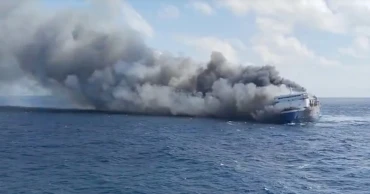
5 dead, dozens missing in Indonesia ferry fire
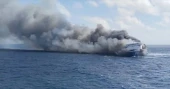
An Indonesian ferry carrying 271 people caught fire in waters off the main island of Java on Sunday, leaving at least five people dead and dozens missing as rescuers and passing vessels evacuated hundreds from the burning ship, officials said.
The Mutiara Sentosa 2 ferry was traveling from Indonesia's second-largest city of Surabaya in East Java to the city of Makassar in South Sulawesi, with 232 passengers, 39 crew members and 181 vehicles, mostly trucks, and an excavator, when the fire broke out between 6 a.m. and 7 a.m. in waters off Sumenep regency, according to Indonesia’s National Search and Rescue Agency, or Basarnas.
The ferry operator, PT Atosim Lampung Pelayaran, reported the incident to the Surabaya search and rescue office about an hour later, Basarnas said in a statement. It said the company received information from the ferry's captain that the vessel was on fire near the northern tip of Madura island, but contact was later lost.
By 9:45 a.m., authorities determined the ferry was about 19 nautical miles north of Buruan Sapudi island after communicating with the nearby cargo vessel Meratus Project 3, which was unable to approach the burning vessel closely because it was carrying a flammable load.
Footage released by the National Search and Rescue Agency showed thick black smoke billowing from one side of the ferry and spreading across much of the ship while videos circulating on social media and messaging groups showed terrified passengers, mostly wearing life jackets, could be seen clustered on the deck and upper sections of the vessel awaiting rescue, some jumping into the sea as orange flames and black smoke billowed from the burning vessel.
The ferry was reported to be nearly engulfed by flames, with passengers gathered on the bridge and bow. A tugboat and another passing vessel moved in and began evacuating passengers shortly before 10 a.m., the statement said.
By Sunday evening, several nearby vessels managed to rescue 227 passengers and crew and recovered five bodies. At least 39 people remained unaccounted for.
The cause of the fire was not immediately known and remained under investigation.
Ahmad Abdul Karim, one of the survivors, said the fire appeared to have started from a truck on the lower vehicle deck.
“Someone came up from the lower deck and told us there was a fire. When we went down to check, two vehicles were already burning," Karim said, "Fanned by the wind, the flames spread extremely quickly. In less than 30 minutes, everyone had been instructed to move to the bow of the ferry.”
Search and rescue teams dispatched a rescue vessel from Surabaya, although officials estimated it would take about six hours to reach the scene. A rigid inflatable boat from the Sumenep rescue post was sent toward the location but later returned to shore because of rough seas and high waves. The Indonesian Navy also deployed a warship to assist.
The 160 meters (525 feet) long and 25 meters (82 feet) wide ferry was built in Japan in 1992 and operated on the Osaka-Shinmoji route as the “Ferry Osaka” before being sold to Indonesia in 2015. It serves the Surabaya-Makassar route, a voyage that typically takes around 40 hours and is primarily used by domestic travelers and cargo transport between Java and Sulawesi.
Indonesia is an archipelago of more than 17,000 islands where ferries are a common method of travel. Disasters occur regularly, with weak safety enforcement often blamed.
1 day ago

Trump announces Iran talks on Monday
U.S. President Donald Trump said Sunday that negotiations with Iran will begin Monday afternoon, noting that Saudi Arabia, the United Arab Emirates (UAE) and Qatar had asked the United States to call off planned strikes because "they think there's a deal."
"There's a deal on (the Strait of) Hormuz, and then there will be a deal on the nuclear, or you might call it the denuclearization of Iran," Trump told reporters on Air Force One en route to Joint Base Andrews.
Claiming that Iran had also asked the United States to pull back the planned strikes, Trump said that "now what we're doing is we're talking to them in the form of a negotiation."
Saudi Crown Prince and Prime Minister Mohammed bin Salman Al Saud spoke on the phone with Trump on Saturday and "expressed concern and asked for clarity" about the proposed plan of action against Iran, a U.S. official told news outlet Axios.
Pakistan, Qatar, the UAE, Türkiye and other countries have also called on the United States and Iran to de-escalate tensions and avoid further conflict.
1 day ago