World

South Korean officials fail to free shark trapped in Busan canal
South Korean officials on Wednesday failed to guide a large shark back to the open sea after spending hours trying to rescue it from a canal in the port city of Busan, where it has been stranded for more than a month.
Rescue workers used a floating platform to steer the 3-metre-long female dusky shark, nicknamed Bukangi after the Korean name for Busan’s North Port, through the narrow waterway. However, by evening, the shark remained near the canal’s mouth instead of swimming out to sea.
The shark was first spotted in mid-September and soon became a popular attraction, drawing visitors as it swam in circles with its fins visible above the water.
According to city officials, Bukangi attracted more than 1.6 million visitors to the canal. The city also adopted the shark as a mascot. However, authorities struggled for weeks to find an effective way to guide it back to the open sea.
Wednesday’s rescue operation was the third attempt to free the shark. Earlier efforts on Sept 29 and Oct 2 failed despite the use of boats spraying water and nets stretched across the narrow canal. The shark evaded the boats and swam over the nets.
Experts have expressed concern over the animal’s health, noting that it had shown no signs of feeding during its 34-day stay in the canal. The declining water temperature has also raised concerns about its condition.
During Wednesday’s operation, workers carefully manoeuvred a large floating platform through the canal to push the shark towards the sea. Those on the platform used oars to turn it back whenever it approached, while dozens of workers on both banks pulled ropes to move the structure forward. Hundreds of spectators gathered along the canal to watch the unusual rescue effort.
The team managed to move the platform about one kilometre towards the canal’s mouth and installed additional nets to prevent the shark from swimming back into the waterway. However, camera and drone footage showed Bukangi swimming near the platform and nets for hours without heading out to sea.
“During Bukangi’s 34 days in North Port, the shark became a friend to the entire country and a symbol of Busan, the nation’s maritime capital. It’s heartbreaking to say goodbye,” Busan Mayor Chun Jae-soo wrote in a Facebook post.
He said authorities would continue doing everything possible to ensure the shark’s safe return to its natural habitat.
7 days ago

Cyberattack hits State Bank of India, exposes customer records
India's largest bank, State Bank of India (SBI), said on Wednesday that a cyberattack by hackers breached the organization's data, resulting in the disclosure of 3,897 customer records on the dark web.
According to the bank, the exposed data included customers' registered mobile numbers, dates of birth, names, gender, email addresses, and residential addresses.
SBI said it has activated its cyber incident response and containment protocols and engaged an independent cybersecurity agency to conduct a comprehensive assessment and investigate the nature and extent of the alleged compromise.
The bank claimed that the leak is not expected to have any material impact on the bank's core business operations, financial performance, or business continuity.
7 days ago
Hungary arrests former central bank chief over suspected financial fraud
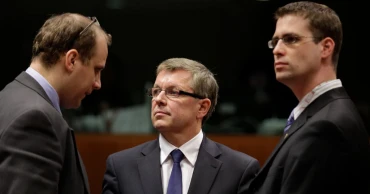
Hungarian police on Wednesday arrested former central bank governor György Matolcsy on suspicion of economic fraud and other financial offences, marking a major development in the new government’s efforts to investigate alleged abuses during the rule of former Prime Minister Viktor Orbán.
Prime Minister Péter Magyar announced Matolcsy’s detention in a Facebook post but did not provide further details.
Since taking office earlier this year, Magyar’s government has made investigating suspected financial misconduct by officials from the previous administration a priority.
Earlier on Wednesday, Hungary’s Central Prosecutor’s Office said it was conducting coordinated investigative operations at several locations as part of a probe into the suspected criminal misappropriation of funds linked to the central bank. The office did not name Matolcsy but said further information would be released later.
Matolcsy headed Hungary’s central bank from 2013 to 2025, after serving as Orbán’s economy minister from 2010 to 2013. He was considered one of Orbán’s closest economic allies and has denied any wrongdoing.
His lawyer, Pál Bátki, told Hungarian news outlet Telex that Matolcsy had been detained on suspicion of economic fraud causing significant financial damage and the use of a forged private document.
Much of Matolcsy’s tenure at the central bank was overshadowed by allegations of corruption involving foundations established by the bank and endowed with hundreds of billions of forints in public funds, equivalent to hundreds of millions of dollars.
A criminal complaint was filed last month alleging embezzlement, negligence, fraud and abuse of office during Matolcsy’s tenure as governor.
The complaint followed an audit of the central bank’s past real estate investments, which reportedly found that some properties had been purchased at inflated prices, resulting in significant financial losses for the bank.
It remained unclear whether Matolcsy’s detention was linked to the real estate transactions or the funding provided to the central bank’s foundations.
In an exclusive interview with The Associated Press on Tuesday, Magyar said members of the previous government, along with oligarchs, businesspeople and their relatives, had committed serious crimes, particularly corruption involving both national and European Union funds.
His administration launched the National Asset Recovery and Protection Office in July, granting it investigative and prosecutorial powers to pursue cases involving the alleged misuse of public money.
Magyar described the office as a “superauthority” capable of coordinating with police, prosecutors and the national tax authority to investigate complex corruption cases more quickly.
7 days ago

France's long tradition of protest sometimes descends into violence
France has a long and proud tradition of mass protests, with demonstrations often becoming a powerful means for people to demand change.
When the French protest high fuel taxes, they don yellow vests and take to the streets. Farmers demanding better pay have driven hundreds of tractors down the Champs-Élysées, while museum workers have gone on strike and closed the Louvre over concerns about managing tourists.
Public protest is deeply rooted in French national identity, much like “La Marseillaise,” the 1792 national anthem that reflects the collective duty to resist tyranny.
However, this month's violent demonstrations, among the most serious in years, coupled with a tough police response, have raised concerns that unrest is overshadowing the hundreds of thousands of peaceful protesters demonstrating against rising living costs and deteriorating conditions in schools.
On Saturday alone, at least 2,400 people were arrested after rioters in cities across France clashed with police, torched cars, stormed public buildings, looted shops and set a historic city hall ablaze. Further demonstrations could follow.
“How can French people do this to France?” outgoing President Emmanuel Macron asked on Sunday, condemning the destruction.
Nothing could justify the damage, he said, adding, “We all feel anger and shame.”
Yet France's history shows that its vocal and colourful protest culture has sometimes descended into violence, dating back to the executions of King Louis XVI and Marie-Antoinette during the revolution that overthrew the monarchy in 1789.
A protest culture takes shape
Historians say the French Revolution helped establish the modern tradition of civic engagement as a public duty. Under this principle, voting is not the only way to bring about change; demonstrations are regarded as a fundamental means of making political elites listen to the public and defending freedoms.
Becoming an activist is seen as a rite of passage passed down through generations, while the right to protest is constitutionally protected.
“It's a way to build collective identity and political community,” said Magali Della Sudda, research director in political science at the French National Center for Scientific Research in Bordeaux.
France's post-revolutionary history has not followed a straightforward path of protests leading to reforms. Instead, it has been marked by recurring cycles of popular uprisings, repression, mobilisation and political concessions.
At times, the tradition has ended tragically. In 1871, government troops crushed the newly established Paris Commune, or municipal government, reportedly killing thousands.
Collective action has also brought tangible gains. In 1968, student demonstrations and a general strike forced the government to make concessions, including an increase in the minimum wage.
More recently, the “yellow vest” movement, known in French as “gilets jaunes,” began in opposition to a proposed fuel tax increase before expanding to encompass broader concerns over living costs and inequality.
Some demonstrations in 2018 and 2019 involved burning cars, looting and clashes with police. Violence by a minority of participants has frequently marred otherwise peaceful marches in France.
Similarly, student protests over the weekend expanded beyond education to include other grievances, with scenes of looting and confrontations with police.
It remains unclear how many people involved in ransacking shops had joined the demonstrations, which drew tens of thousands of participants, and how many were opportunists taking advantage of the unrest.
Authorities have imposed nightly curfews, while calls have emerged for further protests later in the week.
Police violence fuels public mistrust
Some of the factors driving the latest protests are rooted in more recent developments in France's protest culture, according to political scientist Fabien Jobard, who has studied the history of demonstrations and policing.
Since the 1990s, France has experienced recurring waves of what the French call “violences urbaines,” or urban violence, which Americans would describe as riots, Jobard said.
Such unrest is often triggered by police violence. Nationwide disturbances erupted in 2005 after two teenagers died while fleeing police, and again in 2023 after an officer fatally shot a 17-year-old during a traffic stop outside Paris.
“For young people from the suburbs, the riot is one of the traditional forms of collective expression,” Jobard said.
Government critics and human rights campaigners have accused police of using unnecessarily violent tactics during the past month.
Much of the criticism has focused on rubber-bullet launchers, known in France as LBDs, and stun grenades, which critics blame for causing serious injuries to protesters.
Della Sudda also pointed out that nearly 8,000 arrests in the weeks leading up to Oct 17 far exceeded the few dozen detentions recorded during a 1998 protest involving 500,000 students who demonstrated against teacher shortages and deteriorating school facilities.
A growing sense among protesters that their concerns are not being heard is another contributing factor, she said.
For example, instead of listening to demonstrators and negotiating with them, the government attempted to address the grievances of the yellow vest movement through a digital platform known as “the great national debate.”
Anti-government protesters dismissed Macron's initiative.
“As a result,” Della Sudda wrote, “mistrust is growing.”
7 days ago
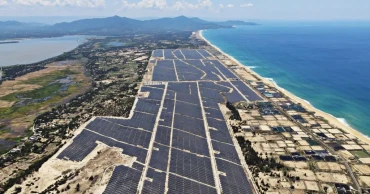
China expands green energy cooperation to support developing countries' energy transition
China's renewable energy supply chains, engineering expertise and operational experience are creating new opportunities for developing countries seeking to transition to cleaner energy sources.
From solar farms in Southeast Asia to off-grid systems in rural Africa, Chinese clean energy projects are helping expand electricity access, generate employment and develop local skills.
In 2021, China pledged to stop building new coal-fired power plants overseas. Since then, green energy has become a major focus of cooperation with countries participating in the Belt and Road Initiative, with Chinese companies involved in solar, wind and hydropower projects supporting local energy transitions.
Solar partnerships promote low-carbon growth
Across Southeast Asia, renewable energy projects built by Chinese companies are helping meet growing electricity demand while reducing emissions.
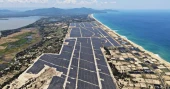
In Indonesia's West Java province, the 100-megawatt Karawang photovoltaic project, constructed by China Electric Power Construction Group Hubei Engineering Co Ltd, began operations in 2024.
The project supplies clean electricity to the industrial park in Karawang, reducing annual carbon dioxide emissions by 19,800 tonnes and saving around 8,800 tonnes of standard coal.
It has also contributed to developing local expertise. During construction, the Chinese team trained more than 300 Indonesian workers, helping establish a local workforce capable of independently installing solar systems.
In Vietnam, PowerChina Jiangxi Electric Power Engineering Co Ltd constructed the 330-megawatt Phu My Solar Power Plant in Gia Lai province. Engineers adapted equipment and mounting structures to withstand coastal salt corrosion, high temperatures and typhoons.
The plant generates approximately 520 million kilowatt-hours of electricity annually, cutting carbon dioxide emissions by around 400,000 tonnes a year.
Its construction created more than 2,000 local jobs, while training programmes helped workers develop skills in renewable energy operations and maintenance.
Beyond solar power, energy cooperation between China and Vietnam now covers wind, hydropower and waste-to-energy projects, further expanding their clean energy partnership.
Clean energy helps reduce electricity costs
In Pakistan, Chinese solar products and technologies are helping diversify an energy mix that has long depended heavily on thermal power.
As the South Asian country faces high electricity costs and unreliable supply, the expansion of solar power has brought clean electricity to millions of households.
Chinese companies have also introduced flexible instalment payment schemes to make solar systems more affordable, enabling families to reduce their electricity bills.
Meanwhile, the China-built Mohmand Hydropower Project, which is under construction in Pakistan, is expected to generate 2.86 billion kilowatt-hours of electricity annually. The project has created more than 5,000 local jobs and is helping strengthen the country's construction capabilities.
Chinese green energy projects are also contributing to economic development in partner countries. Construction generates employment and provides training for skilled workers, while solar panels and energy storage systems support the development of supply chains in infrastructure, logistics and maintenance.
With no fuel costs, wind and solar power offer more predictable long-term generation expenses than fossil fuels. This can help lower electricity bills for households and businesses while providing affordable power for local industries.
Off-grid solar expands electricity access
Across Africa, dispersed populations and challenging terrain have made the expansion of conventional electricity grids expensive and difficult. Many rural and pastoral communities continue to lack reliable electricity.
China has responded by supplying lightweight, easy-to-install off-grid solar and energy storage systems. Operating independently of main electricity grids, these systems provide stable power and help extend access to remote communities.
In Kenya's pastoral areas, remote villages and refugee camps, Chinese solar equipment has replaced costly and polluting diesel generators. The systems now support everyday activities, local festivals and small businesses.
Solar lighting has enabled rural schools to extend their operating hours, while photovoltaic irrigation pumps have reduced farming costs and increased crop yields by around 30 percent in some cases.
Reliable, clean and affordable electricity is doing more than providing lighting for homes. It is supporting education, agriculture and small-scale businesses while helping local communities secure more stable incomes.
China's overseas energy cooperation has shifted from coal-fired power projects towards green energy partnerships. By combining project construction with technology transfer and workforce training, the country is helping its partners develop sustainable energy systems that can operate independently over time.
As high-quality cooperation under the Belt and Road Initiative deepens, China is helping developing countries harness their wind, solar and water resources to drive economic growth, improve livelihoods and advance a shared low-carbon future.
7 days ago
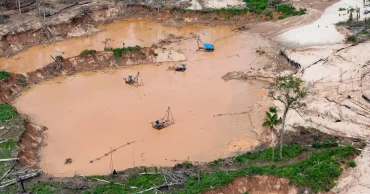
Human rights body calls for oversight of technology used in Latin American environmental crimes
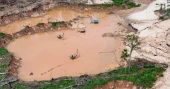
A human rights commission has called for tighter oversight of technologies used by criminal organisations in Latin America, warning that satellite internet, drones and online platforms are facilitating illegal mining and other activities that threaten forests and remote communities.
The call was made Tuesday by the Office of the Special Rapporteur on Economic, Social, Cultural, and Environmental Rights, known as REDESCA, which operates under the Inter-American Commission on Human Rights.
The move reflects growing concerns over how criminal networks are using technology to coordinate operations, monitor territories and extend their activities into remote areas.
REDESCA urged governments to strengthen controls on the transfer and use of these technologies and called on companies to assess whether their products and services could be misused by criminal groups.
The statement came as a United Nations conference on transnational organised crime was underway in Vienna, where governments are considering launching negotiations on an agreement to combat environmental crimes, including illegal mining, logging and wildlife trafficking.
More than a dozen Indigenous representatives from Amazonian countries are attending the Oct 19-23 gathering, calling for stronger international action against criminal networks threatening their forests and communities.
REDESCA said satellite internet services, including Elon Musk's Starlink, have been used in illegal mining operations to coordinate logistics, payments and movements in remote areas lacking conventional communications infrastructure.
Drones are also being deployed by armed groups and criminal organisations for surveillance and territorial control in areas associated with illicit economic activities, the office said.
The Armed Conflict Location & Event Data Project, which monitors political violence worldwide, recorded around 670 incidents involving weaponised drones across Latin America since 2018, according to an August report by the organisation.
More than 72% of the incidents occurred between January 2025 and August 2026.
The figures indicate the growing use of armed drones across the region but are not limited to environmental crimes.
REDESCA also drew attention to the use of social media to advertise mercury, a toxic metal used in illegal gold mining that can contaminate waterways and accumulate in fish consumed by local communities.
Public prosecutors documented 108 TikTok posts promoting mercury for illegal gold mining, which collectively received more than 5.8 million views, according to REDESCA.
The office did not identify the country or investigation involved when responding to questions from The Associated Press.
REDESCA said publicly documented cases also included drones flying over Indigenous communities amid disputes related to illegal logging, as well as the use of weaponised drones to intimidate Indigenous civilians.
However, it cautioned that the available evidence does not always establish a direct link between these incidents and activities related to environmental protection.
Technology also helps communities protect forests
The same technologies exploited by criminal groups can also help Indigenous communities safeguard their territories.
Satellite imagery, GPS mapping and drones can help detect deforestation and illegal mining, enabling communities to gather evidence of incursions while potentially reducing their exposure to armed groups.
REDESCA called on governments to improve oversight of technology transfers and investigate their illicit use. It also urged technology and telecommunications companies to evaluate the risk of their products and services being diverted to criminal organisations.
The office further warned that the development and operation of advanced technologies have environmental consequences, including energy and water consumption, mineral extraction and electronic waste.
It stressed that governments should support community-led environmental monitoring while ensuring that responsibility for protecting territories remains with public authorities.
7 days ago
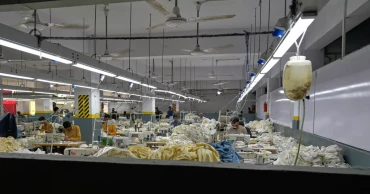
Pakistan factory workers suffer in extreme heat as global brands fall short on safety pledges
Siddiqui was working amid the constant hum of machinery when her vision began to blur and her heart started pounding.
The garment factory on the outskirts of Karachi was sweltering, crowded with perspiring workers and large industrial machines radiating heat. The air was heavy with humidity from the summer monsoon.
Feeling as though she could not breathe, Siddiqui drew the concern of her co-workers, who called her supervisor. The 28-year-old, whose identity The Associated Press is withholding beyond her surname for fear of employer retaliation, said she was told to finish her work.
“The supervisor said, ‘Just complete this work,’” she told AP. “Suddenly darkness came before my eyes.”
Overcome by the heat, she collapsed.
Extreme heat, intensified by climate change, is creating hazardous working conditions in Pakistan's factories. From denim jeans to household goods, these factories manufacture products for global companies that have pledged to protect workers' health and safety. However, experts and labour rights advocates say those commitments have yet to translate into adequate workplace protection, leaving workers increasingly vulnerable as temperatures rise.
AP interviewed more than a dozen factory workers in Karachi, all of whom described sweltering workplaces, a lack of heat-safety measures and adverse health effects, including fainting. They spoke on condition of anonymity because they feared retaliation from their employers. All but one said they lost wages when heat-related illnesses forced them to miss work. Ten said they produced goods for global brands sold in the United States and Europe.
Workers face scorching conditions inside factories
For workers like Siddiqui, extreme heat — temperatures of 32.2 degrees Celsius (90 degrees Fahrenheit) or above combined with high humidity — is not merely an occupational hazard.
She lives with her six children in a small room on the outskirts of Karachi without air conditioning, where temperatures regularly exceed 37.8 degrees Celsius (100 degrees Fahrenheit) during heatwaves.
Conditions are even worse inside the garment factory where she sews clothes for Spanish brands such as Zara and Mango. Large machines generate additional heat, while fans are often broken or too small to provide relief. Workers told AP that windows are narrow, positioned high up or kept closed to prevent theft, trapping more heat inside.
“Smoke, heat, you face it,” said a 34-year-old male factory worker.
Heat-related illnesses and wage losses are widespread
Extreme heat can act as a silent killer, sometimes causing little outward indication while inflicting serious internal damage. It can also aggravate existing conditions, including cardiovascular disease, diabetes and asthma. Studies have linked heat exposure to dehydration, heatstroke, organ failure and death.
“The longer you work in the heat, the less that you're protected from it and the health risks rise,” said Andreas Flouris, founder of FAME Lab, which researches the health effects of heat.
Climate change is rapidly increasing the number of people exposed to extreme heat. The World Health Organization identifies heat stress as a leading cause of weather-related deaths. Research by World Weather Attribution has also found that climate change has substantially increased the frequency, intensity and risks of extreme heatwaves in Pakistan.
Workers interviewed by AP reported temporary muscle paralysis, swollen limbs, fluctuations in blood pressure, breathing difficulties, blurred vision and exhaustion, particularly during the hottest months. One worker showed scaly rashes on her arms caused by repeated chemical exposure, saying the pain became worse in summer.
All the workers said they had witnessed colleagues fainting because of the heat. Several had fainted themselves, some on multiple occasions. Those who collapsed were often given only a brief rest or a sugary drink before being instructed to return to work.
Workers said complaints to supervisors had brought no meaningful changes.
Only one worker interviewed by AP said they received paid sick leave. The others said they lost wages for missed working hours, even when they fainted at work or suffered heat-related illnesses.
Siddiqui wept on the floor of her home while recounting how she fainted and was taken to hospital. She earns 15,000 Pakistani rupees ($54) a month, and the cost of hospital treatment — which her employer refused to cover — left her unable to afford food for her children.
“Sometimes they eat one meal, sometimes they don't eat a meal,” she said, adding that her younger children sometimes cry from hunger. “The older ones have gotten used to it.”
Practical solutions remain largely absent
Factories can adopt simple, scalable and economically feasible measures to protect workers from extreme heat, including accurately monitoring indoor temperatures and humidity, providing cold drinking water and allowing regular breaks, Flouris said.
Other measures include installing barriers to reduce radiant heat from machinery, improving ventilation and cooling systems, and painting rooftops white to reflect sunlight.
“We're talking about some very simple strategies,” he said.
However, workers told AP that almost none of these measures were in place at their factories.
Several said the metal roofs of their workplaces made summer conditions unbearable, yet employers did not provide additional drinking water or breaks.
All the workers said their factories lacked heat sensors. Only one reported having a ventilation system, which was switched on only when auditors visited for inspections.
Although employers provided drinking water, workers said it was rarely cold and they were uncertain whether it was safe to drink.
“Sometimes it smells like dead rats,” said the 34-year-old male worker.
Safety pledges by global brands lack enforcement
Pakistan has national and provincial laws, along with constitutional protections, intended to safeguard workers from hazardous workplace conditions, said Farhan Haider, a programme manager at the Pakistan Institute of Labour Education and Research in Karachi.
Some companies sourcing products from these factories, including Inditex, the parent company of Zara, and Mango, have signed legally binding agreements to protect workers or introduced their own workplace safety commitments.
One of the most concrete initiatives is the International Accord for Health and Safety in the Textile and Garment Industry. In 2025, the agreement announced that it would recognise heat as an occupational safety risk and develop protocols to address heat stress. The protocols remain under review and have not yet taken effect.
Representatives of the Pakistan Accord, a country-specific safety programme operating as an extension of the broader International Accord, did not respond to AP's requests for interviews or comment.
Brands have a responsibility to ensure their suppliers are held accountable for protecting workers, including from extreme heat, said Cara Schulte, a researcher at Climate Rights International who published a report on factory workers' conditions in Pakistan in 2025.
In an email to AP, an Inditex spokesperson said the company was strengthening efforts to address heat stress across its supply chain through updated factory audits, guidance and training for suppliers, and cooperation with industry initiatives.
A Mango spokesperson described workers' health and safety as a “non-negotiable priority” and cited the company's supplier code of conduct, which was strengthened this year to explicitly address extreme temperatures and heat stress.
A spokesperson for Sindh province, where Karachi is located, acknowledged that implementation of the regulations remained a challenge.
“The government is making efforts to enforce these regulations, but given the province's vast size and the presence of numerous industrial zones, complaints are inevitable,” said Sadia Javed, who is also a member of the Provincial Assembly.
For workers like Siddiqui, however, complaints continue to go unanswered as temperatures climb.
“If you feel too unwell, (supervisors) say, ‘This is an everyday problem. Women cry and complain a lot, but the work still must be done,’” she said.
7 days ago

Prince Harry wants to reconcile with father, brother amid family rift
Prince Harry has expressed his desire to mend his strained relationships with his father, King Charles III, and elder brother, Prince William, saying reconciliation is important amid the challenges facing the world.
In an interview with GQ magazine on grief and family, recorded in New York in late September and published on Tuesday, Harry was asked whether he grieved over his “complicated” relationships with his father and brother.
“Yes, of course,” he replied, noting that many people could relate to such family difficulties.
“Some people don’t want it to work out – I want it to work out,” he said. “Of course I do ... with everything else that’s going on in the world, the most important thing is to reconcile — that’s the key point.”
Harry, his wife Meghan and their two children returned to the UK in late August, six years after the couple stepped down as working royals and moved to California, a decision that deepened divisions within the royal family.
The couple had subsequently criticised the royal household in interviews, including allegations of racism by an unnamed royal and claims that palace staff had been insensitive to Meghan’s mental health struggles.
However, Harry, who is fifth in line to the British throne, said last year that he wanted to reconcile with his family and spend more time with his father, who is receiving treatment for an undisclosed form of cancer.
Asked whether he believed the family rift could be repaired, Harry said the effects of past conflicts could remain for a long time but encouraged people to move forward.
“Look, scars stick around forever,” he said, adding that letting go of the past was “something that I would encourage everybody to do.”
“For me, there’s enough drama in the world and enough drama in people’s lives than to continue with issues with family,” he added.
A spokesperson for Harry later clarified that his remark about “some people” not wanting reconciliation was not intended as criticism of William or any other member of the royal family.
7 days ago
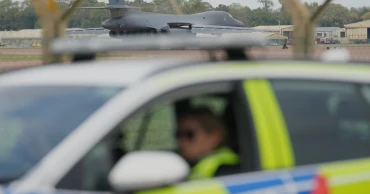
UK rearrests 2 men over suspected Iran-linked plot at US air base
British police on Tuesday rearrested two men on suspicion of assisting Iran’s intelligence service in connection with an alleged plot targeting a US-operated air base in England last month.
Counter Terrorism Policing said the suspects, a 24-year-old British national and a 25-year-old dual British-Iranian national, were arrested under the National Security Act.
One of the men was initially arrested on September 27, the day the suspected plot targeting RAF Fairford took place, while the other was first arrested on October 1. Both had been released on bail pending further investigation before being rearrested on Tuesday.
RAF Fairford, located in western England, has been used by US forces to launch bombing operations against Iran during this year's war.
The suspected incident prompted the evacuation of dozens of residents from homes near the base as armed police officers and military bomb-disposal experts searched the surrounding rural area.
Police later said they had discovered a quantity of gasoline, an accelerant, in three vans at the site, but no explosives were found.
British authorities have linked the incident to Tehran, which has denied involvement. The suspected plot also prompted the United States to withdraw its bombers from RAF Fairford.
UK Prime Minister Andy Burnham said the alleged plot was “almost certainly” directed by Iran’s Islamic Revolutionary Guard Corps (IRGC).
Iran has previously said that any military base used to launch attacks against its territory would be considered a legitimate target.
Five other men in their 20s were arrested earlier in connection with the investigation and subsequently released on bail pending further inquiries. No one has been charged so far.
Laurence Taylor, head of the UK’s Counter Terrorism Policing, said detectives were pursuing multiple lines of inquiry in what he described as a highly complex investigation.
“This is very much a live investigation, and our evidence gathering continues, but at this time our position remains the same; we consider it highly likely that there is Iranian state involvement,” he said in a statement.
Investigators are continuing to examine the extent of any Iranian involvement and the objectives behind the suspected plot, he added.
Last week, MI5 chief Ken McCallum warned that Iran and Russia were stepping up their hostile activities against the UK, saying the incident at RAF Fairford was not an isolated case.
McCallum said Tehran was seeking to expand its activities in Britain beyond its traditional targets, including Iranians opposed to the country's Islamic authorities.
More than 50 people have been arrested over Iran-linked plots in the UK over the past year, he said.
7 days ago
At least 153 killed in drone strike on market in Abyei region
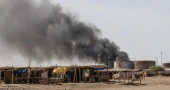
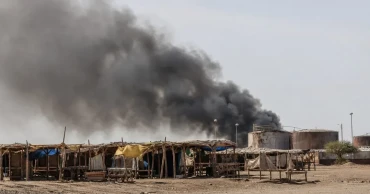
At least 153 people were killed in a drone strike on a market in Abyei, a disputed border region between Sudan and South Sudan, after the attack hit a nearby fuel depot and triggered a fire that continued to burn on Tuesday, a local official said.
Yohanna Akol Ngor, caretaker information minister of the Abyei administration, blamed Sudan’s military for Monday’s attack on Amiet Market, located north of Abyei town.
“We have recorded 153 deaths,” Akol told The Associated Press by phone on Tuesday, adding that the death toll was continuing to rise as the fire raged.
The motive behind the attack remained unclear, and the AP could not independently verify who was responsible. Sudan’s military did not respond to a request for comment.
Doctors Without Borders, also known by its French acronym MSF, said more than 20 injured people had been taken to Ameth Bek Hospital, where its medical teams were working alongside staff from South Sudan’s Health Ministry.
“So far we received over 20 patients, including several critical cases. Patients with burns were also admitted,” said Dr Christian Lindauer, MSF’s medical activities manager at the hospital.
South Sudan’s Foreign Ministry also blamed Sudan’s military, saying the strike hit several locations within the market, causing civilian casualties and extensive damage to property.
The ministry said it had summoned Sudan’s ambassador to protest the attack and urged Khartoum to “refrain from any actions that endanger civilian lives and property.” It also called for disputes over Abyei to be resolved through diplomatic channels.
Akol said the drone strike took place at around 11am on Monday, targeting a fuel depot that supplied local businesses.
“It is a horrible and shocking situation,” he said.
MSF called on all parties to halt attacks on civilians and civilian infrastructure, voicing concern over people's ability to safely access healthcare and other essential services.
Amiet Market serves as a major trading hub for the Ngok Dinka and Misseriya communities.
The attack comes as Sudan’s military and the paramilitary Rapid Support Forces continue to fight a war that began in April 2023, devastating large parts of Sudan and threatening stability along its borders.
The oil-rich Abyei region has long been disputed between Sudan and South Sudan. Its status remained unresolved under a 2005 peace agreement that ended decades of civil war and was still unsettled when South Sudan gained independence in 2011.
A proposed referendum on the region’s future stalled over disagreements about voter eligibility. The majority Ngok Dinka community supports joining South Sudan, while Misseriya nomads, who use the area’s pastures, favour remaining part of Sudan.
Abyei has also witnessed deadly communal violence, including land-related clashes between the Ngok Dinka and neighbouring Twic Dinka communities.
7 days ago