World
Houthis claim attacks on two Saudi oil tankers as US continues strikes on Iran
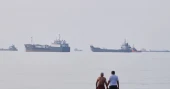
Yemen's Iran-backed Houthi rebels said early Thursday they attacked two Saudi oil tankers in the Red Sea, while the United States carried out a 12th consecutive night of airstrikes on Iran, further escalating tensions in the region.
The latest developments have raised fears of a wider conflict that could further disrupt global shipping and energy supplies, with no signs of progress in diplomatic efforts to ease the crisis.
The US Central Command (CENTCOM) said the overnight strikes were aimed at weakening Iran's ability to threaten commercial shipping and civilian vessels in regional waters as Washington seeks to restore safe navigation through the Strait of Hormuz.
Earlier on Wednesday, President Donald Trump warned that the US would target one Iranian bridge or power plant every time Iran attacked a ship in the Strait of Hormuz.
"From this point forward, any time the Islamic Republic of Iran shoots at a ship in the Strait of Hormuz... the United States will bomb and destroy one bridge or power plant," Trump wrote on social media.
US Secretary of State Marco Rubio, speaking at a regional summit in the Philippines, said Iran had expressed interest in negotiations but questioned its willingness to honour any agreement.
"The problem is making a deal with people who don't keep their commitments," Rubio said.
Houthis claim tanker attacksThe Houthi-run SABA news agency said the rebels targeted the Saudi-linked oil tankers Encelia and Layla in the Red Sea, claiming both vessels caught fire.
If confirmed, the attacks would be the Houthis' first reported strike on commercial ships since they announced a blockade of Saudi-linked shipping through the Bab el-Mandeb Strait earlier this week.
The group said the move was in retaliation for Saudi Arabia's blockade of Houthi-controlled areas in Yemen and a recent attack on Sanaa's international airport.
Bab el-Mandeb is one of the world's busiest maritime routes, linking the Red Sea with the Gulf of Aden. Around 12% of global trade, including roughly one-quarter of the world's container shipping, passes through the waterway.
A senior Houthi official said the blockade would continue until Saudi Arabia lifted its restrictions on Yemen.
Saudi Arabia's state news agency confirmed that the tanker Encelia was attacked and caught fire while sailing in the Red Sea, but said there were no casualties. It did not mention the Layla.
The UK Maritime Trade Operations (UKMTO) also reported that a tanker had been struck by an unidentified projectile southwest of Saudi Arabia's Al Shuqaiq area. No casualties were reported.
Rubio urged the Houthis to avoid further escalation, saying continued attacks would only worsen the situation.
Strait of Hormuz tensions continueThe US air campaign comes as tensions remain high over the Strait of Hormuz, one of the world's most important oil shipping routes.
The waterway, through which about one-fifth of globally traded oil and gas normally passes, has been severely disrupted by the conflict.
Iran says it has the right to regulate shipping through the strait and has targeted vessels using routes protected by US forces.
In response, Washington has tightened its blockade on Iranian ports and expanded military operations across Iran.
Trump also indicated this week that US forces could target an Iranian nuclear facility currently under construction.
Iranian Parliament Speaker Mohammad Bagher Qalibaf dismissed the US threats, saying conditions in the Strait of Hormuz would not return to how they were before the conflict.
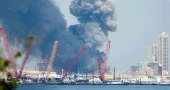
Overnight strikes and regional concernsIranian state media reported that US missiles hit areas near Ahvaz, Ramshir and Andimeshk in western Iran overnight. Two people were reportedly killed in a strike near the Iraqi border town of Shalamcheh.
Iran has responded to US attacks by targeting energy facilities and desalination plants in neighbouring Gulf countries.
Kuwait's military said its air defence systems intercepted hostile drones, while Iranian Foreign Minister Seyed Abbas Araghchi warned that Tehran would respond forcefully to any further attacks.
"Any aggression against Iran, including our infrastructure, will receive a strong and decisive response," he wrote on X.
Diplomatic efforts remain stalledIranian Interior Minister Eskandar Momeni recently held talks in Pakistan, which has been trying to mediate between the parties, but there has been little indication of any diplomatic breakthrough.
Pakistan's Prime Minister Shehbaz Sharif strongly condemned the attacks on the Saudi oil tankers.
Meanwhile, Iran's Interior Ministry said diplomatic contacts were continuing despite the ongoing fighting.
An Arab diplomat, speaking anonymously, said Gulf countries were becoming increasingly pessimistic about the chances of reducing tensions and remained deeply concerned about the latest escalation in the region.
11 days ago
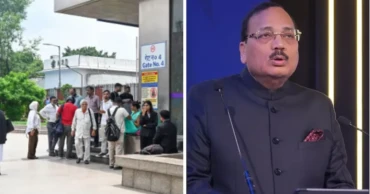
Closure of Delhi Metro stations amid protests reaches Supreme Court
The closure of several Metro stations in the Indian capital due to ongoing student protests reached the Supreme Court on Thursday, as lawyers complained of difficulties in accessing the court.
Several Metro stations in central Delhi have remained closed for the past few days as protests at Jantar Mantar, led by the social media platform Cockroach Janta Party (CJP), intensified.
At least 16 Metro stations remained shut on Thursday, including the Supreme Court Metro station.
The issue was raised before the apex court by Supreme Court Bar Association President Vikas Singh.
Referring to the closure of key Metro stations around the Supreme Court, Singh said many lawyers and court staff were facing difficulties and were unable to reach the court on time.
He urged Chief Justice of India Surya Kant to intervene. In response, the Chief Justice said he would step in if the issue was not resolved by lunchtime.
Singh suggested that people holding valid Supreme Court entry passes, along with Registry staff, should be allowed to exit at the Supreme Court Metro station after appropriate security screening.
"In the metro, there is one advantage that when they come out of the train, there is an exit point. There they can be screened. People having proximity cards, and Registry staff, can be permitted to come out, and the rest can be told to take the other train and go. So people will be able to use the train also," Singh submitted.
Responding to the concern, the Chief Justice said the Supreme Court administration had already taken up the matter with Metro authorities.
He also assured the Bar that if the issue remained unresolved, he would personally intervene.
"If by lunchtime something does not happen to open the Metro station, I will intervene. We have directed that no adverse orders should be passed today for non-appearance of lawyers etc," the Chief Justice said.
The Delhi Metro on Thursday morning announced that 16 Metro stations, including the Supreme Court station, would remain closed until further orders. #Source: NDTV
11 days ago
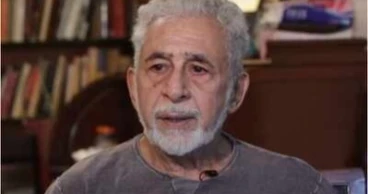
Indian legend Naseeruddin Shah questions Bollywood's silence on student protests
Veteran Indian actor Naseeruddin Shah has questioned why many of Bollywood's biggest names have remained silent on the student protests over education reforms, saying some people speak up only after it no longer costs them anything.
Speaking to The Wire, a media outlet based on Delhi, Shah was asked why many leading actors had not commented publicly on the demonstrations, which have spread across India over the past week.
"They will do it when their conscience tells them to," Shah said. "There is a saying: a dog with a bone in its mouth can't bark. As soon as the bone drops out of their mouth, or it breaks their teeth, then they will bark."
When asked whether celebrities were staying silent because they benefited from doing so, Shah replied, "Absolutely. And how long can they do that? Time will tell."
Shah had voiced support for the protesters a day earlier in a video message, condemning what he described as the treatment of students by authorities.
"I want to tell all these children not to lose hope," he said. "Many people sympathise with you. Many people are with you. Keep fighting."
He ended the message with the words, "Sab yaad rakha jayega" ("Everything shall be remembered"), directed at the government.
Several figures from India's film industry, including Ratna Pathak Shah, Shabana Azmi, Dia Mirza, Swara Bhasker, Prakash Raj, Diljit Dosanjh and Vir Das, have also expressed support for the protests.
The demonstrations at Jantar Mantar in New Delhi gathered momentum after educator and environmentalist Sonam Wangchuk began an indefinite hunger strike.
Protesters are seeking talks with the central government and have called for the resignation of Union Education Minister Dharmendra Pradhan over the alleged NEET-UG paper leak and other alleged irregularities in the examination process.
11 days ago

Thai authorities launch manhunt after attack kills 5 soldiers in troubled south
Thai security forces have launched a search for those behind a deadly attack in the country's conflict-hit southern region that left five soldiers dead and injured several civilians.
According to the Internal Security Operations Command (ISOC), around 10 armed attackers opened fire and hurled pipe bombs at soldiers manning a security checkpoint near a residential area in Narathiwat province on Wednesday evening before escaping.
The attack also injured six civilians, including a 10-year-old boy who remains in hospital in stable condition.
Authorities released photographs of the suspected attackers, who were dressed in black clothing and hats and were seen riding in the back of a black pickup truck. Security officials later found the vehicle abandoned and set on fire about 21 kilometres from the attack site.
The attackers also took three AK-47 rifles, three bulletproof vests and three mobile phones belonging to the soldiers, officials said.
Narathiwat, along with neighbouring Yala and Pattani provinces, has a Muslim-majority population in predominantly Buddhist Thailand. The three southern provinces have been affected by a long-running separatist insurgency since 2004, which has claimed thousands of lives.
Many Muslims in the region have long complained of discrimination and unequal treatment, while security crackdowns have often intensified tensions. Although the violence has declined compared with previous years, sporadic attacks continue.
In a Facebook post, ISOC Region 4, which oversees security operations in southern Thailand, said authorities would speed up the investigation and make every effort to arrest those responsible.
Prime Minister Anutin Charnvirakul strongly condemned the incident, describing it as a terrorist attack that deliberately targeted government personnel and posed a serious threat to national security, government spokesperson Rachada Dhnadirek said.
Video footage aired by Thai PBS showed that nearby homes and properties were also damaged in the attack. One house suffered damage to its roof, doors and windows, while a motorcycle parked outside was destroyed. Another home had multiple bullet holes in its front metal gate.
11 days ago
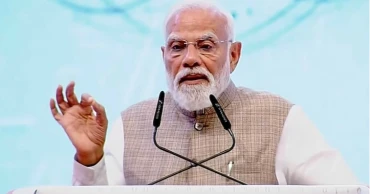
PM Modi announces fast-track courts for paper leak cases
Indian Prime Minister Narendra Modi on Thursday announced that the government will set up fast-track courts to ensure quick trials and strict punishment in paper leak cases, amid growing student protests and political pressure over alleged examination leaks.
In a post on X, Modi said protecting the future of young people is the government’s top priority.
“Nothing is more important than the welfare and future of our youth,” he wrote, adding that he has directed the authorities to take all necessary steps to establish the special courts.
The Prime Minister said the move is part of a series of measures aimed at protecting students’ interests and warned that those responsible for paper leaks would face strict action.
The announcement came as opposition parties and the satirical online group Cockroach Janta Party (CJP) continued protests over the issue, demanding the resignation of Education Minister Dharmendra Pradhan.
Leader of the Opposition Rahul Gandhi criticised the Prime Minister’s statement, accusing the government of failing to protect the country’s education system.
In a post on X, Gandhi alleged that the government had allowed the education system to deteriorate and had failed to act against those responsible for repeated paper leaks.
He repeated the Opposition’s demands, calling for the dismissal of Education Minister Dharmendra Pradhan, an apology to students and action against those accused of assaulting student protesters.
A day earlier, Rahul Gandhi claimed that more than 150 examination paper leaks had taken place in India over the past 10 years without a single conviction.
Following the Prime Minister’s announcement, the Cockroach Janta Party renewed its demand for Dharmendra Pradhan’s resignation.
Earlier this week, Modi described paper leaks as a “grave sin” during a meeting of the National Democratic Alliance (NDA).
The Opposition has been demanding that the Prime Minister make a statement in Parliament on the paper leak issue and the police action against protesting students in New Delhi.
While the government has agreed to hold a debate in Parliament, it has accused the Opposition of delaying the discussion by insisting on the Education Minister’s resignation as a precondition.
Source: NDTV
12 days ago
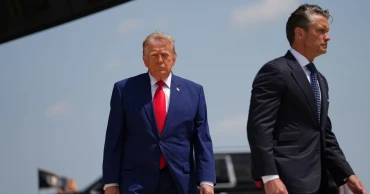
Republicans continue backing Iran war despite growing political risks
Republicans in the U.S. Congress are trying to balance support for the Iran war with the political risks of defending an increasingly unpopular conflict as elections approach and the future of the war remains uncertain.
The pressure has intensified in recent days, especially for Republican lawmakers seeking reelection in November. While some GOP members say they want more information from President Donald Trump's administration about the war's objectives and rising costs, they have continued to support the president's decision to engage militarily and have repeatedly voted to leave key war-making powers in the hands of the White House.
"Is anyone out there in the real world happy with gas prices? No," said Republican Sen. John Kennedy of Louisiana after questioning military leaders during a tense Senate hearing Tuesday. "But I think they understand why gas prices are as high as they are."
It remains unclear whether more Republicans who have privately expressed concerns about the conflict will begin speaking out publicly as the midterm elections get closer. Lawmakers in both the House and Senate are expected to face another major test of their support for Trump this week as Democrats push for new votes requiring congressional approval for military action against Iran.
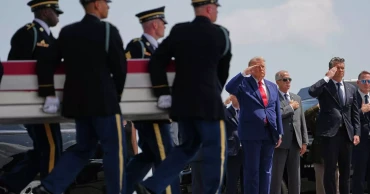
The debate comes as the United States has launched multiple rounds of airstrikes against Iran during the escalating confrontation over the Strait of Hormuz. Fuel prices have risen sharply, and Defense Secretary Pete Hegseth told senators Tuesday that the war has already cost the United States about $37.5 billion. On Wednesday, Trump traveled to Dover Air Force Base to receive the remains of four American service members killed during the conflict.
Maryland Democratic Sen. Chris Van Hollen, who is expected to lead the next Senate war powers vote as early as Thursday, said the combination of congressional hearings, American casualties and rising economic costs makes it important for officials to be held accountable.
"This is a very unpopular war," Van Hollen said.
Polls show public opposition
Recent polling suggests that most Americans disapprove of Trump's handling of the Iran conflict. A July survey by The Washington Post and Ipsos found that relatively few Americans believe the war has been worth fighting, and most are not confident that U.S. military action and negotiations will prevent Iran from developing nuclear weapons.
The poll also showed that only about two-thirds of Republicans approve of Trump's handling of Iran. While around 60% of Republicans believe the war has been worth fighting and are confident it will stop Iran from obtaining a nuclear weapon, roughly one-third remain unconvinced.
Republican Sen. Mike Rounds of South Dakota, who is seeking reelection, said he has tried to explain to voters that he has reviewed classified intelligence and believes military action was necessary to prevent Iran from acquiring a nuclear weapon.
"It's challenging," Rounds said. "It's complicated, and a lot of the stuff we know, we can't talk about, because it's classified."
Maine Republican Sen. Susan Collins, another lawmaker facing reelection, questioned military leaders Tuesday about the closure of the Strait of Hormuz.
"It seems to me that there's been a different plan almost daily with dealing with this problem," she told Hegseth and Joint Chiefs Chairman Gen. Dan Caine.
War powers votes become more contentious
Opposing the war has also carried political risks. Collins was one of four Republicans who joined Democrats in June when the Senate passed a war powers resolution on Iran for the first time. The vote angered Trump, who reportedly called the four Republicans "losers" during a GOP Senate luncheon the following day.
Another Republican who supported that resolution was Louisiana Sen. Bill Cassidy, who later lost his Senate seat in a primary after Trump endorsed a challenger.
During the closed-door luncheon, Cassidy reportedly told Trump that the administration needed to provide more details about the conflict.
"This was supposed to last four weeks, it's lasted four months," Cassidy said. "Our original objectives have not been achieved."
Cassidy later said Trump argued back, and he refused to change his position until he received a briefing. After the White House arranged a private meeting with him, Cassidy changed his vote during a late-night revote before the Senate left for a two-week recess.
On Wednesday, Cassidy declined to say whether the latest developments would affect his vote on the next effort to halt the war.
House to take up another resolution
The House of Representatives is expected to consider a similar war powers resolution on Thursday after approving one in June. It is unclear whether enough Republicans will again join Democrats to pass the measure, which is being led by Democratic Rep. Pramila Jayapal of Washington.
House Speaker Mike Johnson has strongly urged Republican members to oppose the resolutions. Echoing Trump's argument, Johnson said the U.S. has acted to ensure that Iran does not obtain a nuclear weapon, which he called a potential disaster.
At the same time, Johnson said there is broad agreement that "now we got to wrap it up."
Before leaving for Dover on Wednesday, Trump defended his handling of the war.
"Americans don't want high gasoline prices but they aren't against the war," he said.
12 days ago
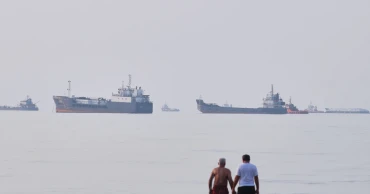
US carries out strikes on Iran as both sides threaten civilian infrastructure
The United States carried out a 12th consecutive night of airstrikes on Iran on Thursday as both countries intensified attacks on civilian infrastructure amid their widening conflict.
The U.S. Central Command (CENTCOM) said the latest strikes were aimed at "further degrading Iran's ability to threaten civilian mariners and commercial vessels transiting regional waters," as Washington seeks to restore the free flow of shipping through the Strait of Hormuz.
Earlier in the day, President Donald Trump warned that the U.S. would target one Iranian bridge or power plant every time Iran attacks a ship in the strategic waterway.
"From this point forward, any time the Islamic Republic of Iran shoots at a ship in the Strait of Hormuz, whether it be by missile, rocket, drone or any other weapon, the United States will bomb and destroy ONE BRIDGE OR POWER PLANT," Trump wrote on social media.
The latest U.S. strikes came as diplomatic efforts showed little visible progress, with both sides maintaining firm positions over the Strait of Hormuz, a key global energy route that remains largely closed. The conflict has raised concerns over further disruption to the global economy and pushed fuel prices higher ahead of the U.S. midterm elections later this year.
Iranian Foreign Minister Seyed Abbas Araghchi said Tehran would follow an "eye for an eye" approach.
"Any aggression against Iran, including our infrastructure, will compel a powerful and decisive response," he wrote on X.
Iranian state media reported that U.S. missiles struck areas near the western cities of Ahvaz, Ramshir and Andimeshk late Wednesday. It also said two people were killed in a U.S. missile strike in the border town of Shalamcheh near Iraq early Thursday.
Meanwhile, Kuwait's military said on social media that its air defence systems were intercepting hostile drones following what it described as Iranian attacks.
Iran has responded to U.S. operations by targeting energy facilities and desalination plants that supply drinking water in neighbouring Gulf states. Under international law, attacks on civilian infrastructure are generally prohibited unless such facilities are being used for military purposes.
War's economic impact grows
The continued closure of the Strait of Hormuz, through which about one-fifth of the world's traded oil and gas passed during peacetime, has rattled the global economy. Adding to concerns, Yemen's Iran-backed Houthi rebels have threatened to target Saudi shipping in the Red Sea, placing another major trade route at risk.
Trump travelled to Dover Air Force Base on Wednesday to receive the remains of four U.S. service members. A day earlier, Defence Secretary Pete Hegseth told a Senate hearing that the war had already cost the United States an estimated $37.5 billion.
Brent crude oil climbed above $93 a barrel, compared with less than $72 earlier this month before the conflict intensified. Gasoline prices have also continued to rise.
Iran maintains that it has the right to regulate traffic through the Strait of Hormuz and potentially charge transit fees. It has attacked vessels using a shipping lane monitored by U.S. forces and intended to remain outside Tehran's control.
Parliament Speaker Mohammad Bagher Qalibaf said the situation in the strait would not return to prewar conditions.
"We have repeatedly said that the situation of the strait will not return to prewar conditions," he wrote on social media.
Diplomatic efforts remain stalled
Before the latest strikes, Iranian Interior Minister Eskandar Momeni visited Pakistan, which has been acting as a mediator, in an effort to revive diplomatic talks. However, there was no indication of any breakthrough in efforts to end the conflict.
Iranian Interior Ministry spokesman Ali Zeinivand said diplomacy was continuing and messages were still being exchanged, according to the state-run IRNA news agency.
An Arab diplomat, speaking on condition of anonymity, said Gulf countries were becoming increasingly pessimistic about prospects for de-escalation despite continued mediation efforts by Pakistan and Turkey.
Speaking at a regional summit in the Philippines, U.S. Secretary of State Marco Rubio criticised Iran's actions in the Strait of Hormuz.
He said allowing any country to control an international waterway, impose tolls and attack ships that refuse to pay would set a dangerous global precedent.
Rubio added that Washington remained open to negotiations, but said Iran did not appear serious about talks at this stage, leaving the U.S. focused on protecting international shipping.
Following Iran's attacks, the United States also reimposed a blockade on Iranian ports.
Trump hints at strike on nuclear facility
Speaking from the Oval Office on Tuesday, Trump said the U.S. had "no interest in meeting" Iran for talks at present.
He also indicated that the U.S. could target Pickaxe Mountain, an underground Iranian nuclear facility under construction near the Natanz enrichment site. While the nearby Natanz complex was bombed during the 12-day Iran-Israel war in 2025, Pickaxe Mountain has remained untouched as Iran continues work there.
Iran has consistently maintained that its nuclear programme is peaceful, despite resuming uranium enrichment to near weapons-grade levels after Trump withdrew the U.S. from the 2015 nuclear agreement during his first term.
12 days ago
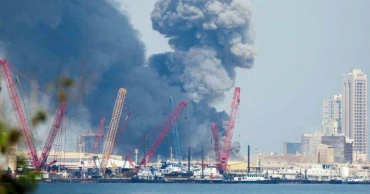
Iran enters ‘new phase of deterrence,’ warns senior adviser
A senior adviser to Iran's Supreme Leader has said the country has entered "a new phase of deterrence," warning that any US attempt to strike Iran at a low cost would have consequences beyond the battlefield.
In a post on X, Ali Akbar Velayati said the belief that Iran could be attacked without significant repercussions was a miscalculation.
Fifty-three Iranian civilians killed since late June: Ministry
"The Islamic Republic of Iran is in a new phase of deterrence," he wrote, adding that any military action against Iran could affect global energy markets and the wider world economy.
Velayati also warned that the United States would not achieve greater security by threatening Iran, rallying regional allies or seeking European support.
"The White House should know that by threatening Iran and mobilising regional allies and activating the European lobby, it will not achieve greater security and stability; rather, it will globalise the consequences of its mistakes," he said.
Iranian leaders have repeatedly warned that they could broaden the conflict if the US steps up its military attacks. In recent days, power and water desalination facilities in Kuwait have come under repeated attacks, drawing condemnation from the Gulf Cooperation Council (GCC) countries.
With inputs from Al Jazeera
12 days ago
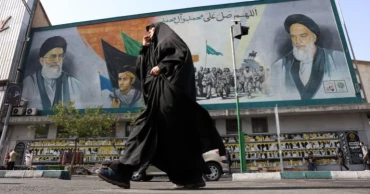
Fifty-three Iranian civilians killed since late June: Ministry
At least 53 Iranian civilians, including three children, have been killed in US strikes since June 27 after fighting intensified and the Islamabad memorandum of understanding collapsed, according to Iran's Health Ministry.
The ministry said more than 590 people have also been injured in the attacks during the same period.
Meanwhile, the US military has also suffered casualties in the conflict. According to US Central Command, at least 18 American soldiers have been killed and hundreds more wounded since the war began in late February.
With inputs from Al Jazeera
12 days ago
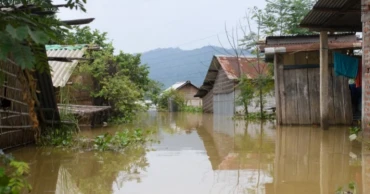
Assam flood death toll rises to 31
The death toll from the ongoing floods in India's northeastern state of Assam has risen to 31, Indian media says on Wednesday.
According to the Assam State Disaster Management Authority, more than half a million people remain affected across 16 flood-hit districts.
The authority said floodwaters have inundated 872 villages and damaged over 24,210 hectares of cropland in the affected areas.
12 days ago