World
Iran says it perceives every 'enemy' threat as 'noteworthy'
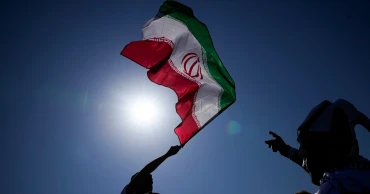
Iran's Acting Defense Minister Seyed Majid Ebn Al-Reza said Sunday that Tehran perceives every "enemy" threat as "real and noteworthy," rejecting any characterization of them as mere psychological warfare.
"We will neither be surprised nor remain passive. We use threats as a basis to increase our preparedness, strengthen our deterrence, and develop our power," Al-Reza wrote on social media platform X after U.S. President Donald Trump said earlier that he had agreed to hold off fresh attacks against Iran.
In his post on Truth Social, Trump said the United States was "locked and loaded and ready to go against the Islamic Republic of Iran, at levels of Military Terror, Strength, and Power not seen since World War II," but held off after being "asked by Iran, and other Middle Eastern Countries," citing a forthcoming deal that would include the "Immediate, Complete, and Total OPENING OF THE HORMUZ STRAIT, and an end to Iran's nuclear threat."
Earlier U.S. media reports had suggested U.S. and Israeli strikes on Iranian energy infrastructure could begin over the weekend.
Israel's Channel 12 news reported Sunday that Iranian Foreign Minister Seyed Abbas Araghchi has agreed to a Qatari-U.S.-brokered compromise deal allowing ships to enter the Gulf through the Iranian-controlled side and exit via Omani waters.
However, Iran's semi-official Fars news agency, citing a source close to the Iranian negotiating team, quickly rejected the claim.
Fars also quoted a military source as saying that as long as the U.S. "hostile and malicious acts" continue, the Strait of Hormuz will remain closed, with vessels permitted to transit only via Iran-designated routes and with the coordination and permission of the Navy of the Islamic Revolution Guard Corps.
The source warned that other routes are unsafe, adding that Iran's policies on the strategic waterway remain unchanged.
Iran tightened its grip on the strait on Feb. 28, barring safe passage of vessels belonging to or affiliated with Israel and the United States following their joint strikes on Iranian territory.
During the past days, the U.S. military launched multiple waves of strikes against Iranian targets, saying they were in response to Iranian attacks on vessels in the strait and aimed at "degrading Iran's ability to threaten commercial shipping."
Iran responded with missile and drone attacks targeting U.S. military bases and facilities in the region.
1 day ago
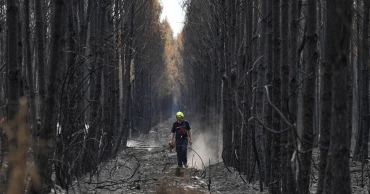
French wildfire near Bordeaux contained as firefighters battle separate blaze in Provence
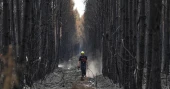
A massive wildfire near Bordeaux that burned an area four times the size of Paris and forced around 224,000 people to evacuate remained contained on Sunday, although it was still burning. Meanwhile, a separate wildfire in the Provence region stopped spreading overnight but had not yet been brought under control.
Around 3,000 firefighters were deployed across the two fire zones, working to extinguish hotspots, create firebreaks and secure burned areas as high temperatures and strong winds continued to pose the risk of flare-ups.
The wildfire in the Gironde region scorched about 420 square kilometres in just 10 days before authorities announced over the weekend that its spread had been stopped.
"The fire is now fixed, which does not mean that the fire is extinguished," the Gironde prefecture said on Sunday, using the French firefighting term for a blaze that has been contained within its perimeter.
The region remains under France's highest red forest fire alert, with dry weather, soaring temperatures and afternoon winds raising concerns that the flames could reignite.
Additional firefighting teams from Ukraine, Lithuania and French Polynesia were expected to arrive on Sunday and Monday to strengthen the response.
Scientists at World Weather Attribution said in a rapid analysis released on Thursday that human-caused climate change had doubled the likelihood of the extreme fire conditions that fueled the wildfires in France.
According to the European Union's Copernicus Climate Change Service, Europe is the fastest-warming continent, with temperatures rising at twice the global average rate since the 1980s.
The Gironde wildfire triggered one of the largest peacetime evacuations in modern French history, leaving many thousands of residents still displaced or unable to return home.
In southeastern France's Var department, nearly 1,500 firefighters continued battling another wildfire that burned around 18 square kilometres in just over a day.
Officials said the fire in the Gros Bessillon hills was stabilised on Sunday morning, meaning it had not expanded overnight. However, unlike the Gironde wildfire, it had not yet been officially declared contained.
Firefighting aircraft assisted ground crews as they worked to prevent the flames from reaching villages surrounded by vineyards, olive groves and wooded hills in the Green Provence region.
About 2,500 people were evacuated as the fire threatened nearby communities.
The latest blaze is the fourth major wildfire to hit central Var since July 19. Earlier this week, another smaller wildfire near Brignoles forced Hollywood actor George Clooney, his family and around 700 other residents to evacuate before firefighters brought it under control.
Prime Minister Sébastien Lecornu said the country's wildfires were largely under control but warned that changing weather conditions continued to pose a serious challenge.
He also announced the appointment of a national coordinator to oversee reconstruction efforts in fire-affected areas.
More than 1,170 square kilometres have been burned by wildfires across France since the beginning of the year.
1 day ago
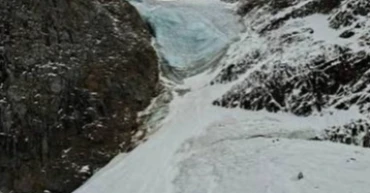
All 10 climbers buried in Pakistan avalanche confirmed dead
Renowned British-Nepali mountaineer Nirmal Purja and nine fellow climbers who were buried in an avalanche on Pakistan's Broad Peak have been confirmed dead, his expedition company said on Saturday as recovery efforts continued.
Elite Exped, Purja's expedition company, announced that all 10 members of the team had lost their lives in the avalanche that struck on Thursday, describing the tragedy as a devastating loss for the global climbing community.
"The world has lost one of mountaineering's greatest climbers," the company said in a statement, expressing condolences to the families of all those who died.
Rescue teams had recovered four bodies by Friday, with three of them brought down despite severe weather that disrupted helicopter operations. Military-supported search teams resumed efforts on Saturday to recover the remaining victims.
Irfan Arshad Khan, president of the Alpine Club of Pakistan, said the deaths of climbers from different countries represented a profound loss to the international mountaineering community.
He praised military personnel, civilian rescuers and Sherpas involved in the operation, saying the Himalayas and Karakoram continue to inspire adventurers while reminding them of the significant dangers posed by high-altitude expeditions.
Earlier on Saturday, local police official Tahir Khan said the remains of Omani climber Nathira Ahmed were being flown to Islamabad, while the bodies of American climber Mallory Geis and Nepali climber Bahadur Gurung remained at a hospital in Skardu, the main city in Gilgit-Baltistan.
According to China's Xinhua News Agency, citing the Chinese embassy in Pakistan, a Chinese climber was also among those killed in the avalanche.
The expedition was led by Purja, also known as Nims Dai, a Nepal-born former British Army soldier who gained worldwide recognition after climbing the world's 14 peaks above 8,000 metres in a record 189 days in 2019. His achievement was featured in the Netflix documentary 14 Peaks: Nothing Is Impossible, although the record was surpassed in 2023.
Elite Exped described Purja as an inspirational leader whose determination, humility and belief in human potential motivated climbers around the world.
In a statement, Geis' family remembered her as "a bright light" who was deeply loved by family and friends.
The expedition marked Geis' first attempt to climb an 8,000-metre peak in Pakistan. For Pakistani guide Sakhi, who worked with the travel company Moving Mountains, it was expected to be his final expedition. Besides being an experienced mountaineer, he was also known as a geographer and high-altitude photographer.
Fatal accidents are not uncommon in Pakistan's northern mountain ranges, where climbers face hazards including avalanches, falling ice and rocks, extreme altitude and rapidly changing weather conditions.
1 day ago

Trump says US may suspend Iran strikes if peace deal advances
US President Donald Trump said Saturday that he is prepared to suspend further American military strikes against Iran, saying regional partners have outlined the framework of a possible agreement aimed at ending the five-month conflict.
In a post on social media, Trump said the proposed agreement would include the immediate reopening of the Strait of Hormuz and measures to eliminate what he described as Iran's nuclear threat.
He said he had agreed to call off planned military action in the interest of global stability and Iran's future prosperity, while stressing that the decision would depend on the swift conclusion of a deal.
Trump has previously announced pauses in military action against Iran since the United States and Israel launched attacks on Feb. 28, though hostilities have resumed after earlier diplomatic efforts failed.
Iran's defence minister responded on X, saying Tehran remained vigilant and prepared to respond to any tangible threats from the United States, adding that the country was neither surprised nor passive following Trump's remarks.
Proposal seeks renewed negotiationsA regional official involved in mediation efforts said the latest proposal envisions the United States and Iran returning to the negotiating table to resolve issues that have blocked previous agreements.
According to the official, the proposal includes reopening the Strait of Hormuz and halting attacks across the region, including operations by Iran-backed militias in Iraq targeting Gulf states and Jordan.
In return, the United States would lift its naval blockade on Iran and permit Tehran to resume oil exports under the terms of a proposed ceasefire.
The official, speaking on condition of anonymity because of the sensitivity of the talks, said negotiations are continuing and no final agreement has been reached.
Trump also claimed Israel would support the ceasefire initiative, though Israeli authorities did not immediately comment on the statement.
Saudi concerns over escalationSaudi Crown Prince Mohammed bin Salman discussed the situation with Trump by phone on Saturday, expressing concern that further US military action could trigger Iranian retaliation, according to the Saudi Press Agency.
A person familiar with the conversation said Saudi officials fear Iran could target energy infrastructure in Saudi Arabia and other Gulf nations if tensions escalate. The call took place before Trump's social media announcement.
The source said the crown prince sought clarification on possible US actions toward Iran. A White House official confirmed the call but declined to disclose details.
Iran has repeatedly targeted vessels transiting the Strait of Hormuz without its approval during its confrontation with the United States.
Israeli strikes continue in GazaMeanwhile, Israeli airstrikes across Gaza overnight killed at least eight Palestinians, including two children, and injured more than a dozen others, according to local health authorities.
Health officials said three members of a family, including a four-year-old child, were killed in a strike on a residential apartment in southern Gaza. Another strike in Gaza City killed three more family members, including a child, while the mother, who was six months pregnant, was among those killed, according to hospital officials.
In central Gaza, an Israeli strike killed a man and his wife and wounded four others, local medical authorities said.
The Israeli military said the strikes targeted Hamas operatives but did not provide further details.
According to Gaza's Health Ministry, at least 1,222 Palestinians, including more than 260 children, have been killed since the October ceasefire. Five Israeli soldiers have also died during the same period. Israel and Hamas continue to accuse each other of violating the truce.
Separately, the US State Department issued fresh security alerts on Saturday advising American citizens across the Middle East to prepare for possible flight cancellations, temporary airspace closures and other travel disruptions. The advisory covers Bahrain, Israel, Iraq, Jordan, Kuwait, Lebanon, Oman, Qatar, Saudi Arabia and the United Arab Emirates.
1 day ago
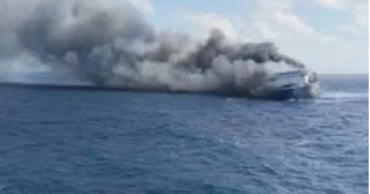
Five dead, 41 missing after ferry catches fire off Indonesia
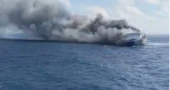
At least five people were killed and 41 others remained missing after a ferry carrying 271 passengers and crew caught fire in Indonesian waters, authorities said.
According to the National Search and Rescue Agency (Basarnas), the vessel caught fire near Madura Island while travelling from Surabaya, Indonesia's second-largest city in East Java, to Makassar in South Sulawesi. The ferry's captain alerted authorities after the blaze broke out, reports BBC.
Video footage aired by local broadcaster iNews showed dozens of passengers wearing life jackets aboard what appeared to be a lifeboat. Other videos captured people climbing down from the burning ferry as thick smoke and flames engulfed the upper section of the vessel.
1 day ago
DR Congo's Ebola outbreak becomes largest on record: WHO
The ongoing Ebola outbreak in the DR Congo has become the largest ever recorded in the country, surpassing the 2018-2020 epidemic, the World Health Organization (WHO) said on Saturday.
According to the WHO's latest disease outbreak report, the DRC had recorded 3,605 confirmed Ebola cases caused by the Bundibugyo virus as of Thursday, including 1,587 deaths, resulting in a case fatality rate of 44 percent.
The previous largest outbreak, which affected eastern DRC between 2018 and 2020, recorded 3,317 confirmed cases.
Initially limited to the Mongbwalu health zone in Ituri province, the current outbreak has spread over the past two months to 49 health zones across five provinces — Ituri, North Kivu, South Kivu, Haut-Uele and Tshopo.
The WHO said 151 health workers have been infected during the outbreak, with 44 of them dying, underscoring continuing gaps in infection prevention and control at healthcare facilities.
The UN health agency warned that insecurity, population displacement, frequent movement of people and cross-border travel are hampering surveillance and response efforts, increasing the risk of further transmission.
The outbreak is unfolding in conflict-affected areas where access to healthcare, clean water, food and shelter remains limited. Attacks on health facilities have also disrupted response operations and increased the risk of undetected spread.
Describing the risk within the DRC as "very high," the WHO called for a major expansion of disease surveillance, testing, clinical care, infection prevention, community engagement and logistical support to contain the outbreak.
1 day ago

7 suspected robbers killed in gunfight with Afghan police in Kabul
Seven suspected armed robbers were killed in a gunfight with Afghan police in Kabul on Saturday night.
Khalid Zadran, Kabul police spokesperson, said the exchange of fire took place in Police District 8 at around 9 pm. He confirmed the incident in a statement posted on social media platform X early Sunday.
Police recovered a vehicle along with several weapons and ammunition from the suspected robbers, the statement said.
One security personnel was also injured in the incident, though no further details were immediately available.
1 day ago
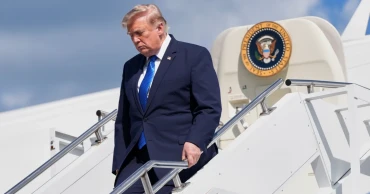
Trump to pause Iran strikes after framework for ending war is reached
US President Donald Trump said Saturday he would order American forces to suspend further strikes on Iran, claiming that key Middle East allies had agreed on the basic framework of a deal aimed at ending the five-month-long war.
In a social media post, Trump said the proposed agreement would ensure the “immediate, complete and total” reopening of the Strait of Hormuz and eliminate what he described as Iran’s nuclear threat.
He said he had decided to cancel a planned attack “for the future benefit of the world” and for “a successful and prosperous Iran,” while making clear the decision depends on the parties being able to quickly reach a final agreement. Trump also said Israel had agreed to work with the United States to complete the deal. Iran did not immediately respond publicly.
The announcement came a day after Trump suggested the US was close to launching renewed large-scale strikes to pressure Tehran into negotiations.
The US and Israel launched attacks on Iran on Feb. 28, saying the campaign was intended to weaken Tehran’s missile capabilities, stop it from developing nuclear weapons and end its support for allied armed groups. However, the goals and timeline of the conflict have shifted repeatedly, and an earlier ceasefire agreement reached in mid-June collapsed within weeks.
Meanwhile, Saudi Crown Prince Mohammed bin Salman expressed concern during a phone call with Trump that any escalation could trigger Iranian attacks on Saudi and other Gulf states’ energy infrastructure, according to a person familiar with the discussion.
Separately, the US State Department issued fresh security alerts for Americans across several Middle Eastern countries, warning of possible flight cancellations, temporary airspace closures and other travel disruptions. Iran has also repeatedly targeted vessels passing through the Strait of Hormuz without its authorization during the conflict.
1 day ago
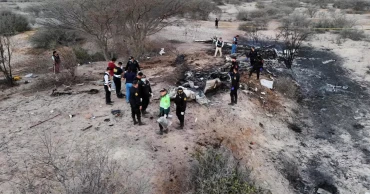
13 die as tourist plane crashes during Nazca Lines flight in Peru
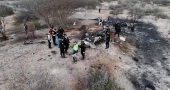
A sightseeing plane carrying European tourists to view Peru’s famed Nazca Lines crashed into a field outside the city of Nazca on Saturday, killing all 13 people on board, local authorities said.
According to Nazca’s municipal government, the aircraft departed from the nearby city of Ica and was operated by Peruvian airline Aerodiana. The company says it has been offering scenic flights over the UNESCO-listed Nazca Lines for the past 14 years using Cessna Grand Caravan aircraft.
The Nazca Lines are vast geoglyphs etched into the desert centuries ago by Peru’s Indigenous inhabitants. The giant figures, depicting various animals, can only be fully viewed from the air or from specially built observation towers.
Peru’s Transportation Ministry said the victims included seven Italian tourists aged between 18 and 54, two 52-year-old Spanish nationals, and two German tourists aged 77 and 78. The remaining victims were pilot Américo Salazar and co-pilot Irenka Guanilo del Carpio.
President Keiko Fujimori expressed sorrow over the tragedy and said authorities were considering a temporary suspension of operations at the airport. She said a final decision would be taken after receiving reports from the relevant ministries.
Peruvian authorities have launched an investigation into the cause of the crash. Aerodiana did not immediately respond to requests for comment.
1 day ago

Saudi crown prince urges Trump to avoid escalating Iran conflict
Saudi Crown Prince Mohammed bin Salman urged US President Donald Trump not to escalate the conflict with Iran during a phone conversation on Saturday, as Trump considers launching new military strikes against Tehran, according to a person familiar with the discussion.
The call, first reported by media, came amid growing concerns in Riyadh that US attacks on Iran’s energy facilities or other critical infrastructure could trigger retaliatory strikes against Saudi Arabia and other Gulf states’ energy assets. The source, who was not authorized to speak publicly, said the crown prince sought clarification from Trump about the military options under consideration.
Trump warns of continued military action against Iran
A White House official confirmed the leaders spoke but declined to disclose details of the conversation.
Earlier this week, Saudi Arabia joined the United States in strikes targeting logistics and weapons facilities used by Iranian-backed militias in Iraq, while continuing to advocate renewed US-Iran negotiations to end the five-month conflict. The crown prince also sent Saudi Defense Minister Khalid bin Salman to Washington for separate meetings with Trump and Vice President JD Vance on Iran strategy.
Trump has vowed retaliation after Iran’s failed attack on a US base in Jordan. The State Department on Saturday issued security alerts for Americans in 10 Middle Eastern countries, warning of possible flight disruptions and heightened regional risks as tensions continue to rise.
1 day ago