World
Venezuela accuses US Navy of raiding tuna boat in Caribbean amid rising tensions
Venezuela on Saturday accused the United States of illegally boarding one of its fishing vessels, in the latest sign of escalating tensions between the two countries.
Foreign Minister Yván Gil said personnel from a U.S. Navy destroyer intercepted a Venezuelan tuna boat carrying nine fishermen while it was operating in Venezuelan waters. Eighteen armed U.S. servicemen allegedly remained on board for eight hours, preventing communication and normal fishing activities, before the vessel was released under Venezuelan naval escort.
Speaking at a press conference, Gil described the action as “illegal and hostile,” stressing that the boat had authorization from the Ministry of Fisheries. He presented photographs of the incident and said a video filmed by the fishermen also showed U.S. personnel on the vessel alongside the warship.
“Those who give the order to carry out such provocations are seeking an incident to justify a military escalation in the Caribbean,” Gil warned, vowing that Venezuela would defend its sovereignty against any provocation.
The U.S. government has not yet commented on the allegation.
The incident comes weeks after President Donald Trump ordered the deployment of warships in the Caribbean, citing operations against Latin American drug cartels. On Wednesday, Trump claimed U.S. forces had attacked a drug-laden vessel that had departed Venezuela, killing 11 alleged members of the Tren de Aragua gang. Washington has provided no evidence for the claim.
Venezuela denounced the killings as extrajudicial, with Interior Minister Diosdado Cabello calling the U.S. account “a tremendous lie” and suggesting the incident may be tied to the disappearance of civilians in a coastal region unconnected to drug trafficking.
The Trump administration has accused President Nicolás Maduro of running a cartel to flood the U.S. with drugs and recently doubled the bounty for his capture from $25 million to $50 million.
Although Washington has given no indication of planning a ground incursion with the more than 4,000 troops stationed in the region, Caracas has called on citizens to enlist in militias to support its armed forces. On Saturday, the government urged volunteers to report to military barracks for training.
10 months ago
Trump urges NATO to halt Russian oil imports, warns of steep tariffs on China
President Donald Trump on Saturday called on NATO countries to stop buying Russian oil and warned of imposing tariffs of 50% to 100% on China over its continued purchases of Russian petroleum.
In a post on his social media platform, Trump said NATO’s commitment to the Ukraine war has been “far less than 100%,” describing the purchase of Russian oil by some alliance members as “shocking.” Addressing NATO members, he wrote: “It greatly weakens your negotiating position and bargaining power over Russia.”
Since 2023, Turkey has been the third-largest buyer of Russian oil, after China and India, according to the Centre for Research on Energy and Clean Air. Other NATO members, including Hungary and Slovakia, also continue to import Russian oil. It remains unclear whether Trump intends to confront Turkish President Recep Tayyip Erdogan or Hungarian Prime Minister Viktor Orbán directly.
Trump’s comments came after multiple Russian drones entered Polish airspace on Wednesday, a NATO ally. Poland shot down the drones, but Trump downplayed the incursion, suggesting it “could have been a mistake.”
U.S. Secretary of State Marco Rubio, however, called the drone incident “unacceptable and dangerous,” though he said it was still unclear whether Russia deliberately targeted Poland.
Trump calls 50% India tariffs a big deal, says it caused a rift with India
While Trump has repeatedly pledged to end the war swiftly, critics say he has avoided pressuring Russian President Vladimir Putin. His recent meeting with Putin in Alaska produced little progress toward peace. Meanwhile, Congress is pressing him to support a bill toughening sanctions against Moscow.
The U.S. and its allies are moving to show firmer resolve. At an emergency U.N. Security Council meeting on Friday, acting U.S. Ambassador Dorothy Shea reaffirmed that Washington “will defend every inch of NATO territory,” calling the drone incursion “a sign of immense disrespect” for U.S.-led peace efforts.
Britain on Friday also banned 70 vessels linked to Russian oil trade and sanctioned 30 individuals and companies, including Chinese and Turkish businesses accused of supplying Russia with weapons components.
Trump argued that a NATO-wide ban on Russian oil, combined with heavy tariffs on China, would be a decisive step. “China has a strong grip over Russia, and powerful tariffs will break that grip,” he wrote, adding that tariffs could be withdrawn once the war ends.
The U.S. president has already imposed a 25% import tax on Indian goods tied to Russian energy purchases, raising the overall tariff to 50%. Still, Trump has indicated a willingness to negotiate with Indian Prime Minister Narendra Modi.
Tensions with China remain high. Earlier this year, Trump’s 145% tariffs on Chinese goods prompted Beijing to retaliate with 125% tariffs on U.S. exports, effectively freezing trade between the world’s two largest economies. Subsequent negotiations lowered U.S. tariffs to 30% and China’s to 10%.
In his latest post, Trump blamed the war on his predecessor Joe Biden and Ukrainian President Volodymyr Zelenskyy, while notably excluding Putin.
His remarks followed a call with Group of Seven finance ministers on Friday, during which U.S. officials urged their counterparts to cut off revenues funding Russia’s war effort.
10 months ago
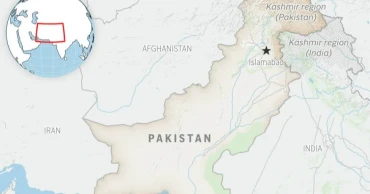
12 soldiers, 35 militants killed in Pakistani Taliban raids near Afghan border
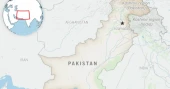
Pakistani security forces conducted raids on two Pakistani Taliban hideouts near the Afghan border over the past two days, resulting in the deaths of 12 soldiers and 35 militants, the military said Saturday.
In the first operation in Bajaur district of Khyber Pakhtunkhwa, 22 militants were killed. A separate raid in South Waziristan claimed the lives of 13 militants and 12 soldiers, who the military said “paid the ultimate sacrifice and embraced martyrdom.”
The army said militants are using Afghan territory to launch attacks in Pakistan and called on the Taliban government in Kabul to prevent such activities. The killed militants were described as “Khwarij,” a term used for the Pakistani Taliban, and the military alleged Indian backing, though no evidence was provided.
The Pakistani Taliban, also known as Tehrik-e-Taliban Pakistan (TTP), operates separately from the Afghan Taliban but is closely allied and has been emboldened since the Taliban took power in Kabul in 2021.
10 months ago

Family of Utah man accused of killing Charlie Kirk says he had become ‘more political’
The family of a young Utah man accused of fatally shooting conservative activist Charlie Kirk told authorities he had recently become “more political” and recalled a dinner table conversation where they discussed whether Kirk was spreading hate.
Tyler James Robinson, 22, of Washington, Utah, was arrested on suspicion of aggravated murder, felony discharge of a firearm causing serious bodily harm, and obstruction of justice, according to a probable cause statement released Friday. A judge has ordered him held without bail.
Robinson had recently mentioned Kirk’s scheduled visit to Utah Valley University — about three and a half hours from his family home in southern Utah — which sparked a discussion during dinner about his dislike of Kirk’s views, according to the family. State records show Robinson is registered to vote but unaffiliated with any political party and listed as inactive, having not voted in the last two general elections.
His parents, who run a granite countertop business, are registered Republicans. Court records indicate Robinson has no prior criminal history. It was not immediately clear whether he had an attorney to speak on his behalf, and his family has not responded to media inquiries.
Community in shock
Police sealed off Robinson’s street on Friday as reporters gathered outside the family’s home in a suburb of St. George. Window blinds were drawn, and neighbors expressed shock online that someone from their close-knit community had been implicated in such a high-profile killing. Several praised the family for assisting authorities in his arrest.
Neighbors described the Robinsons as quiet, outdoors-oriented, and active in family trips. Social media posts from previous years show the family vacationing in Disneyland, Hawaii, the Caribbean and Alaska, and engaging in boating, fishing, zip-lining and target shooting. One 2017 photo shows a smiling young Robinson holding the handles of a .50-caliber heavy machine gun during a visit to a military facility.
Robinson had been baptized into The Church of Jesus Christ of Latter-day Saints, though church spokesperson Doug Andersen declined to provide further details about his involvement. Neighbors said they hadn’t seen the family at church services for years.
Friends and acquaintances described him as intelligent, quiet and reserved. Robinson had been an honor roll student in high school, scoring in the 99th percentile on standardized tests. He earned a scholarship to Utah State University in 2021 but dropped out after one semester. He later enrolled in an electrical apprenticeship program at Dixie Technical College in St. George.
How the arrest unfolded
Utah Governor Spencer Cox said Friday that the breakthrough came when a family member reached out to a family friend with information that Robinson had confessed or implied involvement in the shooting. Authorities then confirmed the tip with a friend of Robinson’s, who showed them messages describing a note Robinson allegedly left behind.
Discord, the social media platform where Robinson was reported to have shared gun-related discussions, later clarified that the communications in question were between Robinson’s roommate and another friend after the shooting, not posted by Robinson himself.
When Robinson was arrested, authorities said he was wearing clothing consistent with surveillance footage of the shooter. Ammunition recovered at the scene bore engravings referencing meme culture and fascist imagery, according to Governor Cox.
10 months ago

How Hilton Kathmandu, Nepal’s tallest hotel, was built and destroyed in hours
Nepal’s skyline was clouded with smoke this week after Hilton Kathmandu, the country’s tallest hotel, was destroyed during violent anti-government protests. Dramatic footage showed the glass tower engulfed in flames as demonstrators, largely from the Gen Z movement, targeted government buildings, parliament, and residences of political leaders.
Nearly 20 people have died amid clashes with security forces and curfews, with the burning of Hilton Kathmandu becoming a stark symbol of widespread unrest. Developed by the Shanker Group, Hilton Kathmandu broke ground in 2016 and opened in July 2024 after an investment of around Rs 8 billion. The 64-metre-high hotel, located in the Naxal neighbourhood, featured 176 rooms and suites, making it Nepal’s tallest hotel.
The hotel’s design was intended as a cultural statement, with glass fins inspired by Buddhist prayer flags and a facade that harmonized with the urban streets on one side and the Langtang mountain range on the other. Interiors offered world-class hospitality, including five restaurants, a spa, a gym, event spaces, and a rooftop bar, Orion, reflecting Nepalese heritage. Built with resilience in mind, the tower incorporated shear walls and damping systems to withstand earthquakes, qualifying it as an “immediate occupancy” structure.
Today, Hilton Kathmandu lies in ruins. Its glass facade is shattered, interiors gutted, and the structure scarred by fire. The destruction marks not only the loss of a luxury landmark but also the vulnerability of development amid political instability. The protests, initially sparked by social media restrictions, escalated into a broader uprising against corruption and political stagnation. Even the resignation of Prime Minister KP Sharma Oli failed to calm the unrest, which forced the temporary closure of Kathmandu’s international airport, severely affecting Nepal’s tourism-dependent economy.
Source: NDTV
10 months ago
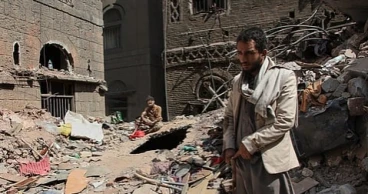
Israeli airstrikes in Yemen damage homes, leave families struggling in Sanaa
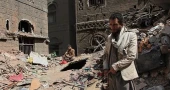
Israeli airstrikes targeting Iran-backed Houthi rebels in Yemen have severely damaged residential areas in the capital, Sanaa, leaving families living amid ruins with little hope of assistance from local authorities.
According to the Houthi-run health ministry, Wednesday’s strikes killed 46 people, including 11 women and five children, and injured 165 others. Eleven journalists were also among the dead. Most casualties were reported in Sanaa, where dozens of homes in central neighborhoods, including Tahrir, sustained extensive damage.
The strikes followed a Houthi-launched drone attack on a southern Israeli airport, which breached Israel’s air defenses and injured one person. Houthi officials also reported damage to a military headquarters, a fuel station in Sanaa, a government facility in Hazm, and Yemen’s National Museum. Footage from Sanaa showed shattered walls, debris, and destroyed interiors in residential buildings.
Residents told UNB that they cannot afford repairs and have received no assistance from authorities. Um Talal, a mother of two sons and a daughter, described her damaged home, saying, “Everything was lost in the blink of an eye. Authorities haven’t even called us to this day.” Despite the destruction, she said the family plans to rebuild what they can and continue living there.
Shopkeeper Khaled al-Dabeai said the blasts terrified residents, causing widespread panic, and knocked products off store shelves. Another resident, Ahmed al-Wasabi, said his family narrowly escaped when part of their house was destroyed.
Israel has repeatedly launched airstrikes in response to Houthi missile and drone attacks, which the rebels say are acts of solidarity with Palestinians amid the ongoing Gaza conflict. Houthi leader Mahdi al-Mashat vowed to continue attacks, warning Israelis to “stay alarmed since the response is coming for sure.”
The strikes highlight the ongoing human cost of Yemen’s civil war, exacerbating the plight of civilians already struggling amid years of conflict and economic hardship.
10 months ago
Widening Protests Challenge Serbia’s Populist President Vucic
Serbia is facing its most intense wave of protests in decades as demonstrators challenge President Aleksandar Vucic’s decade-long populist rule, raising concerns over political stability and human rights.
The unrest began after a deadly canopy collapse at Novi Sad railway station on Nov. 1, 2024, which killed at least 16 people, highlighting alleged state negligence and corruption. Initially led by university students, the protests have expanded nationwide, drawing citizens frustrated with rising living costs and government impunity. Demonstrators are demanding accountability, transparency, and early elections.
Authorities have responded with escalating force, deploying riot police, plainclothes officers, and parapolice units reportedly led by pro-Vucic soccer hooligans. Protesters have faced beatings, arbitrary arrests, and the use of tear gas, stun grenades, and sonic devices, prompting condemnation from human rights groups. In turn, demonstrators have staged sit-ins, occupied university halls, and blocked major roads, sustaining a cycle of confrontation.
Vucic, who rose to power from his nationalist beginnings under former strongman Slobodan Milosevic, has dismissed protesters as “terrorists” backed by Western powers. While offering dialogue, he has refused to call early elections and has replaced over 100 teachers and university staff with loyalists.
10 months ago
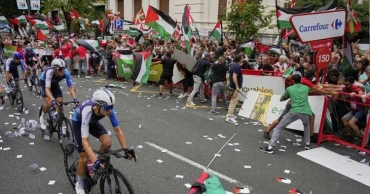
Anti-Israel protests turn Spanish Vuelta cycling race into diplomatic flashpoint
Protests against Israel’s military campaign in Gaza have disrupted Spain’s Vuelta cycling race, drawing international attention and sparking a diplomatic dispute between Madrid and Tel Aviv.
Hundreds of demonstrators, waving Palestinian flags, gathered along the race route, including in Rosana Prieto’s small village in northwestern Spain, aiming to broadcast their message to global television audiences. During one incident, a protester’s proximity to the cyclists caused a crash, though no riders from the Israeli-owned team, Israel Premier Tech, were injured. Over the past 10 days, five stages have been interrupted or shortened, and more than 20 protesters detained.
Spain’s government has tacitly endorsed the demonstrations. Prime Minister Pedro Sánchez has condemned Israel’s actions in Gaza as “genocide,” while Foreign Minister José Manuel Albares supports expelling the Israeli team from the race. Government spokesperson Pilar Alegría, who also oversees sports, said neutrality was impossible in the face of widespread death and destruction.
The protests have heightened tensions with Israel. Prime Minister Benjamin Netanyahu criticized the Spanish measures as “antisemitic” and a “blatant genocidal threat.” Meanwhile, Spanish activists are sending humanitarian aid by ship to Gaza, aiming to breach Israel’s naval blockade.
The unrest has affected riders and teams. Cyclists voted to quit if safety risks persisted, though Israel Premier Tech has continued competing while removing its team name from uniforms to reduce attention. Some riders reported threats from protesters, including flagpole strikes and tacks on the course.
Political analysts say the Vuelta protests reflect growing public anger over Spain’s stance on Gaza, with Sánchez leveraging grassroots movements to strengthen Spain’s opposition to Israel. Authorities plan a heavy security presence, including 1,500 police officers, for the race’s final stage in Madrid this Sunday.
10 months ago

Bolsonaro Retains Strong Political Influence Despite Conviction in Brazil
Former Brazilian President Jair Bolsonaro continues to wield significant political influence despite being convicted and sentenced to 27 years and three months in prison over attempted coup charges, experts and political observers say.
Bolsonaro, under house arrest and in poor health, did not attend the Supreme Court hearings. However, public support for the far-right leader remains strong, with opinion polls showing a deeply divided society. A Datafolha survey in August found 48% of Brazilians wanted him imprisoned, while 46% favored keeping him free.
Despite legal setbacks, Bolsonaro’s base remains active, with tens of thousands demonstrating across Brazil on Independence Day earlier this month. “Ideals are not killed, ideals are not arrested,” said Luiz Niemeyer, a Bolsonaro supporter in Rio de Janeiro. Analysts suggest that even behind bars, Bolsonaro could shape the 2026 presidential election by influencing which candidates carry his coalition’s banner.
Evangelical allies and lawmakers are advocating for amnesty to restore his political rights before 2030. Meanwhile, right-wing leaders such as Sao Paulo Governor Tarcísio de Freitas and Parana Governor Ratinho Junior are being considered as potential pro-Bolsonaro candidates. Bolsonaro’s inner circle, including his sons, remains central in deciding the movement’s future leadership.
Experts describe the situation as “Bolsonarism 2.0,” a phase in which the far-right movement consolidates and strengthens beyond Bolsonaro himself. Sociologist Esther Solano noted, “The movement is strong enough to outlive him, with emerging leaders preparing to continue his conservative agenda.”
Observers say that although President Luiz Inácio Lula da Silva is regaining popularity, Bolsonaro’s enduring influence underscores the deep polarization in Brazil and signals that his political ideology will continue to shape the country’s politics in the coming years.
10 months ago

Israel intensifies Gaza City airstrikes, at least 32 killed: hospital
At least 32 people, including 12 children, were killed in airstrikes across Gaza City as Israel escalates its offensive and urges residents to evacuate, medical officials reported Saturday.
Israel has intensified strikes on Gaza City, targeting high-rise buildings it claims house Hamas surveillance equipment, in a bid to seize the city, considered Hamas’ last stronghold. One overnight strike in Sheikh Radwan killed a family of 10, including a mother and three children.
Despite calls to leave, many residents remain due to high relocation costs, repeated displacement, and safety concerns. Israel says over 250,000 people have left northern Gaza, while the UN estimates more than 100,000 have moved south since mid-August. Humanitarian agencies warn mass displacement is worsening the crisis, with shelters and supplies still pending entry into Gaza.
The bombardment follows Israel’s recent strike targeting Hamas leaders in Qatar, raising concerns for ongoing ceasefire negotiations and the safety of around 48 hostages still held in Gaza.
The Gaza conflict began on Oct. 7, 2023, when Hamas militants attacked southern Israel, killing over 1,200 people and abducting 251. Israel’s retaliation has killed over 64,700 Palestinians, including large numbers of women and children, and displaced about 90% of Gaza’s population.
10 months ago