World
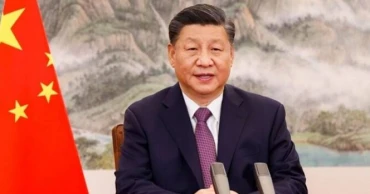
Xi urges BRICS to defend multilateralism, strengthen global cooperation
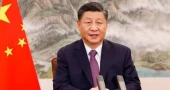
Chinese President Xi Jinping has called on BRICS nations to jointly uphold multilateralism and defend the multilateral trading system, urging stronger cooperation among emerging economies amid rising global challenges.
Speaking at a virtual BRICS Summit on Monday, Xi said BRICS countries – standing at the forefront of the Global South – must embody the BRICS spirit of openness, inclusiveness, and win-win cooperation.
“At this critical juncture, BRICS countries should act jointly to defend multilateralism and the multilateral trading system, deepen cooperation, and contribute to building a community with a shared future for humanity,” he said.
Xi emphasised that multilateralism remains a cornerstone of international peace and sustainable development. “Multilateralism is the shared aspiration of the people and the overarching trend of our time,” he said. “It provides an important underpinning for world peace and development.”
He urged BRICS members to adhere to the principle of extensive consultation, joint contribution, and shared benefits, and to safeguard the international system with the United Nations at its core and the international order based on international law.
Addressing economic concerns, Xi called on BRICS countries to stand firm in promoting openness and defending the international economic and trade order.
He described economic globalisation as an “irresistible trend of history,” stressing that no country can thrive in isolation. “No matter how the international landscape evolves, we must stay committed to building an open global economy and achieving win-win outcomes,” he said.
President Xi also underlined the importance of BRICS solidarity in addressing shared challenges and fostering common development. “The more closely we work together, the more resilient, resourceful, and effective we are in confronting external risks,” he said.
He reaffirmed China’s readiness to collaborate with fellow BRICS countries on initiatives such as the Global Development Initiative and high-quality Belt and Road cooperation. “We should leverage our respective strengths, deepen practical cooperation, and enhance partnerships in business, finance, science, and technology to strengthen the foundation and momentum of BRICS cooperation.”
“Strong wind tests the resilience of grass, and fierce fire reveals true gold. As long as we take responsibility and support one another, the giant ship of BRICS will weather the shifting international tides and sail far and steady,” he said.
10 months ago
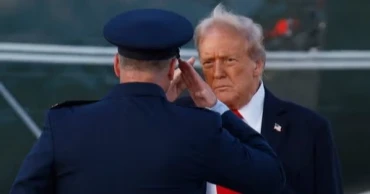
Trump urges Supreme Court to block release of billions in foreign aid
The Trump administration on Monday asked the Supreme Court for an emergency order to keep nearly $5 billion in foreign aid frozen, despite a lower court ruling that the move was likely illegal.
President Donald Trump announced on Aug. 28 that he would not spend $4.9 billion in congressionally approved foreign aid, using a rarely invoked budget maneuver known as a pocket rescission. The authority, disputed in court, has not been used by a president in about 50 years.
U.S. District Judge Amir Ali ruled last week that the administration’s decision violated the law, noting that only Congress can approve rescission proposals. A federal appeals panel also refused to block his ruling, prompting the administration to appeal to the Supreme Court.
Justice Department lawyers said another $6.5 billion in aid under the freeze will be released by Sept. 30, the end of the fiscal year.
Nonprofit groups that filed the lawsuit argued the freeze broke federal law and disrupted urgent humanitarian programs overseas.
10 months ago
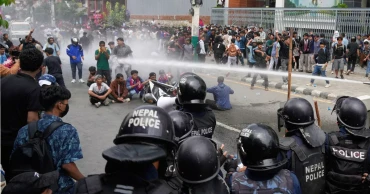
17 killed as police open fire on protesters near Nepal’s parliament
Police in Kathmandu opened fire Monday on protesters demonstrating against a government ban on social media, killing at least 17 and wounding dozens more.
Seven people died at the National Trauma Center, said Dr. Badri Risal, adding there were 58 wounded in the hospital.
“Many of them are in serious condition and appear to have been shot in the head and chest,” the doctor said at the country's main hospital located in the heart of Kathmandu.
Families waited anxiously outside for news of their relatives while people lined up to donate blood.
Two people died at the Civil Hospital and two more at the KMC hospital, according to doctors there who spoke on condition of anonymity because they are not authorized to comment.
The wounded were being treated at half a dozen hospitals in Kathmandu.
Tens of thousands of protesters took to the streets of Nepal's capital Monday to vent their anger against a decision by authorities to block most social media platforms including Facebook, X and YouTube, saying that the companies had failed to register and submit to government oversight.
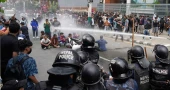
Protesters pushed through barbed wire and forced riot police to retreat as they surrounded the Parliament building. Police fired tear gas and water cannon but were outnumbered and sought safety inside the Parliament complex. Police eventually opened fire at the protesters.
The situation remained tense and the government announced a curfew for Monday around Parliament, the government secretariat, presidential house and key parts of the city.
“Stop the ban on social media, stop corruption not social media,” the crowds chanted, waving the red and blue national flags. Monday's rally was called the protest of Gen Z, generally referring to people born between 1995 and 2010.
About two dozen social network platforms that are widely used in Nepal were repeatedly given notices to register their companies officially in the country, the government said. Those which failed to register have been blocked since last week.
TikTok, Viber and three other platforms have registered and operate without interruption.
The move by the authorities came as the government sent a bill for a debate in Parliament that wants to ensure that social platforms are “properly managed, responsible and accountable.” It includes asking the companies to appoint a liaison office or point in the country.
The bill has been widely criticized as a tool for censorship and punishing government opponents who voice their protests online. Rights groups have called it an attempt by the government to curb freedom of expression and violate fundamental rights.
Nepal in 2023 banned video-sharing app TikTok for disrupting “social harmony, goodwill and diffusing indecent materials." The ban was lifted last year after TikTok's executives pledged to comply with local laws. They include a ban of pornographic sites that was passed in 2018.
10 months ago
Israel depriving Palestinian prisoners of food, its Supreme Court rules
In a rare wartime intervention, Israel’s Supreme Court ruled Sunday that the government has denied Palestinian detainees even a minimum subsistence diet and directed authorities to provide more food of better quality to inmates.
The court’s decision marks one of the few times the judiciary has challenged government actions during the 23-month Israel-Hamas war.
Since Hamas’ Oct. 7, 2023, attack on southern Israel that killed 1,200 people, mostly civilians, Israel has brushed aside mounting global criticism by insisting its measures are necessary to defeat Hamas.
Israeli forces have detained large numbers of Palestinians in Gaza and the West Bank over alleged militant links. Many were later released without charge after months in camps and prisons, reporting harsh conditions that included overcrowding, limited food, poor medical care and outbreaks of scabies.
Acting as Israel’s highest body of accountability, the Supreme Court reviews complaints from individuals and rights groups against government practices, such as restricting food and medical supplies to Gaza or, in this case, what two Israeli organizations called a “systemic policy” of depriving prisoners of food.
In a unanimous ruling, the three-judge panel said the government has a legal duty to provide Palestinian detainees with three daily meals to ensure “a basic level of existence” and ordered officials to meet that standard.
In addition, in a 2-1 decision, the court accepted a petition from the Association for Civil Rights in Israel (ACRI) and the rights group Gisha, agreeing with their claim that the government’s deliberate food restrictions in detention facilities had led to malnutrition and starvation.
“We are not speaking here of comfortable living or luxury, but of the basic conditions of survival as required by law,” the ruling said. “Let us not share in the ways of our worst enemies.”
Palestinian officials say at least 61 detainees have died in Israeli custody since the war began, including a 17-year-old boy in March whom doctors said likely died of starvation.
National Security Minister Itamar Ben-Gvir, who oversees prisons, previously boasted that he reduced conditions for Palestinian security prisoners to the legal minimum. On Sunday, he condemned the court’s decision.
“Are you from Israel?” he asked the judges, arguing that while Israeli hostages in Gaza have no one to help them, Israel’s Supreme Court defends Hamas “to our disgrace.” He pledged that prisoners would continue to receive “the most minimal conditions stipulated by law.”
ACRI urged immediate implementation of the ruling, writing on social platform X that Israel’s prison service has “turned Israeli prisons into torture camps.”
“A state must not starve people,” it said. “People must not starve people — no matter what they have done.”
10 months ago
Houthi drone hits Israeli airport amid intensified Gaza assault
A drone launched by Yemen’s Houthi rebels breached Israel’s advanced air defense system on Sunday, striking Ramon Airport in southern Israel. The impact shattered glass, injured one person, and temporarily halted flights, the Israeli military confirmed.
Although damage at Ramon Airport was minimal and operations resumed within hours, the attack marks a rare successful strike by the Houthis inside Israeli territory. The rebel group later claimed responsibility.
This attack came in retaliation for recent Israeli airstrikes in Yemen’s Houthi-controlled capital, which killed top officials including the Houthi prime minister — a major escalation in the nearly two-year-long conflict between Israel and the Iran-backed rebels.
Escalation in Gaza and Legal Pushback
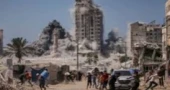
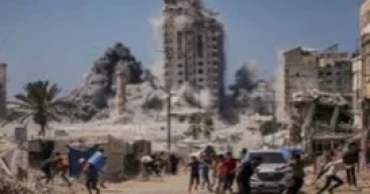
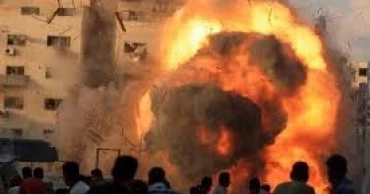
In Gaza City, Israeli forces demolished another high-rise building, displacing hundreds more Palestinians, as they urged civilians to flee south amid an intensifying offensive. The building, which Israel claims was used by Hamas for intelligence purposes, collapsed in seconds. Hamas has denied the allegation.
Meanwhile, in a rare move, Israel’s Supreme Court ruled that the state is not providing adequate food to Palestinian detainees. It ordered the government to ensure that detainees receive the minimum sustenance required by law — a decision prompted by petitions from Israeli human rights organizations alleging widespread hunger in prisons.
Houthis Vow More Attacks After Israeli Strike on Their Leaders
Following the killing of Prime Minister Ahmed al-Rahawi, Houthi forces vowed to step up attacks against Israel and maritime targets in the Red Sea. On Sunday, one of several drones launched from Yemen evaded Israeli defenses and struck the passenger terminal at Ramon Airport near Eilat, injuring a 63-year-old man and forcing temporary flight diversions.
Houthi military spokesperson Brig. Gen. Yahya Saree said eight drones had been launched, warning that Israeli airports would continue to be targets. The Israeli military intercepted three other drones near the Egyptian border and is investigating how the fourth one slipped through its defenses.
The Houthis have launched numerous aerial attacks on Israel since the start of the Gaza war, including those using cluster munitions. Despite the frequency of these assaults, most have caused limited damage. Prior to Sunday, the most serious strike occurred in May, when a missile landed near Ben Gurion Airport, prompting months-long flight cancellations.
Continued Destruction in Gaza
Israel continued its campaign in Gaza City, targeting what it claims is Hamas’ last major stronghold. The Al-Ra’iya Tower, a seven-story building that sheltered many displaced residents, was destroyed on Sunday. Residents described the trauma of repeated displacement, with some choosing to stay despite warnings, while others fled yet again to overcrowded, unsanitary camps.
At least 13 people, including six children and three women, were killed in strikes on a school-turned-shelter, apartment buildings, and tent camps, according to officials at Shifa Hospital. The military said it was targeting militants near the school and had warned civilians to evacuate.
In central Gaza, Al-Awda Hospital reported receiving five bodies — including a young girl’s — following an Israeli strike on a gathering in the Nuseirat refugee camp. The Israeli military has not commented on the incident.
The Gaza Health Ministry reports that over 64,000 people have died since the war began, with more than half being women and children. These numbers include both civilians and combatants.
Trump Claims Israel Accepted Ceasefire Proposal
On Sunday, former U.S. President Donald Trump claimed on social media that Israel had accepted his ceasefire terms for Gaza and urged Hamas to do the same. He warned it was his “last warning” to the group but did not provide details of the proposed terms. Israel did not confirm his statement, and its prime minister’s office declined to comment.
Hamas acknowledged receiving some ideas through intermediaries and welcomed any initiative involving prisoner swaps, but maintained its demands for a full Israeli withdrawal and a Palestinian-led civil administration in Gaza — conditions Israel has consistently rejected.
Israel targets high-rise in Gaza City amid expanded offensive, promises more strikes
Prime Minister Benjamin Netanyahu remains firm on the need for Hamas to disarm completely before any ceasefire can be considered. Meanwhile, a hostages' advocacy group urged the Israeli government to back the emerging agreement, fearing that continued offensives could endanger the remaining hostages believed to be alive in Gaza.
Despite international criticism, Netanyahu reaffirmed his commitment to military victory in Gaza, stating he prioritizes defeating Israel’s enemies over global perception.
10 months ago
Drone from Yemen’s Houthis hits Southern Israeli airport
A drone fired by the Houthi militants in Yemen breached Israel's multilayered air defenses on Sunday and slammed into the country's southern airport, the Israeli military said, briefly shutting down commercial airspace and diverting flights over southern Israel.
Israel said Yemen's Houthi rebels attacked with several drones, most of which were intercepted outside of Israel.
At least one of the drones slipped through Israel's defense system and crashed into the passenger terminal at the Ramon International Airport near the resort city of Eilat, the Israeli Airports Authority said, blowing out glass windows and sending smoke plumes billowing.
The Houthis claimed responsibility for the strike.
Israel's Magen David Adom emergency rescue service said it treated a 63-year-old man for light shrapnel wounds. The damage to Ramon Airport appeared limited and within a couple of hours it reopened as normal flights resumed.
The attack comes days after Israeli strikes on Yemen's rebel-held capital of Sanaa killed the Houthi prime minister and other officials in his Cabinet in a major escalation of the nearly 2-year-old conflict between Israel and the Iran-backed militant group in Yemen.
Saying that they were acting in solidarity with the Palestinians, the Houthis began firing missiles and drones into Israel after Hamas' Oct. 7 attack ignited the Israeli military's devastating campaign in Gaza.
Houthi drone hits Israeli airport
After Israel's targeted killing of Houthi Prime Minister Ahmed al-Rahawi last Thursday, the militants vowed to escalate their attacks targeting Israel and merchant ships navigating the vital trade route through the Red Sea off Yemen.
The Houthis hailed Sunday's attack on Ramon Airport — some 19 kilometers (12 miles) from Eilat on Israel's southern tip — as “a unique, qualitative military operation.”
“Enemy airports are unsafe, and foreigners must leave them for their own safety,” Nasruddin Amer, deputy head of the Houthi media office, wrote on social media. “Other sensitive targets are under fire.”
Shortly before Sunday's strike, the Israeli military said that it had intercepted three Houthi attack drones near Israel's border with Egypt but failed to detect a fourth drone that hit Ramon Airport without setting off air raid sirens. The military said it was looking into what happened.
The Houthis have stepped up their aerial attacks on Israel in recent months, including by deploying warheads with cluster munitions that scatter smaller munitions over a large area and challenge Israel's air defense system that otherwise intercepts most drones and missiles.
Houthi attacks on Israel, while frequent since the Israel-Hamas war erupted in October 2023, rarely cause major damage or manage to hit significant targets like airports. But in May, a Houthi missile hit near Israel's main Ben Gurion Airport, prompting many international airlines to cancel flights to Tel Aviv for months.
Israel pushes forward with Gaza City operation
Israeli Prime Minister Benjamin Netanyahu on Sunday vowed to push forward with Israel’s operation in Gaza City, as negotiations between Israel and Hamas continued to falter.
“Our effort in Gaza on the last strongholds, actually the last important stronghold, Gaza City, is part of our effort to complete the crushing of the Iranian axis’s chokehold,” Netanyahu said at the start of the weekly cabinet meeting in Jerusalem.
Netanyahu claimed that more than 100,000 Palestinians have left Gaza City in advance of the operation, though international organizations have countered this figure, as Palestinians questioned where in Gaza could possibly be safe.
Last week, just a few thousand people were leaving each day, with only 41,000 people having evacuated since mid-August, of the approximately 1 million people estimated around Gaza City, according to the United Nations.
Negotiations stalled between Hamas and Israel
Meanwhile, attempts to relaunch negotiations between Israel and Hamas are faltering.
Bassem Naim, a member of Hamas’ political bureau, said the militant group won’t lay down its arms until the establishment of an independent Palestinian state with Jerusalem as its capital. But he said that Hamas is ready for a long-term truce and will release the hostages still being held in Gaza in exchange for a number of Palestinians imprisoned by Israel and the complete withdrawal of Israeli troops from Gaza.
Naim said Hamas is still waiting for Israel to respond to a 60-day ceasefire proposal crafted by Egyptian and Qatari mediators last month.
The Prime Minister's Office refused to comment on negotiations.
There are 48 hostages still being held in Gaza, around 20 of which Israel believes are still still alive. Militants kidnapped 251 people and killed around 1,200 people in southern Israel during the attack that sparked the war on Oct. 7, 2023.
Strikes kill 13 Palestinians in Gaza
At least 13 Palestinians were killed in Israeli strikes on Sunday morning, including six children and three women, according to local hospitals. Shifa Hospital in northern Gaza said that eight people were killed in an Israeli strike on a school where displaced people were sheltering. The Israeli military said it was targeting a militants around the school and had warned civilians to evacuate before the strike. The military accuses Hamas of hiding weapons and militants inside civilian areas.
Five other people were killed in strikes on tents and apartment buildings in central Gaza and Gaza City, according to local hospitals. Israel’s military did not have immediate comment on the other strikes.
The Gaza Health Ministry said a total of 64,368 have been killed and 162,776 have been wounded since the start of the war. The ministry does not differentiate between civilians and combatants, but says more than half of the casualties were women and children.
10 months ago

Cancer Immunotherapy Breakthrough: Russian vaccine 'Enteromix' shows 100% efficacy in trials
In what could prove to be a major breakthrough for cancer patients, an mRNA-based vaccine has been developed, demonstrating 100% efficacy and safety in clinical trials.
The Enteromix vaccine showed promising results during trials, helping patients with large tumors by significantly reducing their size and effectively destroying cancer cells, reports WION.
According to Russia Today (RT), the vaccine is now only awaiting final approval from the Russian Ministry of Health for public rollout.
Developed in Russia, Enteromix is the first cancer vaccine to utilize the same mRNA technology platform that was successfully used in COVID-19 vaccines.
This next-generation immunotherapy is designed to precisely target and eliminate cancer cells, offering new hope to millions of cancer patients worldwide.
Enteromix is administered via intramuscular injection and has already been introduced for early clinical use in several oncology centers across Russia.
Unlike traditional treatments like chemotherapy or radiation, Enteromix follows a personalized approach, tailoring the therapy to each individual patient.
Notably, no serious side effects were reported during clinical trials.
The vaccine was developed by the Russian Ministry of Health’s National Medical Research Radiological Centre, in collaboration with the Engelhardt Institute of Molecular Biology (EIMB) of the Russian Academy of Sciences (RAS).
Who can benefit from Enteromix?
Patients suffering from lung, breast, colorectal, or pancreatic cancers can benefit from the vaccine. It may also be effective for high-risk individuals with hereditary cancer syndromes (e.g., BRCA1/2) and those whose cancers are resistant to chemotherapy.
Additionally, immunocompromised patients who cannot tolerate conventional treatments may look to Enteromix as a safer alternative.
Following its successful clinical trials, the vaccine now only awaits regulatory clearance from the Russian government.
10 months ago
From Sao Paulo to Kunming, voice of Global South grows louder
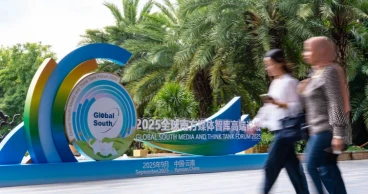
The Global South Media and Think Tank Forum 2025 opened Friday in Kunming, southwest China's Yunnan Province, bringing together hundreds of scholars and officials in a bid to amplify the voice of developing countries on the world stage.
The five-day gathering, held under the theme "Empowering Global South, Navigating Global Changes," is the second edition following a previous one in Sao Paulo, Brazil last year.
About 500 representatives from more than 260 institutions across 110 countries, as well as international and regional organizations, are set to take part.
The agenda focuses on building consensus on peace, identifying new drivers of development, broadening cooperation and advancing dialogue among civilizations.
BUILDING CONSENSUS THROUGH DIALOGUE
It is believed that in the face of global changes of the century, pursuing modernization and working for a more just and equitable international order are the sacred historic missions of Global South countries and the common issues of the times for Global South media and think tanks.
Last November, the first forum in Brazil issued the Sao Paulo Declaration, calling on media and think tanks in the Global South to resolutely advocate for the group's common interests and continuously boost its voice and influence in global affairs.
In July, the BRICS Media and Think Tank Forum and the SCO Media and Think Tank Summit were held respectively in Brazil and China, further broadening consensus and providing intellectual support for countries in the Global South.
Leonardo Attuch, editor-in-chief of Brazil 247, who attended the Sao Paulo forum and has registered for the Kunming event, said the media play a key role in improving the global governance system and amplifying the voice of the Global South.
"In just one year, we have already seen deeper and more structured dialogues among Global South media, further amplifying the voices of Global South countries and transforming the traditionally Western media-dominated hegemonic narrative," said Attuch.
FOR SHARED DEVELOPMENT
In recent years, the Global South has seen its influence grow significantly. Accounting for over 40 percent of global gross domestic product (GDP) and contributing as much as 80 percent of global growth, the Global South is a key force for maintaining world peace, driving world development, and improving global governance.
China has always been a member of the Global South, a reliable long-term partner of fellow developing countries, and a doer and go-getter working for the cause of global development.
From Asia to Africa, Latin America to the Pacific, China collaborates with Global South countries to advance high-quality Belt and Road cooperation, building roads, bridges and harbors, crucial infrastructure for economic prosperity. "Small and beautiful" livelihood projects, such as the Luban Workshops and hybrid rice cultivation, have taken root across Global South countries, supporting their modernization efforts.
Nassar Abdulkareem Nassar, deputy director of media affairs at the Iraqi News Agency, emphasized China's role as a Global South member in advancing practical cooperation. "In Iraq, China's support has enabled numerous landmark projects and livelihood programs," he said.
The practical cooperation with China has provided a continuous impetus for development across the Global South, including Iraq, added Nassar.
The world today is undergoing profound changes unseen in a century, and the collective rise of the Global South is becoming a defining feature of this transformation.
Media and think tanks in the Global South are not only a disseminator of the Global South's voice and a chronicler of the changing times, but also a shaper of the Global South's image and a promoter of a more just and equitable international order.
Fabio Manzini Camargo, special assistant to the Brazilian Minister of Health, told Xinhua that this forum helps strengthen collaboration among media and think tanks in the Global South, enabling audiences to understand the reality of contemporary society from the perspective of the Global South.
ANSWERING CONTEMPORARY QUESTIONS
Today, a shared mission facing Global South countries is to break the Western-dominated global public opinion pattern, and establish their own subjectivity and power of discourse.
The world is increasingly valuing the voices of Global South countries, and the international community has realised that without listening to the demands of the majority of humanity, world peace cannot be maintained, let alone achieve sustainable development for all humankind, said Fidel Alejandro Gomez Vega, vice president of Cuba's Prensa Latina News Agency.
The Global South is emerging as a powerful force driving peaceful development and building a more just international order, the media executive added.
Global South media and think tanks should become the voice and conscience of the diverse societies, providing in-depth analysis, advocating constructive narratives, and shaping a balanced global discourse system, said Dzhoni Melikyan, head of the International Relations Research Department of the Public Relations and Information Center under the Office of the Armenian Prime Minister.
Against the backdrop of escalating geopolitical conflicts, their collaboration is crucial, added the Armenian official.
Ahmad Ismayilov, executive director of the Media Development Agency of Azerbaijan, said that the media play a vital role in spreading objective and reliable information, so that Global South media outlets must become the bridge between policymakers and people.
Media of the Global South must invest in digital transformation, train and adopt artificial intelligence tools, and establish intercontinental alliances to amplify the voice of the Global South, Ismayilov said.
During the forum, two signature documents are scheduled to be released -- the Yunnan Consensus, a joint pledge to expand cooperative production of news and analysis, and a research report on China's contribution to global public intellectual products, which distills best practices from the country's South-South initiatives.
The event also marks the formal launch of the Global South Joint Communication Partnership Network, which features more than 1,000 media outlets, think tanks and other institutions across 95 countries and regions.
10 months ago
China Focus: Scholars hail Chinese modernization, new development pathways at global forum
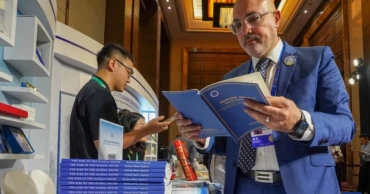
A new think tank report underscoring China's contributions to global public intellectual goods was released on Saturday during the opening ceremony of the 2025 Global South Media and Think Tank Forum in southwest China's Yunnan Province, drawing strong resonance among scholars from Global South countries.
The report, titled "Answering the Questions of Our Time: The Global Significance and Practical Value of China's Public Intellectual Goods," was released by Xinhua Institute, a think tank affiliated with Xinhua News Agency.
The report says that achieving modernization is the right and inevitable choice for the people of all countries -- and the key lies in finding development paths that suit their specific national conditions and the laws governing human social progress.
Chinese modernization, rooted in China's national conditions and drawing on the outstanding achievements of human civilization, offers the world a new model of modernization. It has rewritten the paradigm of global modernization and created a new form of human advancement, according to the report.
"There is no single path to modernity. Every nation has the right to follow its own course, drawing on its own history, while engaging openly with others," said Ambreen Jan, vice minister of the Ministry of Information and Broadcasting of Pakistan, at the forum held in the city of Kunming.
The report also highlights the broad relevance of China's new development philosophy -- innovation, coordination, green development, openness and shared benefits, noted Sun Ming, vice president of the Academy of Contemporary China and World Studies.
Sun added that innovation-driven growth has revitalized China's economy and sparked technological breakthroughs, offering important insights for Global South countries pursuing industrial upgrading and economic competitiveness.
Chinese modernization represents a significant leap beyond the theories and practices of Western-style modernization, shattering the myth that "modernization equals Westernization," and offering valuable lessons for other countries, especially those in the Global South, as they strive to address development challenges and achieve prosperity and progress, the report says.
China's modernization demonstrates that there is no single universal model for development. Instead, it underscores a comprehensive path built on development prioritization, state guidance, shared benefits, openness and cooperation, and ecological sustainability, said Koh King Kee, president of the Center for New Inclusive Asia in Malaysia.
China's approach offers Global South countries a way to avoid past pitfalls and provides a new frame of reference for exploring alternative forms of modernization worldwide, Koh King Kee added.
Hamed Vafaei, director of the Asia Research Center at the University of Tehran in Iran, highlighted China's sustainable and inclusive development models tailored to Global South needs, which challenge Western neoliberal frameworks -- prioritizing local contexts over one-size-fits-all policies.
Chinese modernization is firmly people-centered, a key concept in the report, which is echoed by Shamsun Nahar Khan, executive editor of United News of Bangladesh.
"Modernization must be people-centered, driving growth while protecting cultural identity, social cohesion and sustainability. By adopting people-centered modernization pathways, countries can ensure that growth is inclusive, sustainable and reflective of Southern priorities," Shamsun Nahar Khan said.
10 months ago
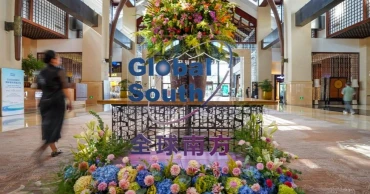
Global South media, think tank forum pools strength for enhanced cooperation
Some 500 journalists, scholars, government officials and entrepreneurs from 110 countries or international and regional organizations convened Friday in southwest China's Yunnan Province for the Global South Media and Think Tank Forum 2025.
Their common aspiration is to turn the Global South's rising economic weight -- representing 40 percent of global GDP and 80 percent of world growth -- into an equally powerful voice in the fields of international discussion and communication.
Within five days of meeting, participants will brainstorm and contribute their wisdom to translate the forum theme, "empowering global south, navigating global changes," into tangible solutions for practical projects.
Plenary sessions will alternate with focused workshops on peace-building narratives, AI-driven newsrooms, heritage preservation and other topics.
Two signature documents are scheduled to be released -- the Yunnan Consensus, a joint pledge to expand cooperative production of news and analysis, and a research report on China's contribution to global public intellectual products, which distills best practices from the country's South-South initiatives.
The event also marks the formal launch of the Global South Joint Communication Partnership Network, which features more than 1,000 media outlets, think tanks and other institutions across 95 countries and regions.
Guests and staff members communicate at the venue of Global South Media and Think Tank Forum 2025 in Kunming, southwest China's Yunnan Province, Sept. 5, 2025. (Xinhua/Peng Yikai)
This is the second edition of the forum, which is co-hosted by Xinhua News Agency, the Communist Party of China Yunnan Provincial Committee and the People's Government of Yunnan Province. It was first held last November in Sao Paulo, Brazil.
Experts and intellectuals attending the forum point out that Global South countries have long been in a weak position in the international public opinion arena. Often as objects of observation, narration and shaping, their voices have been drowned out, their stories distorted, and the truth behind them obscured.
Professor Cheng Manli from Peking University's School of Journalism and Communication noted that a common task for Global South countries is to break the existing international public opinion pattern and discourse monopoly, and to establish their own subject status and discourse advantage.
"The fate of the Global South should not be determined by others but shaped by us. We need strategic unity, long-term vision and political courage," Aires Ali, former prime minister of Mozambique, told Xinhua. "The Global South is not only a geographical concept but also a voice, a force and a history full of struggle and hope. It is our common responsibility to make this voice heard, respected and cherished by our people and the entire international community."
His view is echoed by Khalid Mubarak Al-Shafi, editor-in-chief of Qatar's Peninsula Newspaper.
"We are in need of strengthening unity and building consensus among nations to achieve peace. We must work together to foster mutual understanding and respect, rejecting all forms of violence and discrimination," said Al-Shafi.
A guest is pictured at the venue of Global South Media and Think Tank Forum 2025 in Kunming, southwest China's Yunnan Province, Sept. 5, 2025. (Xinhua/Peng Yikai)
Forum participants believe that cooperation among Global South media and think tanks holds great potential in the future.
In terms of maintaining peace and stability, the security deficit facing the world today requires not only political mediation and diplomatic dialogue, but also the building of bridges of understanding and communication by media and think tanks.
Participants also stress the importance of building partnerships between media outlets and think tanks.
"Knowledge must inform narratives, and narratives must reach people," Narine Nazaryan, director of the Armenian state news agency Armenpress, told Xinhua.
Nazaryan called on media and think tanks from the Global South to create platforms that "bring academic insight and journalistic reach together, so that civilizational dialogue moves beyond declarations and becomes daily practice."
"The Global South is home to many cultures and traditions, each with its own way of understanding the world," Ambreen Jan, Pakistan's federal secretary and vice minister of information and broadcasting, told Xinhua.
"The bridges we build today, with our friends in China and with all countries in the Global South, can carry practical solutions to the challenges we share," she said.
10 months ago