World
Over 64,000 Palestinians killed as Israel-Hamas standoff Continues
More than 64,000 Palestinians have been killed in the nearly two-year war in the Gaza Strip, local health officials said Thursday, as Hamas and Israel reiterated their incompatible demands for ending the fighting sparked by the militant group’s 2023 attack.
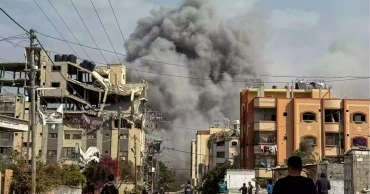
Israeli strikes killed 28 people, mostly women and children, overnight and into Thursday, according to hospitals, as Israel pressed ahead with its offensive in famine-stricken Gaza City. Brig. Gen. Effie Defrin, the military spokesman, said Israeli forces control 40% of the city and that the operation would expand "in the coming days.”
In the occupied West Bank, Israelis established a new settlement in a Palestinian city, according to an anti-settlement monitoring group.
The latest strikes came as Israeli troops were operating in parts of Gaza City with plans to take over all of it. The most populous Palestinian city is home to around a million people many of whom have already been displaced multiple times.
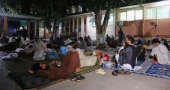
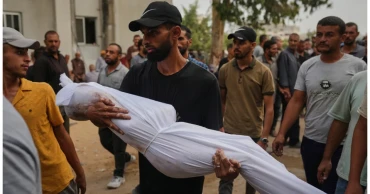
Shifa Hospital in Gaza City received 25 bodies, including nine children and six women, after Israeli strikes hit tents housing displaced people, according to hospital records. Among those killed was a 10-day-old baby. Another three people were killed in southern Gaza, according to Nasser Hospital in Khan Younis.
Maha Afana said the strikes woke her up in the middle of the night as she slept in a tent in Gaza City with her children. When she checked on them she found the bodies of her son and daughter, drenched with blood. “I started screaming,” she said.
Associated Press footage of the aftermath showed charred tents and debris. The sound of further Israeli bombardment echoed in the background.
“What did those children do to the state of Israel? They didn’t carry a knife or artillery. They were just sleeping,” said Hayam Basous, who lost a relative in the strike.
There was no immediate comment from the Israeli military, which says it only targets militants and tries to avoid harming civilians. It blames civilian deaths on Hamas, saying militants are entrenched in densely-populated areas.
Death toll rises
Gaza’s Health Ministry said that 64,231 Palestinians have been killed since the start of the war. The latest update includes around 400 who were presumed missing but whose deaths it says have been confirmed.
The ministry doesn't say how many of those killed in the war were militants or civilians. It says women and children make up around half the dead.
The ministry is part of the Hamas-run government and staffed by medical professionals. Its figures are seen as a reliable estimate of wartime deaths by U.N. agencies and many independent experts. Israel has disputed them without providing its own toll.
Hamas-led militants killed around 1,200 people, mostly civilians, and abducted 251 people in their attack on southern Israel on Oct. 7, 2023. Most have since been released in ceasefires or other agreements.
No visible progress in ceasefire efforts
Hamas released a statement late Wednesday saying that it was open to returning all 48 hostages it still holds — around 20 of them believed by Israel to be alive — in exchange for Palestinian prisoners, a lasting ceasefire, the withdrawal of Israeli forces from all of Gaza, the opening of border crossings and a start to the daunting challenge of rebuilding Gaza.
Israeli Prime Minister Benjamin Netanyahu’s office dismissed the offer as “spin” and said that the war would continue until all the hostages are returned, Hamas is disarmed and Israel has full security control of the territory, with civilian administration delegated to others.
Talks on a temporary ceasefire that would have seen some of the hostages returned broke down last month when U.S. Middle East envoy Steve Witkoff walked away, blaming Hamas. The militant group later accepted a proposal that Hamas and Arab mediators said was almost identical to an earlier one accepted by Israel, but there’s been no public indication that talks have resumed.
Israel and the U.S. have recently hinted at pursuing a comprehensive deal in which all the remaining hostages would be released at once.
New settlement in West Bank city
An anti-settlement watchdog group said Israelis have established a new settlement in the heart of the Palestinian city of Hebron, in the occupied West Bank.
Peace Now says the government-backed settlers took over a building on a main thoroughfare used by Palestinians to access the Old City, where hundreds of hardline settlers already live in a decades-old settlement guarded by Israeli troops adjacent to Palestinian homes.
There was no immediate comment from the Israeli government.
Hebron’s Old City is home to a major holy site revered by Jews and Muslims, where the biblical patriarchs Abraham, Isaac and Jacob, and their wives, are believed to be buried. It has often been the scene of Israeli-Palestinian violence.
Israel captured the West Bank, along with Gaza and east Jerusalem, in the 1967 Mideast war. The Palestinians want all three territories for a future state and – along with most of the international community – view settlements as illegal and an obstacle to peace.
“The goal of establishing a settlement in the heart of Hebron’s casbah is to seize new areas of the city and displace Palestinians from them, similar to what was done in the city center around the existing settlements,” Peace Now said.
“The settlement in Hebron is the ugliest face of Israeli control in the territories. Nowhere else in the West Bank is apartheid so blatant,” it said.
10 months ago
Gaza health authorities report 84 killed in Israeli strikes in 24 hours
Gaza health authorities said on Thursday that 84 Palestinians were killed and 338 injured in Israeli attacks across the area in the past 24 hours.
Since the war began on October 7, 2023, a total of 64,231 Palestinians have died and 161,583 have been injured. At least 2,356 people were killed and over 17,244 hurt while trying to get food, the authorities added.
Hospitals in Gaza also reported three more deaths from starvation and malnutrition in the past day, bringing the total to 370, including 131 children, since the start of the conflict.
The war started when Hamas attacked southern Israel, killing 1,200 people and taking hostages. Israel responded with a large military offensive that has heavily damaged the coastal territory.
10 months ago

In court, Trump links India tariffs to promoting peace in Ukraine
In the court papers, the Trump administration has argued that the tariffs are "a crucial aspect of our push for peace" in Ukraine.
The Trump administration has asked the U.S. Supreme Court to review a federal appeals court ruling that deemed most of the former president’s tariffs illegal. In court filings, the administration defended the tariffs as “a crucial aspect” of efforts to promote peace in Ukraine.
The tariffs, including those recently doubled to 50 percent on India, were partly aimed at penalizing countries importing Russian energy amid the Ukraine war and partly under Trump’s “America First” trade policy. The appeals court last week said Trump exceeded his authority under the International Emergency Economic Powers Act (IEEPA), though it allowed the tariffs to remain in place until mid-October for a possible Supreme Court review.
Trump criticized the ruling on Truth Social, saying the court “incorrectly said that our tariffs should be removed” and vowed to fight with the Supreme Court’s help. Treasury Secretary Scott Bessent warned that halting the tariffs could cause “dangerous diplomatic embarrassment.”
Source: NDTV
10 months ago

European leaders meet U.S. envoy Witkoff to discuss Ukraine security
U.S. special envoy Steve Witkoff met European leaders in Paris on Thursday to discuss long-term security guarantees for Ukraine and continued American support after the war. He is also scheduled to meet Ukrainian President Volodymyr Zelenskyy during the talks, a Ukrainian official said.
The meeting, part of a “coalition of the willing,” focused on plans for military aid and security arrangements in the event of a ceasefire to prevent future Russian aggression. French President Emmanuel Macron and British Prime Minister Keir Starmer emphasized that any European security force in Ukraine would require U.S. backing. Macron said preparatory work on the guarantees had been completed and should now receive political approval.
Ukraine’s presidential chief of staff, Andriy Yermak, said guarantees must be strong and effective “in the air, at sea, on land, and in cyberspace.” Earlier this month, the U.S. indicated readiness to support guarantees similar to NATO’s collective defense, though the practical details remain unclear.
Meanwhile, Ukraine reported that Russia launched 112 strike and decoy drones overnight Thursday, of which 84 were intercepted or jammed. Some coalition leaders attended the Paris talks in person, while others joined virtually, and a call with U.S. President Donald Trump was planned afterward.
10 months ago
Afghanistan earthquake kills over 2,200, Taliban reports
Hundreds of bodies have been recovered from homes destroyed by last week’s powerful earthquake in eastern Afghanistan, raising the death toll to over 2,200, Taliban spokesman Hamdullah Fitrat said Thursday.
The 6.0-magnitude quake struck several provinces Sunday night, flattening villages and leaving many trapped under rubble. Kunar province has seen the highest casualties due to its steep river valleys and mountainous terrain.
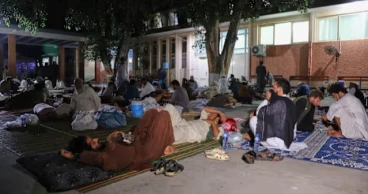
Fitrat said search and rescue operations are ongoing, with tents set up for survivors and emergency supplies being delivered.
10 months ago

Gaza war: Israeli president meets Pope Leo XIV at Vatican
Pope Leo XIV met Thursday with Israeli President Isaac Herzog as Israel pushes ahead with a planned Gaza offensive, with the Vatican pressing for an immediate ceasefire and the release of Hamas-held hostages.
Herzog was welcomed at the Apostolic Palace by Swiss Guards before talks that, according to his office, focused on freeing hostages, combating global antisemitism, and protecting Christian communities in the Middle East. While Herzog’s office said the visit came at the pope’s invitation, Vatican spokesman Matteo Bruni clarified that the audience was granted at Herzog’s request.
The largely ceremonial president has sought unity since taking office. Hamas abducted 251 hostages during its Oct. 7, 2023 attack that killed about 1,200 people. Israel believes around 20 of the 50 hostages still in Gaza are alive.
The Vatican has condemned both Hamas’s kidnappings and Israel’s heavy strikes in Gaza. Pope Francis earlier called Israel’s actions “immoral” and disproportionate, raising questions of genocide — a charge Israel rejects. Leo XIV, the first American pope, has continued that stance, urging an end to “collective punishment,” forced displacement, and calling for a permanent ceasefire and unhindered humanitarian aid.
10 months ago
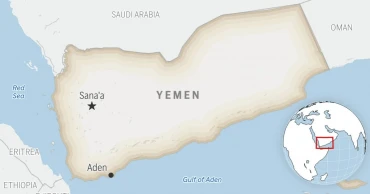
Houthi rebels suspected in Red Sea ship attack after escalating missile strikes on Israel
A vessel in the Red Sea was targeted Thursday in a suspected Houthi attack, officials said, as the Yemeni rebels step up missile launches against Israel.
The incident occurred off Hodeida, with the UK Maritime Trade Operations center reporting an “unknown projectile” landing near the ship amid heavy electronic interference. The vessel and crew were unharmed.
Maritime security firms Ambrey and EOS Risk Group also confirmed the apparent assault, noting the Houthis have shifted from sporadic fire to multiple daily attacks on Israel in recent days.
The strike follows an Israeli raid last week that killed the Houthis’ prime minister and other leaders. The rebels have increasingly used cluster munitions, raising interception challenges for Israel as it prepares a new Gaza offensive.
Since November 2023, the Houthis have attacked over 100 ships, sinking four and killing at least eight sailors. Their renewed campaign comes as prospects for a Gaza ceasefire and U.S.-Iran nuclear talks remain uncertain.
10 months ago

Death toll in Lisbon streetcar crash rises to 17 as Portugal holds national day of mourning
The number of fatalities in the crash of one of Lisbon’s iconic streetcars rose to 17 on Thursday after two more injured victims passed away, an emergency services official confirmed.
According to Margarida Castro Martins, head of Lisbon’s Civil Protection Agency, all of the deceased were adults. Their identities and nationalities have not yet been released, pending notification of their families.
In total, 23 people were injured in Wednesday’s accident. Among the injured were both Portuguese citizens and foreign nationals, including two Germans, two Spaniards, and one person each from France, Italy, Switzerland, Canada, Morocco, South Korea, and Cape Verde, Martins said.
The diversity of victims highlights the popularity of the historic streetcar, a major attraction for tourists visiting the Portuguese capital during the summer.
Thursday was declared a national day of mourning in Portugal, marking the deadliest incident in Lisbon in recent memory.
Though authorities have not disclosed the names of the victims, the transport workers’ union, SITRA, confirmed that André Marques, the streetcar's brakeman, was among those who died.
The 19th-century streetcar, part of the city’s heritage and a frequent feature on tourist itineraries, was packed at the time of the crash. It runs a short but scenic route up one of Lisbon’s steep hills.
Forensic experts worked through the night to complete autopsies, supported by specialists from other cities. The injured were taken to various hospitals in Lisbon.
As of Thursday, the mangled streetcar remained on the crash site in downtown Lisbon, surrounded by police tape. Investigators from Portugal’s judicial police documented the scene, photographing the rails and the wreckage on the quiet street.
Officials have not yet speculated on the cause, though possibilities include brake failure or a snapped cable.
The vehicle, officially known as the Elevador da Glória, lay on its side on the narrow, curving road where it derailed and slammed into a nearby building. Its top and sides were severely crushed by the impact.
Eyewitness Teresa d’Avó told Portuguese broadcaster SIC that the streetcar appeared to be out of control, barreling down the hill without braking. She described the crash as violent and said it scattered bystanders, some of whom fled into Avenida da Liberdade, the city’s main boulevard.
The crash occurred around 6 p.m. local time, at the beginning of the evening rush hour. Emergency crews managed to extract all victims from the wreckage within just over two hours.
Though commonly called a streetcar, the Elevador da Glória is technically a funicular, operating on steel cables and capable of carrying over 40 passengers. It serves both tourists and locals on a short route between Restauradores Square and the Bairro Alto nightlife district.
In response to the accident, Lisbon’s City Council suspended three other funicular streetcar services in the city for immediate safety inspections.
The Elevador da Glória is designated as a national monument.
Last year, Lisbon welcomed about 8.5 million tourists, with the streetcar being one of its most visited attractions. Long lines often form for the brief but scenic ride.
Carris, the company operating the funicular, stated that regular maintenance had been completed prior to the crash. In a statement posted to social media, the company extended condolences to the victims and their families and pledged a full investigation into the cause.
President Marcelo Rebelo de Sousa and Lisbon Mayor Carlos Moedas both expressed their sorrow, with Moedas calling it “a tragedy unlike any we’ve seen before.”
The Portuguese government formally declared Thursday a national day of mourning, stating that the crash caused “an irreparable loss of life” and had shaken the nation.
In solidarity, the European Parliament and European Commission flew EU flags at half-staff in Brussels. Several European leaders also shared messages of condolence.
10 months ago
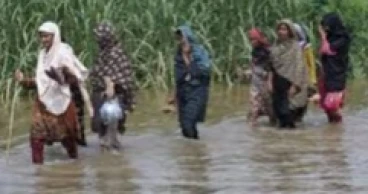
300,000 more evacuated in eastern Pakistan following new flood alert from India
Authorities in Pakistan’s Punjab province have evacuated nearly 300,000 people over the past two days after receiving a fresh flood alert from India, officials reported on Wednesday.
This brings the total number of people displaced since last month to approximately 1.3 million.
Floodwaters have inundated several villages in Punjab’s Muzaffargarh district, after previously impacting areas in Narowal and Sialkot, both situated close to the Indian border.
In an effort to shield major cities, officials are redirecting rising river waters onto agricultural land. The emergency response is being described as one of the most extensive rescue and relief operations in Punjab’s history — a region that spans parts of both eastern Pakistan and northwestern India.
Thousands of emergency workers, including military personnel, are using boats to evacuate residents and livestock from submerged areas, said Arfan Ali Kathia, Director-General of Punjab’s Provincial Disaster Management Authority (PDMA).
According to Kathia, India issued a second flood warning within 24 hours early Wednesday via diplomatic channels, prompted by heavy rainfall and dam discharges on their side of the border.
The Ravi, Chenab, and Sutlej rivers are all experiencing high flood levels due to intense rains and upstream water releases.
Rescue teams are also deploying drones to locate stranded individuals, particularly those stuck on rooftops. Kathia noted that over 3.3 million people across 33,000 villages in Punjab have been affected so far. Damage assessments are ongoing, and the provincial government has pledged compensation for those who lost homes or crops.
Meanwhile, at least 29 people have died due to landslides and flooding in India’s Punjab state, which has a population of over 30 million.
Temporary shelters are being established, and relief supplies such as food and essentials are being distributed, although many affected residents say government assistance is inadequate.
According to the National Disaster Management Authority, around 40,000 people are staying in relief camps, but the whereabouts of many others remain unknown.
In Sher Shah village, 54-year-old farmer Noor Mohammad expressed frustration over the lack of support, saying he had sent his family to stay with relatives.
Another resident, Malik Ramzan, chose to remain near his flooded home rather than move to a camp, citing poor conditions and delayed aid deliveries.
On Wednesday, Punjab Chief Minister Maryam Nawaz Sharif visited Muzaffargarh, meeting with displaced families at relief sites. Her visit coincided with India’s latest flood alert.
Last week, floods struck Kasur, Bahawalpur, and Narowal districts, even submerging the revered shrine of Guru Nanak near the Indian border. Officials say the shrine has since been cleaned and reopened for visitors.
Pakistan began large-scale evacuations last month following India’s release of excess water from dams into low-lying border areas.
This latest disaster is considered the worst flooding since 2022, when climate-driven floods killed nearly 1,700 people in Pakistan.
10 months ago

Arizona hiker dies after fall near Alaska’s Mendenhall Glacier
An Arizona man died after falling near the Mendenhall Glacier in Alaska’s capital, authorities said Wednesday.
The hiker, identified as 69-year-old Thomas Casey, was found dead around 5 p.m. Monday, according to Alaska State Troopers. He had last been seen on Saturday morning, but no one knew where he planned to hike or when he would return. Troopers said they were alerted about an overdue hiker on Sunday morning.
Search teams used cellphone data to track Casey and located his body off a trail near the glacier. His remains were sent to the state medical examiner’s office.
Juneau police said Casey had been staying in the city for the summer.
Just weeks earlier, in July, a Kentucky woman visiting Juneau on a cruise was also found dead in the mountains after failing to return from a hike.
11 months ago