World
Israel to halt or reduce aid in northern Gaza amid intensifying offensive
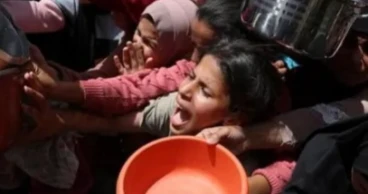
Israel will soon halt or scale back humanitarian aid deliveries to northern Gaza as its military offensive against Hamas expands, an official said Saturday, a day after Gaza City was declared a combat zone.
The move is expected to draw further international condemnation as Palestinians face worsening humanitarian conditions and families of remaining hostages express growing alarm after nearly 23 months of war.
Speaking on condition of anonymity, the official told The Associated Press that Israel will stop airdrops over Gaza City in the coming days and reduce the number of aid trucks as preparations are underway to evacuate hundreds of thousands of people south.
On Friday, Israel ended daytime pauses in fighting that had allowed limited aid access, calling Gaza City a Hamas stronghold and citing the continued presence of tunnel networks. The UN and aid groups said the measures were far short of the 600 trucks needed daily to meet Gaza’s needs.
Meanwhile, Prime Minister Benjamin Netanyahu’s office confirmed the remains of hostage Idan Shtivi, kidnapped during Hamas’ Oct. 7 attack at the Nova music festival, were recovered in Gaza. Families of other captives renewed calls for a ceasefire deal, warning the ongoing offensive puts their loved ones in greater danger.
Aid agencies also warned of “massive population movement” if Israel presses ahead with further evacuations. Mirjana Spoljaric, president of the International Committee of the Red Cross, said the destruction of infrastructure and extreme shortages of food, water and medicine make it impossible to evacuate Gaza City’s population in a safe and dignified way.
Heavy Israeli airstrikes continued overnight. A strike on a Gaza City bakery killed 12 people, including six women and three children, while another strike on Rimal neighborhood killed seven, health officials said. Hamas called the attack on a residential building a “brutal escalation.”
Separately, four Palestinians were shot dead while trying to collect aid in central Gaza, according to Al-Awda Hospital officials. Gaza’s Health Ministry reported that 10 more people, including three children, died from starvation and malnutrition in the past 24 hours, bringing the war’s total to 332 such deaths.
Since the conflict began, at least 63,371 Palestinians have been killed, including nearly half women and children, according to the Hamas-run Health Ministry. While Israel disputes the figures, the UN and independent experts consider the ministry’s data the most reliable source on casualties.
END/UN
B/FH/0830 hrs
11 months ago
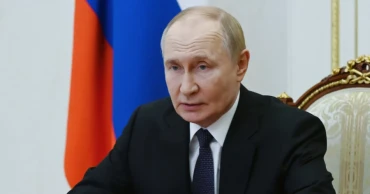
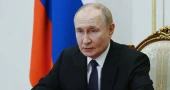
Putin to visit India in December, Kremlin confirms
Russia's President Vladimir Putin plans to travel to India in December, Putin's aide said Friday.
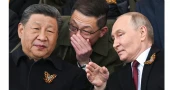
Putin's foreign affairs adviser Yuri Ushakov told reporters that the Russian leader will discuss his upcoming December visit with Indian Prime Minister Narendra Modi on Monday in China. Putin and Modi will meet on the sidelines of the annual summit of the Shanghai Cooperation Organization (SCO), which was established by China and Russia in 2001 with a focus on security in Central Asia and the wider region.
Putin is attending the summit and holding multiple bilateral meetings on the sidelines as part of a four-day visit to China on Aug. 31 to Sept. 3.
He also will hold extensive talks with Chinese leader Xi Jinping in Beijing and attend a massive military parade there commemorating the 80th anniversary of the end of World War, according to the Kremlin.
In addition meeting with Modi, the Russian leader on Monday is also scheduled to have bilateral meetings with Turkish President Recep Tayyip Erdogan and Iranian President Masoud Pezeshkian, as well as other contacts, Ushakov said.
Russian officials also were "working on the possibility of a bilateral meeting” between Putin and North Korean leader Kim Jong Un in Beijing, where Kim will also be attending the parade, Ushakov added.
According to Ushakov, Putin's meeting with Modi will be the first this year, but the two “have repeatedly maintained contact by telephone.”
Modi travelled to Russia last year twice — first to Moscow for talks with Putin in July, his first trip to Russia since the full-scale invasion of Ukraine by the Kremlin’s forces in 2022, and then to Kazan in October for the summit of the BRICS bloc of developing economies.
Russia had strong ties with India during the Cold War, and New Delhi’s importance as a key trading partner with Moscow has grown since the war in Ukraine.
Modi has avoided condemning Russia while emphasizing a peaceful settlement. Their partnership has become more complicated, however, as Russia has moved closer to China amid international isolation of Moscow over Ukraine.
China and India are key buyers of Russian oil following sanctions imposed by the United States and its allies that shut most Western markets off to Russian exports.
11 months ago
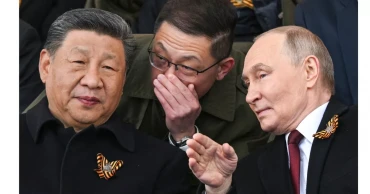
Who are the world leaders heading to China for SCO summit and military parade
Beijing will roll out the red carpet for more than two dozen world leaders at two major, defense-related events in the coming week. The guest lists, including notable omissions, are a window into China’s ambitions, alliances and continued attempts to expand its influence.
The two events are the annual summit of the Shanghai Cooperation Organization (SCO), a group established by China and Russia in 2001 with a focus on security in Central Asia and the wider region, and a massive military parade commemorating the 80th anniversary of the end of World War II, where China emerged victorious over its neighbor Japan.
High-profile guests of Chinese President Xi Jinping will include the Russian and North Korean leaders, as well as heads of state and government from most Southeast Asian and Central Asian nations.
But the guest lists for the SCO forum and the military parade don’t fully overlap, reflecting Beijing’s interests, loyalties and limitations among its neighbors and beyond.
Russia, India and Central Asia will be present at the SCO summit
World leaders will start pouring in for the SCO summit, to be held Sunday and Monday in the port city of Tianjin, just southeast of Beijing. Then on Wednesday, there will be a massive military parade in Beijing marking the 80th anniversary of Japan’s surrender at the end of World War II.
The parade is set to showcase some of China’s most advanced homegrown weapons, including more than 100 aircraft, and numerous tanks and missiles.
The guest list for the SCO summit includes leaders of the organization's 10 member states, along with representatives from almost two dozen other countries, some of which may join the group at a later date.
SCO was established by China, Russia, Kazakhstan, Kyrgyzstan and Tajikistan and later expanded to include members such as India, Iran, Pakistan and Belarus. Afghanistan and Mongolia are observer states, and 14 other countries, mostly from Southeast Asia and the Middle East, serve as “dialogue partners.” The country hosting the annual summit rotates every year.
Russian President Vladimir Putin, Iranian President Masoud Pezeshkian, and Indian Prime Minister Narendra Modi top the list of dignitaries attending the summit. Also attending are Turkish President Recep Tayyip Erdogan and Egyptian Prime Minister Mustafa Madbouly, whose countries are “dialogue partners” within SCO.
Some countries that are not SCO members will also be represented, mostly from Southeast Asia. These include Indonesia, Laos, Malaysia and Vietnam, reflecting China’s desire to shore up its ties within the region.
Not everyone will stay for the military parade
Most of the high-level guests at the SCO forum and the military parade will overlap, but there will be some notable departures — and additions.
The leaders of India, Egypt and Turkey will leave Beijing before the military show. Egypt will be represented by a lower-level official. Like most Western countries and their allies, India and Turkey generally refrain from posing alongside China’s top leaders at military parades, which take place every few years.
Instead, joining Xi and Putin to observe Chinese troops marching in lockstep on Chang'an Avenue will be North Korean leader Kim Jong Un, who will not have attended the earlier SCO summit. This will be Kim’s first meeting with Xi in more than six years, and his first occasion to come together with a group of world leaders since the reclusive North Korean leader took office, in late 2011.
Xi, Putin and Kim potentially seated together in Tiananmen Square will make for a defiant show of unity at a time when the West is increasingly frustrated over Russia’s war in Ukraine. Beijing, though on paper neutral in the conflict, has not condemned Moscow’s invasion of Ukraine and is accused of selling weapon components to Russia. Meanwhile, North Korea has sent troops to aid the Russians in the war.
Additionally, Myanmar’s junta chief Min Aung Hlaing, who is the country’s acting president in the wake of a military coup in 2021, will also attend the military parade.
Cuban President Miguel Díaz-Canel, as well as the leaders of the Democratic Republic of Congo and Zimbabwe, will also be there.
The only European heads of state attending the parade but not the SCO summit will be the Russia-friendly Serbian President Aleksandar Vucic and Slovakian Prime Minister Robert Fico.
11 months ago
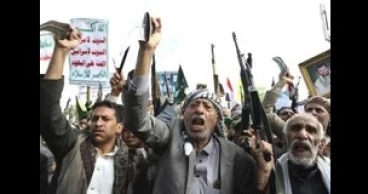
Israeli strike kills Houthi prime minister in Yemen’s capital Sanaa
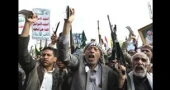
Yemen’s Houthi rebels said Saturday that an Israeli airstrike in Sanaa killed the prime minister of their rebel-run government, marking the highest-ranking Houthi figure slain in the Israeli-U.S. campaign against the Iran-backed group.
According to a statement from the Houthis, Prime Minister Ahmed al-Rahawi was killed in Thursday’s strike in the capital along with several ministers. Others, including senior officials, were wounded, though no details were provided.
The Houthis said the strike targeted al-Rahawi and members of his government during a “routine workshop” to review its activities over the past year.
The attack took place as the rebels’ Al-Masirah television channel was airing a recorded speech by Abdul Malik al-Houthi, the reclusive leader of the group, who vowed retaliation against Israel while updating supporters on the Gaza conflict. Senior Houthi leaders often gathered to watch his addresses.
On Thursday, the Israeli military said it had “precisely struck a Houthi terrorist regime military target” in Sanaa but offered no immediate comment on the reported death of the prime minister.
Al-Rahawi, originally from the southern province of Abyan, was once an ally of former Yemeni President Ali Abdullah Saleh. He joined the Houthis after they seized Sanaa and much of northern Yemen in 2014, triggering the country’s protracted civil war. He was appointed prime minister in August 2024.
His killing makes him the most senior Houthi official eliminated since the U.S. and Israel launched joint air and naval operations in response to the group’s missile and drone attacks on Israel and on commercial vessels in the Red Sea.
The Houthis have repeatedly claimed their attacks on shipping are meant to pressure Israel and show solidarity with Palestinians amid the war in Gaza. Their operations have disrupted global trade along the Red Sea, a vital route for nearly $1 trillion in goods annually.
In May, the Trump administration announced an agreement with the Houthis to halt airstrikes in exchange for an end to attacks on commercial shipping. The rebels, however, later clarified that the deal did not prevent them from striking targets they view as aligned with Israel.
11 months ago
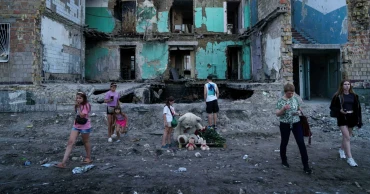
1 dead, dozens injured in Russian strike on Southern Ukraine
Russia launched a mass attack on southern Ukraine, local officials said, two days after a rare airstrike on central Kyiv killed 23 and damaged European Union diplomatic offices as U.S.-led efforts to end Moscow’s three-year war on its neighbor staggered.
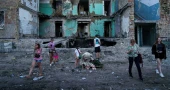
The assault overnight into Saturday killed at least one civilian and wounded 28 people, including children, in the Zaporizhzhia region, Gov. Ivan Fedorov reported, where a five-storey residential building was struck.
Russia launched 537 strike drones and decoys, as well as 45 missiles, according to Ukraine’s Air Force. Ukrainian forces shot down or neutralized 510 drones and decoys, and 38 missiles, the force reported.
The Kremlin on Thursday said Russia remained interested in continuing peace talks, despite the air attack on Kyiv that day that was one of the largest and deadliest since Moscow’s full-scale invasion in 2022.
Thursday's strike was one of the few times Russian drones and missiles have penetrated the heart of the Ukrainian capital. Children were among the dead, and search and rescue efforts continued for hours to pull people from the rubble.
Hours after the attack, the Trump administration approved a $825 million arms sale to Ukraine that will include extended-range missiles and related equipment to boost its defensive capabilities, as U.S. efforts to broker peace between Ukraine and Russia appear to have stalled.
11 months ago
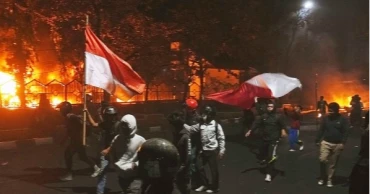
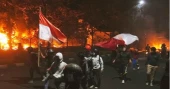
Mob attack on Indonesian parliament building leaves 3 dead
An enraged mob torched a local parliament building in Indonesia’s South Sulawesi province, leaving at least three people dead and five others injured, officials said Saturday.
The blaze broke out late Friday in Makassar, the provincial capital. Television footage showed the council building engulfed in flames, turning the night sky a glowing orange. By morning, rescuers had recovered three bodies, while five people were hospitalized with burns or injuries after leaping from the building, said local disaster official Fadli Tahar.
The violence spread to other cities. In West Java’s Bandung, protesters also set fire to a regional parliament building, though no casualties were reported. In Surabaya, the country’s second-largest city, demonstrators stormed the regional police headquarters after torching vehicles and tearing down fences. Security forces responded with tear gas and water cannons, as protesters fought back using fireworks and wooden clubs.
Foreign embassies in Jakarta — including those of the United States, Australia, and several Southeast Asian nations — have urged their citizens to avoid protests and crowded public areas.
Calm returned to much of the capital by Saturday as authorities cleared the wreckage of torched police offices, buses, and cars. The unrest, however, continued elsewhere, following five days of nationwide protests sparked by revelations that all 580 lawmakers receive a monthly housing allowance of 50 million rupiah ($3,075) on top of their salaries. The allowance, nearly 10 times Jakarta’s minimum wage, has fueled anger amid rising unemployment, soaring taxes, and mounting living costs.
Public fury deepened after the death of 21-year-old ride-hailing driver Affan Kurniawan, who was reportedly struck and killed by a police armored vehicle while delivering food in Jakarta on Thursday. A video of the incident went viral, sparking outrage against security forces. Witnesses said a police vehicle from the Mobile Brigade sped through a crowd of protesters, ran over Kurniawan, and failed to stop.
In Bali, hundreds of ride-hailing drivers and students staged a rare solidarity protest on Saturday, demanding police reform and the release of detainees. Marching toward the regional police headquarters, they clashed with riot police who fired tear gas, while protesters hurled rocks, bottles, and flares.
Violent demonstrations also flared across multiple cities on Friday, including Medan, Solo, Yogyakarta, Magelang, Malang, Bengkulu, Pekanbaru, and Manokwari in Papua. The National Commission on Human Rights (Komnas HAM) said nearly 950 people were arrested in Jakarta by Thursday alone. Authorities reported that about 25 police officers were hospitalized with serious injuries, though Komnas HAM believes civilian casualties are much higher.
Amnesty International condemned the government’s response, accusing it of stifling free expression through excessive force. “No one should lose their lives for exercising their right to protest,” said Usman Hamid, Executive Director of Amnesty International Indonesia. “The authorities must immediately and unconditionally release anyone detained solely for exercising their rights.”
11 months ago
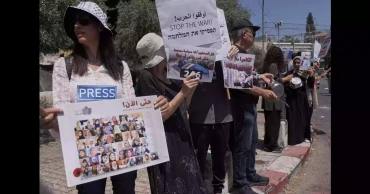
Protesters in Nazareth call for Gaza peace while family of journalist Mariam Dagga mourns her loss
Israeli and Palestinian activists in Nazareth staged a rally Friday, wearing stickers resembling the “Press” insignia to emphasize that journalism should not be treated as a crime. The demonstration called for peace in Gaza and an end to the killing of journalists.
Hundreds gathered in the northern Israeli town, donning blue-and-white “Press” stickers typically used to identify reporters in conflict zones. Protesters carried portraits of Palestinian journalists slain during the war and held a banner reading: “Don’t assassinate the truth.” Some banged on empty pots to highlight both hunger in Gaza and the silencing of the press.
Among the victims remembered was 33-year-old Mariam Dagga, a freelance contributor for The Associated Press. Dagga was killed earlier this week alongside four other reporters and 17 others when Israeli forces struck Nasser Hospital in Khan Younis, where many journalists had taken shelter.
The hospital strike, according to the Israeli military, was aimed at what it claimed was a Hamas surveillance camera. Officials said journalists were not targeted, while Prime Minister Benjamin Netanyahu described the incident as a “mishap.”
Mariam, who had been documenting the struggles of displaced Palestinians and the efforts of doctors caring for the wounded and malnourished children, became one of nearly 200 journalists killed since the conflict began on October 7, 2023. The war erupted after a Hamas attack inside Israel left 1,200 people dead and 251 taken hostage. In response, Israel’s military campaign has killed more than 63,000 people in Gaza, according to the territory’s health ministry.
Her family, still grappling with the loss, shared painful memories. Mariam’s father, Riyad, broke down recalling the moment he learned of her death. “When I heard the news, I couldn’t walk. I collapsed,” he said, holding onto her last photographs.
Her sister, Nada, was with her during the attack. She recounted their final exchange: “Mariam was on the stairs filming. She looked at me and smiled. That was our last look.”
Mariam’s brother, Mohamed, was the one who carried her body from the stairwell to the hospital’s operations room after the strike. Her final photographs captured the damaged stairwell at Nasser Hospital, moments before she was killed.
11 months ago
Audio clip spread on social media in adviser’s name fake: Home Ministry
The Ministry of Home Affairs on Saturday said the audio clip circulated on social media in the name of Home Affairs Adviser Lieutenant General (retd) Md Jahangir Alam Chowdhury involving Gono Parishad Odhikar leader Nurul Haque Nur is ‘fake or AI-generated’.
The fabricated 25-second audio clip shared from multiple accounts including one named ‘Ismail Chowdhury Samrat’ attempted to show the adviser instructing an anonymous police officer regarding Nur, said a statement of the Home Ministry.
The ministry clarified that the voice in the clip does not belong to the adviser but is an artificially generated or distorted version.
Anyone familiar with the adviser’s voice can easily understand that it is not his voice, the statement said.
The ministry said such false and misleading content misinforms the public, spreads rumours and undermines social order and the rule of law.
The Ministry of Home Affairs strongly protests the creation and circulation of such fabricated audio recordings and the responsible people will be brought under strict legal action, it said.
The ministry also cautioned against making or spreading any fake audio or content on social media and warned that legal action will be taken against those involved in such activities.
11 months ago
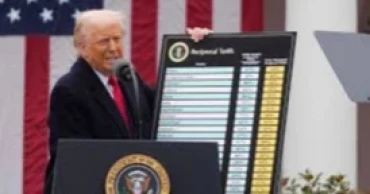
Court rules Trump’s use of emergency powers for tariffs was Illegal
A US federal appeals court ruled on Friday that former President Donald Trump had no legal authority to impose widespread tariffs under emergency powers — a major legal setback for the former president. However, the court left the tariffs in effect for now, giving the administration until mid-October to appeal to the Supreme Court.
The U.S. Court of Appeals for the Federal Circuit upheld a lower court’s ruling that Trump overreached under the 1977 International Emergency Economic Powers Act (IEEPA) when he imposed tariffs on nearly all foreign imports.
"It seems unlikely Congress meant to grant the President unlimited authority to impose tariffs," the judges said in a 7-4 decision.
Despite the ruling, the tariffs remain active while the legal process continues. Trump vowed to challenge the decision, claiming it would “destroy the United States of America” if not overturned.
A White House spokesperson, Kush Desai, maintained that Trump acted legally and expressed confidence in ultimately winning the case.
Meanwhile, Jeffrey Schwab, a lawyer representing small businesses harmed by the tariffs, said the ruling confirms that the president cannot impose tariffs without limits, protecting U.S. companies and consumers from “uncertainty and harm.”
However, Jake Colvin, president of the National Foreign Trade Council, warned that businesses may not feel immediate relief and called on Congress to reclaim its constitutional role over trade policy.
Senator Ron Wyden (D-Ore.) said he would push for votes to repeal the tariffs whenever possible.
What the ruling means for Trump’s trade agendaThe decision complicates Trump’s efforts to reshape U.S. trade policy unilaterally. While other legal avenues exist for imposing import taxes, they come with greater limits and longer timelines.
Trump’s unpredictable tariff strategies have unsettled global markets, strained alliances, and raised concerns about inflation and economic slowdown. However, he has also used them to pressure countries like the EU and Japan into accepting trade terms favorable to the U.S. and to generate revenue to help offset his tax cuts.
Before the ruling, some legal experts, like Ashley Akers from law firm Holland & Knight, noted that tariffs were a core part of Trump’s trade negotiation strategy — one that could be weakened by the court’s decision.
A dissenting opinion from four judges argued that the 1977 law does not violate constitutional limits and does allow the president some authority to act in emergencies.
The Justice Department warned in recent court filings that overturning the tariffs could lead to billions in refund claims and a major hit to the federal budget. So far, the U.S. has collected $159 billion in tariff revenue, more than twice the amount collected in the previous year.
Attorney General Pam Bondi accused the court of interfering with the president’s foreign policy powers and also vowed to appeal.
What tariffs are involved?
The ruling focuses on two sets of Trump-imposed tariffs:
“Liberation Day” tariffs (April 2):
Trump imposed up to 50% tariffs on imports from countries with which the U.S. runs trade deficits, and a 10% baseline tariff on nearly all others. He justified them under a declared national emergency over the U.S. trade deficit.
“Trafficking tariffs” (Feb 1):
Tariffs placed on imports from Canada, Mexico, and China in response to a claimed national emergency involving the flow of illegal drugs and migrants into the U.S.Critics argued that the longstanding U.S. trade deficit — ongoing for 49 years — does not constitute the kind of “extraordinary threat” required to invoke emergency powers under IEEPA.
The Court of International Trade had previously ruled in May that the Liberation Day tariffs exceeded Trump’s legal authority. It also rejected the trafficking tariffs, saying they did not directly address the stated emergencies.
What’s not affected?
The case does not challenge:
Tariffs on steel, aluminum, and autos imposed after a Commerce Department investigation cited national security risks.China-specific tariffs under Section 301 of the 1974 Trade Act, which President Biden has kept in place.
What happens next?
If the Supreme Court takes up the case and overturns the tariffs, the U.S. could face massive refund demands from importers.
Trump may still try to impose tariffs under other legal tools, such as:
Section 122 of the 1974 Trade Act, which allows tariffs of up to 15% for 150 days on countries with big trade surpluses.Section 301, which lets the president retaliate against unfair trade practices — the legal basis for his trade war with China.
11 months ago
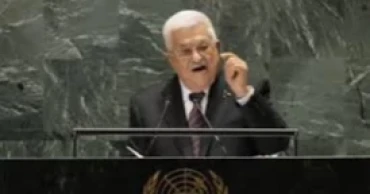
US revokes visas of Palestinian President, officials ahead of UN General Assembly
U.S. Secretary of State Marco Rubio has revoked the visas of Palestinian President Mahmoud Abbas and 80 other Palestinian officials ahead of the upcoming United Nations General Assembly in September, a decision the Palestinian Authority (PA) has condemned as a breach of international law.
A U.S. State Department official, speaking anonymously due to the sensitive nature of visa matters, confirmed Friday that the new restrictions target Abbas and other members of the Palestinian Authority. However, Palestinian diplomats stationed at the U.N. were granted exceptions and can continue their duties in New York.
This action is part of an ongoing series of measures taken by the Trump administration targeting Palestinian officials. It comes at a time of renewed conflict in Gaza, where Israel has declared the largest city a combat zone. Additionally, the U.S. has suspended a program that previously allowed wounded Palestinian children from Gaza to receive medical care in the U.S., following pressure from conservative voices online.
In a statement, the State Department said it is denying some visa applications from Palestinian officials, including those affiliated with the Palestine Liberation Organization (PLO)."It is in our national security interest to hold the PLO and PA accountable for not fulfilling their commitments and for obstructing peace efforts," the department said.
It also emphasized that both the PLO and PA must reject terrorism and stop promoting it in education in order to be considered credible partners for peace, as required under U.S. law.
The Palestinian Authority criticized the move as a violation of the U.S.’s responsibilities as the host country of the United Nations, citing the U.N. Headquarters Agreement and the PA’s status as a U.N. observer state."The Palestinian presidency expressed deep regret and astonishment," the statement said, calling the decision a violation of international norms.
U.N. spokesperson Stephane Dujarric said the organization would seek clarification from Washington, noting,"It’s important that all member and observer states are able to be represented."
Despite the visa revocations, the U.S. confirmed it would grant waivers to allow Palestinian representatives at the U.N. mission to continue operating in New York under existing host country agreements.
The move reflects the administration’s broader policy of tightening entry restrictions and making public examples of controversial visa decisions. In one recent case, a top State Department official publicly posted about revoking visas for British music duo Bob Vylan, who led a chant critical of the Israeli military.
Palestinian U.N. envoy Riyad Mansour said President Abbas had been scheduled to attend and speak at the General Assembly, as he has done for years. He was also expected to participate in a high-level meeting on September 22, co-hosted by France and Saudi Arabia, focused on advancing a two-state solution for Israel and Palestine.
11 months ago