World

Israel declares Gaza City a combat zone as death toll surpasses 63,000
Israel officially designated Gaza’s largest city as a combat zone on Friday and recovered the bodies of two hostages, marking the beginning of a new phase in its military campaign, which has faced sharp criticism from the international community.
As fighting resumed, Gaza's health ministry reported the death toll had risen to 63,025, with 59 more fatalities in the last 24 hours. Despite the renewed military activity, aid groups and religious institutions sheltering civilians in Gaza City said they would not evacuate, standing firm in their commitment to support those still facing hunger and displacement.
This development comes after weeks of Israeli plans to expand operations in Gaza City, where hundreds of thousands of civilians are taking refuge amid widespread famine. The Israeli military has escalated airstrikes on the outskirts of the city in recent days.
UN warns Israeli assault on Gaza City would crush hopes of ending war
Heavy smoke and loud explosions were visible from southern Israel on Friday morning, underscoring the intensifying military campaign. Israeli authorities claim Gaza City remains a stronghold for Hamas and allege that underground tunnels continue to be used, despite previous raids during the nearly 23-month-long conflict.
Prime Minister Benjamin Netanyahu reiterated that Israel must dismantle Hamas’ presence in Gaza City to prevent future attacks like the one on October 7, 2023, which sparked the war.
Though the United Nations and aid organizations have condemned the offensive, residents say the violence has been constant."The massacres never stopped, even during the so-called humanitarian pauses," said local resident Mohamed Aboul Hadi in a message from Gaza City.
Meanwhile, displaced families have started setting up makeshift tents in central Gaza, near the Nuseirat refugee camp, citing dire living conditions."We are thrown out like animals — no, worse than animals," said Mohammed Maarouf, who is sheltering with his family of nine.
According to Gaza’s Health Ministry, which operates under Hamas but is staffed by medical professionals, over 63,000 people have been killed since the war began. The toll includes 322 deaths due to malnutrition, with 121 of them children. While Israel disputes the figures, it has not released its own count, and the UN continues to regard the ministry’s data as the most reliable available.
Escalation Amid Evacuation Warnings
Last month, Israel introduced temporary "tactical pauses" in fighting during certain hours to allow humanitarian aid to pass. However, relief organizations reported ongoing difficulties due to blockades, theft, and military restrictions.
On Friday, the Israeli military reversed that policy, ramping up operations and mobilizing tens of thousands of reservists."We will escalate our operations until all hostages are returned and Hamas is dismantled," said army spokesperson Avichay Adraee, urging civilians in Gaza City to evacuate south, calling it “inevitable.”
Many residents began fleeing again, loading their belongings onto trucks and carts. However, many expressed despair over the lack of safe shelter."There’s no safe place left. We don’t know where to go," said Saddam Yazigi.
Despite the renewed bombardment, around 440 people sheltering at the Holy Family Church chose to remain, along with clergy members."When danger comes, we move closer to the walls," said church member Farid Jubran.
The U.N. and other NGOs have also chosen to stay in Gaza City. Yet, the Israeli military did not provide prior notice of the resumed daytime fighting, aid groups said. The Norwegian Refugee Council, which coordinates humanitarian efforts, reported being caught off guard. The U.N. warned that medical services may lose up to half their hospital capacity.
"We cannot serve two million besieged people in the south," said Zaher al-Wahidi, spokesperson for Gaza’s Health Ministry.
This offensive coincides with last week’s declaration of famine in Gaza City by the world’s leading food security agency. An Israeli military source stated they would continue facilitating aid — but did not clarify how that would be done amid the combat.
"This will have a devastating impact on already malnourished, displaced, and traumatized civilians," said the U.N.’s humanitarian office.
Hostage Remains Recovered
Israel also reported the recovery of the remains of two hostages — Ilan Weiss, 55, and another individual who has not yet been publicly identified. Weiss was killed during the October 7 assault on Kibbutz Be’eri.
"We will not stop until every hostage, living or dead, is brought home," said Netanyahu.
Hamas’ military wing, via spokesperson Abu Obeida, said its fighters were prepared for battle in Gaza City and would try to keep remaining hostages alive, but acknowledged fighting is likely near where hostages are being held.
Currently, around 50 of the original 251 hostages remain in Gaza, with 20 believed to still be alive, according to Israeli authorities. Roughly 1,200 Israelis, mostly civilians, were killed in the October 7 attack. Some hostages were released during temporary ceasefires or exchanges.
The Hostages and Missing Families Forum — an advocacy group pushing for hostage recovery — renewed its call for a deal.
"Time is running out. The government must remain at the negotiation table until every last hostage returns," the group stated.
11 months ago
Japan speeds up missile deployment as regional tensions rise
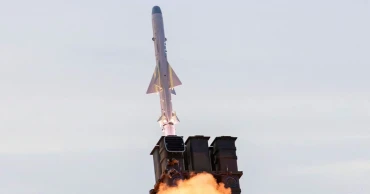
Japan will deploy its domestically developed long-range missiles a year earlier than planned, the Defense Ministry announced Friday, as it strengthens its strike-back capability amid rising regional security challenges.
The first batch of Type-12 anti-ship missiles, with a range of about 1,000 kilometers, will be installed at Camp Kengun in Kumamoto by March 2026, the ministry said.
Japan is enhancing its military self-sufficiency to counter China’s growing naval presence and rising tensions from North Korea and Russia. In June, Japan observed two Chinese aircraft carriers operating near its southern islands simultaneously for the first time.
The move marks a shift from Japan’s post-World War II self-defense policy. A 2022 security strategy highlighted China as the main threat and called for a closer Japan-U.S. alliance and expanded roles for the Self-Defense Forces.
Military spending is set to rise to 2% of GDP by 2027. Japan also plans to deploy U.S.-made Tomahawk missiles this year and expand unmanned air, sea, and underwater drones for coastal surveillance.
11 months ago
Pakistan rushes to rescue thousands trapped by Punjab floods
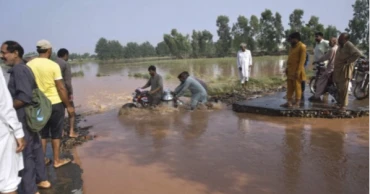
Rescuers in Pakistan are racing to evacuate tens of thousands stranded by floods in eastern Punjab province, with many still lacking food and medical care as authorities struggle to deliver aid.
The floods began Monday after heavy rains forced sudden water releases from Indian dams on the Sutlej, Chenab and Ravi rivers, the worst deluge in the region in 40 years. Nearly 300,000 people have been evacuated and more than 1 million affected, said Irfan Ali Kathia of the Punjab Disaster Management Authority. At least 20 people have died in Punjab this week, raising the nationwide toll to 820 since late June.
Army chief Field Marshal Asim Munir visited flood-hit Narowal district Friday to oversee rescue operations. Officials said around 1,100 relief and medical camps are operating, with more being set up.
Floodwaters have inundated villages near Lahore, sparking fears for the city. Authorities breached embankments along the Chenab River to ease pressure, but the National Disaster Management Authority warned rivers remain dangerously high and more rain could worsen the crisis.
Displaced families say they urgently need food and medicine. Aid workers report widespread infections, diarrhea, and malaria in submerged villages. Livestock are also falling sick due to lack of fodder and veterinary care.
Punjab Chief Minister Maryam Nawaz Sharif pledged compensation for losses to homes, crops, and livestock, saying the priority is saving lives and delivering aid.
The disaster highlights Pakistan’s vulnerability to climate change. In neighboring India, nearly 100 people have died in flood-hit Kashmir.
11 months ago

UK court backs government in case over asylum-seekers’ hotel housing
Britain’s Court of Appeal on Friday overturned a High Court order that would have forced asylum-seekers to leave a hotel northeast of London, a site that has drawn weeks of protests and national political debate.
A three-judge panel ruled in favor of the Labour government and hotel owner Somani Hotels, allowing 138 asylum-seekers to remain at the Bell Hotel in Epping, Essex. The High Court had earlier ordered their eviction by Sept. 12, citing local planning laws.
Justice David Bean said the lower court “made a number of errors,” warning that closing one site would only shift the burden elsewhere and that considering protests as grounds for closure risked encouraging “lawlessness.”
The case has fueled controversy as councils elsewhere consider similar legal action. Opponents say the government is prioritizing asylum-seekers over local residents, a charge Labour denies. Conservative leader Kemi Badenoch said, “Local communities should not pay the price for Labour’s total failure on illegal immigration.”
Protests—both peaceful and violent—have been staged outside the hotel in recent weeks. Tensions escalated after a resident was charged with sexual assault of a 14-year-old girl.
Health Minister Stephen Kinnock warned that closing hotels could leave migrants homeless but said alternative housing options are being sought.
As of June, more than 32,000 asylum-seekers were housed in hotels across Britain, according to the Home Office, down from a peak of 56,000 in September 2023.
11 months ago
Kyiv mourns 23 dead after Russian attack, peace talks stalled
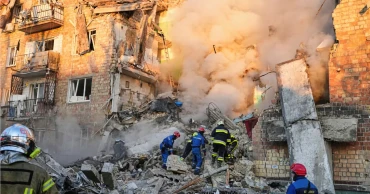
The death toll in a major Russian missile and drone strike on the Ukrainian capital rose to 23, including four children, officials said Friday, as U.S.-led efforts to end the three-year war remain stuck in apparent limbo.
Authorities in the Kyiv region declared Friday an official day of mourning. Flags flew at half-staff and all entertainment events were canceled after Russia hammered Ukraine with almost 600 drones and more than 30 missiles overnight from Wednesday to Thursday, including rare strikes on downtown Kyiv.
Rescue workers pulled 17 people from the rubble after the Kyiv attack, among them four children, Interior Minister Ihor Klymenko said. The youngest victim was a 2-year-old girl. Some bodies have yet to be identified, and eight people remain unaccounted for, authorities said. More than 50 people were wounded.
“Thousands of personnel from the Interior Ministry’s agencies and units worked at the strike sites in Kyiv, rotating every few hours,” Klymenko said of the 30-hour rescue operation.
Efforts to stop the fighting with a ceasefire and end Europe’s biggest conflict since World War II through a comprehensive peace settlement have made no progress despite intense diplomatic maneuvering.
European Union defense ministers expressed outrage Friday over Russia’s continuing onslaught in Ukraine and vowed to exert more pressure on Moscow.
Ukrainian Foreign Minister Andriy Sybiha said that, at the request of Ukraine, the U.N. Security Council was due to hold an emergency meeting Friday in response to the latest Russian aerial attack.
Putin set to attend summit in China with Iran, North Korea
U.S. President Donald Trump has bristled at Russia’s stalling on an American proposal for direct peace talks with Ukrainian President Volodymyr Zelenskyy. Trump said a week ago he expected to decide on next steps in two weeks if direct talks aren’t scheduled.
Trump complained last month that Russian President Vladimir Putin “ talks nice and then he bombs everybody.” But the latest attack on Kyiv drew no public condemnation from the Trump administration, with White House press secretary Karoline Leavitt noting that Ukraine has been striking Russian oil refineries.
Putin is due to attend a summit meeting in China from Sunday that will also include Iran and North Korea, countries which like Beijing have aided Russia’s war effort, according to the United States.
From Sept. 9, world leaders are expected to attend the U.N. General Assembly, where Russia's invasion will likely be discussed.
Senior Ukrainian officials in New York for talks with US
Meanwhile, Western officials are still working on security guarantees for Ukrain e that aim to deter another Russian invasion if a peace deal is signed.
Ukrainian Prime Minister Yuliia Svyrydenko and the head of the presidential office, Andriy Yermak, were in New York on Friday to discuss the possible guarantees and further cooperation, according to a Ukrainian official.
Zelenskyy noted Friday that Russia hasn’t budged from its terms for stopping its invasion. Ukraine, on the other hand, has accepted an American proposal for a ceasefire and a meeting between Putin and Zelenskyy.
Russia has repeatedly raised objections about the peace proposals. Foreign Ministry spokesperson Maria Zakharova said Friday that security guarantees should be the result of peace negotiations rather than a prerequisite for talks to take place.
“The provision of security guarantees is not a condition, but rather the result of a peaceful settlement that eliminates the root causes of the crisis in Ukraine,” Zakharova said. “That in turn will guarantee the security of our country,” she said.
Zelenskyy wants more international pressure on Moscow
Zelenskyy urged countries to crank up the pressure on Russia’s economy through sanctions and tariffs.
“Russia refused to stop the killing — they even said ‘no’ to President Trump. We’re seeing negative signals from Russia regarding a possible leaders’ summit,” Zelenskyy said in a social media post. “Honestly, we think Putin is still interested only in continuing this war.”
The Atlantic Council, a Washington think tank, noted that recent American presidents have shied away from taking a tougher line with Putin for fear of a potential nuclear conflict.
“Putin knows that Washington and its allies have more than enough capacity to reverse his gains in Ukraine, but it is nearly certain that he doubts the United States has the will to do so,” the Atlantic Council said in an assessment this week.
It added that “the second Trump administration has repeatedly signaled that the United States has no vital interests at stake in this war.”
11 months ago
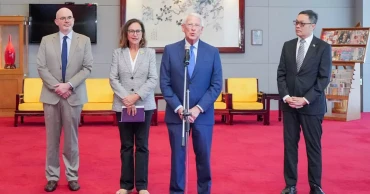
China slams US senators’ visit to Taiwan, cites sovereignty concerns
A visit by a pair of U.S. senators to Taiwan has drawn criticism from China, which claims the island as its own and objects to any contact between officials of the two sides.
Senate Armed Services Committee Chairman Roger Wicker, a Mississippi Republican, and Nebraska Republican Deb Fischer arrived in Taipei on Friday for a series of high-level meetings with senior Taiwan leaders to discuss U.S.-Taiwan relations, regional security, trade and investment, according to the American Institute in Taiwan, which acts as Washington’s de facto embassy in lieu of formal diplomatic relations with the self-governing island democracy.
Upon arrival, Wicker said: “A thriving democracy is never fully assured … and we’re here to talk to our friends and allies in Taiwan about what we’re doing to enhance worldwide peace.”
“At a time of global unrest, it is extremely significant for us to be here,” Fischer added, noting that discussions would include “security, opportunities and progress for this part of the world.”
But Chinese Foreign Ministry spokesperson Guo Jiakun protested the visit, saying it “undermines China’s sovereignty and territorial integrity, and sends a gravely wrong signal to the separatist Taiwan independence forces.”
The pair's two-day visit to Taiwan follows stops in Hawaii, Guam, Tinian, Pala and the Philippines.
The U.S. is Taiwan's largest supplier of arms. It provides the island with the latest generation tanks, air defense missiles and upgraded F-16 jet fighters as part of its guarantee of security against Beijing's threat to invade.
China considers the American supply of arms to Taiwan a violation of commitments made to it by previous U.S. administrations.
11 months ago

Protests against police spark unrest across Indonesia
Protests erupted in multiple cities and tensions soared across Indonesia on Friday, a day after a delivery rider was allegedly run over by a police armored vehicle during clashes between riot police and students protesting against lawmakers' allowances.
Protesters marched to the headquarters of the police mobile brigade in the capital Jakarta on Friday, and some attempted to storm the compound. Police used water canons and fired rounds of tear gas to push back the demonstrators, who hurled bottles, rocks and flares at them.
One group of rioters set fire to a five-story building near the police compound in Kwitang neighborhood of central Jakarta, causing several people to be trapped inside. Some students halted their protests to help soldiers and residents rescue those trapped.
Other protesters destroyed traffic signs and other infrastructure, causing traffic to come to a standstill in the area.
Clashes between rock-throwing demonstrators and riot police also broke out in other cities across the country, including Surabaya, Solo, Yogyakarta, Medan, Makassar, Manado, Bandung and Manokwari in the easternmost Papua region.
The unrest came after a video on social media apparently showing the death of the motorcycle taxi driver during Thursday's clashes shocked the nation and spurred an outcry against the security forces.
The victim, identified as 21-year-old Affan Kurniawan, was reportedly completing a food delivery service order when he was caught in the clash following days of violent demonstrations.
Witnesses told local television that the armored car from the National Police’s Mobile Brigade unit suddenly sped through the crowd of demonstrators and hit Kurniawan, causing him to fall. Instead of stopping, the car ran over him.
Thousands of motorcycle riders, along with rights activists and politicians, paid their respects to the Kurniawan on Friday during his burial. They filled a major traffic circle in the heart of the city and sprawled into its main thoroughfares.
President Prabowo Subianto appealed for calm and expressed condolences in a televised speech.
“I am deeply concerned and deeply saddened by this incident,” Subianto said. “I was shocked and disappointed by the officers’ excessive actions.”
The former general said he has been closely monitoring developments surrounding the protests, and said he has ordered a thorough investigation. He called on people “to remain vigilant against elements that constantly stir up unrest and seek chaos.”
“In a situation like this, I urge all citizens to remain calm and trust in the government I lead, which will do what’s best for the people,” Subianto said.
Authorities confirmed that seven members of the police motor brigade who were linked to the incident have been detained and questioned, though the driver of the armored vehicle has not yet been identified.
Nationwide protests began on Monday after reports revealed that all 580 lawmakers received a monthly housing allowance of 50 million rupiah ($3,075) in addition to their salaries. The allowance, introduced last year, is almost 10 times the Jakarta minimum wage.
Critics argue the new allowance is not only excessive but also insensitive at a time when most people are grappling with soaring living costs and taxes and rising unemployment.
11 months ago

49 migrants dead after boat capsizes off Mauritania's coast
At least 49 people have died when a boat carrying migrants capsized this week, the Mauritanian coast guard said Friday.
Authorities said the boat came from Gambia and capsized Tuesday morning off the coast of Mheijrat.
“The boat left Gambia a week ago and had 160 people on board, including Senegalese and Gambian nationals,” Mohamed Abdallah, the head of the coast guard, told The Associated Press.
“When the migrants saw the lights of the Mheijrat, they tried to move to one part of the boat, causing it to capsize,” Abdallah said.
The official said 49 bodies have washed ashore and just 17 people were rescued so far. The others remain missing, the official said.
In recent years, Mauritania’s waters have become a highway for migrants across sub-Saharan Africa seeking to reach Europe, primarily the Canary Islands. In July 2024, a similar incident killed more than a dozen migrants on their way to Europe off Mauritania, with 150 others declared missing.
The country’s authorities have tightened control and expulsion measures for migrants. Last year, it signed a 210 million-euro deal ($225 million)with the European Union in a deal aimed at deterring migrants from using the country to get to the European Union.
Mauritania has also been accused of abuse towards migrants who are transiting through the country in a nationwide coastal crackdown, according to human rights groups.
An increasing number of West African migrants have been trying to reach Europe via the perilous Atlantic coast route in search of a better life as economic opportunities dwindle across the region.
In September last year, at least 30 bodies were found on a boat off the coast of the Senegalese capital.
11 months ago

Japan, UK say defense partnership reaches 'new level' as aircraft carrier docks in Tokyo
Defense ministers of Japan and Britain on Thursday praised their “deep strategic alignment” as a Royal Navy aircraft carrier made a historic stop in Tokyo.
The HMS Prince of Wales, leading a 12-nation carrier strike group of 4,000 personnel on an eight-month mission, is the first foreign aircraft carrier to visit the Japanese capital, U.K. Defense Secretary John Healey said at a joint press briefing.
“We are proud to be taking our air and naval cooperation to new levels,” Healey said after talks with Japanese Defense Minister Gen Nakatani.
The cooperation, he said, reflects the U.K.’s pledge to step up its economic and security engagement in the Indo-Pacific.
Nakatani welcomed the milestone, saying: “Japan and the U.K. are the closest security partners in Asia and Europe, and we have steadily deepened our cooperation. I am delighted to share this historic moment when our defense ties have reached a new stage.”
Both countries are working with Italy on the Global Combat Air Program, aiming to deploy a next-generation fighter jet by 2035. In a joint statement, the ministers vowed to speed up efforts to finalize the program’s first international contract by year-end.
They said the initiative would support national aerospace industries, integrate cutting-edge technologies to counter future threats, and safeguard vital sectors.
Japan has been expanding its defense partnerships beyond the United States in response to China’s growing assertiveness in the region.
During recent multinational drills, a British F-35B fighter jet landed on the JS Kaga, marking the first time a U.K. aircraft operated from a Japanese carrier, underscoring Tokyo’s ongoing military buildup.
11 months ago

Floods displace 250,000, affect over 1.2 million in Eastern Pakistan
Massive flooding in Pakistan’s eastern Punjab province has impacted over 1.2 million people and displaced nearly 250,000, after heavy rainfall and water released from overflowing Indian dams caused three major rivers to overflow.
Rescue teams in boats rushed to reach stranded residents after the Ravi, Sutlej, and Chenab rivers breached their banks. The flooding has destroyed homes, farmlands, and businesses, leaving many residents trapped.
At least 15 people lost their lives in Gujranwala district and surrounding areas, police said. More rainfall is forecast from Friday and may continue into next week following a short break.
Punjab’s provincial minister Marriyum Aurangzeb reported that 1,432 villages along the overflowing rivers have been submerged, affecting 1.2 million people and displacing 248,000. She added that around 700 relief camps and 265 medical centers have been established, and emergency supplies are being distributed.
Nationwide, over 800 people have died due to floods since late June.
Meanwhile, in India-controlled Kashmir’s Jammu region, record August rainfall has triggered flash floods and landslides, damaging infrastructure and affecting two major Hindu pilgrimage routes. Indian authorities evacuated thousands, with at least 115 deaths reported so far.
This marks the first time in nearly four decades that the Ravi, Sutlej, and Chenab rivers have all simultaneously reached high flood levels in Pakistan, complicating rescue efforts across multiple districts, the provincial irrigation department said.
Some victims say they are still awaiting assistance. Zainab Bibi, 54, who was stranded on her rooftop for two days in Narowal, said she had ignored earlier warnings, believing her village—far from the river—would be safe.
Mohammad Saleem, a farmer from the same district, said water from across the Indian border washed away his home and all their belongings. His wife, Kaneez Bibi, added that the dowry saved for their daughter’s November wedding was also lost in the flood.
Evacuations began earlier this week across Punjab following heavy monsoon rains and rising water levels caused by India releasing dam water, which severely affected low-lying border areas.
Punjab Chief Minister Maryam Nawaz Sharif praised preemptive evacuations and the removal of illegal riverside structures for preventing higher casualties, calling it one of the province’s most severe flood emergencies in decades. She urged authorities to ensure no displaced persons are left without food or medical care and to take steps to control potential outbreaks of waterborne diseases.
Federal Planning Minister Ahsan Iqbal, during a visit to Narowal, accused India of releasing large volumes of water without proper warnings—allegedly violating a bilateral water treaty it suspended earlier this year. India had suspended the agreement after blaming Pakistan-based militants for an attack in Kashmir that killed 26 tourists—an accusation Islamabad denies.
Iqbal described the water release as an act of “water aggression,” directly linking it to the current flooding. Indian officials have not responded publicly to the allegations.
Among the affected areas was the historic shrine of Guru Nanak near the Indian border in Narowal, which was quickly evacuated by rescue teams.
In 2022, Pakistan suffered devastating climate-induced floods that claimed nearly 1,700 lives.
11 months ago