World
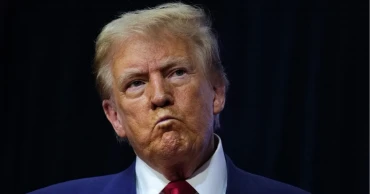
Trump unveils Gaza disarmament deal, but burdles and uncertainty remain
US President Donald Trump said Thursday that a deal has been reached for Hamas to disarm and Israel to withdraw its forces from Gaza, but many hurdles, conditions and long timelines remained to wind down the war in the Palestinian territory. Neither Hamas nor Israel gave immediate indication that they had agreed.
The White House announcement comes nine months after a U.S.-brokered ceasefire was signed. Negotiations between Israel and Hamas had largely deadlocked over the implementation of its second phase, including the disarmament of Hamas and the reconstruction of Gaza.
“The agreement will be carried out in carefully structured phases,” Trump said on social media. “As disarmament is completed, Israeli forces will withdraw, and the International Stabilization Force will work with a new Palestinian police force to take responsibility for Gaza being safe for its residents and its neighbors.”
Trump’s 20-point ceasefire plan calls on the militant group to surrender its weapons and destroy its vast network of tunnels. It also envisions Israeli forces withdrawing from Gaza, the arrival of a new technocratic Palestinian government, deployment of an international security force and the rebuilding of the battered Palestinian enclave.
Trump announced what he said was an agreement to realize one of the most difficult portions of the Gaza ceasefire while negotiations have stalled and military attacks have escalated in the war that the U.S. and Israel in February launched against Iran, a key sponsor of Hamas.
Officials offer long or unspecific timelines for Hamas to disarmU.S. and Board of Peace officials, describing the deal to reporters on condition of anonymity under guidelines set by the White House, gave an extremely optimistic assessment of the agreement that laid out a scenario very similar to the one described by Trump and his top aides when the Board of Peace, an international body established by Trump to oversee the ceasefire in Gaza, was first formed.
The officials were unable to offer specific timelines for the disarmament of Hamas or other groups that operate in Gaza, such as Palestinian Islamic Jihad, but said the Gaza police force would turn over weapons to the technocratic Board of Peace-backed Gaza administration in the next two weeks.
The Gaza police force, however, does not include the vast majority of Hamas militants and heavy weaponry is not included in that part of the agreement, according to the officials.
Instead, the surrender of heavy weapons and the decommissioning of Hamas tunnels and other infrastructure are to come later in a process that could take between 200 and 350 days, a Board of Peace official said.
Israel has not responded but has been deeply skepticalA U.S. official said Israel, which has been deeply skeptical about Hamas’ willingness to give up its guns or relinquish at least behind-the-scenes control of Gaza, had been consulted at every step of the negotiation.
However, the official said Israel was not being asked to do anything more than what it had initially committed to when it agreed to Trump’s 20-point plan, which essentially involves withdrawing its forces from Gaza and committing to ending airstrikes on the territory.
The official said Trump would be “very, very disappointed” if Israel didn't adhere to the agreement. Trump and Israeli Prime Minister Benjamin Netanyahu met at the White House on Tuesday, but neither said much about what was discussed in their first face-to-face meeting since launching the war against Iran.
Israel’s U.N. Mission said it had no immediate comment.
The official added that Iran remains a wildcard in the equation because although it counseled Hamas members not to accept a deal, it is also not in a position to offer the group much support because it is preoccupied with the conflict with the United States.
Hamas previously had insisted on implementing the first phase of the ceasefire before moving to discuss its weapons. The group’s founding charter calls for armed resistance against Israel, and it has been reluctant to give up an arsenal, including rockets, anti-tank missiles and explosives, that lies at the heart of its identity.
Hamas announced earlier this month, however, that it had dissolved its government in Gaza and was preparing to transfer power to a technical committee backed by the United Nations as part of the ceasefire deal.
The war in Gaza began after the Hamas-led attack on southern Israel on Oct. 7, 2023, killed around 1,200 people and saw 251 taken hostage. Israel’s retaliatory offensive in Gaza has killed more than 73,000 Palestinians, including those killed since the ceasefire, Gaza’s Health Ministry said.
Israel’s military now controls more than half of Gaza, leaving Palestinians confined to squalid tent camps and heavily damaged urban neighborhoods.
3 days ago

India strengthens global digital cooperation through digital public infrastructure partnerships with 24 countries
Over the past decade, the government of India has built a robust ecosystem of open, interoperable and inclusive digital platforms that have transformed public service delivery, promoted financial inclusion, fostered innovation and created new opportunities for citizens and businesses, said the Press Information Bureau of India.
The government's vision now extends beyond domestic digital transformation towards building a globally connected, trusted and inclusive digital ecosystem.
Digital Public Infrastructure (DPI) was one of the key priority areas of the Digital Economy Working Group (DEWG) meetings during India's G20 Presidency in 2023.
The G20 New Delhi Leaders’ Declaration explicitly recognised DPI, as a development accelerator for economic growth.
In furtherance of this vision, the Government of India has signed MoUs with 24 countries for cooperation in sharing successful population-scale digital solutions to accelerate digital transformation globally.
These MoUs provide a framework for cooperation in capacity building, knowledge and best-practice exchange, joint workshops and expert consultations, feasibility and e-readiness assessments, and the development, piloting and scaling of proven digital solutions. The country-wise list of signed MoUs is provided at Annexure-I.
The government of India has undertaken virtual consultations and technical workshops with partner countries to showcase India Stack and other population-scale digital solutions and identify areas of interest.
Based on the solutions identified, detailed technical discussions have held with the concerned Indian technical agencies and partner countries including feasibility studies to assess the readiness of the partner country’s digital ecosystem.
Significant progress has been achieved with countries of the Global South, including the conclusion of Implementation Framework Agreement (IFA) and a Non-Disclosure Agreement (NDA) with Kenya for implementation of DigiLocker. Development of a foundational DigiLocker solution in Cuba has also commenced.
Further, under the Indian Technical and Economic Cooperation (ITEC) programme of MEA, a course on DPI was conducted for Cuban delegation in December 2025.
Additionally, bilateral consultations have progressed with partner countries such as Lao PDR, Seychelles, Venezuela, Armenia, Fiji, Guyana Colombia for the potential adoption of key Indian digital solutions, including e-Sanjeevani, e-Office, e-Hospital etc.
Moreover, Unified Payments Interface (UPI) is linked with the payment systems of various countries to facilitate Person-to-Person (P2P) remittances and Person-to-Merchant (P2M) transactions.
The government regularly facilitates study visits and technical interactions for foreign delegations, enabling them to engage with key institutions like Unique Identification Authority of India (UIDAI), National e-Governance Division (NeGD), National Payments Corporation of India (NPCI), National Informatics Centre (NIC), Centre for Development of Advanced Computing (C-DAC), etc.
These engagements enable partner countries to discuss implementation challenges and draw on India’s experience in developing its Digital Public Infrastructure. Some of the recent study visits include delegations from Kenya, Rwanda, Nepal, Indonesia, and South Africa.
The government has also approved the Social Impact Fund (SIF), which is a government led, multistakeholder initiative to provide financial support and technical assistance for DPI pilot implementation in the Global South particularly in Low- and Middle-Income Countries (LMICs).
4 days ago
Thousands breach Morocco-Spain border into Ceuta in ‘absolute chaos’
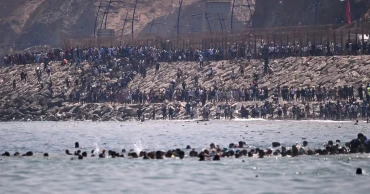
Thousands of migrants crossed into Spain’s North African enclave of Ceuta from Morocco on Thursday, prompting local authorities to call for a national emergency and military deployment to restore border control.
Spain’s Interior Ministry said it would ensure public safety and protect the country’s borders but said migration concerns did not justify declaring a national emergency.
“The situation is absolute chaos,” said Rachid Sbihi, head of the association representing Spain’s Civil Guard officers in Ceuta. He said thousands of people had crossed and the border had “totally collapsed.”
Videos showed large groups, mostly young Moroccan men but also families with women and children, entering through the Tarajal beach area. Some migrants shouted “Viva España!” as they arrived. Authorities have not yet identified the reason behind the sudden surge.
The crossings followed a sharp increase in attempts to reach Ceuta by sea on Wednesday, when at least three people died while trying to swim from Morocco. Moroccan authorities have not publicly commented on the situation.
Spain said Morocco was cooperating to stop further crossings and help return those who entered illegally. Interior Minister Fernando Grande-Marlaska is expected to visit Ceuta on Friday.
Ceuta’s regional leader Juan Jesús Vivas urged Madrid to declare a national emergency and send more police and soldiers to secure the border, saying additional forces were needed to protect residents and maintain control.
More than 1,500 migrants had entered Ceuta in the previous week, overwhelming reception facilities, officials said. Spain’s Interior Ministry said nearly 3,000 migrants had reached the territory by land or sea as of July 15.
The latest influx recalled a similar crisis in May 2021, when more than 8,000 migrants entered Ceuta over two days during a diplomatic dispute between Spain and Morocco. Ceuta, a Spanish territory on Africa’s northern coast, has long been a major entry point for migrants seeking a better life in Europe.
4 days ago

Congo Ebola death toll tops 1,500 as outbreak continues to accelerate
The death toll from the Democratic Republic of Congo's rapidly expanding Ebola outbreak has surpassed 1,500, according to official figures released Thursday, underscoring the growing challenge facing health authorities.
Government data showed that as of Tuesday, the country had recorded 3,442 confirmed cases and 1,521 deaths since the outbreak was declared on May 15.
The outbreak has been linked to the Bundibugyo strain of the Ebola virus, for which no approved vaccine or specific treatment is currently available.
Health officials said 797 patients remain in isolation or are receiving hospital treatment, while 615 people have recovered. However, contact tracing remains below target, with only about 78 percent of identified contacts under monitoring, short of the 95 percent level considered necessary to contain the disease.
Ongoing armed conflict and illegal mining activities in eastern Congo have complicated efforts to identify and monitor people exposed to the virus.
Nearly 90 percent of infections have been reported in Ituri province, although cases have also been confirmed in five provinces, including the major city of Kisangani.
Neighbouring Uganda, meanwhile, declared an end to its Ebola outbreak earlier this week after the country's last patient was discharged in June.
Ebola is a highly infectious viral disease transmitted through direct contact with bodily fluids, including blood, vomit and semen. Although relatively rare, it can be fatal if not treated promptly.
According to the World Health Organization (WHO), the current outbreak is spreading faster than previous Ebola epidemics. The 2014–16 West Africa outbreak, the deadliest on record, took around eight months to surpass 1,000 deaths, whereas the current outbreak has reached more than 1,500 fatalities within a much shorter period.
The WHO said the global risk of international spread remains low because Ebola is not airborne and requires direct contact for transmission. However, it continues to classify the risk within Congo as "very high."
Health officials have also warned that attacks on medical facilities, misinformation about the virus and insecurity have disrupted response efforts. Several international aid organisations temporarily withdrew staff from Ituri's Nyakunde health zone after an attack on a hospital and treatment centre earlier this month.
Authorities said the withdrawal of aid partners has affected disease surveillance, contact tracing and the delivery of essential medical supplies, although security conditions have since improved and officials are urging humanitarian teams to resume operations.
4 days ago
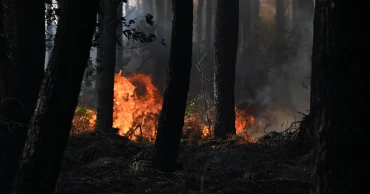
84,000 return home as France gains ground against massive wildfire
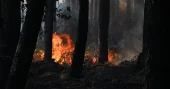
French authorities on Thursday allowed about 84,000 people evacuated by a massive wildfire in the country's southwest to return home, as cooler temperatures and improved weather conditions helped firefighters gain the upper hand against one of France's largest recent blazes.
The wildfire, which has scorched around 42,000 hectares of land in the Gironde region near Bordeaux, is no longer spreading, officials said, although firefighting operations continue to extinguish remaining hotspots.
The return of residents marks a significant step forward after about 224,000 people were forced to evacuate at the height of the crisis.
Regional authorities advised returning residents to wear gloves and face masks while cleaning ash from their homes and to remain prepared in case renewed evacuations become necessary.
The A63 motorway south of Bordeaux, a key transport route linking France and Spain, has also reopened ahead of the busy August holiday season.
More than 3,300 firefighters, supported by aircraft, helicopters and international assistance, remain engaged in containing the blaze. Crews are creating firebreaks, removing vegetation and carrying out controlled burns to prevent the fire from reigniting.
French Interior Minister Laurent Nunez said police water cannons had also been deployed to help extinguish lingering hotspots.
A drop in temperatures, higher humidity and light rainfall have provided much-needed relief after France endured its fourth heatwave of the year.
Across southern Europe, however, extreme heat continues to fuel wildfires. Firefighters remained engaged in battling blazes in Spain, Turkey, Germany and the United Kingdom, while Greece reported the deaths of three firefighters on the island of Crete.
In Romania, authorities shut down both reactors at the Cernavoda nuclear power plant because low water levels in the Danube River affected cooling operations.
Successive heatwaves and prolonged dry conditions have left much of southern Europe vulnerable to wildfires, forcing hundreds of thousands of people to flee their homes and holiday destinations in recent weeks.
4 days ago
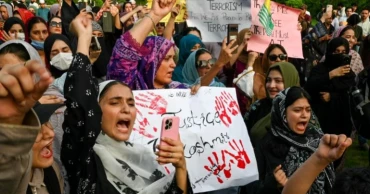
Over 30 dead in Pakistan-administered Kashmir polls unrest, protest group claims
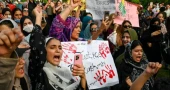
Rights groups have voiced concern over escalating violence during regional elections in Pakistan-administered Kashmir after a banned activist organisation boycotted the polls and staged protests, with the group claiming more than 30 protesters were killed.
Leaders of the Joint Awami Action Committee (JAAC) said clashes between police and demonstrators earlier this week left over 30 people dead. In a video statement on Wednesday, JAAC member Sardar Umar Nazir alleged that 20 supporters were killed during a protest march on Monday, the day the first phase of voting was held. He also claimed at least 10 more protesters died the following day in Rawalakot, Mirpur and other areas, including during sit-ins.
Dozens arrested ahead of protest by banned group in Pakistan-administered Kashmir
“Our demand was peaceful... we tried to keep it non-violent and bullets were fired,” Nazir said.
Pakistani authorities said one security official was killed and five others injured in Monday’s violence.
Amnesty International described reports of lethal force against protesters as “disturbing” and called for an independent investigation, while conflict monitor ACLED warned the violence could undermine the credibility of the electoral process.
The first round of voting covered Mirpur, Kotli and Bhimber districts, with two more phases scheduled for August 2 and August 10. Pakistan’s ruling PML-N secured nine of the 13 seats contested in Monday’s vote.
JAAC was banned under anti-terrorism laws in June, triggering widespread unrest that disrupted banking, road transport and internet services. Pakistani authorities alleged India-backed armed elements joined the protests, an accusation India has previously denied.
Amnesty also condemned the JAAC ban as unlawful, urging authorities to restore communications, allow media and independent observers into the region, and refrain from using deadly force against protesters.
JAAC has demanded the abolition of 12 assembly seats reserved for Kashmiri refugees, arguing they allow major Pakistani political parties to influence the regional parliament. Political analyst Hasan Askari said any future regional government dependent on those seats would struggle to resolve the dispute. Several parties also alleged ballot stuffing and vote rigging after Monday’s polling.
With inputs from Al Jazeera
4 days ago
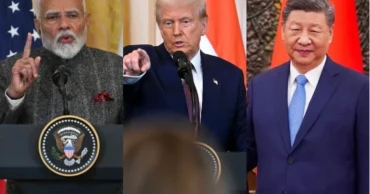
US Senate advances Russia sanctions bill with 100 % tariff threat against India, China
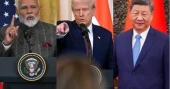
The US Senate has advanced a bipartisan bill that would impose tougher sanctions on Russia and allow President Donald Trump to levy tariffs of up to 100 percent on goods from major buyers of Russian oil and gas, including China and India.
The measure, which also includes new penalties against Iran, passed a key Senate vote 86-12, comfortably crossing the 60-vote threshold needed to move forward. Nearly all Republicans and a majority of Democrats backed the bill.
The Senate action came hours after lawmakers paid tribute to the late Senator Lindsey Graham, who had spent more than a year building bipartisan support for the legislation. It also followed a meeting between senators and Ukrainian President Volodymyr Zelensky, who was in Washington to honor Graham, a strong critic of Russian aggression.
What the bill says
The legislation would impose sanctions on Russian officials, oligarchs, financial institutions and vessels in the so-called “shadow fleet” that Moscow uses to bypass restrictions on its oil exports.
It would also give Trump the authority to impose tariffs of up to 100 percent on goods from the world's five biggest buyers of Russian oil or natural gas, including China and India.
However, the bill includes exemptions for countries that get less than 15 percent of their natural gas from Russia and are taking steps to reduce their dependence on Russian energy.
At Trump's request, the revised legislation also extends sanctions targeting Iran's energy and weapons sectors.
The bill is named after Graham, who played a key role in securing support for the measure and reached an agreement with the White House on a revised version shortly before his death earlier this month.
Supporters say the legislation would cut Russia's energy revenues and limit President Vladimir Putin's ability to finance the war in Ukraine, which has entered its fifth year.
“There is no greater way to honor Senator Graham's legacy than to move forward with this bipartisan agreement,” six Republican and Democratic senators said in a joint statement.
While there is broad support in Congress for imposing tougher penalties on Russia, some Democrats have expressed concerns that the tariff provisions could give Trump too much power.
They also warned that the tariffs could increase import costs for US consumers and potentially hurt European allies.
The legislation must still clear the House of Representatives before it can be sent to Trump for his signature. The House has already left Washington for its summer recess and is unlikely to take up the bill before September.
Source: NDTV
4 days ago
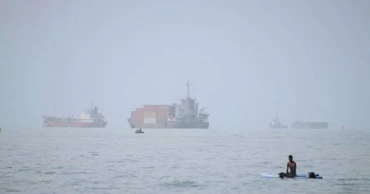
Jordan says air defenses intercept five missiles launched from Iran
Jordanian air defenses intercepted five missiles launched from Iran early Thursday, the state-run Petra news agency reported, hours after the US military said it had carried out a major new wave of strikes against Iran.
No casualties were reported in Jordan following the missile interceptions, Petra quoted a spokesman for the Jordanian armed forces as saying.
The US Central Command said in a social media post that American forces had spent more than two hours striking “dozens” of targets linked to Iran’s Islamic Revolutionary Guard Corps.
The targets included military command centers, missile and drone facilities, and coastal surveillance and defense sites, according to the command.
The strikes came hours after US President Donald Trump vowed to hit Iran “very hard” after Iranian forces targeted a US military base in Jordan.
Iranian state media reported that two people were injured in attacks on Qeshm Island in the Strait of Hormuz. Explosions were also reported in Khuzestan province in southwestern Iran.
The latest escalation followed US and Saudi strikes on Iran-backed militias in neighboring Iraq on Wednesday. At least 20 fighters and six Iranian advisers were reportedly killed in those attacks.
In another development, drone strikes set fire to two natural gas vessels at Egypt’s port of Damietta, British maritime security company Ambrey said.
It was not immediately known who carried out the attacks on a US-owned floating storage facility and a Greek-owned tanker. No injuries were reported.
The renewed violence on several fronts after days of relative calm raised fears that the conflict could again escalate into a full-scale war.
The developments also highlighted the challenges of ending a five-month conflict that has disrupted the global economy and become increasingly unpopular among Americans.
The continued fighting could also increase concerns that the US is using up its already limited stocks of advanced weapons needed to protect its military bases and allies.
4 days ago
US launches strikes on Iranian targets after foiling missile attack on American forces
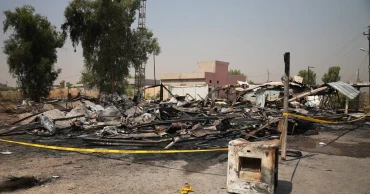
The US military said early Thursday that it had completed what it called “a heavy wave of strikes against Iran” in response to an earlier Iranian missile attack on a US base in Jordan.
US Central Command said in a social media post that over a two-hour period, US forces struck “dozens” of targets linked to Iran’s Revolutionary Guard Corps, including military command centers, missile and drone facilities, and coastal surveillance and defence sites.
The US military launched the retaliatory strikes on Iranian targets Wednesday following Tehran’s attack on American forces in Jordan. The strikes came after the US, together with Saudi Arabia, attacked Iran-backed militias in neighbouring Iraq, killing at least 20 fighters and six Iranian advisers.
The latest strikes came hours after US President Donald Trump vowed to hit Iran “very hard” after Tehran targeted a base in Jordan that hosts US troops.
Iranian state media reported that two people were injured in attacks on Qeshm Island in the Strait of Hormuz. Explosions were also reported in Khuzestan province in southwestern Iran.
Meanwhile, drone strikes set fire to two natural gas vessels at Egypt’s Damietta port, according to British maritime security firm Ambrey.
It was not immediately clear who was behind the attacks on a US-owned floating storage facility and a Greek-owned tanker. No injuries were reported.
4 days ago
US-Iran conflict enters new phase as Saudi Arabia joins strikes, diplomacy stalls
The stop-start conflict between the United States and Iran appears to have entered a new phase, with Saudi Arabia publicly joining military action against Tehran-backed proxies as diplomatic efforts to end the war once again falter amid deepening mistrust between the two longtime adversaries.
Despite several days of relative calm, both sides carried out military strikes over the past 24 hours, raising fears of a return to full-scale fighting and further regional escalation. At the same time, it remains unclear whether either Washington or Tehran has a clear strategy for ending the conflict.
While President Donald Trump and his allies have recently claimed that Iran is eager to return to negotiations, Iran's Deputy Foreign Minister said Tuesday that Tehran had made no request to resume diplomatic talks for more than two weeks.
After an attempted attack on a US base in Jordan was thwarted, Trump returned to threatening Iran on Wednesday while keeping open the possibility of further negotiations.
"They've already apologized, but, you know, we got to smack them a little bit," Trump told reporters in the Oval Office. "It's our turn, and we'll see if we get there with an agreement at some point. But we're going to hit them very hard."
Hours later, the US military said it had launched "a powerful response to yesterday's attempted Iranian attacks on U.S. forces based in the Middle East" in a social media post. It did not immediately provide details about the targets.
The latest developments reflect a pattern seen repeatedly over the past several months, with Trump alternating between saying a deal to end the war and address Iran's nuclear programme was close and issuing threats aimed at forcing Tehran to accept US demands.
The stakes are particularly high for Trump and his Republican Party as the unpopular conflict has disrupted the global economy only months before the crucial November midterm elections. Renewed fighting has also resulted in more US military casualties and raised concerns that Washington is depleting stocks of key air defence systems needed to protect its troops and allies.
Saudi Arabia enters conflict as Israel steps back
Iran said it fired ballistic missiles at Jordan's Muwaffaq Salti Air Base, a key US military facility in the region, over the past day. Trump said the missiles were intercepted.
Saudi Arabia, meanwhile, joined the United States in striking several logistics and weapons facilities used by Iranian-backed militias in Iraq.
The first publicly announced joint US-Saudi strikes came after drone attacks targeted Saudi Arabia, further complicating a conflict that now involves nearly every country in the region. A US official, speaking on condition of anonymity to discuss sensitive military operations, said the two attacks were not linked.
Saudi Defense Minister Khalid bin Salman was at the White House on Wednesday, where he separately met Trump and Vice President JD Vance, according to a person familiar with the matter who was not authorised to speak publicly.
Drone attacks also caused fires on two natural gas vessels at a port in Egypt, a close US ally and regional mediator. Egypt has so far been among the few Middle Eastern countries spared direct military action during the war.
If the attack is confirmed to have been carried out by Iran or its allies, it would represent a significant expansion of the conflict.
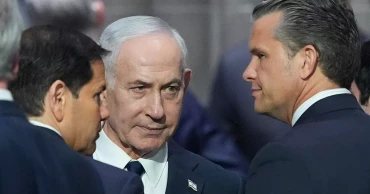
The US-Saudi strikes came hours after Israeli Prime Minister Benjamin Netanyahu left his first meeting with Trump since the two countries launched their war against Iran on Feb. 28.
An Israeli official briefed on Tuesday's White House meeting said Netanyahu assured Trump that the United States, rather than Israel, was leading the policy toward Iran. The comment appeared aimed at countering suggestions that Netanyahu was increasingly out of step with Washington over the way forward.
However, Israeli officials have privately expressed concern that Trump is seeking to keep the conflict at a low level as the midterm elections approach, according to a person familiar with internal discussions within Netanyahu's government. Both the person and the Israeli official spoke on condition of anonymity because they were not authorised to discuss the matter publicly.
The person said Israeli officials are also increasingly concerned about Trump's sensitivity to rising oil prices as the Strait of Hormuz remains effectively closed to global energy shipments. They are also worried about growing concerns within the US administration over the rapid use of critical missile interceptors.
The recent fighting with Iran has further reduced US stocks of Patriot and THAAD interceptors, which were already limited, potentially increasing risks to American troops if hostilities resume, according to an analysis released this week by the Center for Strategic and International Studies, a Washington-based think tank.
Gen Dan Caine, chairman of the Joint Chiefs of Staff, has also warned Trump that the condition of US munitions stocks could affect military operations against Iran, another US official said.
The official, who spoke on condition of anonymity to discuss sensitive conversations, said Caine delivered the message as part of his regular responsibility to provide Trump with military advice and options.
Failed diplomacy clouds prospects for US-Iran talks
The Trump administration currently appears to have no clear strategy for restarting negotiations with Iran over ending the conflict.
Although some mediators have been working to revive talks or establish conditions for their resumption, the administration is not actively pursuing negotiations at present, a senior US official said.
The official, who spoke on condition of anonymity to discuss internal deliberations, said recent developments in the region indicate that a return to direct diplomacy is not imminent.
Analysts say the uncertainty and lack of a clear strategy are rooted in deepening mistrust between Washington and Tehran, particularly after an interim ceasefire proposal agreed in mid-June collapsed in recent weeks.
Ali Vaez, Iran project director at the International Crisis Group, said senior Iranian officials had been nearly unanimous in approving the memorandum of understanding with the United States.
"But now none of them believe that Trump is a reliable negotiating partner," he said. "The problem, I think, is that Trump also has now the same impression about the Iranians."
The repeated cycle of negotiations, breakdowns and military strikes is not entirely unexpected.
US-Iran relations since the 1979 Islamic Revolution have been marked by failed negotiations, false starts and military actions that stopped short of full-scale war, although the two countries are now engaged in a much more serious conflict.
Despite its shortcomings, the 2015 nuclear agreement reached with Iran under the Obama administration was the first major agreement between the two countries since the Algiers Accords in 1981, which ended the US hostage crisis and established a framework for resolving other disputes, including the unfreezing of Iranian assets held by the United States since the Islamic Revolution.
However, both sides accused each other of violating the terms of the agreements from the outset.
Disputes over alleged violations of the Algiers Accords contributed to a period of intense hostility, including US support for Saddam Hussein's Iraq during the 1980-88 Iran-Iraq war.
Relations improved somewhat after the 2015 nuclear deal, but Trump's decision to withdraw from the agreement in 2018 during his first term, his "maximum pressure" sanctions campaign against Tehran and the US killing of Iran's top military commander Qassem Soleimani in early 2020 pushed relations to new lows.
4 days ago