world
ICC member states to vote on prosecutor Karim Khan's future amid misconduct allegations
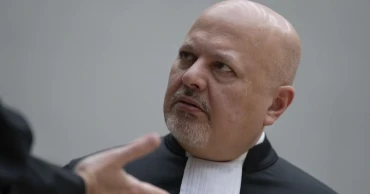
Member states of the International Criminal Court (ICC) are set to decide Friday whether to permanently remove Chief Prosecutor Karim Khan in an unprecedented vote that comes amid sexual misconduct allegations and mounting political pressure on the global tribunal.
Diplomats representing the court's 125 member states gathered at the United Nations headquarters in New York for a special session of the Assembly of States Parties (ASP), the ICC's governing body, to determine Khan's future.
The British lawyer has denied allegations of sexual misconduct involving a female aide, despite findings by the court's oversight body that he committed serious misconduct and breached his official duties.
Khan was formally suspended from his duties in June after the ICC oversight committee concluded that he had engaged in an inappropriate relationship with a staff member and later attempted to discourage her from pursuing the allegations. He has rejected those findings.
A majority vote of member states is required to remove him permanently from office.
Khan is not attending the closed-door meeting because US sanctions imposed by the Trump administration over the ICC's investigation into Israeli officials prevent him from entering the United States.
His legal team has criticized the decision to proceed in his absence, arguing that he should have the opportunity to defend himself before such a significant disciplinary decision is made.
Khan has also been suspended from practising law in the United Kingdom while the British Bar Standards Board conducts its own investigation into the allegations.
The Netherlands, which hosts the ICC in The Hague, has publicly announced that it will vote in favour of Khan's removal. No other member state has disclosed its position ahead of the secret ballot.
The disciplinary proceedings have unfolded alongside the ICC's investigation into the war in Gaza, a case that has drawn sharp criticism from several governments.
In 2024, the court issued arrest warrants for Israeli Prime Minister Benjamin Netanyahu and former Defence Minister Yoav Gallant over alleged crimes against humanity related to the conflict in Gaza, prompting sanctions by the United States against Khan and other ICC officials.
The controversy has exposed divisions within the court. Earlier this year, a group of ICC staff expressed concern over Khan's possible return, saying his leadership had been significantly weakened. Meanwhile, several Palestinian organisations accused the court's oversight body of political interference in the disciplinary process.
If Khan is removed, ICC member states will begin the process of selecting a new chief prosecutor. Until then, the prosecutor's office will continue to be led by Khan's two deputies.
11 days ago

Member of Vance's Secret Service detail under investigation over alleged leak
The US Secret Service has launched an internal investigation into a member of Vice President JD Vance's security detail over allegations related to a suspected leak of sensitive information, the agency said Thursday.
Secret Service spokesperson Anthony Guglielmi said the employee is under internal review and could also face a criminal investigation over allegations involving compromised "operational and information security."
"While we will not comment on the specifics of this matter, one principle is unequivocal: any conduct that potentially threatens the safety of a protectee will not be tolerated," Guglielmi said in a statement.
The agency did not identify the individual under investigation.
According to the Secret Service, the inquiry stems from a report published last week by MS NOW, which said some agents assigned to Vance's protective detail had privately expressed frustration over last-minute travel requests involving the vice president and his family.
Vance's office declined to comment and referred inquiries to the Secret Service.
Vice President Vance and his wife, Usha, reside at the official vice presidential residence at the US Naval Observatory in Washington with their children.
The couple welcomed their fourth child, Alec Neel Vance, on Sunday. According to the vice president's office, he is the first child born to a sitting US vice president in more than 150 years. The couple's other children are Ewan, 9, Vivek, 6, and Mirabel, 4.
11 days ago

Considering "bigger" strikes in Iran: Trump
U.S. President Donald Trump said he is seriously considering restarting major combat operations in Iran, including strikes that would be bigger than the "Operation Epic Fury" launched on Feb. 28, Axios reported on Thursday.
"I am considering a massive attack. Bigger than ever before. I am close to making a decision. We are all set for it," Trump said in the interview, adding that Iran had not "received enough pain yet."
Israel "would join in two minutes if I ask them to," Trump said, admitting there would be "consequences" for Israel if it joined the strikes.
Trump didn't give a deadline for his decision, according to the report.
As of Wednesday, U.S. forces had launched strikes against Iranian military targets for 12 consecutive days following the collapse of a June memorandum of understanding intended to reopen the Strait of Hormuz.
International benchmark Brent crude rose to the highest level in two months, reaching 100 U.S. dollars per barrel on Thursday morning after two Saudi oil tankers were hit in the Red Sea.
As many as 68 percent of U.S. adults said the war with Iran was "not worth fighting," while only 28 percent said it was, according to a poll released by The Washington Post-Ipsos last week.
11 days ago

US announces over $200 million humanitarian assistance to ICRC, IFRC
The United States on Thursday announced more than $200 million in disaster and humanitarian assistance to the International Committee of the Red Cross (ICRC) and the International Federation of Red Cross and Red Crescent Societies (IFRC).
This assistance, including a nearly $133 million contribution to ICRC’s 2026 Global Appeal and $70 million to IFRC, furthers the Department’s approach of flexible humanitarian assistance awards with global coverage, enabling implementing organizations to address ongoing crises and respond to new disasters using funding they already have on hand, bypassing lengthy procurement timelines.
"Today’s contributions support organizations that respond quickly when disasters strike, provide unparalleled access to people in need in conflict settings, and leverage preexisting worldwide disaster and humanitarian response infrastructure," said the Spokesperson at the US Department of State.
Rapid, Flexible, and Efficient:
Through its extensive network of National Red Cross and Red Crescent Societies, comprising 18 million trained volunteers, IFRC delivers rapid, scalable humanitarian assistance in response to sudden onset disasters and complex emergencies.
When disasters strike, these National Societies are often first on the ground, providing immediate life-saving assistance.
This U.S. funding will help IFRC surge support to National Societies as needed, helping to meet immediate needs.
Worldwide Access:
This contribution to ICRC will support its work to deliver life-saving assistance to people living through armed conflict.
ICRC’s unique mandate and neutral and impartial positioning enable it to achieve unparalleled access to conflict-affected populations across frontlines and in hard-to-reach areas, providing life-saving assistance to people that may otherwise be inaccessible to other humanitarian implementers.
Providing Efficient Assistance Through Existing Response Infrastructure:
By providing assistance through such well-known and well-established organizations, the Department is leveraging existing response infrastructure to provide assistance quickly and efficiently.
The rapid, flexible, and global focus of this assistance complements similarly structured awards to Catholic Relief Services, UNICEF, and the World Food Program, in addition to the Department’s historic memorandum of understanding and $3.8 billion commitment to the UN Office for the Coordination of Humanitarian Affairs.
By prepositioning assistance with trusted and proven implementing organizations, the Department is enabling faster, more efficient humanitarian and disaster response while reducing bureaucratic burdens on Department staff.
"The United States remains the largest humanitarian donor in the world, and we continue to call on other governments and the private sector to join our push for a faster, more accountable, efficient, impact-driven, locally driven, and hyper-prioritized model of global humanitarian assistance," said the US government in a media note.
11 days ago

US House again backs resolution to limit Iran military action despite Republican opposition
The US House of Representatives has narrowly approved a resolution calling for congressional authorization before further American military action against Iran, marking the second time lawmakers have backed such a measure amid the escalating conflict.
The resolution passed Thursday by a 214-208 vote, with a small group of Republicans joining Democrats. The Senate was expected to consider a similar proposal later in the day.
Although the measure is largely symbolic and unlikely to become law, supporters say it reflects growing concern in Congress over the Trump administration's handling of the war and the absence of a clearly defined strategy.
Democratic Representative Pramila Jayapal, who led the resolution in the House, said the conflict has continued without "a clear mission, strategy or end goal."
Most Republicans opposed the measure, arguing the president should retain broad authority to direct military operations. House Foreign Affairs Committee Chairman Brian Mast defended the campaign, saying it was aimed at holding Iran accountable for attacks that had claimed American lives and cautioned against diminishing the sacrifices of US service members killed during the conflict.
Representative Gregory Meeks, the top Democrat on the House Foreign Affairs Committee, countered that military action should not proceed without congressional approval, arguing lawmakers deserve a full explanation of the administration's objectives.
President Donald Trump has maintained that the continued airstrikes do not represent a return to a prolonged war. Following the first House vote on the issue in June, he dismissed the resolution as "meaningless" and criticized Republicans who supported it.
The debate comes as US airstrikes continue and diplomatic efforts have shown little visible progress. Tensions over the Strait of Hormuz, a vital route for global oil shipments, remain unresolved, contributing to higher fuel prices and concerns about broader economic consequences.
Defense Secretary Pete Hegseth recently told lawmakers that the United States has spent an estimated $37.5 billion on the conflict so far.
The issue has also exposed divisions within the Republican Party. While many GOP lawmakers have publicly backed Trump's approach, some have privately questioned the duration and objectives of the campaign. Trump has previously criticized Republicans who voted in favor of limiting his war powers, calling them disloyal.
Recent opinion polls suggest the conflict has limited public support. Surveys indicate that a majority of Americans disapprove of Trump's handling of the war, with many unconvinced that military action and ongoing negotiations will prevent Iran from developing nuclear weapons. Even among Republican voters, a significant minority remains skeptical about the war's objectives and outcome.
11 days ago
Trump says Saudi nuclear pact requires normalization with Israel
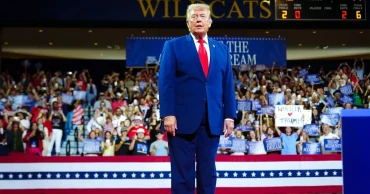
US President Donald Trump said Thursday that any agreement with Saudi Arabia on a civilian nuclear programme would be contingent on the kingdom establishing diplomatic relations with Israel under the Abraham Accords.
In a post on social media, Trump said the proposed deal would not permit Saudi Arabia to enrich uranium. The issue has drawn scrutiny from nonproliferation experts, who argue the agreement lacks sufficient safeguards to ensure uranium cannot be enriched to weapons-grade levels.
The remarks came as political debate intensified in Washington over the administration’s handling of the conflict with Iran.
The US House of Representatives narrowly approved a resolution on Thursday calling for congressional authorization before further US military action against Iran, marking the second time lawmakers have backed such a measure.
The resolution passed by a vote of 214-208 and now shifts attention to the Senate, which was expected to take up similar legislation later in the day.
Although the Democratic-led effort is largely symbolic and faces uncertain prospects, supporters say it sends a clear message that lawmakers want Congress to play a greater role in decisions involving military action.
Representative Pramila Jayapal, who led the measure on the House floor, criticized the administration’s approach, saying the conflict has continued without a clearly defined mission, strategy or end objective.
The resolution was approved with support from Democrats and a small number of Republican lawmakers who joined them. However, most Republicans opposed the measure, backing Trump’s handling of the conflict and rejecting efforts to limit the president’s authority over military operations.
11 days ago
More than 10,000 evacuated as wildfire spreads near popular tourist town in France
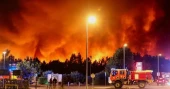
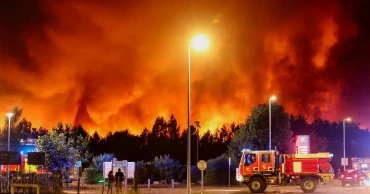
More than 10,000 people were evacuated overnight after a fast-moving wildfire spread near the popular Atlantic coastal town of Lège-Cap-Ferret in southwestern France, authorities said Thursday.
The fire has burned more than 2,000 hectares (4,900 acres) of land, although no injuries have been reported so far.
The Gironde prefecture said around 500 firefighters are battling the blaze, but warned that weather conditions remain unfavourable, making it difficult to bring the fire under control.
As a safety measure, authorities evacuated more than 10,000 people, including many tourists staying at eight holiday camps and campgrounds in the area southwest of Bordeaux.
More than 1,000 residents living near forested areas were also asked to leave their homes.
Authorities have opened emergency shelters in nine municipalities, where more than 2,500 evacuees have taken refuge.
France and several other southern European countries have experienced a series of major wildfires this summer, driven by prolonged heatwaves and dry weather.
Scientists say climate change is increasing the frequency and intensity of extreme heat and drought, creating conditions that make wildfires more likely and more destructive.
France has been hit by repeated heatwaves since before the start of summer, leaving forests and vegetation extremely dry and vulnerable to fire.
Interior Minister Laurent Nunez said more than 12,500 wildfires have broken out across the country since the beginning of the year, burning nearly 44,000 hectares of land.
11 days ago
Houthis claim attacks on two Saudi oil tankers as US continues strikes on Iran
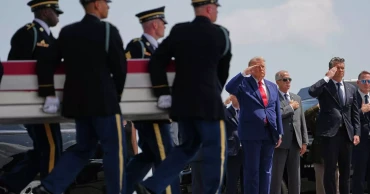
Yemen's Iran-backed Houthi rebels said early Thursday they attacked two Saudi oil tankers in the Red Sea, while the United States carried out a 12th consecutive night of airstrikes on Iran, further escalating tensions in the region.
The latest developments have raised fears of a wider conflict that could further disrupt global shipping and energy supplies, with no signs of progress in diplomatic efforts to ease the crisis.
The US Central Command (CENTCOM) said the overnight strikes were aimed at weakening Iran's ability to threaten commercial shipping and civilian vessels in regional waters as Washington seeks to restore safe navigation through the Strait of Hormuz.
Earlier on Wednesday, President Donald Trump warned that the US would target one Iranian bridge or power plant every time Iran attacked a ship in the Strait of Hormuz.
"From this point forward, any time the Islamic Republic of Iran shoots at a ship in the Strait of Hormuz... the United States will bomb and destroy one bridge or power plant," Trump wrote on social media.
US Secretary of State Marco Rubio, speaking at a regional summit in the Philippines, said Iran had expressed interest in negotiations but questioned its willingness to honour any agreement.
"The problem is making a deal with people who don't keep their commitments," Rubio said.
Houthis claim tanker attacksThe Houthi-run SABA news agency said the rebels targeted the Saudi-linked oil tankers Encelia and Layla in the Red Sea, claiming both vessels caught fire.
If confirmed, the attacks would be the Houthis' first reported strike on commercial ships since they announced a blockade of Saudi-linked shipping through the Bab el-Mandeb Strait earlier this week.
The group said the move was in retaliation for Saudi Arabia's blockade of Houthi-controlled areas in Yemen and a recent attack on Sanaa's international airport.
Bab el-Mandeb is one of the world's busiest maritime routes, linking the Red Sea with the Gulf of Aden. Around 12% of global trade, including roughly one-quarter of the world's container shipping, passes through the waterway.
A senior Houthi official said the blockade would continue until Saudi Arabia lifted its restrictions on Yemen.
Saudi Arabia's state news agency confirmed that the tanker Encelia was attacked and caught fire while sailing in the Red Sea, but said there were no casualties. It did not mention the Layla.
The UK Maritime Trade Operations (UKMTO) also reported that a tanker had been struck by an unidentified projectile southwest of Saudi Arabia's Al Shuqaiq area. No casualties were reported.
Rubio urged the Houthis to avoid further escalation, saying continued attacks would only worsen the situation.
Strait of Hormuz tensions continueThe US air campaign comes as tensions remain high over the Strait of Hormuz, one of the world's most important oil shipping routes.
The waterway, through which about one-fifth of globally traded oil and gas normally passes, has been severely disrupted by the conflict.
Iran says it has the right to regulate shipping through the strait and has targeted vessels using routes protected by US forces.
In response, Washington has tightened its blockade on Iranian ports and expanded military operations across Iran.
Trump also indicated this week that US forces could target an Iranian nuclear facility currently under construction.
Iranian Parliament Speaker Mohammad Bagher Qalibaf dismissed the US threats, saying conditions in the Strait of Hormuz would not return to how they were before the conflict.
Overnight strikes and regional concernsIranian state media reported that US missiles hit areas near Ahvaz, Ramshir and Andimeshk in western Iran overnight. Two people were reportedly killed in a strike near the Iraqi border town of Shalamcheh.
Iran has responded to US attacks by targeting energy facilities and desalination plants in neighbouring Gulf countries.
Kuwait's military said its air defence systems intercepted hostile drones, while Iranian Foreign Minister Seyed Abbas Araghchi warned that Tehran would respond forcefully to any further attacks.
"Any aggression against Iran, including our infrastructure, will receive a strong and decisive response," he wrote on X.
Diplomatic efforts remain stalledIranian Interior Minister Eskandar Momeni recently held talks in Pakistan, which has been trying to mediate between the parties, but there has been little indication of any diplomatic breakthrough.
Pakistan's Prime Minister Shehbaz Sharif strongly condemned the attacks on the Saudi oil tankers.
Meanwhile, Iran's Interior Ministry said diplomatic contacts were continuing despite the ongoing fighting.
An Arab diplomat, speaking anonymously, said Gulf countries were becoming increasingly pessimistic about the chances of reducing tensions and remained deeply concerned about the latest escalation in the region.
11 days ago

Closure of Delhi Metro stations amid protests reaches Supreme Court
The closure of several Metro stations in the Indian capital due to ongoing student protests reached the Supreme Court on Thursday, as lawyers complained of difficulties in accessing the court.
Several Metro stations in central Delhi have remained closed for the past few days as protests at Jantar Mantar, led by the social media platform Cockroach Janta Party (CJP), intensified.
At least 16 Metro stations remained shut on Thursday, including the Supreme Court Metro station.
The issue was raised before the apex court by Supreme Court Bar Association President Vikas Singh.
Referring to the closure of key Metro stations around the Supreme Court, Singh said many lawyers and court staff were facing difficulties and were unable to reach the court on time.
He urged Chief Justice of India Surya Kant to intervene. In response, the Chief Justice said he would step in if the issue was not resolved by lunchtime.
Singh suggested that people holding valid Supreme Court entry passes, along with Registry staff, should be allowed to exit at the Supreme Court Metro station after appropriate security screening.
"In the metro, there is one advantage that when they come out of the train, there is an exit point. There they can be screened. People having proximity cards, and Registry staff, can be permitted to come out, and the rest can be told to take the other train and go. So people will be able to use the train also," Singh submitted.
Responding to the concern, the Chief Justice said the Supreme Court administration had already taken up the matter with Metro authorities.
He also assured the Bar that if the issue remained unresolved, he would personally intervene.
"If by lunchtime something does not happen to open the Metro station, I will intervene. We have directed that no adverse orders should be passed today for non-appearance of lawyers etc," the Chief Justice said.
The Delhi Metro on Thursday morning announced that 16 Metro stations, including the Supreme Court station, would remain closed until further orders. #Source: NDTV
11 days ago
Indian legend Naseeruddin Shah questions Bollywood's silence on student protests
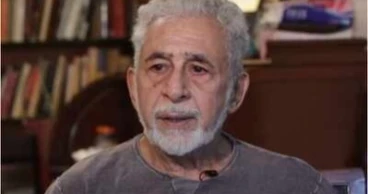
Veteran Indian actor Naseeruddin Shah has questioned why many of Bollywood's biggest names have remained silent on the student protests over education reforms, saying some people speak up only after it no longer costs them anything.
Speaking to The Wire, a media outlet based on Delhi, Shah was asked why many leading actors had not commented publicly on the demonstrations, which have spread across India over the past week.
"They will do it when their conscience tells them to," Shah said. "There is a saying: a dog with a bone in its mouth can't bark. As soon as the bone drops out of their mouth, or it breaks their teeth, then they will bark."
When asked whether celebrities were staying silent because they benefited from doing so, Shah replied, "Absolutely. And how long can they do that? Time will tell."
Shah had voiced support for the protesters a day earlier in a video message, condemning what he described as the treatment of students by authorities.
"I want to tell all these children not to lose hope," he said. "Many people sympathise with you. Many people are with you. Keep fighting."
He ended the message with the words, "Sab yaad rakha jayega" ("Everything shall be remembered"), directed at the government.
Several figures from India's film industry, including Ratna Pathak Shah, Shabana Azmi, Dia Mirza, Swara Bhasker, Prakash Raj, Diljit Dosanjh and Vir Das, have also expressed support for the protests.
The demonstrations at Jantar Mantar in New Delhi gathered momentum after educator and environmentalist Sonam Wangchuk began an indefinite hunger strike.
Protesters are seeking talks with the central government and have called for the resignation of Union Education Minister Dharmendra Pradhan over the alleged NEET-UG paper leak and other alleged irregularities in the examination process.
11 days ago