world
Rubio warns ASEAN that Iran's Hormuz demands could threaten global shipping
US Secretary of State Marco Rubio on Wednesday warned that Iran's demand to control and collect tolls from ships passing through the Strait of Hormuz could set a dangerous global precedent and threaten freedom of navigation.
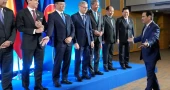
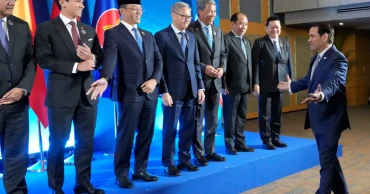
Speaking at the opening of the annual Association of Southeast Asian Nations (ASEAN) foreign ministers' meeting in Manila, Rubio said allowing any country to control an international waterway and charge ships for passage would pose risks not only in the Middle East but also in the Indo-Pacific region.
"If a country is allowed to control an international waterway, charge tolls and attack ships that refuse to pay, it would create a dangerous precedent that could be repeated in other parts of the world, including this region," Rubio said.
His remarks came as ASEAN members voiced concern over the renewed conflict in the Middle East, which has also affected economies in Southeast Asia. Despite the US focus on the Middle East, Rubio assured ASEAN leaders that Washington remained fully committed to the regional bloc.
On the sidelines of the meeting, Rubio also joined his counterparts from the Quad grouping — the United States, Australia, India and Japan — to discuss cooperation on technology, humanitarian assistance, disaster response, maritime security and transnational security.
In a joint statement, the four countries reaffirmed their commitment to strengthening maritime security and maintaining peace and stability in the Indo-Pacific, amid growing concerns over China's expanding influence in the region.
"The Quad remains a priority, and we will meet again later this year," Rubio wrote in a post on X.
The Trump administration has repeatedly criticised China's increasingly assertive actions in the South China Sea, particularly those affecting smaller claimant countries such as the Philippines, a long-standing US treaty ally.
The South China Sea disputes, involving China, Taiwan, Vietnam, Malaysia, Brunei and the Philippines, are among the key issues being discussed during the three-day ASEAN meetings in Manila.
Rubio also held talks with Indian External Affairs Minister Subrahmanyam Jaishankar, where they discussed regional security, the conflict involving Iran and efforts to finalise an interim trade agreement aimed at reducing tariffs imposed by President Donald Trump on Indian goods.
According to US State Department spokesperson Tommy Pigott, both sides agreed on the importance of completing the interim trade deal, which is nearing completion.
Rubio was also scheduled to meet Chinese Foreign Minister Wang Yi on the sidelines of the ASEAN meetings.
12 days ago
Trump approves nuclear deal that could allow Saudi Arabia to enrich uranium
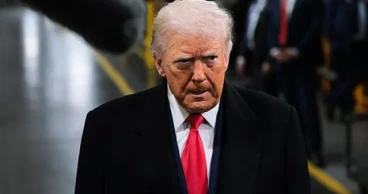
US President Donald Trump has approved a nuclear cooperation agreement with Saudi Arabia that could allow the kingdom to enrich uranium for its civilian nuclear programme, according to two people familiar with the decision.
The sources, who were not authorised to discuss the matter publicly because the decision has not yet been formally announced, said the agreement could be unveiled as early as Wednesday.
The proposed deal is expected to remain in force for 30 years and would involve US companies in developing Saudi Arabia's civilian nuclear programme. It could also pave the way for the construction of a uranium enrichment facility in the kingdom following a joint US-Saudi feasibility study.
However, the agreement is expected to face scrutiny in Congress, where some lawmakers are concerned that allowing Saudi Arabia to enrich its own uranium could fuel nuclear proliferation and trigger a new regional arms race.
Saudi Arabia is a member of the Vienna-based International Atomic Energy Agency (IAEA), which promotes the peaceful use of nuclear energy while monitoring member states to ensure they are not pursuing secret nuclear weapons programmes.
According to one of the sources, the agreement is not expected to include the IAEA's Additional Protocol, which provides for more extensive inspections, monitoring and verification measures.
The expected announcement comes as the United States and Israel continue military operations against Iran, aimed in part at preventing Tehran from developing a nuclear weapon. Iran has consistently maintained that its uranium enrichment programme is for peaceful purposes.
The White House and Saudi officials in Riyadh did not immediately respond to requests for comment. The Wall Street Journal first reported the decision.
Both Trump and former President Joe Biden had previously sought to negotiate a civilian nuclear agreement with Saudi Arabia that would involve sharing American nuclear technology.
However, non-proliferation experts have warned that allowing Saudi Arabia to operate uranium enrichment facilities could eventually enable the kingdom to pursue a nuclear weapons programme. Saudi Arabia's de facto ruler, Crown Prince Mohammed bin Salman, has previously suggested the kingdom would seek nuclear weapons if Iran were to acquire one.
US Energy Secretary Chris Wright visited Saudi Arabia last year, shortly before Trump's trip to the kingdom, and discussed expanding Saudi Arabia's commercial nuclear power industry with Saudi officials. The US Department of Energy did not immediately respond to requests for comment on Tuesday.
Saudi Arabia has also strengthened its security ties with nuclear-armed Pakistan. The two countries signed a mutual defence pact after Israel launched an attack on Qatar targeting Hamas officials. Pakistan's defence minister later said his country's nuclear capability "will be made available" to Saudi Arabia if necessary, a statement widely viewed as a warning to Israel, which is widely believed to be the Middle East's only nuclear-armed state.
Although uranium enrichment alone does not automatically lead to the development of nuclear weapons, experts say it provides a critical capability that could eventually support a weapons programme if combined with other technologies. This concern has long been at the centre of Western objections to Iran's nuclear activities.
The United Arab Emirates, Saudi Arabia's neighbour, signed a so-called "123 Agreement" with the United States to build the Barakah nuclear power plant with South Korean assistance. Unlike Saudi Arabia's proposed arrangement, the UAE agreed not to pursue uranium enrichment, a model that non-proliferation experts have described as the international "gold standard" for civilian nuclear cooperation.
12 days ago
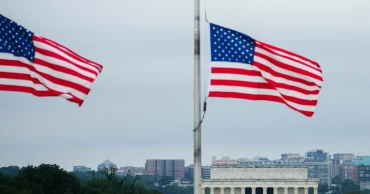
US identifies third service member believed killed in Iranian attack on Jordan base
The US military has identified a third service member believed to have been killed in last week's Iranian attack on a military base in Jordan as Sgt. Angel S. Rampersad, 28, of New York.
The confirmation raises the number of US service members killed since the war began to 18.
Earlier, the Pentagon identified 1st Lt. Tyler James Feehan, 25, of Ewa Beach, Hawaii, and Pvt. Isabella Gonzales, 19, of Carrollton, Texas, as the two other soldiers killed in Friday's missile and drone attack on the base in Jordan.
The soldiers died in Iranian ballistic missile and drone strikes, marking the first US troop deaths from direct Iranian fire since the early days of the conflict. They had been deployed as part of a US mission against the Islamic State group, according to a US Central Command statement.
Following the attack, US Central Command said two service members had been killed and another was missing. A day later, it announced that unidentified human remains had been recovered and that efforts were underway to confirm their identity.
The Pentagon now believes those remains are Rampersad's. Her official status has been changed to "Duty Status–Whereabouts Unknown," and she is considered "believed to be deceased."
Rampersad served in the same unit as Gonzales — the 10th Army Air & Missile Defense Command based in Ansbach, Germany.
Separately, the military identified another US soldier killed in Iraq as Sgt. Michael Emmanuel Swinton, a 30-year-old father from North Carolina, who died during the controlled detonation of an Iranian drone, according to a military statement released Tuesday and his family.
Swinton will be awarded the Bronze Star, Purple Heart and Combat Action Badge and will be promoted posthumously to staff sergeant. The Army said it is investigating the circumstances surrounding his death on Sunday at an air base in Irbil.
He is survived by his wife and two children — a 6-year-old son and a 4-year-old daughter.
"I will never recover from this," his wife, Mia Gonzalez-Swinton, wrote on Facebook on Monday. "We had so many plans for when you got back. I'm sick to my stomach." She said she was informed of his death on Sunday.
Swinton's mother, Christel Swinton Andujar, told The Associated Press that his wife and children were the centre of his life.
"His legacy will live on through the countless lives he touched, the laughter he shared, the strength he gave others, and the unconditional love he poured into his family," she said. "He will forever be missed, forever honored, and forever our hero."
Swinton enlisted in the US Army in 2017 and was assigned to the 55th Air Defense Artillery Regiment, 108th Air Defense Artillery Brigade, based at Fort Bragg, North Carolina.
He lived in Spring Lake, a community near Fort Bragg popular with military families, according to public records. The Army listed his hometown as nearby Fayetteville.
"Sgt. Swinton was an experienced noncommissioned officer who took great pride in his work and the people around him," said Brig. Gen. John L. Dawber, commanding general of the Army Air and Missile Defense Command. "He answered the call to duty with courage, honor and selfless dedication."
The renewed fighting between the United States and Iran has now entered its 10th day, with both sides continuing to exchange strikes. Iran has also targeted US allies in the region, where thousands of American troops remain deployed.
Iranian authorities say US strikes over the past three weeks have killed at least 50 people and wounded more than 500 others.
Both sides have also targeted civilian infrastructure used by millions of people. The conflict has claimed the lives of ship workers, foreign workers and civilians in Gulf countries, Israel and Lebanon.
The US State Department has issued a fresh warning to American citizens, saying that "Iran and groups supportive of Iran may target other US interests overseas or at locations associated with the United States and Americans throughout the world."
President Donald Trump has defended the military campaign, saying it is necessary to prevent Iran from developing nuclear weapons. However, he is facing growing political pressure to end the conflict and avoid a prolonged Middle East war, a scenario he had pledged to avoid during his election campaign. The escalation has also driven global oil prices higher in recent weeks.
13 days ago
US completes 11th straight night of strikes on Iran as diplomacy falters
The US military carried out its 11th consecutive night of airstrikes on Iran early Wednesday, as fighting across the Middle East continued to overshadow diplomatic efforts in Pakistan to revive a collapsed interim ceasefire agreement.
The US Central Command (CENTCOM) said the latest strikes targeted aircraft hangars and drone storage facilities. The attacks followed President Donald Trump's indication that the US campaign against Iran would intensify.
Ahead of the latest strikes, Iranian Interior Minister Eskandar Momeni visited Pakistan, which has been acting as a key mediator in the conflict, in an effort to revive diplomatic talks. However, it remained unclear whether a new agreement could be reached to end the war, which has increasingly focused on control of the Strait of Hormuz, a crucial route for global energy supplies.
Speaking from the Oval Office on Tuesday, Trump expressed little optimism about negotiations, saying the US had "no interest in meeting." He also suggested that US forces could soon strike an area near one of Iran's main uranium enrichment sites.
With diplomatic efforts stalled and shipping through the Strait of Hormuz largely disrupted, both sides have increasingly targeted civilian infrastructure across the region that supports millions of people.
Despite repeated US airstrikes, Iran has maintained control over the Strait of Hormuz, through which about one-fifth of the world's crude oil and natural gas passed before the conflict began.
The US continued its attacks into Wednesday as Iranian air defence systems were activated near Tehran. Iran's state-run IRNA news agency reported explosions in Bushehr, East Azerbaijan, Hamadan, Hormozgan, Khuzestan, and Sistan and Baluchistan provinces.
The latest strikes came a day after Iran attacked a tanker in the Strait of Hormuz, forcing its crew to abandon the vessel. Iran also continued attacks on US allies in the region, launching strikes against Bahrain, Jordan and Kuwait.
The escalating conflict pushed global energy prices higher, with benchmark crude oil trading above $92 a barrel on Wednesday and the average price of regular gasoline in the United States reaching $4 per gallon.
As the US prepares for midterm elections later this year, opinion polls have shown growing public dissatisfaction with the war, driven by rising fuel prices and increasing American casualties in a conflict that had appeared to be easing only weeks ago.
A US official told The Associated Press that the number of wounded American troops in the Iran conflict has exceeded 500. The figure is higher than the Pentagon's official count of 482 injured personnel listed in its Defense Casualty Analysis System.
The official, who spoke on condition of anonymity because they were not authorised to discuss the matter publicly, said the reporting system has a significant delay in recording injuries due to its design rather than any deliberate effort to underreport casualties.
Houthis open new front in the Red Sea
Meanwhile, Iran-backed Houthi rebels in Yemen have expanded the conflict by announcing a naval blockade of Saudi Arabia in the Red Sea, threatening global oil supplies and international trade. With the Strait of Hormuz blocked, Saudi Arabia has relied on a pipeline to the Red Sea to export millions of barrels of oil.
The Houthi-run SABA news agency reported Tuesday that six ships in the Red Sea changed course after receiving warnings from the group. The Associated Press could not immediately verify the claim.
Three Houthi officials, speaking anonymously because they were not authorised to brief the media, said the group had warned international shipping companies on Monday against using the Bab el-Mandeb Strait, the southern gateway to the Red Sea.
Pakistan renews diplomatic efforts
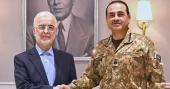
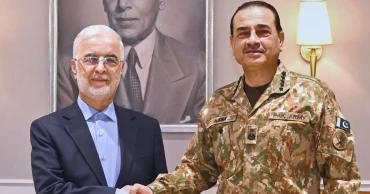
During his visit to Islamabad, Momeni met Pakistan's army chief, Field Marshal Asim Munir, according to two officials familiar with the closed-door talks. He later held talks with Prime Minister Shehbaz Sharif.
In a statement, Sharif expressed deep concern over the recent escalation between the US and Iran and urged all parties to show restraint and avoid further actions that could destabilise the region.
Pakistan's civilian and military leadership had helped broker last month's interim agreement between Washington and Tehran and has since been trying to bring both sides back to the negotiating table.
Trump, however, said Iranian officials "want to desperately meet," but added that the US had "no interest in meeting" until they were prepared for meaningful negotiations. He also said the US could soon target the area around Pickaxe Mountain, a heavily fortified underground site near one of Iran's key nuclear enrichment facilities.
Iranian military leaders warned that any attack on nuclear or other sensitive facilities would be viewed as a major escalation, according to Iranian state media.
Relations between the two sides remain deeply strained. Iran was hit by surprise attacks in June 2025 and again in February while nuclear negotiations with the US were underway. The interim ceasefire later collapsed after Iran resumed attacks on vessels in the Strait of Hormuz, which was supposed to reopen under the agreement.
Tanker attacked in Strait of Hormuz
The British military's United Kingdom Maritime Trade Operations (UKMTO) said a tanker was attacked early Tuesday in the Strait of Hormuz off the coast of Oman, forcing the crew to abandon the ship.
Iran's paramilitary Revolutionary Guard claimed responsibility for that attack as well as two other strikes on ships in the strategic waterway on Monday.
The shipping route close to Oman's coast has been the corridor recommended by the US military to help commercial vessels avoid Iranian-controlled waters.
CENTCOM said on X that, as of Tuesday, US forces had redirected eight commercial ships and disabled one vessel as part of efforts to enforce the blockade in the Strait of Hormuz.
13 days ago
Hegseth to face Senate questions over Iran war funding
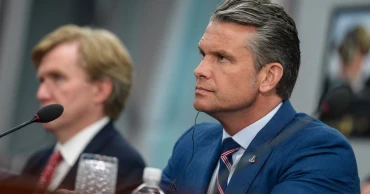
US Defense Secretary Pete Hegseth is set to face tough questions from senators on Tuesday over the war with Iran as Republicans seek to advance a $95 billion budget package to fund military operations, along with aid for farmers and voting law changes backed by the White House.
Hegseth, Gen. Dan Caine, chairman of the Joint Chiefs of Staff, and Agriculture Secretary Brooke Rollins are scheduled to testify before the Senate Appropriations Committee, days after the military announced that three more American service members had died in the conflict. The latest fatalities bring the US death toll to 17, while more than 100 troops have been injured since early July.
Sen. Patty Murray, the committee's top Democrat, is expected to warn that the conflict with Iran "could be another forever war."
According to her prepared remarks, Murray will say President Donald Trump has repeatedly promised that a deal is close and the war will end soon, yet is now seeking an additional $70 billion for the conflict.
Military funding makes up the largest share of the Republican budget proposal, which also includes $10 billion in assistance for farmers affected by Trump's tariffs and another $10 billion for voting law changes, including likely new voter identification requirements. None of the spending is offset by reductions elsewhere.
An AP-NORC poll found that most Americans continue to disapprove of Trump's handling of the Iran conflict. Meanwhile, fuel prices have risen as Iran seeks to control oil shipments through the Strait of Hormuz, US munitions are running low amid continued missile strikes, and Trump has moved away from his earlier campaign pledge to avoid prolonged military conflicts.
Despite growing concerns, Trump has shown no indication of changing course, while most Republicans have continued to support his strategy without using Congress' budgetary or war powers to limit the conflict.
House Speaker Mike Johnson said the administration was working to bring the conflict to an end but acknowledged there were still many questions about how that would happen.
Hegseth is also expected to face scrutiny over his leadership of the Pentagon.
Senate Democratic Leader Chuck Schumer accused the defense secretary of focusing on promoting testosterone screenings for troops instead of publicly disclosing the latest casualty figures from the Iran war.
Democratic lawmakers have also demanded the release of a Pentagon report into a deadly attack on an Iranian primary school at the start of the conflict and have threatened to withhold Hegseth's travel budget if the report is not made public.
The Senate is also expected to consider another war powers resolution this week after voting several times to try to limit the conflict. Although the House has passed a measure restricting Trump's authority to wage war, no such resolution has yet cleared both chambers.
Meanwhile, Republicans are moving the budget proposal through the reconciliation process, allowing it to pass with a simple majority despite Democratic opposition.
The House is expected to vote on the proposal this week. However, some Republicans, including Rep. Warren Davidson of Ohio, have criticised the plan, arguing that it would increase the federal deficit because the new spending is not matched by spending cuts. Several other conservative Republicans have voiced similar concerns, while GOP senators are waiting to see whether the House can advance the measure.
13 days ago
Nearly 150 migrants dead or missing off Mauritania, says UN
Nearly 150 migrants died or went missing in separate boat incidents off the coast of Mauritania last week while attempting to reach Europe, the UN refugee agency said Tuesday.
The agency said it was "extremely saddened" by the tragedies, reporting that 144 people were dead or missing following two incidents between July 14 and 18. A total of 387 migrants were rescued.
According to Mauritania's coast guard, 122 people went missing after a boat carrying 160 migrants from Gambia to Spain's Canary Islands ran out of fuel and drifted at sea for 25 days near the capital, Nouakchott.
In a separate incident, the coast guard said it rescued 179 people on Saturday from a boat that had departed from Senegal.
The discrepancy between the figures released by the UN agency and the Mauritanian authorities was not immediately explained.
Mauritania has become a key departure point for migrants from sub-Saharan Africa seeking to reach Europe, as limited economic opportunities continue to drive people to undertake the dangerous journey.
The UN refugee agency described the Atlantic route to the Canary Islands as one of the world's deadliest migration corridors due to its long distances and the frequent use of overcrowded and unseaworthy boats.
13 days ago
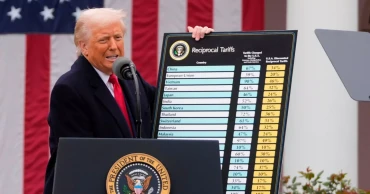
Trump imposes 50% tariffs on most Canadian goods
US President Donald Trump on Monday imposed a 50% tariff on most Canadian goods, accusing Canada of unfairly discriminating against American automobiles, alcohol and dairy products, in a move that could intensify trade tensions and fuel inflation.
The tariffs, introduced under Section 338 of the 1930 Trade Act, will take effect in 30 days, allowing time for negotiations. Energy products, potash, fish and critical minerals are exempt, but goods previously covered under the US-Mexico-Canada Agreement (USMCA) are included after the US declined to renew the 2020 pact.
Canadian Prime Minister Mark Carney said Ottawa remains committed to "free and fair trade" and is ready to negotiate, while Ontario Premier Doug Ford urged Canada to respond with matching tariffs if the measures proceed.
Business leaders on both sides called for negotiations, warning of economic damage. Analysts also cautioned that invoking the rarely used Depression-era law could increase uncertainty and potentially expand tariffs to other US trading partners.
The move poses political and economic risks for Trump ahead of November's midterm elections. Critics warned the tariffs would raise consumer prices and trigger retaliation, while the administration argued they would encourage manufacturing to return to the US.
Trump also ordered a review of possible additional tariffs over Canadian wildfire smoke affecting US air quality. He further accused Canada of maintaining discriminatory policies on US autos, alcohol and cheese, citing retaliatory measures taken after earlier US tariffs over fentanyl-related disputes.
13 days ago
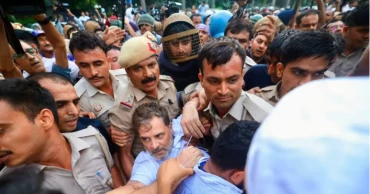
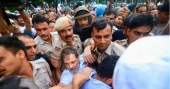
Rahul, Priyanka Gandhi detained during protest outside Modi's residence
Congress leader Rahul Gandhi and party MP Priyanka Gandhi Vadra were detained by Delhi Police on Tuesday during a protest outside Prime Minister Narendra Modi's residence in New Delhi, according to NDTV.
Samajwadi Party chief Akhilesh Yadav was also detained and removed from the protest site.
The Congress intensified its campaign against the Centre by marching towards the Prime Minister's residence at Lok Kalyan Marg, a day after the Cockroach Janta Party (CJP)-led demonstration over alleged NEET and other examination paper leaks. The march was led by Congress president Mallikarjun Kharge, Leader of the Opposition Rahul Gandhi and Priyanka Gandhi Vadra.
The leaders marched from Kharge's residence on Rajaji Marg, demanding accountability for the police action against protesters during Monday's CJP march to Parliament. Police later detained Rahul Gandhi, Priyanka Gandhi and several opposition leaders around 6:40 pm after Gandhi reportedly refused to leave the protest site.
Before his detention, Rahul Gandhi appealed to people to join the protest, describing the police action against students as "an attack on every Indian family." He accused the government of avoiding accountability and demanded justice for the students.
The protest took an unexpected turn when Union Minister Jitendra Singh visited the site and held talks with Rahul Gandhi.
According to Congress leaders, the discussions ended without any breakthrough. Singh later claimed Gandhi had initially agreed to call off the protest if the government allowed a parliamentary discussion on the NEET and other examination paper leaks, but later added a new demand seeking the resignation of Union Education Minister Dharmendra Pradhan. The Congress did not immediately respond publicly to Singh's claim before police dispersed the protest.
Rahul Gandhi later stepped up his criticism of the government, demanding the resignations of both Prime Minister Narendra Modi and Home Minister Amit Shah. He alleged that the Centre was unwilling to discuss the issue in Parliament or take responsibility for the police action against students.
The Congress protest came a day after the CJP's march to Parliament, during which protesters, mainly students and young people, were baton-charged and tear-gassed by police and the Rapid Action Force.
The CJP claimed several protesters were injured, while Delhi Police alleged that demonstrators turned violent, attacked security personnel with stones, vandalised police vehicles and injured 118 police personnel, including senior officers.
The ruling BJP accused the Congress of compromising the Prime Minister's security by attempting to march towards his residence. Congress leaders, however, maintained that the protest was peaceful and said they had no alternative venue to press their demands.
Samajwadi Party chief Akhilesh Yadav and NCP (Sharadchandra Pawar) leader Supriya Sule joined the protest in solidarity, while the Aam Aadmi Party stayed away, alleging that the Congress demonstration diverted attention from the CJP's agitation, highlighting differences within the opposition over its strategy to challenge the government. Source: NDTV Profit
13 days ago
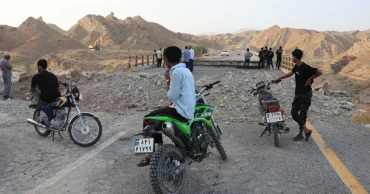
Iranian official visits Pakistan as Iran-US conflict enters 10th day
Iran's Interior Minister Eskandar Momeni held talks in Pakistan on Tuesday as Islamabad intensified efforts to revive the collapsed interim agreement between Iran and the United States, while both sides continued exchanging attacks for a 10th consecutive day.
Momeni met Pakistan's army chief, Field Marshal Asim Munir, and was expected to hold talks with Prime Minister Shehbaz Sharif. Pakistan has been urging Washington and Tehran to resume negotiations under the June memorandum of understanding, though no details of the closed-door meeting were released.
Iran attacks another tanker in Hormuz as US strikes continue for 10th night
Meanwhile, Iran attacked a tanker in the Strait of Hormuz, forcing its crew to abandon the vessel, while the US launched fresh airstrikes targeting Iranian military command centres, missile and drone sites, maritime capabilities and air defence systems.
Despite 10 days of US strikes, Tehran has maintained its grip on the strategic waterway, where shipping has nearly halted after the collapse of last month's interim deal. Iran's Revolutionary Guard claimed responsibility for attacks on three ships over two days.
The US warned Americans worldwide of possible Iranian-linked attacks, while President Donald Trump vowed retaliation for any American casualties. Iran also launched drones and missiles toward Jordan and Bahrain, though Jordan said all incoming threats were intercepted. Rising tensions have pushed Brent crude close to $90 a barrel and US gasoline prices to about $4 per gallon.
13 days ago

India’s youth-led Cockroach movement vows to continue protests after police crackdown
Supporters of India’s youth-driven Cockroach movement on Tuesday vowed to continue their protest in New Delhi, a day after police used tear gas and batons to disperse thousands of demonstrators attempting to march towards Parliament.
Hundreds of protesters remained at Jantar Mantar, the capital’s designated protest venue, amid a heavy police presence, saying they would continue their sit-in until Education Minister Dharmendra Pradhan resigns over alleged shortcomings in the country’s examination system.
“We will continue our protest,” said Abhijeet Dipke, founder of the Cockroach Janta Party (CJP).
The clash between protesters and police on Monday marked a major turning point in the CJP’s two-month campaign. What began as a satirical protest has grown into a nationwide youth movement demanding action on issues including exam leaks, unemployment and government accountability.
Videos showing police using batons against protesters and removing demonstrators by force spread widely on social media, triggering public anger. Some footage showed young protesters crying and appealing to police not to attack them, while other scenes showed demonstrators standing firm despite baton charges.
Delhi Police said around 180 people were injured during the confrontation, including 118 security personnel and 60 protesters.
Sona Bisht, a 20-year-old student who joined the protest, said the police action had only strengthened her determination.
“If the government thinks they can stop Gen Z by doing this, they are mistaken. We are here raising issues about education and our future. We will not leave until our demands are fulfilled,” she said.
The government made its first apparent attempt to engage with the protesters after nearly a month of silence, with a senior minister holding discussions with movement representatives on Monday. However, the talks failed to calm tensions as protest leaders said they wanted concrete action rather than assurances.
Their demands include the resignation of Pradhan, reforms in the examination system and compensation for families of students who died by suicide following alleged irregularities in recruitment and entrance examinations.
Dipke accused the authorities of going back on their commitment, alleging that police launched a baton charge after inviting protesters for talks.
Rights organisation Amnesty International criticised the police response, saying the action demonstrated how peaceful dissent was being restricted in India.
“The role of authorities is to protect and facilitate peaceful protests, not suppress them,” the organisation said, adding that the right to peaceful assembly is protected under international human rights law and the Indian Constitution.
The movement, which has attracted students, professionals and families, represents a significant challenge to Prime Minister Narendra Modi’s government during its third term. It has revived debate over the government’s handling of public dissent and the use of force against demonstrators.
The campaign gained further momentum after prominent activist Sonam Wangchuk, whose three-week hunger strike became a symbol of the protests, was taken to a hospital by police over the weekend.
Rabina Kashyap, a 26-year-old professional, said she joined the protest on Tuesday after watching footage of police using tear gas and batons against students.
“I have nothing to do with this protest. But this is India, my country, and these are my people. So I will stand with them,” she said.
13 days ago