world
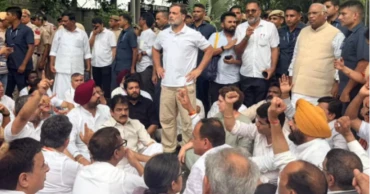
Rahul, Priyanka Gandhi lead protest near PM's residence over exam paper leaks
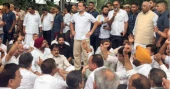
Congress leaders Rahul Gandhi, Priyanka Gandhi Vadra and party president Mallikarjun Kharge on Tuesday led a protest march towards Prime Minister Narendra Modi's residence, intensifying pressure on the Centre over alleged leaks of NEET and other examination papers.
The demonstration came a day after the Cockroach Janta Party (CJP)-led march to Parliament, which ended in clashes between protesters and security personnel.
Congress workers assembled outside Kharge's residence at 10, Rajaji Marg before marching towards the Prime Minister's official residence at 7, Lok Kalyan Marg, located just over a kilometre away.
Monday's protest, attended largely by students and youth, witnessed police and Rapid Action Force personnel using batons and tear gas to disperse the crowd. The CJP claimed that several demonstrators sustained injuries during the crackdown and reiterated its demand for Education Minister Dharmendra Pradhan's resignation over the alleged examination paper leaks.
The Delhi Police, however, alleged that protesters turned violent, accusing them of pelting stones, damaging police vehicles and engaging in widespread disorder. According to police, 118 personnel, including senior officers, were injured during the unrest.
Source: NDTV
13 days ago
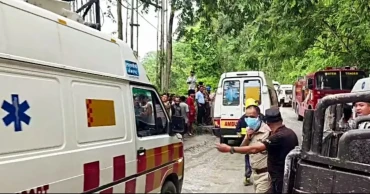
10 killed, over 18 feared trapped after landslide and gas leak in Sikkim tunnel
At least 10 workers were killed and more than 18 others are feared trapped after a landslide inside a tunnel under construction triggered a suspected methane gas leak in India's northeastern state of Sikkim, officials said.
So far, 12 workers have been rescued, while search and rescue operations are continuing with teams from the National Disaster Response Force (NDRF) and other emergency agencies.
The incident occurred around 3:09 pm on Monday at the Samardung tunnel in South Sikkim, where Patel Engineering is constructing a section of the Teesta Stage VI Hydroelectric Project.
According to the Chief Minister's Office, rescue efforts are ongoing, although the exact number of workers trapped inside the tunnel has yet to be confirmed.
Preliminary reports suggest that a landslide inside the tunnel blocked the passage, trapping several workers. Rescue operations have been slowed by a suspected methane gas leak, making it unsafe for emergency personnel to reach the affected area.
Alongside the NDRF, teams from the State Disaster Response Force (SDRF), Sikkim Police, and the Fire and Emergency Services have been deployed. Authorities have also restricted traffic around the site to support rescue work.
Namchi District Collector Anupa Tamling said rescue teams from Siliguri and Pakyong, along with the SDRF, were mobilised immediately after the incident was reported.
She said firefighters and police officers tried twice to enter the tunnel without protective equipment but had to retreat because of dangerous conditions.
The first NDRF team later evacuated those emergency workers, while a second NDRF team entered the tunnel to continue the rescue operation.
Officials said methane levels inside the tunnel initially remained so high that rescuers could not reach the area where the trapped workers are believed to be.
Tamling said the exact cause of the landslide is still unknown. According to workers who escaped, they heard a loud blast-like sound inside the tunnel before running to safety.
She cautioned that the number of people trapped remains provisional, adding that the administration's top priority is to rescue everyone safely.
Sources said several members of the first rescue team suffered dizziness and breathing problems after being exposed to methane gas. They were safely brought out and taken to a nearby hospital for treatment.
13 days ago
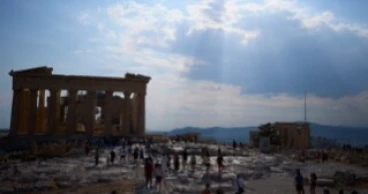
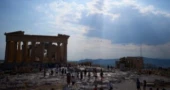
Two tourists injured in knife attack near Athens' Acropolis
Two tourists were injured in a knife attack near the Acropolis, Greece's most visited tourist site, on Tuesday morning, police said.
The attacker stabbed a Greek American man and woman near the entrance to the Acropolis Museum at the foot of the historic Acropolis hill.
According to police, the woman suffered minor injuries to her leg, while the man was more seriously injured after being stabbed in the arm.
Authorities quickly detained the suspect, and both victims were taken to hospital by ambulance for treatment.
Police have not yet identified the attacker but said he appeared to be experiencing psychological problems. The motive for the attack is still under investigation.
Violent attacks of this nature are uncommon in Greece. In April, an 89-year-old man was arrested after allegedly opening fire with a shotgun at a social security office and a courthouse in central Athens, injuring at least four people in an incident reportedly linked to grievances over social security.
The Acropolis, home to the nearly 2,500-year-old Parthenon and several other ancient monuments, is one of Greece's most famous landmarks. Around 4.6 million people visited the site last year.
13 days ago
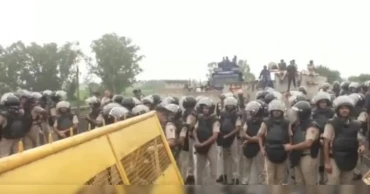
Farmers’ march to Delhi halted at Haryana border over proposed India-US trade deal
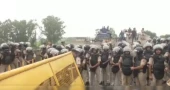
Hundreds of farmers from Punjab heading towards New Delhi to join a Kisan Mahapanchayat against the proposed India-US trade agreement were stopped by Haryana Police at the Shambhu border on Tuesday.
The Shambhu border, a key entry point between Punjab and Haryana, witnessed scenes similar to the February 2024 “Delhi Chalo-2” farmers’ protest, with authorities setting up barricades using concrete blocks, iron spikes and multiple layers of security barriers to prevent the farmers from moving towards the Indian capital.
After being denied entry, the protesting farmers turned the border area into a demonstration site, accusing the Haryana and Punjab governments of curbing their democratic right to hold a gathering in Delhi.
BKU Shaheed Bhagat Singh leader Tezveer Singh alleged that Haryana Police had placed barricades inside Punjab territory and criticised the Punjab government for allegedly remaining inactive instead of opposing the move.
While Punjab-based farmer groups were stopped at the border, farmers from Haryana districts, including Ambala and Kurukshetra, continued their journey towards Delhi.
The Mahapanchayat was organised under the banner of Desh Bachao Morcha, bringing together farmer organisations from Punjab, Haryana and Himachal Pradesh to demand that the central government withdraw from negotiations on the proposed India-US trade agreement.
Kisan Mazdoor Sangharsh Committee (KMSC) leader Sarwan Singh Pandher said groups including KMSC, Kisan Mazdoor Morcha’s Punjab unit, Azaad Kisan Morcha and BKU Ekta Sangharsh had started their marches from different parts of Punjab before being stopped at Shambhu.
Pandher said a joint statement issued by India and the United States in February 2026 included a commitment to negotiate the first phase of a multi-sector bilateral trade agreement by autumn 2026.
He argued that the proposed agreement went beyond a traditional trade pact as it could cover areas including agriculture, dairy, industry, digital trade, e-commerce, investment, government procurement, intellectual property rights and services.
Farmer leaders expressed concerns that previous US trade positions had sought greater access to India’s agriculture and dairy markets through reduced tariffs and fewer restrictions on products such as soybeans, maize, cotton, ethanol, apples, almonds, dairy items, poultry and fisheries.
They warned that allowing subsidised American agricultural and dairy products into the Indian market could severely affect millions of small and marginal farmers who may struggle to compete.
The protesters also raised concerns over what they described as a lack of transparency in the trade negotiations, saying important details of the proposed agreement had not been made public.
Farmer organisations said India’s dairy sector supports nearly 80 million rural families and warned that any negative impact on the sector would affect producers, small traders, food processors, agro-based industries and micro enterprises.
The Desh Bachao Morcha demanded that the government make all documents related to the proposed India-US trade agreement public and avoid signing any deal without detailed consultations with farmers, workers, dairy producers, small businesses and other stakeholders.
Source: NDTV
13 days ago
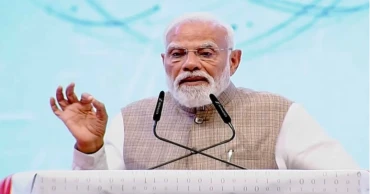
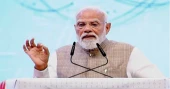
Modi calls preventing exam paper leaks a national responsibility, seeks strict action over NEET case
Indian Prime Minister Narendra Modi has called for the toughest possible action against those responsible for the alleged NEET examination paper leak, saying preventing such incidents is a national responsibility.
Speaking after the NDA Parliamentary Party's 'Mangal Milan' meeting on Tuesday, Parliamentary Affairs Minister Kiren Rijiju quoted Modi as urging all stakeholders to work together to build a secure and foolproof examination system.
According to Rijiju, the Prime Minister also asked NDA allies to remain united in supporting legislative business and urged opposition parties to cooperate in Parliament despite political differences, saying all lawmakers share responsibility for the country's future and the welfare of its youth.
Modi's remarks came a day after police used tear gas and batons to stop hundreds of students from marching toward Parliament during protests over alleged irregularities in competitive examinations, including the NEET paper leak.
The demonstration was led by the Cockroach Janta Party (CJP), a satirical political group that emerged earlier this year. The protesters demanded the resignation of Education Minister Dharmendra Pradhan over the controversy.
NEET, India's nationwide medical entrance examination, is taken by more than two million students each year. The exam was cancelled in May after allegations that the question paper had been leaked before the test. Authorities later held a fresh examination.
The controversy was followed by complaints over the online marking system used for examinations taken by nearly two million CBSE high school students, with some alleging incorrect grades and mismatched results.
Rijiju said Modi noted that the government acted quickly after reports of the NEET paper leak surfaced, leading to arrests and action against those allegedly involved. He added that the Prime Minister said the re-examination was organised promptly to protect students' academic future.
The student protests intensified after activist Sonam Wangchuk was taken to hospital on Saturday, ending his 21-day hunger strike in support of the movement. Wangchuk later announced he would continue his fast from the hospital, criticising the authorities' handling of peaceful demonstrators.
The CJP said two of its leaders later met Union Health Minister J.P. Nadda and submitted a letter outlining their demands after the government initiated contact. Nadda confirmed the meeting, describing it as cordial.
The first day of India's Monsoon Session of Parliament was disrupted by opposition protests over the alleged NEET paper leak and other issues, including allegations related to donations for the Ram temple.
Source: NDTV
13 days ago
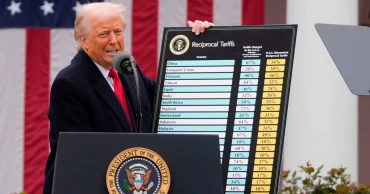
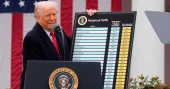
Trump announces 50% tariffs on most Canadian imports amid trade tensions
US President Donald Trump on Monday announced a 50 percent tariff on most imports from Canada, accusing the neighbouring country of unfair trade practices involving automobiles, alcoholic beverages and dairy products.
The move is expected to heighten trade tensions between the two long-standing allies and could add pressure on prices while further straining bilateral economic relations.
A senior US administration official said Canada, along with China, was among the few countries to retaliate against previous US tariffs, prompting the latest action. The official spoke on condition of anonymity while briefing reporters ahead of the announcement.
According to the White House, Trump signed three proclamations under Section 338 of the US Trade Act of 1930, authorising the new tariffs.
The administration said the 50 percent duties will apply to most Canadian goods, including products that had previously enjoyed tariff-free access under the United States-Mexico-Canada Agreement (USMCA).
However, the tariffs will not apply to energy products, potash, fish and critical minerals.
The USMCA, which came into effect in 2020, was not renewed by the United States, leading to a fresh round of trade negotiations that could continue until 2036.
The White House said the new tariffs will take effect in 30 days, leaving room for possible negotiations before the measures are implemented.
Responding to the announcement, Canadian Prime Minister Mark Carney reaffirmed his country's commitment to free and fair trade and said Canada remains ready to negotiate with Washington.
In a statement, Carney noted that Canada had signed more than 20 new economic and security partnerships and expressed hope that outstanding trade issues with the United States could be resolved through dialogue.
He also warned that the trade dispute has increased costs for families, particularly in the United States, and said both countries would benefit from a negotiated solution.
13 days ago
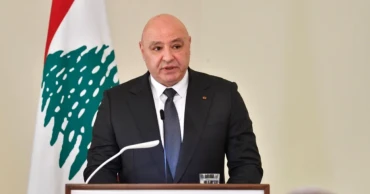
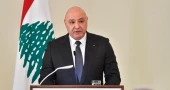
Lebanese president to meet Trump seeking Israeli withdrawal from southern Lebanon
Lebanese President Joseph Aoun is set to meet US President Donald Trump in Washington on Tuesday as part of efforts to secure the withdrawal of Israeli troops from southern Lebanon and advance a long-term security arrangement following months of conflict between Israel and the Iran-backed Hezbollah group.
The meeting will conclude Aoun’s four-day visit to the United States and comes as Lebanon and Israel continue rare direct negotiations under US mediation.
Beirut hopes the talks will lead to the withdrawal of Israeli forces from areas of southern Lebanon they continue to occupy, while also securing international support to strengthen the Lebanese Armed Forces and enable them to assume full control over territories previously influenced by Hezbollah.
On June 26, Lebanon and Israel announced a US-backed framework agreement outlining the gradual withdrawal of Israeli troops from southern Lebanon and the disarmament of Hezbollah. The agreement also sets out steps toward a future peace accord between the two neighbours, which have never established formal diplomatic relations and have technically remained at war since Israel's creation in 1948.
The US State Department announced on Monday that operations had begun in three villages—Froun, Srifa and Zawtar al-Gharbieh—designated as part of a pilot zone under the agreement, although no further details were disclosed. The three villages are currently outside Israeli military control, and neither Lebanese nor Israeli authorities immediately commented on the announcement.
Ahead of his meeting with Trump, Aoun held talks with US Secretary of State Marco Rubio on Sunday.
Rubio reaffirmed Washington’s commitment to supporting the framework agreement and its full implementation, describing the discussions as positive.
He said lasting peace in Lebanon would not be possible without resolving the issue of Hezbollah’s armed presence.
Rubio said Lebanon’s government must become the country's only legitimate armed authority while also stressing the importance of rebuilding the country's economy and attracting international investment.
He noted that security alone would not ensure long-term stability, highlighting the need for economic recovery and stronger state institutions.
The Lebanese army has recently increased deployments in several areas expected to fall within the pilot zone, establishing checkpoints and conducting patrols in preparation for the agreement’s implementation.
Despite signs of progress in negotiations, Israeli troops remain stationed in parts of southern Lebanon. Israeli officials have indicated that they intend to maintain forces in what they describe as a long-term security zone along the border.
Hezbollah has rejected the direct Lebanon-Israel talks mediated by Washington and instead has expressed support for US-Iran negotiations aimed at ending the broader regional conflict, including hostilities in Lebanon.
Lebanon’s government, which took office earlier this year on a reform agenda, has pledged to disarm all non-state armed groups, including Hezbollah.
The government has accused Hezbollah of drawing Lebanon into renewed conflict with Israel after the group launched rockets toward northern Israel in March following US and Israeli strikes on Iran.
At the same time, Beirut has criticised Israel’s subsequent military offensive, which Lebanese authorities say killed more than 4,000 people and displaced around 1.2 million others.
Lebanese officials maintain that a complete Israeli withdrawal and increased international support for the country's financially strained military are essential to achieving lasting peace and stability in southern Lebanon.
13 days ago
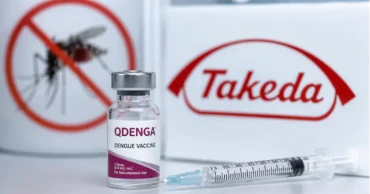
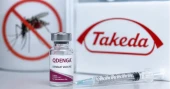
India approves first dengue vaccine as Takeda’s QDENGA receives regulatory clearance
India has approved its first dengue vaccine, granting regulatory clearance to Japanese drugmaker Takeda Pharmaceutical’s QDENGA, in a major milestone in the country’s fight against the mosquito-borne disease.
Takeda announced on Monday that India’s drug regulator had authorised the vaccine, providing the country with its first approved immunisation option against dengue as cases continue to rise.
The company said reported dengue infections in India have increased nearly elevenfold over the past two decades, underlining the growing public health challenge and the need for stronger preventive measures.
QDENGA is a live-attenuated tetravalent vaccine designed to protect against all four dengue virus serotypes. According to Takeda, the vaccine can be administered regardless of whether a person has previously been infected with dengue and does not require pre-vaccination screening, making it suitable for large-scale immunisation programmes.
India accounts for nearly one-third of the world's dengue cases, making it one of the most important markets for the vaccine. The approval comes as health authorities continue to tackle recurring outbreaks in several parts of the country.
To support future supply, Takeda entered into a partnership with Hyderabad-based vaccine manufacturer Biological E in 2024.
Under the agreement, Biological E plans to build manufacturing capacity for up to 50 million doses annually, contributing to Takeda’s global goal of producing 100 million doses each year by the end of the decade.
Since its international launch in 2022, QDENGA has been approved in 43 countries, with more than 32 million doses distributed worldwide.
Source: NDTV
13 days ago
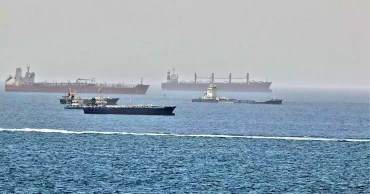
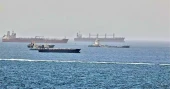
Iran attacks another tanker in Hormuz as US strikes continue for 10th night
Iran attacked another commercial tanker in the Strait of Hormuz early Tuesday, forcing its crew to abandon the vessel, as the United States carried out a 10th consecutive night of airstrikes targeting the Islamic Republic in an escalating conflict over the strategic waterway.
The continued US military campaign has so far failed to persuade Tehran to ease its control over the Strait of Hormuz, a vital maritime route through which about one-fifth of the world's seaborne crude oil and natural gas trade traditionally passed during peacetime.
Despite growing fears of a broader regional conflict, diplomatic efforts continued as Iran's interior minister travelled to Pakistan, which has been acting as a mediator between the two sides. However, there was no indication that fresh negotiations were close to ending the hostilities.
The temporary agreement reached last month to halt the fighting has effectively collapsed, while commercial shipping through the Strait of Hormuz has been severely disrupted. As military operations intensify, both Washington and Tehran have accused each other of targeting infrastructure relied upon by civilians.
The US State Department issued a fresh global security alert, warning that Iran and groups aligned with it could target American interests, personnel and facilities around the world.
The conflict has also affected global energy markets, with oil prices rising sharply in recent weeks. Brent crude traded above 88 dollars a barrel on Tuesday, while the average price of regular gasoline in the United States climbed to about four dollars per gallon, adding pressure on consumers ahead of this year's midterm elections.
The US military also identified two service members killed in an Iranian attack on a military base in Jordan, while a third soldier remains unaccounted for.
Separately, the Pentagon confirmed the death of another American service member in Iraq on Saturday during what it described as the controlled detonation of a downed Iranian drone.
President Donald Trump vowed a strong response to attacks on US troops, saying on social media that Iran would "pay many times over" whenever an American soldier was killed.
Trump was also scheduled to attend a ceremony later Tuesday at Dover Air Force Base, where the remains of at least one of the fallen service members were expected to arrive.
13 days ago
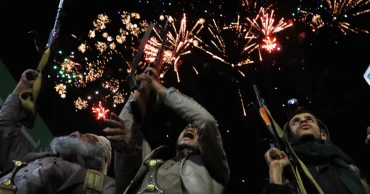
Houthis announce maritime embargo on Saudi shipping through Bab al-Mandeb
Yemen's Iran-backed Houthi rebels have announced a maritime embargo against Saudi Arabia, threatening to block Saudi shipping through the strategic Bab al-Mandeb Strait in retaliation for what they described as Riyadh's blockade of Yemen and a recent attack on Sanaa International Airport.
Houthi military spokesperson Yahya Saree said in a televised statement on Monday that the embargo would take effect immediately, calling the move an “eye for an eye” response.
The group did not provide details on how the restrictions would be enforced. However, Nasruddin Amer, deputy head of the Houthi media office, said on social media platform X that the Bab al-Mandeb Strait would be closed to Saudi shipping in response to what he described as Saudi Arabia’s decade-long blockade of Yemen.
The Bab al-Mandeb Strait, located at the southern entrance to the Red Sea, is one of the world's most important maritime chokepoints. Around 12 percent of global trade passes through the waterway, while roughly one-quarter of the world's container traffic transits the narrow passage en route to and from the Suez Canal.
The announcement has raised concerns over renewed disruption to international shipping in the region.
The Houthis previously demonstrated their ability to disrupt maritime traffic by launching attacks on commercial vessels during the Israel-Hamas war in Gaza. More than 100 ships were targeted in a campaign that significantly affected trade through the Red Sea.
It remains unclear whether the group intends to launch a similar campaign against Saudi-linked vessels.
Saudi Arabia's military said it would continue to ensure freedom of navigation through the waterway.
Saudi military spokesperson Maj. Gen. Turki al-Malki said any threats against vessels transiting the Bab al-Mandeb would be dealt with "swiftly and firmly," describing such actions as a clear violation of international law and an act of maritime piracy.
13 days ago