world
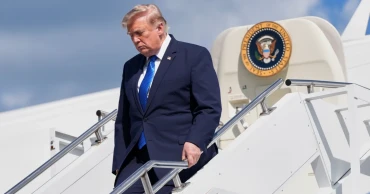
Trump to pause Iran strikes after framework for ending war is reached
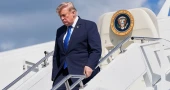
US President Donald Trump said Saturday he would order American forces to suspend further strikes on Iran, claiming that key Middle East allies had agreed on the basic framework of a deal aimed at ending the five-month-long war.
In a social media post, Trump said the proposed agreement would ensure the “immediate, complete and total” reopening of the Strait of Hormuz and eliminate what he described as Iran’s nuclear threat.
He said he had decided to cancel a planned attack “for the future benefit of the world” and for “a successful and prosperous Iran,” while making clear the decision depends on the parties being able to quickly reach a final agreement. Trump also said Israel had agreed to work with the United States to complete the deal. Iran did not immediately respond publicly.
The announcement came a day after Trump suggested the US was close to launching renewed large-scale strikes to pressure Tehran into negotiations.
The US and Israel launched attacks on Iran on Feb. 28, saying the campaign was intended to weaken Tehran’s missile capabilities, stop it from developing nuclear weapons and end its support for allied armed groups. However, the goals and timeline of the conflict have shifted repeatedly, and an earlier ceasefire agreement reached in mid-June collapsed within weeks.
Meanwhile, Saudi Crown Prince Mohammed bin Salman expressed concern during a phone call with Trump that any escalation could trigger Iranian attacks on Saudi and other Gulf states’ energy infrastructure, according to a person familiar with the discussion.
Separately, the US State Department issued fresh security alerts for Americans across several Middle Eastern countries, warning of possible flight cancellations, temporary airspace closures and other travel disruptions. Iran has also repeatedly targeted vessels passing through the Strait of Hormuz without its authorization during the conflict.
2 days ago
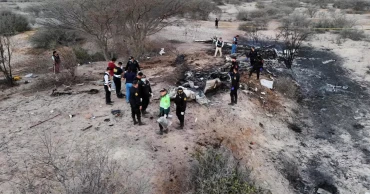
13 die as tourist plane crashes during Nazca Lines flight in Peru
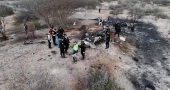
A sightseeing plane carrying European tourists to view Peru’s famed Nazca Lines crashed into a field outside the city of Nazca on Saturday, killing all 13 people on board, local authorities said.
According to Nazca’s municipal government, the aircraft departed from the nearby city of Ica and was operated by Peruvian airline Aerodiana. The company says it has been offering scenic flights over the UNESCO-listed Nazca Lines for the past 14 years using Cessna Grand Caravan aircraft.
The Nazca Lines are vast geoglyphs etched into the desert centuries ago by Peru’s Indigenous inhabitants. The giant figures, depicting various animals, can only be fully viewed from the air or from specially built observation towers.
Peru’s Transportation Ministry said the victims included seven Italian tourists aged between 18 and 54, two 52-year-old Spanish nationals, and two German tourists aged 77 and 78. The remaining victims were pilot Américo Salazar and co-pilot Irenka Guanilo del Carpio.
President Keiko Fujimori expressed sorrow over the tragedy and said authorities were considering a temporary suspension of operations at the airport. She said a final decision would be taken after receiving reports from the relevant ministries.
Peruvian authorities have launched an investigation into the cause of the crash. Aerodiana did not immediately respond to requests for comment.
2 days ago
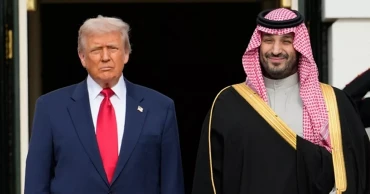
Saudi crown prince urges Trump to avoid escalating Iran conflict
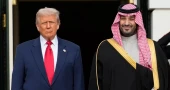
Saudi Crown Prince Mohammed bin Salman urged US President Donald Trump not to escalate the conflict with Iran during a phone conversation on Saturday, as Trump considers launching new military strikes against Tehran, according to a person familiar with the discussion.
The call, first reported by media, came amid growing concerns in Riyadh that US attacks on Iran’s energy facilities or other critical infrastructure could trigger retaliatory strikes against Saudi Arabia and other Gulf states’ energy assets. The source, who was not authorized to speak publicly, said the crown prince sought clarification from Trump about the military options under consideration.
Trump warns of continued military action against Iran
A White House official confirmed the leaders spoke but declined to disclose details of the conversation.
Earlier this week, Saudi Arabia joined the United States in strikes targeting logistics and weapons facilities used by Iranian-backed militias in Iraq, while continuing to advocate renewed US-Iran negotiations to end the five-month conflict. The crown prince also sent Saudi Defense Minister Khalid bin Salman to Washington for separate meetings with Trump and Vice President JD Vance on Iran strategy.
Trump has vowed retaliation after Iran’s failed attack on a US base in Jordan. The State Department on Saturday issued security alerts for Americans in 10 Middle Eastern countries, warning of possible flight disruptions and heightened regional risks as tensions continue to rise.
2 days ago
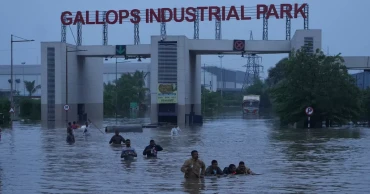
India's Assam flood death toll rises to 82
The death toll in ongoing floods in India's northeastern state of Assam has risen to 82, with two people still missing, officials said Saturday.
According to Assam Chief Minister Himanta Biswa Sarma, Sivasagar district reported the highest 42 deaths, followed by Charaideo and Jorhat districts with 21 and nine deaths respectively.
According to Sarma, the floods hit 2,251 villages, affecting over 1.1 million people in the state. Floods have fully damaged 2,530 residential houses and another 9,668 houses have suffered partial damage.
The authorities have set up 218 relief camps where 71,889 people have taken shelter. Besides, 1,811 relief distribution centers have been opened in the affected districts.
"Relief operations continue to expand across the state, with the number of relief distribution centers increasing to 1,811 now," Sarma said. "Every effort remains focused on relief, rehabilitation and restoring normalcy."
2 days ago
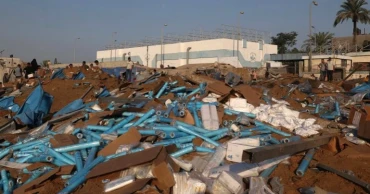
Israel says five Hamas weapons depots destroyed in Gaza
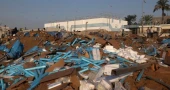
The Israeli military and the Shin Bet security agency said they destroyed five Hamas weapons depots across the Gaza Strip during overnight operations.
According to the Israeli army, one of the targeted depots was located adjacent to Al-Aqsa Martyrs Hospital in Deir el-Balah. It alleged that the sites were being used by Hamas to store assault rifles, explosive devices, anti-tank launchers and other military equipment.
The hospital administration and Gaza authorities, however, disputed the claim, saying the targeted facilities were being used to store the hospital's medical supplies.
With inputs from Al Jazeera
2 days ago

12 killed in road accidents ahead of Senegal's Grand Magal pilgrimage
At least 12 people have been killed in road accidents ahead of Senegal's annual Grand Magal pilgrimage in the central city of Touba, the National Fire Brigade said on Saturday.
The fatalities have been recorded since the brigade launched its emergency operation on July 28, Lieutenant Djily Diouf, communications officer for the contingent deployed for the pilgrimage, was quoted as saying by the Senegalese Press Agency.
As of 8:00 am local time on Saturday, firefighters had responded to 182 emergency incidents involving 304 people, Diouf said.
Among those operations, 133 were road accidents involving 286 people. Firefighters provided assistance to 274 victims, while 12 people were confirmed dead.
To support the large influx of pilgrims, the brigade has also supplied 281 cubic metres of water in Touba to help meet increased demand and avert potential shortages.
For this year's pilgrimage, the National Fire Brigade has deployed 563 personnel along with 91 emergency and support vehicles to provide rescue, firefighting and medical services.
The Grand Magal, scheduled to take place on Sunday, is one of Senegal's largest annual religious gatherings. Organised by the Mouride Muslim brotherhood, the event commemorates the 1895 exile of its founder, Cheikh Ahmadou Bamba, by the French colonial authorities.
2 days ago
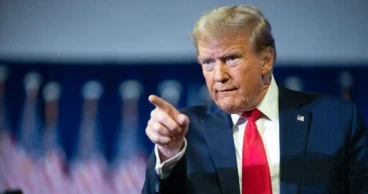
Trump warns of continued military action against Iran
US President Donald Trump has threatened further military strikes against Iran as Washington presses for the reopening of the Strait of Hormuz, amid escalating tensions across the Middle East.
Speaking at Camp David on Friday, Trump said the US would continue striking Iran "very hard" until it could no longer sustain the conflict. White House Press Secretary Karoline Leavitt accused Tehran of violating a truce memorandum, attacking commercial ships and killing US troops, warning that Iran would continue to face consequences.
Trump announces Hamas disarmament agreement, but challenges remain
The US State Department also issued heightened security alerts for Americans in 10 regional countries, citing risks of flight disruptions and airspace closures.
On Saturday, Kuwait said its forces responded to fresh Iranian drone attacks targeting key facilities, though no casualties were reported. Separately, two tanker-related incidents occurred in the Strait of Hormuz off Oman, with one vessel sustaining engine room damage after being hit by a projectile.
In Gaza, Israeli strikes killed at least four people after Hamas announced it was willing to disarm under a US-brokered ceasefire framework. Israel said it targeted Hamas positions and weapons storage sites. Egypt welcomed Hamas's response, while Israeli far-right minister Itamar Ben-Gvir rejected the proposal.
Elsewhere, Yemen's Houthi rebels diverted Saudi shipping, Israel destroyed an alleged Hezbollah tunnel network in southern Lebanon, and Lebanese President Joseph Aoun criticised the operation ahead of planned talks in Rome. An Israeli army officer was also wounded during operations in southern Lebanon.
2 days ago

UK PM Burnham opens ‘No. 10 North’ in Manchester to shift power beyond London
British Prime Minister Andy Burnham has opened a new government office in Manchester, saying the move marks the beginning of a major shift in political power and investment away from London.
The new office, known as "No. 10 North," is about 260 kilometres from the prime minister's official residence at 10 Downing Street and is central to Burnham's plan to give more powers and funding to regional leaders across the UK.
Burnham, who previously served as Mayor of Greater Manchester before becoming prime minister, said the office represents "a North Pole that balances the South Pole" of Westminster politics.
"This is not just another office. It represents a fundamental change in how the country approaches growth and investment," he said on Friday.
Burnham plans to work from the Manchester office at least one day each week alongside a permanent team of advisers, civil servants and policy experts.
More powers for local leadersAs part of the new approach, Burnham announced that regional mayors will be allowed to keep a larger share of income and business tax revenue collected in their areas.
He described the move as the biggest transfer of power, funding and responsibility from the central government in a generation, although details of the funding arrangements have yet to be released.
Burnham hopes the policy will help create jobs and boost economic growth in areas that have struggled with industrial decline, unemployment and population loss.
Building on Manchester's successDuring his nine years as Greater Manchester mayor, Burnham oversaw major investment in the city, including new housing, public transport and business development.
Supporters say his approach combined public investment with private sector partnerships while giving local communities greater control over housing, transport and public services.
Burnham now wants to apply the same model across the country.
Mixed reactionsPolitical analyst Rob Ford of the University of Manchester said the move shows Burnham is serious about reducing the UK's traditionally centralised system of government.
"The UK is one of the most centralised democracies in the developed world. Changing that will be a major challenge," Ford said.
Critics, however, argue that Manchester's economic success has not benefited all surrounding communities and say Burnham must ensure other regions also receive greater powers and investment.
Support from regional leadersSupporters welcomed the decision to establish a government office outside London.
Rose Marley, chief executive of Cooperatives UK, said holding government meetings in Manchester would make it easier for organisations outside the capital to engage with ministers.
She also said the move could help ensure a wider range of regional voices is heard in national decision-making.
Some residents also supported the initiative but said similar offices should eventually be created in other parts of England to ensure balanced regional development.
Burnham said No. 10 North is intended to become a permanent centre for regional decision-making as part of his government's broader plan to reduce the UK's long-standing economic divide between London and the rest of the country.
2 days ago

US to make visa bond programme permanent, raises maximum fee to $20,000
The United States will make permanent a visa bond programme requiring applicants from 50 countries, most of them in Africa, to pay a refundable bond before applying for certain US visas.
According to a draft notice published Friday in the Federal Register, the US State Department said a year-long review found the programme helped reduce visa overstays, prompting the decision to make it permanent from Monday.
The revised rules also raise the maximum bond amount from $15,000 to $20,000. The previous minimum bond of $5,000 has been removed, leaving bond amounts of $10,000 or $20,000, depending on the decision of a consular officer.
The programme applies to applicants seeking B1 business visas and B2 tourist visas.
The bond is refunded if the visa application is rejected or, if approved, once the traveller complies with all visa conditions and leaves the United States as required.
The Trump administration introduced the programme in August last year as part of broader efforts to reduce illegal immigration and prevent visitors from overstaying their visas.
The State Department said it costs the US government about $18,000 to locate, arrest and deport each person who remains in the country after their visa expires.
According to the department, nearly 45,500 visitors from the 50 affected countries overstayed their visas in 2024. During the first 10 months of the bond programme, fewer than 50 overstays were recorded from those countries.
US officials described the programme as successful in reducing visa violations.
However, critics argue that the policy places a heavy financial burden on people from low-income countries who want to travel to the United States for tourism, business, education or to visit family members.
The State Department had originally expected around 2,000 applicants to be affected by the programme. Instead, about 20,000 applicants were required to pay the bond.
Nearly half of those applicants decided not to proceed with their visa applications, contributing to an 83 percent drop in business and tourist visas issued to citizens of the affected countries.
The department said it expects the permanent programme to further reduce demand for B1 and B2 visas from countries covered by the policy.
2 days ago

Strong El Niño threatens more heatwaves, floods, and drought: UN
The United Nations' World Meteorological Organization (WMO) has warned that a strong El Niño event is expected to intensify between August and October, increasing the likelihood of extreme weather across many parts of the world.
The climate pattern is forecast to contribute to above-average global temperatures, significant shifts in rainfall, and continued unusually warm sea surface temperatures in the tropical Atlantic.
According to the WMO, sea surface temperature anomalies in key monitoring areas are expected to exceed 2.9°C, signaling a powerful El Niño.
The agency says these forecasts provide governments and communities with valuable time to prepare for potential impacts through early planning and risk reduction measures.
UN Secretary-General António Guterres said El Niño is worsening the effects of an already overheating planet, pointing to intense heatwaves, devastating wildfires, and record-breaking ocean temperatures.
He argued that continued reliance on fossil fuels is driving the climate crisis and warned that expanding coal, oil, and gas production will increase future risks. He urged immediate action to protect vulnerable populations and address the underlying causes of climate change.
WMO Secretary-General Celeste Saulo emphasized that although El Niño is one of the world's most closely monitored climate phenomena, forecasts alone cannot prevent disasters.
She noted that the current event is unfolding alongside unprecedented ocean warming and rising global temperatures, making early preparedness more important than ever. She added that timely, reliable climate information can help governments, humanitarian organizations, and sectors such as agriculture and health reduce the impacts of extreme weather and protect at-risk communities.
2 days ago