world
UN faces uncertainty as Trump returns to US presidency
The United Nations and other international organizations are bracing for four more years of Donald Trump, who famously tweeted before becoming president the first time that the 193-member U.N. was “just a club for people to get together, talk and have a good time.”
In his first term, Trump suspended funding for the U.N. health and family planning agencies, withdrew from its cultural organization and top human rights body, and jacked up tariffs on China and even longtime U.S. allies by flaunting the World Trade Organization’s rulebook. The United States is the biggest single donor to the United Nations, paying 22% of its regular budget.
Trump’s take this time on the world body began taking shape this week with his choice of Republican Rep. Elise Stefanik of New York for U.S. ambassador to the U.N.
Stefanik, the fourth-ranking House member, called last month for a “complete reassessment” of U.S. funding for the United Nations and urged a halt to support for its agency for Palestinian refugees, or UNRWA. President Joe Biden paused the funding after UNRWA fired several staffers in Gaza suspected of taking part in the Oct. 7, 2023, attack led by Hamas.
Here’s a look at what Trump 2.0 could mean for global organizations:
‘A theater’ for a conservative agenda
Speculation about Trump’s future policies has already become a parlor game among wags in Washington and beyond, and reading the signals on issues important to the U.N. isn’t always easy.
For example, Trump once called climate change a hoax and has supported the fossil fuel industry but has sidled up to the environmentally minded Elon Musk. His first administration funded breakneck efforts to find a COVID-19 vaccine, but he has allied with anti-vaccine activist Robert F. Kennedy Jr.
“The funny thing is that Trump does not really have a fixed view of the U.N.,” said Richard Gowan, U.N. director for the International Crisis Group think tank.
Gowan expects that Trump won’t view the world body “as a place to transact serious political business but will instead exploit it as a theater to pursue a conservative global social agenda.”
There are clues from his first term. Trump pulled the U.S. out of the 2015 Paris climate accord and is likely to do it again after President Joe Biden rejoined.
Trump also had the U.S. leave the cultural and educational agency UNESCO and the U.N.-backed Human Rights Council, claiming they were biased against Israel. Biden went back to both before recently opting not to seek a second consecutive term on the council.
Trump cut funding for the U.N. population agency for reproductive health services, claiming it was funding abortions. UNFPA says it doesn’t take a position on abortion rights, and the U.S. rejoined.
He had no interest in multilateralism — countries working together to address global challenges — in his first term. U.N. Secretary-General Antonio Guterres calls it “the cornerstone” of the United Nations.
1 year ago
‘Mocking Tagore’: Salman’s team denies ties to Kapil Show amid legal trouble
Salman Khan's team has denied any involvement with The Great Indian Kapil Show on OTT platform Netflix following a legal trouble against the show for presumably disrespecting Nobel laureate Rabindranath Tagore's legacy.
Kapil Sharma's Netflix show, The Great Indian Kapil Show, has found itself in legal trouble over allegations of disrespecting Rabindranath Tagore’s legacy, reports Indian media.
Reports have emerged suggesting Salman Khan's production house SKTV had been served a legal notice as well for its alleged association with the show.
Dismissing speculation, Salman Khan's team has issued a statement denying any kind of involvement with Kapil Sharma's show.
The statement reads, "Certain sections of the media are reporting that Salman Khan / SKTV have also received the notice, which is incorrect as we are not associated with The Great Indian Kapil Show on Netflix."
The notice claims that The Great Indian Kapil Show disrespected Rabindranath Tagore's legacy and risks offending cultural and religious sentiments.
1 year ago
$1 trillion needed in climate cash for developing nations, Experts say at COP29
The major battle in Baku is over how much rich nations will help poor countries to decarbonize their energy systems, cope with future harms of climate change and pay for damage from warming's extreme weather. The old goal of $100 billion a year in aid is expiring and Baku's main focus is coming up with a new, bigger figure.
A special independent group of experts commissioned by United Nations Secretary-General Antonio Guterres issued its own estimate of costs and finances on Thursday, calling for a tripling of the old commitment.
“Advanced economies need to demonstrate a credible commitment” to helping poor nations, the report said.
A coalition of poor nations at the Baku talks are asking for $1.3 trillion in annual climate finance. The independent experts' report said about $1 trillion a year is needed by developing nations from all outside sources, not just government grants.
The report detailed how expensive decarbonizing the world's economy would be, how much it would cost and where the money could come from. Overall climate adaption spending for all countries is projected to reach $2.4 trillion a year.
"The transition to clean, low-carbon energy, building resilience to the impacts of climate change, coping with loss and damage, protecting nature and biodiversity, and ensuring a just transition, require a rapid step-up in investment in all countries,'' said the report.
For the third straight year, efforts to fight climate change haven't lowered projections for how hot the world is likely to get — and recent developments in China and the United States are likely to slightly worsen the outlook, according to an analysis Thursday.
The analysis comes as countries come together for the 29th edition of the United Nations climate talks, hosted in Baku, Azerbaijan, where nations are trying to set new targets to cut emissions of heat-trapping gases and figure out how much rich nations will pay to help the world with that task.
But Earth remains on a path to be 2.7 degrees Celsius (4.9 degrees Fahrenheit) warmer than pre-industrial times, according to Climate Action Tracker, a group of scientists and analysts who study government policies and translate that into projections of warming.
If emissions are still rising and temperature projections are no longer dropping, people should wonder if the United Nations climate negotiations known as COP are doing any good, said Climate Analytics CEO Bill Hare.
“There’s an awful lot going on that’s positive here, but on the big picture of actually getting stuff done to reduce emissions ... to me it feels broken,” Hare said.
Climate action is stifled by the biggest emitters
The world has already warmed 1.3 degrees Celsius (2.3 Fahrenheit) above pre-industrial times. That's near the 1.5-degree (2.7 F) limit that countries agreed to at 2015 climate talks in Paris. Climate scientists say the atmospheric warming, mainly from human burning of fossil fuels, is causing ever more extreme and damaging weather including droughts, flooding and dangerous heat.
Climate Action Tracker does projections under several different scenarios, and in some cases, those are going up slightly.
One projected track based on what countries promise to do by 2030 is up to 2.6 degrees Celsius, a tenth of a degree warmer than before. And even the analysts' most optimistic scenario, which assumes that countries all deliver on their promises and targets, is at 1.9 Celsius, also up a tenth of a degree from last year, said study lead author Sofia Gonzales-Zuniga of Climate Analytics, one of the main groups behind the tracker.
“This is driven highly by China,” Gonzales-Zuniga said. Even though China's fast-rising emissions are starting to plateau, they are peaking higher than anticipated, she said.
Another upcoming factor not yet in the calculations is the U.S. elections. A Trump administration that rolls back the climate policies in the Inflation Reduction Act, and carries out the conservative blueprint Project 2025, would add 0.04 degree Celsius (0.07 Fahrenheit) to warming projections, Gonzales-Zuniga said. That's not much, but it could be more if other nations use it as an excuse to do less, she said. And a reduction in American financial aid could also reverberate even more in future temperature outlooks.
“For the U.S. it is going backwards,” said Hare. At least China has more of an optimistic future with a potential giant plunge in future emissions, he said.
“We should already be seeing (global) emissions going down" and they are not, Hare said. “In the face of all of the climate disasters we’ve observed, whether it’s the massive floods in Nepal that killed hundreds of people or whether it’s the floods in Valencia, Spain, that just killed hundreds of people. The political system, politicians are not reacting. And I think that’s something that people everywhere should be worried about.”
1 year ago
1 mln migrants in US rely on temporary protections that Trump could target
Maribel Hidalgo fled her native Venezuela a year ago with a 1-year-old son, trudging for days through Panama's Darien Gap, then riding the rails across Mexico to the United States.
They were living in the U.S. when the Biden administration announced Venezuelans would be offered Temporary Protected Status, which allows people already in the United States to stay and work legally if their homelands are deemed unsafe.
People from 17 countries, including Haiti, Afghanistan, Sudan and recently Lebanon, are currently receiving such relief.
But President-elect Donald Trump and his running mate, JD Vance, have promised mass deportations and suggested they would scale back the use of TPS that covers more than 1 million immigrants.
They have highlighted unfounded claims that Haitians who live and work legally in Springfield, Ohio, as TPS holders were eating their neighbors’ pets. Trump also amplified disputed claims made by the mayor of Aurora, Colorado, about Venezuelan gangs taking over an apartment complex.
“What Donald Trump has proposed doing is we’re going to stop doing mass parole,” Vance said at an Arizona rally in October, mentioning a separate immigration status called humanitarian parole that is also at risk. “We’re going to stop doing mass grants of Temporary Protected Status.”
Hidalgo wept as she discussed her plight with a reporter as her son, now 2, slept in a stroller outside the New York migrant hotel where they live. At least 7.7 million people have fled political violence and economic turmoil in Venezuela in one of the biggest displacements worldwide.
“My only hope was TPS,” Hidalgo said. “My worry, for example, is that after everything I suffered with my son so that I could make it to this country, that they send me back again.”
Venezuelans along with Haitians and Salvadorans are the largest group of TPS beneficiaries and have the most at stake.
Haiti's international airport shut down this week after gangs opened fire at a commercial flight landing in Port-Au-Prince while a new interim prime minister was sworn in. The Federal Aviation Administration barred U.S. airlines from landing there for 30 days.
“It's creating a lot of anxiety," said Vania André, editor-in-chief for The Haitian Times, an online newspaper covering the Haitian diaspora. “Sending thousands of people back to Haiti is not an option. The country is not equipped to handle the widespread gang violence already and cannot absorb all those people.”
Designations by the Homeland Security secretary offer relief for up to 18 months but are extended in many cases. The designation for El Salvador ends in March. Designations for Sudan, Ukraine, and Venezuela end in April. Others expire later.
Federal regulations say a designation can be terminated before it expires, but that has never happened, and it requires 60 days' notice.
TPS is similar to the lesser-known Deferred Enforcement Departure Program that Trump used to reward Venezuelan exile supporters as his first presidency was ending, shielding 145,000 from deportation for 18 months.
Attorney Ahilan T. Arulanantham, who successfully challenged Trump's earlier efforts to allow TPS designations for several countries to expire, doesn't doubt the president-elect will try again.
“It's possible that some people in his administration will recognize that stripping employment authorization for more than a million people, many of whom have lived in this country for decades, is not good policy" and economically disastrous, said Arulanantham, who teaches at the University of California, Los Angeles School of Law, and helps direct its Center for Immigration Law and Policy. “But nothing in Trump’s history suggests that they would care about such considerations.”
Courts blocked designations from expiring for Haiti, Sudan, Nicaragua and El Salvador until well into President Joe Biden's term. Homeland Secretary Alejandro Mayorkas then renewed them.
Arulanantham said he “absolutely” could see another legal challenge, depending on what the Trump administration does.
Congress established TPS in 1990, when civil war was raging in El Salvador. Members were alarmed to learn some Salvadorans were tortured and executed after being deported from the U.S. Other designations protected people during wars in Bosnia-Herzegovina and Kuwait, from genocidal violence in Rwanda, and after volcanic eruptions in Montserrat, a British territory in the Caribbean, in 1995 and 1997.
A designation is not a pathway to U.S. permanent residence or citizenship, but applicants can try to change their status through other immigration processes.
Advocates are pressing the White House for a new TPS designation for Nicaraguans before Biden leaves office. Less than 3,000 are still covered by the temporary protections issued in 1998 after Hurricane Mitch battered the country. People who fled much later under oppression from President Daniel Ortega’s government don’t enjoy the same protection from deportation.
“It's a moral obligation” for the Biden administration, said Maria Bilbao, of the American Friends Service Committee.
Elena, a 46-year-old Nicaraguan who has lived in the United States illegally for 25 years, hopes Biden moves quickly.
“He should do it now,” said Elena, who lives in Florida and insisted only her first name be used because she fears deportation. “Not in January. Not in December. Now.”
1 year ago
Sri Lanka votes in a parliamentary election that's key for its new Marxist-leaning president
Sri Lankans are voting in a parliamentary election Thursday that is key for the country's new, Marxist-leaning president to consolidate his party's power and follow through on promises of economic recovery.
President Anura Kumara Dissanayake won the presidential election on Sept. 21 in a victory that marked a rejection of the traditional political parties, which have governed the island nation since its independence from British rule in 1948.
However, Dissanayake’s failure to secure more than 50% of the vote has fueled concerns over his party’s outlook in Thursday's election.
His National People’s Power party must increase its votes significantly — from the 42% it won in the presidential election — if it is to acquire a minimum of 113 seats to take control of the 225-member Parliament.
The biggest challenge for the NPP — which was founded in 2019 and is a relative newcomer on Sri Lanka’s political scene — is that many of its candidates are new faces in politics running against well-established politicians from the traditional parties.
Of the 225 parliament seats, 196 are up for grabs under Sri Lanka's proportional representative electoral system, which allocates seats in each district among the parties according to the proportion of the votes they get.
The remaining 29 seats — called the national list seats — are allocated to parties and independent groups according to the proportion of the total votes they receive countrywide.
There are 8,821 candidates vying for the 196 seats for elected members of Parliament.
Read: Train hits and kills 2 wild elephants in Sri Lanka as 2 of its fuel-carrying tankers derail
Sajith Premadasa, who came in second in the presidential election and his Samagi Jana Balawegaya, or United People's Power party, is NPP's main competition.
Dissanayake, while campaigning for his party’s candidates, has called on voters to help elect them to Parliament so he won’t need to rely on a coalition to enact the reforms he promised.
Election results are expected on Friday.
The election comes at a decisive time for Sri Lankans, as the island nation is struggling to emerge from its worst economic crisis, having declared bankruptcy after defaulting on its external debt in 2022.
The country is now in the middle of a bailout program with the International Monetary Fund and debt restructuring with international creditors nearly complete.
Dissanayake had said during the presidential campaign that he planned to propose significant changes to the targets set in the IMF deal, which his predecessor Ranil Wickremesinghe signed, saying it placed too much burden on the people. However, he has since changed his stance and says Sri Lanka will go along with the agreement.
Sri Lanka’s crisis was largely the result of economic mismanagement combined with fallout from the COVID-19 pandemic, which along with 2019 terrorism attacks devastated its important tourism industry. The pandemic also disrupted the flow of remittances from Sri Lankans working abroad.
Read more: Sri Lanka closes schools as floods hammer the capital
The government also slashed taxes in 2019, depleting the treasury just as the virus hit. Foreign exchange reserves plummeted, leaving Sri Lanka unable to pay for imports or defend its currency, the rupee.
Sri Lanka’s economic upheaval led to a political crisis that forced then-President Gotabaya Rajapaksa to resign in 2022. Parliament then elected Wickremesinghe to replace him.
The economy was stabilized, inflation dropped, the local currency strengthened and foreign reserves increased under Wickremesinghe. Nonetheless, he lost the election as public dissatisfaction grew over the government’s effort to increase revenue by raising electricity bills and imposing heavy new income taxes on professionals and businesses, as part of the government’s efforts to meet the IMF conditions.
Dissanayake’s promise to punish members of previous governments accused of corruption and to recover allegedly stolen assets has also raised much hope among the people.
1 year ago
New storms and flooding threaten Spain's hard-hit Valencia again
New storms in Spain caused school closures and train cancellations on Wednesday, two weeks after flash floods in Valencia and other parts of the country killed more than 220 people and destroyed thousands of homes.
Coastal areas of Valencia were placed under the highest alert on Wednesday evening. Forecasters said up to 180 millimeters (7 inches) of rain could fall there within five hours.
Cleanup efforts in parts of Valencia hardest hit by the Oct. 29 storm were still continuing, and there were concerns over what more rain could bring to streets still covered with mud and debris.
In southern Malaga province, streets were flooded, while 3,000 people near the Guadalhorce river were moved from their homes as a preventive measure. Schools across the province were closed, along with many stores. Train service was canceled between Malaga and Madrid, and between Barcelona and Valencia.
Valencia's regional government also restricted the use of private vehicles until Thursday in areas hit by the October storm, when tsunami-like floods caused severe car pile-ups.
There were no reports of deaths due to the new storms.
Spanish weather forecaster AEMET put Malaga on red alert, saying up to 70 millimeters (roughly 3 inches) of rain had accumulated in an hour. Parts of Tarragona province in the east also faced heavy rain and remained under red alert.
The forecast in Malaga delayed the start of the Billie Jean King Cup tennis finals between Spain and Poland, which was set for Wednesday.
The storm system affecting Spain is caused by warm air that collides with stagnant cold air and forms powerful rain clouds. Experts say that drought and flood cycles are increasing with climate change.
1 year ago
Investigation into Chinese hacking reveals 'broad and significant' spying effort, FBI says
A federal investigation into Chinese government efforts to hack into U.S. telecommunications networks has revealed a “broad and significant” cyberespionage campaign aimed at stealing information from Americans who work in government and politics, the FBI said Wednesday.
Hackers affiliated with Beijing have compromised the networks of “multiple” telecommunications companies to obtain customer call records and gain access to the private communications of “a limited number of individuals," according to a joint statement issued by the FBI and the federal Cybersecurity and Infrastructure Security Agency.
The FBI did not identify any of the individuals targeted by the hackers but said most of them “are primarily involved in government or political activity."
The hackers also sought to copy “certain information that was subject to U.S. law enforcement requests pursuant to court orders,” the FBI said, suggesting the hackers may have been trying to compromise programs like those subject to the Foreign Intelligence Surveillance Act, or FISA, which grants American spy agencies sweeping powers to surveil the communications of individuals suspected of being agents of a foreign power.”
The warning comes after several high-profile hacking incidents that U.S. authorities have linked to China, part of what they say is an effort to steal technological and government information while also targeting vital infrastructure like the electrical grid.
In September, the FBI announced that it had disrupted a vast Chinese hacking operation known as Flax Typhoon that involved the installation of malicious software on more than 200,000 consumer devices, including cameras, video recorders and home and office routers. The devices were then used to create a massive network of infected computers, or botnet, that could then be used to carry out other cyber crimes.
Last month, officials said hackers linked to China targeted the phones of then-presidential candidate Donald Trump and his running mate, Sen. JD Vance, along with people associated with Democratic candidate Vice President Kamala Harris.
Authorities did not disclose how or if the operations announced Wednesday are connected to the earlier campaigns.
In their statement Wednesday, the FBI and CISA said officials are working with the telecommunication industry and hacking victims to shore up defenses against continuing attempts at cyberespionage.
“We expect our understanding of these compromises to grow as the investigation continues,” the agencies wrote.
China has rejected accusations from U.S. officials that it engages in cyberespionage directed against Americans. A message left with China's embassy in Washington was not immediately returned Wednesday.
1 year ago
India's Modi likely to find comfort in Trump's return and a shared worldview
Donald Trump’s return to the White House has made many countries anxious and recalculating where they stand with the U.S., but India appears to be welcoming the change that may embolden nationalist leaders like Prime Minister Narendra Modi.
“I know today a lot of countries are nervous about the U.S., let’s be honest about that,” India’s External Affairs Minister Subrahmanyam Jaishankar said over the weekend. India was “not one of them.” A call from Modi “was among the first three calls, I think, that President (elect) Trump took," he added.
A second Trump presidency is likely to play out in New Delhi’s favor, experts say, especially as Modi seeks to reset India’s relationship with the West after recent frictions over his refusal to join sanctions against Russia or condemn its 2022 full-scale invasion of Ukraine. Modi has also been criticized over India's democratic backsliding.
“Trump’s victory means that the Indian policies that have put New Delhi at odds with the West … will no longer be a cause of concern for Washington,” said Michael Kugelman, South Asia director at the Wilson Center.
There could be ruptures on trade, immigration and climate change goals — but on balance, “the return of Trump means that India’s relations with the West – and specifically its most powerful country — will get a boost,” he added.
Modi has sought to cast India as a rising global player with a fast-growing economy that can counter China. But critics say his authoritarian politics and right-wing Bharatiya Janata Party have deeply polarized the country with minorities increasingly marginalized and the right to free speech and press under attack.
When President Joe Biden honored Modi with a state visit last year, he walked a tightrope as activists and groups pressured him to confront Modi over his human rights record. Still, the two leaders rolled out new business deals on defense and technology.
Such concerns won't be an issue with Trump, said Uday Chandra, an expert on South Asia and foreign policy. “He is a refreshing reset from the Indian perspective … he is much more transactional.”
Trump, long an open admirer of Russian President Vladimir Putin, is also likely to be more understanding of India’s strategic partnership with Moscow, which dates back to the Cold War, its record purchases of Russian crude, and its refusal to pick a side in the war in Ukraine. “This was the real sort of thorn in India-U.S. relations over the past two years … but with Trump, I don’t see this being an issue,” Chandra said.
Read: Modi, Trump commit to strengthening India-US ties during phone call: MEA
One hot-button issue is trade. In his first term, trade differences between the two countries came to the fore with Trump calling India the “tariff king” over disagreements on farm goods, Harley Davidson motorcycles and medical devices. In 2019, he canceled the country's special trade privileges and India responded by slapping tariffs on more than two dozen U.S. goods.
This time, Trump wants to impose a “universal” tax of 10% or 20% on all imports and raise tariffs on Chinese goods to 60%. India, which counts the U.S. as its second-largest trading partner, won't be an exception.
“New Delhi will have to do more than just tinkering with its policies to deal with Trump’s emphasis on fair trade,” said C Rajamohan, a professor at the Institute of South Asian Studies in Singapore.
Immigration could turn into a sore point if Trump attempts to also curb skilled migration. Indians have often been the largest group applying for the H1-B work visa but Trump had called the visa program “very bad” and “unfair” for U.S. workers.
Progress on climate change and clean energy could also be hit.
“India and the U.S. have done quite a lot on this front over the past four years — but this is something that could unravel because a Trump administration is more aligned with the fossil fuel industry than with green technology,” said Milan Vaishnav, South Asia Program director at the Carnegie Endowment for International Peace.
Both Trump and Modi embody strongmen tactics, count on an impassioned support base and have ramped up polarization to consolidate votes. And unlike liberal leaders in the West, Trump doesn’t view Modi’s policies at home problematic – or even relevant, said Kugelman.
“They’re both ardent nationalists committed to making their nations stronger at home and abroad,” he added.
Analysts also point to the personal bond between the two. When Trump visited India in 2020, Modi threw him an event in the world's largest cricket stadium.
Read more: BRICS Summit: Putin hosts Xi, Modi, other Global South leaders in move to counter western influence
The year before that, Trump held a massive rally for Modi in Texas and likened him to Elvis Presley for his crowd-pulling power. In his congratulatory post to Trump on X last week, Modi shared photos of the two leaders hugging, smiling and holding hands.
“There’s a bromance between the two,” said Chandra. "But they're also united by a shared worldview — that we are in a post- liberal world and that liberalism as an ideology for conducting global politics is no longer viable. That’s as true in India as it is in America.”
1 year ago
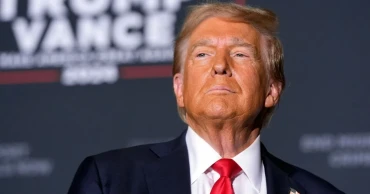
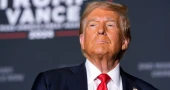
Trump makes a victor’s return to Washington and pledges a ‘smooth’ transition of power from Biden
Donald Trump made a victor’s return to Washington on Wednesday, visiting the White House for a nearly two-hour meeting with President Joe Biden and committing to a straightforward transition of power as the president-elect moves quickly to build out his new administration.
Sitting in front of a crackling fire in the Oval Office, the former rivals shook hands as reporters looked on. Biden called Trump "Mr. President-elect and former president” before settling on “Donald.”
“Congratulations,” the Democrat told the Republican. “I look forward to having, like they said, a smooth transition,” Biden said. “Welcome. Welcome back.”
Trump replied, “Thank you very much," saying that “politics is tough. And it’s, in many cases, not a very nice world. But it is a nice world today, and I appreciate it very much.”
He said the transition between the outgoing and incoming administrations "will be as smooth as it can get and I very much appreciate that, Joe.” Trump, who has long disputed his 2020 election loss to Biden, did not invite Biden to the White House during the transition four years ago.
The scene put in stark relief the remarkable political rebound for Trump, who departed Washington in January 2021 as a diminished, politically defeated leader after helping incite a mob of his supporters to attack the Capitol. Today, he is preparing to come back to power with what he and his GOP allies see as a mandate for governance.
Neither he nor Biden answered questions shouted by the media after their brief remarks. At one point, Biden looked at Trump, who moved his head to the side and gave a small shrug but did not respond.
After his election win in 2016, Trump met with President Barack Obama in the Oval Office and called it “a great honor.” But he soon was back to heaping insults on his predecessor.
While refraining Wednesday from the bombast seen as a candidate, Trump looked at ease in the Oval Office, unlike in 2016, when he appeared nervous and subdued when meeting with Obama eight years ago.
Trump left the White House after his session with Biden without addressing the large contingent of reporters on the White House driveway waiting outside the West Wing in case he did make an appearance.
Each was joined by his chief of staff for the private meeting that is a traditional part of the peaceful handoff of power, but a ritual that Trump declined to participate in four years ago after losing to Biden.
First lady Jill Biden greeted Trump upon his arrival at the White House and gave him a handwritten letter of congratulations for his wife, Melania Trump, who did not make the trip to Washington. The letter also expressed the first lady's team’s readiness to assist with the transition.
As Trump met with Biden, Trump sent out a fundraising email to supporters saying that he "is inside the White House right now conducting a very important meeting.”
Trump had flown from Florida in the morning, joining up with billionaire Elon Musk for a morning session with House Republicans. That discussion came as Trump prepares for a potentially unified Republican government and sweep of power.
Back in Washington for the first time since his election victory, Trump told the GOP lawmakers, “It’s nice to win.”
He received a standing ovation from House GOP members, many of whom took cellphone videos of Trump as ran through their party's victories up and down the ballot, in what would be, under the constitutional limits, his final presidential election.
“I suspect I won’t be running again unless you say he’s good we got to figure something else,” Trump said to laughter from the lawmakers.
The Constitution's 22nd Amendment prevents presidents from running for a third term.
House Speaker Mike Johnson, R-La., said of Trump's arrival, “He is the comeback king.”
“We owe him a great debt of gratitude," Johnson said.
Trump's reemergence comes amid Republican congressional leadership elections — with the potential for the president-elect to place his imprint on the outcome. He endorsed Johnson's return to the speaker's office with the president-elect saying he is with Johnson all the way, according to a person familiar with the remarks but not authorized to publicly discuss the private meeting.
Musk joining Trump on the return to Washington comes after the Tesla and SpaceX CEO has been spending much of his time at Mar-a-Lago, Trump's Florida estate, and participating in discussions as the incoming Trump administration prepares to transition from Biden's.
Trump has named Musk to a government efficiency advisory role in his incoming administration. Some close to Trump and his team now see Musk as the second most influential figure in Trump’s immediate orbit, after Susie Wiles, the campaign manager who is Trump's incoming chief of staff.
Trump has continued to lie about widespread voter fraud that did not occur. In addition to not inviting then-president-elect Biden to the White House, Trump left Washington without attending the inauguration. It was the first time that had happened since Andrew Johnson skipped Ulysses S. Grant's swearing-in 155 years ago.
Biden insists that he'll do everything he can to make the transition to the next Trump administration go smoothly. That's despite having spent more than a year campaigning for reelection and decrying Trump as a threat to democracy and the nation’s core values. Biden then bowed out of the race in July and endorsed Vice President Kamala Harris to succeed him.
Traditionally, as the outgoing and incoming presidents meet in the West Wing, the first lady hosts her successor upstairs in the residence, But her office said Melania Trump wasn't attending, saying in a statement that “her husband’s return to the Oval Office to commence the transition process is encouraging, and she wishes him great success.”
When Trump left Washington in 2021, even some top Republicans had begun to decry his role in helping incite the mob that stormed the Capitol mere weeks earlier. But his win in last week's election completes a political comeback that has seen Trump once again become the unchallenged head of the GOP.
Wednesday's trip was not the first time Trump has returned to the Capitol area since the end of his first term, though. Congressional Republicans hosted Trump over the summer, as Trump was again solidifying his dominance over the party.
In last week's election, Republicans wrested the Senate majority from Democrats and are on the cusp of keeping control of the House, are in the midst of their own leadership elections happening behind closed doors Wednesday. Johnson has pulled ever-closer to Trump as he worked to keep his majority — and his own job with the gavel.
Trump didn't meet in the morning with the Senate, where Republicans chose Sen. John Thune of South Dakota in a three-way race to replace outgoing GOP leader Mitch McConnell of Kentucky. Trump's allies were pushing GOP senators to vote for Sen. Rick Scott of Florida.
1 year ago
Israel's West Bank settlers hope Trump's return will pave the way for major settlement expansion
As Donald Trump’s victory became apparent in last week's U.S. elections, Jewish West Bank settlement advocates popped bottles of champagne and danced to the Bee Gees at a winery in the heart of the occupied territory, according to a post on Instagram. The winery said it was rolling out a special edition red named for the president-elect.
Settlement supporters believe they have plenty of reasons to celebrate. Not only did the expansion of housing for Jews in the West Bank soar past previous records during Trump's first term, but his administration took unprecedented steps to support Israel’s territorial claims, including recognizing Jerusalem as its capital and moving the U.S. Embassy there, and recognizing Israel's annexation of the Golan Heights.
This time around, as Israel is embroiled in a multifront war, settlement advocates believe Trump’s history of fervent support could translate into their supreme goal: Israeli annexation of the West Bank — a move that critics say would smother any remaining hopes for Palestinian statehood. Some are even gunning for resettling Gaza under a Trump administration.
“God willing, the year 2025 will be the year of sovereignty in Judea and Samaria,” Israeli Finance Minister and settlement firebrand Bezalel Smotrich said Monday, referring to the West Bank by its biblical name, in comments that sparked international uproar. He said he would make sure the government lobbies the Trump administration on the idea.
Israel captured the West Bank, along with east Jerusalem and the Gaza Strip in the 1967 Mideast war. The Palestinians want those territories for their hoped-for future state. Israel annexed east Jerusalem in a move most of the international community does not recognize and in 2005 it withdrew its settlers and troops from the Gaza Strip, where it has been fighting a war against Hamas.
Settlement expansion in the West Bank has ballooned during Israel’s open-ended occupation, with more than half a million Israelis living in about 130 settlements and dozens of unauthorized outposts. The Western-backed Palestinian Authority administers semiautonomous parts of the West Bank that are home to most of the Palestinian population.
During his first term as president, Trump abandoned decades-long U.S. opposition to the settlements. He proposed a Mideast plan that would have allowed Israel to keep them all. His ambassador to Israel was a staunch settlement advocate and opponent of Palestinian statehood.
But Trump also took steps that are keeping some settler proponents cautious. His Mideast plan did leave room for a Palestinian state, even if critics say it was an unrealistic vision for one. And the Trump-brokered normalization agreements between Israel and Arab countries held the country back from annexing the West Bank.
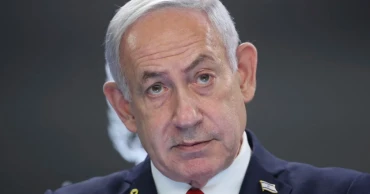
While he has not explicitly stated his policy for his second term, his initial administration picks, including ambassadors to Israel and the U.N., are deeply pro-Israel, indicating he likely will not stand in the way of Israeli Prime Minister Benjamin Netanyahu’s far-right government advancing settlement building.
“There has never been an American president that has been more helpful in securing an understanding of the sovereignty of Israel,” Mike Huckabee, Trump's nominee for ambassador to Israel, told Israel Army Radio, when asked about the possibility of West Bank annexation. “I fully expect that to continue.”
A spokesperson for Netanyahu declined to say whether the Israeli leader would pursue annexation during Trump's presidency. But Netanyahu has named an American-born, hard-line settlement activist, Yechiel Leiter, to serve as ambassador to Washington.
Rights groups already claim Israel is enforcing an apartheid system in the West Bank, and annexation would open Israel up to similar charges if it doesn’t grant Palestinians there equal rights. Israel opposes giving West Bank Palestinians citizenship, saying it would destroy Israel’s Jewish character.
Regardless of whether annexation comes, settler advocates envision unbridled expansion under Trump and under an Israeli government where settler leaders and supporters hold key positions. They see a presidential term where they will be able to more deeply entrench their presence in the West Bank with a proliferation of housing, roads and industrial zones.
“I’m sure that with President Trump it will be much easier because he supports the state of Israel,” said Israel Ganz, the chairman of the Yesha Council, a settler lobbying group.
Israeli settlement expansion has carried on to varying degrees under multiple American administrations. During Trump's term, Israel advanced nearly 33,000 housing units, according to Peace Now, an antisettlement watchdog group, almost three times as much as during President Barack Obama's second term.
The numbers fell significantly during the first two years of the Biden administration, but shot up again in 2023, shortly after Israel's current far-right, prosettlement government was formed, and have surged throughout the war.
The Biden administration has slapped sanctions on Jewish settlers suspected of fomenting violence against Palestinians, an approach that is likely to end under Trump.
In the West Bank, billboards advertise new settlement housing, beckoning passersby to make their home there. In Beit El, next to the Palestinian administrative center of Ramallah, a new neighborhood boasts not the red-roofed, single-family homes that became icons of the settler movement, but rather six towering multistory apartment buildings that can house hundreds, and look like any Israeli suburb.
Palestinians view the settlements as a violation of international law and an obstacle to peace, a position with wide international support. Israel considers the West Bank to be the historical and biblical heartland of the Jewish people and says any partition should be agreed on in negotiations. Peace talks have been moribund for more than a decade, and support for a Palestinian state among Israelis fell after Hamas' Oct. 7, 2023, attacks that sparked the war.
Wasel Abu Yusuf, a Palestinian official, said Trump hadn’t yet made his positions clear and it was unknown if he would support Israeli annexation.
Dror Etkes, an antisettlement researcher and activist, said that during the first Trump administration, West Bank outpost farms, which have forced entire Palestinian communities off huge swaths of land, saw a “meteoric rise,” as did infrastructure projects that allow settlements to expand, like roads and water systems.
Over the next four years, “we can assume that we will see more significant steps of de facto annexation or maybe even official annexation," Etkes said.
Some settler advocates, like Daniella Weiss, believe Trump will not pressure Netanyahu to withdraw troops swiftly from Gaza, creating an opening for resettlement. That notion would be a nonstarter with other American administrations, and much of the international community would oppose it.
A similar strategy in the early years of Israel's West Bank occupation led to the proliferation of settlements there. Two of Netanyahu's key governing partners also support resettling Gaza, although the Israeli leader has said it is not “realistic.”
Yair Sheleg, a research fellow at Jerusalem's Shalom Hartman Institute who studies the settler movement, said Trump was “fickle” and that in his expected push to normalize ties between Israel and Saudi Arabia, he could end up being less favorable to the settlement enterprise than many hope.
But nonetheless, he said, the overarching feeling among settler advocates is that "Trump understands ... the needs of the settlement enterprise.”
1 year ago