world

Think tank report highlights China's contributions to WWII victory
A think tank report released on Friday underlines the great significance and contributions of the Chinese people's resistance against Japanese aggression to the victory in the World Anti-Fascist War.
Titled "Remembering History and Defending Justice -- Great Contributions of the Main Battlefield in the East of the World Anti-Fascist War," the report was jointly issued in Chinese and English by the national high-level think tanks of the Central Institute of Party History and Literature and Xinhua News Agency.
The year 2025 marks the 80th anniversary of the victory in the Chinese People's War of Resistance against Japanese Aggression and the World Anti-Fascist War.
The report was released at an international symposium. Qu Qingshan, head of the Central Institute of Party History and Literature and president of the council of the National High-Level Think Tank of the institute, said the spirit of resistance is as relevant today as it was decades ago and remains cherished for the Chinese people.
"We commemorate the victory of the War of Resistance to inherit and promote the great spirit, strengthen the spiritual bond that unites the Chinese people in their struggle, and ignite the determination and courage to overcome all difficulties," Qu said.
Addressing the symposium, Xinhua President Fu Hua, also director of the academic committee of the National High-Level Think Tank of Xinhua News Agency, said that from the very beginning, China's War of Resistance held great significance in saving human civilization and safeguarding world peace, making indelible contributions to the victory of the World Anti-Fascist War.
Fu called for a complete, objective and thorough understanding of the World Anti-Fascist War and a correct view of the history of WWII, so that the light of peace and justice will never fade.
The releasing ceremony was chaired by Lyu Yansong, editor-in-chief of Xinhua and deputy director of the academic committee of the National High-Level Think Tank of Xinhua News Agency, and attended by scholars from countries including Russia, Brazil, Italy, Vietnam, Singapore, Malaysia and Argentina.
MAIN BATTLEFIELD IN THE EAST
"The World Anti-Fascist War was a unified global struggle, with the Chinese People's War of Resistance against Japanese Aggression forming a vital component," the report says.
On Sept. 18, 1931, Japanese troops attacked Chinese forces in Shenyang, capital of northeast China's Liaoning Province, marking the start of Japan's 14-year invasion of China.
Despite enormous difficulties, China's soldiers and civilians carried the war of resistance through to the end, tenaciously resisting the Japanese aggressors.
Serving as the main battlefield in the East of the World Anti-Fascist War, China pinned down and fought back against the main Japanese ground forces, as well as part of its naval and air power.
During the war, Chinese forces annihilated more than 1.5 million Japanese troops, accounting for over 70 percent of Japan's total military casualties in WWII, according to the report.
By containing the main forces of Japanese militarism, China not only secured its own national survival but also provided crucial support to resistance forces on other battlefronts, the report says.
Speaking at the symposium, Sergei Sanakoyev, a member of the Russian International Affairs Council and president of the country's Asia-Pacific Research Center, spoke highly of the importance of the Chinese people's enduring resistance, noting that it plays a decisive role in the Asian battlefield.
As one of the key members of the world anti-fascist alliance, China smashed Japanese militarist invasion, liberated the occupied land and restored Asia-Pacific peace, he said.
UNSHAKABLE GLOBAL SIGNIFICANCE
The victory in the Chinese People's War of Resistance against Japanese Aggression marked the first complete triumph against foreign invasion in modern Chinese history, reestablishing China's major-country status in the world.
The victory on the battlefield in the East also gave strong impetus to the world's national liberation movements, as the independence and liberation of the Chinese nation provided an inspiring model for colonial and semi-colonial countries.
Nguyen Minh Hoan, a professor at Ho Chi Minh National Academy of Politics (Central Party School of the Communist Party of Vietnam), hailed the main battlefield in the East as a site of great significance, embodying patriotism, national liberation and social progress.
He added that the victory on the main battlefield in the East, along with China's modernization drive, serves as an inspiration for his country and other developing nations in upholding national independence and international unity, pursuing a suitable development path and participating in global governance.
After WWII, the world colonial system rapidly collapsed, as did Japan's colonial empire, removing a major obstacle to the Asian liberation movement. Since the end of the war, over 100 countries have achieved national independence and liberation, freeing billions of people from the shackles of colonialism.
Moreover, China participated throughout the entire founding process of the United Nations, the most universal, representative and authoritative international organization. The UN Charter, which China helped formulate, has established the cornerstone of modern international order and defined the basic norms governing contemporary international relations.
FOR A BRIGHTER FUTURE
The report highlights the importance of learning from history and staying on the path of peaceful development and common prosperity.
It stresses the need to maintain the correct historical view, uphold the post-war world order, defend international fairness and justice, resolutely pursue peaceful development, and collaboratively build a community with a shared future for humanity.
Francisco Cesar Ferraz, an associate professor at the State University of Londrina in Brazil, said after reading the report that China, as a crucial theater of WWII, not only made significant contributions to the victory of the war but also helped shape the post-war global geopolitical landscape. However, Western historiography influenced by Eurocentrism, Cold War pressures, and discursive barriers, has underestimated China's contribution.
The report urges all peace-loving and justice-upholding people worldwide to stand united, stay vigilant against any resurgence of fascism and militarism, and resolutely oppose dragging humanity into the tragedy of war once again.
10 months ago

Russia launches largest drone assault on Ukraine since war began
Russia launched its largest aerial assault on Ukraine since the start of the war, deploying over 800 drones and decoy devices in a coordinated strike that hit multiple targets across the country, including the capital, Kyiv. At least two people were killed and 17 injured in the attacks.
According to Ukrainian officials, the assault involved 805 drones and decoys, along with 13 missiles of various types. The Ukrainian Air Force reported that it intercepted and destroyed 747 drones and four missiles.
"This is the largest drone attack we've seen since the full-scale invasion began," confirmed Yuriy Ihnat, a spokesperson for Ukraine’s Air Force.
The strikes resulted in nine confirmed missile impacts and 56 drone hits across 37 locations, with falling debris causing additional damage in eight areas.
In Kyiv, smoke was seen rising from the Cabinet of Ministers building, a central government facility, marking what could be the first time a key government building was directly damaged in an airstrike. Emergency services quickly arrived at the scene, while police cordoned off the area.
"This is the first instance where a government building has sustained damage from a Russian attack, including to its roof and upper floors," Prime Minister Yulia Svyrydenko said. "We will rebuild the structures, but the lives lost are irreplaceable."
Svyrydenko urged the international community to respond with more than just words, calling for tougher sanctions, especially targeting Russian oil and gas.
Among the victims were a woman and her three-month-old baby, whose bodies were pulled from the rubble by rescuers, Kyiv city administrator Tymur Tkachenko confirmed. He had initially stated the child was one year old. At least 10 sites in Kyiv were damaged in the barrage.
Mayor Vitalii Klitschko said Russian drones struck a nine-story apartment building in Kyiv’s Sviatoshynskyi district and a four-story residential block in the Darnytskyi district—both reportedly direct hits.
This marks the second large-scale drone and missile strike on Kyiv in just two weeks, further diminishing hopes for a diplomatic resolution.
The attack follows recent calls from European leaders urging President Vladimir Putin to end the war. Meanwhile, 26 of Ukraine’s allies have pledged to send troops as part of a “reassurance force” after the conflict concludes.
Ukrainian President Volodymyr Zelenskyy has reiterated his willingness to engage in peace talks with Putin and has appealed to U.S. President Donald Trump to impose stronger sanctions on Moscow to pressure an end to the war.
10 months ago
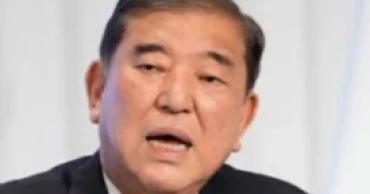
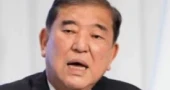
Japan PM Shigeru Ishiba signals resignation amid party pressure
Japanese Prime Minister Shigeru Ishiba has indicated he will resign, responding to mounting pressure from within his own Liberal Democratic Party (LDP) following a major electoral setback in July, according to Japan’s NHK public broadcaster.
Ishiba, who assumed office last October, had resisted stepping down despite persistent demands from conservative factions in his party. However, he has now chosen to leave in an effort to prevent further division within the LDP, NHK reported.
His decision comes just a day before the party is scheduled to decide whether to hold an early leadership election—widely seen as a de facto vote of no-confidence in his leadership.
Ishiba is expected to formally announce his resignation at a press conference later on Sunday.
The July upper house election dealt a significant blow to Ishiba’s coalition, which failed to secure a majority in the 248-seat chamber, intensifying concerns over his administration’s stability.
Sources suggest that his resignation followed a meeting on Saturday with Agriculture Minister Shinjiro Koizumi and former Prime Minister Yoshihide Suga, a close advisor, both of whom reportedly urged him to step aside before Monday’s party decision.
Despite previously emphasizing the need to maintain political continuity amid ongoing economic challenges—including U.S. trade tensions, inflation, and agricultural reforms—Ishiba has now decided to relinquish his role.
Calls for his resignation gained momentum after the LDP’s internal review of the election loss last week, which recommended sweeping reforms and hinted at leadership change as a necessary step forward.
10 months ago

Watch the moon turn red during a total lunar eclipse tonight
Skywatchers in Asia including Bangladesh are in for a treat Sunday night as a rare celestial event, a blood moon total lunar eclipse, lights up the sky.
The phenomenon occurs when the sun, Earth, and moon align perfectly in a straight line.
This year’s second total lunar eclipse will be fully visible across Asia—from Saudi Arabia to the Philippines, extending north to the Arctic Ocean and south to Antarctica—as well as in parts of East Africa and western Australia.
Other regions, including Europe, the rest of Africa, and Australia, will see only partial views, while some glimpses will be possible from Brazil’s coast and parts of Alaska.
During the eclipse, Earth’s shadow will cover the full moon, with totality lasting one hour and 22 minutes. The entire event, from the first shadow to the moon’s return to full brightness, will span over five hours.
Earlier this year, a shorter total lunar eclipse in March offered prime viewing for the Americas. This Sunday night’s spectacle, known as a blood moon for its reddish hue, will be visible on the opposite side of the globe.
Two weeks later, the sky will feature a partial solar eclipse observable from New Zealand, parts of Australia, and Antarctica.
10 months ago
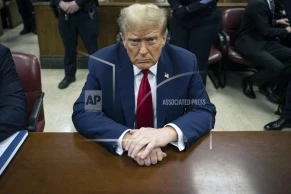
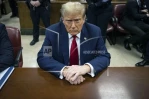
Trump threatens ‘war’ on Chicago as thousands protest federal crackdown
United States President Donald Trump has warned of unleashing his newly renamed “Department of War” on Chicago, sparking outrage and protests in both Chicago and Washington, DC, against the deployment of National Guard troops and immigration agents in Democratic-led cities.
Trump made the threat on Saturday through a post on his Truth Social platform, sharing a parody image from the film Apocalypse Now that depicted flames and helicopters over Chicago’s skyline. “‘I love the smell of deportations in the morning,’” he wrote. “Chicago about to find out why it’s called the Department of WAR.”
The president offered no further details, only adding the phrase “Chipocalypse Now,” a play on the 1979 Vietnam War film where the line “I love the smell of napalm in the morning” is delivered.
Trump has repeatedly threatened to expand federal enforcement in Chicago, similar to measures already taken in Los Angeles, and to deploy National Guard troops there, reports AL Jazeera.
Illinois Governor JB Pritzker denounced the remarks, saying the state “won’t be intimidated by a wannabe dictator.” He added, “The President of the United States is threatening to go to war with an American city. This is not a joke. This is not normal.”
Chicago Mayor Brandon Johnson also condemned Trump’s comments, calling them “beneath the honor of our nation” and accusing him of trying to “occupy our city and break our Constitution.”
Protests erupted in both Chicago and DC. In downtown Chicago, more than a thousand demonstrators carried signs saying “I.C.E. out of Illinois, I.C.E. out of everywhere,” while speakers compared the crackdown to Israel’s actions in Gaza. Nazek Sankari of the US Palestinian Community Network told the crowd, “We are inspired by the steadfastness of Palestinians in Gaza, and it is why we refuse to cower to Trump and his threats.”
Viviana Barajas of the community group Palenque LSNA vowed Chicago would “stand up” just as Los Angeles had. “If he thinks these frivolous theatrics to undermine our sovereignty will shut out the passion we have for protecting our people, this is Chicago, and he is sorely mistaken,” she said.
In Washington, protesters at the “We Are All DC” march carried banners reading “END THE D.C. OCCUPATION” and posters with slogans like “Trump must go now,” “Free DC,” and “Resist Tyranny.” Al Jazeera’s Heidi Zhou-Castro reported that demonstrators were calling Trump “a fascist and an authoritarian.”
Critics also noted that Trump had already deployed 2,000 troops to the capital last month despite violent crime being at a 30-year low. Mark Fitzpatrick, a former US diplomat and DC resident, said, “Federal agents, national guards patrolling our streets, that’s really an affront to the democracy of our city … We don’t have our own senators or members of the House of Representatives, so we’re at the mercy of a dictator like this, a wanna-be dictator.”
One protester, Jun Lee, carried a woodcut sign that read “Free DC.” She said she joined the march because she was “saddened and heartbroken” by the federal intervention. “This is my home, and I never, ever thought all the stuff that I watched in a history documentary that I’m actually living in person,” she said.
Trump has claimed he has broad authority to deploy the National Guard, at times even joking about being a dictator. “Most people are saying, ‘If you call him a dictator, if he stops crime, he can be whatever he wants’. I am not a dictator, by the way,” he said last month. “Not that I don’t have – I would – the right to do anything I want to do.” He added: “I’m the president of the United States. If I think our country is in danger – and it is in danger in these cities – I can do it.”
10 months ago

Key facts about the recent immigration sweep at Georgia factory
Hundreds of federal agents descended on a sprawling site where Hyundai manufactures electric vehicles in Georgia and detained 475 people, most of them South Korean nationals.
This is the latest in a long line of workplace raids conducted as part of the Trump administration's mass deportation agenda. But the one on Thursday is especially distinct because of its large size and the fact that it targeted a manufacturing site state officials have long called Georgia's largest economic development project.
The detainment of South Korean nationals also sets it apart, as they are rarely caught up in immigration enforcement compared to other nationalities.
Here are some things to know about the raid and the people impacted:
The workers detained
South Korea’s Foreign Minister Cho Hyun said Saturday that more than 300 South Koreans were among the 475 people detained.
Some of them worked for the battery plant operated by HL-GA Battery Co., a joint venture by Hyundai and LG Energy Solution that is slated to open next year, while others were employed by contractors and subcontractors at the construction site, according to Steven Schrank, the lead Georgia agent of Homeland Security Investigations.
He said that some of the detained workers had illegally crossed the U.S. border, while others had entered the country legally but had expired visas or had entered on a visa waiver that prohibited them from working.
But an immigration attorney representing two of the detained workers said his clients arrived from South Korea under a visa waiver program that enables them to travel for tourism or business for stays of 90 days or less without obtaining a visa.
Attorney Charles Kuck said one of his clients has been in the U.S. for a couple of weeks, while the other has been in the country for about 45 days, adding that they had been planning to return home soon.
The detainees also included a lawful permanent resident who was kept in custody for having a prior record involving firearm and drug offenses, since committing a crime of “moral turpitude” can put their status in jeopardy, Lindsay Williams, a public affairs officer for U.S. Immigration and Customs Enforcement, said Saturday.
Williams denied reports that U.S. citizens had been detained at the site since “once citizens have identified themselves, we have no authority.”
Hyundai Motor Company said in a statement Friday that none of its employees had been detained as far as it knew and that it is reviewing its practices to make sure suppliers and subcontractors follow U.S. employment laws. LG told The Associated Press that it couldn’t immediately confirm how many of its employees or Hyundai workers had been detained.
The South Korean government expressed “concern and regret” over the operation targeting its citizens and is sending diplomats to the site.
“The business activities of our investors and the rights of our nationals must not be unjustly infringed in the process of U.S. law enforcement,” South Korean Foreign Ministry spokesperson Lee Jaewoong said in a televised statement from Seoul.
Most of the people detained have been taken to an immigration detention center in Folkston, Georgia, near the Florida state line. None of them have been charged with any crimes yet, Schrank said, but the investigation is ongoing.
Raid is the result of a monthslong investigation
The raid was the result of a monthslong investigation into allegations of illegal hiring at the site, Schrank said.
In a search warrant and related affidavits, agents sought everything from employment records for current and former workers and timecards to video and photos of workers.
Court records filed this week indicated that prosecutors do not know who hired what it called “hundreds of illegal aliens.” The identity of the “actual company or contractor hiring the illegal aliens is currently unknown,” the U.S. Attorney’s Office wrote in a Thursday court filing.
The sprawling manufacturing site
The raid targeted a manufacturing site widely considered one of Georgia’s largest and most high profile.
Hyundai Motor Group started manufacturing EVs at the $7.6 billion plant a year ago. Today, the site employs about 1,200 people in a largely rural area about 25 miles (40 kilometers) west of Savannah.
Agents specifically honed in on an adjacent plant that is still under construction at which Hyundai has partnered with LG Energy Solution to produce batteries that power EVs.
The Hyundai site is in Bryan County, which saw its population increase by more than a quarter in the early 2020s and stood at almost 47,000 residents in 2023, the most recent year data is available. The county’s Asian population went from 1.5% in 2018 to 2.2% in 2023, and the growth was primarily among people of Indian descent, according to Census Bureau figures.
Raid was the ‘largest single site enforcement operation’
From farms and construction sites to restaurants and auto repair shops, there have been a wide array of workplace raids undertaken in this administration. But most have been smaller, including a raid the same day as the Georgia one in which federal officers took away dozens of workers from a snack-bar manufacturer in Cato, New York.
Other recent high-profile raids have included one in July targeting a legal marijuana farm northwest of Los Angeles. More than 360 people were arrested in one of the largest raids since Trump took office in January. Another one took place at an Omaha. Nebraska, meat production plant and involved dozens of workers being taken away.
Schrank described the one in Georgia as the “largest single site enforcement operation” in the agency’s two-decade history.
The majority of the people detained are Koreans. During the 12-month period that ended Sept. 30, 2024, only 46 Koreans were deported during out of more than 270,000 removals for all nationalities, according to Immigration and Customs Enforcement.
Community members and advocates have mixed reactions
Kemp and other Georgia Republican officials, who had courted Hyundai and celebrated the EV plant’s opening, issued statements Friday saying all employers in the state were expected to follow the law.
The nonprofit legal advocacy organization Asian Americans Advancing Justice-Atlanta described the raid in a joint statement as “unacceptable.”
“Our communities know the workers targeted at Hyundai are everyday people who are trying to feed their families, build stronger communities, and work toward a better future,” the statement said.
Sammie Rentz opened the Viet Huong Supermarket less than 3 miles (4.8 kilometers) from the Hyundai site six months ago and said he worries business may not bounce back after falling off sharply since the raid.
“I’m concerned. Koreans are very proud people, and I bet they’re not appreciating what just happened. I’m worried about them cutting and running, or starting an exit strategy," he said.
Ellabell resident Tanya Cox, who lives less than a mile from the Hyundai site, said she had no ill feelings toward Korean nationals or other immigrant workers at the site. But few neighbors were employed there, and she felt like more construction jobs at the battery plant should have gone to local residents.
“I don’t see how it’s brought a lot of jobs to our community or nearby communities,” Cox said.
10 months ago
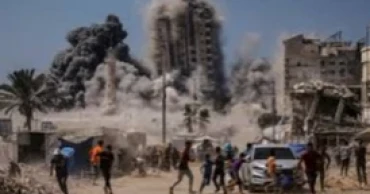
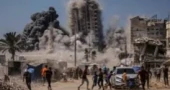
Israel targets high-rise in Gaza City amid expanded offensive, promises more strikes
Israeli forces struck a high-rise building in Gaza City on Friday following an evacuation warning, intensifying a military campaign aimed at taking control of the devastated city, home to roughly one million Palestinians. Separate airstrikes in the city reportedly killed at least 27 people, according to local health authorities.
The Israeli military claims that Hamas uses high-rise buildings for surveillance and ambush planning. Officials said they would continue with “precise, targeted strikes” in the coming days against militant infrastructure.
In preparation for an expanded offensive, Israel has called up tens of thousands of reservists and issued repeated evacuation orders. The renewed military push has sparked growing opposition inside Israel and criticism from the international community.
Friday’s airstrike reportedly hit the Mushtaha Tower in Rimal, once an upscale neighborhood. Local resident Ahmed al-Boari said the area had been sheltering displaced residents. Satellite imagery showed numerous makeshift tents surrounding the building. The number of casualties from the strike was not immediately known. Israel said the tower was targeted because it was being used by Hamas operatives. The building’s roof had already sustained damage from previous strikes.
Growing Fears as Gaza City Declared Combat ZoneIsrael has officially designated Gaza City a combat zone, with certain areas labeled “red zones” where residents have been ordered to evacuate. Many civilians, including those who had previously returned after fleeing, are now living in fear.
Shifa Hospital in Gaza City reported 27 fatalities from overnight strikes, including six members of a single family. The Israeli military says it targets only militants and holds Hamas responsible for civilian casualties, accusing the group of operating in densely populated areas.
Inside Israel, the offensive has triggered protests by families of hostages still believed to be held in Gaza—48 in total, 20 of whom are presumed alive. Demonstrators accuse Prime Minister Benjamin Netanyahu of prolonging the war to appease far-right political allies rather than seeking a ceasefire to secure the hostages’ release.
“The government is waging a war of attrition—not only against the hostages but also against the entire Israeli public,” said Lishay Lavi-Miran, whose husband Omri is among the captives.
Hamas Releases Video of HostagesOn Friday, Hamas released a video appearing to show two hostages in Gaza City: Guy Gilboa-Dalal and Alon Ohel. Gilboa-Dalal, who was last seen over six months ago in another hostage video, is seen pleading for an end to the war—believed to be speaking under duress.
The ongoing conflict began on October 7, 2023, when Hamas-led militants launched a surprise attack on southern Israel, killing about 1,200 people and taking 251 hostages. Most of the hostages have since been released under ceasefire deals or other negotiations.
In response, Israel launched a broad offensive that has killed more than 64,000 Palestinians, according to Gaza’s Health Ministry. The ministry does not specify how many were combatants, but says women and children account for around half the death toll.
Israel insists the war will continue until Hamas is dismantled and all hostages are freed. It also plans to maintain indefinite security control over the Gaza Strip, home to more than two million Palestinians. Hamas has stated it will only release the remaining hostages in exchange for Palestinian prisoners, a permanent ceasefire, and a full Israeli withdrawal from Gaza.
Settler Violence in West Bank EscalatesElsewhere, in the occupied West Bank, Israeli settlers reportedly attacked the Palestinian village of Khallet A-Daba overnight. Witnesses said settlers used clubs and pepper spray against residents. Activist videos showed injured individuals, including a baby with head wounds.
Nine Palestinians were hospitalized, said local activist Basel Adra, who helped produce the Oscar-winning documentary No Other Land, which highlights settler violence. The Israeli military demolished much of the village last month and has not yet commented on the latest incident.
Criticism Over U.S. Sanctions on Palestinian NGOsHuman rights groups in Israel and Palestine issued a joint statement condemning new U.S. sanctions targeting Palestinian civil society organizations. They argue the measures will severely impact groups that have long worked to defend Palestinian rights.
The Biden administration on Thursday sanctioned three Palestinian NGOs—Al Haq, Al Mezan, and the Palestinian Center for Human Rights—accusing them of aiding International Criminal Court (ICC) investigations into alleged Israeli war crimes.
Last year, the ICC issued arrest warrants for Israeli Prime Minister Netanyahu and former Defense Minister Yoav Gallant, citing alleged crimes against humanity in Gaza. The U.S. and Israel reject the ICC’s jurisdiction and have sanctioned several of its officials.
Ammar Dwaik, head of the Palestinian Independent Commission for Human Rights, warned the move "criminalizes accountability" and sends a dangerous message globally. “It tells governments they can silence human rights defenders without consequence,” he said.
10 months ago
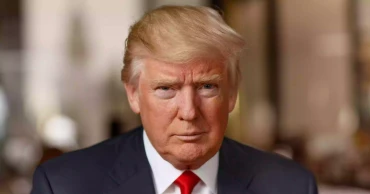
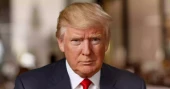
Donald Trump claims India, Russia have fallen to China
US President Donald Trump said in a social media post that it “looks like we’ve lost India and Russia to deepest, darkest China,” sarcastically wishing the three countries a “prosperous future.”
His comment came after Chinese President Xi Jinping hosted Indian Prime Minister Narendra Modi and Russian President Vladimir Putin at the Shanghai Cooperation Organisation summit in Tianjin. The leaders discussed cooperation on energy, security, and other issues, highlighting growing ties that diverge from Washington’s positions on Ukraine and global trade.
Trump noted that US-India relations have cooled in recent years, citing tariffs on Indian goods and criticism of India’s energy trade with Russia. He argued that India benefits disproportionately from trade with the US while relying heavily on Russian oil and military products.
Source: NDTV
10 months ago
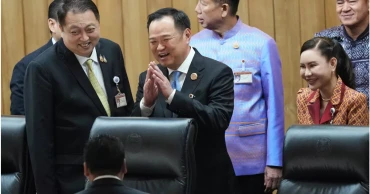
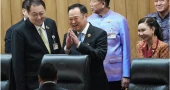
Anutin Charnvirakul elected Thailand’s new prime minister
Veteran Thai politician Anutin Charnvirakul won a vote in Parliament on Friday to become the country’s next prime minister, according to an unofficial running tally broadcast live on television.
Anutin, leader of the Bhumjaithai party, won a total of 311 votes, far exceeding the 247 required majority from the House of Representative’s 492 active members. He and his government are expected to take office in a few days after obtaining a formal appointment from King Maha Vajiralongkorn.
Anutin succeeds Paetongtarn Shinawatra, who was dismissed by court order as prime minister last week after being found guilty of ethics violations over a politically compromising phone call with neighboring Cambodia’s Senate President Hun Sen.
The dispute erupted into a deadly five-day armed conflict in July.
Anutin, who's an elected member of the House, got up from his seat and walked around the chamber to take pictures with other lawmakers when he was a few votes short from the winning total. He and wellwishers exchanged the traditional Thai greeting of wai, with both hands clasped together.
After the House Speaker announced the total tally, a round of applause erupted as he thanked lawmakers around him.
Anutin had served in Paetongtarn’s Cabinet, but he resigned his position and withdrew his party from her coalition government after news of the leaked phone call caused a public uproar.
Pheu Thai, currently leading a caretaker government, attempted to dissolve Parliament on Tuesday, but the acting prime minister said their request was rejected by the king’s Privy Council. The party also nominated its candidate Chaikasem Nitisiri. He received 152 votes.
The 58-year-old Anutin had served in the Pheu Thai-led coalition government that took power in 2023 and before that in the military-backed but elected government under former Prime Minister Prayuth Chan-ocha.
Anutin is best known for successfully lobbying for the decriminalization of cannabis, a policy that is now being more strictly regulated for medical purposes. He also played a high-profile role as health minister during the COVID-19 pandemic, when he was accused of tardiness in obtaining adequate vaccine supplies to fight the virus.
His party has promised to dissolve Parliament within four months in exchange for support from the People’s Party. That party’s leader, Natthaphong Ruengpanyawut, said it would remain in the opposition, leaving the new government potentially a minority one.
The People’s Party also said that an Anutin-led government would have to commit to organizing a referendum on the drafting of a new constitution by an elected constituent assembly. The party has long sought changes to the constitution — which was imposed during a military government — to make it more democratic.
The People’s Party, then named the Move Forward Party, won the most seats in the 2023 election but was kept from power when a joint vote of the House and the Senate failed to approve its candidate for prime minister.
Senators, who were appointed by a military government and were strong supporters of Thailand’s royalist conservative establishment, voted against the progressive party because they opposed its policy of seeking reforms to the monarchy.
The Senate no longer holds the right to take part in the vote for prime minister.
After Move Forward was blocked from taking power, Pheu Thai had one of its candidates, real estate executive Srettha Thavisin, approved as prime minister to lead a coalition government. But he served just a year before the Constitutional Court dismissed him from office for ethical violations.
Srettha’s replacement Paetongtarn, former Prime Minister Thaksin Shinawatra’s daughter, also lasted just a year in office. But even before she was forced out, her government was greatly weakened when Anutin’s Bhumjaithai Party abandoned her coalition right after her controversial call in June with Cambodia’s Hun Sen.
Its withdrawal left Pheu Thai’s coalition with just a tiny and unstable majority in Parliament.
A day ahead of the vote, Thaksin made a surprise departure from Thailand to Dubai, where he lived during his self-imposed exile starting in 2008. His travel took place days before a court ruling over a handling of his return in 2023 that could open him up to a new prison sentence.
The move prompted speculation that he was fleeing again, although Thaksin said he was travelling for a medical checkup and would return to Thailand in a few days.
10 months ago
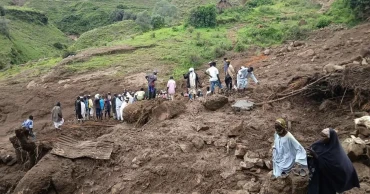
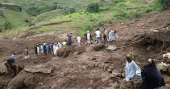
Sudan buries Darfur landslide victims
Sudanese authorities said Thursday they recovered and buried the bodies of hundreds of people who died in a landslide over the weekend in Sudan’s western region of Darfur.
Mujib al-Rahman al-Zubair, head of the Civil Authority in the Liberated Territories, said in a video address shared with The Associated Press that the authority, along with help from local aid workers, was able to reach 375 bodies, but the remaining bodies remain trapped underground.
“May the victims of this devastating incident receive mercy,” he said as he and dozens of others gathered at the scene of the landslide to pray for the dead.
Al-Zubair is leading rescue missions, hoping to recover more bodies and find survivors despite the lack of equipment and resources.
The Aug. 31 landslide that followed days of heavy rainfall in Tarasin, in the Marrah Mountains, could have possibly killed as many as 1,000, Mohamed Abdel-Rahman al-Nair, a spokesperson for the Sudan Liberation Movement-Army, previously told the AP. The United Nations’ Office for the Coordination of Humanitarian Affairs, OCHA, had a similar death toll estimate, but said it’s hard to confirm the magnitude of the tragedy because the area is hard to reach.
The U.N. has said that efforts have been mobilized to support the impacted area, located more than 900 kilometers (560 miles) west of the capital, Khartoum.
U.N. spokesperson Stéphane Dujarric said in a briefing on Thursday that an estimated 150 people from Tarseen and neighboring villages have been displaced.
OCHA and partners launched a rapid assessment and response mission Thursday, with teams from local NGOs, U.N. agencies and international groups reaching the site partly by donkey due to rough terrain, according to Dujarric. Their focus is to verify the number of people affected and deliver essential aid for up to 750 people, including medical kits and food. Mobile health clinics and emergency medical teams were also deployed to the area.
Al-Nair said in a statement Thursday that the landslide caused a “catastrophic humanitarian situation” that requires a rapid response from the international community to provide food and shelter for those who have lost everything.
The Marrah Mountains region is a volcanic area with a height of more than 3,000 meters (9,840 feet) at its summit. The mountain chain is a world heritage site and is known for its lower temperature and higher rainfall than its surroundings, according to UNICEF.
A small-scale landslide hit the area in 2018, killing at least 19 people and injuring dozens of others, according to the now-disbanded United Nations-African Union mission in Darfur.
Sudan is already impacted by one of the worst humanitarian crises in the world caused by the ongoing civil war that erupted in April 2023 in the capital city, Khartoum. The conflict spread across the country after simmering tensions escalated between the Sudanese army and its rival paramilitary Rapid Support Forces. More than 40,000 people have been killed and as many as 12 million displaced.
Some areas in the country are struggling with famine and disease outbreaks such as cholera.
10 months ago