world

US appeals court upholds injunction blocking Trump’s order to create federal voter list
A federal appeals court has upheld a ruling that blocks President Donald Trump’s executive order to create a federal list of eligible voters and restrict the delivery of mail ballots to people included on the list in nearly half of US states.
A panel of judges from the 1st US Circuit Court of Appeals on Saturday rejected the Trump administration’s effort to implement the mail-in voting restrictions in 23 states that had challenged the order ahead of November’s midterm elections.
Trump issued the executive order in March directing the head of US Citizenship and Immigration Services and the commissioner of the Social Security Administration to create a “state citizenship list” of eligible voters. The order also directed the US Postal Service to deliver mail ballots only to people on the list.
Trump has described the proposed changes as safeguards to prevent non-US citizens from voting. However, state election officials argued that the measures could be abused and create confusion in the election process.
Democratic officials from 23 states and the District of Columbia challenged the order in a lawsuit filed in US District Court in Boston.
They argued that Trump’s order was unconstitutional because states and Congress, rather than the president, have the authority to establish election rules.
US District Court Judge Indira Talwani, who was nominated by Democratic President Barack Obama, agreed with the challengers and blocked implementation of Trump’s order for the Nov. 3 elections, but only in the states that filed the lawsuit.
The Justice Department said in an emailed statement Sunday that it is “reviewing all options” for its next legal steps and remains confident that Trump’s executive order will ultimately be upheld.
8 days ago

US pauses attacks on Iran for second straight day as Tehran also holds fire
The United States paused its attacks on Iran for a second consecutive day on Sunday, while Tehran said it had also halted its strikes, as efforts continued to bring the two sides back to negotiations on an interim ceasefire deal that has been badly undermined by recent exchanges of fire.
It remained unclear why the US paused its attacks after nearly two weeks of escalation that saw it target Iranian coastal areas and infrastructure following Iran’s firing on ships attempting to pass through the Strait of Hormuz. The Pentagon did not immediately respond to questions on Sunday.
“President (Donald) Trump has always been consistent in saying he prefers a diplomatic solution, but he continues to retain all options if Iran continues terrorist activities in the Strait of Hormuz or against allies,” White House communications director Steven Cheung said.
“It would be wise for Iran to work toward a negotiated deal. Otherwise, they know what will happen,” he added.
Iran also halted attacks for the past two nights, an Iranian army spokesperson told state television on Sunday. Tehran has in recent days launched counterattacks against countries in the region that host US military forces, killing at least three people at a base in Jordan.
The status of mediation efforts by Pakistan, Qatar and other countries was not immediately clear as concerns persisted over shipping through the Strait of Hormuz and another key waterway, the Bab al-Mandeb Strait leading to the Red Sea. Iran-backed Houthi rebels in Yemen threatened last week to block Saudi shipping there.
Global energy supplies and the economy remain at risk as gasoline prices have risen again.
Iran said Sunday that it was continuing talks with Oman on ensuring the safe passage of ships through the Strait of Hormuz, which lies between the two countries. Iranian Foreign Ministry spokesperson Esmail Baghaei said the talks had made progress and were continuing.
Baghaei also said there had been no change in the status of the strait. Tehran has maintained that the interim agreement with the US allows it to manage shipping through the waterway for now. It has also opposed US efforts to support a shipping route through the strait that passes close to Oman.
The US military said Saturday that its recently reinstated naval blockade against Iran remained in place. It said a dozen commercial ships had been redirected, two disabled and two boarded.
US forces “remain highly vigilant, focused, lethal, and ready,” the military said.
The 60-day period that began after the interim agreement was signed by the two countries in mid-June is now well into its second half. Major issues that were supposed to be negotiated, particularly Iran’s nuclear program at the center of the tensions, remain unresolved as mediators work to keep both sides engaged in talks.
A regional official involved in the mediation said diplomacy was continuing and described the pause in US and Iranian strikes as a “positive signal that helps their efforts to de-escalate.”
The official said both countries wanted to return to the interim ceasefire agreement and that a compromise under discussion focused on allowing Iran to manage vessel traffic through the Strait of Hormuz with fewer restrictions on ships. The official spoke on condition of anonymity because they were not authorized to discuss the negotiations publicly.
Meanwhile, Israeli Prime Minister Benjamin Netanyahu is scheduled to travel to the United States and meet with Trump in Washington on Tuesday, his office said.
The two last met in Washington in February, weeks before they launched the war against Iran, which killed senior Iranian leaders, including Supreme Leader Ayatollah Ali Khamenei.
Iran-backed Hezbollah fired at Israel two days after the war began, prompting Israel to respond with airstrikes and ground forces in southern Lebanon.
Since then, the US has backed landmark direct talks between Lebanon and Israel aimed at easing tensions on that front and finding a way to disarm Hezbollah.
8 days ago

German police hunt suspect in Berlin Pride van-ramming attack that left 1 dead, 16 injured
German authorities on Sunday issued a wanted notice for a fugitive suspect in a van-ramming incident near Berlin’s Pride festival that killed one person and injured at least 16 others.
Police and prosecutors appealed to the public for help in locating the 21-year-old suspect, identified as Abdul B. They said he was believed to have injured several people with a moving vehicle late Saturday night, while one or more people apparently fled from the vehicle. Several people were also apparently stabbed, authorities said.
The wanted notice warned people not to have “direct contact” with the suspect, saying he could be armed and dangerous.
Police earlier said they had identified a suspect with links to Islamic groups in the German capital.
“The suspect is known to police. He is known to us as a member of Islamic circles here in Berlin, and our search for this person is proceeding at full speed,” police spokesperson Florian Nath said.
However, Nath said investigators had no information about the suspect’s “specific motives.”
Police carried out several operations across Berlin as they searched for the suspect, including a raid on an apartment in the Schöneberg district early Sunday. However, no one was found there, police said.
Julian Miethig, who had attended the Pride festival nearby, said he was planning to go to an after-party when a friend told him that “something bad happened there and there are a lot of fire trucks, a lot of emergency vehicles, ambulances.”
“It’s a dark day for the community,” he said.
According to police, a white van entered the Tiergarten park at around 10 p.m. and struck several people before crashing into a tree.
At the time, the closing party of the Pride festival, known as Christopher Street Day, was underway near the Brandenburg Gate, a short distance from the park. Earlier in the day, around 80 trucks had taken part in a parade through central Berlin.
Police said a woman was killed in the incident. Berlin’s fire service said three people suffered life-threatening injuries, eight others were seriously injured and five sustained minor injuries.
The Pride event near the Brandenburg Gate was called off at around 10:15 p.m., while a band’s performance on stage was interrupted. People were asked to return home and avoid passing through the park.
Ricarda Hofmann, one of the presenters at the Pride event, said in an Instagram post that she had been there “not just as a moderator, but as part of a community that comes together to be visible. To celebrate love. To stand up for each other.”
She said the incident had left her speechless.
“What happened today has changed something in me,” she wrote.
Hundreds of thousands of people had gathered in Berlin on Saturday to celebrate Pride, although it was unclear how many remained at the festival when the incident occurred late in the evening. The event is one of Europe’s largest LGBTQ+ celebrations.
The van, its damaged front resting against a tree, remained at the scene on Sunday morning.
German Chancellor Friedrich Merz described the incident as “an attack on our society.”
“What an abhorrent act in Berlin,” Merz wrote in a post on X. He added that Germany loves freedom and “we will preserve and defend that.”
In neighboring Netherlands, Amsterdam is hosting World Pride this week and next alongside its annual Pride celebrations.
Amsterdam Mayor Femke Halsema said authorities and organizers were “closely monitoring the security situation” following the Berlin attack.
She said security is always tight during such events and additional measures would be introduced where necessary, adding that visitors would hopefully notice them as little as possible.
“We don’t want to be scared and we want to be able to celebrate freedom and being able to be who you are and love who you want to,” she said.
8 days ago

France's D-Day beaches, Greece's Mount Olympus secure UNESCO World Heritage designation
World War II’s D-Day landing beaches in northern France and the iconic Mount Olympus in Greece were among the sites added to the World Heritage List on Sunday at a U.N. committee meeting in South Korea reviewing dozens of nominations.
The UNESCO committee, which meets in Busan through Wednesday, also inscribed the ancient Japanese capitals of Asuka and Fujiwara and South Sudan’s Boma-Badingilo Migratory Landscape, host to one of the world’s largest land mammal migrations and the country’s first addition to the World Heritage List.
The French designation covers the five Normandy landing beaches — Omaha, Utah, Sword, Gold and Juno — where more than 150,000 Allied troops came ashore on June 6, 1944, along with the Pointe du Hoc assault site, all central to the campaign to liberate Western Europe from Nazi occupation during World War II.
International Council on Monuments and Sites, which evaluates submissions to the heritage committee, said the sites contain extensive remnants, from German fortifications and bomb-scarred landscapes to Allied harbor structures and sunken vessels, marking an “event widely perceived as having enabled the return of freedom and heralded a lasting peace on the European continent.”
ICOMOS also called for stronger monitoring and preservation efforts on the sites, citing potential threats posed by tourism, climate change and rising sea levels, and the development of wind farms near the areas.
Ahlem Gharbi, France’s permanent delegate to UNESCO, said the Normandy landings marked a turning point from global conflict toward a postwar order built on peace and security, and that the designation of the sites carries added significance at a time of escalating international crises and wars.
“It’s probably the greatest amphibious landing there’s ever been. It ought to be remembered for that alone,” historian David Edgerton said in a recent interview with The Associated Press.
The World Heritage inscription of Mount Olympus, the mythical home of the 12 Olympian gods, rewarded a 12-year effort by Greece to secure recognition for its tallest mountain as a mixed cultural and natural heritage site. Rising 2,918 meters (9,573 feet) from a base near sea level, the mountain was believed to be the throne of Zeus, king of the gods, while also harboring rich biodiversity.
Evangelos Geroliolios, mayor of Dion-Olympus, a municipality at the foot of the mountain, said in a recent interview with the AP that inclusion on the World Heritage List “places greater obligations on our part to protect this environment,” citing the potential impact of increased tourism.
“We reaffirm our unwavering commitment to safeguarding Mount Olympus for the benefit of present and future generations,” said Georgios Koumoutsakos, Greece’s delegate to UNESCO. “As Greek mythology wisely reminds us, it is always best to remain on good terms with gods.”
The designated Japanese locations in the western prefecture of Nara cover 19 archaeological sites from the 6th- to 8th-century capitals of Asuka and Fujiwara, where Japan established its first centralized state modeled after Chinese systems. The sites preserve the largely buried remains of royal palaces, government offices, Buddhist temples and tombs from capitals that influenced the later capitals of Nara and Kyoto.
Japanese Vice Culture Minister Shigeki Kobayashi thanked the committee for inscribing the Asuka-Fujiwara sites and said Japan reaffirms its commitment to “transmitting this valuable property to the future generations.” Japanese Prime Minister Sanae Takaichi, a Nara native, wrote on X that she hopes the World Heritage designation will boost tourism to the site.
Yoshiyuki Aihara, a Nara University archaeology professor, told AP the sites are significant because they show how Japan’s ancient state was formed through influences from China and the Korean Peninsula.
“If you dig underneath these rice paddies about 1 meter, you start finding a stretch of ruins in this area, though that’s not easy for ordinary visitors to understand,” said Aihara, who is continuing excavation work at the site.
South Sudan’s Boma-Badingilo site encompasses vast wetlands, flood plains and savannas shaped by seasonal rainfall and flood dynamics, with an estimated 6 million white-eared kob, tiang and Mongalla gazelles moving across the landscape in response to changing environmental conditions.
It also provides habitat for elephants, lions, cheetahs and other wildlife while supporting various ethnic communities that have lived by herding, farming and fishing for centuries, according to UNESCO.
8 days ago

‘Just the beginning, long way to go’: Abhijeet Dipke reflects on CJP movement after protest victory
Abhijeet Dipke, the face of India’s Cockroach Janta Party (CJP) movement, said the group’s recent success was only the beginning and that it had a long journey ahead, following the resignation of Education Minister Dharmendra Pradhan over allegations of exam paper leaks.
In a video message posted on his X account on Sunday morning, Dipke appeared relaxed after weeks of protests, saying he could finally rest without worrying about the next challenge.
“I could go to sleep and wake up in my bedroom without thinking about what to do next or what will happen till evening,” he said.
Recalling the 37-day protest campaign, Dipke described the period as “really, really difficult” but said there was “no panic” after the government accepted their demands and the movement called off its demonstrations.
“This is just the beginning. The Cockroach Janata Party has a long way to go,” he told his followers.
Dipke founded the CJP in May as a satirical response to a comment by India’s Chief Justice, but the initiative soon transformed into a nationwide youth movement over education reforms, unemployment and government accountability.
Thousands of supporters, who called themselves “cockroaches,” gathered at New Delhi’s Jantar Mantar protest site, demanding accountability over alleged irregularities in major entrance examinations, including NEET.
The protesters held Pradhan responsible for the exam paper leak crisis and the deaths of some students, and made his resignation one of their key demands. After weeks of demonstrations, Pradhan stepped down, while the government assured that no legal action would be taken against protesters. The CJP subsequently withdrew its agitation.
Reflecting on the movement, Dipke thanked supporters who stood by the campaign despite widespread doubts about its success.
Suffering from typhoid and fever, he also apologised for not being able to personally thank everyone who gathered at Jantar Mantar after the announcement.
“All the people who were waiting at Jantar Mantar for 37 days, I want to thank each and every one of you. I really, really, really appreciate what you did for this country,” he said.
Dipke also expressed gratitude to critics, saying their questions helped him improve and contributed to the movement’s ability to deliver results.
“I think that’s why we were able to deliver as well,” he added.
Source: NDTV
8 days ago

Typhoon Noul hits southern China, over 700,000 evacuated as flights canceled
Typhoon Noul made landfall in southern China early Sunday, bringing strong winds and heavy rainfall to Guangdong province and Hong Kong, forcing more than 700,000 people to evacuate and disrupting air and rail services.
China’s National Meteorological Center said Noul struck the coast of Huidong county in Huizhou city, Guangdong, around 3:50am Sunday. State media described it as the strongest typhoon to hit China so far this year.
Hong Kong’s Observatory said the storm had maximum sustained winds of 110 kilometres per hour near its centre as it moved inland over Guangdong, gradually weakening while continuing to affect the region with heavy rain and strong winds.
More than 715,000 people in Guangdong province were relocated as authorities placed the area on high alert, state media reported. Train services across the province were suspended on Sunday.
The weather authority warned that parts of southern Guangdong and southeastern Fujian provinces could experience heavy rainfall and strong winds over the weekend. State broadcaster CCTV reported that several trees were uprooted in coastal Huilai county.
Hong Kong’s airport authority said around 350 flights were canceled due to the storm. At least nine people were injured across the city during the typhoon period, according to local authorities.
Before reaching Hong Kong, parts of scaffolding attached to a high-rise building collapsed on Saturday afternoon, police said, though no injuries were reported initially.
Taiwan’s weather agency said Noul brought rainfall to parts of southern and eastern Taiwan before moving away from the island.
Earlier this month, Typhoon Bavi affected eastern China with strong winds and heavy rain, prompting the evacuation of more than 2 million people after making landfall on July 11. Another storm, Maysak, hit southern China on July 3.
8 days ago
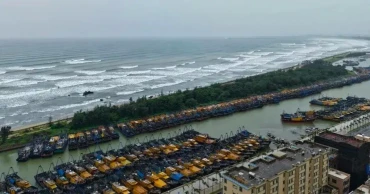
China issues orange typhoon alert after Noul hits Guangdong coast
China’s National Meteorological Center issued an orange typhoon alert on Sunday after Typhoon Noul made landfall in southern Guangdong Province, bringing strong winds near its center.
The typhoon struck the province with maximum winds reaching Force 14 near its eye, according to the meteorological authority.
Later on Sunday morning, Noul weakened from a severe typhoon to a typhoon, the center said.
China follows a four-tier, color-coded warning system for typhoons, with red being the highest level, followed by orange, yellow and blue.
The weather authority also renewed a red alert for rainstorms and a yellow alert for severe convective weather on Sunday.
It urged local authorities to strengthen disaster prevention and emergency response measures, particularly against possible flash floods, landslides and mudslides caused by the storm.
8 days ago

Pralhad Joshi takes additional charge as India's education minister after Pradhan resigns
Union Minister Pralhad Joshi has been given additional charge of India's Ministry of Education following the resignation of Dharmendra Pradhan amid nationwide protests over alleged examination paper leaks.
The appointment was confirmed by the President's Office on Saturday after accepting Pradhan's resignation. Joshi will continue to serve as Union Minister for Food and Consumer Affairs while overseeing the education portfolio.
Speaking to reporters after his appointment, Joshi thanked Prime Minister Narendra Modi and pledged to carry out his new responsibilities with dedication.
He credited the Modi government with achieving significant milestones over the past 12 years and praised his predecessor for implementing the National Education Policy and introducing several key reforms in recent years.
Pradhan, 57, submitted his resignation on the 35th day of protests at Delhi's Jantar Mantar, saying he stepped down to prevent what he described as anti-national forces from exploiting the situation.
In his resignation letter, he said he had devoted more than four decades to improving education and supporting students and teachers, describing a strong and inclusive education system as the foundation of a strong nation.
Hours after Pradhan's resignation, spokespersons of the Cockroach Janta Party (CJP), Saurav Das and Ashutosh Ranka, jointly announced the end of the protest alongside Union ministers JP Nadda and Jitendra Singh, saying the movement had been withdrawn "in good faith" after the government assured them that their demands would be addressed.
The resignation of Pradhan had been the principal demand of the protest movement launched by Abhijeet Dipke, a Boston University graduate who recently returned to India to campaign against alleged examination paper leaks.
A day before taking charge of the Education Ministry, Joshi had reiterated the government's commitment to protecting students' interests while accusing anti-social elements of attempting to exploit the protests.
He said the Modi government remained committed to strengthening the education system, ensuring fairness in examinations and taking strict action against any irregularities affecting students.
Joshi also acknowledged students' right to peaceful protest but urged them to remain vigilant against attempts by outside groups to hijack the movement for other purposes.
Source: NDTV
8 days ago
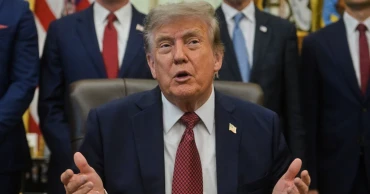
US pauses Iran strikes as diplomacy gains momentum, but uncertainty remains
The United States has suspended its airstrikes on Iran after nearly two weeks of escalating military operations, while diplomatic efforts have intensified in an attempt to prevent the conflict from returning to full-scale war.
It remains uncertain, however, whether Washington and Tehran are moving toward a lasting breakthrough as the conflict approaches its fifth month on Tuesday.
President Donald Trump has sent mixed signals, warning that further military action remains an option while also saying negotiations with Iran are continuing. He has dismissed concerns that rising fuel prices linked to the conflict could hurt Republicans in November's midterm elections.
The situation is further complicated by Israeli Prime Minister Benjamin Netanyahu's planned visit to Washington next week. Israel, which joined the United States in launching military operations against Iran on Feb. 28, has so far stayed out of the latest U.S. strikes following Iran's effective closure of the Strait of Hormuz, through which about one-fifth of global oil supplies normally pass.
Analysts say Israel's absence from the latest phase of the conflict could signal either a desire to avoid widening the war or leave open the possibility of greater military pressure if diplomacy fails.
Regional mediation efforts are continuing, with officials involved in the talks describing the pause in military operations as a positive development that could help reduce tensions.
According to a regional official familiar with the negotiations, discussions are focused on restoring an interim ceasefire while reaching a compromise over shipping through the Strait of Hormuz. The proposal under discussion would allow Iran to oversee vessel transit with fewer restrictions on commercial shipping.
Iran tightened control over the strategic waterway after the conflict began by targeting commercial vessels, contributing to sharp increases in global oil prices. The disruption has raised economic concerns in the United States, where higher fuel costs have become a political issue ahead of the congressional elections.
The U.S. military has expanded its operations in recent weeks, targeting Iran's coastal defenses, transport infrastructure and military positions in an effort to weaken Tehran's ability to threaten shipping in the Gulf.
Analysts believe the military campaign is intended to pressure Iran into returning to negotiations. However, they note that Iran's divided political leadership may complicate diplomatic progress, as some factions could view concessions to Washington as a sign of weakness.
Despite their differences, both countries have strong economic incentives to restore normal shipping through the Strait of Hormuz, although they remain divided over how the waterway should be managed.
Regional tensions remain high despite the pause in direct U.S.-Iran fighting.
Yemen's Iran-backed Houthi rebels said Saturday they launched missiles and drones at Saudi Arabia in response to Saudi airstrikes on the Red Sea port city of Hodeida. The group also claimed it had closed the Bab el-Mandeb Strait, another strategically important shipping route.
Meanwhile, the U.S. military said it continues enforcing its naval blockade of Iranian ports and disabled a Mozambique-flagged vessel in the Gulf of Oman after it allegedly attempted to breach the blockade.
Trump said Friday that Washington has two options: continue military operations or pursue diplomacy.
"We can keep doing exactly what we're doing... or we can negotiate with them, which we're also doing right now," he told reporters.
While saying he does not believe Iran is yet ready to reach an agreement, Trump added that Tehran appears to be taking negotiations more seriously as the conflict continues.
The president also met senior national security advisers on Friday to review U.S. strategy toward Iran, including whether to maintain the current approach or expand military operations. No American airstrikes were reported overnight, ending a streak of 13 consecutive nights of attacks.
Trump insisted he is not rushing to end the conflict because of domestic political considerations, saying his administration's priority is to "do it right" rather than focus on the approaching elections.
8 days ago

Volker Türk wins second term as UN human rights chief despite opposition from US, Israel and Russia
U.N. human rights chief Volker Türk won a second term Friday despite opposition from the United States, Russia and Israel to keep him in one of the most controversial United Nations posts for four more years.
U.N. member nations rejected a U.S. proposal to delay the vote until the end of next week as well as a Russian proposal to extend Türk’s term just until the end of the year. The vote in the 193-member General Assembly to reappoint Türk was 144-10, with 13 abstentions.
While he got strong support, the votes and speeches also reflected concern that Secretary-General António Guterres quietly nominated the Austrian lawyer this month after private consultations, with no public discussion, as the U.N. chief nears the end of his own 10-year tenure.
Türk’s job as the U.N. rights chief, by its nature, is tricky: It requires speaking out against rights violations by the governments of the countries that make up the membership of the world body. For instance, Türk has sharply criticized Russia’s 2022 invasion of Ukraine.
Türk got wide support but loud pushback from the U.S. and Israel
Türk, whose term was supposed to expire on Oct. 11, has faced opposition from critics and some countries for his criticism of Israel’s attacks in Gaza and his approach to China’s crackdown on its Uyghur minority. None of Türk’s predecessors have served two full terms since the job was created in 1993.
U.S. deputy ambassador Jeff Bartos warned before the vote that reappointing Türk would prove that the General Assembly “is dysfunctional” and that the vote “was quietly shoved onto the agenda at the last minute to bypass meaningful review.”
“Make no mistake, if this assembly tolerates procedural overreach, backroom deals and the misuse of U.N. posts, there will be consequences,” he warned. “The United States will immediately reassess our engagement, participation and funding.”
The Trump administration already owes nearly $4 billion to the U.N. for its regular dues and for the separate budget for U.N. peacekeeping operations.
Russia’s deputy ambassador, Dmitry Chumakov, said Guterres had sown discord among U.N. members and accused Türk of “political bias” and promoting “Western geopolitical interests under the pretext of concern for human rights.”
Speaking for the European Union, Ireland’s U.N. Ambassador Fergal Mythen reaffirmed the 27-nation bloc’s “wholehearted support” for Türk.
“The European Union believes that Mr. Türk has demonstrably fulfilled responsibilities entrusted to him effectively and with integrity in an objective and non-selective manner over the past four years,” Mythen said. He takes on another term when “the multiplication of obstacles and challenges and rights violations is relentless, and the promotion and protection of all human rights becomes ever more contested.”
Guterres, whose own second five-year term ends Dec. 31, sent letters to regional groups at the United Nations this month informing them of his intention to reappoint Türk. The African group had no objection, but the Latin American countries had several, including Nicaragua, Argentina and Paraguay.
Before the vote, Israel’s Foreign Ministry called Guterres’ action to get a second term for Türk the U.N. secretary-general’s “latest moral failure,” saying on social media that the choice should be left to his successor.
“After years of bias against Israel, the answer is accountability — not rewriting the rules,” the ministry said.
Guterres is ‘following the rules’ on the reappointment, UN says
U.N. spokesman Stephane Dujarric says Guterres was following the 1993 resolution that established a U.N. high commissioner for human rights and allows for a second term.
“The secretary-general is doing things in a very transparent manner, following the rules and his authority,” Dujarric told reporters Friday. “Consultations were had with member states prior to this and with regional groups.”
As human rights chief, the longtime U.N. functionary who worked for Guterres at United Nations headquarters in New York, Türk has expressed concerns on issues in China as diverse as the fate of detained individuals — like artist Gao Zhen, lawyer Yu Wensheng and media mogul Jimmy Lai — and counterterrorism and assimilation practices that affect ethnic minorities including the Uyghurs in the regions of Xinjiang, Inner Mongolia and Tibet.
Critics insist he could have done more to publicly follow up on a report issued by his predecessor, former Chilean President Michelle Bachelet, that said China’s discriminatory detention of Uyghurs and other mostly Muslim ethnic groups in Xinjiang may amount to crimes against humanity.
Türk also has stopped short of joining independent U.N. rights experts who have accused Israel of genocide against Palestinians during its war against Hamas in Gaza. Israel vehemently denies those claims.
Former head of Human Rights Watch Ken Roth said: “The biggest stain on Türk’s reputation is his utter abandonment of the Uyghurs.”
Türk has used both private engagement with Beijing and public advocacy to support human rights in China, his office said. Roth called that “an admission that he is doing nothing, that he’s putting the plight of the Uyghurs on the deep back burner, and is just pretending to care.”
The Chinese government denies the Uyghurs have been or are being persecuted. It maintains its policies in Xinjiang rooted out terrorism and religious extremism after sporadic bouts of violence rocked the region in previous decades.
9 days ago