Tech
Ukraine uses midrange drones to hit Russian supply lines and slow advances
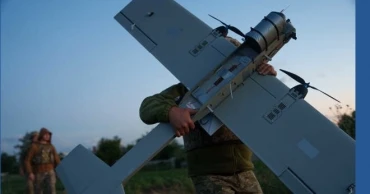
Ukraine is increasingly using midrange drones to strike Russian supply routes far behind the front lines, a strategy military commanders say is disrupting logistics, slowing Russian advances and helping Ukrainian forces regain ground.
From an underground command centre in Ukraine's Kharkiv region, drone operators monitor live thermal images of roads in Russian-held territory. Once they spot a military vehicle, they guide the drone toward its target, aiming to destroy fuel, ammunition and troop supplies before they reach the battlefield.
"Our mission is to cut logistics," said Kat, commander of Ukraine's K-2 Brigade. "If we stop their supply lines, frontline troops are left without food, ammunition, batteries and night-vision equipment. That's how we weaken them."
The soldiers interviewed by The Associated Press used only their military call signs, following Ukrainian military rules.
By repeatedly targeting roads used to transport fuel, ammunition and reinforcements, Ukrainian commanders say they have made Russia's supply operations slower, more expensive and less reliable. They believe this has helped slow Russian offensives while allowing Ukraine to launch counterattacks and carry out strikes in Russian-occupied Crimea.
Until recently, this area was difficult for Ukraine to reach. Frontline drones lacked the necessary range, while long-range drones were reserved for strategic targets hundreds of kilometres away. That left a large area where Russian forces could move supplies with little threat.
Now, fixed-wing midrange drones equipped with Starlink satellite communications have filled that gap, turning Russian supply routes into active targets.
"They are putting constant pressure on Russian logistics and making it harder for Russia to keep some parts of the front supplied," said Samuel Bendett, a researcher at the Center for Naval Analyses.
Bendett said Ukraine will need to maintain this pressure while Russia develops ways to counter the drones. Although he expects Moscow to adapt over time, he said Russia's larger military can absorb greater losses for now.
"The key question is whether Ukraine can keep up this pressure in the coming weeks and months," he said.
The K-2 Brigade operates from what looks like an ordinary office, while drones are assembled in workshops and launched from hidden locations near the front.
Inside the command room, drone pilots dressed in civilian clothes work at desks covered with coffee cups, energy drink cans and electronic devices. Their computer screens display satellite maps and target locations rather than office documents.
In May alone, the brigade launched 800 midrange drones, successfully hitting their intended targets with 650 of them.
The drones are launched more than 200 kilometres away, after which pilots in Kharkiv take control. They can guide the aircraft for up to four hours and more than 100 kilometres behind Russian lines.
Some operators are flying drones over towns they once called home before Russia's invasion forced them to leave. They now search those same streets for Russian troops, military vehicles and ammunition depots.
The brigade even keeps a scoreboard tracking the performance of its 10 drone teams. The current record stands at 17 successful strikes in a row.
One of the unit's top drone operators, 20-year-old Pharaon, said his gaming experience helped prepare him for the job.
"When I was younger, I spent a lot of time playing Counter-Strike," he said. "It's similar in some ways because you're competing to destroy enemy targets."
Military experts say Ukraine's campaign gained momentum earlier this year after SpaceX blocked Russian forces from using Starlink satellite services without authorisation. The move disrupted Russian drone operations while giving Ukraine a technological advantage.
Rob Lee, a senior fellow at the Foreign Policy Research Institute's Eurasia Program, described the Starlink restriction as one of the year's most significant developments on the battlefield.
Pharaon said the improvement has been dramatic.
"Now, eight out of every 10 missions are successful," he said. "A few months ago, it was the opposite."
The K-2 Brigade mainly uses the Dart drone, an inexpensive aircraft made from lightweight materials including wood, polystyrene and 3D-printed parts. It is mainly used to attack Russian supply convoys. Larger drones, such as the Hornet, carry heavier explosives and are used against bridges and other infrastructure.
Before every mission, crews inspect batteries, cameras, flight controls and the Starlink communication system to ensure the drone remains connected throughout the flight.
The drones are then taken to concealed launch sites near the front line, where soldiers prepare them for takeoff using catapult launchers.
Russia was initially caught off guard when Ukraine expanded the campaign about three months ago. It has since increased mobile air defence teams, machine-gun positions and drone interception units, but Ukrainian commanders say the speed and scale of the attacks have allowed them to stay ahead.
Bendett said Russia also faces coordination problems between military units, making it harder to respond quickly when drones are detected.
Ukraine has focused many of its attacks on key highways linking the occupied cities of Mariupol, Berdyansk, Melitopol and Crimea, which are major supply routes for Russian forces in southern and eastern Ukraine.
According to Ukraine's military intelligence, repeated drone attacks have made parts of the land corridor connecting Russia to Crimea increasingly dangerous, disrupting the movement of fuel, ammunition and reinforcements.
Pharaon said Russia is now expanding its anti-aircraft defences and deploying more interception teams near major cities.
In response, Ukrainian drone operators plan routes that avoid known Russian air defence positions. During flights, they sometimes see anti-aircraft fire below as the drones continue toward their targets.
Lee said Russia has also been testing electronic warfare systems designed to interfere with Starlink since 2024, but so far those efforts have had only limited success.
"I think they have achieved some success, but we'll have to wait and see how effective it becomes," he said.
28 days ago

Experts say current AI still lacks real-world understanding
Current artificial intelligence systems such as ChatGPT, Claude and Gemini are powerful tools for writing, coding and solving maths problems, but leading AI researchers say they still fall far short of understanding the real world.
One of them is Yann LeCun, a pioneer in artificial intelligence and former chief AI scientist at Meta, who argues that today's AI cannot match even the basic understanding of a rat when it comes to interacting with the physical world.
"We don't have robots that are nearly as good at understanding the physical world as a rat," LeCun said during the VivaTech technology conference in Paris.
After leaving Meta in 2025, LeCun founded Advanced Machine Intelligence Labs (AMI Labs) with the aim of developing a new generation of AI capable of handling real-world situations, such as household chores and robotics.
According to LeCun, large language models (LLMs), the technology behind ChatGPT and similar chatbots, are excellent at tasks such as writing text, coding and solving mathematical problems because these tasks are well-defined. However, he believes they are not designed to understand how the real world works.
"They basically accumulate knowledge and reproduce it, but they are not particularly smart because they don't have a true understanding," he said.
LeCun argues that current AI models rely on statistical patterns rather than reasoning about physical reality. As an example, he said if a pen is balanced upright and released, even a young child knows it will fall over. However, no one can predict exactly which direction it will fall because the outcome depends on many unpredictable factors.
An LLM may attempt to predict one specific outcome based on its training data, but such a prediction would likely be wrong because it lacks a real understanding of the physical world.
To address this limitation, AMI Labs is developing a new AI system called Joint Embedding Predictive Architecture (JEPA).
Instead of trying to predict every possible detail, JEPA creates simplified representations of the real world, allowing AI to focus only on the information that matters. In the pen example, the system would recognise that predicting the exact direction of the fall is unnecessary.
The approach has attracted strong investor interest. Earlier this year, AMI Labs raised more than $1 billion in seed funding, one of Europe's largest early-stage investment rounds. Investors include US chipmaker Nvidia and the investment fund managing Amazon founder Jeff Bezos' private wealth.
Researchers say building AI that understands the physical world has become increasingly important as companies invest billions of dollars in humanoid robots.
Although robots have become more capable, teaching them to safely perform everyday household tasks such as ironing clothes or loading dishwashers remains difficult and expensive.
LeCun believes current language models are unlikely to solve that problem.
"LLMs are largely hopeless for robotics," he said, rejecting claims that simply making today's AI models larger will eventually produce superhuman intelligence.
His views are shared by many AI researchers.
Ingmar Posner, Professor of Applied Artificial Intelligence at the University of Oxford and director of its Applied AI Lab, believes future AI systems must be able to explain their decisions and understand cause-and-effect relationships.
"You need models that can answer questions like: What matters? What causes what? What would happen if I took a different action?" Posner said.
Posner and his research team have spent the past four years developing an alternative approach known as World Models.
The concept has existed for decades but gained renewed attention after a 2018 research paper by David Ha and Jurgen Schmidhuber suggested AI could learn by building internal simulations of the world.
Since then, companies including Google DeepMind have expanded research in this area. One version of Google's Dreamer World Model learned to collect diamonds in the video game Minecraft by imagining possible future scenarios before making decisions.
Posner's team is developing what he calls a "mechanistic world model," designed to organise knowledge so AI can efficiently recall, combine and update information when needed.
However, he cautioned that predicting when these new systems will become practical is difficult.
He noted that only a few years before ChatGPT was launched in late 2022, many researchers believed similar technology was still decades away.
Several major AI companies are now investing in world-model research. Google DeepMind is developing its Genie model, London-based Wayve has built a system called Gaia, while AI pioneer Fei-Fei Li founded World Labs in San Francisco in 2023 to develop another new AI architecture.
LeCun said AMI Labs plans to continue refining its AI system throughout this year and hopes to deploy it first in industrial applications next year.
If successful, he believes the technology could eventually evolve into general-purpose AI systems capable of handling a wide variety of real-world tasks with minimal additional training.
Despite concerns about increasingly capable robots, LeCun believes humans will continue to play the central role.
"We're still going to need humans to figure out what questions to ask, what to build and what to create," he said.
He expects future AI systems, even those that may surpass humans in some abilities, to function as assistants rather than replacements.
"Our interaction with future AI systems, even if they are smarter than us, will be like the relationship between a business leader or political leader and a team of highly capable assistants," he said.
Source: BBC
29 days ago

High-tech ball technology plays key role in dramatic World Cup VAR decision
A piece of advanced technology inside the official match ball played a decisive role in one of the most dramatic moments of the FIFA World Cup, helping officials rule out a late Croatia goal against Portugal.
The controversial decision came deep into stoppage time on Thursday when Croatia appeared to have scored a dramatic equalizer against Portugal in Toronto. However, the goal was disallowed after the Video Assistant Referee (VAR) determined that Croatia's Igor Matanovic had made a slight touch on the ball before it reached Mario Pasalic, who was in an offside position.
Portugal went on to win the match 2-1 and secure a place in the Round of 16, while Croatia's players and supporters were left frustrated, believing the goal had been wrongly ruled out.
According to FIFA, the decision was based on its "connected ball technology," which uses advanced sensors inside the official Adidas "Trionda" match ball to detect even the slightest contact that cannot be seen by the human eye or standard video replays.
The sensor, known as an inertial measurement unit (IMU), collects data around 500 times per second, allowing officials to identify the exact moment a player touches the ball.
The system works alongside multiple stadium cameras, sending real-time information to VAR officials to help review offside decisions, handballs and penalty incidents.
During the review, referee Espen Eskås was asked to check the pitch-side monitor. FIFA said the technology showed a clear signal indicating the ball had lightly brushed Matanovic's head before reaching Pasalic, making the offside call valid.
Professor Manos Tentzeris of the Georgia Institute of Technology said the system is highly accurate, regardless of how fast the ball is moving or how much it is spinning.
He said the technology can determine the ball's position with about 99.99% accuracy and precisely identify where players are on the field, even down to the tip of a shoe in close offside situations.
FIFA first introduced connected ball technology at the 2022 World Cup after testing it between 2020 and 2022 at competitions including the Arab Cup and the Club World Cup. It was also used during the UEFA European Championship in 2024.
The technology has previously influenced major decisions. At Euro 2024, ball sensors detected that Denmark defender Joachim Andersen had handled the ball in the penalty area against Germany. After a VAR review, Germany was awarded a penalty, which Kai Havertz converted in a 2-0 victory.
Following that match, Denmark coach Kasper Hjulmand criticized the growing influence of technology, saying it was not how football was meant to be played.
Croatia coach Zlatko Dalić expressed similar frustration after his team's World Cup exit, saying such decisions were taking the joy out of football.
30 days ago

Australia PM criticizes Senate delay to tougher child social media ban measures
Australian Prime Minister Anthony Albanese has criticized senators for delaying proposed changes to the country's world-first social media ban for children, warning that the hold-up could allow technology companies to destroy documents that may be used as evidence against them.
The government this week introduced amendments to strengthen the powers of Australia's online safety regulator, eSafety Commissioner Julie Inman Grant, to enforce the ban that prevents children under 16 from holding accounts on platforms such as Facebook, Instagram and YouTube.
The proposed changes would allow the commissioner to demand documents from social media companies, in addition to information, about the steps they are taking to keep children off their platforms. Under the current law, she can only request information.
However, the opposition Liberal Party and the Greens referred the bill to an eight-week Senate inquiry on Thursday, delaying its passage. The ruling Labor government does not have a majority in the Senate.
Albanese called the delay "outrageous," saying it gives social media platforms time to delete important records before regulators can legally demand them.
He told the Australian Broadcasting Corp. that if the bill had passed immediately, the commissioner could already have started requesting documents and issuing fines where necessary.
The amendments would also allow the commissioner to seek information from third parties, including providers of age-verification technology, to check whether platforms' claims about preventing children from accessing their services are accurate.
The bill also proposes doubling the maximum penalty for companies that fail to take reasonable steps to keep children off their platforms, increasing the fine to 99 million Australian dollars (about $68 million).
Greens Senator David Shoebridge, who has consistently opposed the social media ban, questioned the need to double a penalty that has never been imposed.
He argued that increasing fines alone would not necessarily make children safer online.
Opposition communications spokesperson Senator Sarah Henderson said the proposed changes were still not strong enough.
She described the social media ban as poorly designed, rushed and ineffective, saying Parliament should examine the amendments carefully and consider stronger measures.
Australia's Parliament passed the original legislation in 2024 with broad bipartisan support, giving the 10 affected social media platforms more than a year to implement the restrictions.
The Australian law has drawn global attention, with several countries monitoring its progress as they consider introducing similar child safety measures.
The government initially said more than five million children's accounts had been removed, deactivated or restricted after the ban became law.
However, the eSafety Commission reported in March that about 70% of children who had accounts on restricted platforms when the ban took effect on Dec. 10 were still using Facebook, Instagram, Snapchat and TikTok.
In April, Inman Grant said she was considering legal action against Facebook, Instagram, Snapchat, TikTok and YouTube, arguing they had failed to take reasonable steps to prevent children from accessing their services.
She said the remaining restricted platforms, including X, Kick, Reddit, Threads and Twitch, had shown more satisfactory progress.
Communications Minister Anika Wells said she had been receiving monthly updates from the eSafety Commission since March and that the government had not seen the improvements it expected.
30 days ago

AI brings challenges and opportunities for office assistants
Artificial intelligence is changing the way administrative assistants work, raising concerns about future job losses while also creating new opportunities for those willing to adapt.
Secretaries and administrative assistants, a profession largely made up of women, have already seen their numbers decline over the past two decades. Now, AI tools such as ChatGPT, Claude and Microsoft Copilot are expected to automate many routine office tasks, adding to concerns about the future of the profession.
Still, many administrative professionals are embracing the technology, saying it helps them work faster and focus on more valuable responsibilities.
Deanna Danger, 43, who has worked as an administrative professional since 2003, believes adapting to new technology has always been part of the job.
"All you have to do is evolve," she said.
Danger, executive assistant to Vanderbilt University's chief information officer, began using AI at work in 2022. Today, AI tools take meeting notes for her, allowing her to actively participate in discussions instead of focusing on typing everything being said.
She said tasks that once took hours can now be completed in less than five minutes.
Despite these productivity gains, government data shows the profession has been shrinking for years. About 3.5 million people worked as secretaries and administrative assistants in the United States in 2004, with women making up nearly 97% of the workforce. By 2024, that number had dropped to around 2.1 million, even as the overall workforce grew.
The U.S. Bureau of Labor Statistics expects most administrative support jobs to continue declining through 2034, although medical secretaries and administrative assistants are projected to grow because of increasing demand in the healthcare sector.
The unemployment rate for office and administrative support workers rose to 4% in June from 3.6% a year earlier, according to the U.S. Labor Department.
Emily Rolen, lead economist for employment projections at the Bureau of Labor Statistics, said technology has steadily reduced demand for administrative workers over many years.
Word processing software, speech-to-text programs, digital scheduling tools and similar technologies have all made office work more efficient while reducing the need for some traditional administrative roles.
A January report by the Brookings Institution found that clerical and administrative workers could be among the groups most affected by AI because many have limited financial resources, fewer opportunities to switch careers and narrower skill sets. Women account for about 86% of the six million workers in these occupations.
The report also noted that many administrative workers are older than the average U.S. employee, earn below the national median wage and often enter the profession with only a high school diploma.
However, many assistants argue that the data does not reflect their ability to adapt.
Danger regularly hosts online discussions through the American Society of Administrative Professionals, where members share ways they use AI to design flyers, plan executive events, write social media posts, prepare standard operating procedures and complete other routine tasks.
Some participants have also raised concerns about data privacy, security and the lack of clear AI regulations. Many agreed that AI cannot replace human qualities such as emotional intelligence, relationship management and sound judgment.
Fiona Young, founder of AI training company Carve and a former executive assistant, said demand for AI training has increased sharply since 2023. She has trained administrative professionals at companies including Google, Amazon, Uber, Salesforce and LinkedIn.
According to Young, employers increasingly expect staff to make AI part of their everyday work rather than simply understand the technology.
Oana Manolache, founder and CEO of webinar platform Sequel.io, has strongly encouraged employees to use AI. However, she said the technology cannot replace her executive assistant, Stephanie Martinez.
Instead, Martinez uses AI to handle repetitive tasks such as note-taking and meeting preparation, giving her more time to focus on building relationships, supporting executives and making informed decisions.
Working remotely from El Salvador through Viva Talent, Martinez also used AI to analyse customer communications, identify satisfied clients and draft emails requesting product reviews, saving significant time while allowing her to focus on creative problem-solving.
Melissa Peoples, an executive assistant coach based in Austin, Texas, said many assistants want to use AI but often lack the time, training or support from employers to do so.
She added that workplace culture also plays a role. While some executives encourage assistants to develop new skills, others still treat them as support staff with limited opportunities to contribute.
Peoples said proper AI training can help administrative professionals strengthen their skills, increase their value to employers and remain competitive as AI becomes more common in the workplace.
1 month ago
AI videos of deceased loved ones gain popularity in South Korea
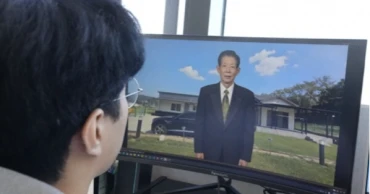
More South Koreans are turning to artificial intelligence to create lifelike video messages of deceased family members, hoping to find comfort in their grief. But the growing trend is also sparking debate over ethics, mental health and the rights of the dead.
When 28-year-old office worker Lee Geon Hui wanted to give his father a meaningful gift, he chose an AI-generated video featuring his late grandfather, who died before Lee was born.
Using a script written by Lee, a Seoul-based technology company created a video in which a digital version of his grandfather spoke directly to his father, calling him "my most precious son." The AI character apologised for making him work on the family farm as a child and for opposing his decision to become a hairstylist.
"My father said he wouldn't watch the video. But then he did, and he shed tears. So I felt rewarded," Lee said.
Lee said he wrote the script to express feelings that he believed his grandfather would have wanted to share.
Several South Korean startups now offer AI services that recreate deceased people using photos and voice recordings. Television programmes have also featured AI versions of late singers and actors, helping the technology gain wider public attention.
Experts say the technology has the potential to comfort grieving families but also raises difficult ethical, legal and psychological questions.
"It's a double-edged sword because it deals with human emotions," said Yong Man Ro, an artificial intelligence expert at the Korea Advanced Institute of Science and Technology.
One of the companies providing the service, Vaice, says it serves about 300 customers every month. Most clients are people in their 40s and 50s who want AI videos of their late parents, while others commission videos of grandparents as gifts for their parents.
Vaice CEO Jeongu Won said the company only needs a few photographs and short voice recordings to create a digital version of the deceased. A three- to five-minute video costs about 600,000 won ($390).
According to Won, many families play the videos during memorial ceremonies or traditional holidays. Most customers include messages of love, while others use the videos to express regret over unresolved family conflicts.
Lee said his grandfather died in a car accident before he was born and that his father had always wished he could have shown his father that he had built a successful life and family.
"I don't know much about my grandfather. But when I saw tears running down my father's face, I realised he still misses him," Lee said.
Although interest in AI memorial videos is growing, experts say the technology must be used carefully.
Choung Wan, an emeritus professor at Kyung Hee University Law School, said South Korea needs laws to protect the dignity and rights of deceased people. He argued that AI recreations should not be made if a person objected to such use before their death and that there should be clear rules governing the commercial use of people's images and voices.
Experts are also closely watching the development of so-called "griefbots" or "deathbots" that allow users to have two-way conversations with AI versions of deceased loved ones.
Choung warned that such technology could make it harder for grieving people to accept the loss of a loved one.
"A healthy mourning process involves accepting the absence of the deceased," he said. "Talking with an AI system that imitates them could interfere with that process and leave people trapped in a fantasy."
Won said his company has not introduced AI chatbots because unsupervised conversations could create unexpected ethical problems.
Technology continues to improve rapidly. Choi Yu Ha, an executive at another AI company, JL Standard, said today's systems can recreate facial details, including wrinkles and skin texture, with remarkable accuracy.
Ro, the AI expert, said he created a one-minute AI video of his own parents after they died last year and showed it to his siblings during a family gathering.
The digital versions of their parents told the family, "Don't worry" and "Take care," leaving everyone deeply moved.
But Ro said the family watched the video only once.
"One time was enough to honour our late parents," he said. "We moved on."
1 month ago

US lifts restrictions on Anthropic's AI models after cybersecurity review
The Trump administration has lifted restrictions on artificial intelligence company Anthropic's latest Claude AI models after a temporary ban prompted by cybersecurity concerns.
Anthropic said Tuesday that its Claude Fable 5 model is once again widely available. The company is also restoring access to its most advanced model, Mythos 5, but only for a limited number of US-based organisations approved by the federal government.
The US Commerce Department had blocked foreign nationals from accessing both AI models on June 12. Anthropic said the decision forced it to suspend the products for all users just days after launching them.
In a blog post, the San Francisco-based company said the government's concerns stemmed from findings by cybersecurity researchers at Amazon, its main cloud computing partner.
According to Anthropic, the researchers discovered a way to bypass the safety protections built into Claude Fable 5, allowing the system to identify and potentially exploit software vulnerabilities.
US officials have become increasingly cautious after Anthropic warned earlier this year that its Mythos AI model was highly capable of detecting software weaknesses that could be misused by hackers to target critical computer systems.
Meanwhile, Anthropic's main competitor, OpenAI, announced on Friday that it is also limiting the release of its latest AI model at the request of the Trump administration.
OpenAI said its new model, GPT-5.6 Sol, will initially be available only to a small group of government-approved users for a temporary period.
Last month, President Donald Trump signed an executive order creating a framework for the federal government to review the national security risks of the most advanced AI systems for up to 30 days before they are released publicly.
Although participation in the review process is voluntary for AI developers, the administration has yet to fully implement the new framework.
1 month ago

Neon acquires OpenAI drama 'Artificial' after Amazon drops film
Independent film distributor Neon has acquired "Artificial," director Luca Guadagnino's upcoming drama about OpenAI CEO Sam Altman, after Amazon MGM Studios decided not to release the project.
Neon announced Tuesday that it secured the worldwide rights to the film following a competitive bidding process. The company plans to release the movie later this year and position it as an awards contender during the upcoming Oscar season.
The film, with an estimated budget of $40 million, stars Andrew Garfield as Sam Altman and follows the events surrounding Altman's brief dismissal and reinstatement as OpenAI's chief executive in 2023. The cast also includes Monica Barbaro, Yura Borisov and Academy Award winner Mark Rylance, while Ike Barinholtz portrays Elon Musk.
Amazon MGM unexpectedly dropped the nearly completed film earlier this month, only a few months after Amazon announced a $50 billion investment in OpenAI through a broad, multiyear partnership signed in late February.
At the time, Amazon MGM said the project would be "better served" by another studio and subsequently put the film up for sale.
Neon has built a strong reputation for releasing critically acclaimed films, including Oscar winners Parasite and Anora. The distributor has also backed each of the last seven Palme d'Or winners at the Cannes Film Festival.
The company did not disclose how much it paid to acquire the worldwide distribution rights.
In a statement, Neon said the deal reflects its commitment to working with visionary filmmakers and bringing ambitious films to audiences around the world.
1 month ago
Chinese vice premier calls for stronger link between innovation and industry
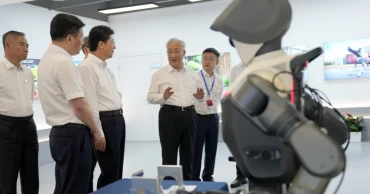
Chinese Vice Premier Zhang Guoqing has called for closer integration between scientific and technological innovation and industrial development, saying stronger quality management is essential to boost the supply of high-quality products and services.
Zhang, who is also a member of the Political Bureau of the Communist Party of China Central Committee, made the remarks during a visit to east China's Zhejiang Province from Thursday to Saturday.
He said China should continue creating new drivers of economic growth and strengthen its competitive advantages to support the country's steady economic recovery.
During his tour of the cities of Hangzhou and Yiwu, Zhang visited companies working in sectors such as brain-computer interface technology, robotics and textiles.
He described enterprises as the main force behind innovation and said their role should be further strengthened. He urged companies to invest more in basic research, pursue cutting-edge innovation and speed up breakthroughs in key technologies.
Zhang also called for expanding the country's AI Plus Initiative by promoting practical applications of artificial intelligence. He said faster development of industry-specific AI models and intelligent agents would help modernize manufacturing, improve productivity and support the transformation of traditional industries into smarter, greener and more integrated operations.
During a visit to the Yiwu International Trade City, Zhang reviewed quality control, brand development and regulation of e-commerce platforms.
He urged businesses to put quality first, build stronger brands through innovation and develop long-term brand strategies. He also called for stricter action against trademark infringement and counterfeit products in line with the law.
The vice premier said platform companies should play a greater role in promoting innovation, supporting economic growth, creating jobs and improving China's competitiveness in global markets while increasing the supply of high-quality products and services.
1 month ago

Singapore launches online safety commission to combat digital abuse
Singapore on Monday launched its new Online Safety Commission, providing victims of online abuse with a dedicated channel to seek the removal of harmful content, access support services and pursue civil remedies.
According to a joint statement issued on Sunday by the Ministry of Digital Development and Information, the Ministry of Law and the commission, the new body will initially deal with five types of harmful online behaviour. These include sexual harassment, doxxing, cyberstalking, the non-consensual sharing of intimate images, and image-based child sexual abuse.
Authorities said more categories of online harm will be added in later stages.
Victims of online harassment and cyberstalking are expected to first report the harmful content to the online platform. If the platform does not respond quickly or fails to take appropriate action, they can then file a complaint with the commission.
However, cases involving doxxing, intimate image abuse and image-based child abuse can be reported directly to the commission without first contacting the platform.
The commission has the authority to order people who posted harmful content, administrators of online groups or pages, and digital platforms hosting such content to take corrective action if there is evidence that online harm has occurred. This may include removing content, blocking access to it or restricting user accounts. Failure to comply with these orders is considered a criminal offence.
If online platforms or administrators ignore the commission's directives, internet service providers may be instructed to block access to the offending websites or online services in Singapore. App stores may also be ordered to stop offering apps operated by non-compliant platforms.
The commission will also help victims identify anonymous individuals responsible for online abuse when their identities are unknown.
In addition, it will work with community organisations to provide counselling and other support services for victims of digital abuse.
1 month ago