Tech

Is Google about to reshape—or ruin—the internet?
Google says its latest artificial intelligence upgrade to Search will revitalize the internet. But critics fear it could devastate the open web and change how we access online information forever. One thing is certain: a turning point for the internet is rapidly approaching. Welcome to what some are calling the dawn of the "machine web."
For decades, the internet has operated on a basic understanding—websites allow search engines like Google to index their content for free, and in return, Google drives users to those websites, helping them generate revenue through ads and sales. It’s a system that has sustained countless online businesses and independent content creators.
Roughly 68% of online activity begins on a search engine, and Google dominates with a 90% market share. If the web is a garden, Google has long been its source of sunlight. But this relationship may soon shift.
At Google’s developer conference on May 20, 2025, CEO Sundar Pichai unveiled a major update to Search—AI Mode, a new feature that promises a “total reimagining” of how people search online. Unlike existing AI Overviews that supplement traditional search results, AI Mode offers chatbot-style answers that often eliminate the need to click on links altogether.
Search experts warn that this could slash web traffic to independent publishers and news sites, upending the economic foundation of the open internet.
"If AI Mode becomes the default, it could drastically reduce the revenue of online publishers who depend on organic traffic,” says Lily Ray, SEO strategist at marketing firm Amsive. “Millions of websites could be affected. Google has all the power in this situation.”
Google, however, insists the new tools are beneficial. The company claims AI Mode will enhance the search experience, broaden the range of queries users can make, and still support content discovery.
“We send billions of clicks to websites daily, and that remains a priority,” a Google spokesperson told the BBC. “AI Mode opens new doors for people to find and engage with online content.”
Even so, there is widespread agreement that the look and function of the internet is about to change dramatically. Whether that’s good or bad remains to be seen.
Threat to the Open WebWhile the internet isn’t going away, the way we navigate it is undergoing a seismic shift. Social media remains strong and subscription-based content is thriving, but it’s the “open web”—the vast space of freely accessible, independent websites—that some fear is endangered.
Taiwan places Huawei and SMIC on export control list amid growing tech tensions
Such concerns aren’t new. In 2010, Wired magazine famously declared “The Web is Dead.” Since then, the rise of smartphones, apps, and social media has sparked similar predictions. But experts now warn that Google’s AI Mode is unlike any previous disruption.
“I wouldn’t say websites will go extinct,” says Barry Adams of SEO consultancy Polemic Digital. “But ‘decimated’ is the right word.”
Google disagrees. It maintains that AI Overviews have already increased engagement by leading users to a broader array of sites and encouraging deeper interaction with the content they click on. Still, it hasn’t released hard data to support these claims.
And while Google asserts that AI tools include source links, critics argue users are less likely to click on them if they get complete answers upfront. Data seems to back this up: some studies suggest click-through rates have dropped by 30% to 70% for certain types of queries. Meanwhile, over 60% of Google searches now reportedly end without a single link being clicked.
A Shrinking Revenue StreamThe concern is not just about declining traffic—it’s about a system-wide impact on how content is produced, distributed, and discovered. If AI Mode becomes the default search experience, it could double the decline in web traffic because traditional search results would disappear entirely.
"Clicks to the web from Google could be cut in half, even in a best-case scenario," says Adams. “For some online publishers, that difference could mean survival or bankruptcy.”
Gisele Navarro, editor of the product review site HouseFresh, says the shift is already hurting smaller sites. “We’re seeing our search impressions go up, but actual clicks are going down,” she says. “AI is answering users’ questions before they ever reach us.”
Navarro believes this trend threatens to shrink the diversity of content people can find online. “It’s like asking a librarian for a book and being told the summary instead,” she says. “That sense of the web as a public library is disappearing.”
Google says it’s committed to the web’s future. Nick Fox, senior VP of Search, recently said that the volume of web content has grown 45% over the past two years, not including spam, and that user engagement remains strong.
Speaking with AI: Best Free Apps for English Speaking Practice
Yet many online businesses say the damage is already happening. Sites like HouseFresh that once relied on Google's algorithm for steady traffic are now struggling, as Google appears to prioritize big brands—and now, AI answers—over independent voices.
Navarro is blunt: “Google made the rules and rewarded players for years. Now they’re changing the game without warning. I think it will destroy the open web as we know it. Maybe it already has.”
Enter the Machine WebWhat lies ahead is a new digital ecosystem that some are calling the "machine web"—a version of the internet where content is created for machines, not people, and users rely on AI summaries instead of browsing pages.
Demis Hassabis, head of Google DeepMind, predicts that publishers may soon prioritize feeding content directly into AI models, potentially bypassing traditional websites entirely.
That may create a streamlined, always-on information system. But it could also mean the end of spontaneous discovery—the rabbit holes, the unexpected gems, the diversity of thought that have defined the web for decades.
In a recent podcast, Sundar Pichai acknowledged the magnitude of change ahead. “Ultimately, it depends on what users want,” he said.
But Dame Wendy Hall, a pioneer of web science, offered a cautionary note: “I’m not worried because change is natural. Something new will come. But for many people, it might be too late by the time it arrives.”
Source: With inputs from BBC
1 year ago

Taiwan places Huawei and SMIC on export control list amid growing tech tensions
Taiwan’s Commerce Ministry has added Chinese tech giants Huawei Technologies and Semiconductor Manufacturing International Corp (SMIC) to its export control list, reflecting rising trade and technology tensions between Taiwan, China, and the United States.
Being listed as part of Taiwan’s “strategic high-tech commodities” control measures means Taiwanese businesses must now obtain special licenses before exporting products to these companies. The list also includes groups such as the Taliban, al-Qaeda, and various entities in China, Iran, and other regions.
The updated list was released on Sunday, though neither Huawei nor SMIC has issued a statement regarding their inclusion.
Both Huawei and SMIC are already under U.S. sanctions. They are developing China’s most advanced AI chips as part of Beijing’s strategy to compete with American tech firms like Nvidia and to reduce reliance on foreign chip supplies amid international export restrictions.
Taiwan plays a key role in global semiconductor production and is home to the world’s largest chipmaker, Taiwan Semiconductor Manufacturing Co. (TSMC), which supplies major players like Nvidia.
In November, the U.S. directed TSMC to stop delivering certain high-end chips to Chinese clients, further tightening controls on China's access to leading-edge technologies.
China views Taiwan as a breakaway province and has not ruled out using force to bring it under its control. Meanwhile, the United States remains Taiwan’s most important unofficial ally and arms supplier.
1 year ago

How Prime Video's 'Burn Bar' is changing the way we watch NASCAR
NASCAR fans have grown accustomed to seeing speed, throttle and braking on broadcasts for years. There has been one measurement, though, that has eluded networks and viewers for years.
Until now.
Viewers of the Prime Video races have been able to see fuel usage with the introduction of the Burn Bar. Race teams have measured burn rates and fuel levels down to the last ounce for years, but the methodology has been kept secret for competitive reasons.
Prime Video, though, developed an AI tool using car data available to broadcasters and teams that can measure miles per gallon. The Burn Bar made a brief appearance during Prime's first broadcast, the Coca-Cola 600 on May 25. It has been used more frequently the past two weeks and will be deployed again on Sunday during the race in Mexico City.
NASCAR on Prime analyst Steve Letarte, a former crew chief for Jeff Gordon and Dale Earnhardt Jr., contributed to the development of the Burn Bar and sees it as the first step in taking race analysis to a new level.
Speaking with AI: Best Free Apps for English Speaking Practice
“It’s the first true tool that is taking information off the car, making calculations and then displaying to the fan a calculation or measurement that is being used in the garage. And it does affect the team,” he said. “There’s not a sensor on the car giving us miles per gallon. It’s a mathematical calculation of other cars performances.”
The AI model analyzes thousands of performance data per second, including a range of in-car telemetry signals, RPMs, throttle and optical tracking of each car’s position. The model then evaluates each driver’s fuel consumption and efficiency throughout the race.
Letarte worked with Prime Video “Thursday Night Football Prime Vision" analyst Sam Schwartzstein and Amazon Web Services during the process. They came up with four methodologies that were tested during the first part of the season, which was broadcast by Fox. Schwartzstein and Letarte would then get the data from teams after races to see how close they were until they picked one that worked the best.
The Burn Bar received its toughest test during last week's race at Michigan as the final 48 laps were run without a caution flag. Most teams made their final pit stops with 50 laps to go, meaning teams were going to be down to the end of their fuel runs at the checkered flag.
“We projected William Byron to run out, which he did, and then we were on the razor’s edge for Denny Hamlin. And then watching the truck push him back into victory lane at the end, knowing he was as close as we thought he was. What a cool way to see this feature come to life and elevate NASCAR broadcasts,” Schwartzstein said.
Alex Strand, Prime Video’s senior coordinating producer for live sports, also sees the Burn Bar as the first tool of many that Amazon and Prime Video can develop for its coverage. Prime Video is in the first year of a seven-year agreement to carry five races per season.
“It’s really cool to live in a world where it shows us that anything is possible. We’re starting with something that we’re really excited about, but it’s setting us down a path that will open up new doors for us,” he said. “I think that’s what we’re really excited about is to say, ‘OK, we’ve had success in Year 1 on a feature that’s resonated with fans right out of the gate.’ It raises the table for our offseason.”
Meta invests $14.3B in AI firm Scale and recruits its CEO for 'superintelligence' team
After Sunday's race in Mexico City, Prime Video's coverage for this season wraps up with the race at Pocono on June 22.
1 year ago

Speaking with AI: Best Free Apps for English Speaking Practice
Want to speak English confidently? Whether it is for work, study, or travel, strong speaking skills can make a big difference. But you do not always need a tutor — AI apps are changing the way we learn languages. With free, smart tools available on your phone, you can practise speaking anytime, anywhere. In this article, we explore the best free AI-powered apps to improve your English speaking skills quickly and effectively.
Top 10 Free AI Apps for English Speaking Practice
.
Loora AI
Loora AI is a powerful AI English-speaking app designed to help users build fluency through guided conversations and real-time feedback. With its highly accurate speech recognition, Loora provides instant corrections and pronunciation coaching, making it feel like having a private tutor in your pocket.
Learners love its stress-free, judgement-free environment and the wide variety of conversation topics it offers. While it lacks human interaction, its constant availability makes up for it. The only downside is that advanced features require a subscription. Still, with a 4.8 rating on the Google Play Store, Loora stands out as an effective tool for speaking improvement.
Read more: Everyday Habits to Learn English Successfully
Rosetta Stone
Rosetta Stone shines as the go-to app for immersive language learning, especially when it comes to improving English speaking skills. Built on the idea of learning through real-life context, it uses AI-driven tools and native speaker audio to simulate real conversations. Its clean, user-friendly interface and bite-sized lessons make it easy to stay consistent.
Users especially praise the immersive feel, which helps boost both confidence and comprehension. While it lacks detailed explanations for wrong answers and does not offer strong progress reminders, its overall impact is undeniable. With a solid 4.6 Google Play rating, Rosetta Stone remains a favourite for serious learners.
Babbel
Babbel stands out for its structured and practical approach to English learning, blending grammar, vocabulary, and conversation into a seamless experience. The app focuses on real-life scenarios, using short, clear lessons and adaptive review features to help users retain what they learn. It is ideal for learners with some prior knowledge who want a more challenging and professional feel.
While the subscription cost is higher than some alternatives, users praise its well-organised content, repetition techniques, and live classes. Some languages offer more content than others, but overall, Babbel is a reliable platform with a 3.9 Google Play rating and strong user satisfaction.
Read more: Best Free Websites to Improve English Writing Skill
Duolingo
Duolingo makes learning English fun, engaging, and easy to stick with—especially for beginners. Its colourful interface, gamified lessons, and daily streak tracker keep users motivated while they build their vocabulary and grammar basics. The app uses spaced repetition to reinforce learning and even offers podcasts for skill enhancement.
However, it falls short in speaking and real-life conversation practice, making it less ideal for advanced learners. Still, its free version offers great value, and the premium plans are affordable. With a 4.5 rating on Google Play Store, Duolingo is a fantastic starting point for anyone beginning their English-speaking journey.
ChatGPT
ChatGPT is a surprisingly effective tool for practising English conversations, even though it was not specifically designed for language learning. Its ability to generate natural, human-like responses makes it perfect for learners wanting to simulate real-life dialogue. With a 4.5 Google Play rating, ChatGPT is a smart companion for conversational growth.
You can chat about almost any topic, get instant replies, and even use the “speak” feature to work on pronunciation. While it does not offer progress tracking or traditional lesson structures, its flexibility and responsiveness make it a favourite for personalised practice. Many users love how it helps build vocabulary in context.
Read more: Top 10 Football Live Streaming Apps for iOS and Android in 2025
Talkpal
With a 4.4 rating on Google Play Store, Talkpal is a strong contender for fluency training. TalkPal offers an AI-powered language learning experience centred around real-life role-play scenarios. It is especially effective for improving speaking skills, thanks to real-time feedback and personalised sessions that adjust based on your progress.
The app allows users to practise conversations in a flexible, interactive way, simulating human-like tutoring. While vocabulary retention methods could be stronger and the style may not suit everyone, many users praise its natural conversation features and 24/7 accessibility. The chat-based format and tailored approach make it a convenient choice for language learners.
Makes You Fluent
Makes You Fluent offers an AI tutor that feels like chatting with a real person, providing instant feedback to help learners improve their English speaking skills. The app features level-based dialogue games and vocabulary lists, making it great for casual conversation practice in a stress-free environment.
With 24/7 availability, you can practise anytime without waiting for a human tutor. Users appreciate how the AI corrects mistakes and helps conversations flow naturally. While it lacks human interaction and advanced customisation, its ease of use and personalised learning plans have earned it a solid 4.4 rating on Google Play Store.
Read more: How to Get Traffic Updates in Dhaka: Useful Apps and Sources
Lingvist
Lingvist is an AI-powered app focused on rapid vocabulary acquisition through spaced repetition, making it ideal for learners who want to build a strong foundation quickly. With a 4.4 Google Play rating, Lingvist is a solid choice for vocabulary-focused learners. The app personalises lessons based on your progress, ensuring that vocabulary remains relevant and engaging.
While Lingvist excels at helping users expand their word bank and track progress, it falls short on conversational practice and grammar instruction, which limits its use for holistic language learning. Despite fewer free features, many users praise its effective algorithm and enjoyable interface.
ELSA Speak
ELSA Speak is an AI-powered app designed to improve English pronunciation and fluency with over 7,100 targeted lessons focusing on syllable stress, intonation, and articulation. It offers instant, detailed feedback using advanced speech analysis, helping users identify and correct specific pronunciation issues. The app’s structured lesson plans and progress tracking make learning efficient and motivating.
Read more: Best Free Bangladeshi Online Doctor Apps for Android, iOS
But its speech recognition can sometimes be overly strict, and it mainly focuses on American English, limiting accent diversity. Grammar corrections are not included, and the AI tutor is only accessible through a premium subscription. Despite these, ELSA Speak holds a solid 4.4 rating on the Google Play Store.
Praktika
Praktika is a unique language learning app that uses AI avatars to simulate real-life conversations, making it ideal for users seeking immersive, interactive speaking practice. Through engaging role-plays and casual dialogues, users can enhance their grammar and vocabulary skills in realistic scenarios. The app is beginner-friendly and understands imperfect pronunciations, allowing learners to build confidence as they practise.
However, it lacks in-depth pronunciation correction and structured pronunciation lessons, which may limit its usefulness for more advanced learners. While it provides valuable support for grammar and vocabulary development, those seeking advanced fluency may need additional resources. It currently holds a 4.1 rating on the Google Play Store.
Read more: 10 Best eBook Reader Apps for Android, iOS
Tips to Maximize Learning
- Set clear goals that match what you want to improve—like speaking, writing, or vocabulary.- Practice every day, even if it is just for 10–15 minutes.- Combine different apps to build a complete learning experience.- Write down new words and corrections for later review.- Speak out loud while using the app to improve your pronunciation.- Use headphones to hear clearly and get accurate feedback.- Pay attention to mistakes and repeat corrected phrases until you master them.- Choose apps that offer real-life scenarios or conversation practice.- Keep track of your learning progress and celebrate small wins.- Stay motivated with games, streaks, or by learning with a friend.
Read more: Best Free Personal Safety Android, iOS Apps for Women
Verdict
Each AI English learning app has its unique strengths—some excel in conversation, others in pronunciation or vocabulary. Depending on your learning goals, combining a few of these tools can offer a well-rounded experience. Choose the one that suits your style, stay consistent, and enjoy your language learning journey!
Read more: Best Video Editing Apps for Android, IOS
1 year ago

Meta’s $14.3bn bet on scale AI to boost global AI push
Meta is making a bold move to strengthen its position in the global artificial intelligence (AI) race with a $14.3 billion investment in Scale AI.
The social media giant has acquired a 49 per cent stake in the startup and appointed its 28-year-old CEO, Alexandr Wang, to lead a newly established AI lab within Meta.
Wang will now report directly to Meta CEO Mark Zuckerberg, while remaining on Scale AI’s board of directors. Jason Droege, formerly Scale's chief strategy officer, has stepped in as interim CEO.
The investment is seen as Meta’s most aggressive push in AI since the underwhelming launch of its Llama 4 language model earlier this year.
Despite high expectations, the rollout of Llama 4 was plagued by delays and controversy, leaving it lagging behind competitors such as OpenAI’s ChatGPT, Google’s Gemini and Anthropic’s Claude.
Meta’s partnership with Wang is part of a wider strategy to rebuild its AI ambitions and develop what it calls “superintelligence.”
Space station leak concerns can delay astronaut visit from India, Poland, Hungary
Zuckerberg has reportedly been courting AI talent from rival firms with substantial offers in a bid to fast-track progress.
Scale AI, founded by Wang, provides annotated data essential for training AI models, working with leading tech firms including Google and OpenAI.
The company also maintains high-profile government contracts, including with the US Department of Defense and the Qatari government.
Notably, Meta has opted for a 49 per cent non-voting stake in Scale, likely to avoid additional regulatory scrutiny amidst ongoing antitrust investigations.
Wang described Meta’s investment as a major milestone, assuring Scale employees that those holding equity will benefit from the deal. He will now oversee Meta’s new AI lab, which is expected to focus on building general intelligence systems.
Further details on the lab’s mission are set to be revealed in the coming weeks.
Source: With inputs from India Today
1 year ago
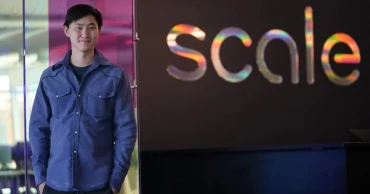
Meta invests $14.3B in AI firm Scale and recruits its CEO for 'superintelligence' team
Meta is making a $14.3 billion investment in artificial intelligence company Scale and recruiting its CEO Alexandr Wang to join a team developing “superintelligence” at the tech giant.
The deal announced Thursday reflects a push by Meta CEO Mark Zuckerberg to revive AI efforts at the parent company of Facebook and Instagram as it faces tough competition from rivals such as Google and OpenAI.
Meta announced what it called a “strategic partnership and investment” with Scale late Thursday. Scale said the $14.3 billion investment puts its market value at over $29 billion.
Scale said it will remain an independent company but the agreement will “substantially expand Scale and Meta’s commercial relationship.” Meta will hold a 49% stake in the startup.
Wang, though leaving for Meta with a small group of other Scale employees, will remain on Scale’s board of directors. Replacing him is a new interim Scale CEO Jason Droege, who was previously the company’s chief strategy officer and had past executive roles at Uber Eats and Axon.
Zuckerberg's increasing focus on the abstract idea of “superintelligence” — which rival companies call artificial general intelligence, or AGI — is the latest pivot for a tech leader who in 2021 went all-in on the idea of the metaverse, changing the company's name and investing billions into advancing virtual reality and related technology.
It won't be the first time since ChatGPT's 2022 debut sparked an AI arms race that a big tech company has gobbled up talent and products at innovative AI startups without formally acquiring them. Microsoft hired key staff from startup Inflection AI, including co-founder and CEO Mustafa Suleyman, who now runs Microsoft's AI division.
Google offers more employee buyouts amid AI expansion, antitrust challenges
Google pulled in the leaders of AI chatbot company Character.AI, while Amazon made a deal with San Francisco-based Adept that sent its CEO and key employees to the e-commerce giant. Amazon also got a license to Adept’s AI systems and datasets.
Wang was a 19-year-old student at the Massachusetts Institute of Technology when he and co-founder Lucy Guo started Scale in 2016.
They won influential backing that summer from the startup incubator Y Combinator, which was led at the time by Sam Altman, now the CEO of OpenAI. Wang dropped out of MIT, following a trajectory similar to that of Zuckerberg, who quit Harvard University to start Facebook more than a decade earlier.
Scale's pitch was to supply the human labor needed to improve AI systems, hiring workers to draw boxes around a pedestrian or a dog in a street photo so that self-driving cars could better predict what's in front of them. General Motors and Toyota have been among Scale's customers.
What Scale offered to AI developers was a more tailored version of Amazon's Mechanical Turk, which had long been a go-to service for matching freelance workers with temporary online jobs.
More recently, the growing commercialization of AI large language models — the technology behind OpenAI's ChatGPT, Google's Gemini and Meta's Llama — brought a new market for Scale's annotation teams. The company claims to service “every leading large language model,” including from Anthropic, OpenAI, Meta and Microsoft, by helping to fine tune their training data and test their performance. It's not clear what the Meta deal will mean for Scale's other customers.
Wang has also sought to build close relationships with the U.S. government, winning military contracts to supply AI tools to the Pentagon and attending President Donald Trump's inauguration. The head of Trump's science and technology office, Michael Kratsios, was an executive at Scale for the four years between Trump's first and second terms. Meta has also begun providing AI services to the federal government.
Meta has taken a different approach to AI than many of its rivals, releasing its flagship Llama system for free as an open-source product that enables people to use and modify some of its key components. Meta says more than a billion people use its AI products each month, but it's also widely seen as lagging behind competitors such as OpenAI and Google in encouraging consumer use of large language models, also known as LLMs.
It hasn't yet released its purportedly most advanced model, Llama 4 Behemoth, despite previewing it in April as "one of the smartest LLMs in the world and our most powerful yet.”
Meta's chief AI scientist Yann LeCun, who in 2019 was a winner of computer science's top prize for his pioneering AI work, has expressed skepticism about the tech industry's current focus on large language models.
“How do we build AI systems that understand the physical world, that have persistent memory, that can reason and can plan?” LeCun asked at a French tech conference last year.
These are all characteristics of intelligent behavior that large language models “basically cannot do, or they can only do them in a very superficial, approximate way,” LeCun said.
Instead, he emphasized Meta's interest in “tracing a path towards human-level AI systems, or perhaps even superhuman.” When he returned to France's annual VivaTech conference again on Wednesday, LeCun dodged a question about the pending Scale deal but said his AI research team's plan has “always been to reach human intelligence and go beyond it.”
Nvidia chief calls AI ‘the greatest equalizer’ — but warns Europe risks falling behind
“It’s just that now we have a clearer vision for how to accomplish this,” he said.
LeCun co-founded Meta's AI research division more than a decade ago with Rob Fergus, a fellow professor at New York University. Fergus later left for Google but returned to Meta last month after a 5-year absence to run the research lab, replacing longtime director Joelle Pineau.
Fergus wrote on LinkedIn last month that Meta's commitment to long-term AI research “remains unwavering” and described the work as “building human-level experiences that transform the way we interact with technology.”
1 year ago

Space station leak concerns can delay astronaut visit from India, Poland, Hungary
A chartered spaceflight for India, Poland and Hungary’s first astronauts in decades has been delayed indefinitely because of leak concerns at the International Space Station.
NASA said Thursday that it wants to monitor the cabin pressure on the Russian side of the orbiting lab before accepting visitors. Officials stressed that the seven astronauts currently at the space station are safe and that other operations up there aren't affected.
SpaceX was supposed to launch four private astronauts this week on a 14-day space station mission, but bad weather and SpaceX rocket trouble delayed the flight. Then the station leak issue cropped up.
The Russian Space Agency has been dealing with a cabin pressure leak at the station, and recent repairs resulted in what NASA calls “a new pressure signature.” Additional details were not immediately available.
The three Russians aboard the space station recently inspected the inside walls of the aging Zvezda service module, which was launched in 2000. They sealed some areas and measured the current leak rate.
“Following this effort, the segment now is holding pressure,” NASA said in an online update.
Japan's private lunar lander crashes in second failed moon mission
The private mission's delay provides extra time for NASA and the Russian Space Agency “to evaluate the situation” and determine whether more repairs are needed.
The chartered flight was arranged by the Houston company Axiom Space, and was to be Axiom's fourth trip to the space station with paying customers since 2022.
“This is the right thing to do,” Axiom Space's executive chairman Kam Ghaffarian said in a written statement. “We will continue to work with all of our partners to finalize a new launch date.”
1 year ago

Google offers more employee buyouts amid AI expansion, antitrust challenges
Google is offering voluntary buyouts to additional employees across several major departments as part of its ongoing cost-cutting efforts. This move comes as the company braces for a potential court ruling that could lead to the breakup of parts of its sprawling internet business. The restructuring was confirmed by Google following reports from various media outlets.
While the exact number of affected workers is not known, The Wall Street Journal reports that the buyouts have been extended to staff in Google’s search, advertising, research, and engineering teams. Most of Alphabet Inc.’s nearly 186,000 employees work at Google.
“In support of our future priorities, some teams launched voluntary exit programs earlier this year, and more are now doing so,” said Google spokesperson Courtenay Mencini. She also mentioned that certain remote employees living near Google offices are being asked to adopt hybrid work schedules to encourage more in-person collaboration.
These workforce changes come as Google awaits a critical federal court decision regarding its dominance in search. A judge previously ruled that Google’s search engine constitutes an illegal monopoly in a U.S. Justice Department case dating back nearly five years. A second antitrust case is also underway involving Google’s digital advertising business.
U.S. District Judge Amit Mehta is expected to rule by Labor Day on a government proposal that would bar Google from paying over $26 billion annually to Apple and other companies to maintain its search engine as the default option. The proposal also seeks to require data sharing with competitors and may mandate the sale of the Chrome browser. Google is preparing to appeal last year’s ruling should the court uphold the monopoly claim.
These legal battles coincide with broader efforts by the Justice Department to break up Google's ad tech business, which a federal judge said misused its dominant position, harming online publishers and competition.
Like other major tech companies, Google has been steadily reducing its workforce since 2023, reversing the aggressive hiring that took place during the pandemic’s surge in demand for digital services. The company began by laying off 12,000 employees early last year and has since continued downsizing certain departments. These cuts come as Google shifts more resources toward artificial intelligence, which is rapidly transforming its products, particularly its search engine, into more interactive, conversational tools.
1 year ago
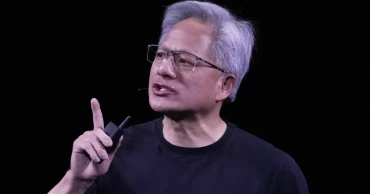
Nvidia chief calls AI ‘the greatest equalizer’ — but warns Europe risks falling behind
Will artificial intelligence save humanity — or destroy it? Lift up the world’s poorest — or tighten the grip of a tech elite?
Jensen Huang — the global chip tycoon widely predicted to become one of the world’s first trillionaires — offered his answer on Wednesday: neither dystopia nor domination. AI, he said, is a tool for liberation.
Wearing his signature biker jacket and mobbed by fans for selfies, the Nvidia CEO cut the figure of a tech rockstar as he took the stage at VivaTech in Paris.
“AI is the greatest equalizer of people the world has ever created,” Huang said, kicking off one of Europe’s biggest technology industry fairs.
Huang’s core argument: AI can level the playing field, not tilt it. Critics argue Nvidia’s dominance risks concentrating power in the hands of a few. But Huang insists the opposite — that by slashing computing costs and expanding access, “we’re democratizing intelligence” for startups and nations alike.
But beyond the sheeny optics, Nvidia used the Paris summit to unveil a wave of infrastructure announcements across Europe, signaling a dramatic expansion of the AI chipmaker’s physical and strategic footprint on the continent.
In France, the company is deploying 18,000 of its new Blackwell chips with startup Mistral AI. In Germany, it’s building an industrial AI cloud to support manufacturers. Similar rollouts are underway in Italy, Spain, Finland and the U.K., including a new AI lab in Britain.
Other announcements include a partnership with AI startup Perplexity to bring sovereign AI models to European publishers and telecoms, a new cloud platform with Mistral AI, and work with BMW and Mercedes-Benz to train AI-powered robots for use in auto plants.
Disney, Universal sue AI firm Midjourney for copyright infringement
The announcements underscore how central AI infrastructure has become to global strategy — and how Nvidia, now the world’s most valuable chipmaker, is positioning itself as the engine behind it.
As the company rolls out ever more powerful systems, critics warn the model risks creating a new kind of “technological priesthood” — one in which only the wealthiest companies or governments can afford the compute power, energy, and elite engineering talent required to participate. That, they argue, could choke the bottom-up innovation that built the tech industry in the first place.
Huang pushed back. “Through the velocity of our innovation, we democratize,” he said, responding to a question by The Associated Press. “We lower the cost of access to technology.”
As Huang put it, these factories “reason,” “plan,” and “spend a lot of time talking to” themselves, powering everything from ChatGPT to autonomous vehicles and diagnostics.
But some critics warn that without guardrails, such all-seeing, self-reinforcing systems could go the way of Skynet in “ The Terminator ” movie — vast intelligence engines that outpace human control.
To that, Huang offers a counter-model: layered AI governance by design. “In the future,” he said, “the AI that is doing the task is going to be surrounded by 70 or 80 other AIs that are supervising it, observing it, guarding it, ensuring that it doesn’t go off the rails.”
He likened the moment to a new industrial revolution. Just as electricity transformed the last one, Huang said, AI will power the next — and that means every country needs a national intelligence infrastructure. That’s why, he explained, he’s been crisscrossing the globe meeting heads of state.
“They all want AI to be part of their infrastructure,” he said. “They want AI to be a growth manufacturing industry for them.”
Europe, long praised for its leadership on digital rights, now finds itself at a crossroads. As Brussels pushes forward with world-first AI regulations, some warn that over-caution could cost the bloc its place in the global race. With the U.S. and China surging ahead and most major AI firms based elsewhere, the risk isn’t just falling behind — it’s becoming irrelevant.
Huang has a different vision: sovereign AI. Not isolation, but autonomy — building national AI systems aligned with local values, independent of foreign tech giants.
“The data belongs to you,” Huang said. “It belongs to your people, your country... your culture, your history, your common sense.”
But fears over AI misuse remain potent — from surveillance and deepfake propaganda to job losses and algorithmic discrimination. Huang doesn’t deny the risks. But he insists the technology can be kept in check — by itself.
Global outage disrupts ChatGPT services, users report widespread access issues
The VivaTech event was part of Huang’s broader European tour. He had already appeared at London Tech Week and is scheduled to visit Germany. In Paris, he joined French President Emmanuel Macron and Mistral AI CEO Arthur Mensch to reinforce his message that AI is now a national priority.
1 year ago

Disney, Universal sue AI firm Midjourney for copyright infringement
Disney and Universal have filed a copyright lawsuit against popular artificial intelligence image-generator Midjourney on Wednesday, marking the first time major Hollywood companies have enter the legal battle over generative AI.
Filed in federal district court in Los Angeles, the complaint claims Midjourney pirated the libraries of the two Hollywood studios to generate and distribute “endless unauthorized copies” of their famed characters, such as Darth Vader from Star Wars and the Minions from Despicable Me.
“Midjourney is the quintessential copyright free-rider and a bottomless pit of plagiarism. Piracy is piracy, and whether an infringing image or video is made with AI or another technology does not make it any less infringing," the companies state in the complaint.
According to AP, the studios also claimed the San Francisco-based AI company ignored their requests to stop infringing on their copyrighted works and to take technological measures to halt such image generation.
Disney to pay $439m to take full control of streaming service Hulu
Midjourney didn’t immediately respond to a request for comment Wednesday.
In a 2023 interview with The Associated Press, Midjourney CEO David Holz described his image-making service as “kind of like a search engine” pulling in a wide swath of images from across the internet. He compared copyright concerns about the technology with how such laws have adapted to human creativity.
“Can a person look at somebody else’s picture and learn from it and make a similar picture?” Holz said. “Obviously, it’s allowed for people and if it wasn’t, then it would destroy the whole professional art industry, probably the nonprofessional industry too. To the extent that AIs are learning like people, it’s sort of the same thing and if the images come out differently then it seems like it’s fine.”
Major AI developers don’t typically disclose their data sources but have argued that taking troves of publicly accessible online text, images and other media to train their AI systems is protected by the “fair use” doctrine of American copyright law.
The studio’ case joins a growing number of lawsuits filed against developers of AI platforms — such as OpenAI, Anthropic — in San Francisco and New York.
Meanwhile, the first major copyright trial of the generative AI industry is underway in London, pitting Getty Images against artificial intelligence company Stability AI.
1 year ago