tech

China’s ‘artificial sun’ project reaches major engineering milestone
China's "artificial sun" project has achieved a major engineering breakthrough with the successful development and testing of two key superconducting magnet systems for future fusion reactors.
The Institute of Plasma Physics under the Chinese Academy of Sciences announced on Saturday that it had completed the development, acceptance and full-performance testing of a toroidal-field superconducting magnet and a high-temperature superconducting central solenoid coil.
Scientists said all of the project's core technologies were developed in China, marking a significant step forward in the country's fusion energy research.
According to the institute, the newly developed systems rank among the world's most advanced in terms of overall performance and are expected to play a vital role in future fusion reactors.
The achievement is part of China's Experimental Advanced Superconducting Tokamak (EAST), widely known as the country's "artificial sun" project.
Fusion energy aims to replicate the process that powers the sun by producing clean, safe and nearly limitless energy. Superconducting magnets are among the most important components of fusion reactors, as they generate the powerful magnetic fields needed to confine extremely hot plasma during the fusion process.
Researchers said the successful testing of the two magnet systems represents an important milestone in advancing China's long-term goal of developing practical fusion power.
1 month ago
BG Interactive showcases managed cybersecurity solutions at Phoenix Summit
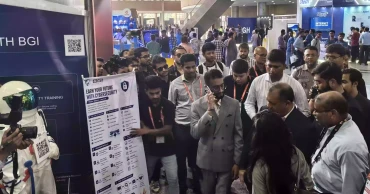
BG Interactive Ltd showcased its next-generation managed cybersecurity services, Security Operations Center (SOC) capabilities and cybersecurity workforce development initiatives at Phoenix Summit Dhaka 2026, highlighting its commitment to strengthening Bangladesh’s cyber resilience amid the country’s accelerating digital transformation.
As a sponsor of one of the country’s leading cybersecurity events, the company presented its Cyber Command Center (CCC) and a range of managed security services aimed at helping organisations strengthen cyber resilience while reducing operational costs.
A notable moment at the summit was the visit of Information and Broadcasting Minister Zahir Uddin Swapon to the company's booth on Friday. During the visit, the minister commended BG Interactive’s initiatives and encouraged its efforts to strengthen Bangladesh's cybersecurity landscape.
At Booth No. 8, BG Interactive demonstrated its flagship Security Operations Center as a Service (SOCaaS), a fully managed 24/7 cybersecurity monitoring and incident response service designed to help organisations avoid the substantial investment required to establish and operate their own Security Operations Centers.
According to the company, organisations using the service can significantly reduce capital expenditure while benefiting from continuous threat monitoring, real-time incident detection, rapid response, threat intelligence and compliance reporting delivered by cybersecurity specialists.
BG Interactive also offers end-to-end SOC deployment and implementation services for organizations seeking dedicated on-premise Security Operations Centers, covering architecture design, technology selection, implementation, customised operational playbooks, operational management and continuous optimization.
The company said its cybersecurity portfolio includes Vulnerability Assessment and Penetration Testing (VAPT), digital forensics, cybersecurity advisory and consultancy, cybersecurity training, and ISO and IT auditing services.
Its ISO consulting services support organisations in achieving and maintaining internationally recognized certifications, including ISO 27001:2022, through governance assessments, risk and compliance reviews, application security audits, SOC maturity assessments, cloud security audits and disaster recovery evaluations.
As part of its workforce development efforts, BG Interactive also provides cybersecurity awareness and technical training on phishing defence, secure software development, cloud security, SIEM operations, incident response, malware analysis, threat hunting and role-based security training for IT professionals, developers, HR personnel, finance teams and senior executives.
To engage students and technology enthusiasts, the company introduced "Cyber Hunt," an interactive cybersecurity competition where participants solve cyber challenges for a chance to win prizes, including a smartphone.
1 month ago

Trump administration restricts access to advanced AI models
OpenAI and Anthropic have limited access to their latest artificial intelligence models following cybersecurity reviews by the administration of US President Donald Trump, reflecting increased government scrutiny of advanced AI systems.
OpenAI said Friday its new model, GPT-5.6 Sol, will initially be available only to a small group of customers approved by the Trump administration. The company described the move as temporary, saying it expects broader public access in the coming weeks.
Australia plans tougher enforcement of social media ban for under-16s
Hours later, Anthropic announced that the administration had approved a limited release of its Mythos 5 cybersecurity model, two weeks after the Commerce Department restricted its deployment. The company said the model would initially be available only to selected cyber defenders and infrastructure providers.
The White House said it is working with leading AI developers to address national security risks posed by increasingly powerful AI technologies. Earlier this month, Trump signed an executive order creating a framework for reviewing advanced AI systems for up to 30 days before public release.
The policy has drawn criticism from lawmakers and cybersecurity experts, who warned that government control over AI releases could hurt US innovation and competitiveness. Both OpenAI and Anthropic are also exploring public stock market listings as regulatory oversight of the sector continues to expand.
1 month ago

Australia plans tougher enforcement of social media ban for under-16s
Australia is preparing to tighten its laws banning children under the age of 16 from using social media, as the government admits many young users continue to access major platforms despite the restrictions.
Prime Minister Anthony Albanese said the government is reviewing whether the existing law, which took effect on Dec. 10 last year, needs to be strengthened and whether regulators have sufficient authority to enforce it effectively.
"We're working on that as a priority because this is something that other generations didn't have to deal with, which is why it's complex," Albanese told Parliament on Thursday.
Speaking to the Australian Broadcasting Corp. on Friday, he said the government was examining whether the legislation was "as strong as possible" and whether eSafety Commissioner Julie Inman Grant had all the powers needed to enforce the rules.
Australia became the first country to introduce a nationwide ban preventing children under 16 from holding accounts on social media platforms such as Facebook, Instagram and YouTube. Since then, several other countries have introduced or proposed similar restrictions.
Britain last week announced plans to stop children under 16 from accessing several social media platforms to reduce exposure to harmful content and excessive screen time.
Canada, Brazil and Indonesia have also introduced age-based rules or proposed legislation for children's social media access, while France, Spain, Denmark, Thailand and South Korea are considering similar measures.
In April, eSafety Commissioner Julie Inman Grant said she was considering legal action against Facebook, Instagram, Snapchat, TikTok and YouTube, claiming the companies had not done enough to prevent underage Australians from using their platforms.
Those platforms, along with X, Kick, Reddit, Threads and Twitch, face fines of up to 49.5 million Australian dollars (US$34 million) if they fail to take reasonable steps to remove accounts belonging to children under 16.
Experts say recent data suggests the current restrictions are not working as intended.
Lisa Given, an information sciences expert at Melbourne's RMIT University, said the government's latest move appeared to be driven by growing evidence that many children continue to use restricted platforms.
Data released by the eSafety Commissioner in March showed that seven out of 10 underage children still had accounts on Facebook, Instagram, Snapchat and TikTok after the ban came into effect.
She also cited a study published this week in the *British Medical Journal*, which found that 85% of surveyed Australian children aged 12 to 17 were still using restricted social media platforms.
"I do think it's failing," Given said, adding that many young people themselves had described the policy as ineffective.
According to ‘The Sydney Morning Herald’, Inman Grant said earlier this month that her office lacked sufficient authority to enforce the law effectively.
"What I would say is a regulator is only as good as the tools and the resources that they're given," she was quoted as saying.
The Associated Press sought comment from her office on Friday, but did not immediately receive a response.
Given said stronger enforcement powers or alternative regulatory measures may be needed, adding that courts would likely have to determine what qualifies as the "reasonable steps" platforms are legally required to take.
Albanese also said the government plans to move ahead with digital duty of care legislation, which would make online platforms more accountable for harm caused by their content and algorithms.
1 month ago

Apple increases prices for Macs and iPads
Apple on Thursday raised prices for several Mac and iPad models, attributing the increases to a global shortage of memory chips driven by surging demand from the artificial intelligence (AI) industry.
The Cupertino, California-based technology giant described the supply crunch as an “unprecedented challenge” for the consumer electronics sector, saying the rapid expansion of AI data centres has sharply increased demand for memory and storage components.
“We have never seen a component price increase this much, this quickly,” Apple said in a statement, adding that it had absorbed rising component costs for as long as possible before deciding to increase prices.
Under the revised pricing, the entry-level MacBook Neo now costs $699, up from $599, while the 512GB MacBook Air has risen to $1,299 from $1,099. The 1TB MacBook Pro is now priced at $1,999, compared with its previous $1,699.
Among iPads, the 128GB iPad Air now costs $749, up from $599, while the 256GB iPad Pro WiFi has increased to $1,199 from $999.
Industry analysts expect Apple to raise iPhone prices later this year. IDC analyst Nabila Popal said the latest increases exceeded expectations and suggested iPhone Pro and Pro Max models could see price hikes of up to $200.
Apple shares fell $13.29, or 4.5%, to $279.88 in Thursday afternoon trading.
1 month ago
Agility Robotics seeks Wall Street debut in $2.5bn humanoid robot push
Agility Robotics, a US company that develops human-like robots for warehouse work, plans to go public in a move that could test investor confidence in the growing market for AI-powered humanoid machines.
The Oregon-based company announced Wednesday that it will merge with an investment firm in a deal valuing Agility at about $2.5 billion. The move is expected to make it the first publicly traded company focused entirely on building and selling humanoid robots.
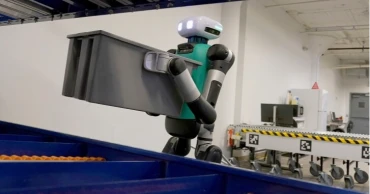
Agility is best known for its robot "Digit," which is designed to lift and move heavy containers and storage bins in warehouses and industrial facilities. Company officials say Digit is already being used commercially, making it one of the first humanoid robots to perform real-world warehouse tasks.
The company will merge with a special-purpose acquisition company (SPAC) managed by Churchill Capital Group. Churchill co-founder and chairman Michael Klein said Agility has attracted support from major technology and investment firms, including Amazon, Nvidia, SoftBank and Foxconn.
Among its early customers are Toyota, German industrial supplier Schaeffler and Latin American e-commerce giant Mercado Libre.
Agility faces competition from companies such as Tesla, whose CEO Elon Musk has promoted the Optimus humanoid robot as a key part of the company's future plans. Chinese robotics company Unitree is also moving toward a stock market listing in Shanghai.
Despite being classified as a humanoid robot, Digit was not designed to closely resemble a human, according to Agility co-founder and chief robot officer Jonathan Hurst. Its bird-like legs and claw-style gripping hands are specifically designed to improve performance in industrial environments.
Chief Executive Officer Peggy Johnson said Digit is intended to handle repetitive, physically demanding and potentially hazardous tasks that many workers prefer to avoid.=
"The demand is growing rapidly," Johnson said, noting that companies are bringing manufacturing back home, experienced workers are retiring, and fewer young people are interested in taking up routine manual jobs.
Unlike many traditional industrial robots that operate behind safety barriers, future versions of Digit are expected to work directly alongside human employees in warehouses and factories. The company also sees potential applications in hospitality, home services and elderly care in the future.
Agility said the funds raised through the public listing will help expand commercial deployments and increase production of its next-generation robot, Digit V5.
The company believes the global market for humanoid robots could eventually exceed $1 trillion, although a growing number of firms are competing to capture a share of the sector.
Industry analysts say Agility and Unitree represent two different approaches to humanoid robotics. While Agility focuses on practical workplace robots, Unitree has gained attention for showcasing robots that can dance, perform backflips and demonstrate other entertainment-oriented features.
Experts say the emerging humanoid robot industry is still evolving, with companies continuing to search for the most promising commercial opportunities.
1 month ago

China's technological progress an opportunity, not a threat: Li Qiang
Chinese Premier Li Qiang on Wednesday defended China's rapid technological advancement, saying the country's innovations should be viewed as an opportunity for the world rather than a threat.
Speaking at the opening session of the World Economic Forum's Annual Meeting of the New Champions, also known as the "Summer Davos," in the northeastern Chinese city of Dalian, Li said growing concerns over China's technological rise were misplaced.
He acknowledged that some countries have described China's high-tech expansion as "China Shock 2.0," seeing it as a challenge to advanced economies.
Instead, Li said it should be regarded as "China Opportunity 2.0."
"From the global development perspective, 'China Opportunity 2.0' means there'll be broader access to advanced technologies and more widely shared benefits," he said.
"China's emerging technologies and products are bringing to the world not shocks, but opportunities; not threats, but empowerment," he added.
China's growing exports of electric vehicles, solar panels, semiconductors, batteries, artificial intelligence technologies and robotics have provided affordable products to global markets, but they have also sparked criticism from governments concerned about overcapacity and unfair competition.
Li also rejected claims that China's technological rise has been driven primarily by extensive state subsidies.
The United States and European countries have repeatedly accused Beijing of giving unfair advantages to its industries through state support. Earlier this month, a report by the Organization for Economic Cooperation and Development (OECD) said massive government subsidies, including those in China, can distort global markets and create unfair competitive advantages.
"There are some people who say that Chinese products are competitive mainly because of the Chinese government's subsidies. That's not true. The Chinese government is not that wealthy," Li said.
He argued that China's vast domestic market of 1.4 billion people, which enables the rapid adoption of new technologies, along with strong corporate investment, has been a major driver of the country's technological progress.
Li cited Chinese technology giant Huawei and robotics firm Unitree as examples of the country's innovation success.
Both companies have recently faced increased scrutiny from the United States. Earlier this month, the Pentagon expanded its list of Chinese companies allegedly linked to the military, adding Unitree and several other technology firms. The designation bars the companies from securing US defense contracts. Huawei is also included on the list.
Beijing has strongly opposed the move, saying it unfairly targets Chinese companies.
1 month ago

AI chatbots enter dating world as modern “Cyrano,” helping users craft romance
As people increasingly rely on artificial intelligence in everyday life, chatbots are now becoming unexpected assistants in the search for love—acting as digital dating coaches, profile editors, and message writers.
Marie Lansley, who recently moved to San Francisco for a new job while also looking for a partner, says she has been “trying everything” in her dating life, including AI tools. She uses chatbots to help initiate conversations on dating apps, something she finds challenging despite being comfortable talking in person.
AI tools, she said, are widely becoming informal relationship advisers for her and many others.
“I am open to AI finding me the love of my life, but I’m also not fully convinced that it can,” Lansley said. While she sees AI as useful for making dating more efficient, she believes attraction and chemistry remain fundamentally human. “AI is great at making dating more efficient. But the chemistry — that’s always going to be analog.”
Across dating platforms, users are turning to AI in different ways. Some use matchmaking services powered by algorithms, others rely on tools to improve their profiles, while many use chatbots to draft messages or decode replies from potential partners.
Lansley alternates between OpenAI’s ChatGPT and Anthropic’s Claude, while others experiment with tools like Grok, Gemini, and similar systems. Dating apps and AI companies have also begun promoting these uses, with social media content showcasing chatbot-generated dating advice.
Dating coach Carey Gaynes compared the trend to the classic story *Cyrano de Bergerac*, where one person writes romantic words for another.
“Claude is the new Cyrano,” she said, adding that users are often “using a voice that isn’t yours.”
Gaynes said she has seen people of all ages experimenting with AI in dating but warned against becoming too dependent on it, even as she acknowledges its usefulness.
Opinions about AI’s role in romance vary widely, ranging from enthusiasm to deep skepticism.
Lansley said she has been surprised by how emotionally aware chatbots can appear, noting that an AI matchmaking app she tried asked surprisingly thoughtful, layered questions. However, she said it did not necessarily improve results, as her first match was not ideal.
Others see AI as helpful mainly for early-stage conversations. Los Angeles student Mason Naung said he could see its value for crafting opening lines on apps like Hinge, but would consider anything beyond that a “small red flag.”
AI is also being used in less expected ways, including writing breakup messages. San Diego business owner Dani Cohen said she would prefer receiving an AI-written goodbye over being “ghosted,” arguing that any tool that improves communication is beneficial.
However, concerns about overreliance are growing. Some users say they would reject partners who rely too heavily on AI-generated messages, arguing it undermines authenticity and creativity.
A 2025 Pew Research Center survey found that 53% of U.S. adults believe AI will reduce creative thinking, while half said it could weaken people’s ability to form meaningful relationships.
Despite concerns, AI is rapidly becoming embedded in the dating industry. Apps like Tinder now use AI-powered features to suggest matches, while Hinge offers AI-generated prompts and profile feedback. Bumble has also signaled a shift toward AI-driven matchmaking, moving away from its traditional swipe model.
Still, some users insist love should remain unmediated. Others argue that while AI can reduce effort and improve communication, it may also dilute authenticity in relationships.
New York-based content creator Jake Clay described the shift as a “Catch-22,” noting that while AI helps people manage awkward dating tasks, it also risks replacing parts of human connection that should remain personal.
“It’s kind of a sad commentary,” he said.
1 month ago
High fuel prices fuel surge in Chinese EV sales as charging networks lag behind
Rising global fuel prices, driven in part by disruptions in the Middle East, have accelerated demand for electric vehicles (EVs) worldwide, giving Chinese automakers a stronger foothold in developing markets even as charging infrastructure struggles to keep pace.
The blockade of the Strait of Hormuz, a key global energy route, disrupted the shipment of around one-fifth of the world’s crude oil and liquefied natural gas, first affecting Asia and later spreading to Africa. The shock pushed fuel prices higher and strengthened the shift toward electric mobility.
As a result, global exports of Chinese EVs jumped sharply. In April alone, shipments reached a record $9.4 billion, according to analysis of Chinese customs data by the think tank Ember. Exports surged to countries including Australia, Brazil, Southeast Asia and East Africa.
China exported about 435,000 passenger EVs and plug-in hybrids in May, more than double the same period last year, according to the China Association of Automobile Manufacturers.
Governments from Laos to Ethiopia are also promoting electrification to reduce fuel import costs and subsidies, while consumers increasingly turn to EVs to cope with rising transport expenses.
However, the rapid expansion in EV adoption is exposing a major weakness: underdeveloped charging networks.
Experts say the mismatch between rising EV numbers and limited charging points has created a “chicken-and-egg problem.” Paul Gong, head of China automotive research at UBS, said government support is crucial to overcome the gap.
“Government support for infrastructure could help accelerate adoption,” he said.
Rising EV demand across Asia and Africa
In Southeast Asia, imports of Chinese EVs have surged, particularly in Thailand, Laos and the Philippines. Laos recently announced a ban on fuel-powered vehicle imports for the rest of 2026 as part of its shift toward electric transport.
Africa imported about 44,000 Chinese EVs in 2025, a 130% increase from a year earlier, according to Chinese trade data.
Transport costs account for a large share of household spending across many developing countries, making consumers highly sensitive to fuel price volatility. In South Africa, transport makes up nearly one-fifth of household expenses, according to a 2024 Stellenbosch University study.
Global EV adoption is also rising rapidly. One in four new cars sold worldwide last year was electric, according to the International Energy Agency (IEA), which projects sales could reach 23 million in 2026, or nearly 30% of global car sales.
Chinese automakers currently supply around 60% of global EV sales, the IEA said, with growing expansion into Europe, Africa and Latin America.
“In the next five years, we will accelerate our overseas expansion,” said Jerry Gan, CEO of Geely Auto, at a company event in March.
In Vietnam, domestic EV maker VinFast has also seen strong growth, supported by rising demand in Southeast Asia. One rider in Hanoi said switching to an electric motorbike has significantly reduced his fuel expenses.
“Before, so much of my income went into fuel. Now, I can actually save some money,” he said.
Charging infrastructure falling behind
Despite strong sales growth, charging infrastructure remains limited in many countries.
Thailand, for example, has about 4,600 public charging locations serving more than 424,000 EVs and plug-in hybrids, according to the Electric Vehicle Association of Thailand. That is roughly one charging location for every 92 vehicles.
Some drivers say the shortage creates daily challenges. Others continue to rely on hybrid solutions, keeping fuel-powered vehicles for longer trips.
In Malaysia, public fast-charging stations increased by more than 70% in 2025 after government incentives. Indonesia has also expanded its network to more than 4,500 charging stations through its state utility PLN.
But in contrast, Ethiopia, which has banned imports of non-electric vehicles, had only around a dozen charging stations as of mid-2025, despite estimating a need for more than 1,170.
“In developing markets, affordability can accelerate the shift, but infrastructure, power reliability and usage patterns remain key constraints,” said Chris Liu of research firm Omdia.
Governments and utilities step in
Across Africa and parts of Asia, state-owned utilities are increasingly taking the lead in building EV charging infrastructure.
Experts say utilities see EVs as a future source of electricity demand and are positioning themselves accordingly. Kenya Power, for example, plans to build 44 charging stations in the coming year.
Africa currently has about 2,000 public charging stations, with South Africa accounting for the largest share.
However, challenges remain, including grid capacity, maintenance and investment costs.
Analysts say large automakers have limited incentive to build charging networks abroad, making government-backed utilities a key driver of future expansion.
“You need charging infrastructure to support an even larger fleet size,” said UBS analyst Paul Gong.
1 month ago

Australia and Canada finalize $1.75 billion agreement for advanced radar system
Australia and Canada have entered into a landmark $1.75 billion defense agreement to deploy an Australian-developed long-range radar system across Canada, strengthening military cooperation between the two nations.
The agreement’s first phase was signed in Canberra by Australian Defense Minister Richard Marles and Canadian Secretary of State for Defense Procurement Stephen Fuhr. The project will establish an early-warning radar network extending from the Canada–U.S. border into the Arctic region.
Marles described the deal as a significant step in the strategic partnership between the two countries, emphasizing that Australia and Canada would now collaborate closely on the future development of Over-the-Horizon Radar technology.
Fuhr highlighted the longstanding relationship between the two Commonwealth nations, noting their history of cooperation and shared membership in the Five Eyes intelligence alliance alongside the United States, the United Kingdom, and New Zealand. He said Australia is a trusted partner as Canada adapts to evolving global security and economic challenges.
Canadian Prime Minister Mark Carney selected the Australian radar system over competing U.S. alternatives shortly after taking office last year. In March, he became the first Canadian prime minister in more than a decade to visit Australia, where he and Prime Minister Anthony Albanese agreed to deepen cooperation in areas including defense technology, artificial intelligence, and critical minerals.
Defense contractor BAE Systems Australia will assist both governments in developing the Arctic Over-the-Horizon Radar project. The technology, refined over four decades, uses high-frequency radio waves reflected off the ionosphere to detect aircraft, ships, and other objects at vast distances beyond the reach of conventional radar systems.
The contract represents the largest defense export in Australia's history. It surpasses the country's previous record, a $700 million agreement signed in 2024 to supply Germany with 100 Australian-manufactured Boxer armored vehicles.
1 month ago