tech

US judge allows antitrust lawsuit against Apple
A US federal judge on Monday rejected Apple’s bid to dismiss a government lawsuit accusing the tech giant of building illegal barriers to protect the iPhone from competition and inflate its profit margins.
US District Judge Xavier Neals of New Jersey issued a 33-page opinion that allows the antitrust lawsuit, filed by the US Justice Department 15 months ago, to move forward. He also set a timeline that could bring the case to trial in 2027, as reported by AP.
Apple had urged the court to throw out the lawsuit, arguing that the Justice Department misrepresented the smartphone market and made other legal errors.
However, Judge Neals ruled there is sufficient evidence to support the government’s market definitions and said the central allegations in the case deserve to be examined in court.
The Justice Department’s lawsuit seeks to challenge what it describes as a “walled garden” that Apple has built around its products, including the iPhone and iPad, by tightly integrating hardware and software. While Apple says this system benefits users, the government alleges it has turned into a shield against competition, enabling higher prices and stifling innovation.
The lawsuit “sets forth several allegations of technological barricades that constitute anticompetitive conduct,” Neals wrote. He added that prosecutors had presented enough concerns to raise the “dangerous possibility” that Apple has turned the iPhone into an illegal monopoly.
Apple alters EU app store rules to avoid fines
In response, Apple maintained its stance, saying, “The Justice Department's case is wrong on the facts and the law, and we will continue to vigorously fight it in court.”
The antitrust lawsuit is one of several legal challenges facing the California-based company, which reported \$94 billion in profits on \$295 billion in sales during its last fiscal year ending in September.
In April, a federal judge issued a civil contempt order barring Apple from collecting fees on in-app transactions processed through alternatives to its proprietary payment system, which previously charged commissions of 15% to 30%.
Apple is also facing the possible loss of more than \$20 billion in annual payments it receives for setting Google as the default search engine on its devices. That issue is part of a separate Justice Department antitrust case against Google, with a Washington, D.C. judge expected to rule on proposals to disrupt Google’s search monopoly.
Neals' decision on Monday came as Apple was also hit with a lawsuit from app developer Proton, echoing the allegations of anti-competitive conduct. Proton’s lawsuit seeks class-action status on behalf of thousands of app developers, punitive damages against Apple, and a court order to dismantle the company’s walled garden.
1 year ago

How to Use ChatGPT and Other AI Tools to Improve Your IELTS Writing and Speaking Preparation
Preparing for the IELTS exam is a challenging yet rewarding journey. With the rise of AI tools like ChatGPT, learners now have a powerful resource to enhance their writing and speaking skills through personalised, on-demand practice and feedback. Let's find out how ChatGPT and other AI tools can help you make solid preparations for the writing and speaking sections of the IELTS exam.
How to Get Desired IELTS Score in Writing & Speaking Utilising ChatGPT or Other AI Apps
.
Generate Writing Topics On-Demand
One of the most effective ways to improve your IELTS writing skills is by consistently practising with new topics. ChatGPT can instantly generate IELTS Writing Task 1 and Task 2 prompts.
You simply need to give a command such as, “Give me a Task 2 essay topic on education,” and within seconds, you will have a practice prompt that mirrors the structure of real IELTS questions. This makes it easy to maintain variety in your writing and ensures you are exposed to a wide range of question types, from opinion to problem-solution essays.
Read more: How to Use ChatGPT and Other AI Tools to Improve Your IELTS Writing and Speaking Preparation
Analyze and Rewrite Your Essays
After completing a task response, you can request ChatGPT or any kind of similar AI app to review it. For example, using a prompt such as “Can you give feedback on this IELTS Task 2 essay?” along with your essay allows the chatbot to assess your grammar, vocabulary, coherence, and overall structure.
It will then break down your writing into the four IELTS scoring criteria—Task Response, Coherence and Cohesion, Lexical Resource, and Grammatical Range and Accuracy—and even give you a band estimate. You can also ask ChatGPT to rewrite your essay in a more academic or formal tone, helping you learn how to polish your writing.
Practice Academic Writing Style
Many test takers struggle with maintaining the required formal tone in Writing Task 2. ChatGPT can help you rewrite informal sentences into a more suitable academic style. For example, you might paste a paragraph and say, “Make this more formal and academic,” and it will return a refined version. This repeated exposure to academic phrasing trains your brain to automatically choose more formal constructions when writing under pressure.
Simulate IELTS Speaking Part Practice
ChatGPT is capable of simulating IELTS Speaking Parts 1, 2, and 3 by providing realistic prompts that resemble those used by actual examiners. Ask something like, “Pretend you are an IELTS examiner. Ask me Part 1 speaking questions,” and it will provide one question at a time, just like the real test.
Read more: IELTS for UKVI Explained: Key Insights for Bangladeshi Candidates
For Part 2, it can generate cue cards and even give you feedback on your response if you choose to type it out afterward. Practising in this format can help reduce anxiety, improve your fluency, and train you to think on your feet.
Improve Fluency Through Interactive Conversations
To sound more fluent and natural during the Speaking test, you need regular practice in forming complex ideas and expressing them clearly. ChatGPT can hold extended conversations with you on various IELTS-friendly topics like environment, education, technology, and culture.
This back-and-forth dialogue sharpens your ability to expand answers, use linking devices, and apply topic-specific vocabulary. While ChatGPT can not listen to your pronunciation, typing your answers and receiving written feedback still helps you develop rhythm and cohesion in speech.
Get Grammar and Vocabulary Feedback
One of the most frustrating aspects of self-studying IELTS is identifying your grammar and vocabulary weaknesses. With ChatGPT, you can paste any piece of writing or a sample speaking response and ask, “Please highlight grammar mistakes and suggest better word choices.”
Read more: How to Register for IELTS Exam in Bangladesh
It will analyse your work line by line, correcting errors and suggesting more advanced or suitable alternatives. You can even request vocabulary lists for specific topics or ask how to paraphrase certain phrases more effectively, helping you master the lexical resource band criteria.
Train ChatGPT to Evaluate Writing with Model Answers
You can use a more advanced method by “training” ChatGPT to assess writing against model answers. Provide five sample essays rated from Band 5 to Band 9, then include your own essay.
Instruct ChatGPT to compare your answer to the model responses and provide a full-band score evaluation based on IELTS criteria. This method is particularly helpful because it aligns ChatGPT’s feedback with the actual scoring system used by IELTS examiners, making the evaluation much more reliable.
Limitations of Using ChatGPT and Other AI Tools for IELTS Preparation
.
Not a Certified IELTS Examiner
While ChatGPT can provide helpful evaluations and corrections, it is not a certified IELTS examiner. This means the feedback it gives—especially band score predictions—may not always be accurate. Its understanding of IELTS criteria is broad but not specific to the training that human examiners undergo. Therefore, its scoring should be viewed as approximate, not official.
Read more: Free Websites for Online IELTS Mock Tests
Lacks Clear Opinion and Argumentation
A major limitation of ChatGPT in essay writing is its tendency to maintain a neutral tone. It is designed to present balanced viewpoints without taking a firm stand. However, in many IELTS Writing Task 2 essays, particularly those that ask for an opinion, test-takers are expected to take a clear position and support it with arguments. Overly vague or generic answers can lower your score for Task Response and reduce clarity.
No Personal Experience in Speaking Responses
Another major drawback is ChatGPT’s inability to reference personal experience. In the IELTS Speaking section, drawing from your real-life stories and opinions helps make your responses more engaging and authentic. Since ChatGPT and similar kinds of AI apps can only provide general or hypothetical examples, its answers often lack the depth and individuality that examiners look for.
Does Not Evaluate Pronunciation
Although ChatGPT can assess grammar and vocabulary through written responses, it cannot listen to your speech. This means it cannot evaluate crucial aspects like pronunciation, stress, or intonation—key components of the IELTS Speaking score.
Information May Be Inaccurate or Generic
Lastly, ChatGPT is not affiliated with IELTS, and its suggestions should be cross-checked with official resources. Always verify content accuracy and avoid using it as your only source of preparation. AI serves as a supplementary tool—not a substitute for official materials or expert advice.
Read more: IELTS Practice Tests: 7 Full Free IELTS Mock Tests to Take Online
In a Nutshell
ChatGPT and other AI tools can be a powerful ally in your IELTS Writing and Speaking preparation, offering flexible, instant practice and helpful insights. From generating topics to refining grammar and vocabulary, it adds great value to self-study. However, it is essential to balance AI support with official IELTS materials, expert feedback, and personal effort. While ChatGPT enhances learning, it should complement—not replace—structured preparation from certified sources and real-world language practice.
1 year ago
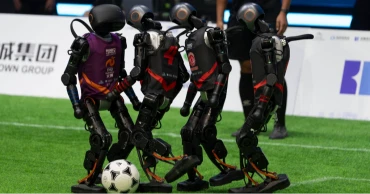
China’s humanoid robots outshine human footballers, draw crowds with AI-driven matches
While China’s national men’s football team continues to disappoint on the international stage, humanoid robots are capturing attention in Beijing — not for their athletic skills, but for the cutting-edge AI technology behind them.
On Saturday night, four teams of humanoid robots competed in fully autonomous 3-on-3 football matches, powered entirely by artificial intelligence. The event, promoted as the first of its kind in China, also served as a preview for the upcoming World Humanoid Robot Games, scheduled to be held in Beijing.
Organizers highlighted that the robots played the matches without any human control, relying solely on AI-based strategies and decision-making.
Outfitted with sophisticated visual sensors, the robots could track the ball and maneuver around the field with surprising agility. They were even programmed to pick themselves up after falling. Still, in a display of realism, some robots had to be carried off on stretchers after toppling over during play.
China launches powerful hydrogen generator to cut emissions
China is ramping up efforts to advance AI-driven humanoid robots, using sports such as marathons, boxing, and football as testing grounds to refine their performance in real-world scenarios.
Cheng Hao, founder and CEO of Booster Robotics—the company that provided the robot players—described sports competitions as ideal environments to develop the complex interaction between hardware, software, and AI algorithms.
Cheng also underlined the importance of safety, especially with future plans for human-robot matches.
“In the future, we might organize football games between robots and humans. For that to happen, we must guarantee absolute safety,” Cheng explained. “These matches wouldn’t focus on winning or losing but would allow for real offensive and defensive interactions. That’s how we can build public trust and show that robots are safe.”
Booster Robotics supplied the hardware for all four university teams, while the universities themselves developed the AI algorithms for perception, game strategy, formations, and passing — considering variables such as speed, force, and direction, according to Cheng.
In the final, Tsinghua University’s THU Robotics defeated the China Agricultural University’s Mountain Sea team with a 5-3 scoreline to claim the championship.
Tsinghua supporter Mr. Wu cheered his team’s victory but also praised the competition.“THU performed really well,” he said. “But the Mountain Sea team from Agricultural University also exceeded expectations. It was a thrilling match.”
China’s men’s football team, meanwhile, has only qualified for the World Cup once and has already been eliminated from next year’s tournament in Canada, Mexico, and the United States.
1 year ago
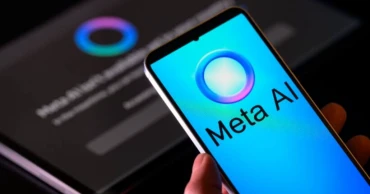
Meta’s new cloud processing feature raises privacy concerns for Facebook users
Facebook users are being urged to exercise caution before enabling a new feature that allows Meta, Facebook's parent company, to access and scan photos stored on their phones — including those never shared on social media platforms.
The development follows growing concerns over Meta’s use of user data, especially after reports confirmed that the company has been training its artificial intelligence (AI) models using publicly shared photos from Facebook and Instagram.
However, recent revelations indicate that Meta now seeks access to private photos stored on users’ devices, according to a report by asianetnews.
A TechCrunch report, cited by India Today and The Verge, explains that some Facebook users recently received pop-up notifications while attempting to upload a story. The notification offered the option to activate a new feature called Cloud Processing, which enables Meta to automatically upload photos from a user’s camera roll to the company’s cloud.
The feature promises to offer users AI-powered creative tools such as photo collages, event recaps, AI-generated filters, and theme-based suggestions for occasions like birthdays or graduations.
While the feature may appear useful and harmless at first glance, experts warn of significant privacy risks. Once activated, users effectively give Meta permission to scan, analyze, and process personal photos stored on their devices, including those never posted online. Meta’s AI system will reportedly examine faces, objects, locations, dates, and even the metadata embedded in those images.
Meta has defended the feature, describing it as an entirely optional service aimed at enhancing user experience. The company says users can turn the feature on or off at any time. “It is an opt-in feature that you can turn on or off at will,” Meta said.
Rise in harmful content on Facebook following Meta's moderation rollback
Despite these assurances, privacy advocates remain concerned, especially considering Meta's history of handling user data. The company recently admitted that it has been using all photos shared publicly on Facebook and Instagram since 2007 to train its generative AI models.
However, Meta has not clearly defined what qualifies as ‘public’ content or what age restrictions apply to its data use policies, raising further questions.
To opt out of Cloud Processing, users can disable the feature through Facebook’s settings. Meta says that if the feature is turned off, any unshared photos uploaded to the cloud will be deleted within 30 days.
As tech companies continue to experiment with the limits of user data collection in the AI era, experts warn that features like Cloud Processing — though presented as tools for user convenience — may quietly expand access to personal data.
Previously, users had to consciously decide to share photos publicly. With Cloud Processing enabled, however, those same photos can be silently uploaded to Meta’s servers, allowing Meta AI to access them.
In this context, experts advise users to carefully review the terms of such features and make informed decisions to protect their privacy.
1 year ago

NetChoice sues Arkansas over social media laws
Tech industry trade group NetChoice filed a lawsuit against the state of Arkansas on Friday, challenging two newly enacted laws that impose restrictions on social media platforms and open the door for parents to sue over harmful content linked to youth suicides.
The lawsuit, filed in federal court in Fayetteville, comes months after a federal judge struck down a previous Arkansas law requiring parental consent for minors to open social media accounts. The new laws were signed earlier this year by Republican Governor Sarah Huckabee Sanders.
“Despite the overwhelming consensus that laws like the Social Media Safety Act are unconstitutional, Arkansas elected to respond to this Court’s decision not by repealing the provisions that it held unconstitutional but by instead doubling down on its overreach,” NetChoice stated in the lawsuit.
Several U.S. states have pursued similar laws, citing concerns over the mental health effects of social media on children. NetChoice — whose members include TikTok, Meta (Facebook’s parent company), and X (formerly Twitter) — had successfully challenged Arkansas’ 2023 age-verification requirement for social media users, which a federal judge blocked and struck down in March.
Similar laws have also been halted by courts in Florida and Georgia.
A spokesperson for Arkansas Attorney General Tim Griffin said the office is reviewing the lawsuit and “looked forward to defending the law.”
One of the laws being challenged prohibits social media companies from using designs, algorithms, or features that they “know or should have known through the exercise of reasonable care” could lead users to die by suicide, purchase controlled substances, develop an eating disorder, or become addicted to the platform.
Rise in harmful content on Facebook following Meta's moderation rollback
NetChoice argues that this provision is unconstitutionally vague and fails to provide clear guidance on what content would violate the restrictions. The lawsuit also points out that the law would affect both minors and adults.
It questions whether certain songs referencing drugs — like Afroman’s “Because I Got High” — would fall under the new restrictions.
The same law allows parents to sue social media companies if their children died by suicide or attempted to do so after exposure to content promoting self-harm or suicide. Companies found in violation could face civil penalties of up to $10,000 per incident.
NetChoice is also contesting a second law that broadens the scope of Arkansas’ restrictions on social media platforms. This measure requires platforms to prevent minors from receiving notifications between 10 p.m. and 6 a.m. It also prohibits companies from designing their platforms to “evoke any addiction or compulsive behavior.”
NetChoice contends the law lacks clarity on how platforms can comply and that the language is so broad, it is unclear what types of content or features would constitute a violation.
“What is ‘addictive’ to some minors may not be addictive to others. Does allowing teens to share photos with each other evoke addiction?” the lawsuit stated.
1 year ago

MrBeast pulls AI Thumbnail tool amid backlash from YouTube creators
Popular YouTuber MrBeast has taken down an AI-powered thumbnail generator following strong criticism from fellow creators who accused the tool of exploiting their work without consent.
The creator, whose real name is Jimmy Donaldson, introduced the feature last week through his YouTube analytics platform, Viewstats. He claimed the tool was designed to help smaller content creators craft more effective thumbnails. However, the move sparked a backlash, with critics arguing that it used existing thumbnails without permission.
Prominent YouTubers including PointCrow and Jacksepticeye condemned the AI generator. PointCrow, whose real name is Eric Morino, accused MrBeast of launching “something that can steal… hard work without a thought,” alleging the AI model had been trained on other creators’ thumbnails without consent.
In response, MrBeast announced on X (formerly Twitter) that he would be removing the tool from Viewstats. Instead, he plans to promote human artists available for hire.
"I genuinely care about the YouTube community more than anyone can imagine," MrBeast wrote, acknowledging the feedback. “It deeply saddens me when I do something that upsets people in the community. If creators don't want the tool, then that's perfectly fine.”
The now-defunct tool, offered via an $80-per-month subscription, allowed users to replicate popular thumbnail styles and even insert themselves into visuals resembling those from other channels. Critics likened the feature to generative AI tools trained on unauthorized content — a practice currently under legal scrutiny in multiple copyright lawsuits.
Despite MrBeast’s initial belief that creators would welcome the tool, it faced swift condemnation. Critics noted that, although the concept aimed to democratize content creation, it ultimately risked harming original creators and eroding trust in the community.
MrBeast, who currently holds over 385 million subscribers and is widely considered the platform’s highest-paid personality, has long emphasized supporting creators through tools and business ventures. However, the recent controversy adds to a series of challenges. These include a lawsuit tied to his Amazon series Beast Games, which drew allegations of mistreatment during filming, and criticism from the Mexican government for filming at Mayan ruins.
In a separate incident in April, MrBeast also apologized for a poorly organized fan event in Las Vegas that some attendees described as a “horrible” experience.
Despite these controversies, MrBeast remains a dominant figure in digital entertainment, with an expanding media presence and influence over YouTube’s creative landscape.
Source BBC
1 year ago

Apple alters EU app store rules to avoid fines
Apple has revamped its App Store policies in the European Union in a last-minute attempt to avoid further fines under the bloc's digital competition laws.
The move follows a €500 million ($585 million) penalty imposed by the European Commission in April for preventing app developers from directing users to cheaper purchasing options outside Apple’s App Store.
The Commission had given the tech giant a 60-day deadline, which expired on Thursday, to implement changes and avert additional periodic fines.
Under the new terms, Apple will make it easier for app developers to inform users about better deals on digital products and alternative payment options, including other websites, apps, or app stores.
The California-based company is also introducing a two-tier fee system to accommodate developers who choose to use alternative payment methods.
vivo T4 Ultra Review: A Game-Changing Mid-range Flagship
“The European Commission is requiring Apple to make a series of additional changes to the App Store," Apple said in a statement. "We disagree with this outcome and plan to appeal.”
The European Commission acknowledged Apple’s announcement and stated it “will now assess these new business terms for DMA compliance,” referring to the Digital Markets Act.
The DMA aims to curb the market dominance of major tech companies, with potential fines of up to 10% of their global annual revenue for non-compliance.
One of the DMA’s key provisions requires developers to inform customers of cheaper purchasing options and provide direct access to those offers.
Apple’s previous restrictions, which blocked developers from steering users to external payment channels, had drawn criticism from several companies, including Spotify, which removed its in-app payment feature to avoid paying commissions of up to 30% on digital subscriptions through iOS.
END/UNB/SA/1709hrs
1 year ago

Windows' infamous ‘Blue Screen of Death’ turning black as part of new updates
After decades of haunting computer users with its trademark blue background, Windows’ infamous “Blue Screen of Death” is getting a new look — it will soon turn black.
The change comes as part of Microsoft’s wider efforts to make the Windows operating system more resilient, following last year’s major CrowdStrike incident that caused millions of computers worldwide to crash.
“It's now easier than ever to manage unexpected restarts and recover quickly,” Microsoft said in a statement from its Redmond, Washington headquarters on Wednesday.
As part of the update, Microsoft is simplifying the experience for users facing unexpected system restarts. The redesigned error screen will feature a black background, a shorter message, and will no longer display the familiar frowning face. Instead, it will show the percentage progress for the system restart.
The updated interface is expected to roll out later this summer for all devices running Windows 11 (version 24H2).
How ChatGPT and other AI tools are changing the teaching profession
In addition, Microsoft announced a new “quick machine recovery” feature aimed at reducing downtime, especially during large-scale outages. The mechanism will allow Microsoft to automatically deploy targeted fixes without requiring complex, manual intervention from IT teams.
The quick machine recovery feature will also become widely available later this summer on Windows 11, with further improvements expected by the end of the year.
1 year ago

China launches powerful hydrogen generator to cut emissions
A homegrown hydrogen internal combustion engine generator set has been put into commercial operation in central China's Hubei Province, contributing to exhaust gas treatment and the reduction of carbon emissions, the China Science Daily reported Wednesday.
The 300-kilowatt generator set -- the most powerful of its kind in China -- has been jointly developed by Huazhong University of Science and Technology, Yuchai Power and ONEST-POWER. It is designed to directly utilize hydrogen-rich industrial exhaust gas to generate electricity.
Industrial exhaust gas requires purification before it can be used for power generation. However, this generator can directly use hydrogen-rich exhaust gas, cutting purification costs by approximately 40 percent. It also boasts a power generation efficiency of over 42 percent.
During its trial operation in a chemical industrial park in Hubei, the generator set converted 500,000 standard cubic meters of waste hydrogen into 8 million kilowatt-hours of clean electricity, which is equivalent to the annual electricity consumption of 7,000 households.
How ChatGPT and other AI tools are changing the teaching profession
It is estimated that one such generator set operating 6,000 hours annually can consume 1.4 million standard cubic meters of hydrogen and reduce carbon dioxide emissions by 1,362 tonnes per year -- equivalent to the carbon sequestration of 74,000 trees.
According to the developer, chemical industrial parks across China can recycle up to 4.5 million tonnes of by-product hydrogen annually. Even if only a portion of this hydrogen is used for power generation, such generator sets could make a substantial contribution to reducing CO2 emissions.
1 year ago

Best Free and Paid Airplane Games for Android and iOS in 2025
Simulation games invite players to a world where reality is arranged on a pixelated display, and they rule out other genres in popularity. Mobile airplane games are designed to bring the thrill of piloting an actual carrier or fighter while being educational in every way. Here are some of the most played and highest-rated free and paid aeroplane games for Android and iOS that promise an exciting playtime.
Top 10 Free & Paid Airplane Simulation Games for Mobile in 2025
.
Infinite Flight Simulator
Anyone looking for a comprehensive aeroplane simulation experience will find the Infinite Flight Simulator highly enjoyable. The game will sit you in a plane’s cockpit and leave total control in your hands. There are numerous plane models and routes to choose from, where every combination will set you up for a unique experience. One of the most popular flight games developed by Infinite Flight LLC, the Infinite Flight Simulator, was first released on July 7, 2013, and later updated on June 4, 2025. With a downloadable size of 570 MB for Android and 685 MB for iOS devices, the game is currently celebrating a 3.8-star rating on the Play Store and a 4.3-star rating on the App Store.
Flight Pilot Simulator 3D
Wildlife Studios’ Flight Pilot Simulator 3D, which was launched in 2015 and updated on June 9, 2025, delivers what you look for in an arcade flying game. With realistic 3D visuals and mesmerising animations, the game unloads a pack of exciting missions. From emergency rushes and rescue missions to flying for your life with raging fire on your plane, you will get a solid aero fighter gaming experience. The Flight Pilot Simulator 3D takes 255MB of storage on Android and 307.5MB of storage on iOS devices. It has a 3.8-star Play Store rating and a 4.6-star App Store rating.
Read more: Top 10 Football Live Streaming Apps for iOS and Android in 2025
Airline Commander
Airline Commander sets itself apart from other airplane games by being uncompromisingly true to its genre. The game offers real airlines coordinating their flights according to the real-time world. You can pick any location, set a course to anywhere, take complete control, track yourself and others on HD satellite view, and show off your skill in the competition mode. Airline Commander, offered by RORTOS, first came out in 2018 and had a recent update on May 20, 2025. The game requires 525MB of storage on Android and 1.2GB of storage on iOS devices. It has a 4.1-star Play Store rating and a 4.6-star App Store rating.
X-Plane Flight Simulator
Manoeuvre your fingers through hundreds of buttons, knobs and switches in an interactive cockpit and navigate your aircraft following a predefined course. Developed by Laminar Research, the game is designed to bring the flight simulation experience from desktop to mobile. After its release in 2015, the game received an update on April 5, 2025, adding new features and gameplay options. It’s an easy download for both Android and iOS users, requiring only 1GB of storage.
F18 Carrier Landing II
F18 Carrier Landing II is a challenging game that will test not only your navigational and landing abilities but also your fighting spirit. You will fly military aircraft, being accompanied by Top Gun comrades, and run critical missions, which will end with the successful landing on the limited runway of an aircraft carrier. Released in 2011 and updated in June 2025, F18 Carrier Landing II is one of many aero adventure games offered by RORTOS. It is a premium game priced at BDT 1,100 and has a download size of 210 MB.
Read more: Assassin’s Creed Shadows Game Review: What’s New
Modern Warplanes: PvP Jet Fighter
Advance your game and fly at a supersonic speed across dangerous enemy territories while drawing hell to the earth in Modern Warplanes: PvP Jet Fighter. Multiplayer functionalities, PvP dogfighting sessions, and spectacular visuals are set for an immersive aerial combat experience. Brought by ForgeGames Mobile, Modern Warplanes: PvP Jet Fighter first became available in 2016 and added updated features in September 2024. Downloadable at 160MB of storage, the game has a 4.2 rating on the Play Store.
Turboprop Flight Simulator 3D
During play, Turboprop Flight Simulator 3D will give you an educational journey, as all the planes in this game are of Boeing types. Several tutorial missions, movable parts, a faithfully arranged cockpit, different landing and take-off strategies, and flight missions will make you a veteran virtual pilot in an enjoyable way. AXgamesoft released the game in 2017 and refurbished it on July 22, 2025. Downloadable at 74 MB of free storage in Android and 252.1 MB of storage in iOS devices, the game promises quality gaming with a 4.6 rating in the Play Store and a 4.7 rating in the App Store.
Wings of Heroes
This is the third RORTOS and WWII number in this list, clearly a hymn to the developer company’s expertise in making aeroplane simulations and the popularity of war games. Wings of Heroes takes a different approach to war flight frenzy, offering a 5v5 multiplayer setting. Players must come up with their strategies and demonstrate skill while destroying opponent planes. The game first came out in 2022 and was last updated on June 9, 2025. It has a 4.2-star rating in the Play Store and a 4.4-star rating in the App Store.
Read more: Top 10 Best Offline Android Games Under 200MB for Low-End Phones
Sky Gamblers: Storm Raiders 2
The renowned aerial combat game developer Atypical Games launched Sky Gamblers: Storm Raiders 2 in 2020 and relaunched it on October 7, 2023. The game lets you dogfight with enemy planes while flying over the cities of different countries like the UK, the US, Egypt, Russia, Norway, and Germany. All the planes and settings are taken from the eve of WWII and kept true to the original inspirations. It extends a rewarding multiplayer mode, which can be a thrilling pastime to spend with friends. The game occupies 2GB of storage on Android devices and 2.6GB on iOS devices. It currently has a 4.0 rating on the App Store and comes at a price of BDT 420.
War Dogs: Air Combat Flight Simulator WW2
Aeroplane combat games set in the enthralling sky of World War 2 have always rocked the world of flight action game lovers. While playing War Dogs, you will course your bomber among the roving enemy fighters and shoot down their numbers. Whether you want to somersault in the air with a dogfighter and release a mass payload onto the enemy heads from heavy bombers, or numerous single missions and multiplayer sessions will create such opportunities. A tribute from Teapot Games, War Dogs first landed in 2019 and got redesigned in 2023. You need 94 MB of free space on Android and 296.1 MB on your iOS device to indulge in this exciting game rated with 4.2 stars in the Play Store and 4.7 stars in the App Store.
Conclusion
From realistic cockpit controls to intense WWII dogfights, the best free and paid aeroplane games for Android and iOS in 2025 deliver immersive experiences for every flight enthusiast. Whether you're into simulation, strategy, or aerial combat, these top 10 titles offer diverse gameplay, stunning visuals, and educational value for hours of engaging playtime.
Read more: Greatest Video Game Inspired Movies and TV Series You Shouldn’t Miss
1 year ago