tech

Google faces major setback in appeal against EU antitrust fine over Android
Google suffered a significant blow on Thursday in its ongoing effort to overturn a multibillion-euro antitrust fine from the European Union, as a top legal adviser to the EU’s highest court sided with regulators.
Juliane Kokott, the advocate general of the European Court of Justice, issued a non-binding opinion recommending that Google’s appeal against the penalty—worth over 4 billion euros ($4.7 billion)—be dismissed.
The case originated in 2018 when the European Commission, the EU’s executive arm, fined Google 4.134 billion euros. The Commission concluded that Google had misused the dominance of its Android mobile operating system to suppress competition and limit consumer choices.
Google challenged the ruling, and in 2022 a lower court slightly reduced the fine to 4.125 billion euros. However, Google proceeded to appeal that decision as well, taking it to the European Court of Justice.
In her advisory opinion, Kokott recommended that the court uphold both the fine and the lower court’s ruling. Her opinion was summarized in a press release issued by the court.
Responding to the development, Google expressed disappointment, arguing that if the court accepts the advocate general’s recommendation, it could have a chilling effect on investment in open platforms. The company said this would negatively impact Android users, developers, and business partners.
Google offers more employee buyouts amid AI expansion, antitrust challenges
“Android has created more choice for everyone and supports thousands of successful businesses in Europe and around the world,” Google said in a statement.
Although advocate general opinions are not legally binding, they are often influential and commonly adopted by the judges in their final rulings.
The European Court of Justice confirmed that the judges have now begun their deliberations, with a final judgment to be issued at a later date.
This Android-related fine is one of three major antitrust penalties imposed on Google by the European Commission in the past decade, amounting to over 8 billion euros, as the EU intensifies its regulatory efforts against Big Tech firms.
Google also remains under investigation in Brussels in a separate antitrust case concerning its digital advertising operations, with a decision still pending.
1 year ago

SpaceX Rocket explodes during test in Texas; no injuries reported
A SpaceX rocket undergoing testing at the company’s Starbase facility in Texas exploded late Wednesday, creating a large fireball but causing no injuries, the company confirmed.
The explosion occurred around 11 p.m. during preparations for the Starship vehicle’s tenth test flight. SpaceX described the incident as a “major anomaly” while the rocket was still on the test stand.
In a statement posted on X (formerly Twitter), SpaceX assured that all personnel were safe and that a designated safety perimeter had been maintained throughout the operation.
The company emphasized there was no risk to nearby communities and urged the public not to approach the area. SpaceX also said it is coordinating with local authorities in response to the incident.
1 year ago

Google faces setback in EU android antitrust appeal
Google faced a big setback Thursday in its attempt to overturn a multibillion-dollar European Union antitrust penalty involving Android after a top court's legal adviser sided with regulators.
The European Court of Justice's advocate general, Juliane Kokott, recommended in a preliminary opinion that Google's appeal against the fine worth more than 4 billion euros ($4.7 billion) should be dismissed.
The case dates back to 2018, when the EU’s executive Commission slapped Google with a 4.134 billion euro fine after finding that the US tech company used the dominance of its mobile android operating system to throttle competition and reduce consumer choice.
vivo T4 Ultra Review: A Game-Changing Mid-range Flagship
After Google filed an initial appeal, a lower court trimmed the penalty to 4.125 billion euros in 2022, which the company also appealed to the Court of Justice.
Kokott advised that the Court of Justice confirm the fine and uphold the lower court's judgment, according to a press release summarising her opinion.
Opinions from the advocate general aren’t legally binding but are often followed by judges.
The judges “are now beginning their deliberations in this case. Judgment will be given at a later date,” the court said.
The fine was one of three antitrust penalties totaling more than 8 billion euros that the European Commission slapped on Google in the last decade, as the 27-nation bloc launched its crackdown on Big Tech companies.
Google still faces a decision from Brussels in an antitrust case targeting its digital ad business.
1 year ago
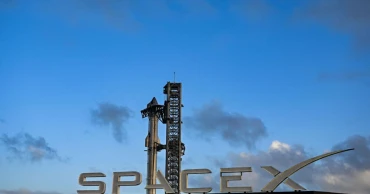
SpaceX rocket explodes during test in Texas
A SpaceX rocket undergoing testing at the company’s Starbase facility in southern Texas exploded late Wednesday, lighting up the night sky with a large fireball.
According to SpaceX, the Starship vehicle suffered a “major anomaly” around 11 p.m. while it was stationed on the test stand in preparation for its tenth flight trial.
Space station leak concerns can delay astronaut visit from India, Poland, Hungary
In a statement shared on X (formerly Twitter), SpaceX confirmed that a safety perimeter was in place during the test and that all staff members were safe and accounted for.
The company, led by CEO Elon Musk, assured that the explosion posed no risk to nearby communities and advised the public against approaching the area. SpaceX added that it is coordinating with local authorities in response to the incident.
1 year ago
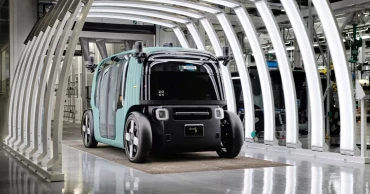
Amazon hopes to deliver 10,000 robotaxis annually with new factory, challenging Waymo
Amazon is preparing to manufacture up to 10,000 robotaxis per year at a massive new facility near Silicon Valley, marking a significant step in its effort to rival autonomous driving leader Waymo. Tesla CEO Elon Musk is also competing in the growing self-driving market.
The newly unveiled 220,000-square-foot (20,440-square-meter) factory represents a major milestone in Amazon’s autonomous vehicle ambitions, which date back to its $1.2 billion acquisition of self-driving startup Zoox five years ago. Zoox, founded in 2014, is set to power Amazon’s robotaxi service, which will begin operations in Las Vegas later this year and expand to San Francisco in 2025.
The facility, located in Hayward, California—just 17 miles (27 km) north of a Tesla manufacturing plant—occupies the former site of a bus factory. Since moving in during 2023, Zoox has transformed the space into a state-of-the-art assembly plant with a 21-station production line. The company is currently producing one robotaxi per day, but aims to ramp up to three vehicles per hour by next year. At full capacity, with two eight-hour shifts, Zoox hopes to reach an annual output of 10,000 vehicles to serve markets like Miami, Los Angeles, and Atlanta.
While the robotaxis are assembled in the U.S., roughly half of their components are imported, according to company officials. Zoox vehicles are fully autonomous, carriage-style units with no steering wheels, seating up to four passengers—setting them apart from Waymo’s vehicles, which use modified cars from existing automakers and retain traditional designs.
Waymo, a Google spin-off that launched as a secret project in 2009, has a significant lead in the field. It began its commercial robotaxi operations in Phoenix nearly five years ago and now offers paid rides in San Francisco, Los Angeles, and Austin. To date, Waymo claims to have completed over 10 million paid rides. On Wednesday, it also filed an application to begin testing in New York City and has plans to expand into Miami and Atlanta.
vivo T4 Ultra Review: A Game-Changing Mid-range Flagship
Despite trailing behind, Zoox believes its unique vehicle design and customer experience will help it compete. “It’s an exciting time to be heading on this journey,” said Zoox CEO Aicha Evans during a tour of the Hayward facility, alongside co-founder and CTO Jesse Levinson.
Zoox’s current testing includes operations in San Francisco and Las Vegas, where it has partnered with Resorts World to provide rides for guests. Last month, a minor collision involving a Zoox robotaxi and an electric scooter in San Francisco led to a voluntary recall to update the vehicle’s software, though no injuries occurred.
Meanwhile, Tesla is still working to enter the robotaxi space. CEO Elon Musk had once promised a fleet of 1 million robotaxis by 2020, but that target remains unmet. Musk is now aiming for a small-scale launch in Austin this Sunday, though he has warned the timeline could shift, citing his “super paranoid” stance on safety.
Zoox has plans to deploy between 500 and 1,000 robotaxis in smaller cities and around 2,000 in larger urban centers. Each robotaxi, built at the Hayward plant, is expected to operate for about five years or 500,000 miles.
Though still in catch-up mode, Amazon’s Zoox is positioning itself to become a key player in the rapidly evolving autonomous transportation sector.
1 year ago

Iran asks its people to delete WhatsApp from their devices
On Tuesday afternoon, Iranian state television called on the public to delete WhatsApp from their smartphones, claiming—without providing evidence—that the messaging platform was collecting user data to share with Israel.
WhatsApp responded with concern, stating that the accusations were false and potentially a pretext for authorities to block the app again at a time when people rely on it most. The platform emphasized its use of end-to-end encryption, which prevents any third party, including service providers, from accessing message content.
“We do not track users' precise locations, we don’t maintain logs of who is messaging whom, and we do not monitor personal messages,” WhatsApp said. “We also do not provide bulk user information to any government.”
End-to-end encryption scrambles messages so that only the sender and recipient can read them. Anyone intercepting the communication would see unintelligible data without the decryption key.
However, Gregory Falco, a cybersecurity expert and assistant professor at Cornell University, pointed out that while message content is encrypted, WhatsApp metadata—such as usage patterns—is not, which has long raised concerns among privacy advocates.
WhatsApp to begin showing ads in parts of the app
Falco also highlighted the issue of data sovereignty, noting that WhatsApp data from users in one country may be stored elsewhere. For example, it is likely that Iranian user data is not stored on servers inside Iran. He argued that countries should store and process their data domestically using their own systems, as trust in the global data infrastructure is increasingly eroding.
WhatsApp is owned by Meta Platforms, which also operates Facebook and Instagram. Iran has previously restricted access to several social media platforms. In 2022, during widespread anti-government protests following the death of a woman in the custody of the morality police, the country blocked WhatsApp and Google Play. These restrictions were lifted late last year.
Despite such bans, many Iranians continue to use virtual private networks (VPNs) and proxy services to access blocked platforms. WhatsApp had remained one of the most widely used messaging apps in Iran alongside Instagram and Telegram.
1 year ago
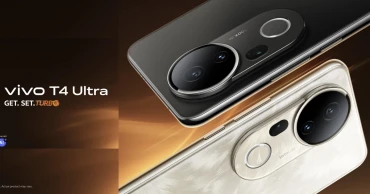
vivo T4 Ultra Review: A Game-Changing Mid-range Flagship
The inventive smartphone brand Vivo launched the vivo T4 Ultra, a midrange flagship, on June 11, 2025, in India. Packed with high-end features, the uniquely designed phone is an instant head-turner. The phone extends the reputation of Vivo’s T-series models, coming as one of the most well-rounded products from its manufacturer. Here is a detailed feature-by-feature description of the vivo T4 Ultra with an effort to delve deeper into its configuration, performance, pros, cons and pricing in Bangladesh.
Key Specs and Features of the Vivo T4 Ultra
The vivo T4 Ultra, drawing forth the efficiency granted by its robust processor and other compatible chipsets and features, seeks to cater to the demands of power users. Since the Pixel 7 Pro, the Galaxy S24 FE 5G, and the iQOO Neo 10, the T4 Ultra are remarkable additions to the higher mid-segment.
Design
The vivo T4 Ultra measures 6.32 inches by 2.95 inches by 0.30 inches dimensionally, coming a few mm shorter than the Galaxy S24 FE 5G and the iQOO Neo 10. Available in two colour variants, each with discernible design patterns: Phoenix Gold with a glittering back and Meteor Grey with a solid, minimal back design. The rear panel of the Phoenix Gold variant is styled with a feather pattern that shimmers dynamically when light is projected from different angles. The Meteor Grey, on the other hand, has a flat, polished rear surface that glows under light with a soft gleam.
Read more: Infinix GT 30 Pro Review: Best Budget Gaming Phone with Flagship Features in 2025
The rear camera panel is a giant vertical ellipse, which may remind you of a vintage wall clock. A circular cutout at the top of the ellipse houses two primary lenses. There is another lens placed below the circle. Near the bottom of the ellipse, a ring flashlight is placed. The fingerprint sensor is in-display, located near the bottom. Users will find all the essential buttons and ports, apart from a 3.5mm audio jack, around the phone's sides.
Display
The vivo T4 Ultra uses a 6.67-inch AMOLED display, which is the current market norm for higher-mid-range smartphones. The pixels on the display are balancedly distributed, keeping a resolution of 1260 x 2800 pixels and a density of 460 ppi. Its peak brightness level of 5000 nits distinguishes it from the other choices. The display is highly touch-responsive at a 120 Hz refresh rate and gives precision when controlling motion graphics.
Apart from the linear punch-hole cutout on the top, the screen extends throughout the front surface. The bezel and chin around the screen are maintained to the minimum extent, allowing for a spacious visual window. Rendered graphics look crisp and bright equally under direct or low lights with adjusted brightness.
Read more: Basic to Flagship: Top 5 Official Smartphones Released in Bangladesh in 2025
Camera
The vivo T4 Ultra sports a 50MP primary camera setup. Its powerful 50MP periscope lens sets the new standard for phones at this price, going beyond the Google Pixel 7’s 48MP periscope shooter. The setup also includes an 8MP ultrawide lens that helps capture panoramic shots, sprinkling balance all over. It’s a clear upgrade over the iQOO Neo 10’s simple 50MP wide and 8MP ultrawide camera module.
The vivo T4 Ultra offers a 32MP wide secondary lens for selfie lovers. Photography with the phone is set for a good experience with features like 3X zoom, AI enhancements, OIS support, and detailed macro images. This makes it the only option available to confront the camera-centric Pixel 7’s renown.
All lenses perform noticeably better in daylight and brighter settings. Darkness nudges down the usual sharpness from the images and smoothens the overall features to fill in missing details.
Read more: Xiaomi Redmi Turbo 4 Pro Review: Can It Survive the Competition?
Hardware and Software
The Vivo T4 Ultra outperforms the Galaxy S24 FE 5G and the Pixel 7 Pro, as the latter two are based on older chips. With T4 Ultra, you will get a last-generation 4nm Dimensity 9300+ chipset, which accompanies an Immortalis-G720 MC12 GPU and up to 12GB of RAM. Combined, these features contribute to outstanding performance. Playing graphically demanding games like Genshin Impact and PUBG will feel effortless without putting you through lag or slow movements. The phone, though, falls short of reaching the level of performance delivered by the iQOO Neo 10 with its Snapdragon 8s Gen 4 and up to 16GB RAM.
The Vivo T4 Ultra runs on Funtouch 15, the native customized operating system built on the stock Android 15. The Funtouch OS is popular for letting users personalize their phone’s navigational outlines, empowering ease of use and better appearance. There are a few promotional bloatware programs that are uninstallable on wish.
Battery and Charger
The phone presents a 5500 mAh Silicon-Carbon battery, which is already a great leap forward compared to the Pixel 7 Pro’s 5000 mAh and Galaxy S23 FE 5G’s Lithium-Ion cells. However, considering the high energy-consuming features and the current market trend, a 7000 mAh battery would be more appreciable for the phone, just as we have seen in the iQOO Neo 10. To compensate for fast power drainage during heavy gaming sessions, users will get a 90W wired charger that takes only 48 minutes to replenish the battery. A reverse charging facility is also included.
Read more: vivo iQoo Z10 Turbo Review: Is It the Mid-Range Beast You Are Looking For?
Price of vivo T4 Ultra in Bangladesh
The vivo T4 Ultra is still not available in Bangladesh. Multiple variants of the phone are available in India, starting from (8/256 GB) INR 37,999 or BDT 53,590.
Pros and Cons of vivo T4 Ultra
.
Pros
- Stylish, premium design with unique finishes- Bright AMOLED display- 5000 nits peak brightness- Robust camera setup- Dimensity 9300+ and up to 12GB RAM- 90W fast charging- 5500mAh Silicon-Carbon battery- Reverse charging support- Runs Android 15 with customizable Funtouch OS.
Cons
- No 3.5mm headphone jack- Demands for higher battery capacity- Low-light photography could be sharper- Some pre-installed bloatware.
Read more: Motorola Edge 60 Pro Review: Know the Pros and Cons
Conclusion
The vivo T4 Ultra is a stylish, performance-focused midrange flagship with a stunning AMOLED display, powerful Dimensity 9300+ chipset, and a standout 50MP periscope camera. With 90W fast charging, Android 15, and unique design variants, it offers excellent value, though it could benefit from better low-light photography and larger battery capacity.
1 year ago

What the Shenzhou-20 astronauts are doing after over 50 days in space
Imagine spending more than 50 days living and working hundreds of miles above the Earth. That has been the real-life experience of China’s Shenzhou-20 astronauts — Chen Dong, Chen Zhongrui, and Wang Jie — aboard the Tiangong Space Station.
Far from a peaceful retreat, their mission has been a busy one. A short video released Monday by China’s state broadcaster CCTV offered a glimpse into their “space business trip,” highlighting a packed schedule filled with scientific experiments, routine health monitoring, and maintenance work — all essential tasks to support future space exploration efforts.
According to a report by CCTV, the three astronauts are in good health, and the various space science experiments are progressing steadily.
Led by experienced astronaut Chen Dong, the crew began their six-month mission after launching into orbit on April 24.
Space station leak concerns can delay astronaut visit from India, Poland, Hungary
Over the past week, they devoted substantial time to space medicine research. During their research, they have explored fundamental aspects of cognitive function in microgravity, focusing on teamwork dynamics, self-awareness in isolation and how astronauts perceive motion, depth, and relationships absent Earth's gravity. These studies are critical for ensuring safe operations during spacewalks and complex tasks.
In addition, they also conducted routine vascular ultrasound scans tracked changes in cardiovascular function over time and used apparatus to capture subtle changes in control and coordination during precise tasks like equipment operation or sample handling, according to the report.
On the front of life science, they focused on the "effects and mechanisms of space microgravity on microorganisms" experiment.
The video showed that in Tiangong's specialized biotechnology experiment rack, the crew observed the growth, developmental patterns, and bioactive compound synthesis of Streptomyces bacteria in weightlessness.
This research is expected to reveal new biological adaptations and potential applications for space-based pharmaceutical research.
The crew carefully sampled liquid cultures, preserving the samples for their eventual journey back to Earth.
Another highlight of their daily routine, in addition to the meticulous space station upkeep, is their rigorous exercise to counter the physical toll of microgravity. The video captures the astronauts running on a treadmill in the space module.
Beyond exercise, the crew undergoes regular checkups like detailed heart monitoring and blood pressure tracking. They also participate in unique health assessments based on traditional Chinese medicine principles, according to the report.
China's space station has now hosted over 200 scientific projects, with nearly 2 tonnes of scientific materials and applied equipment sent to orbit and nearly 100 experimental samples returned to Earth, according to the China Manned Space Agency.
1 year ago

WhatsApp to begin showing ads in parts of the app
WhatsApp said Monday that users will start seeing ads in parts of the app, as owner Meta Platforms moves to cultivate a new revenue stream by tapping the billions of people that use the messaging service.
Advertisements will be shown only in the app's Updates tab, which is used by as many as 1.5 billion people each day. However, they won't appear where personal chats are located, developers said.
“The personal messaging experience on WhatsApp isn’t changing, and personal messages, calls and statuses are end-to-end encrypted and cannot be used to show ads,” WhatsApp said in a blog post.
It’s a big change for the company, whose founders Jan Koum and Brian Acton vowed to keep the platform free of ads when they created it in 2009.
Facebook purchased WhatsApp in 2014 and the pair left a few years later. Parent company Meta Platforms Inc. has long been trying to generate revenue from WhatsApp.
WhatsApp said ads will be targeted to users based on information like their age, the country or city where they're located, the language they're using, the channels they're following in the app, and how they're interacting with the ads they see.
WhatsApp said it won't use personal messages, calls and groups that a user is a member of to target ads to the user.
It's one of three advertising features that WhatsApp unveiled on Monday as it tries to monetize the app's user base. Channels will also be able to charge users a monthly fee for subscriptions so they can get exclusive updates. And business owners will be able to pay to promote their channel's visibility to new users.
Most of Meta's revenue comes from ads. In 2025, the Menlo Park, California-based company's revenue totaled $164.5 billion and $160.6 billion of it came from advertising.
1 year ago
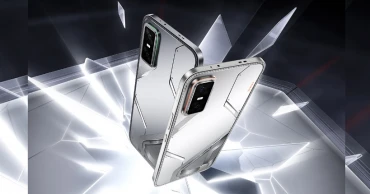
Infinix GT 30 Pro Review: Best Budget Gaming Phone with Flagship Features in 2025
Infinix is a brand known for delivering high-performance smartphones at budget-friendly prices, and it has made waves with its GT series focused on mobile gaming. The Infinix GT 30 Pro, launched on June 1, 2025, continues this trend with powerful specs and gamer-centric features.
Features of the Infinix GT 30 Pro
.
Design and Build Quality
The Infinix GT 30 Pro keeps its gamer-centric appeal with a distinctive "cyber-mecha" aesthetic, customizable RGB LED strips, and well-thought-out ergonomics for handheld gaming. The body is made from a glass front with a plastic frame and back, weighing a reasonable 189 grams.
It feels lightweight yet sturdy in hand, with IP64-rated resistance for dust and water splashes—an upgrade from the GT 20 Pro’s IP54, though still a notch below the iQOO Z10 Turbo Pro’s IP65 and Realme 14’s full IP68/IP69 protection.
The side frame houses pressure-sensitive gaming triggers, giving the GT 30 Pro a clear advantage for gamers who prefer tactile input. While this is not entirely new—its predecessor offered a similar experience—the layout and responsiveness have improved.
Read more: Basic to Flagship: Top 5 Official Smartphones Released in Bangladesh in 2025
Comparatively, the Realme 14 and iQOO Z10 Turbo Pro lack such dedicated gaming hardware, relying solely on screen touch for interaction. For gaming-focused users, this design tweak delivers real functional value.
Display Quality
Infinix has gone all out on display specs here. The GT 30 Pro sports a 6.78-inch AMOLED screen with a 144 Hz refresh rate, 1 billion colours, and an astonishing peak brightness of 4500 nits. It is easily one of the brightest displays in its class and provides an excellent viewing experience under any lighting condition. The 1224x2720 resolution and ~440 PPI density make content sharp and fluid.
Compared to the GT 20 Pro’s 1080p panel at 1300 nits and the realme 14’s 120Hz AMOLED with 2000 nits, the GT 30 Pro clearly stands out. Even the iQOO Z10 Turbo Pro, with its superior 1260x2800 resolution and HDR-ready 144Hz display, only marginally edges past in pixel density (~453 PPI) but not in raw brightness.
When factoring in price, the GT 30 Pro's panel punches way above its weight class and offers a near-flagship visual experience, especially during gaming or media consumption.
Read more: Xiaomi Redmi Turbo 4 Pro Review: Can It Survive the Competition?
Camera Performance
The Infinix GT 30 Pro is equipped with a dual rear camera setup — a 108 MP (f/1.9) main shooter and an 8 MP (f/2.2; 111˚ ultrawide) ultrawide lens. The main sensor performs solidly in daylight with crisp detail and accurate colour reproduction.
However, it lacks OIS (optical image stabilisation), which becomes apparent in low-light scenarios where the images show grain and motion blur. The 8MP ultrawide camera is usable but not spectacular, mainly serving as a utility lens.
Compared to the GT 20 Pro, which also has a 108 MP primary sensor but with OIS and additional macro and depth cameras, the GT 30 Pro loses some ground in versatility and stability. realme 14 offers a single 50MP sensor with OIS that does surprisingly well in all conditions, while the iQOO Z10 Turbo Pro boasts a 50MP wide camera with both PDAF, OIS, and 8MP ultrawide camera producing clearer, more stabilised shots and better video quality.
The 13 MP front-facing camera on the GT 30 Pro offers decent selfies, with acceptable skin tone processing and 4K @ 30 fps video support—another spec where it surpasses the competition, especially Realme 14's 1080p-only selfie cam.
Read more: vivo iQoo Z10 Turbo Review: Is It the Mid-Range Beast You Are Looking For?
Processor Performance
At the heart of the GT 30 Pro is the new MediaTek Dimensity 8350 Ultimate chipset, built on a 4nm process. It includes a powerful octa-core CPU (3.35 GHz prime core) and Mali-G615 MC6 GPU. Performance is excellent for the price, offering smooth multitasking and rapid app loads.
When benchmarked, it outpaces the Dimensity 8200 Ultimate in the GT 20 Pro, especially in sustained workloads. However, the iQOO Z10 Turbo Pro’s Qualcomm SM8735 Snapdragon 8s Gen 4 chip is a step above. It uses a Cortex-X4 prime core and Adreno 825 GPU, which perform better under stress, particularly for heavy multitasking and 3D gaming.
Realme 14’s Qualcomm Snapdragon 6 Gen 4 falls behind all three in CPU and GPU performance, making it the least powerful in this comparison. For most users, especially gamers and content creators, the GT 30 Pro provides more than enough raw processing power for both everyday and intensive tasks.
Gaming Performance
Gaming is where the GT 30 Pro truly shines. The high-refresh-rate screen, advanced cooling, and dedicated triggers create a performance-focused setup. The pressure-sensitive zones allow customisable in-game control, which can be mapped to shoot, aim, or other actions in FPS games. Bypass Charging 2 reduces thermal strain during long gaming sessions, preventing throttling while preserving battery health.
Read more: Motorola Edge 60 Pro Review: Know the Pros and Cons
Compared to the GT 20 Pro, which offered similar gaming features without bypass charging and with slightly less thermal efficiency, the GT 30 Pro is a noticeable upgrade. While iQOO Z10 Turbo Pro edges ahead in raw gaming frame rates due to its stronger GPU, it lacks the dedicated hardware gaming triggers. realme 14 simply is not built for gaming at the same level. It offers decent performance but has no dedicated hardware or cooling features.
Battery Life
The GT 30 Pro offers a massive 5200 mAh or 5500 mAh battery, which supports 45W wired, 30W wireless, 10W reverse wired, and 5W reverse wireless charging. It also features bypass charging—a godsend for gamers. The battery easily lasts over a day under mixed use, and even heavy gaming does not deplete it drastically.
The GT 20 Pro, by contrast, has a smaller 5000 mAh battery with no wireless or reverse charging features. realme 14 features a 6000 mAh battery with 45 W fast charging and bypass support but lacks wireless capabilities. iQOO Z10 Turbo Pro leads the pack in raw charging speed with a 7000 mAh battery and insane 120 W wired charging—charging to 50% in just 15 minutes.
Here, iQoo offers the biggest battery while Infinix wins on charging versatility with both wireless and reverse features, making it more flexible than its competitors.
Read more: Best 10 Smartphones Releasing in May 2025
Software and User Interface
The GT 30 Pro ships with Android 15 and XOS 15. It guarantees two major OS updates, which is decent but still trails behind flagship standards. XOS is feature-rich, especially for gamers, thanks to its XArena gaming mode, trigger customisation, and performance tuning. However, it suffers from the typical drawbacks of bloatware and occasional UI inconsistencies.
The GT 20 Pro had similar issues on Android 14 XOS 14, so while the UI has improved, it is not a revolution. Compared to Android 15 OriginOS 5 on the iQOO Z10 Turbo Pro and Android 15 Realme UI 6.0 on the Realme 14, Infinix's XOS feels more feature-heavy but less polished.
Vivo’s and Realme’s UIs are cleaner, smoother, and more optimised for day-to-day use, although they lack some of the deep gaming tools that XOS offers.
Storage Options
Infinix GT 30 Pro does not hold back in the memory department. With up to 12GB RAM and 512GB UFS 4.0 storage, it competes aggressively. The storage is blazing fast and perfect for gamers and power users alike.
Read more: vivo V50 Lite Review: Does it offer value-for-money
GT 20 Pro offers the same RAM but tops out at UFS 3.1 storage, meaning slower app loads and file transfers. The iQOO Z10 Turbo Pro offers even higher specs (up to 16GB RAM/512GB storage and UFS 4.1), making it ideal for multitaskers and streamers. Realme 14 maxes out at 12GB RAM and 512GB storage but uses older memory tech.
In this regard, GT 30 Pro hits a sweet spot of affordability and performance with modern storage solutions that most users will appreciate.
Pros and Cons of Infinix GT 30 Pro
.
Pros
- 6.78-inch AMOLED display with 144Hz refresh rate.- Super bright screen (up to 4500 nits).- Powerful Dimensity 8350 Ultimate chipset.- 8GB/12GB RAM with UFS 4.0 storage.- 108 MP main camera for sharp photos.- Dual stereo speakers tuned by JBL.- Large 5200/ 5500 mAh battery.- Fast 45W wired and 30W wireless charging.- Bypass charging for better gaming thermals.- Pressure-sensitive gaming triggers.- RGB back panel adds unique design flair.- NFC and infrared ports included.- Under-display fingerprint scanner.- Android 15 with gaming-focused XOS 15.
Read more: Tecno Camon 40 Pro Review: Is It Worth It?
Cons
- Only IP64 rating (dust and splash proof, not waterproof).- No 3.5mm headphone jack.- No microSD card slot for storage expansion.- Slight software bloat with XOS skin.- Plastic build may feel less premium.- Ultrawide and low-light camera quality could be better.
Price of Infinix GT 30 Pro
The official price of the Infinix GT 30 Pro in Bangladesh is BDT 41,999 for the 12GB RAM + 256GB storage variant.
Takeaways
The Infinix GT 30 Pro is ideal for mobile gamers and power users who want top-tier performance without overspending. However, if camera quality or water resistance is your top priority, or you need a headphone jack, this phone might not be the best fit for you.
Read more: Infinix Note 50 Pro Plus Review: Is it a value-for-money midrange smartphone?
1 year ago