tech
Low-cost AI system listens to whales using earthquake monitoring gear
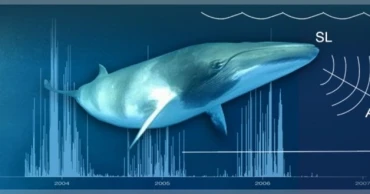
Scientists in south China’s Guangxi Zhuang Autonomous Region have converted earthquake-monitoring equipment into an artificial intelligence-powered “marine stethoscope” capable of detecting the low-frequency calls of endangered whales.
By integrating an island-based seismometer with deep learning algorithms, researchers captured and analyzed the sounds of Bryde’s whales in the Beibu Gulf of the South China Sea, revealing that the species remains in coastal waters and breeds for longer periods than previously recorded.
Microsoft says new quantum chip is 1,000 times more reliable
The study, published in Geophysical Research Letters, was led by associate professor Xiao Zhuo of Guangxi Minzu University. The AI model, trained on more than 1.7 million labeled seismic samples, identified whale calls with 99 percent accuracy from a year-long dataset collected off Xieyang Island near Beihai city.
Researchers found whale vocalizations as low as 5 Hz- far below human hearing and conventional hydrophone limits-traveling through the seabed and detected as micro-tremors. The signals suggest possible courtship or breeding behavior.
Data showed Bryde’s whales were present from January to July 2021, contradicting earlier surveys that suggested they leave by April. Fishermen also reported sightings in July.
Scientists said land-based seismometers offer a cost-effective, continuous monitoring alternative for studying migration and conserving the region’s protected Bryde’s whale population, which exceeds 70 identified individuals.
1 month ago

Trump, Sanders and AI leaders discuss giving public a stake in AI growth
As artificial intelligence continues to expand rapidly across the United States, an unusual debate is emerging among political leaders and tech executives over whether ordinary Americans should directly benefit from the industry's growing wealth.
The discussion gained attention after a recent meeting between Senator Bernie Sanders and Sam Altman, the chief executive of [OpenAI](https://openai.com?utm_source=chatgpt.com). The meeting took place after Sanders proposed that the public should own a 50% stake in major AI companies, with profits going into a public wealth fund that would benefit Americans.
According to people familiar with the talks, Altman told Sanders he also supports the idea of giving the public ownership in AI companies, although he does not agree with the senator's proposal for a 50% stake. Altman reportedly expressed interest in working together to promote the broader concept.
The nearly hour-long meeting highlighted growing pressure on policymakers and AI firms as many Americans remain uncertain about how they will benefit from the AI boom, while concerns continue to rise about its impact on jobs, communities and the environment.
The idea has also attracted support from President Donald Trump. Speaking aboard Air Force One on Friday, Trump said his administration is exploring ways for Americans to share in AI's success and revealed that executives from leading AI companies are expected to visit the White House soon to discuss the issue.
Trump described the concept as a potential partnership between AI companies and the American public. He also noted similarities between the economic concerns of his supporters and those of Sanders' voters.
Public concerns about AI continue to grow across the country. Communities have raised objections to the rapid expansion of data centers, citing worries about electricity use, water consumption and environmental effects. Some states that previously welcomed such projects are now reconsidering tax incentives offered to the industry.
In Michigan, a major data center project backed by Governor Gretchen Whitmer has sparked criticism from activists and some Democratic lawmakers despite promises of thousands of union construction jobs.
Altman acknowledged that many Americans, particularly students, are anxious about AI's long-term impact on employment. A recent poll by the Institute of Politics at Harvard Kennedy School found that about 70% of college students view AI as a threat to future job opportunities.
While concerns continue to grow, many political leaders from both major parties appear to agree that AI development is likely to continue. The debate is increasingly focused on how the technology should be regulated and how its benefits should be shared.
Alongside meetings with Sanders, Altman also held discussions with White House officials and congressional leaders from both parties about the future of AI policy.
Sanders' office said the two sides did not reach agreement on key issues, including his proposal for a 50% public ownership stake that would give citizens a stronger role in decision-making. Sanders also raised concerns about the AI industry's growing influence in elections.
Meanwhile, Washington is moving ahead with efforts to establish rules for the technology. Lawmakers recently unveiled a bipartisan framework for federal AI regulation, while the Trump administration has introduced measures to assess national security risks posed by advanced AI systems before they are released to the public.
Sanders said even supporters of rapid AI development are beginning to recognize that the technology presents serious challenges that require government oversight.
1 month ago

Microsoft says new quantum chip is 1,000 times more reliable
Microsoft has unveiled its second-generation quantum chip, Majorana 2, claiming it is 1,000 times more reliable than its predecessor and could pave the way for a commercially useful quantum computer within the next three years.
The company said the qubits on the new chip can remain stable for an average of 20 seconds, a significant improvement over the millisecond-level performance of the earlier Majorana 1 chip.
Qubits are the building blocks of quantum computers and have the potential to solve problems that are beyond the capabilities of today’s most powerful conventional computers. However, they are highly fragile and prone to errors caused by even minor environmental disturbances.
Microsoft compared the reliability improvement to the difference between a smartphone that needs daily charging and one that requires charging only once every few years.
“We will have a quantum machine in 2029 that can solve commercially viable, reasonable problems,” said Zulfi Alam, Corporate Vice President of Microsoft Quantum.
Despite the progress, the company acknowledged that substantial advances are still required. While Majorana 2 currently contains 12 qubits, a practical large-scale quantum computer would need millions.
The announcement comes amid an intense global race among technology companies and research institutions to develop scalable quantum computers capable of tackling complex scientific, industrial and environmental challenges.
Microsoft has spent two decades pursuing a quantum computing approach known as topological quantum computing. The technology is based on exploiting the properties of a theoretical quasiparticle called the Majorana particle, first proposed in the 1930s by Italian physicist Ettore Majorana.
The company’s research required the creation of a novel state of matter beyond the familiar solid, liquid and gas states.
According to Microsoft, the new chip improves on the original design partly by replacing aluminium with lead as a superconducting material.
Experts said the company’s timeline appears plausible if the technology performs as claimed.
Professor Paul Stevenson of the University of Surrey said Microsoft appeared to have made significant progress in developing viable topological qubits.
“If they succeed, they will leap from being a player with no production quantum computer, to being a serious player in the race to make the next generation of fault-tolerant machines,” he said.
Microsoft’s topological approach has previously faced criticism. In 2018, the company retracted a paper published in the journal Nature that claimed evidence for the existence of Majorana particles. The setback fuelled scepticism among some researchers.
The company released its first Majorana chip in 2025, but questions about its technology remained.
Addressing critics, Jason Zander, Executive Vice President of Microsoft Quantum and Discovery, defended the research.
“We stand behind it 100%,” he said, adding that the company welcomes scientific scrutiny and has shared detailed data with experts and the US defence research agency DARPA as part of a quantum technology development programme.
However, some scientists remain cautious because a research paper accompanying the announcement has not yet undergone peer review.
Microsoft believes future quantum computers could help solve major global challenges, including removing microplastics from the environment and developing more efficient fertilisers for agriculture.
Zander said quantum computers, artificial intelligence and human expertise could work together to accelerate scientific discovery.
Quantum computing remains one of the most challenging fields in technology because qubits are extremely sensitive to temperature changes, vibrations and other environmental factors.
Although many companies are pursuing scalable quantum machines, no organisation has yet demonstrated a fully practical large-scale quantum computer.
Some experts also argue that conventional computers may continue improving for years, potentially delaying the need for widespread quantum computing applications.
#From BBC
1 month ago

FIFA introduces advanced offside technology for 2026 World Cup
FIFA has announced a new generation of semi-automated offside technology for the 2026 World Cup, a move aimed at speeding up decisions and reducing the need for assistant referees to delay raising the offside flag.
The upgraded system will work alongside the Video Assistant Referee (VAR) and send a real-time audio alert to assistant referees when a player is more than 10 centimetres offside. This is a significant improvement over previous versions tested at the Club World Cup and Intercontinental Cup, which only alerted officials when a player was more than 50 centimetres offside.
Under the new system, assistant referees will still have the final authority on when to raise the flag and stop play. They may choose to keep the flag down if they suspect a technical issue, although FIFA said multiple safeguards have been built into the technology to minimise errors.
The technology will not be able to determine extremely close offside calls and may face limitations when players are on the ground or clustered closely together. It will also only apply to positional offsides and cannot be used for subjective decisions, such as determining whether a player interfered with an opponent without touching the ball.
FIFA hopes the system will reduce frustration among players and fans by allowing quicker decisions and limiting unnecessary passages of play. It is also expected to lower the risk of injuries that can occur when play continues despite an apparent offside.
Concerns over delayed offside calls gained attention in May 2025 when Taiwo Awoniyi suffered a serious injury after colliding with a goalpost during a move where the assistant referee delayed raising the flag. The striker was later placed in an induced coma.
In another major innovation, FIFA confirmed it will create AI-powered 3D avatars of every player participating in the tournament to improve decision-making accuracy.
The process will involve digitally scanning all 1,248 players from the 48 competing teams. Each player will undergo a one-second scan during pre-tournament photo sessions. The resulting digital models will be used to generate clearer and more detailed offside animations for officials, broadcasters and fans.
New technology for ball out of play decisionsFIFA has also approved new technology capable of determining whether the ball crossed the touchline before a goal was scored.
The system will generate a 3D animation similar to goal-line technology, showing the precise position of the ball. A sensor inside the ball will also identify which player last touched it, helping VAR officials review decisions involving corners and other restart situations.
The move follows several controversial incidents, including one involving Aston Villa FC in February, when a goal against Brentford FC was disallowed amid uncertainty over whether the ball had gone out of play.
Enhanced offside reviews through goalkeeper perspectiveFIFA is also expanding its "Real-time 3D Recreation" technology to help officials assess "line-of-sight" offside situations more effectively.
The system will provide virtual viewpoints replicating the perspective of both goalkeepers, allowing VAR officials and television audiences to better judge whether a player in an offside position obstructed a goalkeeper's vision.
Several controversial incidents during the past season involved debates over whether goalkeepers had their view blocked. FIFA believes the new technology will provide officials with an additional tool to make faster and more accurate decisions during such situations.
#From BBC
2 months ago

Microsoft tests AI-powered wearable device for workplace use
Microsoft has unveiled early-stage wearable technology concepts designed to give office workers easier access to artificial intelligence tools, as the company explores new ways of integrating AI into everyday work.
At its annual developer conference, Microsoft executive Steven Bathiche showcased two prototype devices developed by the company. One is a small portable cube featuring a touchscreen and voice controls for desktop use, while the other is a wearable badge that can be clipped to a belt or worn around the neck to provide quick access to AI-powered workplace assistance.
Microsoft Chief Executive Officer Satya Nadella described the devices as representing a “new form factor” for computing.
The company has not announced plans to commercialise either product. However, Microsoft said ongoing pilot programmes involving several hundred employees are helping the company understand how such devices could be developed in the future.
The concepts are part of what Nadella referred to as Project Solara. Demonstrations showed office workers using the devices to interact with AI agents, software tools capable of carrying out tasks with a degree of autonomy. These agents are already widely used in the technology sector, particularly for assisting with software development and other routine tasks.
The wearable badge and desktop device are designed to connect with Microsoft software and PCs, enabling users to communicate with AI agents without relying solely on laptops or desktop computers.
Bathiche said the wearable badge is lightweight and intended to support “agent interactions on the go.” During a live demonstration, he activated the device using a fingerprint scan and used its built-in camera to capture images of the audience, which were then sent for review.
According to Bathiche, the camera helps AI agents better understand their surroundings and take appropriate actions based on environmental context.
Microsoft has previously explored wearable technology through its HoloLens mixed-reality headset. The device, developed over nearly a decade, was once expected to be supplied to the US military under a multibillion-dollar contract. However, after facing technical challenges and testing issues, Microsoft announced in 2024 that it would stop producing HoloLens.
The company’s latest effort comes as interest in AI-focused wearable devices grows across the technology industry. Google recently announced plans to revisit smart glasses technology more than a decade after the commercial failure of Google Glass.
The inclusion of cameras in AI-enabled devices continues to raise privacy concerns. Similar products, including AI-powered smart glasses developed by Meta, have faced scrutiny over how and when they collect, store and use visual data.
#From BBC
2 months ago
Nvidia Unveils New AI-Powered ‘Superchip’ for Next-Generation Windows PCs
Nvidia has unveiled a new high-performance chip designed to bring advanced artificial intelligence capabilities to personal computers, marking a major step in the company’s efforts to expand beyond its dominant position in the data center market.
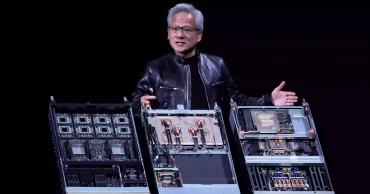
Speaking at the annual Nvidia GTC event in Taipei on Monday, Nvidia founder and CEO Jensen Huang introduced the RTX Spark superchip, which combines central processing unit (CPU) and graphics processing unit (GPU) functions into a single platform. The chip will power a new generation of Windows laptops and desktop computers that Nvidia describes as “AI personal computers.”
The first devices featuring the new technology, including models from Microsoft and Dell, are expected to be launched later this year.
Huang said Nvidia and Microsoft are working together to transform the personal computer experience, enabling users to run sophisticated AI models and personal AI agents directly on their devices. These AI assistants would be capable of understanding users, conducting research, reading files and performing a variety of tasks without relying heavily on cloud-based services.
Microsoft said the new PCs would support advanced AI workloads and highly capable AI models, allowing users to run AI applications locally.
Industry analysts said the move reflects growing demand for personal AI assistants and could significantly reshape the PC market over the coming decade. Nvidia’s new chips are expected to compete directly with products from rivals Intel and AMD.
During the event, Huang also announced that Nvidia’s Vera CPUs for data centers have entered full production, with companies such as Anthropic, OpenAI and SpaceXAI among the early adopters.
In addition, Nvidia showcased a humanoid robot reference design called Isaac GR00T, aimed at supporting robotics research and development.
2 months ago

Malaysia enforces social media ban for children under 16
Malaysia on Monday started enforcing new rules that prohibit children under the age of 16 from having social media accounts, joining a growing number of countries seeking to improve online safety for young users.
Under the new regulations, social media companies must introduce age-verification systems and prevent users younger than 16 from creating accounts. The rules apply to platforms with at least 8 million users, including Facebook, Instagram, TikTok and YouTube.
Companies that fail to follow the regulations could face fines of up to 10 million ringgit (about $2.5 million). However, parents will not be punished if their children manage to bypass the restrictions.
The Malaysian government said the measures are designed to protect children from harmful online content, cyberbullying and platform features that encourage excessive screen time and addictive use.
Malaysia joins countries such as Australia, Brazil and Indonesia, which have already introduced or announced restrictions on children's access to social media. Several other nations, including Britain, France, Spain, Denmark, Thailand and South Korea, are also considering similar measures.
The Malaysian Communications and Multimedia Commission said the rules are not intended to block children from using the internet or digital technology. Instead, they aim to ensure that service providers take greater responsibility for online safety and put age-appropriate protections in place.
“These measures help strengthen the protection of children in the online environment, while providing added reassurance to parents in navigating increasingly complex digital risks,” the regulator said in a statement issued last month.
Social media platforms will also be required to introduce safety features that discourage compulsive use and take stronger action against underage accounts and harmful content.
Technology companies have not yet explained how they will fully comply with the new requirements. The regulator said platforms will be given a grace period to complete the rollout of age-verification systems.
In April, Clara Koh, Meta’s director of public policy for Southeast Asia, warned that a blanket ban on users under 16 could have unintended consequences by pushing teenagers toward less-regulated parts of the internet. She noted that Meta has already introduced “teen accounts” for users under 18, with restrictions on contact, screen time and exposure to inappropriate content.
Malaysia’s move comes as governments worldwide face increasing pressure to address concerns about the impact of social media on children's mental health and online safety.
In March, a US jury ordered Meta and YouTube to pay millions of dollars in damages in a case that alleged certain platform design features contributed to harm suffered by a young user.
While many parents have welcomed the new rules, privacy advocates have raised concerns about the age-verification process.
Benjamin Loh, a social science lecturer at Monash University Malaysia, said the requirement for government-issued identification to verify age has sparked concerns over personal data protection.
He also questioned the effectiveness of age-based restrictions, noting that experiences in other countries have shown mixed results. Since parents face no penalties, he said, families could easily bypass the rules by creating accounts on behalf of their children.
“Unless regulators address this loophole, the law may have limited success in preventing children from using social media,” Loh said.
2 months ago

European officials say Russia increasing attempts to obtain Western technology
Russia has intensified its efforts to obtain Western technology and defense-related information as international sanctions continue to strain its economy and military industries, according to senior European intelligence officials.
Officials from Sweden, Finland and Estonia told The Associated Press that Russian intelligence agencies are increasingly using front companies, intermediaries, cyber operations and espionage networks to gain access to advanced technologies restricted by Western sanctions.
They said Moscow is seeking equipment, software and research that could help sustain its war effort in Ukraine and strengthen its long-term military capabilities.
"Russia knows exactly what it needs and is making major efforts to get it," said Christoffer Wedelin, deputy head of operations at Sweden's Security Service.
According to Wedelin, Russia has shown particular interest in advanced manufacturing equipment, industrial machinery and dual-use technologies that can serve both civilian and military purposes.
In Sweden, Russian operatives have reportedly targeted the country's defense sector and research linked to sophisticated military systems, including the Saab JAS 39 Gripen fighter jet. Authorities say Russia is also seeking civilian technologies, such as advanced camera and laser systems, that could potentially be adapted for military use.
Finnish intelligence chief Juha Martelius said Russia is also trying to acquire technologies that could help it remain competitive with Western countries in the future.
These include areas such as space technology, quantum research, Arctic technology and marine technology, he said.
Officials noted that Russia continues to face difficulties obtaining computer components, software and updates for industrial equipment due to sanctions imposed after its invasion of Ukraine.
Earlier this week, Anne Keast-Butler, head of Britain's signals intelligence agency, accused Russia of continuously targeting the United Kingdom and its European allies through technology theft, sabotage plots and other covert activities.
In Sweden, police recently arrested two people suspected of violating sanctions through a company in Turkey that allegedly shipped machine tools to Russia.
European intelligence agencies have warned that businesses need to be increasingly cautious, as some companies may unknowingly become part of supply networks helping Russia obtain restricted goods.
Officials also said Russia has stepped up cyberattacks against European companies and critical infrastructure. According to Wedelin, Russian-linked actors attempted to disrupt operations at a
Swedish power plant last year, although the attack was detected and stopped before causing serious damage.
He said the incident marked a shift in Russian tactics, with Moscow appearing less concerned about being identified as the source of cyber operations.
"They are taking greater risks to achieve their goals," Wedelin said.
At the same time, intelligence officials say Russia's economic situation is becoming more challenging.
Kaupo Rosin said a large share of Russia's economy is now devoted to military spending, while sanctions and the prolonged war have contributed to slower growth and persistent inflation.
He warned that if Western pressure continues, Russia could face serious financial difficulties later this year despite recent increases in energy revenues.
Rosin said intelligence assessments indicate growing concern among Russian officials about the country's economic outlook and the long-term costs of the war.
However, Finnish intelligence chief Martelius cautioned against expecting rapid political change in Russia, saying the country's political system operates very differently from those in Western democracies.
Russia has not publicly responded to the latest claims made by European intelligence officials.
2 months ago

Russia Intensifies Efforts to Obtain Western Technology Amid Sanctions Pressure
Russia has significantly increased its efforts to acquire Western technology and defense-related information as international sanctions continue to strain its war-driven economy, according to senior European intelligence officials.
Officials from Sweden, Finland and Estonia told The Associated Press that Russian intelligence services are using a range of methods, including front companies, intermediaries and cyber operations, to obtain restricted technologies and industrial equipment. They said Moscow is particularly focused on securing advanced machinery, software, research and dual-use technologies that can support both civilian and military applications.
Swedish Security Service deputy head of operations Christoffer Wedelin said Russia has been targeting Sweden’s defense sector and advanced research projects, including technologies linked to the Gripen fighter aircraft. He added that Moscow is also seeking camera and laser technologies developed for civilian use that could potentially be adapted for military systems.
According to Finnish Security and Intelligence Service director Juha Martelius, Russia is pursuing expertise in areas such as space, quantum, Arctic and marine technologies. He noted that access to advanced computer technology and software updates for industrial machinery remains a priority for Moscow.
British intelligence chief Anne Keast-Butler recently accused Russia of persistently targeting the United Kingdom and its European allies through technology theft, sabotage plots and other hostile activities.
Authorities in Sweden recently arrested two individuals suspected of violating sanctions through a Turkey-based company that allegedly shipped machine tools to Russia.
European intelligence officials also warned of growing cyber threats. Wedelin said Russia has become more willing to take risks and appears less concerned about being identified after cyber operations. He cited a cyberattack on a Swedish power plant last year that failed after security systems detected the intrusion.
The officials suggested that Russia’s increasingly aggressive intelligence activities may reflect concerns about the country's economic outlook. Estonia’s Foreign Intelligence Service chief Kaupo Rosin said a large share of Russia’s economy is now devoted to supporting the war, while sanctions and military spending continue to create financial pressure.
Although rising oil revenues have provided some relief, Rosin argued that they are unlikely to resolve Russia’s broader economic challenges. He warned that continued Western pressure could contribute to a financial crisis later this year.
Rosin also said intelligence assessments indicate growing concern among some Russian officials over the costs of the war in Ukraine, while reports of an imminent “total victory” have largely disappeared from internal discussions.
Despite these challenges, Finnish intelligence chief Martelius cautioned against assuming that economic difficulties will necessarily lead to political change in Russia, noting that the country operates under very different political dynamics than Western democracies.
2 months ago

Digital spring cleaning can help protect your personal data
As many people use the spring season to clean and organise their homes, cybersecurity experts say it is also a good time to tidy up digital devices and online accounts.
Removing unused accounts, forgotten files and old apps can do more than organise online life — it can also reduce the risk of cyber threats and protect personal information.
“Clutter is fuel for scammers. Old accounts, exposed data and forgotten apps give them more ways in,” said Michael Sherwood, vice president of products at cybersecurity company Malwarebytes.
“Cleaning up your digital life is one of the simplest ways to shrink your attack surface in a threat landscape that’s getting smarter, faster, and more automated,” he added.
Free up device storagePhotos, videos and downloaded files can quickly fill up storage space on phones and computers over time.
Limited storage can slow down devices and even block important operating system updates. Most smartphones and computers include built-in tools that help users identify and remove files consuming large amounts of storage.
On iPhones, users can check storage usage through the settings menu under General and iPhone Storage. Android devices provide similar storage management tools through the settings menu.
Windows and Mac computers also offer storage dashboards that help users locate large files and apps taking up space.
Experts recommend saving important files to cloud storage or external drives before deleting them from devices.
Clean up your inboxEmail inboxes often become overcrowded with newsletters, receipts, alerts, reminders and spam messages.
Organising and deleting unnecessary emails can improve productivity and make it easier to manage important messages.
Users can sort emails by size, sender or date to quickly identify large attachments, old messages or unwanted bulk emails for deletion.
Experts also suggest unsubscribing from newsletters and mailing lists that are no longer useful.
Remove unused apps and accountsDeleting apps that are no longer used can free up space on devices, but cybersecurity specialists warn that simply deleting the app is not enough.
If users created accounts for those apps, the accounts should also be deleted to prevent personal data from remaining vulnerable online.
“Every dormant account is an open door. Scammers actively target abandoned logins because no one’s watching,” Sherwood said.
Update apps and operating systemsExperts advise keeping apps, phones and computers updated with the latest software versions and security patches to improve performance and reduce cybersecurity risks.
Review social media privacyCybersecurity professionals also recommend reviewing privacy settings on platforms such as , , and .
Sherwood said users should check what personal information is publicly visible and review which apps and services have access to their accounts.
Experts say deleting older posts and limiting public information can help lower the risk of phishing attacks and identity theft.
“Limiting what personal information is publicly available helps to reduce the risk of falling victim to cyberattacks such as phishing and identity theft,” said Chad Thunberg, chief information security officer at cybersecurity company .
Check third-party accessMany websites and apps allow users to log in using accounts from services such as , or Facebook.
Cybersecurity experts advise reviewing which third-party apps and services still have access to personal accounts and removing any that are no longer needed to improve online privacy and security.
2 months ago