tech

China launches initiative to boost cooperation between large firms and SMEs
China has launched a nationwide campaign aimed at strengthening cooperation and partnerships among businesses of all sizes, according to an official notice issued on Wednesday.
Named the “100 events for 10,000 enterprises” programme for 2026, the initiative seeks to create more opportunities for interaction and collaboration between large companies and small and medium-sized enterprises (SMEs).
The campaign will bring together support from intellectual property service providers, universities, research institutions and financial organizations to build a broad platform. This platform will allow businesses to exchange ideas, showcase their strengths, access services and form partnerships.
The goal is to help more SMEs become part of the innovation, industrial and supply chains of larger companies, while building a more connected, efficient and collaborative business environment.
A series of themed events will be organized under the programme, including matchmaking sessions focused on key sectors such as robotics, servers and artificial intelligence.
The initiative is jointly organized by several government bodies, including the Ministry of Industry and Information Technology, the National Development and Reform Commission, the State-owned Assets Supervision and Administration Commission, the National Intellectual Property Administration and the All-China Federation of Industry and Commerce.
Authorities have also been instructed to improve coordination among departments and gather the needs of large enterprises in advance to ensure more effective and targeted business matchmaking.
2 months ago

North Korea fires projectile as nuclear tensions persist
North Korea fired an unidentified projectile into the sea from its west coast on Tuesday, according to South Korea’s military authorities.
South Korea’s Joint Chiefs of Staff did not immediately provide additional information about the launch.
The launch came after another weapons test on April 19, when North Korea launched several short-range missiles. State media described that test as an exercise showcasing cluster bomb warheads.
North Korean leader Kim Jong Un has continued strengthening the country’s nuclear and missile programs since negotiations with former U.S. President Donald Trump broke down in 2019. Although Trump has repeatedly signaled interest in resuming diplomacy, Pyongyang has rejected those efforts and insists that Washington abandon demands for nuclear disarmament before talks can resume.
Meanwhile, Kim has adopted a tougher approach toward South Korea, labeling it the nation’s main enemy as tensions over North Korea’s nuclear program continue to escalate amid stalled diplomacy.
2 months ago

WhatsApp to Introduce Usernames for Enhanced Privacy
WhatsApp is set to introduce a username feature that will allow users to communicate without sharing their phone numbers.
Under the new feature, users will be able to create and share unique usernames, similar to handles used on Telegram and Instagram. When someone contacts a user through a username, only the handle will be visible instead of the phone number.
The username feature will be optional, allowing users to continue using WhatsApp in the current way if they choose.
Each account will be allowed to have one username, which can later be changed without affecting chats or account settings. However, phone numbers will still remain linked to accounts for login and recovery purposes, though they will stay hidden from users contacting through usernames.
How to Set a WhatsApp Username
1. Firstly, you need to open WhatsApp on your Android phone or iPhone.
2. Next, go to the Settings menu. On Android, tap the three-dot icon in the top-right corner and select Settings. On iPhone, tap the Settings tab at the bottom of the screen.
3. Then, tap your profile name at the top of the page to open your account details.
4. After that, select the Username option once it appears in the profile settings menu.
5. Now, enter the username you want to use for your WhatsApp account.
6. Your chosen username must be between 3 and 35 characters long, include at least one letter, and can only contain letters, numbers, periods, and underscores. It cannot start with "www", begin or end with a period, contain two periods in a row, or end with domain extensions such as .com, .org, or .in.
7. Once you enter a valid username, WhatsApp will automatically check whether it is available.
8. If the username is available, tap Save or Done to confirm your selection.
9. Finally, you can start sharing your WhatsApp username with others instead of giving out your phone number.
This feature will be especially useful if you often chat with people you do not know personally, such as buyers and sellers, community members, or new contacts. Instead of handing out your personal number, you can simply share your username.
WhatsApp recently started rolling out the username feature to some Android and iOS users. Once the feature becomes available, you will be able to decide whether you want people to find you by your phone number, your username, or both.
Source: NDTV
2 months ago

AI use allegations cloud Caribbean writer’s award-winning short story
A prize-winning writer from Trinidad and Tobago is at the center of a growing debate over artificial intelligence after questions emerged about whether AI was used in his award-winning short story.
The controversy involves Jamir Nazir, one of five regional winners of the Commonwealth Short Story Prize announced on May 14. The final winner is expected to be named in June.
Nazir’s story, ‘The Serpent in the Grove’, set in rural Trinidad, was praised by judges for its vivid language and imagery. One judge described the writing as “sublime” and “richly evocative.”
However, questions soon surfaced online about whether the story may have been generated or assisted by artificial intelligence.
The issue escalated after publisher Granta said it used an AI chatbot, Claude, to assess the text. According to Granta, the system concluded that the story was “almost certainly not produced unaided by a human.”
Sigrid Rausing, publisher of Granta, said it remains unclear whether the award may have gone to work involving AI assistance, adding that the story could remain published until a final review is completed by the Commonwealth Foundation.
She also noted the irony that AI tools are now being used to help detect possible AI-generated writing.
Granta said its editors were not involved in selecting the winners beyond routine copy editing, and expressed concern over growing speculation around the case.
Nazir could not be reached for comment, and no contact details were provided by the publishers.
The case comes amid wider concern in the publishing world over the use of AI in creative writing, including recent incidents where book deals were withdrawn over similar allegations.
The Commonwealth Foundation said it is taking the allegations seriously and has launched a review of the judging process.
Its director-general Razmi Farook said the organisation aims to ensure its award system can address the growing challenges posed by AI in creative work.
He added that while the issue is complex, the tone of public debate around it has become increasingly concerning.
Online discussions have intensified, with users highlighting unusual phrases from the story and questioning its originality. Some have also pointed to inconsistencies in Nazir’s online presence and profile images.
Nazir, who also has a poetry book listed on Amazon titled ‘Night Moon Love: Poems For All Those Who Have Loved Or Dreamed Of Love’, maintains a low online profile despite the recent attention.
The author’s biography on the Commonwealth Foundation website states that he hopes readers reflect on moral questions raised by his work and the consequences of everyday choices.
2 months ago

Canada orders online streaming platforms to increase funding for local content
Canada’s federal broadcasting regulator has ordered major online streaming platforms to contribute 15% of their Canadian revenue to support local content production.
The new requirement, announced Thursday by the Canadian Radio-television and Telecommunications Commission, is three times higher than the earlier 5% contribution rule introduced in 2024.
Several major US-based streaming companies, including Apple, Amazon and Spotify, are challenging the earlier rule in court.
The decision is part of Canada’s implementation of the Online Streaming Act, which the United States has already raised as a concern ahead of upcoming trade talks with Canada.
At the same time, the regulator said traditional Canadian broadcasters, which currently contribute between 30% and 45% of their revenues, will see their required contribution reduced to 25%.
According to the CRTC, the new rules are expected to maintain more than 2 billion Canadian dollars in funding for Canadian and Indigenous programming, including French-language content and news coverage.
The regulator also introduced new guidelines on how broadcasters and streaming companies must spend the money, including support for production funds and direct investment in Canadian-made programs.
Most of the streaming companies’ contributions can be used for content production, but the regulator has added extra conditions for the largest platforms.
Streaming services earning more than 100 million Canadian dollars annually in Canada will be required to direct 30% of their spending toward partnerships with Canadian broadcasters and independent producers.
The rules will apply to both streaming services and broadcasters that earn at least 25 million Canadian dollars a year from broadcasting activities in Canada.
The CRTC also announced plans to create a new fund to support selected television channels, including CPAC, which broadcasts live coverage of political events in Canada.
2 months ago

Over 70m warning messages sent to users seeking child abuse material: report
More than 70 million warning messages have been issued to individuals attempting to access child sexual abuse material (CSAM) online over the past two years, according to the Lucy Faithfull Foundation.
The alerts are part of Project Intercept, a joint initiative between the UK-based child protection charity and technology companies including Google, TikTok and Meta.
Instead of simply blocking access, the system sends messages highlighting the illegality of viewing CSAM and directs users to support services designed to help change harmful behaviour.
The foundation said nearly 700,000 people subsequently accessed its Stop It Now resources, which provide confidential guidance and self-help tools. However, experts say the figure remains relatively low compared to the scale of warnings issued.
Professor Sonia Livingstone said the gap was concerning.
“Given that 70 million warning messages have been sent, the fact that only 700,000 people click through to get support seems low. This is disappointing, given that the scale of the problem of child sexual abuse imagery online is growing fast,” she said.
She added that those who do seek help often engage meaningfully with the available resources.
Project Intercept operates in 131 countries and covers a range of online platforms, including encrypted services and AI chatbot systems. The foundation did not disclose how many individuals were responsible for the searches.
However, it said around 28,000 users per month were redirected to support services in 2024 and 2025, with more than four in five continuing to engage with the content.
Deborah Denis, chief executive of the Lucy Faithfull Foundation, said the approach helps intervene at the point of risk.
“By placing warnings at the moment harmful behaviour is happening, we can disrupt it and divert people towards help to change,” she said, adding that the model could be expanded further.
The UK’s National Society for the Prevention of Cruelty to Children (NSPCC) said such interventions can help disrupt harmful behaviour but must be part of broader efforts to prevent illegal content from being created and shared.
Emma Hardy, communications director at the Internet Watch Foundation, said stronger measures were needed, including on encrypted platforms.
“As it is, it is simply too easy to share and distribute child sexual abuse imagery online, and for children to become trapped in cycles of exploitation,” she said.
“Safety by design needs to be a guiding principle and new products and platforms must be built to make sure there is nowhere for this sort of behaviour to hide.”
The UK communications regulator Ofcom said such warning messages align with expectations under the Online Safety Act, adding that the data reflects both progress and the continued scale of the problem.
Tech firms involved in the initiative said the approach complements existing content moderation systems.
Google product manager Griffin Hunt said changes introduced in early 2025 had increased engagement with support services and reduced repeat searches for illegal material.
Meanwhile, Mega, a cloud storage company involved in the project, said the initiative demonstrates that even encrypted platforms can take early action to address harmful online behaviour.
2 months ago

Google AI chief says AGI is on the horizon, raising hopes and concerns
Demis Hassabis, the head of Google DeepMind, says artificial general intelligence (AGI) is now “on the horizon,” suggesting that a major breakthrough in AI could be closer than many expected.
Speaking at Google I/O, Hassabis said AGI could one day help solve all diseases and that humanity may be approaching the “foothills of singularity,” a theoretical point when AI surpasses human intelligence.
AGI refers to a form of AI capable of matching or exceeding human abilities across nearly all cognitive tasks, unlike today’s systems, which are designed for specific jobs such as generating text, analysing images or making recommendations.
Hassabis did not give a specific timeline during his keynote. However, he has previously estimated that AGI could arrive within five to eight years.
The comments drew attention because they came from one of the world’s most respected AI researchers. Hassabis, who has received global recognition for his work in artificial intelligence, is considered a leading voice in the field.
During the conference, Google also demonstrated AI tools designed to handle online shopping, manage tasks and browse the internet like a personal assistant.
Some experts welcomed the optimism but warned that the definition of AGI remains unclear.
Ansh Mehra, founder of The Cutting Edge Group and an AI educator, said many researchers still disagree on what AGI actually means.
He told NDTV that AGI may still be three to four years away, but added that even the concept of intelligence itself is still debated.
Other experts believe AGI may take much longer.
Dr Srinivas Padmanabhuni, chief technology officer of AiEnsured, said common-sense reasoning and modeling consciousness remain major scientific challenges. He estimated that AGI could still be 10 to 15 years away.
Some critics argue that AGI has become a powerful marketing concept in Silicon Valley, where ambitious promises often outpace practical results.
Still, AI is already transforming scientific research. Systems developed by companies such as Google are being used to predict protein structures, improve medical imaging and speed up drug discovery.
Hassabis also suggested that advanced AI could revolutionise medicine by processing vast amounts of biological and medical data much faster than humans.
Researchers say such systems could accelerate the development of new treatments for cancer and other complex diseases and may even help extend human life by advancing research on ageing.
While experts remain divided over when AGI will arrive, many agree that progress in AI is moving rapidly and could reshape science, medicine and society in the coming decades. #From NDTV
2 months ago
How affiliate marketing creating a new generation of digital earners
Affiliate marketing is no longer just a niche internet trend for tech enthusiasts or bloggers. It has become a major digital earning industry worldwide, and the global affiliate marketing market is expected to cross USD 20 billion by 2026. A large part of this growth comes from Amazon’s affiliate ecosystem alone, which is estimated to contribute around USD 9 to 10 billion. It shows how product recommendations and creator-driven sales are becoming a powerful part of modern online business.
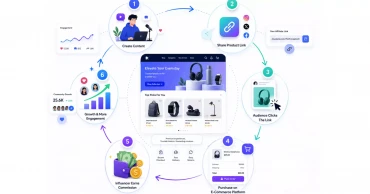
Affiliate marketing is a simple earning model where people promote products through special links and earn a commission when someone makes a purchase through those links. What makes it so popular today is how easy it is to start. Anyone with a smartphone, social media account, or online audience can earn by sharing useful product recommendations without needing investment, stock, or delivery management. From TikTok gadget reviews to Instagram fashion posts, affiliate marketing has now become a growing part of the digital economy.
Globally, Amazon Associates is one of the most popular examples of affiliate marketing. Through the program, creators and influencers earn commissions by sharing Amazon product links. In many countries, affiliate marketing is now a serious side hustle and even a full-time profession for people who build audience trust through content and reviews.
Closer to home, Bangladesh’s influencer and content creator ecosystem is growing rapidly. According to StateGlobe, more than 150,000 active influencers are creating content across TikTok, Facebook, Instagram, and YouTube, while influencer and social media-driven advertising spending could reach nearly USD 120 million by 2026. At the same time, around 68% of Bangladeshi brands are already using influencer marketing as part of their campaigns. This shows that the opportunity for digital income is no longer a future idea, the ecosystem is already here.
For Bangladesh, affiliate marketing is highly relevant because the country has a young, digitally active population, growing smartphone use, and a rising e-commerce culture. Daraz, country’s leading e-commerce platform, has helped bring this opportunity to scale. Through the Daraz Affiliate Program, where affiliates simply choose products or campaigns, share links with their communities, and earn commissions on successful orders.
According to Daraz, affiliate marketing is already becoming a meaningful part of the platform’s business. Every month, more than 10,000 active affiliates engage with the platform, a number that surges during major sales campaigns. To date, over 53,000 individuals and brands have participated in the program.
On average, active affiliates earn around 5,000 Taka per month. However, the highest-performing contributor has earned approximately 150,000 Taka, showing that with consistent effort, trusted content, and the right audience connection, affiliate marketing can become a meaningful source of income.
The ecosystem provides affiliates with access to more than 50,000 active sellers and a catalog of over 23 million products, ensuring relevance for any audience whether they are looking for tech, fashion, or household essentials.
The program works on a simple “Cost Per Sale” model, meaning affiliates earn money when someone successfully places an order through their shared link. On average, the commission is around 5%. If a customer buys within 7 days after clicking the link, the affiliate can still earn commission. In some cases, earnings can go up to BDT 1,050 from a single order.
Many Bangladeshis are already doing affiliate marketing for Amazon, but many newcomers often face challenges such as payment issues, account setup complexity, and international platform restrictions. For those who want to understand how affiliate marketing works in a more local and accessible way, they can explore Daraz’s website or apps to learn about the process, commission structure, and how the model has been operating in Bangladesh over the past few years.
In the long run, affiliate marketing can help Bangladesh build a new generation of digital earners by teaching useful skills like content creation, digital marketing, product research, audience building, and performance tracking. A student can eventually become a performance marketer, a homemaker can grow into a lifestyle creator, and a Facebook group admin can turn into a digital entrepreneur.
The digital ecosystem in Bangladesh is no longer just about consumption, it is about contribution. As affiliate marketing continues to mature, it will remain a vital gateway for the next generation of digital earners to build sustainable careers in the palm of their hands.
Author: Tahsin Reza, Communication Professional
2 months ago

Samsung faces strike after pay talks with union fall apart
Samsung Electronics is facing the prospect of a strike after wage negotiations between management and union leaders broke down on Wednesday, raising concerns over possible disruptions to global semiconductor supplies and South Korea’s trade-driven economy.
The breakdown comes after the latest round of talks ended without agreement. Union leader Choi Seung-ho said workers would begin an 18-day strike from Thursday.
Both sides blamed each other for the failure to reach a deal. Choi accused management of rejecting a government-mediated proposal, while the company said the union’s demands for higher compensation were excessive, particularly for loss-making units.
Government officials have warned they may invoke rarely used emergency powers to force a settlement at Samsung Electronics, where the union represents about 74,000 workers. The union argues that the company has not provided fair compensation despite strong profits driven by the global artificial intelligence boom.
Samsung and its rival SK Hynix together produce about two-thirds of the world’s memory chips, a key component in AI-driven demand. Samsung recently reported an eightfold rise in operating profit for the January–March quarter to a record 57.2 trillion won ($38 billion).
Union leaders are demanding that Samsung allocate 15% of annual operating profits to employee bonuses and remove existing bonus caps, currently set at 50% of annual salaries. Management has rejected the proposal, citing the cyclical nature of the semiconductor industry.
Prime Minister Kim Min-seok has warned that a strike could cause up to 100 trillion won ($66 billion) in economic losses due to disruptions in highly complex chip production processes.
A local court earlier granted a partial injunction on the planned strike, requiring minimum staffing levels to protect facilities and ensure safe operations, while also restricting access to key offices and production areas.
Despite the deadlock, both sides said they remain open to further negotiations.
2 months ago

OpenAI sidesteps costly defeat in Musk lawsuit, but fallout leaves both sides bruised
OpenAI has avoided a potentially damaging legal setback in its high-profile dispute with Elon Musk, but the courtroom battle has left reputational dents on both sides as the artificial intelligence industry faces growing scrutiny.
A federal jury in Oakland ruled Monday that Musk filed his lawsuit too late, missing a statutory deadline, effectively handing OpenAI a victory after a three-week trial that featured extensive evidence and testimony from prominent figures in the tech world. The jury deliberated for less than two hours before reaching its decision.
The verdict allows the ChatGPT maker, valued at around $852 billion, to stay on course for what could become one of the largest initial public offerings in history. However, the proceedings exposed internal tensions, personal rivalries and governance concerns at the heart of one of the world’s most influential AI companies.
Musk had sought to remove OpenAI CEO Sam Altman and accused the company’s leadership — including co-founder Greg Brockman — of abandoning its original nonprofit mission to develop AI for the benefit of humanity. Altman, in response, alleged Musk was attempting to undermine OpenAI to advance his own AI venture.
Despite the legal outcome, testimony during the trial raised questions about Altman’s leadership. Several witnesses described him as lacking transparency, with former board members Helen Toner and Tasha McCauley citing concerns about his truthfulness. The trial also revisited Altman’s brief ouster from OpenAI’s board in 2023 before his swift reinstatement.
Musk, reacting sharply to the ruling, said he would appeal and criticized Judge Yvonne Gonzalez Rogers, calling her a “terrible activist Oakland judge, who simply used the jury as a fig leaf” to set a harmful precedent. “She just handed out a free license to loot charities if you can keep the looting quiet for a few years!” Musk wrote on his platform X. The decision marks his second major courtroom loss in less than two months.
Beyond the legal clash, the case underscored broader concerns about the future of artificial intelligence and the small circle of powerful individuals shaping its development.
“The trial was a reminder … of how much the future of AI still depends on a remarkably small group of powerful tech figures and their personal rivalries,” said Sarah Kreps, director of Cornell University’s Tech Policy Institute. “The trial highlighted not just a dispute between Musk and Altman, but a broader disconnect between the people building these systems and many of the people increasingly expected to live and work alongside them."
Although the judge sought to keep the proceedings focused on legal issues rather than AI risks, concerns about job losses, mental health effects and even existential threats formed a backdrop throughout the trial. Protesters regularly gathered outside the courthouse, criticizing both Musk and Altman and warning about the influence of billionaire-led tech companies.
“This is a funny microcosm of this moment where we have this hugely important technology that’s being developed by for-profit corporations run by people like Musk and Altman and not as the part of some government-led initiative,” said Columbia Law School professor Dorothy Lund.
The trial also revealed behind-the-scenes communications within Silicon Valley, including emails, diary entries and text messages that highlighted internal disputes and, at times, became fodder for online satire.
OpenAI dismissed Musk’s claims as unfounded, characterizing them as an attempt to slow its rapid expansion while boosting his own AI company, now part of SpaceX.
Meanwhile, both OpenAI and Musk’s ventures — along with AI firm Anthropic, founded by former OpenAI leaders — are preparing for major IPOs, signaling continued momentum in the sector despite the controversy.
“It’s a lot of dirty laundry that doesn’t look very appealing, I suppose, and so that may hurt their reputation and may have downstream effects on all kinds of things that you can’t even anticipate,” said University of Richmond law professor Carl Tobias. “But you know, AI is likely to come forward and continue even if it isn’t OpenAI.”
2 months ago