Lifestyle
US faces ‘reading recession’ as student test scores continue to decline
The United States is experiencing what researchers describe as a “reading recession,” with student reading performance continuing to fall nationwide even as some districts show local improvements, according to a new analysis.
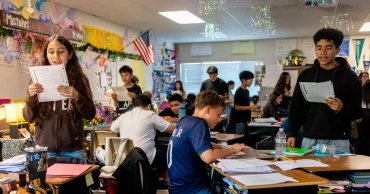
At a classroom in Modesto, California, teacher Nancy Barajas uses an unusual pre-test routine — dimming the lights, playing music and letting her sixth graders dance under a disco ball — to boost confidence before exams.
The approach appears to be working locally. Schools in Modesto have recorded steady gains in both reading and math scores in recent years, though overall performance remains below grade level.
However, national data paints a more concerning picture. A study by researchers from Harvard, Stanford and Dartmouth examined state test scores for grades three to eight across more than 5,000 school districts in 38 states, compiled into a national Education Scorecard.
The findings show that only five states and the District of Columbia recorded meaningful improvement in reading between 2022 and 2025. Overall, students remain about half a grade level behind pre-pandemic reading benchmarks, with only marginal gains in math.
The decline in reading achievement, experts say, began well before the COVID-19 pandemic. Data from the National Assessment of Educational Progress shows falling reading scores for eighth graders since 2013 and for fourth graders since 2015.
Harvard professor Thomas Kane, who helped develop the Education Scorecard, said the pandemic worsened a longer-term decline, describing it as “a mudslide that followed seven years of steady erosion in achievement.”
Researchers point to several possible causes, including increased screen time and reduced recreational reading among children, as well as weaker accountability systems in schools.
Despite the national trend, some states — including Louisiana, Maryland, Tennessee, Kentucky and Indiana — have shown progress after adopting “science of reading” methods that emphasize phonics-based instruction over older approaches that relied more on context-based guessing.
Several states have also introduced dyslexia screening, teacher training programs and instructional coaching to improve literacy outcomes. However, the reforms have not guaranteed success everywhere, with some states still seeing declines.
In Modesto, schools have revamped reading instruction during and after the pandemic, while also expanding support for English learners and investing in teacher training programs, including a phonics-based initiative known as LETRS. The district reports gains equivalent to roughly 18 weeks of additional learning in math and 13 weeks in reading, though overall achievement remains low.
Other districts have also seen improvement by focusing on attendance. In Detroit, Michigan, increased school attendance combined with literacy reforms has helped boost performance, though scores still lag behind national averages. The district, once the subject of a lawsuit over the right to read, used settlement funds to expand learning support and improve school services.
In some schools, additional staff now provide small-group instruction, while attendance officers actively follow up with absent students to keep them in class.
In the southern United States, several states have led reforms in reading and math instruction. Louisiana and Alabama are among the few states where math scores have surpassed pre-pandemic levels. Louisiana is also the only state to exceed its 2019 reading average.
Alabama’s phonics-based reading reforms have contributed to notable gains, later expanded into broader math reforms requiring standardized instruction and regular student assessments.
Despite improvements in some regions, educators and researchers say nationwide recovery remains uneven. They stress that sustained investment, consistent instruction and stronger accountability will be needed to reverse the long-term decline in reading performance.
2 months ago

4 Bangladeshi filmmakers participating in Cannes Docs 2026
Four Bangladeshi filmmakers are participating in Cannes Docs 2026 with their documentary film projects under a French-supported initiative.
Held alongside the Cannes Film Festival, Cannes Docs is one of the world’s leading platforms for documentary filmmakers, producers, broadcasters, and distributors.
The festival began on Tuesday.
The initiative was organised by Alliance Française de Chittagong in collaboration with Bisubo Art Organization and supported through the French PICC grant, said the French Embassy in Dhaka.
The selected filmmakers are Kazi Arefin Ahmed with Opekkha, Citto Aanondi (Sumaiya Binte Selim) with Blue-Collars from the Frontline, S M Kamrul Ahsan with In Search of Her, and Sumon Delwar with My Cousin.
The projects were selected through a national open call launched in September 2025, followed by a transparent and comprehensive jury evaluation process.
2 months ago

Ram Charan’s trainer compares him to Salman Khan, reveals fitness routine for ‘Peddi’
Telugu star Ram Charan has drawn fresh attention for his physical transformation and disciplined fitness regimen ahead of his upcoming film Peddi.
His fitness trainer, Rakkesh R Uddiyar, praised the actor’s strength, endurance and commitment, even comparing him to Bollywood superstar Salman Khan.
Speaking in an interview with Zoom, the trainer said Ram Charan displays similar physical resilience and discipline to Salman Khan, noting his ability to quickly recover from injuries and return to work. He also credited the actor’s mental strength and spiritual discipline for his fitness journey.
“Like Salman Khan, Ram Charan is also very strong… I believe a lot of strength comes from his spirituality,” the trainer said.
Intense training and strict diet plan
The trainer revealed that Ram Charan followed a structured and demanding fitness programme during preparation for Peddi, including cardio-focused routines, strength training and a controlled diet plan ranging between 1,800 to 2,500 calories with carb cycling.
He added that both Ram Charan and Salman Khan share similar fitness habits, including early-morning cardio sessions and maintaining a consistently lean physique.
The preparation phase also coincided with Ram Charan’s 41-day Ayyappa Deeksha, a spiritual observance involving strict dietary and lifestyle restrictions, which made training more challenging.
Describing the process, the trainer said maintaining a full vegetarian diet during intensive training required careful planning and discipline.
“It’s not a one-day programme. I have almost given one year and four months for his body,” he added.
Ram Charan is next set to appear in Peddi, directed by Buchi Babu Sana.
Source: NDTV
2 months ago

Foxhounds kick off iroquois steeplechase with traditional dog parade
The Iroquois Steeplechase in Tennessee opened Saturday with its traditional foxhound parade, as more than 20 trained hounds ran across the turf course to kick off the 85-year-old horse racing event before the main competitions for major purses began.
While jockeys and horse owners competed on the grass track with hurdles for a total purse of $730,000, spectators cheered, took photos and recorded videos as the foxhounds led the opening spectacle of the day.
400-year-old ‘Hamlet’ thrives in TikTok era, from Taylor Swift to Oscars
The foxhounds, specially trained to run alongside horses and hunters, were guided by huntsmen and whippers-in tasked with keeping them on course despite distractions from thousands of spectators, loudspeakers and tailgating food in the infield.
Charles Montgomery, a master and huntsman with the Mells Foxhounds, recalled a hound that once strayed into beer tents and enjoyed the attention so much that she repeated the behaviour the following year and was later excluded from the race.
Founded in 1941 as a Works Progress Administration project, the Iroquois Steeplechase is one of the premier American steeplechase events and is closely tied to fox hunting traditions from the British Isles, where horses were trained to jump obstacles while hunting.
Trustee Stephen Heard said many fox hunting horses are former steeplechase runners. About 25,000 spectators attend, creating challenges for dogs adjusting to noise, smells and distractions.Handlers use experienced hounds to guide younger ones, while GPS collars ensure safety if dogs stray.
Despite the pressure, organizers say the hounds enjoy the event and help showcase hunting traditions.
2 months ago

Venice Biennale opens amid controversy over Russia and Israel
This year’s edition of the Venice Biennale opened Saturday under intense political tension and public protest, making it one of the most disputed editions in recent memory. The event began without awarding its traditional Golden Lion prizes after the jury resigned in protest over the participation of Israel and Russia.
The departing jury argued that countries facing investigations by the International Criminal Court over alleged human rights violations should not take part. Critics, however, questioned why the United States was not included in that stance. British artist Anish Kapoor referred to the ongoing atmosphere as one shaped by “hate and war.”
Instead of a formal jury selection, visitors to the Biennale’s Giardini and Arsenale venues will choose the winning national pavilion and best artist in the central exhibition through anonymous online voting inspired by the Eurovision system. Winners will be revealed on the exhibition’s closing day, Nov. 22.
The opening was accompanied by demonstrations and unrest. Protesters opposing Israel’s participation clashed with police on Friday, while feminist activists from Ukraine and Russia gathered earlier in the week at the Russian Pavilion. Palestinian groups also held memorials for artists killed in Gaza.
Koyo Kouoh’s “In Minor Keys” Highlights Marginalized VoicesThe central exhibition, titled In Minor Keys, opens with a large red feathered sculpture inspired by New Orleans Black Masking traditions rooted in African heritage. The exhibition centers on overlooked and minority perspectives.
Curated originally by the late Koyo Kouoh — the first African woman selected to lead the Biennale’s main exhibition — the show features 110 artists and collectives. After Kouoh’s death last year, five co-curators completed her vision.
Co-curator Marie Helene Pereira said Kouoh believed in creating spaces where all artists could be seen and appreciated.
Lubaina Himid Examines Migration and BelongingAt the British Pavilion, Lubaina Himid presents Predicting History: Testing Translation, a collection of vividly colored paintings exploring the experience of settling in unfamiliar places.
One work depicts two architects debating whether to create a lasting monument or build something temporary that allows escape if needed. Himid, born in Zanzibar and raised in Britain, uses the exhibition to reflect on identity, migration and adaptation.
Vatican Pavilion Offers Reflection Through Music and NatureThe Vatican’s contribution transforms the Mystic Gardens near Venice’s main railway station into a contemplative space focused on spirituality and peace.
Visitors wander through vineyards and herb gardens while listening through headphones to reinterpretations of music by medieval mystic Hildegard of Bingen, reimagined by artists including Brian Eno and Patti Smith.
Rev. Ermanno Barucco described the installation as an invitation for visitors to reconnect with themselves through music and reflection.
Austrian Pavilion Pushes Boundaries With Provocative PerformancesThe Austrian Pavilion, created by artist Florentina Holzinger, quickly became one of the Biennale’s most talked-about attractions.
One performance features a naked woman suspended from a bell tower, while another shows a nude rider circling on a Jet Ski inside a water tank — a commentary on Venice’s transformation into an overcrowded tourist destination.
Another installation includes a woman submerged in filtered wastewater from nearby toilets, part of the exhibition titled Seaworld Venice.
Israeli Pavilion Promotes Dialogue Over BoycottRomanian-born Israeli artist Belu-Simion Fainaru created an installation centered on themes of compassion, resilience and coexistence.
Water slowly drips into a pool in timed intervals symbolizing spiritual concepts from Jewish mysticism. Locks engraved with the phrase “Love thy neighbor as thyself” hang around the pavilion, accompanied by the message “This too shall pass.”
Fainaru criticized the jury’s decision to exclude Israel from awards consideration, calling it discriminatory and arguing in favor of dialogue rather than boycotts.
Estonian Pavilion Celebrates Everyday FeminismIn the Estonian Pavilion, artist Merike Estna will continue painting a large mural throughout the Biennale inside a former church that now serves as a community gymnasium.
Her evolving artwork emphasizes the repetitive, often unrecognized labor traditionally associated with women. Curator Natalia Sielewicz described the project as a representation of everyday feminism and the ongoing work of sustaining both life and society.
2 months ago

UCLA online textbook gives voice to Asian American, Pacific Islander history and cultures
A new free digital textbook developed by the UCLA Asian American Studies Center is aiming to reshape how Asian American and Pacific Islander (AAPI) history and cultures are taught in schools and universities across the United States.
The multimedia textbook, titled “Foundations and Futures: Asian American and Pacific Islander Multimedia Textbook,” seeks to challenge long-standing stereotypes such as “model minority” and “perpetual foreigner,” which scholars say have contributed to the marginalization of AAPI communities in American history.
The project, which took years to complete and involved around 100 contributors including curriculum developers and illustrators, is designed to provide educators with a comprehensive and accessible resource for teaching AAPI experiences.
“Our presence, our practices, our cultural rituals and things like that are not deemed as ‘American,’” said Karen Umemoto, co-editor and director of the UCLA Asian American Studies Center. “The actual putting together of this textbook also became our fight for inclusion and represents our right to be seen, our right to speak.”
Co-editor Kelly Fong said the textbook will help students see themselves represented in mainstream educational materials. “Young people are going to have so many different opportunities to see themselves and their communities represented in this core text,” she said.
The textbook covers a wide range of AAPI histories, including migration, labour movements, community struggles and contributions across the United States, with additional chapters planned for future updates. It also includes multimedia content such as archival images and videos.
Researchers involved in the project said it gained added urgency during the COVID-19 pandemic, which saw a rise in anti-Asian hate incidents across the United States. The development of the textbook was also shaped by broader discussions on racial equity and ethnic studies education.
“COVID, I think, was really one of the things that shaped the textbook the way that it did,” Fong said, adding that education can play a key role in addressing racism.
The textbook includes stories of lesser-known figures and communities, ranging from Vietnamese and Hmong Americans to Indigenous Hawaiians, as well as narratives of women such as Mamie Tape and civil rights leader Patsy Takemoto Mink.
However, scholars acknowledged that the project is launching amid growing political opposition to diversity, equity and inclusion (DEI) initiatives in education, particularly under Republican-led policies in several states.
Despite concerns that some schools may hesitate to adopt the material, educators involved in the project say it fills a long-standing gap in American history teaching and will serve as an important resource for teachers.
Education experts say the free textbook could be especially valuable because of its accessibility and university backing, even as debates continue over ethnic studies and DEI programs in schools.
The UCLA centre is now seeking additional funding to expand the project further, with plans to add more content on communities such as Tongan Americans and Taiwanese Americans in future updates.
2 months ago

Rabindranath’s literature a powerful tool to remove darkness: Nitai Roy on his birth anniversary
Cultural Affairs Minister Nitai Roy Chowdhury has said the literature of Rabindranath Tagore is one of the most effective tools for removing darkness from society.
He said Rabindranath is the ray of sunlight in Bengali literature.
Just as sunlight dispels darkness, Rabindranath, through his timeless literary works, has illuminated and removed the darkness from our consciousness, he added.
The Minister made these remarks, while speaking as the chief guest at the inauguration ceremony of a three-day national celebration of the 165th birth anniversary of Rabindranath Tagore in Kushtia on Friday.
The event was organised by the Ministry of Cultural Affairs and implemented by the Kushtia District Administration at the historic Shilaidaha Kuthibari in Kushtia, a place deeply associated with the poet’s memories.
Nitai Roy Chowdhury, in his address, also said Rabindranath was, in every sense, a humanist and a compassionate advocate for farmers.
Referring to Shilaidaha as a living monument of Bengali literature and culture, he announced that the Ministries of Culture and Tourism would jointly work to transform the Kuthibari into a complete tourist destination.
Cultural Affairs Secretary Kaniz Moula presided over the event, while eminent educationist Professor Wakil Ahmed delivered a commemorative speech titled “Rabindranath: The Poet of Peace and Humanity.”
Members of Parliament Reza Ahmed Bacchu Molla, Afzal Hossain and Farida Yasmin, among others, were present.
The cultural affairs minister also visited the museum inside the Kuthibari and viewed the preserved memorabilia of the poet.
Later, the event was followed by cultural soiree on the open stage with an inaugural musical performance by Kushtia Shilpakala Academy artist Shreha Khatun.
The three-day festival features a variety of events, including Rabindra Sangeet performances, poetry recitations, dance, and drama, said a PID handout.
2 months ago
400-year-old ‘Hamlet’ thrives in TikTok era, from Taylor Swift to Oscars
More than 400 years after its creation, Hamlet is enjoying renewed global popularity, appearing across film, theatre, music and social media.
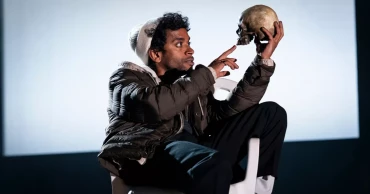
A National Theatre production starring Hiran Abeysekera is running at the Brooklyn Academy of Music, while a London-set film adaptation features Riz Ahmed. Veteran actor Anthony Hopkins has also drawn attention on TikTok with performances of Hamlet’s famous soliloquy.
The play’s influence extends further. The film “Hamnet,” inspired by its origins, won Jessie Buckley an Oscar, while Taylor Swift topped the Billboard chart with a song linked to Ophelia. Eddie Izzard is touring a solo stage version worldwide.
Huge ice block, rising costs fail to stop Everest climbers this season
New interpretations continue to emerge, including productions by the Royal Shakespeare Company and Teatro La Plaza, the latter featuring actors with Down syndrome. Scholars say the play resonates today due to its exploration of anxiety and moral uncertainty.
Filmmaker Aneil Karia has also reimagined the story in modern London, reflecting contemporary political unease. Directors and performers say the enduring appeal of “Hamlet” lies in its adaptability, with each new production offering fresh meaning for modern audiences.
2 months ago

Huge ice block, rising costs fail to stop Everest climbers this season
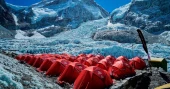
Hundreds of climbers are preparing to scale Mount Everest despite the danger posed by a massive unstable ice block on the route and rising travel and permit costs.
About 464 climbers, along with a similar number of Nepali guides, are now at Everest base camp waiting for the short period of favorable weather expected this month to begin their climb to the world’s highest peak, which stands nearly 8,850 meters high.
Climbers started arriving at the 5,300-meter-high base camp last month. However, their progress was delayed for more than two weeks because of a huge unstable block of ice, known as a serac, hanging dangerously above the main climbing route.
The elite “Icefall doctors” assigned by the Sagarmatha Pollution Control Committee usually complete the climbing route by mid-April by fixing ropes and placing aluminum ladders over deep crevasses.
This year, however, the route through the dangerous Khumbu Icefall was only opened on April 29.
The committee also warned climbers that the cracked serac could collapse at any moment and urged expedition teams to be extremely careful.
The newly prepared route passes below the unstable ice block, which remains a major concern for climbers and guides.
The Khumbu Icefall is considered one of the most difficult sections of the Everest climb because of its constantly moving glacier, deep crevasses and massive hanging ice formations, some as large as 10-story buildings.
A similar falling serac triggered a deadly avalanche in 2014 that killed 16 Nepali guides and workers.
Veteran mountain guide Lukas Furtenbach, who is leading a large expedition team this year, said the risk is serious.
“Anyone who says they are not concerned is either inexperienced or not paying attention,” he said from base camp.
He added that this year’s route is more exposed and difficult than last year’s in some sections because climbers must pass under unstable ice formations.
To reduce risk, Furtenbach said his team is carrying lighter loads, limiting time spent in dangerous areas and relying heavily on experienced Sherpa guides for safety decisions.
Other expedition companies are also warning climbers to move carefully, especially during warmer afternoon hours when melting ice increases the risk of collapse.
António Guterres visited Nepal’s mountains in 2023 and warned about the rapid melting of Himalayan glaciers caused by climate change and global warming.
Despite concerns over safety, the Iran conflict and rising travel expenses, climbing activity remains strong this season, according to expedition organizer Ang Tshering Sherpa.
He said the number of climbers from the United States and Europe has dropped, while more climbers from Asian countries are joining Everest expeditions.
China has closed the northern route to Everest this year, forcing all climbers to attempt the ascent from Nepal’s southern side.
Thousands of climbers have successfully reached Everest’s summit since it was first conquered on May 29, 1953, by New Zealand mountaineer Edmund Hillary and Sherpa guide Tenzing Norgay.
2 months ago
Mubtasim Alvee’s debut solo exhibition ‘A Shared Condition’ begins May 8
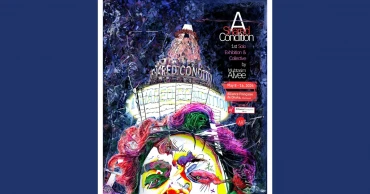
A week-long exhibition titled A Shared Condition, marking the first solo showcase of artist Mubtasim Alvee, will open at Alliance Française de Dhaka on May 8.
Curated by artist Mustafa Zaman, the exhibition will open at 6:00pm on Friday at Alliance Française de Dhaka in Dhanmondi.
The exhibition and its associated collaborative programmes will continue until May 16 and remain open daily from 2:00pm to 8:00pm.
Dhaka-based multidisciplinary artist, animator and activist Mubtasim Alvee is currently pursuing an MFA in Painting at the Faculty of Fine Arts of University of Dhaka. His artistic practice explores abstraction, perception and process through open-ended visual forms reflecting personal and collective experiences.
Alvee is also the founder of Syllabaad Collective and the Charukola Animation Society, both aimed at encouraging collaborative learning and interdisciplinary artistic exchange.
According to organisers, A Shared Condition examines the intersection between personal and collective psychological experiences. Inspired by the concept of pareidolia, the exhibition allows figures and forms to emerge organically from abstraction, reflecting memory, emotion and shifting identities.
The exhibition also addresses how historical, political and cultural forces shape the psyche within a post-colonial context. Organisers said the works portray fragmented and fluid identities, highlighting continuous transformation and uncertainty.
Featuring around 100 artworks created between 2024 and 2026, the exhibition includes works in acrylic, spray paint, pastel, printmaking and digital media.
Alongside the artworks, the programme will include panel discussions, workshops, interactive audio-visual installations, film screenings, musical events and theatre performances.
The event is supported by several organisations, including Bhabachakra, Syllabaad Collective, Charukola Animation Society, Dhaka Comics, Cartoon People, Tickify, Elaka Studios Ltd., Footprint Film Production, Siliconinja, and Street Spirits.
2 months ago