Lifestyle
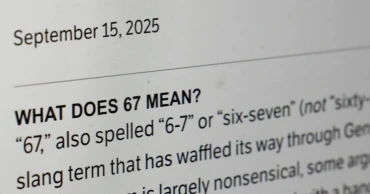
Viral ‘6-7’ tops 2025 list of overused words and phrases
The nonsensical phrase “6-7” has been named the most overused and misused word of 2025, according to Lake Superior State University’s 50th annual Banished Words List.
The tongue-in-cheek list, compiled from around 1,400 submissions from across the United States and several countries including Uzbekistan, Brazil and Japan, highlights words and phrases deemed “cooked” or overhyped.
“6-7,” which gained popularity on social media this year, especially among Gen Z, is considered largely meaningless. Dictionary.com even selected it as its 2025 word of the year. Each number can be read as “six, seven,” or combined as 67, sometimes sparking reactions at college basketball games.
Other words on the top 10 include “demure,” “incentivize,” “perfect,” “gift/gifted,” “my bad” and “reach out,” with some having appeared on past lists.
David Travis, president of Lake Superior State University, said the list reflects changing trends and the influence of social media, noting that words shared via texting or posts can easily be misunderstood without tone or context.
While some terms like “my bad” have lasting appeal, Travis predicted “6-7” will likely fade next year. Gen Z users, however, continue to embrace it as a playful, if puzzling, expression.
7 months ago

Kenyan barber wields shovel to carve social media fame
Safari Martins, known online as Chief Safro, gives haircuts using unconventional tools—including a razor-sharp shovel—at his roadside shack in Kiambu, on Nairobi’s outskirts. His unusual approach has made him one of Kenya’s most recognized barbers, with nearly one million followers each on Instagram and TikTok.
Born in Rwanda, Martins began barbering in 2018 while in high school, offering trims outside classrooms with borrowed clippers. Five years later, he embraced social media, dropping traditional tools in favor of dramatic implements and creating videos that combine haircuts with African folk tales and cultural voiceovers.
Customers, like Ian Njenga, pay a premium for both the haircut and a chance at social media exposure. Martins charges up to 1,500 Kenyan shillings (around $12), far above typical Nairobi rates.
While social media in Kenya has grown rapidly—reaching 15.1 million users by 2025—Martins says barbers often struggle to monetize content compared to creators in gaming or lifestyle niches. “Barbers get viral but are not respected,” he says.
Source: AP
7 months ago

Healthy-sounding food labels may mask high levels of added sugar
Many shoppers feel confident steering clear of sugary pastries and instead choosing products labeled “all natural,” “organic,” or “high-protein,” such as granola, low-fat yogurt or plant-based milk. But experts warn that these health-focused labels can often disguise surprisingly high amounts of added sugar.
Added sugars are not always easy to detect, as food manufacturers frequently rely on marketing language that diverts attention from nutrition facts, said Nicole Avena, a neuroscience and psychiatry professor at Mount Sinai Medical School and Princeton University who researches sugar consumption.
She noted that while some health-conscious brands are responding to growing awareness about sugar-related health risks, many major food companies remain less concerned about consumer well-being.
Excess sugar intake—alongside high salt and saturated fat—has been linked to obesity, heart disease, diabetes and other health problems. According to the American Heart Association, the average American consumes about 17 grams of added sugar daily, totaling roughly 57 pounds a year. While sugary drinks account for about half of that amount, the rest is commonly hidden in foods such as cereals, sauces, dairy items, prepared meals and even whole-grain bread.
Since 2021, food labels have been required to list added sugars separately. However, Avena said some companies have replaced traditional sweeteners like refined sugar and high-fructose corn syrup with alternatives such as monk fruit or sugar alcohols like erythritol, which are not classified as added sugars under FDA rules. As a result, foods may taste even sweeter than before.
10 Popular Air Fryer Models within 10000 TK in 2026
Dietitian Collin Popp of NYU Langone Health said federal guidelines allow added sugar to make up as much as 10% of daily calories, though he believes that limit should be lower—especially for people with diabetes or prediabetes.
He advised consumers to stay alert, even when products appear healthy or are labeled organic. Foods such as flavored yogurts, plant-based milks, English muffins and snack items can contain unexpected sugar. Taking control—by choosing plain versions and adding natural ingredients yourself—can help reduce sugar intake.
Experts also caution that artificial sweeteners may encourage overeating by stimulating the brain’s reward system. While sugar substitutes may benefit certain individuals, reducing reliance on sweet flavors overall is key to better health.
“Consumers shouldn’t let food companies determine how much sugar they consume,” Avena said.
Source: AP
7 months ago

TV series give Arab and Muslim Americans space to share authentic stories
From comedy specials to scripted television, Muslim American creator Mo Amer draws heavily from his own life when telling stories, a choice that has resonated strongly with audiences and critics alike.
Amer, a Palestinian American comedian, writer and actor, has earned widespread praise for his Netflix series “Mo.” Its second season follows the fictional Mo Najjar and his family as they navigate the challenges of seeking asylum in the United States after fleeing as Palestinian refugees. The show is part of a broader movement of television created by Arab American and Muslim American voices that explores identity with depth and realism, moving beyond long-standing stereotypes.
Amer said grounding stories in real cultural experiences allows audiences of all backgrounds to connect. In the new season, Najjar is shown operating a falafel taco stand in Mexico after being caught in a failed attempt to recover stolen olive trees tied to his family’s hopes of starting an olive oil business.
Both seasons of “Mo” were major successes on Netflix, with the first earning a Peabody Award. Amer’s third Netflix stand-up special, “Mo Amer: Wild World,” debuted in October. While the series timeline ends before the Oct. 7, 2023 Hamas attack in Israel, it addresses Israeli-Palestinian relations, the war in Gaza and the realities faced by asylum seekers in U.S. detention centers.
Other programs also reflect this growing representation. “Muslim Matchmaker” features matchmakers helping Muslim Americans find spouses, while the animated series “#1 Happy Family USA,” created by Ramy Youssef and Pam Brady, centers on an Egyptian American Muslim family living in New Jersey after the 9/11 attacks.
Scholars note that portrayals of Arabs and Muslims have long been shaped by political and historical contexts. After 9/11, many U.S. shows depicted Muslims as villains, often conflating Arab identity with Islam. Earlier portrayals leaned on “orientalist” imagery, presenting Middle Eastern people through a colonial lens.
Bandarban’s ‘Ala Mi Tlang’ Eco Resort: A hope of Bawm community
Experts and industry figures say recent shows mark progress, but argue more diverse stories and decision-makers are still needed. Research also suggests positive representation can reduce public support for anti-Muslim policies.
Amer said the main barriers remain with those who approve projects, not creators themselves. While recent successes are encouraging, he views them as only a beginning.
Source: AP
7 months ago

Bandarban’s ‘Ala Mi Tlang’ Eco Resort: A hope of Bawm community
A new tourist centre, Ala Mi Tlang Eco Resort, is being constructed at an altitude of about 2,100 feet above sea level at the foot of Keokradong, one of the country’s highest mountain peaks, in Susuang Para of Bandarban.
“Ala Mi Tlang,” which means Song of the Distant Mountains in Bengali, is being developed with financial assistance from the Bangladesh Army to help improve the livelihoods of the economically backward Bom community.
The scenic Susuang Para, located around 90 kilometres from Bandarban district town, is known for its vast natural beauty. A Bangladesh Army camp is situated adjacent to the resort site.
The foundation stone of the eco resort was laid on Saturday noon by Brigadier General SM Rakib Ibn Rezwan, Commander of the 69 Infantry Brigade and Bandarban Army Region Commander.
7 months ago
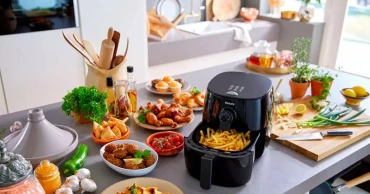
10 Popular Air Fryer Models within 10000 TK in 2026
Nowadays, air fryers have become one of the most essential kitchen appliances in Bangladesh, providing a healthier, faster, and more efficient way to cook daily meals. As lifestyles become busier, people are shifting toward smart, low-oil cooking solutions—making air fryers a top choice for all kinds of individuals. If you are looking for the best air fryer within 10,000 TK in Bangladesh, this guide will help you find the perfect model that fits your needs.
How to Buy an Air Fryer: A Short Buyer Guide
- Choose the right size: For large families you need 5–6L or more and 1–2 people can use smaller models.- Pick the style that fits your kitchen: Basket air fryers are powerful but bulky while toaster-oven styles save space and offer more functions.- Check cleaning ease: Smooth, non-stick baskets clean quickly, and try to avoid mesh baskets that trap crumbs.- Temperature range: It is better to look for 80°C–200°C for cooking flexibility.Power: 1200W–1500W ensures fast, even cooking.Safety features: Auto shut-off, cool-touch handle, and overheat protection are must-haves.- Warranty: It is important to choose models with at least a 1-year warranty.
Read more: Can you eat biryani and still lose weight? Nutritionist shares two simple hacks
10 Air Fryer Models in Bangladeshi Market within 10000 TK
Here are some popular air fryer models available in Bangladeshi markets.
National 1700W Air Fryer - 10 Liter
The National 10 Liter Air Fryer is a powerful and spacious cooking appliance designed for families who want healthier meals with less hassle. Featuring German-quality construction and Japan technology, it delivers fast, efficient, and even cooking while using 80% less oil.
Its large 10-liter capacity makes it ideal for grilling, roasting, baking, and frying bigger portions. The digital display, integrated timer, and auto shut-off ensure effortless and safe operation. Powered at 1700W with a stable 220–240V range, it offers reliable performance for everyday use. Backed by a 2-year service warranty, the National Air Fryer is an excellent value at just Tk 7,500.
Redswiss Air Fryer Glass Window (RSAF-0951) - 9.5 Liter
The Redswiss RSAF-0951 Air Fryer is a premium 9.5-liter European-quality model designed for large families and fast, oil-free cooking. Its 1800W high-power performance ensures quick heating, while the High-Speed Circulation Technology delivers crispy, delicious results without added oil.
The digital touch-screen display, glass viewing window, and non-stick removable basket make cooking simple and convenient. With a stainless-steel surface, dishwasher-safe parts, and an automatic safety shut-off, it is built for both durability and ease of use. Capable of holding up to 2500g of food, it is ideal for versatile cooking. The Redswiss RSAF-0951 is priced at around Tk 9,200 backed by a 2-year warranty.
Read more: 10 Tasty Immunity Boosting Winter Soup Recipes for Children
NOVA Air Fryer NV 901-B (Digital Air Fryer) - 8.5 Liter
The NOVA NV 901-B Digital Air Fryer is an excellent option for families seeking healthier meals with maximum convenience. Powered by a strong 1600W motor, it features rapid air circulation technology that ensures faster and more even cooking.
The touchscreen LED display provides easy access to temperature settings ranging from 50–200°C, along with a 60-minute timer for precise control. Its transparent basket allows you to monitor food without interrupting the cooking process. Ideal for frying, baking, grilling, and roasting, this versatile air fryer delivers great value. Priced at around Tk 8,000, it comes with a 1-year service warranty.
Gazi Smiss 1800W Air Fryer (GA-AF-11) - 7 liter
The Gazi Smiss GA-AF-11 is a powerful 1800W, 7-liter air fryer designed for faster, healthier, and oil-free cooking. Built with a durable stainless-steel surface and an intuitive LED digital touch panel, it offers customizable temperature settings and a timer for precise control over every recipe.
The non-stick frying pot and tray ensure easy cleanup, while the microswitch function and automatic shut-off enhance safety during use. Ideal for medium-sized families, its 7L capacity handles generous portions effortlessly. Operating on 220V–240V, this efficient air fryer delivers great value at Tk 6300, and is backed by a one-year warranty for reliability.
Read more: 10 Popular Room Heater Models for Bangladeshi Homes within 10000 Taka in 2026
National Air Fryer with Digital Touchscreen - 6 Liter
The National 6-Liter Digital Air Fryer is an affordable and efficient option for healthy cooking. With its 6L capacity, it is perfect for small to medium families. The digital touchscreen includes 8 preset cooking programs, making it easy to prepare fries, chicken, snacks, and more with consistent results.
Its sleek black design and round shape enhance both aesthetics and air circulation for faster cooking. The detachable nonstick, ceramic-coated basket is scratch-resistant and dishwasher-safe, ensuring easy maintenance. Designed for speed and convenience, this air fryer offers reliable performance at just Tk 5,000, backed by a 1-year official brand warranty.
Miyako AF-5012 Touchscreen Air Fryer with LCD Display- 6 Liter
The Miyako AF-5012 Touchscreen Air Fryer is a stylish and practical 6-liter model designed for effortless cooking. Its 45° tilt touch panel and LCD display make operation extremely user-friendly, while the smart memory function resumes cooking automatically after the basket is removed and reinserted.
Powered by 1250W with fast-heating technology, it ensures consistent cooking results every time. The durable non-stick coating, dishwasher-safe parts, and BPA-free materials enhance safety and easy cleaning. With features like overheating protection, auto power off/on, heating indicators, and a comfortable compact design, this air fryer offers excellent value at around Tk 6,500, with a 2-year warranty.
Read more: Popular Home Geysers (Water Heaters) Available in Bangladesh in 2025-26
Vision Air Fryer 1300W with Energy Savings Technology (AF-002) – 5 Liter
The Vision AF-002 Air Fryer is a compact and energy-efficient 5-liter model designed for oil-free cooking. Powered by 1300W, it features a sturdy high-gloss plastic body, a durable non-stick double-layer inner pot, and a 1.2m copper power cord for safe usage. The price is only 5,000 Tk.
The dual rotary knobs allow easy temperature and timer adjustments, making it simple to prepare chicken, fries, cakes, steaks, and more. Its 4-dimensional heat dissipation ensures stable performance, while the auto power-off safety feature activates when the basket is removed. Ideal for small families, this efficient air fryer comes with a 1-year brand warranty and is perfect for smoke-free, fat-free cooking.
PHILIPS Air Fryer HD9200 - 4.1 Liter
The PHILIPS HD9200 Air Fryer is a premium 4.1-liter, 1400W model designed for efficient, healthy, and versatile cooking. Using Rapid Air Technology, it delivers crispy results while reducing fat by up to 90%, making it ideal for guilt-free frying, roasting, grilling, baking, and reheating.
Its adjustable 80–200°C temperature control, 60-minute timer, and cool-touch exterior ensure safe and precise operation. The compact design fits easily into any kitchen, while the dishwasher-safe removable parts make cleaning effortless. Built with Philips’ trusted durability, the HD9200 is perfect for small families and everyday use. Priced at Tk 8,200, it comes with a 1-year spare parts and service warranty.
Read more: Delicious Winter Pithas in Bangladesh: Where Savory, and Innovation Meets Tradition
Walton WAF-KB04L Air Fryer - 4 Liter
The Walton WAF-KB04L is a compact and efficient 4-liter air fryer designed for healthier everyday cooking at an affordable price of 7,500 TK. Featuring an adjustable temperature range of 40–200°C and a 60-minute mechanical timer, it provides precise control for frying, roasting, reheating, and baking.
Its detachable non-stick frying basket ensures easy cleaning and convenient food handling. With rapid air circulation technology, it cooks evenly while using minimal oil, delivering crispy fries, juicy chicken wings, and other family favorites. The sleek design and user-friendly controls make it a great fit for modern kitchens, offering reliable performance for versatile daily cooking.
Miyako Air Fryer Rapid Air Technology AF-300CG - 3 Liter
The Miyako AF-300CG is a compact yet powerful 3-liter air fryer designed for quick, healthy, and oil-free cooking. Powered by an impressive 2000W, it uses Quick Heat Circulation, Air Crisp Technology, and a 360° Advanced Hot Air System to deliver fast and even cooking results.
The sleek black unit includes an LED display, touch controls, and 6 preset menus for frying, baking, grilling, roasting, and reheating. Its pull-out non-stick basket is removable and dishwasher-safe, ensuring easy cleaning after every meal. Ideal for small families or bachelors, the AF-300CG offers excellent performance at an affordable Tk 5,000, making it a great countertop addition.
Read more: 7 Homemade Drinks for Sore Throat
Final Words
Choosing the right air fryer within a 10000 TK budget range depends on your cooking style, household size, and preferred features. Those who cook large meals often will benefit from bigger-capacity options that handle bulk portions with ease. If you want a balance of performance, smart features, and convenience, mid-sized models offer the ideal mix for everyday family cooking.
For smaller kitchens, lighter eaters, or quick snack preparation, compact air fryers provide efficiency without taking up space. Whether you prioritize capacity, speed, ease of cleaning, or energy savings, there is a perfect match for every type of user. Focus on what you cook most and choose accordingly.
7 months ago

Patriotic crystal ball to light up Times Square on New Year’s Eve as US 250th anniversary begins
After descending at midnight on New Year’s Eve in New York, the famous Times Square crystal ball will rise once again—this time glowing in red, white, and blue—to welcome 2026 and launch months of festivities marking the United States’ 250th anniversary.
This year’s New Year’s Eve celebration will include patriotic elements such as a second confetti release, offering a preview of the nationwide commemorations planned to honor the signing of the Declaration of Independence in 1776. Hundreds of events, both large and small, are expected across the country.
America250 Chair Rosie Rios, who leads the bipartisan commission established by Congress in 2016 to organize the semiquincentennial, said the celebrations will exceed expectations. She described the anniversary as a once-in-a-generation moment meant to inspire the nation and beyond.
Rios and her team partnered with the Times Square Alliance and One Times Square—the building from which the ball is dropped—to introduce this year’s ceremonial updates. They are also planning an additional ball drop on July 3, the night before Independence Day, staged in classic Times Square fashion.
According to Rios, it will be the first ball drop in Times Square not held on New Year’s Eve in more than a century.
The tradition of the Times Square ball drop dates back to 1907. The original ball, designed by immigrant metalworker Jacob Starr, weighed 700 pounds and featured 100 light bulbs. Over the years, the ball has evolved significantly. The latest version, unveiled last year, measures roughly 12 feet in diameter and weighs nearly 12,000 pounds.
The only interruptions to the ball drop occurred in 1942 and 1943, when New York City imposed nighttime blackouts during World War II. During those years, crowds marked the new year with silence followed by church bells.
Midnight this New Year’s Eve will also signal the official start of America Gives, a national volunteer initiative launched by America250, with organizers aiming to make 2026 the biggest year for volunteer participation in U.S. history.
On New Year’s Day, America250 will take part in the Rose Parade in Pasadena, California, with a float titled “Soaring Onward Together for 250 Years.” The float will feature three oversized bald eagles symbolizing the nation’s past, present, and future.
Rios said the celebrations are designed to connect communities across the country—from the East Coast to the West Coast and beyond—and to encourage grassroots involvement nationwide.
President Donald Trump has also announced a separate initiative, called “Freedom 250,” to organize additional activities tied to the anniversary.
Rios said the wide array of planned events—from fireworks and community meals to student competitions and oral history projects—aims to bring Americans together despite political divisions. By offering many ways to participate, she said, organizers hope to engage people across the entire nation.
7 months ago

Virtual reality helps seniors forge real-life connections
Residents at The Terraces, a retirement community in Los Gatos, California, are rediscovering adventure and connection through virtual reality (VR) technology. Many of the seniors, most in their 80s and 90s, are unable to travel far but can now explore distant places, dive into oceans, or experience thrill-seeking activities like hang-gliding—all from the comfort of their chairs.
The VR programs, curated by Massachusetts-based Rendever, aim to enhance cognitive function and foster social bonds. During one session, residents paddled along with dolphins in a 3D underwater simulation. Another virtual hot-air balloon ride left participants gasping with excitement. Some residents even revisit childhood neighborhoods through VR, evoking cherished memories. “It’s not just seeing it again; it’s the memories it brings back,” said 84-year-old Sue Livingstone.
Adrian Marshall, community life director at The Terraces, noted that VR often becomes a conversation starter, encouraging residents to connect over shared experiences. Research shows VR can improve memory, reduce isolation, and strengthen intergenerational relationships when used thoughtfully.
Doctors recommend belly laughs two to five times a week for health benefits
Rendever, which received a $4.5 million NIH grant, plans to study ways VR can reduce social isolation for seniors at home and their caregivers. Experts emphasize that while VR is not a replacement for traditional activities, it provides a meaningful and engaging avenue for seniors to socialize and enjoy new experiences.
Residents at other retirement communities, such as the Forum in Silicon Valley, also use VR to revisit past travels and experience nature or performances. For Bob Rogallo, living with dementia, a virtual hike through Glacier National Park brought joy, while 93-year-old Almut Schultz delighted in a virtual music performance and playful puppy interactions.
Source: AP
7 months ago

Deck your garden with holly: evergreen beauty with rich history
Holly has long been a symbol of the season, appearing in wreaths, boughs, holiday cards, and catalog covers. But have you considered adding it to your garden? With hundreds of species and hybrids from around the world — and over a dozen native to the continental U.S. — holly offers year-round appeal and winter interest.
Historically, ancient pagans used holly branches as crowns and believed the evergreens could repel evil spirits and hasten spring. Later, early Christians adopted holly as a symbol of eternal life. Its bright red berries and deep-green leaves complement traditional holiday colors, while providing an important food source for birds and wildlife (though most berries are toxic to humans).
Plant holly in early spring, after the last hard freeze but before summer heat sets in, and water regularly during the first year. Most hollies are dioecious, meaning male and female plants are needed for berry production. One male can pollinate up to ten females within 50 feet. Plant tags may not indicate sex, but variety names often help — for example, “China Girl” (female) requires “China Boy” (male) to bear fruit.
Here are a few top choices:
Yaupon Holly (Ilex vomitoria): Native to the southern U.S., adaptable to sun or shade, and suitable for hedges or trees. Hardy in zones 7-9.American Holly (Ilex opaca): Slow-growing, pyramid-shaped, reaching 25-60 feet, thriving in acidic soil, zones 5-9.Blue Holly (Ilex x meserveae): European hybrid with blue-green spiny leaves, 2-8 feet tall, zones 5-7.Winterberry Holly (Ilex verticillata): Deciduous, berries on bare branches offer winter interest, zones 3-9.Caution: English or common holly (Ilex aquifolium), native to Europe and North Africa, can be invasive in parts of the U.S., particularly the Pacific Northwest and California. Avoid planting it in regions where it threatens native vegetation.
With the right choices, holly can add beauty, history, and wildlife value to your garden all year long.
7 months ago
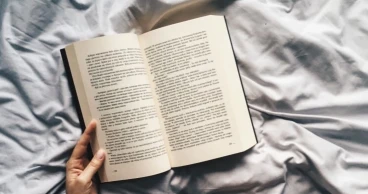
Tips to rekindle your love of reading in 2026
Many adults drift away from reading due to time constraints, fatigue from school assignments, or digital distractions. Yet it’s never too late to reignite the habit, which can reduce stress, boost creativity, and increase empathy. A recent analysis of U.S. data found that only 16% of Americans read for pleasure on an average day in 2023, down from 28% in 2004.
Experts suggest starting with books that spark joy rather than dense nonfiction or lengthy tomes. Jocelyn Luizzi, a Chicago software engineer and book blogger, recommends choosing titles that feel enjoyable. Libraries and online platforms like BookTok or NoveList can provide personalized recommendations based on previous reads.
Creating a routine helps sustain the habit. Attention expert Gloria Mark suggests reading a few pages during lunch or before bed, keeping devices out of sight, or trying audiobooks and e-books for convenience. Social reading activities, such as silent book clubs, can also motivate engagement.
Readers should not feel pressured to finish every book. Jess Bone of University College London notes it’s fine to switch books if one feels slow. The goal is enjoyment, curiosity, and stress relief. Library director Jacqueline Rammer enjoys mysteries and romances that provide satisfying conclusions, noting that a “happily ever after” offers reassurance.
Whether alone or socially, reading regularly in 2026 can be a fulfilling way to unwind and stay mentally active.
7 months ago