Lifestyle
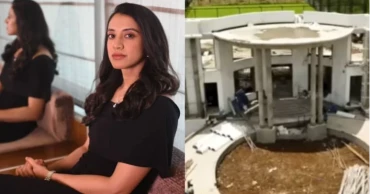
India's Smriti Mandhana's dream farmhouse in Sangli reflects her success beyond cricket
Indian women's cricket star and vice-captain Smriti Mandhana continues to make headlines both on and off the field, with her sprawling 10-acre farmhouse in Maharashtra's Sangli drawing attention for its luxury features and personal touches.
Mandhana recently created history by becoming the first player in men's or women's T20 internationals to hit 600 boundaries, helping India secure a victory over the Netherlands in the Women's T20 World Cup.
Her success, however, is not limited to cricket. The left-handed opener's farmhouse showcases the rewards of years of dedication and hard work.
A video shared by Indian sports broadcaster Jatin Sapru after visiting the property earlier this year offered a glimpse into the impressive estate, which includes a private cricket practice area, training nets, a swimming pool and expansive green surroundings.
Mandhana said she had a clear vision for the farmhouse entrance, drawing inspiration from the grand homes often featured in films by Karan Johar and Sooraj Barjatya.
"Growing up, I was a fan of Karan Johar and Sooraj Barjatya films, so I wanted a similar style for the entrance," she said.
The farmhouse also includes a dedicated practice zone where Mandhana can continue training during breaks from international cricket. Reports suggest the property features a pickleball court decorated with photographs highlighting milestones from her cricket career.
One of the standout attractions is the swimming pool area, complete with a waterfall feature and a spiral staircase leading to the upper floor. Mandhana said her brother's children particularly enjoy spending time in the pool.
When Sapru visited the property, parts of the farmhouse were still under construction. However, a photograph shared in April showing Mandhana standing in front of the completed entrance quickly went viral on social media, with many users describing it as proof that "dreams do come true."
The luxurious farmhouse has become another symbol of Mandhana's remarkable journey from a young cricket enthusiast to one of India's most successful and admired athletes.
Source: NDTV
1 month ago
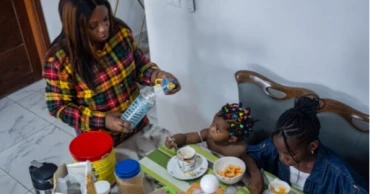
Son preference pressure driving health risks for African mothers, study shows
Deep-rooted cultural pressure to have baby boys is putting many African women at risk of repeated pregnancies and serious health complications, according to a report highlighting maternal health challenges across sub-Saharan Africa.
In the Democratic Republic of Congo, one man, Prosper Mbumba, said he and his wife kept trying for a son after having four daughters, reflecting a widespread belief in some communities that male children are needed to continue family lineage.
“In my tribe, in my culture, that was like an insult, having only daughters,” said Mbumba, a human rights activist. He said he only felt “a little satisfied” after the birth of his first son.
His wife, Régine Ntumba, said she felt relief and happiness when they finally had a boy.
The issue is part of a broader maternal health crisis in sub-Saharan Africa, which records about 180,000 pregnancy-related deaths each year and accounts for around 70% of global maternal deaths, according to the World Health Organization.
Experts say high fertility rates, limited access to contraception, and weak health systems are major drivers of risk. In Congo, women have an average of 5.9 children, according to UN data, partly due to cultural expectations and limited family planning services.
Health workers say women are often blamed for not giving birth to boys, increasing pressure to continue having children even when pregnancies become risky.
“Mostly it is the woman who is blamed for giving birth to a girl,” said Patrick Djemo, who leads MSI Reproductive Choices in Congo. He said many women face pressure from partners and families to avoid contraception and continue childbearing.
Midwives and health workers describe repeated cases of women seeking sons even during high-risk pregnancies, sometimes under severe medical conditions. In one case recalled by a midwife, a woman in her ninth childbirth expressed distress upon learning she had another daughter.
The pressure continues even among educated families in urban areas, where women report threats of marital breakdown if they do not produce a male child.
Health experts warn that such social expectations contribute to unsafe pregnancies, limited use of family planning, and preventable maternal deaths across the region.
1 month ago

Pregnancy linked eating disorders often go undetected, experts warn
Pregnancy can be a deeply challenging time for women with eating disorders, with experts warning that the physical and emotional changes can sometimes trigger relapse or new symptoms that often go unnoticed.
When Elizabeth Claydon became pregnant at 27, she noticed rapid changes in her body that she found difficult to accept. Like many pregnant women, she experienced hormonal shifts, weight gain and physical transformation. But for her, it also triggered distressing thoughts about body image.
“Some days I was okay with the changes and other days it would be really difficult,” she said. “I would look in the mirror and I wouldn’t see myself.”
Claydon had previously suffered from anorexia nervosa in her teenage years and later experienced a relapse before becoming pregnant. She says her eating disorder thoughts returned strongly as her pregnancy progressed, creating what she described as a “battle” between her mind and her changing body.
Experts say such experiences are not widely recognised but are not rare. Research suggests about one in 20 pregnant women experience an eating disorder, either as a relapse or for the first time during pregnancy.
Professor Gemma Sharp, an eating disorder specialist at the University of Adelaide, said pregnancy can be a “perfect storm” due to rapid physical, hormonal and emotional changes. However, she added it can also become a turning point for recovery if proper support is provided.
Studies show that many pregnant and postpartum women struggle with body dissatisfaction, while eating disorders often go undetected due to stigma and lack of screening. Experts say many women avoid seeking help, fearing judgement or believing they should have outgrown such conditions.
The condition, sometimes referred to as “pregorexia,” can have serious health risks for both mother and baby, including complications during pregnancy, low birth weight, premature birth and developmental issues.
Doctors warn that poor maternal nutrition can also affect long-term child health, influencing risks of obesity, diabetes and heart conditions later in life. However, experts say more research is needed to fully understand the impact due to limited data.
The risks do not end after childbirth. Around 13% of women experience eating disorders in the postpartum period, often triggered by sleep deprivation, hormonal changes and pressure to quickly regain pre-pregnancy body shape.
Courtney Louise, a mother and fitness instructor in Australia, said she experienced severe emotional distress after childbirth linked to her past anorexia. “I felt trapped,” she said, describing intense mood swings and emotional breakdowns during the postpartum period.
Health experts say the problem is often missed in medical settings because pregnancy symptoms such as nausea can mask eating disorder behaviours. In many cases, women also avoid disclosing their condition due to shame or fear of judgement.
Specialists say awareness and non-judgemental care are key. Some researchers have developed new guidelines and support resources, but there are still no specific treatments designed exclusively for pregnant women with eating disorders.
Experts recommend better screening, sensitive communication, and multidisciplinary care involving doctors, dietitians and mental health professionals.
“Everybody has an eating disorder alone, but nobody recovers alone,” said psychologist Linda Shanti.
With inputs from NDTV
1 month ago
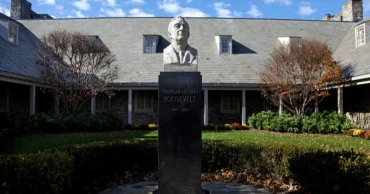
A look at presidential libraries as Obama Center opens to the public June 19
As the Obama Presidential Center opening prepares to open its doors on June 19 in Chicago, historians are once again reflecting on how US presidential libraries preserve both history and personality.
For historian Geoffrey Ward, visiting the Franklin D. Roosevelt Presidential Library and Museum feels like stepping directly into the world of former US president Franklin D. Roosevelt. He describes the site as full of personal artefacts that reveal Roosevelt’s wide-ranging interests, from childhood belongings to books and collections that shaped his public life.
Since Roosevelt helped establish the modern concept of presidential libraries in the late 1930s, the system has expanded across the United States. These institutions, now overseen in part by the US National Archives and Records Administration, range from large modern complexes to small-town museums, including the Ronald Reagan Presidential Library and Museum and the Herbert Hoover Presidential Library and Museum.
Historian Douglas Brinkley, who has visited most of these libraries, said each site carries a distinct atmosphere reflecting the president it represents. He noted that Roosevelt’s decision to donate his home and papers to the public set a lasting model for preserving presidential history close to where leaders lived and worked.
However, experts say presidential libraries often present a carefully shaped version of history. While official archives are managed by federal professionals, museum exhibits are frequently supported by private funding, which can influence how presidents are portrayed.
Some critics argue this can lead to a focus on achievements while downplaying controversies. In some cases, disputes have emerged over how sensitive events are presented, including the Watergate scandal at the Richard Nixon library and debates over policy legacies at other sites.
Historian Max Boot said archival records are generally handled in a neutral and professional way, but museum displays often highlight positive aspects of a presidency more strongly than failures.
Others, like historian Ted Widmer, say there has been gradual improvement in transparency. He pointed to the Lyndon B. Johnson Presidential Library for its willingness to confront controversial issues such as the Vietnam War and historical election disputes linked to former president Lyndon B. Johnson.
Widmer said it remains uncertain whether future presidential libraries will continue moving toward greater openness, especially as political divisions deepen, but stressed the importance of presenting history accurately rather than in a simplified or polished form.
The new Obama Presidential Center opening has also drawn attention for its design and scale. Located on Chicago’s South Side, the project has faced both praise and criticism, including debate over its architecture and decision not to include a National Archives-managed facility on site.
The centre is expected to attract up to one million visitors annually and will include a public library branch, sports facilities, gardens and community spaces. Former US president Barack Obama has been closely involved in shaping its design and features, including recreational areas and reading spaces intended for public use.
Supporters say the centre reflects a modern, community-focused approach to presidential legacy, combining historical preservation with public engagement in a more interactive environment.
1 month ago
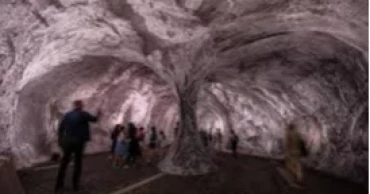
Monumental cave art transforms Paris’ oldest bridge into immersive sensory experience
A striking cave-like installation has opened on Paris’ oldest bridge, temporarily turning the historic structure over the River Seine into a dark, immersive art space filled with sound, scent and light.
For weeks, a black, mountain-like structure had covered the Pont Neuf, raising curiosity among passers-by. It finally opened on Monday evening, allowing the public to step inside the artwork.
Once inside, visitors are met with a dramatic shift in atmosphere. The air carries the smell of damp earth, stone and smoke, while the sounds of low electronic pulses echo through the structure. Beneath it, the bridge’s old cobblestones remain visible underfoot, reinforcing the sense of walking through another world.
The installation, called the Pont Neuf Cavern, has been created by French street artist JR (artist), often described as the “French Banksy.” It is open free of charge and will remain accessible 24 hours a day until June 28.
Built mainly from printed fabric and air, the work rises about 18 metres above the Seine, transforming the centuries-old bridge into a temporary artificial cave.
Visitors described the experience as disorienting yet captivating.
“It feels like the city has disappeared,” said one visitor, noting that although the river remains just outside, the interior feels like stepping into an ancient landscape.
A key feature of the installation is its carefully designed scent environment. Olfactory artist Sarah Bouasse created shifting smells inspired by compounds found in rain-soaked soil. The scent changes as visitors move through the space, from wet earth to warmer, smokier tones.
Many visitors said the experience changed the way they moved across the bridge.
“Today I felt the stones under my feet. And smelled them too,” said one retiree, adding that it made him feel like a child again.
The sound design was created by Thomas Bangalter, known from the electronic duo Daft Punk. His audio installation adds deep rumbles, echoes and rhythmic pulses that intensify the cave-like effect.
Completed in 1607, the Pont Neuf — ironically meaning “New Bridge” — is the oldest standing bridge in Paris. The installation encourages visitors to experience the landmark not just visually, but through smell, sound and touch.
The project also pays tribute to artists Christo and Jeanne-Claude, who famously wrapped the bridge in fabric in 1985, attracting millions of visitors.
Unlike that earlier bright installation, JR’s version explores darkness, guiding visitors through a shadowed passage before they re-emerge into daylight on the other side.
The experience can also be enhanced through a smartphone-based augmented reality feature developed with tech company Snap, which adds digital bats, visual traces and a virtual dancer to the space.
JR has linked the concept to Plato’s allegory of the cave, suggesting modern people are similarly influenced by digital screens and algorithms shaping perception.
Visitors said the installation offers a rare pause in daily urban life.
“Paris needs things that make people stop,” said one visitor.
When the exhibition ends, the structure will be dismantled and its materials reused or recycled, returning the bridge to its normal state as traffic flows again over the historic Seine crossing.
1 month ago
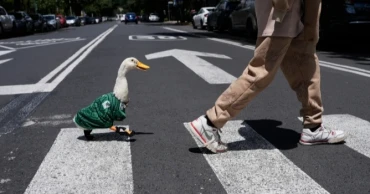
Meet Merlin the duck: Mexico’s street bird becomes unofficial World Cup mascot
While Julián Quiñones and Raúl Jiménez found the back of the net in Mexico’s World Cup-opening win over South Africa on Thursday, it was a duck named Merlin who unexpectedly became the star of the celebrations.
The two-year-old duck, often seen wearing Mexico’s national team jersey and socks, emerged as the tournament’s first unofficial mascot after images of him walking through Mexico City during jubilant celebrations went viral, drawing millions of views across social media platforms. Fans quickly dubbed him a national treasure and an early highlight of the World Cup, with many calling for Merlin to appear inside stadiums.
Already well known in Mexico City’s historic center, Merlin regularly accompanies his owner, Carla Gómez, who sells water and soft drinks from a small cart on weekends. The duck has become a familiar and beloved presence at public events and tourist spots, often attracting crowds eager to take photos.
Gómez said Merlin is considered part of the family and is rarely left alone at home, describing him as a “baby” and even the sole heir to her possessions. She said the duck was originally a gift for her son Cristian, with whom Merlin shares a close bond and accompanies across landmarks such as Alameda Central, the Palace of Fine Arts and the Zócalo.
Following his unexpected rise to fame, Merlin and Gómez recently met FIFA representatives for photos and a promotional shoot. The family now hopes the duck will continue to bring good fortune as Mexico co-hosts the World Cup with Canada and the United States, marking the country’s third time hosting the tournament after 1970 and 1986.
“Mexico, we are with you,” Gómez said, adding that Merlin is the nation’s “number one fan.”
1 month ago
World Cup teams bring global football excitement to small US cities
As the 2026 FIFA World Cup unfolds across North America, several smaller American cities are enjoying a rare moment on the global stage after being selected as training bases for some of the tournament’s biggest teams.
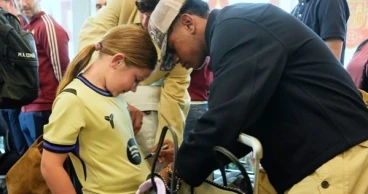
In Chattanooga, Tennessee, eight-year-old Beckham McClure waited for hours with a handwritten note hoping to catch a glimpse of Spain’s star players. When he finally saw them take the field, he turned to his father and whispered: “They’re real.”
The moment reflected the excitement spreading through communities that are hosting national teams between World Cup matches.
Defending European champion Spain has set up its training camp at Baylor School in Chattanooga, while Iraq is based at the historic Greenbrier resort in West Virginia. Germany has chosen Winston-Salem, North Carolina, as its World Cup headquarters.
The arrival of these teams has transformed local communities, bringing international attention and creating a festive atmosphere for football fans.
In Chattanooga, Spanish flags decorate hotels and public spaces, while banners welcoming the team have appeared across the city. Thousands of fans applied for a limited number of tickets to watch Spain’s training sessions at Baylor School.
Local resident Skip Schwartz said Spanish jerseys have become a common sight around the city.
“You can’t always tell whether the person wearing one is from Spain or a local supporter,” he said.
In Winston-Salem, tickets to watch Germany train sold out within minutes. Local businesses have embraced the opportunity, with restaurants and sports bars organizing viewing parties and offering German-themed menus.
Savannah Lahey, manager of a local football bar, said the event has encouraged many people to take an interest in the sport.
“It’s exciting to see people getting involved in something they may not have followed before,” she said.
Teams selected their training bases from a list of FIFA-approved facilities across North America. Higher-ranked teams received priority in choosing locations.
Despite having the option of larger cities such as Chicago and Los Angeles, Spain chose Chattanooga because of Baylor School’s facilities, convenient location and easy access to match venues.
The school upgraded and maintained its football pitches to meet FIFA standards, including strict requirements for field quality, drainage and irrigation systems.
Two grass training fields now serve as the centre of Spain’s daily preparations, while players are staying at a nearby downtown hotel.
For Baylor School officials and former students, Spain’s decision to use the campus is a source of pride.
“It’s hard to imagine that one of the world’s biggest football nations would choose this campus as its World Cup base,” said Schwartz, a member of the school’s board.
The presence of Spain has also created new supporters among local fans.
Tina Ankar, who attended one of the team’s open training sessions, said the experience made her eager to follow Spain throughout the tournament.
“Now we have another team to support besides the United States,” she said.
Students at Baylor School have also enjoyed unprecedented access to world-class football stars. Many were excited to see locker rooms temporarily assigned to players such as Pedri, Gavi and Lamine Yamal.
For 17-year-old student Heath Techasiriwan, the experience has changed his World Cup loyalties.
“Without a doubt, I’m supporting Spain,” he said.
Young goalkeeper Mathew Ramirez was thrilled when Yamal signed his Barcelona jersey after training.
Back in Chattanooga, Beckham McClure returned home with player autographs and selfies, still amazed that the football stars he usually watched on television were standing just a few feet away.
His father, Jaxon McClure, who now coaches hundreds of local children, said the city’s football culture has grown dramatically over the years.
“They could have chosen anywhere in the country,” he said. “And they chose us.”
1 month ago

Gen Z feels lonelier despite easier relationships, says Imtiaz Ali
Filmmaker Imtiaz Ali believes that while young people today can form relationships more easily than previous generations, many are struggling with a growing sense of loneliness and a search for deeper emotional connections.
Speaking to NDTV India during promotions for his upcoming romantic drama Main Vaapas Aaunga, Ali said modern relationships often begin quickly but become difficult to sustain.
"The tragedy with this generation is that they reach their destination very quickly," he said, explaining that many young people expect relationships to be effortless once they find a partner. However, he noted that challenges often emerge after that point.
According to Ali, today's youth are lonelier than earlier generations and are increasingly looking for meaning and stronger emotional bonds in their lives.
He said his new film explores this longing for lasting love and stability, adding that many young people admire the kind of romance associated with earlier generations.
Actor Vedang Raina, who stars in the film, agreed with the filmmaker's observations. He said he personally desires the type of love portrayed in the movie and believes many people of his generation feel the same way.
Raina noted that social media and dating apps have changed the way relationships develop, but many young people still dream of old-fashioned romance, including handwritten love letters and subtle expressions of affection.
He said there is a growing nostalgia among young people for deeper, more meaningful relationships, despite living in a highly connected digital world.
Directed by Ali, ‘Main Vaapas Aaunga’ also stars Diljit Dosanjh, Sharvari and Naseeruddin Shah. The romantic drama is scheduled to be released in cinemas on June 12, 2026.
1 month ago
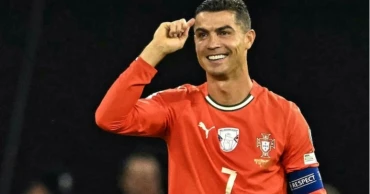
Ronaldo's 90-minute paycheck equals 2,500 years of work for an average professional
The enormous earnings of football superstar Cristiano Ronaldo continue to highlight the vast financial gap between elite athletes and ordinary professionals.
According to estimates, the 41-year-old Portuguese forward earns around $200 million a year from his club contract in Saudi Arabia alone. In Bangladeshi currency, that amounts to roughly Tk 2,400 crore annually, or about Rs 1,600-1,700 crore in Indian currency.
Based on a season of around 55 matches for club and country, Ronaldo earns nearly Rs 30 crore every time he steps onto the field. That means a single 90-minute match brings in more money than many companies spend on salaries in an entire year.
The comparison becomes even more striking when measured against the income of an average professional. Someone earning Rs 12 lakh a year would need around 2,500 years of work to make what Ronaldo earns from just one match.
Ronaldo's wealth extends far beyond his football salary. His estimated net worth is believed to exceed $1 billion, with some estimates placing it at around $1.2 billion, or roughly Rs 10,000 crore.
The fortune has been built through more than two decades of top-level football, including club salaries, bonuses, sponsorship agreements, image rights, business investments and income from his massive social media presence.
Using the same comparison, a professional earning Rs 12 lakh annually would need more than 83,000 years of income to accumulate wealth equal to Ronaldo's current net worth.
Even over a 40-year career, such an employee would earn only a tiny fraction of Ronaldo's fortune. Matching his wealth would require more than 2,000 full working lifetimes.
The figures underline the extraordinary financial rewards available at the highest level of global sport, where a single match can generate earnings that would take ordinary workers thousands of years to achieve.
Source: NDTV
1 month ago

Why Shakira’s ‘Dai Dai’ can’t surpass ‘Waka Waka’ as FIFA World Cup anthem
Colombian superstar Shakira once again stole the spotlight at a FIFA World Cup opening ceremony, but her latest anthem ‘Dai Dai’ has already drawn inevitable comparisons with her legendary 2010 hit ‘Waka Waka (This Time for Africa)’.
The 2026 FIFA World Cup kicked off at the iconic Azteca Stadium in Mexico City with thousands of fans gathering to witness the grand opening show. Shakira headlined the ceremony alongside Nigerian Afrobeats star Burna Boy, delivering the first live performance of ‘Dai Dai’, the tournament’s official song.
The performance featured high-energy choreography, vibrant visuals, colourful dancers and a giant World Cup trophy prop, with Shakira showcasing her trademark stage presence and dance moves.
While the show received strong praise from fans, it quickly sparked debate online over whether ‘Dai Dai’ could ever match the cultural legacy of ‘Waka Waka’, which became one of the most iconic World Cup songs in history.
Social media users were quick to draw comparisons. Many argued that ‘Waka Waka’ had already cemented itself as the “ultimate World Cup anthem,” with one user writing that although ‘Dai Dai’ is “beautiful,” it can never replace the 2010 hit’s global impact.
Others, however, noted that the comparisons themselves highlight Shakira’s rare dominance in World Cup music, pointing out that she also delivered another global hit with ‘La La La (Brazil 2014)’. They said few artists have managed to produce multiple iconic tournament anthems.
While ‘Dai Dai’ continues to gain traction across streaming platforms, ‘Waka Waka’ remains a global cultural phenomenon more than a decade after its release. The song’s official music video has crossed 4.5 billion views on YouTube, compared to 126 million views for ‘Dai Dai’, underscoring the enduring legacy of Shakira’s 2010 anthem.
With inputs from NDTV
1 month ago