lifestyle
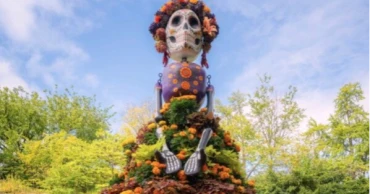
Marigolds take centre stage on Día de los Muertos altars to guide spirits home
Flowers have held cultural and symbolic importance across the world for centuries. Lotus blossoms are sacred in Buddhist and Hindu traditions, cherry blossoms are celebrated in Japan, peonies are cherished in China, and roses are widely associated with love.
However, few flowers play such a significant role in remembering the dead as marigolds, particularly on Nov. 1 and 2, when Latino communities observe Día de los Muertos, or the Day of the Dead.
Known in Mexico as cempasúchil, the flower's name comes from the Aztec language Nahuatl and means "flower of 20 petals." Although commonly called African marigolds, the plants are native to Mexico.
Marigolds are central to the tradition of honouring deceased family members. During the celebration, families decorate altars and shrines with the flowers, candles, photographs, favourite foods and personal belongings of loved ones who have died. Their vivid orange and yellow colours, along with their distinctive fragrance, are believed to help guide the spirits of the departed back to their families.
According to Flora Daily, an online news platform serving the international horticulture and flower industry, Marvel gold, Marvel orange and Marvel lemon are among the most popular marigold varieties during the holiday season. Other species and hybrids are also used to meet demand.
Celebrations across the United StatesDía de los Muertos is marked through public celebrations, cultural exhibitions, performances and community gatherings across the United States.
In San Francisco, the Mission District will honour ancestors and deceased loved ones on Nov. 2 through community altars, ritual dances and public processions.
San Antonio hosts a celebration lasting roughly a week and ending on Nov. 2. The programme includes altars, music, dance and the Dead River Parade along the city's River Walk.
The New York Botanical Garden is also hosting its annual celebration through Nov. 2, featuring live music, dance performances, interactive workshops, cultural activities, a parade and displays decorated with marigolds.
Meanwhile, the National Museum of Mexican Art in Chicago is presenting its annual exhibition through Nov. 29.
Tips for growing marigoldsMarigolds are low-maintenance annual plants that thrive in horticultural zones 2 through 11. They typically grow from summer into autumn, making them suitable for cultivation in the weeks leading up to Día de los Muertos.
In colder regions, the first frost of the season generally kills the plants. However, they can often survive into winter in warmer climates.
Marigolds grow quickly from seed and can be sown directly into garden soil in spring once the danger of frost has passed. They generally begin flowering about eight weeks after sowing. Gardeners who want earlier blooms can start seeds indoors six to eight weeks before planting them outside.
Whether grown from seeds or starter plants, marigolds need a sunny location and well-drained soil. They should be watered regularly during their first few weeks while becoming established, then watered when the soil dries out. Removing faded flowers encourages continued blooming and keeps the plants looking neat.
Although marigolds complement seasonal decorations such as pumpkins, chrysanthemums and ornamental cabbages, their significance extends beyond autumn gardening.
For those celebrating Día de los Muertos, the flowers represent an enduring connection between the living and the dead, helping families honour their ancestors and keep cherished memories alive.
6 hours ago

Chhayanaut's tribute to Abbasuddin Ahmed on his 125th birth anniversary held
Chhayanaut paid tribute to legendary folk singer Abbasuddin Ahmed marking his 125th birth anniversary through a special edition of its Shrotar Ashor at the Chhayanaut auditorium in the capital on Tuesday evening.
The programme, which began at 6:30 pm with opening speeches by Chhayanaut President Dr Sarwar Ali, featured seven artistes performing Bengali songs from different musical traditions, including folk, Nazrul and traditional songs, highlighting the rich musical heritage associated with Abbasuddin Ahmed and other eminent composers and lyricists.
The participating artistes were Priyantu Deb, Suman Majumdar, Most Sarifa Khatun, Biman Chandra Biswas, Md Abul Kalam Azad, Chandana Majumdar and Kiran Chandra Roy.
Priyantu Deb opened his segment with ‘E Kon Modhur Sharab Dile’ and ‘Bosiya Nodikule, Elochule Ke Udasini’, both written by Kazi Nazrul Islam.
Suman Majumdar performed ‘Khatune-Jamat Fatema Janani’, ‘Tomar Akashe Uthechhilo Chand’ and ‘Sadh Jage Mone Porojibone’.
Most Sarifa Khatun presented folk songs including ‘Fande Poriya Boga’ and ‘O Ki Ekbar Asiya’, the latter associated with Abdul Karim.
15 hours ago
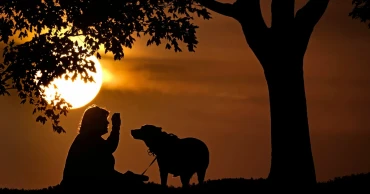
How daylight saving time changes affect health and how to prepare
Most Americans will gain an extra hour of sleep this weekend as daylight saving time ends, but the return to standard time will also bring darker afternoons.
Experts recommend getting outside for morning sunlight to help the body's internal clock adjust more quickly to the time change.
Daylight saving time will end at 2am local time on Sunday, requiring people to set their clocks back one hour before going to bed. Standard time will remain in effect until March 14, when clocks will move forward again as daylight saving time resumes.
The twice-yearly clock change has long drawn criticism in the United States. An AP-NORC poll conducted last year found that only 12% of American adults supported the practice, while nearly half opposed it. US lawmakers revisited the issue over the summer.
Many people find the spring transition more difficult because they lose an hour of sleep. However, others dislike the end of daylight saving time in autumn, as shorter days and earlier sunsets leave less daylight for exercise and outdoor activities after school or work.
The poll found that, if given a choice, most Americans would prefer to retain the additional hour of evening daylight.
Health organisations, including the American Medical Association and the American Academy of Sleep Medicine, have long advocated keeping standard time throughout the year. They argue that standard time aligns more closely with the sun's natural cycle, particularly during winter when sunrise occurs later, and with the body's biological clock, known as the circadian rhythm.
Brighter mornings and reduced light exposure at night help maintain this rhythm, making it easier to wake up on time and maintain healthy sleep patterns.
Most countries do not observe daylight saving time. Among those that do, mainly in North America and Europe, the dates for changing clocks vary. In the United States, Hawaii and most of Arizona remain on standard time throughout the year.
How the body responds to light
The brain has an internal master clock regulated by exposure to sunlight and darkness. This circadian rhythm follows a roughly 24-hour cycle that influences when people feel sleepy and when they are most alert.
These patterns change with age, helping explain why children who wake up early may become teenagers who struggle to get out of bed in the morning.
Morning sunlight plays a crucial role in synchronising the body's internal clock. In the evening, levels of melatonin, a hormone that promotes sleepiness, begin to rise.
Excessive light exposure at night, whether from spending time outdoors later during daylight saving time or from artificial sources such as computer screens, can delay the release of melatonin and disrupt the sleep cycle.
The circadian rhythm also influences other bodily functions, including heart rate, blood pressure, stress hormones and metabolism.
How clock changes affect sleep
Even a one-hour shift can disrupt sleeping patterns because work and school schedules generally remain unchanged despite the change in time.
Following the spring transition, darker mornings and brighter evenings can make it more difficult to fall asleep at the appropriate time. The first few days after the change have been associated with an increase in road crashes and a rise in heart attacks.
During autumn and winter, some people experience seasonal affective disorder, a form of depression commonly associated with shorter days and reduced sunlight.
While many people adjust to the time change relatively easily, much as they recover from jet lag after travelling, the transition can be particularly challenging for shift workers whose schedules are already misaligned with natural daylight and for people who regularly get insufficient sleep.
About one in three US adults sleeps fewer than the recommended seven hours a night, while more than half of American teenagers fail to get the recommended eight hours of sleep on school nights.
Chronic sleep deprivation is associated with heart disease, cognitive decline, obesity and numerous other health problems.
How to prepare for the time change
Experts suggest gradually adjusting bedtime by as little as 15 minutes each night in the days leading up to the clock change, both in autumn and spring, to make the transition easier.
Morning sunlight is particularly important for resetting the circadian rhythm and supporting healthy sleep. People who cannot go outdoors can sit near windows to get exposure to natural light.
Will the US end the clock changes?
The debate over ending the twice-yearly time change resurfaces almost every year. The United States previously experimented with permanent daylight saving time in the 1970s, but the measure lasted less than a year before public opposition led to its reversal.
The latest effort came in July, when the US House of Representatives overwhelmingly passed the Sunshine Protection Act, which would make daylight saving time permanent.
President Donald Trump supports the proposal and has been pressing reluctant senators to back it. He even posted the cellphone number of Arkansas Senator Tom Cotton, who opposes the measure, on social media.
1 day ago
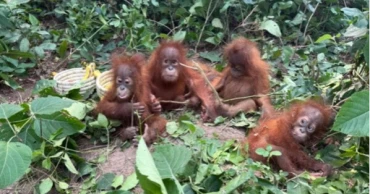
Baby orangutans found in India highlight illegal wildlife trade, raise questions over billionaire's zoo
Five baby orangutans discovered in a forest in eastern India have highlighted the growing illegal trade in exotic animals, while conservationists are raising concerns over the acquisition of rare wildlife by a zoo owned by the family of billionaire Mukesh Ambani.
Villagers initially spotted the five infants in a casuarina forest in India's Odisha state in early September. Their reddish hair and unfamiliar appearance left the residents puzzled.
The three males and two females, aged between six and eight months, had been abandoned on a plantation more than 2,700 kilometres (1,700 miles) from their natural habitats in Borneo and Sumatra, indicating the movement of trafficked primates into India.
The orangutans are now being cared for at an Indian zoo, where keepers have reportedly played classical music to calm them.
Wild orangutans are native only to Borneo and Sumatra, where they help maintain rainforest ecosystems by dispersing seeds over large areas. This supports forest regeneration and carbon storage, helping limit global warming.
The species is critically endangered because of extensive habitat loss. Around 119,500 orangutans remain in the wild, according to the World Wildlife Fund.
A 2026 study by researchers at the National University of Singapore estimated that the global illegal wildlife trade generates $34 billion annually. India is emerging as a significant market, with experts warning that reported seizures represent only a small portion of the growing trade in exotic animals sought by wealthy collectors.
India's wildlife laws were primarily developed to protect native species, including elephants, rhinoceroses and tigers, from international trafficking. However, weaknesses in regulations governing imported animals have made it difficult to establish the origins of exotic wildlife.
In 2022, two young Sumatran orangutans were discovered in boxes at a checkpoint between India's northeastern states of Assam and Mizoram. Another was rescued in Mizoram in 2023, while a young orangutan was found in an apartment near Mumbai in November 2024.
An analysis by the nonprofit Wildlife Trust of India found that at least 23 gibbons were seized at Indian airports in 2025. In May 2026, Egyptian authorities intercepted three sedated baby chimpanzees being transported to India.
"India has become the number one destination for the live trade of primates," said Sinan Serhadli, a wildlife trafficking expert at the Orangutan Information Centre in Indonesia's North Sumatra province.
Wealthy collectors fuel exotic animal tradeUttara Mendiratta, an Indian researcher specialising in wildlife trafficking, said affluent collectors were driving demand for rare animals, which are often treated as status symbols.
Southeast Asia has become a major transit hub for wildlife originating from different regions, she said.
The expansion of tourism has increased direct flights to India through cities such as Bangkok and Kuala Lumpur, creating faster routes for traffickers, although air travel also carries risks compared with land crossings.
"The profit margins are so high that they can afford to lose a few (animals) and still make a profit," Mendiratta said.
Concerns also extend to the legal wildlife trade. Although most commercial trade in orangutans is prohibited, exceptions are allowed for animals bred in captivity.
According to the Convention on International Trade in Endangered Species of Wild Fauna and Flora (CITES), India imported 41 orangutans between 2021 and 2024.
Serhadli questioned whether the animals had genuinely been bred in captivity.
"It just shows the loopholes corruption as well," he said.
The CITES Secretariat declined to comment, saying the matter was under review.
Gaps in Indian wildlife regulationsDuring the COVID-19 pandemic in 2020, India introduced a system allowing people to register exotic animals without providing proof of their origins, amid concerns about diseases spreading from animals to humans.
Owners can report births, deaths and breeding of non-native species through an online portal. However, Mendiratta said the government lacked sufficient personnel and expertise to inspect animal collections and identify species accurately.
The system also creates opportunities for trafficked animals to be falsely presented as legally registered, she said.
India strengthened its wildlife laws in 2022, giving authorities clearer powers to seize illegally traded exotic animals and prosecute traffickers. However, Mendiratta said the trade had already expanded significantly by that time.
A 2026 report by Humane World for Animals India described the country's exotic pet trade as operating at the intersection of biodiversity loss, unchecked consumer demand and organised criminal activity.
India's forest ministry did not respond to a request for comment from The Associated Press.
Indonesia seeks return of baby orangutansIndonesia's Ministry of Forestry said it was taking "active steps" to repatriate the five baby orangutans found in Odisha.
The ministry has sent experts to investigate their origins and assess their health.
Conservationists believe the infants' mothers were likely killed, leaving the young animals traumatised. Orangutans normally depend on their mothers for as long as nine years.
Although conservation efforts have successfully returned orangutans from Thailand to Indonesia, only one has so far been repatriated from India.
Questions have also emerged over the handling of an orangutan transferred last year to Vantara, a private wildlife facility operated by the family of Ambani.
A report written by a federal wildlife official in New Delhi said India's federal wildlife authorities and its CITES authority were not informed when the animal was transferred to the facility.
Officials had ordered the transfer after expressing concerns about its care at a local public zoo. Vantara describes itself as a wildlife rescue and rehabilitation centre.
The orangutan received treatment for a respiratory infection and pneumonia before returning to Indonesia on Oct. 19, following 19 months at the private facility.
India's CITES authority did not respond to a request for comment.
Questions over rare orangutan at billionaire's facilityVantara, a 3,500-acre wildlife facility in western India, houses more than 150,000 animals representing over 2,000 species.
The facility has faced international scrutiny over its acquisition of wildlife.
In November 2025, CITES raised questions about shipments to Vantara that included snow leopards from Germany, a bonobo reportedly bred in Iraq and a gorilla said to have come from Haiti. The primates are not native to those countries.
India's Supreme Court cleared Vantara of allegations of wildlife trafficking and animal mistreatment in 2025.
In September, 27 wildlife conservation and animal welfare organisations sent a letter urging the facility to stop importing wild animals, citing concerns over endangered species and animal welfare.
The organisations said they had "never encountered anything comparable to the scale and diversity" of Vantara's imports, pointing to more than 60,000 animals acquired over a short period.
One particularly controversial animal listed in Vantara's 2024-25 inventory is a Tapanuli orangutan, considered the world's rarest great ape.
Recognised as a distinct species only in 2017, the Tapanuli orangutan is found exclusively in a small area of Indonesia's Sumatra island. Only 716 are estimated to remain in the wild.
"The Tapanuli orangutan is hovering just above extinction," Serhadli said. His organisation is among the few working with the species.
The animal at Vantara would be the only Tapanuli orangutan in captivity.
CITES trade records show that the animal left Indonesia in 2024 and reached India through the United Arab Emirates.
"That can't happen legally," Serhadli said.
Indonesia's Ministry of Forestry said it was taking reports that a Tapanuli orangutan might be outside the country seriously. However, it said it could not confirm the animal's species, origin or the circumstances under which it arrived in India.
The ministry said an investigation would require examining permits and transfer records, alongside scientific testing, to establish the animal's identity and history.
2 days ago

Regular smiling may improve mood, reduce stress and benefit health
Smiling regularly may do more than lift your mood. It can also help build friendships, reduce stress and improve your overall well-being, experts say.
Rather than waiting for something funny or exciting to happen, simply changing your facial expression by turning a frown into a smile may influence how you feel emotionally.
Research supports the idea that smiling can affect mood, although its effects may vary from person to person.
Jeanne Tsai, a longtime psychology professor at Stanford University who leads its Culture and Emotion Lab, said earlier studies have explored the "facial feedback hypothesis", which suggests that facial expressions can influence emotional experiences.
In a well-known experiment conducted in the late 1980s, researchers asked participants to hold a pencil between their lips in a way that produced either a smiling or frowning expression while watching a positive video clip, such as a cartoon. Some participants who adopted a smiling expression reported feeling more amused.
"When we've done that demonstration in classes, it works," Tsai said.
She suggested that smiling alone, without any social interaction, might also remind people of pleasant experiences and help improve their mood.
The benefits of smiling are also reflected in educational settings. The Orange County Academy of Sciences and Arts (OCASA), a charter school group in Southern California, promotes smiling as part of its educational philosophy.
"Smiling creates a supportive classroom culture that makes students relaxed, active, and motivated," the group's website says. It adds that smiling can improve emotional well-being, reduce stress and boost students' confidence.
How smiling may benefit healthJudy Ho, a clinical and forensic neuropsychologist in Los Angeles who also teaches at Pepperdine University, recommends smiling as one possible coping strategy for some patients experiencing depression or anxiety.
"I'm not suggesting that that's the only way they can fix things," Ho said. "It's just like another thing that you can add to your toolbox."
According to Ho, smiling may influence cortisol, a hormone involved in the body's stress response and other functions related to mood regulation. It may also affect brain chemicals associated with positive feelings, including endorphins, dopamine and serotonin.
"People who smile during stressful tasks generally demonstrated lower heart rates during recovery than those maintaining neutral expressions," Ho said. "Smiling also reduced aspects of the body's physiological stress response."
The idea is that regularly smiling may eventually help people experience more positive emotions.
"In some ways it's like a mediating effect," she added.
The meaning of a smile varies across culturesThe way people interpret a smile, including how wide or expressive it is, differs across cultures.
Tsai has studied how American culture often places a strong emphasis on positive emotions while encouraging people to minimise negative feelings such as sadness. In many East Asian cultures, emotional balance is considered more important.
"It's like the positive and the negative emotions are braided together, and so you don't want to feel too positive or too negative," Tsai said. "You want more of a balance between the two."
Her earlier research compared how European Americans and people from East Asian communities, including Taiwan, South Korea, Japan and Hong Kong, perceived neutral or calm smiles and broad, excited grins.
Participants rated different facial expressions based on how warm and trustworthy they appeared. While some Americans viewed more expressive smiles as a sign of friendliness, some East Asian participants considered such expressions emotionally unstable or unreliable.
"What kind of smile matters — whether it's a calm, closed mouth smile more like the Dalai Lama or a big toothy excited smile like Julia Roberts," Tsai said.
She noted that research in Taiwan and other East Asian settings found that people generally did not favour broad, toothy smiles unless the situation called for them.
In Thailand, often known as the "Land of Smiles", smiling is deeply rooted in the culture. The Thai language has nearly 30 words for different types of smiles.
Many programmes that send people to Thailand to teach English as a foreign language also emphasise the importance of smiling at children and colleagues as a way of showing respect, good manners and calmness.
At OCASA charter schools, smiling is encouraged as part of an effort to help children feel acknowledged and supported.
"I've always believed in wanting school to be a happy place for kids," said RaNae Posey, principal of OCASA Capistrano Elementary School.
She said the goal is to help children develop the habit of looking at the brighter side of things.
Forced smiles may have the opposite effectDespite its potential benefits, smiling does not always make people feel better, particularly when they are pressured to do it.
In recent years, women have challenged workplace expectations that require them to smile, arguing that such demands are often applied differently to men. Women and people of colour may also face stereotypes that portray them as cold or unapproachable when they do not smile enough.
Last year, retailer Target faced criticism on social media after introducing a policy requiring employees to smile and make eye contact when customers were within 10 feet (3 metres). Workers were also expected to greet customers personally when they came within 4 feet (1.2 metres).
Nicholas Coles, an assistant professor who leads the Social Science Collaboratory at the University of Florida in Gainesville, said people generally dislike feeling that they have lost control over their own emotions.
"In those scenarios, what we find is that it's more that you're smiling your way to misery," Coles said. "It's only when it feels authentic and voluntary that I think it'll have any real effect."
As the holiday season approaches, people may also feel pressure to smile and remain pleasant during family gatherings, particularly when sensitive subjects such as politics and religion arise.
Ho suggested that choosing to smile during difficult conversations could help people respond more positively to relatives and loved ones.
"If we were able to just smile and be like 'Look, this is somebody that historically cares about you and loves you,' maybe that would change the way that we respond to them even in a moment of tough conversation," she said.
3 days ago

The rubber duck carries traces of American history in its ‘feathers’
More than just a squeezable toy that makes a squeaking sound, the rubber duck is an American invention with a surprisingly rich history.
The cute, often bright-yellow toys have enjoyed renewed popularity in recent years, appearing in tourist shops at destinations ranging from the US Open to Buckingham Palace. They have also won the hearts of people around the world.
According to popular lore, the rubber duck's story began with Charles Goodyear, the inventor of vulcanized rubber. He is said to have turned leftover rubber into a duck-shaped toy for dogs to chew on and babies to use as a teething aid. The legacy continues in Ohio, where a minor-league baseball team bears the name Akron RubberDucks.
Vulcanization made rubber waterproof and highly durable, but the material was also heavy. In 1931, Elenore Shannahan redesigned the toy to make it float, transforming it into a popular companion for bath time.
Her patent described a toy that could create a fountain-like effect and allow people to play pranks by spraying a fine stream of water onto another person's face or body.
The Walt Disney Co. and Seiberling Latex Products helped popularise the toy internationally in 1938 by producing a floating Donald Duck water toy. According to the St. Neots Museum, the vinyl duck familiar today originated with a 1947 design by sculptor Peter Ganine.
When the rubber duck was inducted into the National Toy Hall of Fame, the institution highlighted its developmental benefits for young children, noting that its bright colour, smooth texture and, in some cases, squeaking or quacking sounds help stimulate toddlers' senses.
The humble bath toy has also made its mark on the music industry. "Rubber Duckie" reached No. 16 on Billboard's Hot 100 chart in the magazine's Sept. 26, 1970, issue. The song also earned Jim Henson, who voiced Ernie on "Sesame Street," his first Grammy nomination, according to the Grammy Awards website.
The rubber duck later became an unexpected tool for scientific research. In 1992, a shipping accident sent 29,000 plastic bath toys, including rubber ducks, into the North Pacific Ocean, creating a widespread pollution problem and an unusual opportunity for oceanographers.
Allison Boyle of London's Science Museum said on its website that oceanographers Curtis Ebbesmeyer and James Ingraham relied on reports from beachcombers to track the toys' movements around the world. Their work helped scientists monitor plastic debris and improve models of ocean-surface currents.
"Even the cutest of children's toys plays a role in ocean health," said Rachel Schoeler, manager of the Great Canadian Shoreline Cleanup website.
From its early days as a chew toy to its rise as a bath-time favourite, musical inspiration and scientific research tool, the rubber duck has left its mark on American history and beyond.
4 days ago

Golden sunbeam illuminates ancient Egyptian temple twice a year
Hundreds of tourists and local residents gathered at an ancient temple in southern Egypt at dawn Thursday to witness a solar phenomenon that has occurred for thousands of years, with some visitors spending the night outdoors to secure a glimpse of the spectacle.
Twice a year, on Oct 22 and Feb 22, sunlight enters the dark inner chamber of the Great Temple of Ramesses II, illuminating statues of the pharaoh and two gods. The dates are believed to mark Ramesses II's accession to the throne and birthday, respectively.
The phenomenon, caused by the temple's precise alignment with the sun, lasts about 20 minutes.
“Today is a very special day, as you can see. It’s a celebration and a historic holiday,” Hisham Khela, a local tour guide accompanying Italian tourists, told The Associated Press.
Egyptology enthusiasts and other visitors formed an uneven single-file queue, holding up mobile phones and selfie sticks to capture the event. Many appeared tired after waking up early, while the crowds looked small beside the enormous statues surrounding the temple, which overlooks the Nile.
To celebrate the occasion, performers in colourful costumes gathered outside the temple, smiling and dancing in unison to meditative chimes, tabla percussion and the distinctive sounds of mizmars, an ancient Egyptian wind instrument.
Inside, visitors stood shoulder to shoulder in near darkness as sunlight travelled about 60 metres (200 feet) into the temple, illuminating statues of Ramesses II and the gods Amun-Ra and Ra-Horakhty, according to the National Research Institute of Astronomy and Geophysics.
For many first-time visitors, the ancient spectacle offered unforgettable memories.
Janice Souudi, who travelled from Atlanta, Georgia, said it was her first visit to Egypt and would not be her last.
“I came here today for the huge temple statues and how well preserved they are. But I was most impressed with the colors of the carvings and hieroglyphics and imagery,” she said. “Beautiful, stunning, worth it!”
During the 1960s, archaeologists undertook a massive operation to dismantle and relocate the temple to protect it from rising waters caused by the Aswan High Dam.
Engineers carefully preserved the temple's solar alignment during the relocation, ensuring that more than 3,000 years after its construction, sunlight continues to reach its inner chamber.
5 days ago

Lipu’s debut solo exhibition ‘DOT: The Beginning of Everything’ underway in Japan
‘DOT: The Beginning of Everything’, the first solo exhibition of Japan-based Bangladeshi artist Kamrul Hasan Lipu is underway in Yokohama, Japan, featuring 41 paintings that explore memory, identity and cultural roots through the colours and motifs of Bengali folk art.
The six-day exhibition opened at Gallery Shimizu on October 20 and will continue until October 25, bringing Bengali cultural influences into dialogue with contemporary Japanese aesthetics.
The paintings, primarily created using acrylic and mixed media on canvas, reflect Lipu’s experiences of living away from Bangladesh and his continuing connection with the country’s cultural heritage.
His works move between figurative imagery and expressive abstraction, using vivid colours such as turquoise, emerald green, sea blue, amber, crimson and golden yellow to create layered compositions.
"Through time and distance, my memories of Bangladesh have taken on new forms, allowing familiar faces, sari patterns, birds, and flowers to return through the colors of feeling," Lipu said.
"By bringing my personal experiences into conversation with the ornaments and rhythms of Bengali folk art, I continue to search for a visual language of my own," he added.
5 days ago

South Korean City scrambles to rescue dusky shark after it returns to canal
Authorities in South Korea’s port city of Busan were searching for a new way Thursday to guide a large dusky shark back to the open sea after it returned to a narrow canal just hours after a rescue operation appeared to have succeeded.
The 3-metre-long female shark, nicknamed Bukangi, was moved out of the canal on Wednesday following weeks of unsuccessful attempts. However, it swam beneath a protective net installed around the rescue platform and re-entered the waterway later that night.
Busan officials and the Oceans and Fisheries Ministry are now working to find a safer way to lead the shark into open waters, expressing concern over its health and survival.
During Wednesday’s operation, dozens of workers used a floating platform to push the shark towards the sea. After remaining in nearby waters for several hours, Bukangi slipped beneath the platform’s outer barrier net and returned to the canal.
Officials said the shark was now trapped between that net and another barrier about 50 metres from the canal entrance. Rescuers and inspectors at the scene were discussing possible solutions as the shark continued swimming around the confined area.
Lee Gwang-seok, an official at the Oceans and Fisheries Ministry, said the dense network of barriers and the narrow waterway made it unlikely that the shark would move farther into the canal.
Authorities are also concerned that Bukangi may not have been feeding regularly during its month-long stay and that falling water temperatures could further threaten its health. Busan officials have yet to announce when the next rescue attempt will take place.
Scientists Puzzled by Shark’s Unusual BehaviourBukangi, named after Busan’s North Port where it was first spotted in mid-September, has become a popular attraction as it swims in circles through the canal with its fins visible above the water.
According to city officials, more than 1.7 million people have visited the area to see the shark. Hundreds of spectators gathered along the canal on Wednesday to watch the latest rescue attempt.
Marine researchers remain uncertain about why the shark entered the canal and has continued to stay there.
Kim Hyun-woo, a senior researcher at South Korea’s National Institute of Fisheries Science, suggested that the busy port environment might have influenced the animal’s behaviour. The canal may offer a quieter refuge from the heavy container and cruise ship traffic at North Port.
Kim also said vessel noise, bright lights and electromagnetic fields generated by nearby equipment could interfere with the shark’s sensory systems.
Although officials want to return Bukangi to the sea as soon as possible, Kim stressed that patience may be necessary. He suggested allowing the shark time to adjust to the waters outside the canal before moving farther offshore.
“The shark has been staying inside the canal for an extended period, so I didn’t expect it to head straight out into the open water,” Kim said, adding that it would be better to give the animal about a week to leave on its own.
Previous Rescue Attempts Also FailedWednesday’s operation was the third attempt to free Bukangi. Earlier efforts on September 29 and October 2 failed despite the use of boats spraying water and nets positioned across the narrow canal.
The shark managed to evade the boats and swim over the barriers during those attempts.
Dusky sharks can reach lengths of up to 4.2 metres and inhabit tropical and temperate waters worldwide. They travel long distances in search of suitable habitats, generally preferring water temperatures between 18 and 26 degrees Celsius, and feed on fish and squid, according to the fisheries institute.
The species reproduces slowly, making it particularly vulnerable to population decline. The International Union for Conservation of Nature and Natural Resources lists dusky sharks as endangered.
Official data showed that water temperatures in the Busan area were around 20 degrees Celsius on Thursday morning.
6 days ago

A fall planting guide to long-lasting perennials, from peonies to false indigo
When plants die, we automatically assume we're responsible. Sometimes, we are. But what we might not realize is that, like all living things, plants have a lifespan, and sometimes their time is simply up.
Annuals, of course, complete their entire lifecycles, from seed to death, in one year. Biennials live two years, although they often self-seed. Perennials are those expected to live for two or more years.
Some perennials ( delphiniums come to mind) are short-lived. Others, like coneflowers, have moderate lifespans. But some can outlive their gardeners, surviving under the right conditions for 20, 50 or even 100 years. And fall is a great time to plant them.
Peonies
Peonies (Paeonia spp.) are the super agers of the group. The woody shrubs with large, showy springtime blossoms often take a while to take off, but once they do, they're in it for the long haul, easily living 50-100 years and sometimes even longer. These are heirloom plants, often passed down from generation to generation. Plant them in early fall in a sunny spot (with some afternoon shade in the south) in zones 3-9 for a lifetime of blooms.
Bearded iris
Bearded iris can also live for generations. In fact, with proper care, they can literally live forever. Grown from rhizomes planted in late summer or early fall, their roots produce an endless supply of underground offshoots that continually sprout new life. Dig up and divide clumps every three to five years to prevent crowding, which can lead to root rot and decline, and discard old or dead rhizomes before replanting the newer roots in another sunny spot.
Hostas
Hostas can live for more than 50 years in zones 3-9. For the best results, plant them in spring or fall in rich, slightly acidic soil in a shady spot that gets a bit of morning sun, monitor and protect them from pests like slugs, and divide them every three to five years after their first decade.
Daylilies
Although each daylily (Hemerocallis spp.) flower lasts for just one day, the plants often endure 50 years with little care. Plant them in rich, well-draining soil in a sunny spot. Plant them in rich, well-draining soil in a sunny spot in zones 2, 3-9 or 11, depending on variety. Plant them in early spring or late summer to early fall, and divide clumps every three to five years to rejuvenate the plant (and make more!).
False indigo
False indigo (Baptisia) can easily exceed 50 years in your zone 3-9 garden. The plants are slow to establish, taking up to five years to reach maturity, but once established, their long, woody taproot helps them resist drought, frost and just about anything nature can throw their way. They do not, however, like to be disturbed, so select a sunny garden spot carefully and leave them be. Then decide who their next caretaker should be and write them into your will.
8 days ago