lifestyle

From Spice Girl to fashion icon: Victoria Beckham tells her story her way
Victoria Beckham, once known to the world as “Posh Spice,” is stepping back into the spotlight — this time to tell her own story. In her new Netflix documentary, Victoria Beckham, the former pop star turned fashion designer opens up about her struggles, ambitions, and the journey from fame to credibility in the global fashion industry.
Speaking to the Associated Press in New York, Beckham recalled her early insecurities. “At theater school, they put me in the back row because I was too heavy,” she said, sipping sparkling water between meetings. “We were all judged on how we looked. I was young, had bad skin, my weight went up and down, and I had really lank hair.”
The three-part documentary traces her evolution from bullied student to pop sensation to respected designer. It culminates with her 2024 Paris runway show — a defining moment for Beckham, who spent years proving she was more than just a celebrity with a fashion label. The film also features her husband, football legend David Beckham, echoing the format of his own hit Netflix series Beckham.
“I’ve been in the fashion industry for almost two decades but was defined by four years in the Spice Girls,” she said. “I’m proud of that time, but I’ve been fighting preconceptions ever since.”
The documentary reveals that Beckham initially funded her own career — buying their first home and supporting herself — before David later invested in her fashion business. It also explores how her label nearly collapsed due to lavish spending, including £70,000 on office plants, before she restructured the company with investors’ help.
“I’ve learned so much,” she said. “I know what I know, and I really know what I don’t know. We had to rethink everything to save the business, and I took that on the chin.”
Now 51, Beckham says her brand has achieved stability. “Fashion is profitable on its own, which I’m proud of in this climate. Beauty is also doing incredibly well,” she said. “Now it’s about building the house I’ve always dreamed of.”
Beckham admits she has long been misunderstood. “Before social media, the media told the story — and I always looked miserable in photos. The documentary lets me explain why.”
While she speaks candidly about childhood insecurities and body image, she also credits the Spice Girls for giving her confidence. “They made me believe I could be funny, that I could be myself,” she said.
Reflecting on her journey, Beckham said she hopes her story inspires others. “I’ve been told ‘no’ so many times. If my story gives anyone the confidence to follow their dreams, that’s reason enough to tell it.”
Source: AP
9 months ago

10 Affordable European Countries for Bangladeshi Undergraduate Students in 2026
European nations have a rich legacy of top-standard education, offering globally recognised degrees. Beyond this academic excellence, some European countries charge low tuition fees for non-EU international students. For Bangladeshi undergraduate students, this combination of quality and affordability creates a rare opportunity for global learning. Let’s explore the 10 European countries where HSC-passed Bangladeshi students can do higher studies with comparably low tuition and affordable living costs.
Top 10 Budget-friendly European Study Destinations for Bangladeshi HSC-passed Students
.
Germany
Public universities across Germany remain tuition-free, even for international students outside the EU, making the country one of the most affordable study destinations in Europe. Private universities, however, charge tuition fees ranging in the vicinity of EUR 5,000 and 7,000 per semester, still lower than those in many other countries. These figures translate from BDT 7,09,800 to 9,93,720 (EUR 1 = BDT 141.96).
An exception exists in the state of Baden-Württemberg, where non-EU students pay EUR 1,500 (BDT 2,12,940) per semester. All students must also cover an administrative charge of EUR 200 – 500 (BDT 28,392 – 70,980) per semester, which includes campus administrative costs, student services, and a semester ticket for unlimited local public transport.
Read more: Top 10 Countries Offering Post-Study Work Visas for International Students
Average monthly living expenses range from EUR 900 to 1,200 (BDT 1,27,764 – 1,70,352) for rent, food, insurance, and transportation. In larger cities, a monthly budget of around EUR 1,000 (BDT 1,41,960) is generally sufficient.
Romania
When it comes to affordability, Romania stands out as one of Europe’s most cost-effective destinations for higher education. Public universities charge a fee set roughly at EUR 2,300 and 3,000 per academic year (BDT 3,26,508 – 4,25,880), while private universities average around EUR 9,000 (BDT 12,77,640) annually.
Living expenses typically range between EUR 300 and 600 (BDT 42,588 – 85,176) per month, covering accommodation, food, transportation, and leisure.
Hungary
Degree programmes offered in Hungary are known for their reasonable tuition structure, with most courses costing in the EUR 1,200 and 5,000 (BDT 1,70,352 – 7,09,800) range per year. Programs in Medicine and Dentistry fall into a higher bracket, roughly set at EUR 12,000 and 16,000 annually (BDT 17,03,520 – 22,71,360). At privately funded institutions, tuition begins at nearly EUR 2,500 (BDT 3,54,900) and can rise depending on specialisation and reputation.
Read more: How Bangladeshi Students Can Attest Certificates Online Before Going Overseas
Monthly expenses usually lie within the EUR 600 and 1,000 (BDT 85,176 – 1,41,960) range, influenced largely by city and lifestyle choices.
Poland
In Polish state-owned universities, tuition for undergraduate studies typically falls between EUR 2,000 and 8,000 per annum (BDT 2,83,920 – 11,35,680). Privately run institutions may charge higher fees, though more reasonable options are also available.
Average monthly costs hover around EUR 350 – 550 (BDT 49,686 – 78,078) in most cities. In major urban centres such as Krakow and Warsaw, students generally require EUR 500 – 850 (BDT 70,980 – 1,20,666) to meet living expenses.
Lithuania
Higher education in Lithuania offers competitive pricing, with annual fees for bachelor’s programs generally within EUR 3,500 – 5,000 (BDT 4,96,860 – 7,09,800). Actual figures may fluctuate depending on the institution and academic field.
Read more: Study in Lithuania: Application Process, Visa, Scholarships, Costs, and Benefits
Monthly living costs for international students usually remain moderate, ranging from EUR 350 (BDT 49,686) to EUR 700 (BDT 99,372) for accommodation, food, and daily essentials.
Slovenia
Non-EU/EEA students benefit from cost-effective study options in Slovenia, making quality higher education more accessible. Tuition costs generally fall close to EUR 2,000 and 11,000 per year (BDT 2,83,920 – 15,61,560) for bachelor’s programmes in Slovenia.
Students typically require a monthly budget of EUR 400 – 700 (BDT 56,784 – 99,372) to cover accommodation, food, transportation, and utilities.
Italy
Affordable academic opportunities are available for students outside EU/EEA in Slovenia, without compromising on educational standards. Tuition at public universities in Italy typically varies from EUR 500 to 4,000 annually (BDT 70,980 – 5,67,840), while private institutions and business schools start close to EUR 10,000 (BDT 14,19,600) annually.
Read: Higher Studies in Italy: Application Process, Costs, Student Visa, Scholarships, and Benefits
Read more: Study in South Korea: Admission, Visa, Costs, Scholarships, and Opportunities for International Students
Monthly expenses average between EUR 900 and 1,300 (BDT 1,27,764 – 1,84,548), covering rent, meals, transportation, and general living needs.
Austria
Undergrad programs in Austria remain relatively economical at public institutions, where tuition is about EUR 726 per semester (BDT 1,03,063). There is a small student union fee, amounting to approximately EUR 1,500 annually (BDT 2,12,940). Privately operated universities charge considerably more, with fees ranging from EUR 5,000 to over 20,000 per year (BDT 7,09,800 – 28,39,200).
The average student’s living expenditure is around EUR 1,200 monthly (BDT 1,70,352), though costs tend to rise in major cities such as Vienna.
Czech Republic
Earning a bachelor’s degree in the Czech Republic typically costs within the EUR 3,000 and 10,000 (BDT 4,25,880 – 14,19,600) range a year. Privately run institutions charge more, usually EUR 3,000 – 20,000+ annually (BDT 4,25,880 – 28,39,200), depending on the discipline.
Read more: How To Prepare For Higher Studies Abroad After HSC
Monthly living costs average EUR 500 – 750 (BDT 70,980 – 1,06,470), though expenses are higher in major cities like Prague or Brno due to accommodation prices.
Luxembourg
In budget-friendly criteria, Luxembourg is a bit behind, although the country is quite prosperous in terms of scholar rankings. Tuition at public universities averages around EUR 5,200 per year (BDT 7,38,192), while private institutions range from EUR 10,000 to 25,000 (BDT 14,19,600 – 35,49,000) annually.
Living overheads generally fall between EUR 1,200 and 1,800 (BDT 1,70,352 – 2,55,528) per month, depending on lifestyle and housing options. A notable advantage is the country’s free nationwide public transport system, which significantly reduces daily commuting costs.
In a Nutshell
The 10 affordable European countries present excellent prospects for Bangladeshi undergraduate students seeking accessible, high-quality education in 2026. Among these, Romania, Poland, and Lithuania stand out as the most economical choices. Luxembourg, however, ranks slightly higher in cost due to its premium living standards. Meanwhile, Germany, Hungary, Slovenia, Italy, Austria, and the Czech Republic offer moderately priced yet academically strong options. Together, these destinations open meaningful pathways for ambitious students from Bangladesh to pursue global education at reasonable expense.
Read more: Higher Studies in England: Application, Study Cost, Scholarship, and Other Scopes
9 months ago

Met Museum’s first Egypt exhibition in over a decade brings ancient deities to life
The Metropolitan Museum of Art has opened its first major exhibition on ancient Egypt in more than ten years, drawing huge crowds eager to reconnect with the gods and goddesses of one of the world’s oldest civilizations.
Titled “Divine Egypt,” the show explores how ancient Egyptians represented their deities across 3,000 years of history — from massive limestone statues to delicate golden figurines. Featuring more than 200 objects, including 140 from the Met’s own collection, the exhibition runs through January.
Curator Diana Craig Patch said the show aims to reveal how gods shaped the Egyptians’ understanding of life, death, and meaning — challenges that still resonate today.
European Commission fines Gucci, Chloé, Loewe for price-fixing
Highlights include sculptures of Amun-Re and King Tutankhamun, depictions of Horus and Hathor, and a golden statuette of Amun once owned by Lord Carnarvon. The exhibition concludes with the triad of Osiris, Isis, and Horus, symbolizing eternal life.
“It’s really about life,” Patch said. “Even in overcoming death, the Egyptians believed it was about living forever.”
Source: AP
9 months ago
Learn about Diwali, the Festival of Lights
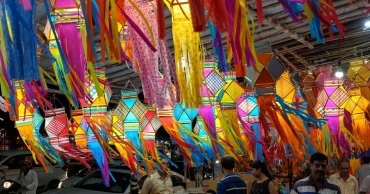
Diwali, widely regarded as India’s most important festival, holds special significance for Hindus. However, it is celebrated across faiths by over a billion people in India and the global diaspora. Spanning five days, the festival features festive gatherings, fireworks, feasts, and prayer.
The word “Diwali” comes from “Deepavali,” meaning “a row of lights.” During the festival, people light traditional clay oil lamps outside their homes, symbolizing the triumph of light over darkness and knowledge over ignorance.
Diwali’s date and timing
Diwali is based on the Hindu lunar calendar and usually falls in late October or early November. This year, the festival is being observed on October 20.
The festival’s core theme
While Diwali is a major Hindu festival, it is also celebrated by Sikhs, Jains, and Buddhists. Though origin stories vary by region and faith, the underlying theme remains the same — the victory of good over evil.
In southern India, Diwali commemorates Lord Krishna’s defeat of the demon Naraka, who had imprisoned women and tormented his subjects. In northern India, it celebrates the return of Lord Rama, his wife Sita, and brother Lakshmana after 14 years in exile.
Celebration traditions: lights, fireworks, feasts
Diwali is marked by lights, fireworks, feasting, new clothes, and prayer. Regional variations include:
Southern India: Early morning warm oil baths, symbolizing spiritual and physical purification akin to bathing in the holy River Ganges.
Northern India: Worship of Goddess Lakshmi, the deity of wealth and prosperity.
Gambling on Diwali night is a traditional practice believed to bring prosperity throughout the year. Many also purchase gold on the first day of the festival, Dhanteras, as a symbol of good fortune. Firecrackers, exchanging sweets and gifts, and creating colorful rangoli designs are common practices. While some northern states had imposed partial or full bans on firecrackers to reduce air pollution, India’s Supreme Court recently approved the sale of “green fireworks,” considered less polluting.
Diwali across other faiths
Jains: Observe Diwali as the day Lord Mahavira attained nirvana, achieving liberation from the cycle of birth and death.
Sikhs: Celebrate Bandi Chhor Divas, coinciding with Diwali, to mark the release of Guru Hargobind from imprisonment by Mughal emperor Jahangir.
Buddhists: Commemorate the day when Hindu Emperor Ashoka, who ruled in the third century B.C., converted to Buddhism.
New in 2025: Diwali becomes an official holiday in California
On October 7, California became the third U.S. state to recognize Diwali as an official statewide holiday. The law, effective January 1, 2026, allows public schools and community colleges to close, gives state employees the option to take the day off, and grants students an excused absence for the festival. The law acknowledges that Diwali is celebrated by Sikhs, Jains, and Buddhists as well.
Pennsylvania was the first U.S. state to declare Diwali a statewide holiday in 2024, followed by Connecticut earlier this year. New York City officially recognized Diwali as a public school holiday in June 2023, and several school districts in New Jersey also observe the festival with a day off.
Source: AP
9 months ago

Big Tech funds AI training for U.S. teachers amid classroom chatbot boom
On a sweltering Saturday in Texas, dozens of teachers gathered in San Antonio not for rest — but to learn how artificial intelligence could reshape classrooms. The event, led by the American Federation of Teachers (AFT), is part of a new national initiative backed by Microsoft, OpenAI, and Anthropic, which are pouring millions into AI training programs for U.S. educators.
Under a deal announced in July, Microsoft pledged $12.5 million, OpenAI $10 million, and Anthropic $500,000 to build AI training hubs, starting with one in New York City, to teach 400,000 educators over five years. The National Education Association (NEA), the country’s largest teachers union, struck a similar deal with Microsoft, aiming to train 10,000 teachers this year.
Grammy winner Laufey debuts as children’s author with ‘Mei Mei The Bunny’
Unions say educators — not corporations — will design the training, covering AI ethics, privacy, and classroom tools. But the partnerships also give Big Tech a foothold in schools as AI chatbots like ChatGPT, Gemini, and Microsoft CoPilot gain traction.
Teachers at the San Antonio workshop tested AI to translate texts, adapt lessons, and create storybooks, calling the tools “game-changing.”
“AI is part of our world,” said trainer Kathleen Torregrossa. “We have to prepare kids for that future.”
Source: AP
9 months ago
European Commission fines Gucci, Chloé, Loewe for price-fixing
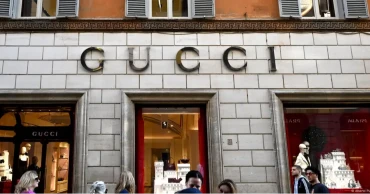
The European Commission has imposed fines totaling over 157 million euros (around $183 million) on luxury fashion brands Gucci, Chloé, and Loewe for anti-competitive practices that restricted independent retailers from setting prices for their products.
The Commission said the brands’ resale price-fixing violated EU competition rules, harmed consumers, and would not be tolerated. “This decision sends a clear message to the fashion industry and beyond that unfair practices will not be accepted in Europe, and that fair competition and consumer protection apply equally to all,” said Commission Vice President Teresa Ribera on Tuesday.
According to the Commission, the three brands limited retailers’ freedom to set prices for luxury clothing, leather goods, footwear, and accessories sold both in stores and online. Retailers were required to follow recommended retail prices, observe maximum discount limits, and schedule sales in line with the brands’ own channels. These practices reduced competition and took away retailers’ pricing independence, the Commission noted.
Gucci and Loewe received reduced fines due to cooperation, with Gucci revealing additional violations. Gucci’s fine stands at nearly 120 million euros, Loewe’s at 18 million euros, and Chloé’s fine, reduced by 15%, totals nearly 20 million euros.
9 months ago

Grammy winner Laufey debuts as children’s author with ‘Mei Mei The Bunny’
Grammy-winning singer-songwriter Laufey is branching out into children’s literature with her debut picture book “Mei Mei The Bunny,” inspired by her beloved mascot-alias.
Publisher Penguin Workshop announced Tuesday that the book, illustrated by Lauren O’Hara, will be released on April 21. The story follows Mei Mei, a determined young bunny aspiring to become a professional musician despite early setbacks.
Merriam-Webster adds 5,000 new words in fully revised ‘Collegiate’ dictionary
“I’m so excited to now share Mei Mei The Bunny in storybook form!” Laufey said. “Mei Mei has been part of my life for years, and opening up her world has been a beautiful journey. I hope readers of all ages find something inspiring in her story.”
Born Laufey Lín Bing Jónsdóttir in Iceland, the 26-year-old artist is known for her signature blend of pop, classical, and jazz influences. Her 2023 album “Bewitched” earned her a Grammy for Best Traditional Pop Vocal Album, and she followed up with “A Matter of Time” earlier this year.
Source: AP
9 months ago

Nationwide Lalon Festival and fair to mark 135th death anniversary of Lalon Shah
For the first time, a nationwide celebration will be held on the occasion of the 135th death anniversary of the legendary mystic poet and philosopher Lalon Shah, featuring Lalon festivals and fairs across the country.
The three-day event in Kushtia, organized by the Ministry of Cultural Affairs and managed by the Bangladesh Shilpakala Academy in collaboration with the Kushtia district administration, will run from October 17 to 19, while Dhaka will host its festivities on October 18. Simultaneously, Lalon fairs and festivals will take place across all 64 districts on October 17.
The cultural program in Kushtia will feature an in-depth exploration of Lalon’s philosophy, musical performances, and a vibrant Lalon fair. The inauguration ceremony will be held at Lalon Dham in Cheuriya, Kumarhati Upazila, Kushtia, on October 17 at 4 pm.
Cultural Affairs Adviser Mostofa Sarwar Farooki will attend as the chief guest, while Md Mofidur Rahman, Secretary of the Ministry, will deliver the welcome address. Internationally renowned writer and researcher Professor Gayatri Chakravorty Spivak will participate as the keynote speaker in the Lalon lecture session.
The session will also feature prominent poet, writer, and thinker Farhad Mazhar, along with Professor A.A. Mamun from the Department of Mass Communication and Journalism at Rajshahi University. The program will be chaired by Abu Hasnat Mohammad Arifin, Deputy Commissioner of Kushtia.
Following the inauguration, the air at Lalon Dham will resonate with Lalon songs and mystical tunes. Baul and Fakir performers from across the country, including TunTun Baul, Sunil Karmakar, Rawshan Fakir, and Latif Shah, will take the stage, and the festival grounds will continue to be filled with performances by visiting Baul-Fakirs on October 18 and 19.
In Dhaka, Lalon festivals and fairs will be held at Suhrawardy Udyan on October 18. Performers at the event will include Imon Chowdhury and the Bengal Symphony, Aleya Begum, Lalon Band, Nirab & Bauls, Mujib Pardeshi, Pothik Nobi, Suchona Shely, Baula Band, Arup Rahee, Samageet, and several other musical groups.
Alongside Kushtia and Dhaka, the nationwide celebration on October 17 will mark the first-ever simultaneous observance of Lalon festivals and fairs in all 64 districts, bringing together devotees, artists, and cultural enthusiasts to honor the legacy of the spiritual luminary.
9 months ago

Nobel laureate Aghion credits creative upbringing for shaping his ideas on innovation and freedom
France’s Nobel economics laureate Philippe Aghion has credited his creative upbringing for shaping his groundbreaking ideas on innovation, growth and economic freedom.
Speaking from his apartment in Paris’ Latin Quarter after being awarded the Nobel Memorial Prize in Economic Sciences on Monday, Aghion reflected on his family’s influence — particularly his mother, Gaby Aghion, founder of the renowned fashion house Chloé.
“I grew up with innovators. My mother invented luxury ready-to-wear,” said the 69-year-old economics professor, who shared this year’s prize with Joel Mokyr of Northwestern University and Peter Howitt of Brown University for research redefining how technological progress fuels prosperity.
Aghion paid tribute to his mother’s pioneering spirit, noting that her vision transformed women’s fashion by introducing ready-to-wear luxury as a freer, more feminine alternative to traditional haute couture.
“Before, there was only haute couture — luxury ready-to-wear didn’t exist,” he explained. “Through Chloé, she imagined how women could be free — they shouldn’t have to change outfits four times a day. She envisioned liberated, emancipated women.”
In his Paris home, a table stacked with books on art and liberty still reflects the world of ideas that continues to inspire his work.
Aghion fondly recalled growing up surrounded by artists and designers, including the late Karl Lagerfeld, who was closely associated with Chloé. “Karl used to help me with my German homework,” he said with a smile.
Source: AP
9 months ago

Phuket emerges as a leading tropical destination for European property buyers
Phuket, Thailand’s largest island, has become one of the most sought-after destinations for European families, retirees, and investors looking to buy property overseas. With its scenic beaches, rich culture, pleasant year-round weather, and welcoming Thai hospitality, the island offers an appealing escape from Europe’s cold winters, economic challenges, and urban stress.
Improved connectivity has made Phuket even more accessible for European travelers, with expanded direct flights from London, Frankfurt, Paris, Zurich, Vienna, and other major cities, along with convenient transit options through the Middle East, Bangkok, Hong Kong, and Singapore. The island’s affordability, tranquil lifestyle, and safety have also boosted its reputation as a prime spot for long-term stays.
Compared to popular European coastal destinations such as Spain’s Costa del Sol or Italy’s Amalfi Coast, property prices in Phuket remain considerably lower. Buyers can choose from a wide range of condominiums, from affordable units to premium branded residences offering strong investment value.
Phuket’s appeal goes beyond real estate. The island offers a vibrant lifestyle with world-class golf courses, marinas, shopping centers, diverse dining options, and numerous outdoor activities. Reliable internet connectivity, international schools, and advanced healthcare facilities make it an attractive place for families, professionals, and retirees alike.
At the forefront of Phuket’s property boom is the Banyan Group, best known for its luxury Banyan Tree Hotels & Resorts. Recognized as Asia’s leading developer of branded residences and ranked fifth globally, the group emphasizes sustainability, comfort, and wellness. European buyers, who traditionally represent about one-third of its customers, value Banyan’s reputation and high-quality after-sales service. The company recently won 15 top honors at the International Property Awards — the highest number achieved by any Asian developer.
How to shop secondhand sustainably and stay stylish
A major highlight of the island’s development is Laguna Phuket, a 1,000-acre integrated resort by the Banyan Group situated along a three-kilometer stretch of Bang Tao Beach. This lakeside and woodland community includes seven luxury hotels, an award-winning golf course, and more than 3,000 branded condominiums, all linked by complimentary shuttle buses and boats.
Laguna Phuket now houses residents from over 50 nationalities, supported by comprehensive infrastructure that includes a kindergarten, wellness centers, diverse leisure facilities, and the new Rava Beach Club — the largest on the island.
“Laguna Phuket has evolved into a thriving residential community. It offers a safe, world-class environment where families, retirees, and professionals can flourish,” said Stuart Reading, Managing Director of Banyan Group Residences.
Source: AP
9 months ago